REVIEW · BEIRUT
Guided Small-Group Tour to Baalbek, Anjar and Ksara with Lunch
Book on Viator →Operated by Lebanon Tours & travels · Bookable on Viator
Three ancient cities in one easy day. This small-group tour from Beirut strings together Baalbek and Anjar UNESCO sites with a winery visit, plus door-to-door pickup so you can skip the self-drive stress.
I love the small group setup, capped at 15, which keeps the day from feeling rushed and helps you get real answers when questions come up. I also like that you’re not just looking at stones: specialist guidance at the ruins (often archaeologists) turns what you see into a story you can follow.
One thing to plan for is that some entrances and the winery experience may not be included, so expect a bit of extra spending on-site. Add in the heat and sun while walking in the Bekaa, and you’ll want to dress and pack accordingly.
In This Review
- Key highlights worth your attention
- Why Baalbek and Anjar belong on your Lebanon list
- Beirut morning logistics: getting there without the hassle
- Baalbek’s Bacchus and Jupiter temples: the Roman scale test
- The Mosque of Sayyida Khawla stop: faith layered onto ruins
- Anjar’s Umayyad city grid: what “city planning” looks like in stone
- Umayyad ruins of Aanjar: palace walls, mosque area, and baths
- Château Ksara winery: Jesuit wine history in the Bekaa
- Lunch in the Bekaa: included, filling, and plan-smart
- Value check: is $65 worth it for this full-day route?
- Who this tour is best for (and who should consider another plan)
- Should you book this Baalbek–Anjar–Ksara day trip?
- FAQ
- How long is the tour?
- What time does the tour start?
- Do I get pickup and drop-off in Beirut?
- How big is the group?
- Which UNESCO World Heritage sites are visited?
- Is lunch included?
- Are admission tickets included for all stops?
- Is the tour ticket mobile?
- Is free cancellation available?
- Can I cancel if I’m within 24 hours of the start time?
Key highlights worth your attention
- Door-to-door pickup and drop-off from central Beirut, with an air-conditioned vehicle
- Two UNESCO stops in one day: Baalbek and Anjar
- On-site specialist explanations, including archaeologists at the ruins
- Lebanese lunch included, served at a local restaurant in the Bekaa
- Château Ksara winery time, tied to the vineyard and Jesuit wine history of Lebanon
- Maximum 15 people, so you’re not lost in a crowd
Why Baalbek and Anjar belong on your Lebanon list
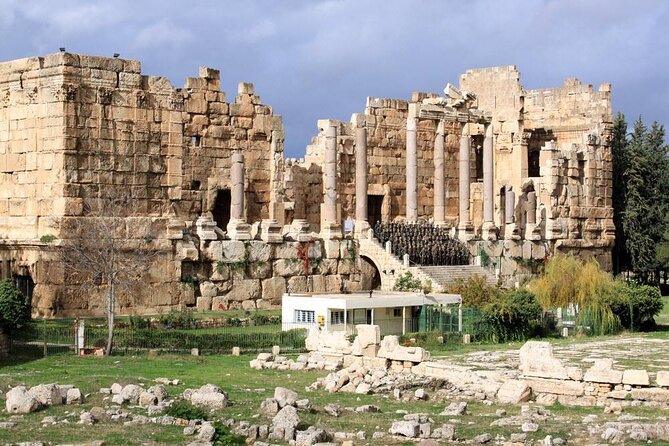
If you only have a day to spend outside Beirut, this is a strong choice. You’re packing two UNESCO World Heritage areas into one long outing: Baalbek, the heavyweights of Roman imperial architecture, and Anjar, the early Islamic/Umayyad city that still shows its original planning grid.
Baalbek is famous for its colossal Roman temple complex tied to the worship of the Jupiter-related cult at Heliopolis. In Roman times, that sanctuary drew crowds of pilgrims, and you can still feel the scale even before you start naming the structures.
Anjar gives you a different kind of wow. The ruins show a very regular layout founded in the early 8th century by Caliph Walid I, and the walls, mosque area, palace zones, thermal baths, and Roman-style details help you see how the Umayyads built on older traditions.
You can also read our reviews of more tours and experiences in Beirut.

Beirut morning logistics: getting there without the hassle
The tour starts at 8:30 am, and you’ll get hotel pickup and drop-off from central Beirut. That matters more than you might think. Instead of negotiating roads, parking, and timing on your own, you’re handed a schedule and a driver, and the day runs on local time.
You’ll travel in a comfortable, air-conditioned vehicle, and the group stays small. In practice, that means the guide can actually manage questions during the ride, and you’re more likely to get those little moments where you can step out, take a photo, or ask what you’re looking at.
The total time is about 9 hours, so it’s a real day trip, not a short taste. Plan your evening accordingly, and keep in mind you’ll be standing and walking outdoors at least a few times.
Baalbek’s Bacchus and Jupiter temples: the Roman scale test
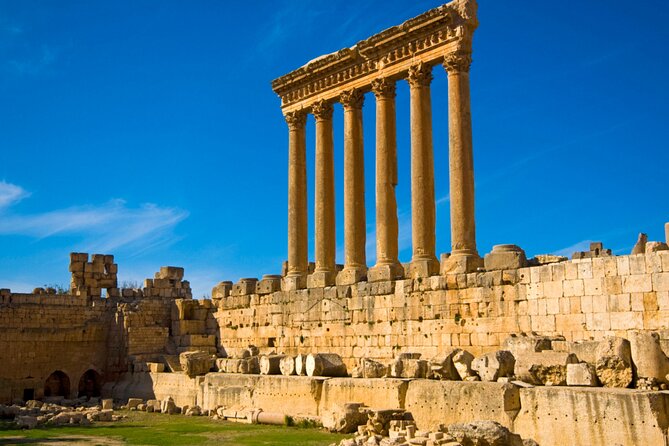
Baalbek is where the day’s biggest “how did they build this?” reaction usually lands. You’ll spend around 1 hour 30 minutes at Baalbek, including the broader area and key highlights like the Temple of Bacchus and the Temple of Jupiter precinct.
What makes this stop special is how the explanations connect the stones to a living sequence of faith. Baalbek began as a Phoenician city, known as Heliopolis during the Hellenistic period, and it kept its religious function into Roman rule. The Romanized triad worship in this area is tied to Jupiter, Venus, and Bacchus, and the temple complex was built over more than two centuries.
A practical note: the entry situation is a mix. The tour information indicates some Baalbek admission may be free, but the Temples of Baalbek admission is not included. So even if part of the experience is covered, you should be ready for an on-site ticket for the specific temple areas.
You’ll also be visiting at altitude, since Baalbek sits around 1,150 meters, at the foot of the Anti-Lebanon slope. That can mean different light and temperature than Beirut, especially in the morning and late afternoon.
The Mosque of Sayyida Khawla stop: faith layered onto ruins
Between the big Roman blocks, there’s a smaller but meaningful moment at the Mosque of Sayeda Khawla. This stop is tied to a belief that Sayyida Khawla, daughter of Imam al-Hussein (grandson of the Prophet Muhammad), was buried here.
Local tradition places this in the context of the caravan of captives associated with Karbala passing through Baalbek, and the story explains why the site matters to the people who live nearby. Even if you’re not seeking a religious stop, it helps you understand why these places aren’t museum-only: they are still part of real life and real belief.
This is also a good pause in the day’s intensity. You’ll break up the long outdoor walking, reset, and then head into the Umayyad ruins with a more rounded sense of how Baalbek’s timeline keeps moving.
Anjar’s Umayyad city grid: what “city planning” looks like in stone
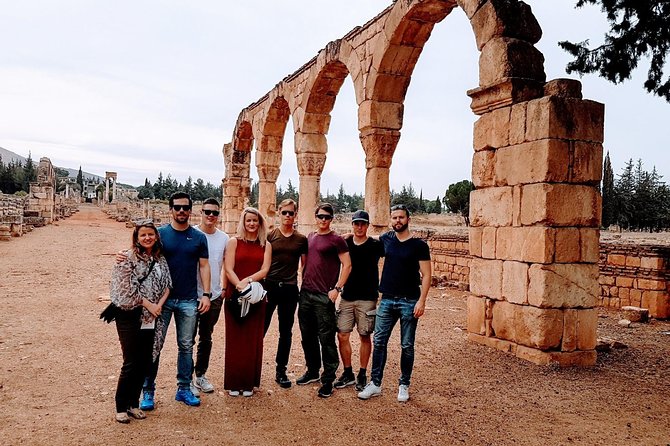
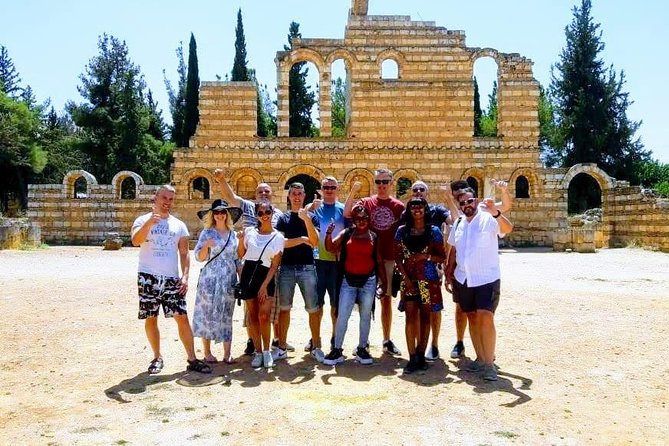
Anjar feels different from Baalbek the moment you start looking for order. You’ll have about 45 minutes at Anjar, and the ruins show a regular layout that looks almost “designed,” like a city built from a plan rather than grown over time.
The roots here are early Umayyad. The site was founded in the beginning of the 8th century by Caliph Walid I, and the archaeological discovery happened late in modern history, at the end of the 1940s. That means what you see today is shaped by later excavation and restoration, but the fundamentals of the city design still come through.
You’ll learn how Anjar sat at a crossroads of important routes: one stretching from Beirut toward Damascus, and another connecting across the Bekaa from Homs to Tiberiade. Standing inside the ruin footprint makes that positioning feel practical, not abstract.
As with Baalbek, admission coverage is mixed. The tour notes that Anjar’s entry is free, while the Umayyad ruins of Aanjar admission is not included, so plan for a potential ticket when you focus on the main palace and surrounding structures.
Umayyad ruins of Aanjar: palace walls, mosque area, and baths
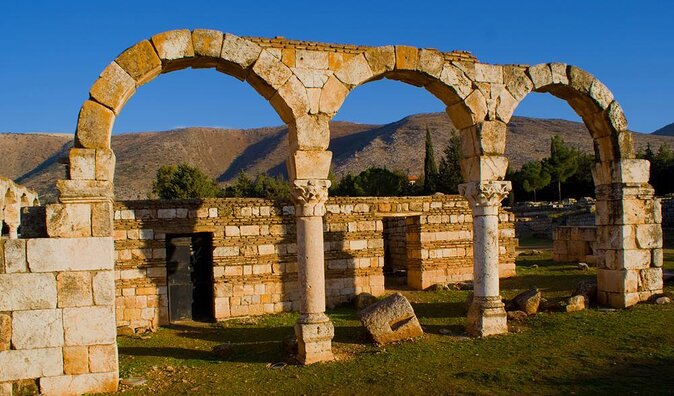
After your initial Anjar time, you’ll spend another 45 minutes focusing on the Umayyad ruins. This is the part where you see more of the city’s internal pieces: walls of the palace zones, harems, a mosque, the great palace area, and thermal baths, plus many pillars with Roman architectural influences.
What I like about this stop is that it helps you read the ruins like a blueprint. Instead of trying to imagine a whole palace city from scattered stones, the layout guides your eye: walls define what was protected, bath areas show daily life, and the palace-mosque relationship hints at the governance and faith structure of the era.
Expect some walking and sun exposure. One review flagged the heat when people were moving around, and that tracks with the area’s outdoor nature. Bring water, wear a hat, and wear shoes you trust on uneven ground.
Château Ksara winery: Jesuit wine history in the Bekaa
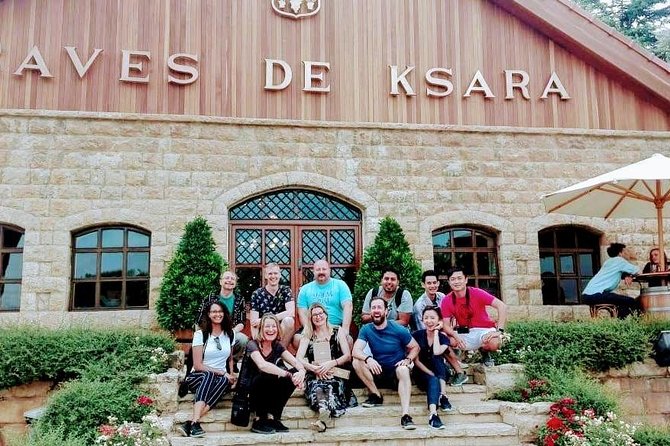
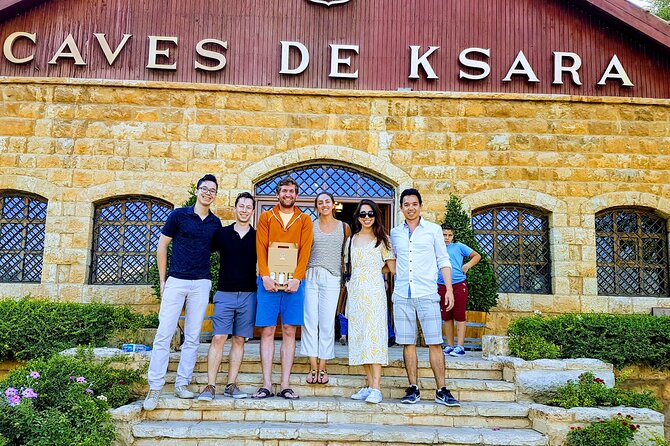
After temples and ruins, the tour shifts gears to something you can smell. You’ll spend around 1 hour at Château Ksara.
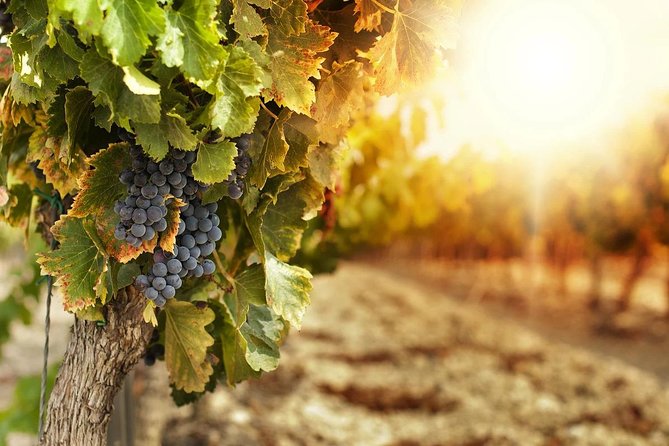
This winery has a clear backstory: it was founded in 1857 by Jesuit priests, and it developed the first dry wine in Lebanon. Château Ksara produces about 3 million bottles annually and exports to over 40 countries, which gives you a sense that this is not just a local stop for photos.
Just like the ruins, ticket details vary. The tour notes Chateau Ksara admission is not included, so expect an on-site fee for entry and any tasting options. One guest mentioned that a wine tasting was an extra cost but felt worth it.
If you’re the kind of person who likes to end a historical day with something sensory, this is the right closer. You get a break from the archaeological scale and trade it for grape rows, cellar talk, and a chance to taste what the region produces.
Lunch in the Bekaa: included, filling, and plan-smart
Lunch is included, and it’s designed to feel like real Lebanon rather than a tourist-buffet detour. You’ll eat at a local restaurant in the Bekaa, and with the long travel day, it’s a big value add: you don’t have to hunt for food between ruins.
In most cases, the best way to treat included lunch is as part of the pacing. You’ll likely get a proper sit-down meal, and you’ll want to use that time to refuel before the later walking.
Still, restaurant experiences can vary depending on timing and staffing. If you have strict dietary needs, I’d suggest letting your guide know at pickup so they can guide you toward the safer choices available at the restaurant.
Also keep in mind it’s an outside-day. Even with lunch covered, pack a small snack you like and a bottle of water for the “between stops” stretches.
Value check: is $65 worth it for this full-day route?
At $65 per person, this tour is priced like a budget-friendly way to hit serious sights without DIY driving. The value comes from a bundle: hotel pickup and drop-off, air-conditioned transport, a small group up to 15, professional guides, and lunch included.
Where the value can change is with on-site fees. The tour information points out that some entries are free (like parts of Baalbek and Anjar) while other parts are not included (like the Temples of Baalbek, the Umayyad ruins area, and Château Ksara admission). So you might need extra money on the day for tickets once you’re standing there and ready to go in.
The upside is that your time is structured by people who know how to move between stops, and you’re not paying for “dead time.” The rides connect you to two UNESCO sites and a winery, with breaks built in.
If you like clarity and organization, you’re also likely to enjoy the way guides run the day. Reviews repeatedly praised guides such as Albert and Hassan for being punctual, friendly, and full of detail, and they highlighted archaeologists showing up as site specialists.
Who this tour is best for (and who should consider another plan)
This is ideal if you’re:
- Short on time and want Baalbek + Anjar + winery in one go
- Not excited about self-driving or dealing with logistics between sites
- Interested in explanations that connect Roman worship, Phoenician roots, and Umayyad city planning
- Happier in a group under 15 where you can still ask questions
Consider another option if you:
- Need lots of free time to wander slowly without schedule pressure
- Want tickets and tastings fully bundled with no on-site payments
- Are very heat-sensitive, since outdoor walking is part of the day
Booking-wise, it’s smart to reserve ahead. This experience is commonly booked about 25 days in advance, so early plans tend to work better than waiting for last minute.
Should you book this Baalbek–Anjar–Ksara day trip?
I think you should book it if you want a guided day that feels like a full course: major UNESCO ruins first, a local lunch, then Château Ksara to close the loop with something modern and Lebanese. The small group size plus door-to-door pickup is a real quality-of-life win.
I’d only hesitate if you hate the idea of extra on-site tickets for temples and winery access. If you’re okay carrying a little cash/card for entrances and you dress for sun and walking, this is a strong use of a day from Beirut.
FAQ
How long is the tour?
It runs for about 9 hours (approx.).
What time does the tour start?
The start time is 8:30 am.
Do I get pickup and drop-off in Beirut?
Yes. The tour includes hotel pickup and drop-off from central Beirut.
How big is the group?
The maximum group size is 15 travelers.
Which UNESCO World Heritage sites are visited?
You’ll visit Baalbek and Anjar, both UNESCO World Heritage sites.
Is lunch included?
Yes. Lunch is included, described as a Lebanese lunch at an authentic local restaurant.
Are admission tickets included for all stops?
Not all admissions are included. Baalbek and Anjar have some free entry noted, but the Temples of Baalbek, the Umayyad ruins of Aanjar, and the Château Ksara admission are listed as not included.
Is the tour ticket mobile?
Yes. The tour includes a mobile ticket.
Is free cancellation available?
Yes. Free cancellation is allowed up to 24 hours in advance for a full refund.
Can I cancel if I’m within 24 hours of the start time?
No. If you cancel less than 24 hours before the start time, the amount you paid is not refunded.