REVIEW · HERMANUS
Hermanus: Boat Based Whale Watching Experience
Book on GetYourGuide →Operated by Hermanus Whale watchers · Bookable on GetYourGuide
Whales show up faster than you expect.
This Hermanus boat trip gives you unobstructed viewing when conditions allow, and I like how the crew keeps distance so whales can come and go naturally. The main drawback to plan for is motion: if you get seasick easily, the sea can make this less fun.
I also like the way guides like Philip and Peter explain what you’re seeing in plain language, from whale behavior to the small stuff on the water. And yes, you’ll get that classic Hermanus feel—Walker Bay from offshore looks totally different than from land.
In This Review
- Key things you’ll notice on this Hermanus whale watch
- Hermanus New Harbour start: coffee, tickets, and a quick game plan
- Safety-first whale viewing: getting close the right way
- What you’ll actually see: whales, dolphins, seals, and seabirds
- Your 90 minutes on the water: enough time to spot and watch, not too long
- Top-deck rules: great views when you can, smarter viewing when you can’t
- What “good whale watching” means here: time, distance, and respect
- Price and value: what $93 buys you in Hermanus
- What to bring: the “sea breeze checklist” that actually helps
- Who should book this whale watch (and who should think twice)
- Should you book? My take on when it’s worth it
- FAQ
- Where do I meet for the trip?
- When do I get the tickets?
- Is there an entrance fee at the harbor?
- How long is the whale watching experience?
- What’s included in the price?
- What animals might I see besides whales?
- Can I stay on the top deck the whole time?
- Is the guide English-speaking?
- What should I bring?
- Is cancellation allowed?
- Is payment flexible?
Key things you’ll notice on this Hermanus whale watch
- Safety briefing before you go so everyone knows what to do out on the water
- Engines disengage when whales are spotted to reduce risk from propellers
- Top-deck access depends on weather and whether whales are found quickly
- You’re not just chasing whales; dolphins, seals, and seabirds often show up too
- A friendly, small-ish group vibe that helps you see more than you fight for space
Hermanus New Harbour start: coffee, tickets, and a quick game plan
Your trip begins at Hermanus New Harbour, where you’ll pick up physical tickets on the day. The operation is straightforward: arrive about 30 minutes before departure, then head to the orange building on the right-hand side right after you enter the harbor.
Two small logistics points matter. First, there’s a harbour entrance fee (R5) payable upon entry, so don’t be caught without small cash. Second, the ticket pickup is part of the day-of rhythm, so plan to show up on time rather than cruising in late and hoping for the best.
You’ll also get a cup of coffee on arrival, and water is available on the boat. This is the kind of detail that sounds minor until you’re out there in sea breeze mode, trying to stay warm and focused.
You can also read our reviews of more tours and experiences in Hermanus.
Safety-first whale viewing: getting close the right way
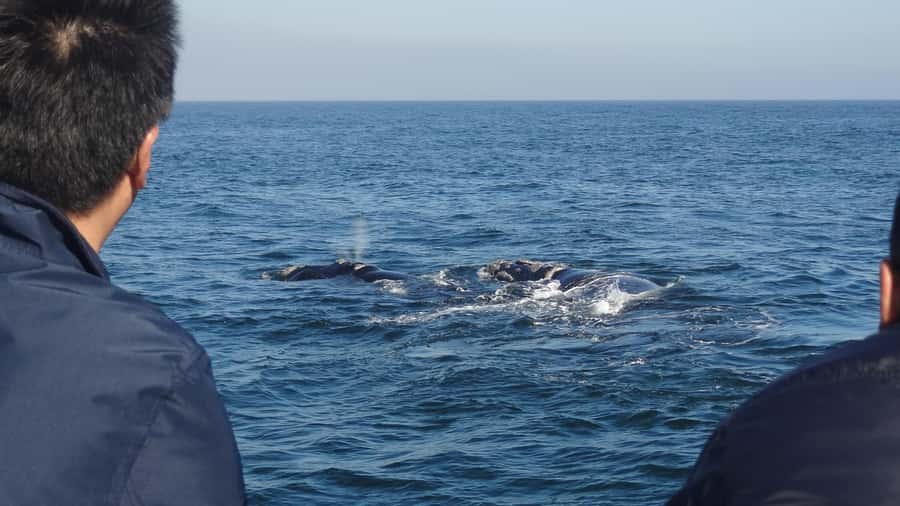
This is the part I respect most. Once whales are spotted, the vessel moves closer—but it does so with rules in place. The crew stops the run close-up by having the engines disengage to prevent the whales from being harmed by propellers.
That matters because whale watching can turn into a crowd sport if nobody is strict. Here, the approach is more like watching wild animals, not powering through them. Reviews also repeatedly highlight that the crew keeps distance and follows whale space, and you feel that difference once you’re out on the water and the boat isn’t trying to bully the scene.
The crew also tends to work the sighting efficiently. You can expect them to tell you what you’re looking at, then help you track whale behavior as it unfolds—often with multiple guide perspectives pointing out movements around the bay.
What you’ll actually see: whales, dolphins, seals, and seabirds
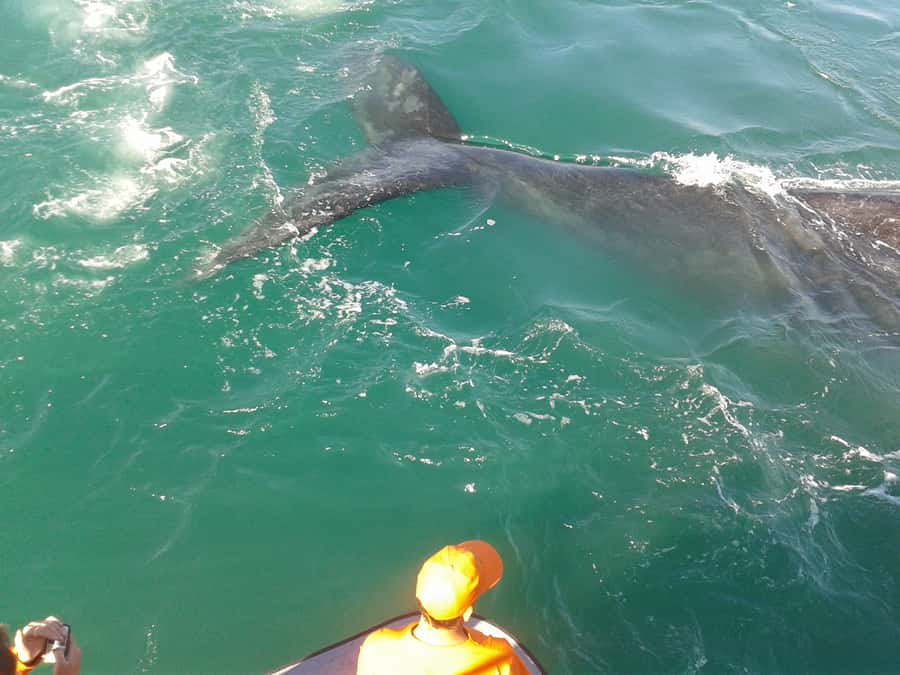
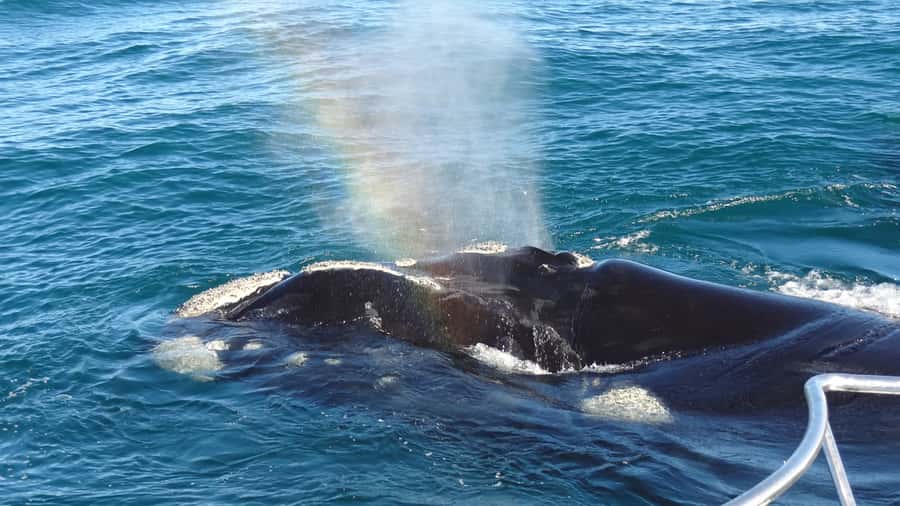
The headline is whales, of course, but the better experience is the variety. You’re set up to look for whales in the water around Hermanus, and you can also get sightings of dolphins, seals, and seabirds while cruising.
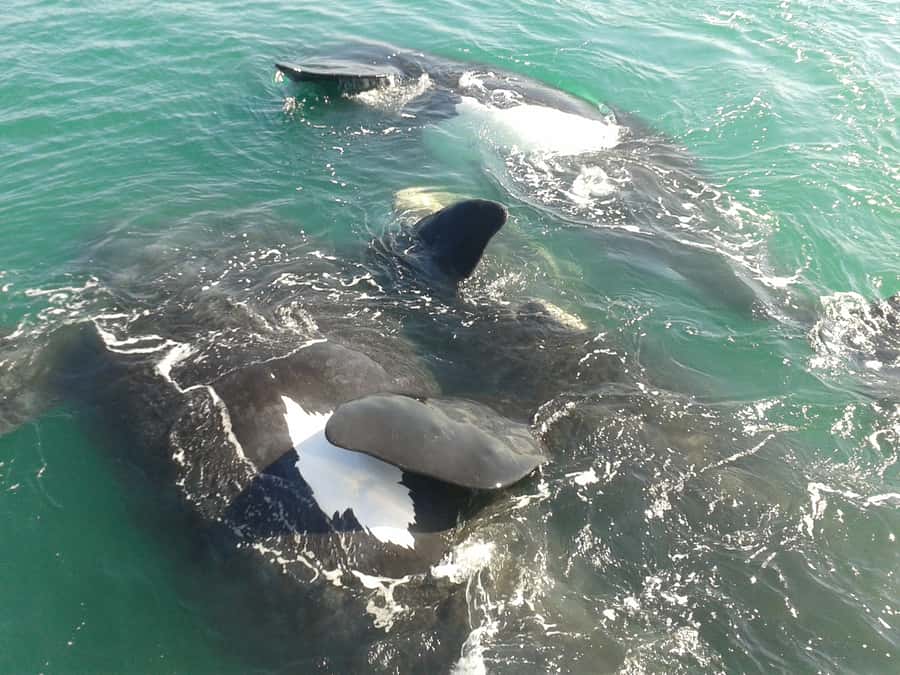
On the whale side, you’re not limited to one kind of moment. Many sightings are described as mother-and-calf pairs, and you may also catch dramatic surface behavior like breaching (sometimes in the distance, sometimes much closer than you expect). One standout account includes a very large calf described around 4 meters, which gives you an idea of why people end up speechless when they see scale from the waterline.
And because whales don’t always follow a schedule, the “secondary wildlife” layer is what keeps the experience satisfying even if whales need more time to show themselves. Dolphins are a frequent highlight—sometimes in big groups—while seals and seabirds help fill in the edges of your attention.
A fun detail worth knowing: whales can be curious. There’s a good chance you’ll experience that odd, humbling feeling of being the ones being watched. The vessel isn’t there to force the interaction, but if a whale comes close on its own, you’ll get the best kind of front-row seat.
Your 90 minutes on the water: enough time to spot and watch, not too long
The stated duration is about 90 minutes, and the whale-watching portion is typically 1.5 to 2 hours. In practice, that timing is what makes this trip feel doable on a vacation schedule rather than like a half-day project you resent later.
The day’s rhythm usually goes like this:
- A quick safety briefing before departure
- A cruise out to where sightings are more likely, with scenic views of Hermanus and the Western Cape from offshore
- Once whales are found, the crew helps you focus and watch as the boat moves closer in a controlled way
- You keep an eye on marine life around you while learning more from the crew
- You return to Hermanus New Harbour after the viewing window
This pacing is also practical for photography and comfort. You get time to follow behavior without feeling rushed every two minutes. At the same time, if the sea turns choppy, you’re not stuck out there forever.
Top-deck rules: great views when you can, smarter viewing when you can’t
You’ll hear a lot of people talk about the top deck, and for good reason. Unobstructed views make a huge difference when whales are at the surface—or when you’re trying to spot spouts and movement quickly.
Here’s the key reality: top-deck access depends on weather and timing. In good conditions, passengers may be allowed on the top deck before departure for the best views right away. If conditions aren’t ideal, you’ll typically only get top-deck access after whales have been found.
That can affect how quickly you see whales’ full-body movements versus how quickly you catch them near the surface. Either way, the goal stays the same: keep you viewing from the best available position while staying safe in the conditions.
One more note from practical experience vibes in the info you have: people often mention a boat setup with space to move around, and an upper deck that’s a selling point. That helps because whale watching isn’t static; you’ll want to step to the best angle as new activity appears.
What “good whale watching” means here: time, distance, and respect
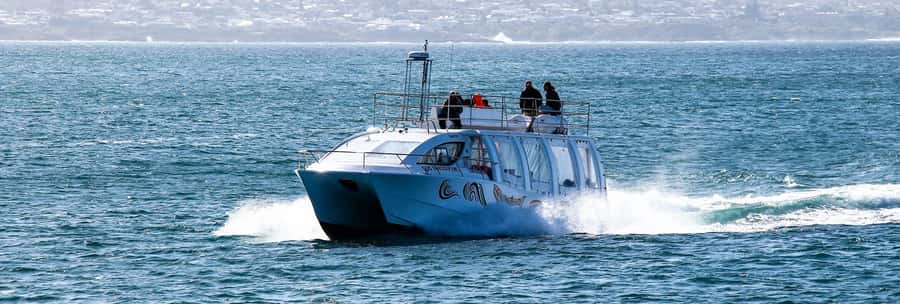
You can judge a whale-watching operator by how they handle the moment whales appear. This one has a clear method: move closer carefully, then shut down engines to protect whales from propellers.
Also, the guides don’t just read facts from a card. They help you interpret what you’re seeing—like why a whale might surface where it does, or what calf behavior often looks like when mother and young are staying near each other. Multiple guide accounts mention that explanations are delivered calmly, including answering repeat questions without snapping. That’s important when you’re with a mixed group, all seeing the same miracle for the first time.
And when sightings are strong, you get that “this is bigger than I thought” feeling: pods of dolphins, seals along the edges, and then whales popping up in a way that makes you stop talking and start watching hard.
Price and value: what $93 buys you in Hermanus
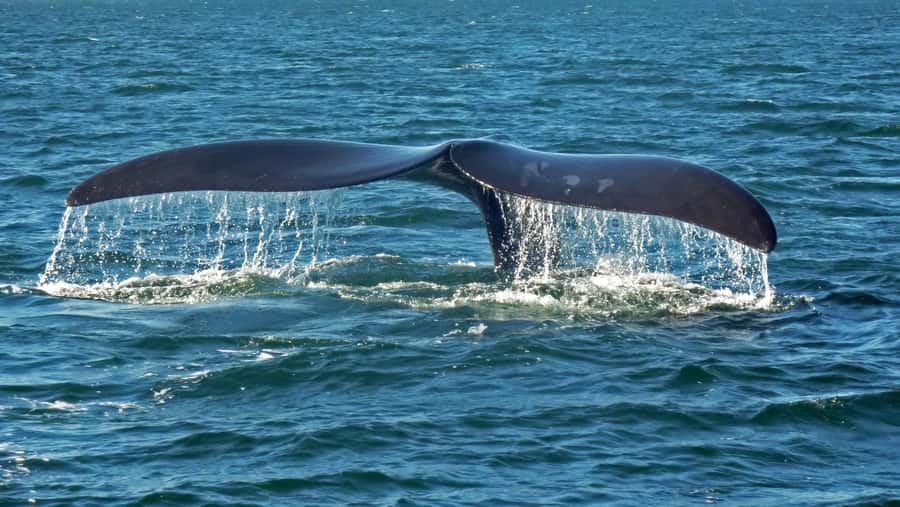
At $93 per person, this trip isn’t the cheapest thing in Hermanus, but it’s also not priced like a private boat. You’re paying for three main things: trained crew attention, a real chance at high-quality sightings, and the comfort of having basic supplies included.
Here’s what you get that directly supports value:
- A tour guide on board
- Water on the boat
- Coffee on arrival
- Time dedicated to whale watching (about 90 minutes total, with a long enough window for multiple sightings)
You also get a group experience that, in at least some runs, is described as limited (one account mentions around 40 people). Smaller groups mean less elbow-to-elbow viewing, which matters when whales can appear quickly.
Is it guaranteed? No wildlife tour can promise whales on a specific minute. But the structure is built for the hunt: safety rules, efficient close viewing once whales are found, and a plan that still delivers marine-life sightings even on days when whales are harder to locate.
What to bring: the “sea breeze checklist” that actually helps
This is a cold-water coastline. Even if Hermanus is sunny, the ocean air can feel sharp once you’re moving.
Bring:
- Warm clothing and layers
- A windbreaker (sea air cuts)
- A jacket if you run cold
- Flat shoes with grip
- Sun hat and sunscreen (yes, even when it’s chilly)
If you’re the type who gets chilled easily, dress like you’re going to stand outside for a while. Because you are.
Also consider comfort items like a small bag that can handle spray, and keep your phone and camera secure if you’re on a deck with wind.
Who should book this whale watch (and who should think twice)
This trip is built for all ages, and the overall experience tends to work well for families because it’s structured, guided, and focused on sightings rather than lectures.
You’ll likely love it if:
- You want wildlife-first watching with a crew that respects whale space
- You care about good viewing angles, especially the top deck when weather allows
- You like learning while you watch (guides point things out as you go)
You should think twice if:
- You get sea sick easily. One account specifically flags this as a potential issue, and another mentions that waves can be high at times, making photography harder. If motion affects you, plan accordingly.
And one practical note: there’s at least one mention that a bathroom on the boat could be useful. That doesn’t mean it’s a deal-breaker, but it’s a good reason to time water intake and dress for the duration.
Should you book? My take on when it’s worth it
Book this trip if your Hermanus goal is simple: you want the most direct route to seeing whales in their natural area, with a crew that follows safety rules once whales appear. The engine disengage approach and the repeated emphasis on distance are exactly the kind of operational details that make whale watching feel ethical, not chaotic.
Don’t overthink it, but do make smart choices:
- Check the weather day-of, since trips are weather permitting and top-deck access can change
- Dress for wind and cold
- If you’re prone to seasickness, decide in advance how you’ll handle it, because the ocean can be unpredictable
If whales are a bucket-list item for you, this is the kind of Hermanus experience that tends to land as a memory you keep.
FAQ
Where do I meet for the trip?
You meet at Hermanus New Harbour. Go to the orange building on the right-hand side directly after entering the harbor.
When do I get the tickets?
You receive physical tickets on arrival, about 30 minutes before the trip start time.
Is there an entrance fee at the harbor?
Yes. There is a harbour entrance fee (R5) payable upon entry.
How long is the whale watching experience?
The total duration is listed as 90 minutes, with 1.5 to 2 hours set aside for the whale watching boat trip.
What’s included in the price?
Included are a guided whale watching boat trip, a tour guide on board, water on the boat, and coffee on arrival.
What animals might I see besides whales?
The experience is designed for whale watching and also includes chances to spot dolphins, seals, and seabirds.
Can I stay on the top deck the whole time?
Not always. In good weather, you may be allowed on the top deck before departure. Otherwise, top deck access may happen only after whales are found.
Is the guide English-speaking?
Yes. The live tour guide is provided in English.
What should I bring?
Bring warm clothing and a windbreaker, plus a sun hat and sunscreen. Wear weather-appropriate clothing and flat shoes.
Is cancellation allowed?
Yes. You can cancel up to 24 hours in advance for a full refund.
Is payment flexible?
You can reserve now and pay later to keep plans flexible.