REVIEW · HURGHADA
Hurghada: Small-Group Luxor Highlights & Tut Tomb Day Tour
Book on GetYourGuide →Operated by Nice Tours · Bookable on GetYourGuide
Luxor in a day sounds wild, and it works. You get a guided hit-list of Egypt’s biggest temple and royal tomb sights—Karnak, Valley of the Kings, Hatshepsut—usually with an Egyptologist guide like Adam or Hamdy keeping the stories clear and the pace moving. The big love for me here is how much you see for the money, and how the day includes both a guided structure and breathing room for photos, snacks, and that optional Nile calm. One thing to consider: the schedule is full, and the 5-hour drive each way means you’re managing heat, time, and energy for a long day.
For a $105 per person day trip, you’re not just getting sites—you’re getting a whole day’s worth of logistics handled by A/C transport, hotel pickup/drop-off from Hurghada, and a lunch stop in Luxor. Just double-check what you selected for entry fees, because some key temple/tomb access depends on the option you choose.
In This Review
- Key Highlights Worth Getting Excited About
- Hurghada to Luxor: Planning for a 15-Hour Adventure
- Karnak Temple: Egypt’s Biggest Sacred City in One Guided Walk
- Lunch in Luxor: A Real Rest Stop (Drinks Are Extra)
- Optional Felucca Ride on the Nile: The Calm Break You’ll Appreciate
- Colossi of Memnon: Two Statues, Thousands of Years, One Good Pause
- Valley of the Kings: Tomb Stories Plus Ticket Choices
- Temple of Hatshepsut: How to Read a Female Pharaoh in Stone
- Guide and Group Size: Why the Human Part Matters on This Route
- Price and Value: Does $105 Add Up for a Hurghada-to-Luxor Day?
- Who Should Book This Day Trip (and Who Might Prefer More Time)
- Should You Book This Hurghada to Luxor Highlights Tour?
- FAQ
- How long is the Hurghada to Luxor tour?
- What major sites are included in the day?
- Is the felucca ride included?
- Are entrance fees included for Karnak and the Valley of the Kings?
- Is lunch included?
- What languages are available for the live guide?
Key Highlights Worth Getting Excited About
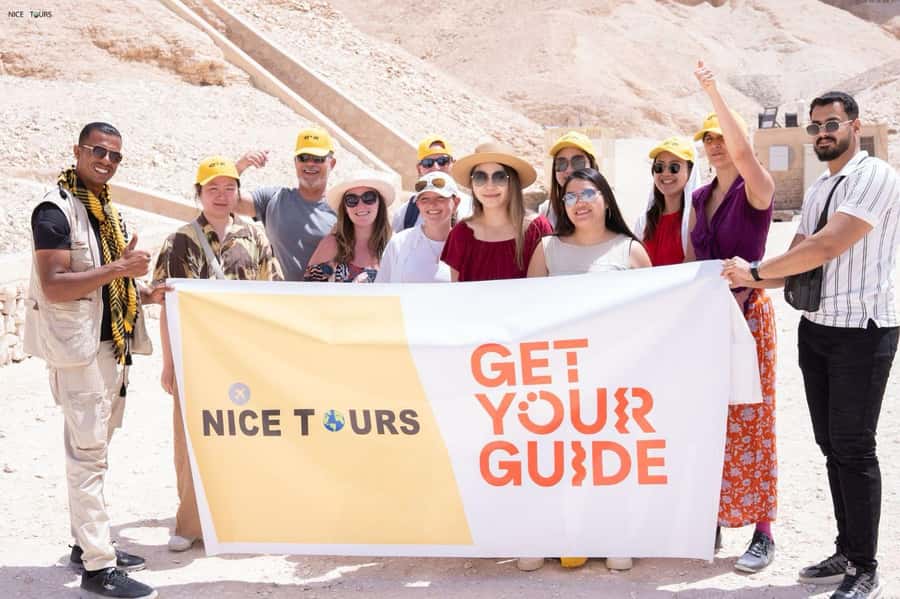
- Karnak Temple with an Egyptologist guide: you’ll learn what you’re looking at instead of just wandering stone to stone.
- Valley of the Kings focus: royal tombs come with context that makes the architecture feel personal, not random.
- Hatshepsut’s mortuary temple: a major stop designed around Egypt’s famous female ruler.
- Colossi of Memnon photo moments: two towering statues that feel impossibly solid after thousands of years.
- Optional felucca ride: a quiet break on the Nile that resets the whole day.
- Optional Tutankhamun Tomb add-on: if you want one more ticketed highlight, it’s available.
Hurghada to Luxor: Planning for a 15-Hour Adventure
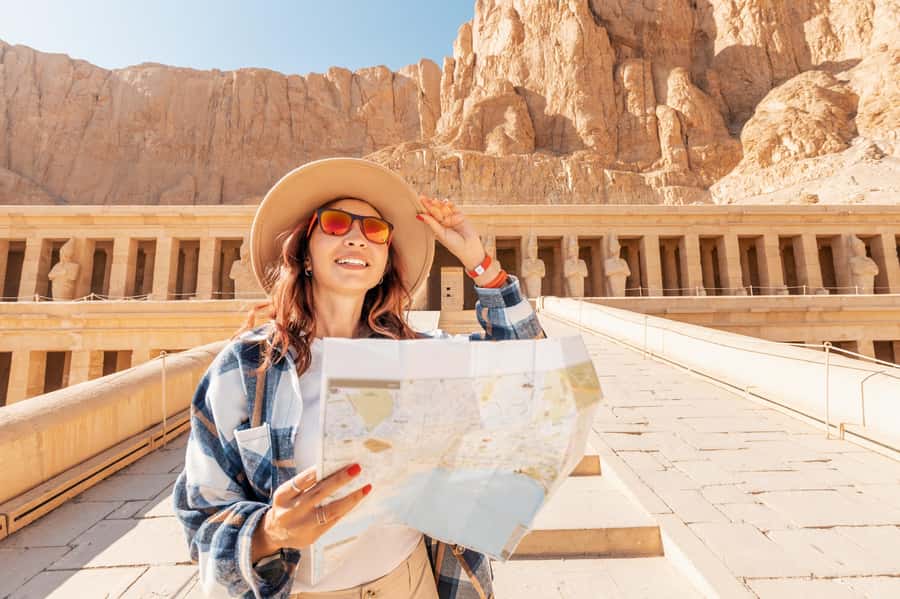
This is a long-haul day trip by design. You start with hotel pickup in Hurghada, then settle in for roughly 5 hours to Luxor. Once you’re there, the tour keeps moving through the highlights, and then you repeat the return drive at the end of the day.
What that means for you: pack for the day, not just the sites. Comfortable shoes matter because you’ll walk through temple courtyards and tomb areas where shade can be limited. Bring sunscreen, a sun hat, sunglasses, and light layers you can manage in heat. A passport or ID card is also a must.
Also, plan your attitude. This is not a slow, wander-at-your-own-pace kind of day. The upside is that you’ll cover the essential Luxor “greatest hits” without needing tickets, routing, or a private guide. The trade-off is that you’ll have to enjoy the sites in bursts—long enough to understand them, but not long enough to disappear into every corner.
The good news: you’re not starting from scratch. The tour includes snacks, soft drinks, and water, which helps a lot when the day starts early and ends late. A/C transport makes the road part easier than you’d expect.
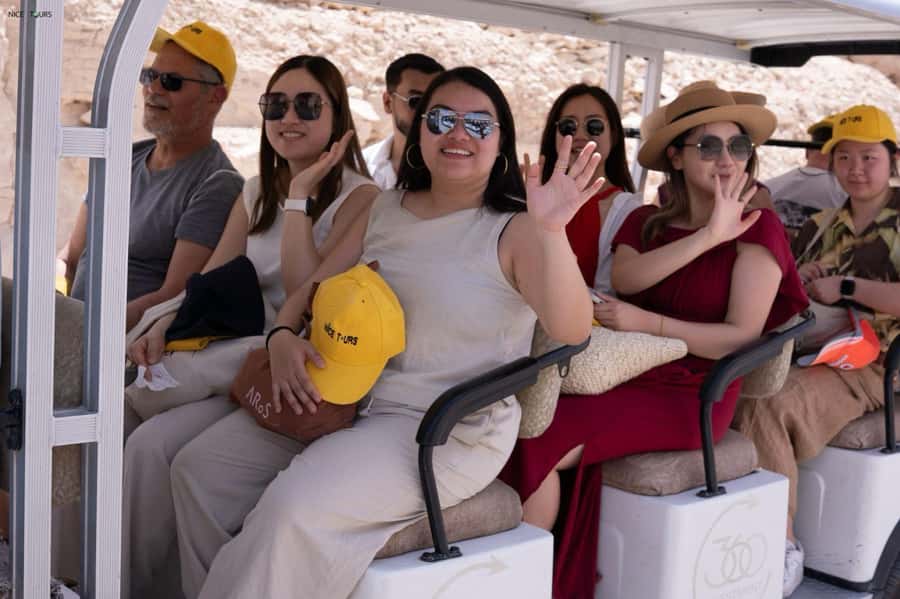
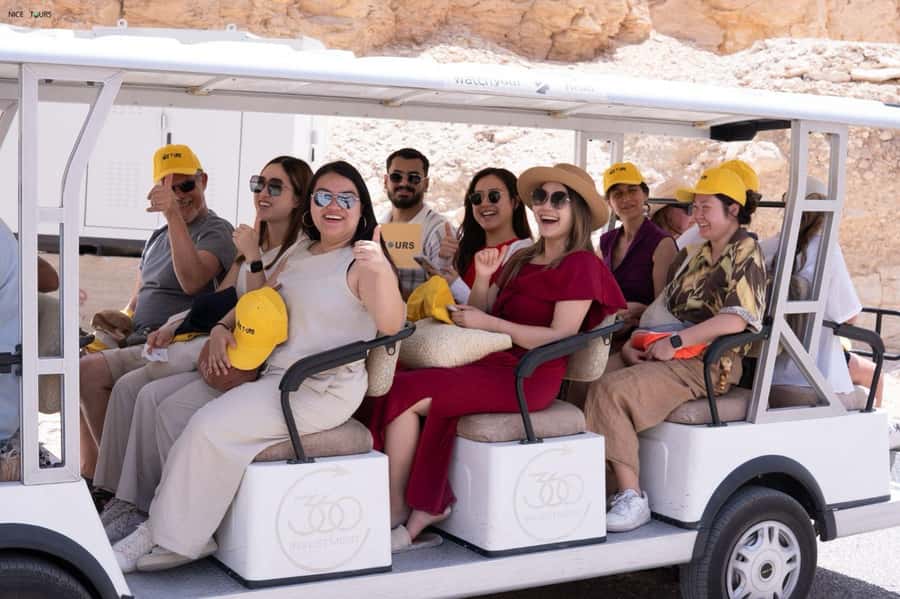
Finally, notice the group feel. It’s described as small-group, and some bookings have been as intimate as three people—so it’s usually easier to ask questions and get individual attention. If your priority is personal interaction (not just being herded from stop to stop), that small size can be a real advantage.
You can also read our reviews of more tours and experiences in Hurghada.



Karnak Temple: Egypt’s Biggest Sacred City in One Guided Walk
Karnak is the kind of place where you can easily lose the thread. There’s so much scale—columns, gateways, halls, carved walls—that without help it becomes visual noise. This tour tackles that problem by pairing the visit with an Egyptologist guide, which is the difference between seeing ruins and understanding why they were built.
You’ll get a guided visit at Karnak Temple, Egypt’s largest ancient temple complex. Expect the guide to frame what you’re looking at: how the site functioned, what different areas represented, and how successive rulers left their mark. That context is what makes your photos feel more meaningful later.
What I like about this stop in a day-trip format: Karnak is big, but the guided approach helps you “get your bearings fast.” You’re not stuck just counting pylons. You’ll also have time for your own sightseeing and photos, which matters because Karnak looks different at different angles.
Possible drawback: because Karnak is such a world of detail, a highlight tour can’t cover everything. If you’re the type who wants to read every inscription like it’s a book, you might leave wishing for more time. If you’re more interested in the big picture plus key structures, this is a strong fit.
Lunch in Luxor: A Real Rest Stop (Drinks Are Extra)
After Karnak, you’ll break for lunch at a local restaurant in Luxor. This is included, and that matters because it keeps the day from turning into a hunt for food between major sites.
From what’s shared by people on the same tour, the meal can be buffet-style and is often better than you’d expect on a day trip. What’s clearly not included: drinks at the restaurant. So if you like soda, juice, or coffee with your meal, budget for it separately.
Practical tip: eat like you’re heading back out into heat. Even a tasty lunch won’t fix sun exposure once you’re back outside. Use the time to refill water and reset your energy.
Optional Felucca Ride on the Nile: The Calm Break You’ll Appreciate
Between temples and tombs, you’ll have a chance to take an optional felucca ride on the Nile. If you add it, you trade footwork for a slower pace on the water—an easy win when you’ve already spent hours walking stone.
This isn’t just scenic time. It’s a mental reset. From the Nile, Luxor’s landmarks come at you from a different angle, and the light over the river tends to feel gentler than mid-day temple courtyards.
One consideration: the felucca is optional, so you’ll want to decide based on your energy. If you’re tired, skipping it can actually improve how much you enjoy the next tomb/temple stops. If you’re feeling good, it’s a nice pacing tool that makes the day feel less like a checklist.
Colossi of Memnon: Two Statues, Thousands of Years, One Good Pause
After the river break, the tour moves to the Colossi of Memnon, two monumental statues that have guarded the area for centuries. These aren’t “quick look and go” stops in terms of atmosphere. Even with limited time, the scale lands.
Why it works on a day tour: the statues are straightforward to understand—two enormous figures, a famous association, and a sense of continuity as you look past the present toward what the Theban necropolis represented. Plus, they’re great photo stops because you can step back and frame them clearly.
The drawback is time. If you’re the kind of person who wants to sit and watch light change over a site, you may wish you had longer. But if you want a strong moment in the middle of a busy day, these deliver.





Valley of the Kings: Tomb Stories Plus Ticket Choices
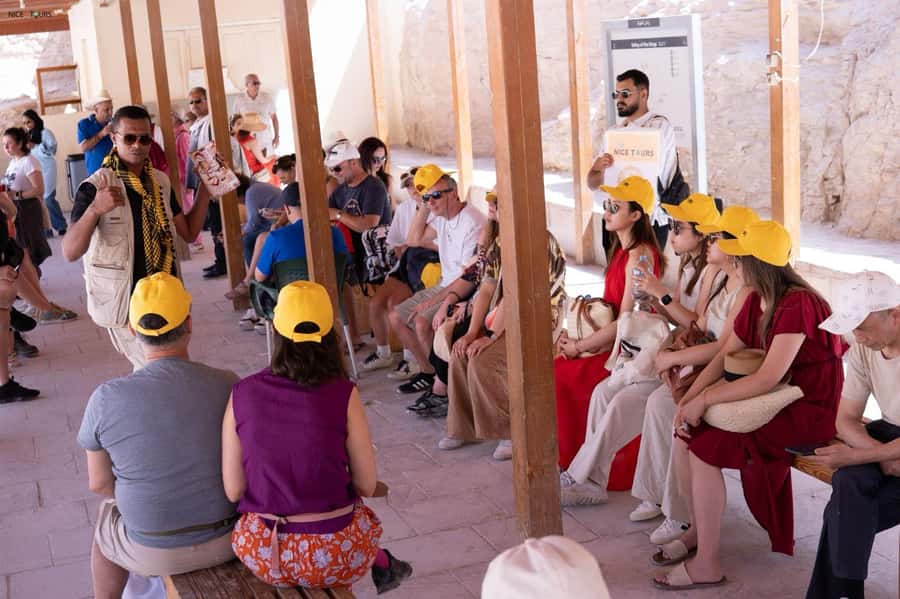
The Valley of the Kings is the heart of this kind of Luxor highlight trip. This is where you get the “royal burial” story in real stone: tombs of legendary pharaohs, guided explanations that help you connect names, time periods, and why these tombs mattered.
Your guide will talk through the significance of the tombs as you explore. That narrative layer is important, because the valley can look similar from one opening to another unless someone connects what you’re seeing to the bigger picture.
Here’s the key practical point: entry to the Valley of the Kings is included only if you choose the option that covers entrance fees. If you don’t, plan on paying separately. Don’t assume—verify your selection before the day.
There’s also an optional Tutankhamun Tomb add-on. If you love the famous names and want one extra ticketed highlight, this can be worth considering. If you’d rather keep the day moving and save energy for Hatshepsut, you can skip it and still get a full Valley experience.
Heat management matters here. People commonly report very hot weather during these tours, so wear sunscreen and plan for short walks between spots. The best strategy is to move when your guide calls you forward, then take your photos when there’s a moment—rather than trying to outwait the sun.
Temple of Hatshepsut: How to Read a Female Pharaoh in Stone
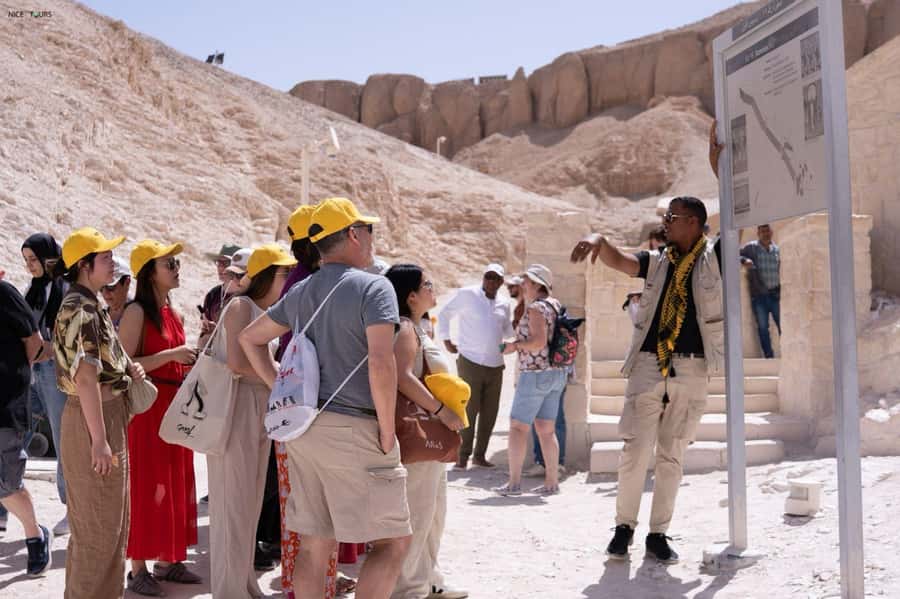
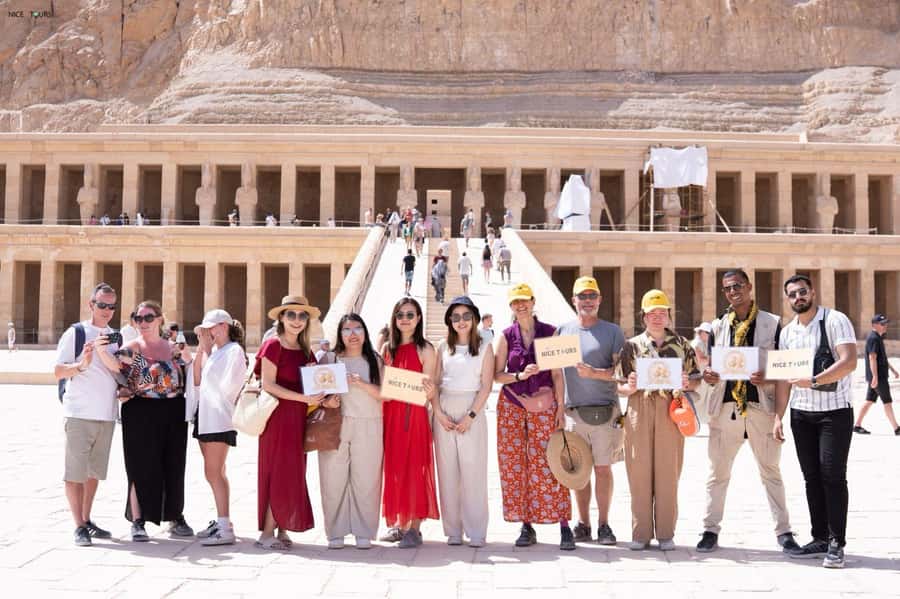
Then comes the Temple of Hatshepsut, a standout stop because it’s built for one of Egypt’s most famous rulers—a woman pharaoh. Even if you only know Hatshepsut’s name, the temple helps you understand why her reign is remembered.
In a day tour, Hatshepsut hits a sweet spot. It’s not just another ruin. The structures are visually strong and emotionally specific: you can feel the purpose behind the monument when you’re shown what to look for and how the temple’s design connects to her legacy.
What’s good about this stop late in the day: by now, you’ve already seen major temple scale at Karnak and the royal burial context at the Valley. Hatshepsut becomes the link between power, belief, and the way rulers wanted their story remembered.
A realistic note: like the other big sites, Hatshepsut can’t be studied like a full museum visit. You’ll be walking through, guided through the key parts, then moved along. If you’re hoping for deep time, you may want a separate guided session in Luxor—but for a day trip, it’s a strong finale.
Guide and Group Size: Why the Human Part Matters on This Route
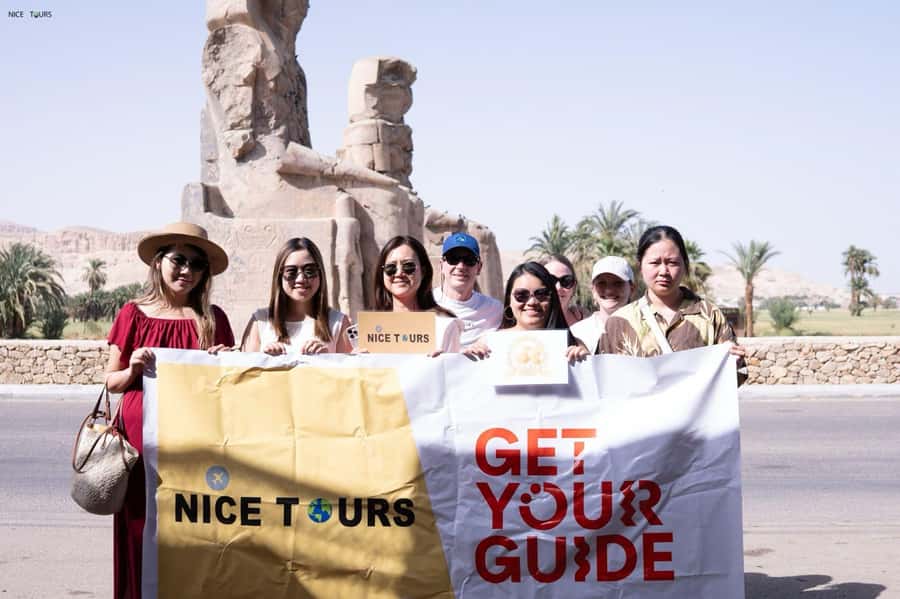
This tour’s real differentiator is the guide. Multiple named guides show up with a consistent style: clear explanations, humor, patience, and help with photos and pacing.
You’ll see examples of guides including Adam, Hamdy, Ahmed Bahaa, Aladdin, and Manal (among others). The common thread: people mention the day feeling fun, not just educational. A good guide also helps you avoid information overload. The goal isn’t to recite dates. It’s to give you the few anchor points that make the rest of the carvings click.
Group size helps too. If you’re in a small group—again, some bookings have been tiny—it’s easier to ask questions, to get a better photo angle, and to move together without feeling lost.
If you’re traveling with kids, this kind of guide attention can make a big difference. The day covers heavy material, so you’ll appreciate a guide who can keep things engaging without turning it into a lecture.
Price and Value: Does $105 Add Up for a Hurghada-to-Luxor Day?

At $105 per person, the value depends on which options you pick. Here’s the math of what you’re getting, based on the inclusions:
- Hotel pickup and drop-off in Hurghada by A/C minivan or bus
- Egyptologist guide
- Lunch in Luxor
- Snacks, soft drinks, and water
- Guided visits to major stops like Colossi of Memnon
- The big temple/tomb entries (Karnak, Valley of the Kings, Hatshepsut) can be included only if you choose the entrance-fees option
- Optional add-ons like the felucca ride and Tutankhamun Tomb depending on what you select
So, is it worth it? For a day trip that handles long-distance transport, paid guides, and meals, yes—especially if you don’t want to deal with independent planning across Luxor in a single day.
Where value can slip: if you don’t select the entrance-fees option and then end up paying multiple entries separately, your total cost rises. It’s still not necessarily a bad deal, but it changes the price equation.
My practical advice: pick your add-ons based on how you like to travel. If you want maximum Luxor highlights, add the entrance fees and consider the felucca. If you’d rather keep it simple, skip the extras and focus on the core guided stops.
Who Should Book This Day Trip (and Who Might Prefer More Time)
This tour is a great fit if you:
- Want the Luxor highlights without switching hotels or planning your own transportation
- Like guided storytelling that helps you understand what you’re seeing
- Are comfortable with a long day and the reality of heat in Egypt
It may be less ideal if you:
- Need lots of quiet time inside tombs with slow pacing
- Prefer flexible, unstructured wandering
- Plan to spend your vacation only “checking boxes” but with zero tolerance for time limits
For many people, though, the big advantage is simple: you’ll leave Luxor knowing the main sites well enough to talk about them later—and you’ll have done it from Hurghada without extra travel headaches.
Should You Book This Hurghada to Luxor Highlights Tour?
If you want an efficient, guided, small-group Luxor day with Karnak, Valley of the Kings, Colossi of Memnon, and Hatshepsut, I’d say yes—especially if you’ll choose the entrance-fees option and you’re open to an optional felucca reset. It’s not a slow-romantic Egypt trip. It’s a focused highlights day built for people who value clarity, good guiding, and real sightseeing time.
If you’re the kind of traveler who hates tight schedules, consider staying in Luxor for more than a day. But if your time is limited and you want the core monuments with context, this is a solid way to make one day count.
FAQ
How long is the Hurghada to Luxor tour?
The tour lasts 15 hours in total, with about 5 hours driving each way between Hurghada and Luxor.
What major sites are included in the day?
You’ll visit Karnak Temple, Colossi of Memnon, the Valley of the Kings, and the Temple of Hatshepsut, plus a local lunch in Luxor.
Is the felucca ride included?
The felucca ride is optional. It’s included only if you select the add-on.
Are entrance fees included for Karnak and the Valley of the Kings?
Entrance fees for Karnak Temple, the Valley of the Kings, and Hatshepsut are included only if you choose the option that includes entrance fees.
Is lunch included?
Yes. Lunch at a local restaurant in Luxor is included, but drinks at the restaurant are not included.
What languages are available for the live guide?
The live tour guide is available in Arabic, English, French, German, and Spanish.