REVIEW · TUNIS
Private Tour to Kairouan, El Jem & Monastir from Tunis_hammamet
Book on Viator →Operated by Didon tours · Bookable on Viator
Kairouan, El Jem, Monastir in one day. What makes this outing work is the hit parade of big-ticket monuments, especially the Great Mosque of Kairouan and the El Jem amphitheatre, paired with time to actually wander and look around. You’ll also get a full guided explanation at each stop, so you’re not just staring at stone.
The main thing to plan for is the day’s rhythm: this is an 8 to 10 hour route with a lot of transit between sites. Also, like many tours in busy tourist zones, shopping can pop up during the day, so if you’re not interested in buying anything, set that expectation early.
In This Review
- Key highlights at a glance
- How the day runs from Tunis or Hammamet
- Great Mosque of Kairouan: the oldest look in the Maghreb
- Medina free time: souks, Les Mekroudhs, and carpet craft
- El Jem amphitheatre: Roman scale you can feel
- Monastir’s Ribat: warrior monks, spiral steps, and sea views
- Price and what you truly get for $98.48
- Who this tour fits best, and what to watch for
- Should you book this Kairouan, El Jem & Monastir private day trip?
- FAQ
- How much does the Kairouan, El Jem & Monastir private tour cost?
- How long is the tour?
- Is hotel pickup offered?
- Which admissions are included?
- Is lunch included?
- Is this tour private for my group?
- What if I need to cancel or the weather is bad?
Key highlights at a glance
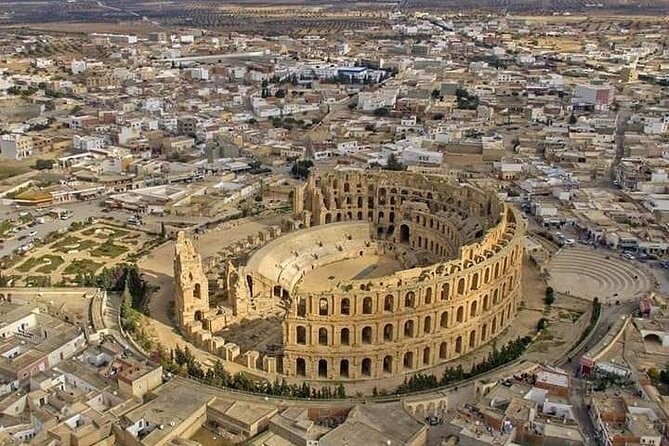
- Great Mosque of Kairouan in 670 AD detail, from the minaret to cedar-wood doors
- Medina time to roam the souks, plus chances to taste Les Mekroudhs
- El Jem amphitheatre as a major Roman arena, holding around 30,000 spectators
- Monastir’s Ribat of 796, with watchtower steps and sea-and-city views
- Entrance tickets included across all major stops, so you’re not paying on the fly
How the day runs from Tunis or Hammamet
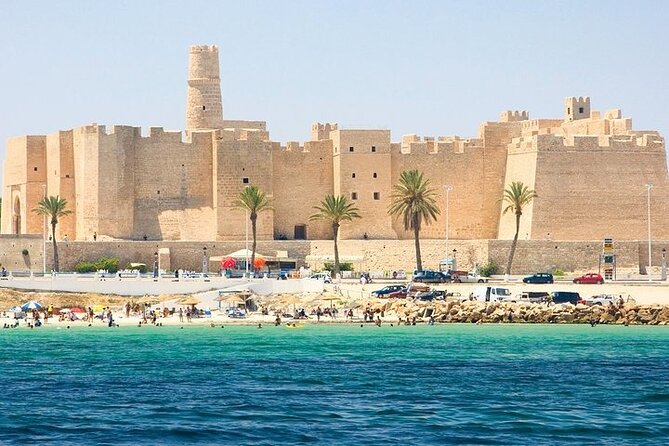
This is a long, classic day trip: plan on roughly 8 to 10 hours total, with several timed visits and travel time in between. That matters because Kairouan, El Jem, and Monastir aren’t next door to each other. One review also flagged that the driving time is real, and that the driver’s skill affects how comfortable the day feels.
The upside of this format is simple: you get three very different “chapters” of Tunisia in one go. You start with the spiritual centerpiece of Kairouan, move into Roman spectacle at El Jem, and finish in Monastir at a fort-like complex that reflects the early Islamic period along the coast. It’s the sort of day that helps you understand the country’s layers without needing multiple bookings.
Because there’s no included lunch, you’ll want to treat meals as your own planning slot. The tour includes paid access to the key sights, so you can spend your energy on exploring instead of thinking about tickets.
Great Mosque of Kairouan: the oldest look in the Maghreb
The Great Mosque is the reason Kairouan sits high on Tunisia’s must-see list. The main idea here is not just that it’s impressive, but that it’s historically foundational: it was built in 670 and is described as the oldest religious building in the Muslim West. The tour’s guided time focuses on the features you’re most likely to notice even without a background in architecture.
I like how the visit is framed around tangible details: the imposing minaret, a large courtyard ringed by arcades, and a sundial that’s part of the courtyard design. You’ll also hear about richly carved cedar wood doors and see how the prayer rooms open off from the courtyard space. The architecture is often described as fortress-like, which helps you picture why later mosques across the region took inspiration from this style.
A practical tip: since this stop is timed to around 40 minutes, arrive ready to look closely. If you rush, you miss the little stuff (columns, doorwork, the courtyard layout). If you take your time, you’ll leave with a clear sense of why this mosque became a symbol and not just a landmark.
Medina free time: souks, Les Mekroudhs, and carpet craft
After the mosque, you get dedicated time to step into the medina of Kairouan, and that’s one of the best parts of the day. A guided tour can explain everything, but medina time is where you start noticing how locals actually live around historic spaces.
You’ll spend about 30 minutes in the medina, with a chance to browse the souks and pick up on crafts. Two details stand out from what’s described for this stop: you can look for artisanal carpet making, and you have the chance to try Les Mekroudhs, the Kairouan pastry often associated with this area.
This is also the point where shopping expectations can shape your day. There was at least one unhappy experience tied to a carpet-shopping stop that didn’t match what the customer expected. I don’t think that means you’ll face problems every time, but it does mean you should travel with a simple plan: if you’re not buying, say so early; if you are buying, don’t feel pressured and treat it like a real purchase, not a casual souvenir moment.
If you do want to buy something, keep your expectations grounded in what you can verify in person. A medina is a great place to browse, even if you come home empty-handed.
El Jem amphitheatre: Roman scale you can feel
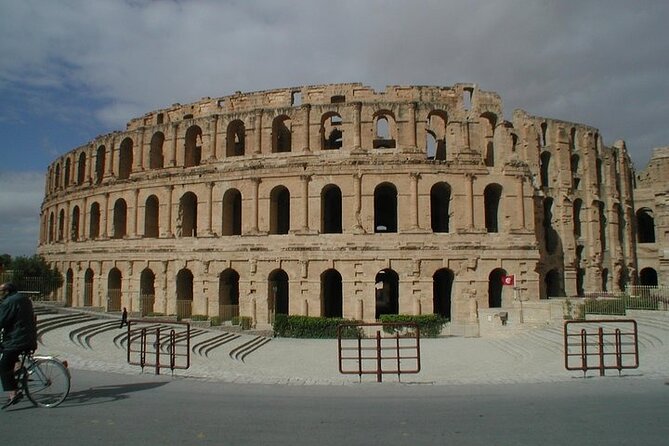
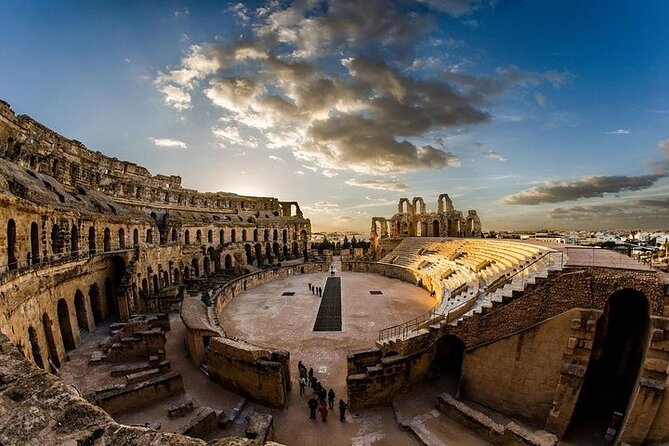
El Jem is the day’s big shock of contrast, and it’s often the single stop people remember most. You’re visiting the Roman amphitheatre, founded in the 3rd century AD, and it’s been recognized as a World Heritage Site since 1972. The tour’s timing gives you about 40 minutes, which is usually enough to understand what you’re looking at and still have time for photos.
What makes this amphitheatre stand out is both size and context. It can accommodate around 30,000 spectators, which puts it among the largest Roman arenas, described as third in the Roman world by size after Rome and Capua. The tour also highlights its underground structures, and those are important because they change how you imagine the building working. It wasn’t just a stadium shell; it included backstage-like spaces that supported the show.
If you love Roman engineering, you’ll likely enjoy how the structure is explained in a way that connects the visible seating areas to the hidden workings below. If you’re less into architecture, the straightforward takeaway still lands: this is a major Roman monument that survived in North Africa, and the scale feels bigger than you might expect from pictures.
In practical terms, give yourself permission to slow down here. Even within a 40-minute visit, you’ll get more out of El Jem if you pause and take in the overall shape rather than rushing to individual sections.
Monastir’s Ribat: warrior monks, spiral steps, and sea views
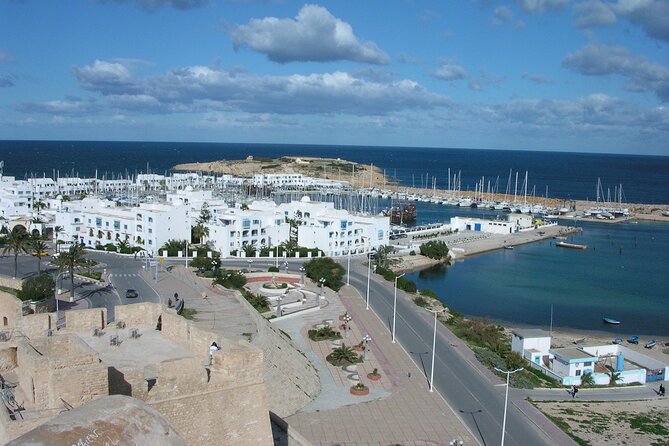
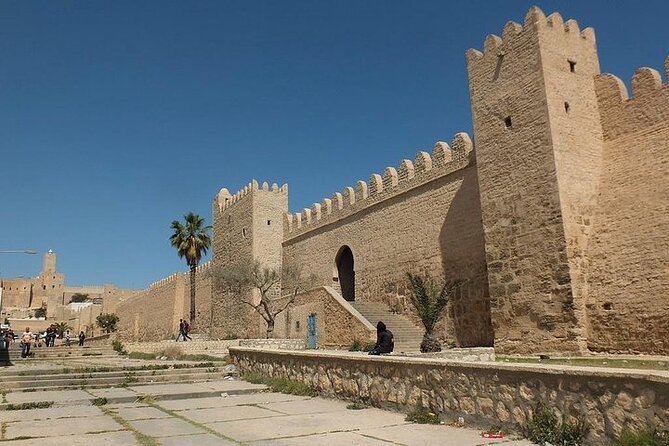
The finale at Monastir is at the Ribat, an early Islamic defensive site with a strong sense of place. The description you get is very specific about its age and purpose: it was founded in 796, built along the Maghreb coast by Arab conquerors, and designed as fortification.
The tour explains the site’s layout: originally quadrilateral, with four main buildings around two interior courtyards. There’s also a story component tied to the community that lived and worked there. The Ribat housed “warrior monks” who took care of military functions while dedicating themselves to prayer and contemplation. You’ll also hear about two prayer rooms and how the larger one is used to display rare collectibles of worship and medieval crafts.
Then there’s the watchtower. The tour notes 100 spiral steps to reach the top, where luminous messages were exchanged at night with nearby ribats. Standing up there, you’re looking at the city of Monastir and the sea, which gives the monument a practical meaning beyond the walls.
This stop is timed to about 40 minutes, so the watchtower portion matters. If you have mobility limits, consider how much stair climbing you can comfortably handle. The site is historic and meaningful, but it’s also physically active.
Price and what you truly get for $98.48
At $98.48 per person, this tour isn’t cheap compared to DIY plans, but it’s also not just a “ride to sites” deal. The value is in what’s included:
- a certified professional tourist guide
- air-conditioned vehicle
- entrance included for the Great Mosque of Kairouan, the Medina area, El Jem amphitheatre, the Ribat of Monastir, and the Aghlabid basins
- GST included
- a mobile ticket
- pickup offered
Lunch isn’t included, so you’ll pay for food separately. But you avoid paying entrance fees while you’re out, and that’s where day trips often get more expensive than they look at first glance.
One more practical detail: this is structured as a private tour, meaning it’s for your group only. That typically helps you move at a pace that fits you, not a schedule built for strangers. Reviews also praise punctual pickup and a caring, organized approach from guides and drivers, which can matter a lot on a day where you’re crisscrossing between three major sites.
Who this tour fits best, and what to watch for
This works especially well if you want a structured day without losing time to logistics. It’s a good match for people who don’t want to research bus routes, hunt down ticket counters, or coordinate timing across Kairouan, El Jem, and Monastir.
It also suits visitors who want cultural context, not just photo stops. In the guide feedback, the most repeated praise is that guides are friendly and the day runs smoothly. Names mentioned for strong guiding experiences include Yaya, Kimos, Caulios, Ahmed, Bilel, Bilal, Chaouki, Beligh, and Balagh, with multiple notes about professional organization and clear explanations.
That said, two considerations are worth respecting:
- The long day: you’ll spend real time in the car between far-apart points. If you easily get tired on road trips, go into it with patience.
- Shopping pressure: at least one negative story involved being taken to a carpet store that the customer felt was not what was promised. If you don’t want to buy, say so early. If you do want to buy, don’t let urgency push you into a bad decision.
Should you book this Kairouan, El Jem & Monastir private day trip?
Book it if your ideal Tunisia day looks like this: one spiritual icon, one Roman arena, and one early Islamic coastal fort—plus real time to wander a medina. The entrance tickets included plus the guided explanations make it a solid value for a full-day route.
Skip it (or ask hard questions first) if you hate long driving days, need a lot of unstructured time, or plan to buy crafts and textiles and want total control over shopping stops. Also, because the experience requires good weather, keep an eye on the forecast and be ready for rescheduling if conditions are poor.
If you fit the first group, you’ll likely feel like you checked the right boxes efficiently—without turning it into a rushed scavenger hunt.
FAQ
How much does the Kairouan, El Jem & Monastir private tour cost?
The price is listed as $98.48 per person.
How long is the tour?
The duration is approximately 8 to 10 hours.
Is hotel pickup offered?
Yes, pickup is offered, and the tour is presented as starting from the Tunis/Hammamet area.
Which admissions are included?
Entrance tickets are included for the Great Mosque of Kairouan, the Medina of Kairouan, the Amphitheatre of El Jem, the Forte El Ribat (Ribat of Monastir), and the Aghlabid basins.
Is lunch included?
No, lunch is not included.
Is this tour private for my group?
Yes. It’s described as a private tour/activity, meaning only your group participates.
What if I need to cancel or the weather is bad?
You can cancel for a full refund up to 24 hours in advance. The experience requires good weather, and if it’s canceled due to poor weather, you’ll be offered a different date or a full refund.