
REVIEW · DUBAI
Dubai Aladdin Tour: Souks, Creek, Old Dubai and Tastings
Book on Viator →Operated by Mohamed Mawla Tourism LLC · Bookable on Viator
Old Dubai hits different with a guide. This 3-hour Aladdin-style walk strings together the city’s older neighborhoods, from Souk Al Seef to the Creek and Al Fahidi, with tastings and an abra water-taxi ride that links Bur Dubai to Deira.
I love the haggling help in the markets, because you’ll get real advice on what to pay and how to negotiate without losing the fun. I also like the Dubai Museum stop inside Al Fahidi Fort (built in the 1780s), which gives you context before you start shopping and snacking.
One heads-up: the food portion is more snack-sized than a full meal, and in the heat you’ll feel every minute—so bring water and dress for walking.
In This Review
- Key points that make this tour worth your time
- A 3-hour Old Dubai Aladdin walk: how the timing really works
- Souk Al Seef: a fast way to see old-style streets and Creek views
- Al Seef to the Creek: why the waterfront matters
- Al Fahidi Historical Neighborhood: wind tunnels, narrow lanes, and classic courtyard life
- Dubai Museum inside Al Fahidi Fort: the oldest fort stop on your route
- The Old Souk and bargaining practice: shopping skills without the guesswork
- Abra crossing at Bur Dubai to Deira: the short ride that seals the day
- Spice Souk tastings and shopping help: what you can do with a guide
- Gold Souk finish: romantic shopping and easy photo time
- World of Illusions photo moment: a quick picture stop
- Price and value: $21 for admissions, crossing, and a guided pace
- Heat, expectations, and one smart way to enjoy it
- Who should book this tour, and who should skip it
- Should you book the Dubai Aladdin Tour with Souks, Creek, Old Dubai, and tastings?
- FAQ
- How long is the Dubai Aladdin Tour?
- Is hotel pickup offered?
- How many people are in a group?
- What does the tour include during tastings?
- Where does the tour end?
- Are admissions included?
Key points that make this tour worth your time
- Small group size (max 15) keeps things moving and easier for questions.
- Abra boat crossing is short, but it’s one of the best ways to connect Old Dubai’s neighborhoods.
- Al Fahidi wind-tower lanes and traditional homes give you the classic look and feel fast.
- Dubai Museum in the oldest fort helps you understand what you’re seeing.
- Souk stops + tastings make it easier to plan your day without doing the homework.
A 3-hour Old Dubai Aladdin walk: how the timing really works
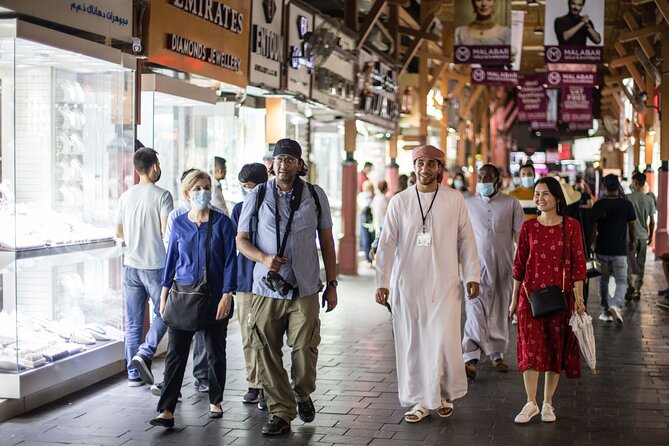
This is designed as a compact, guided sampler of “real old Dubai.” You start near the Creek, then walk in a steady rhythm through heritage areas and markets, with quick stops for photos, a museum visit, and tastings along the way.
It runs about 3 hours, and that matters because Old Dubai can be intense in the midday sun. The tour uses short legs and regular breaks, and you’ll often find stops inside air-conditioned buildings or shaded areas, which makes the heat more manageable.
Your guide also keeps the day from turning into guesswork. A good example: guides like Hamza, Hamsa, and Seef show up in the guide mix, and the common theme is clear explanations plus humor, with lots of room for questions.
You can also read our reviews of more tours and experiences in Dubai.



Souk Al Seef: a fast way to see old-style streets and Creek views
You begin at Souk Al Seef, a 1.8 km heritage promenade that’s very much built to recreate the feel of older Dubai. It’s part heritage zone, part shopping and food area, so you’ll get that “Aladdin” set-piece atmosphere quickly instead of spending hours hunting for the right streets.
It’s also one of the best places on this route for Creek photos. The views from here give you a sense of the geography—where the water runs, and why people built whole communities around it.
The practical upside: admission is included, and the stop is about 30 minutes, so you get value without turning it into a half-day detour. The only downside is that this area is more curated than the older lanes you’ll see later in Al Fahidi.
Al Seef to the Creek: why the waterfront matters
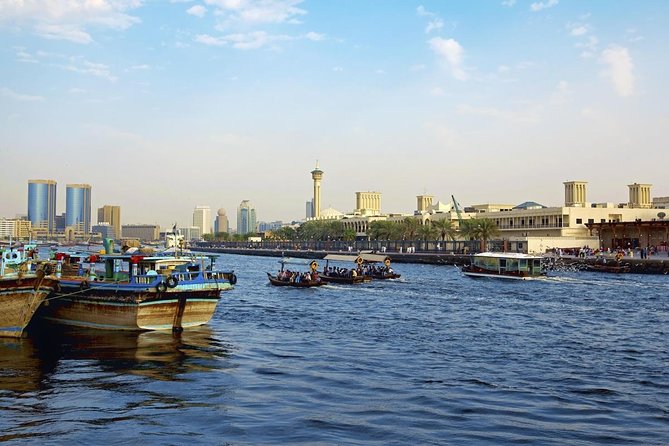
After Souk Al Seef, you’ll walk along Dubai Creek, the waterway that historically shaped trade and daily life. This is the area that splits neighborhoods—Deira to one side and Bur Dubai to the other—so even a short stroll helps you understand the city’s layout.
You’re not just staring at water. You’re learning why the abra (the local water taxi) is still such a big deal: it’s a fast, old-school crossing that people would recognize instantly.
The tour keeps this segment short (about 15 minutes), but it’s long enough to reset your bearings before the more maze-like parts of the walk.
Al Fahidi Historical Neighborhood: wind tunnels, narrow lanes, and classic courtyard life
Next comes Al Fahidi Historical Neighborhood, and this stop is one of the most meaningful parts of the route. You’ll see traditional architecture, narrow lanes, and the kind of old-fashioned design that still feels practical—especially the wind-tunnel features that help cool homes in hot weather.
The walking here is the point. You get a contrast to the newer parts of Dubai, and even when you’re just moving through little alleys and cultural spaces, you start to feel how daily life worked before the skyscrapers took over the skyline.
This is also where your guide’s storytelling matters. If you end up with someone like Hamza or Seef, you’ll likely get a calmer, more explanatory pace rather than a rush through photo spots. Either way, you’ll want comfortable shoes because the lanes can be a bit uneven.
Dubai Museum inside Al Fahidi Fort: the oldest fort stop on your route
The Dubai Museum visit is short (about 30 minutes), but it’s packed with context. It’s set in Al Fahidi Fort, described as Dubai’s oldest building, standing since the 1780s when it was built as a fortress.
Why this is a smart stop: you’re going to markets right after. When you understand trade, settlement, and the city’s transformation, the souks make more sense. You’re not shopping in a vacuum—you’re shopping in a place tied to the way Dubai grew.
If you’re a serious museum fan, 30 minutes may feel like a teaser. But if you want a quick “why this matters” foundation while staying on schedule, it’s a strong use of time.




The Old Souk and bargaining practice: shopping skills without the guesswork
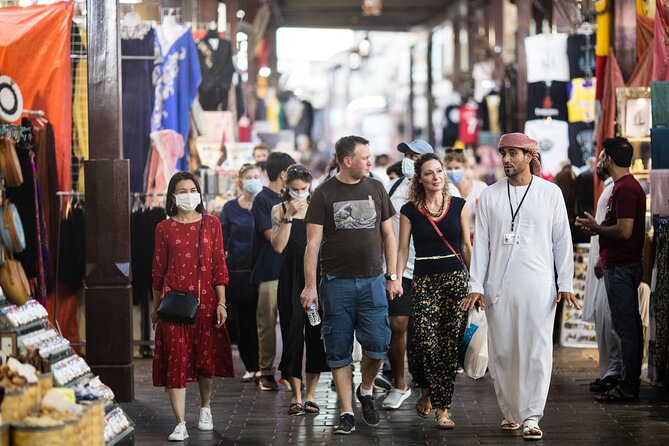
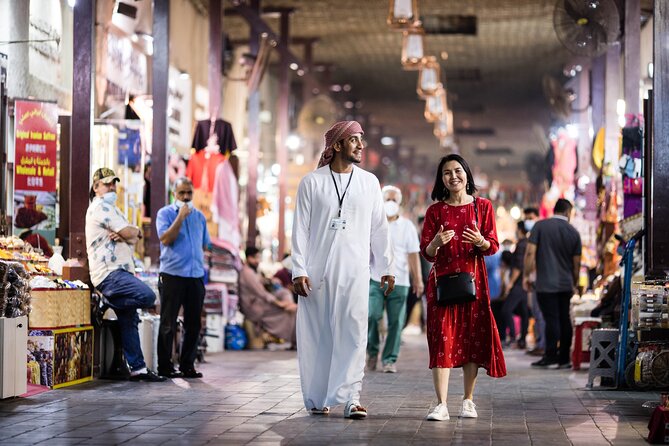
Now you hit the markets, and the tour leans into one of Dubai’s most tourist-reliable skills: bargaining. The Old Souk stop is about 30 minutes, and your guide helps you practice negotiation so you’re not just reacting to prices.
This is also where the “Aladdin” feeling becomes real. Textiles, shawls, local snacks, and the overall market rhythm can be fun and loud at the same time. Your guide’s tips help you decide what looks worth the money and what doesn’t.
A realistic consideration: in any souk, you’ll see lots of shops selling similar goods, and you may feel like some sales pressure exists. If you’re expecting small artisan workshops only, you might find it more merchant-focused than workshop-focused. The value here is that you learn how to shop smart and not overpay just because something looks pretty.
Abra crossing at Bur Dubai to Deira: the short ride that seals the day
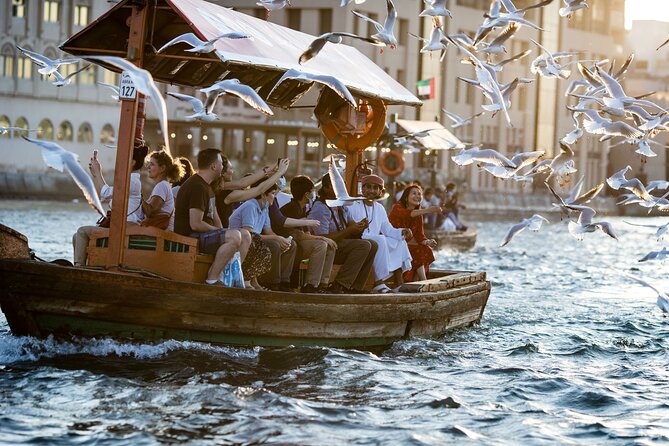
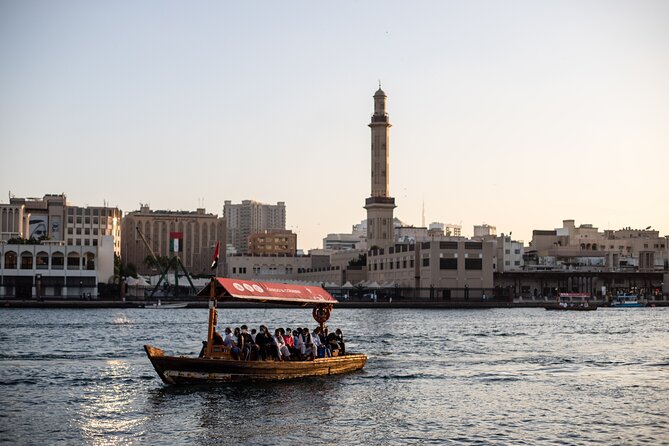
This part is easy to overlook, but it’s a highlight for a reason. You’ll head to the Bur Dubai abra dock and cross the Creek by traditional water taxi. The tour emphasizes that the crossing is just for your group, which keeps the experience from turning into a chaotic public-boat scramble.
The ride itself is brief, but the payoff is big: you get an “Old Dubai in motion” moment. The sound and the water-level perspective make the city feel smaller and more human than the malls and towers.
You also reset the route. Once you’re across, you’re positioned to hit the Deira-side souks where spices and gold take center stage.
Spice Souk tastings and shopping help: what you can do with a guide
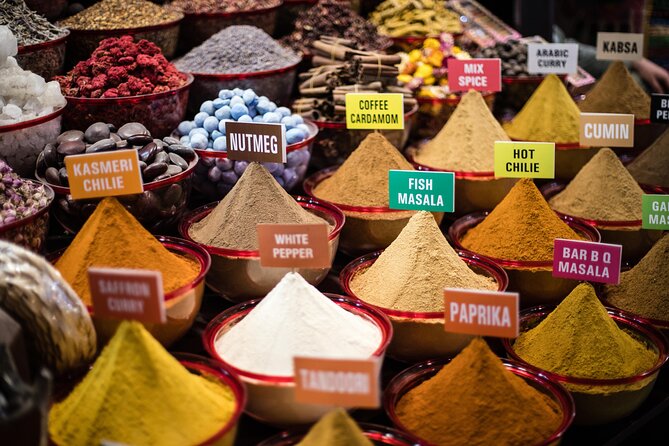
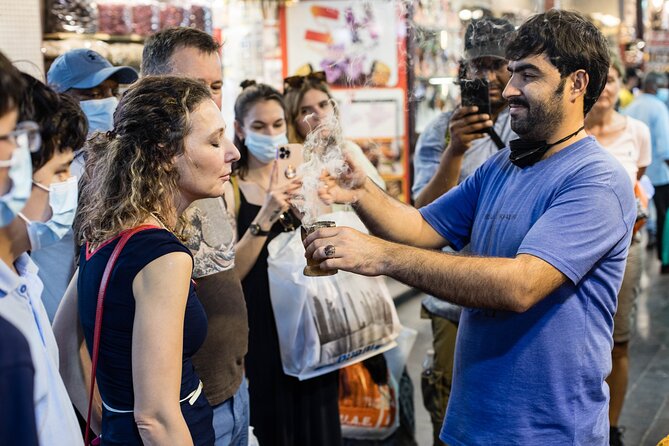
Deira’s Spice Souk is next, and the guide’s role here is especially useful. You’ll explore with less hassle from merchants and learn what the spices are, how they’re used, and how to shop without getting bulldozed.
This stop is about 30 minutes, and it includes a food tasting in the Spice Souk area. Expect samples like tea, coffee, dates, chocolate, and street-food-style bites during the overall tour, with additional tastings tied to the Spice Souk.
Now the balanced part: some people expect a full “food tour” style feast. In practice, these are tastings and snacks more than a long meal. If your main goal is a heavy traditional lunch, you might leave wanting more. If your goal is to sample and learn, it works well.
Gold Souk finish: romantic shopping and easy photo time
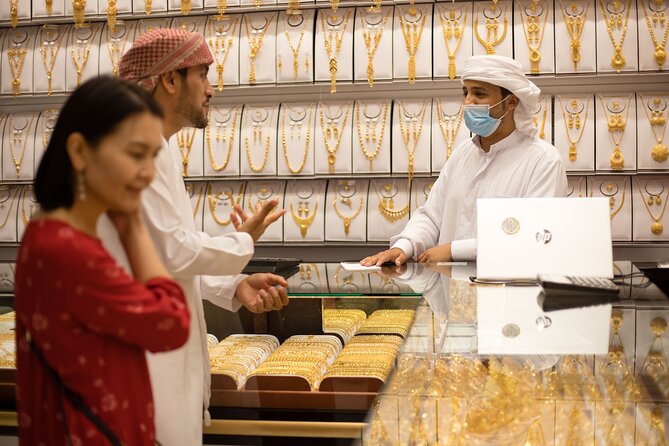
The tour ends at the Gold Souk in Deira, right at the “what do we buy” zone. The finishing point is intentional: it’s where you can browse hundreds of jewelry-focused stores, including silver and precious stones.
Your guide sets you up for the shopping vibe, and you can choose what you actually want to buy. Even if you don’t plan to spend, it’s a fun place for photos and window-shopping, especially after you’ve already built context in the older neighborhoods.
The tour can also end with a practical drop: you’ll be finished at the Gold Souk area, and you can be directed toward the metro station or taxi stop depending on what’s easiest for you.
World of Illusions photo moment: a quick picture stop
There’s also a quick stop called World of Illusions, flagged as a cool photo opportunity. It’s brief, but it gives you a fun visual break from the historic streets and market intensity.
Think of it as the “capture the day” moment. It’s not the core of the tour’s meaning, but it can add a lot of memories for your camera roll.
Price and value: $21 for admissions, crossing, and a guided pace
At about $21 per person for roughly 3 hours, this is priced like a budget-friendly Old Dubai sampler. For that money, you’re not just paying for walking. You’re getting included admissions at stops like Souk Al Seef and Dubai Museum, plus tastings and the abra crossing experience.
It’s also built around small-group comfort (maximum 15 travelers), which matters in places like souks where too many people can make negotiation and explanations awkward.
A note on demand: it’s commonly booked about 24 days in advance, so if your dates are firm, don’t wait until the last moment.
Heat, expectations, and one smart way to enjoy it
Old Dubai in the afternoon can be brutal. One review mentioned 40-degree heat, and that tracks with what you’ll experience in summer months. Wear breathable clothes, use sunscreen, and keep water close even if you’re provided drinks during the tour.
Set your expectations on food too. You’ll get tastings, often including coffee, tea, dates, chocolate, and street-food-style snacks. But if you’re imagining a full sit-down meal with multiple major dishes, you may feel shorted.
Finally, go with a market mindset. Some of the best moments happen when you treat this like a guided “shopping + culture practice,” not a quiet museum day. If you want browsing with zero pressure, plan to say no firmly and move on when you’re ready.
Who should book this tour, and who should skip it
This tour is a great fit if you want:
- A guided route through old neighborhoods without getting lost
- A Creek crossing that’s fast and feels traditional
- Market tips for bargaining so you don’t overpay
- Context before shopping, via the Dubai Museum stop
You might skip it if:
- You want a deeper museum experience that takes hours
- You’re mainly chasing a big, full meal food tour
- You prefer self-guided wandering with total freedom and no structured timing
If you like having a friendly guide steer you through tight spaces—especially with names like Hamza or Hamsa in the mix—this kind of pacing usually clicks.
Should you book the Dubai Aladdin Tour with Souks, Creek, Old Dubai, and tastings?
If your priority is seeing the core pieces of Old Dubai in one easy half-day, I’d book it. The combination of Souk Al Seef, Al Fahidi lanes, the Dubai Museum fort, a traditional abra crossing, and two major market stops is a lot to squeeze into only 3 hours—exactly the kind of time-saving you want on a first trip.
If you’re unsure, use this rule: book it if you want guidance and quick context. Pass if you want a long, food-heavy plan or hours in a museum. Either way, bring water, plan for warm weather, and treat the souks as a fun skill-building experience.
FAQ
How long is the Dubai Aladdin Tour?
It’s about 3 hours.
Is hotel pickup offered?
Pickup is offered. The tour starts at Al Seef Heritage Hotel Dubai, Curio Collection by Hilton, and meeting is near the Dubai Creek area.
How many people are in a group?
The group is small, with a maximum of 15 travelers.
What does the tour include during tastings?
During the walk you’ll sample several tastings such as tea, coffee, dates, chocolate, and street food. Tastings are also included in the Spice Souk portion.
Where does the tour end?
The tour ends at the Dubai Gold Souk in Deira. You can be dropped near the metro station or a taxi stop when it finishes.
Are admissions included?
Admission tickets are included for stops such as Souk Al Seef and Dubai Museum & Al Fahidi Fort.