REVIEW · MARRAKESH
Marrakech: Jemma El Fnaa Food Tour with Dinner
Book on GetYourGuide →Operated by Intrepid Urban Adventures - Europe · Bookable on GetYourGuide
Food leads the way through Marrakech.
This evening walk turns Jemaa el-Fnaa into a living food lesson, from shop stops in the Medina to a sit-down meal back at the square. I love how the guide connects what you eat to where it comes from, and I love the variety of bites, from olives and nuts to pastries and breads that you’d never pick on your own. One thing to consider: the streets and the square get crowded and loud, so if you hate bustle and squeezing through Medina lanes, plan to lean on your guide and take it slow.
For about 3.5 hours, you’ll move at a comfortable walking pace while the night air cools things down just enough to snack without rushing. The route is built for seeing how people actually shop, trade, and eat after work, not just for ticking boxes. If you’re planning your first night in Marrakech, this kind of structure can help you get your bearings fast.
Value-wise, at $46 per person you’re not just paying for dinner. You’re paying for guided access to the right stalls, plus 3 tastings and a proper Moroccan dinner, which is a fair deal when you’re staying in the Medina and you’d likely spend similar money nibbling around anyway. It’s also a small group (max 12) or you can book it private, which makes a difference when you’re navigating crowds.
In This Review
- Key highlights worth showing up for
- Why Jemaa el-Fnaa is the best starting line for dinner
- Souks and street snacks: olives, nuts, pastries, and bread
- The spice market: the flavors have jobs, not just tastes
- Sliding through Riad Zitoun Jdid and the Mellah
- Dinner at Chez Lamine Hadj Mustapha: eat in the middle of the story
- Guides make or break Medina navigation (and yours can be a character)
- Price and value: what $46 buys you in real terms
- Dietary fit and what to tell your guide before you start
- Who this Marrakech food tour suits best
- Should you book this Jemaa el-Fnaa food tour?
- FAQ
- How long is the Marrakech Jemma El Fnaa food tour with dinner?
- Where does the tour start and end?
- What’s included in the price?
- Is this a small group tour?
- Can the tour accommodate vegetarians or vegans?
- Will it work for someone with gluten intolerance?
- What should I wear and bring?
- Is the tour child-friendly?
- Is it easy to cancel or change plans?
Key highlights worth showing up for
- Jemaa el-Fnaa food culture: trade history you can feel, not just read about
- Spice market sensory education: you’ll learn the purpose behind flavors like saffron and cumin
- Souk-to-square pacing: you eat in stages, so you’re not overwhelmed all at once
- Dinner in the UNESCO square area: a meal with the Medina’s energy all around you
- Small-group attention: your guide can help keep the route smooth and questions answered
Why Jemaa el-Fnaa is the best starting line for dinner
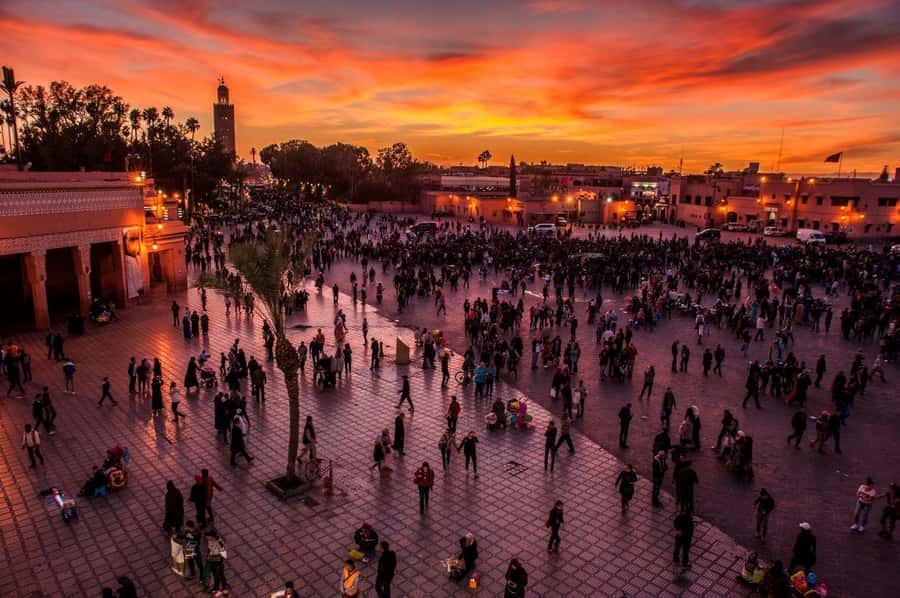
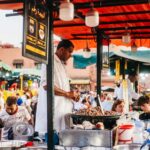
Jemaa el-Fnaa isn’t just a famous plaza. At dusk it becomes the stage where Marrakchis swap stories, set up shop, and feed families—day and night, trade and performance side by side. Starting here means you’re oriented immediately. You see what people mean when they describe Marrakech as a place of constant movement, food smells, and fast talk.
The main reason I like this start is practical. When you begin at the square, the later turns into the side streets make sense. You’re not wandering blind in the Medina. You’re learning a map by taste and conversation—snack first, context second.
And yes, you’ll notice the usual square characters—snakes and monkeys are part of the scene. Your guide’s job is to help you stay calm and keep your distance while you focus on the food and the stories.
You can also read our reviews of more tours and experiences in Marrakesh.


Souks and street snacks: olives, nuts, pastries, and bread
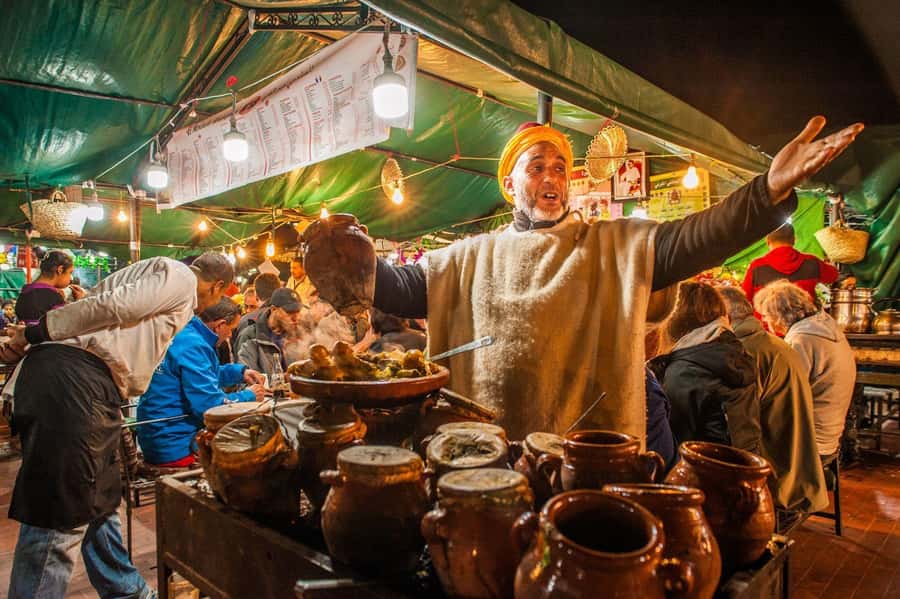
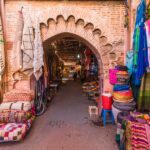
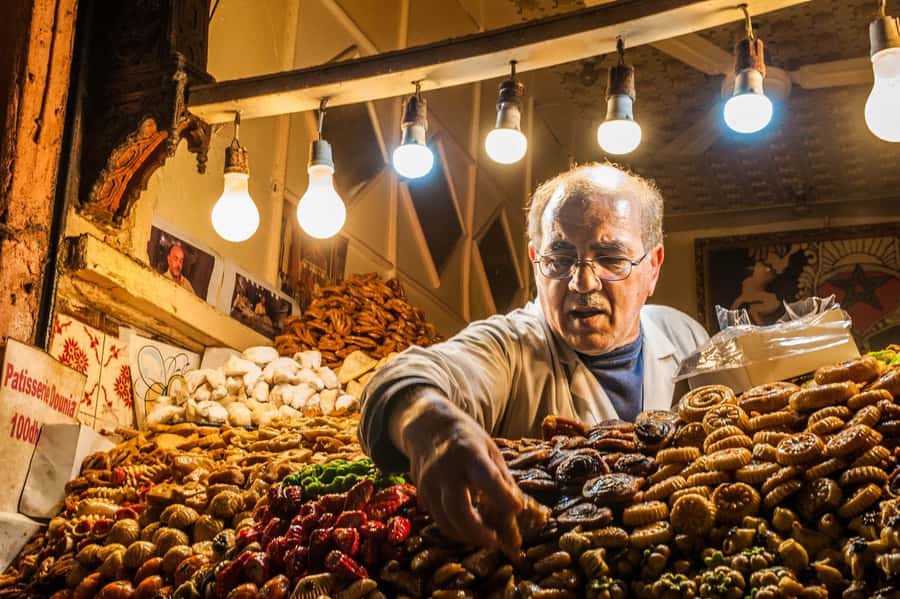
The tour’s “fuel stop” phase is where Marrakech really hooks people. You’ll drift off from Jemaa el-Fnaa into narrow lanes where small local shops sell the kinds of ingredients that make Moroccan cooking taste like Moroccan cooking.
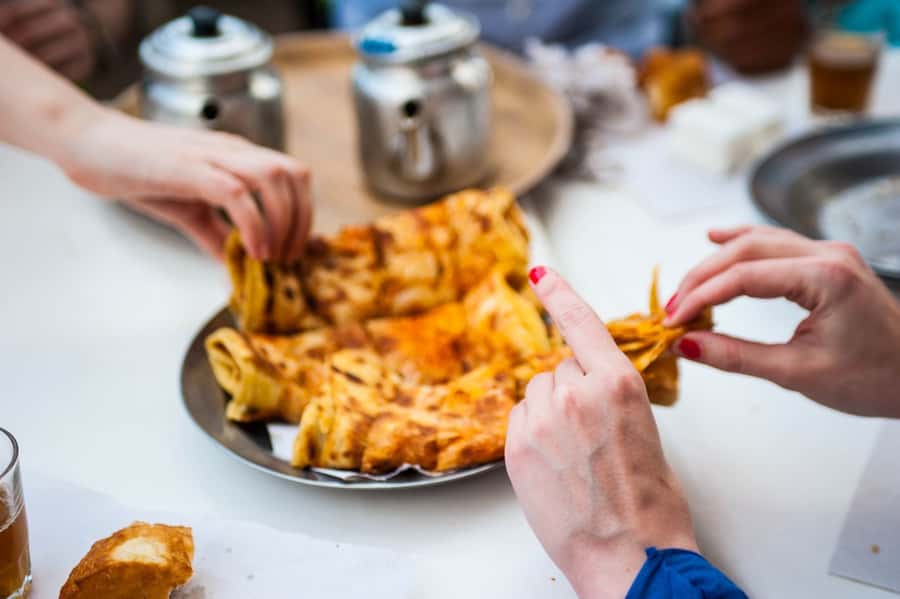
Here’s what you can count on sampling as part of the included tastings: versions of olives, dried fruits, nuts, and Moroccan pastries. The point isn’t only the flavor. The point is pattern recognition—how one ingredient shows up in different forms depending on taste, season, and household preference.
A big plus is that you’re not just handed a random plate. Your guide explains what matters: how olives can be prepared in different ways, what to look for in dried fruit and nuts, and why breads and pastries are everywhere in daily life. That makes the souvenirs you might buy later feel less like an impulse and more like something you actually understand.
One consideration: this is a food tour that may include unusual animal-offal style items as part of the broader street food culture (for example, cow hoof or sheep’s head have come up on past menus). If you know ahead of time that you prefer to avoid those, tell your guide early so they can steer your tastings accordingly.
The spice market: the flavors have jobs, not just tastes
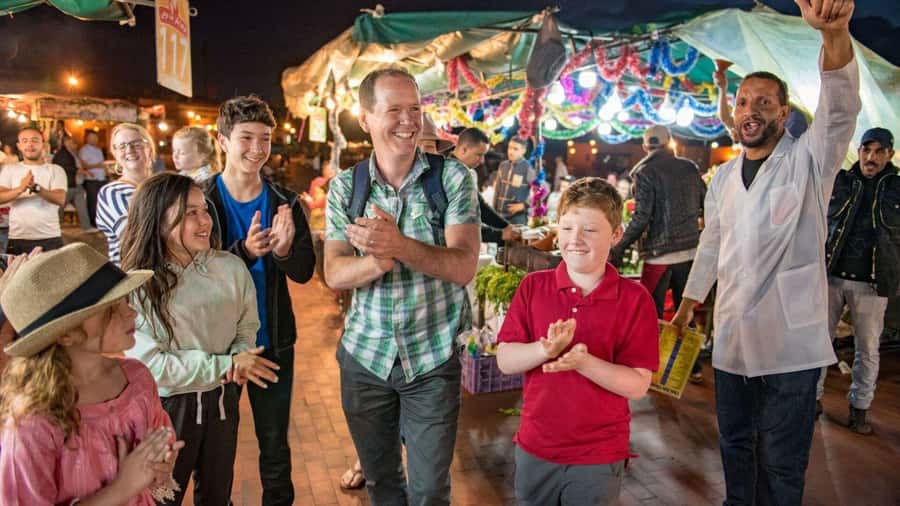
After you’ve had a few bites, the tour shifts into aroma mode at the spice market. This is where the tour stops feeling like a snack run and starts feeling like food education with your hands in it.
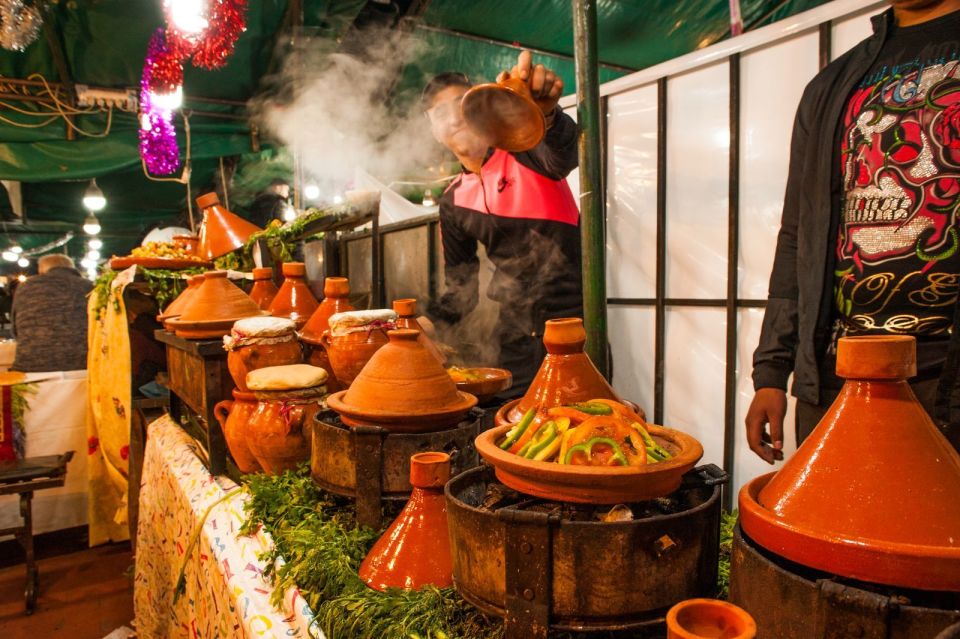
You’ll pass stalls perfumed with spices like cumin, saffron, ginger, pepper, and turmeric. Then you learn what each spice does in Moroccan cooking—whether it’s warmth, color, fragrance, or depth. It’s a simple lesson, but it changes how you order later in restaurants. Suddenly you can explain to yourself why one tagine tastes more fragrant than another.
If you’ve ever left a Moroccan meal thinking it was delicious but not being able to name why, this is the part that helps. You’ll come away with vocabulary you can actually use.
Sliding through Riad Zitoun Jdid and the Mellah
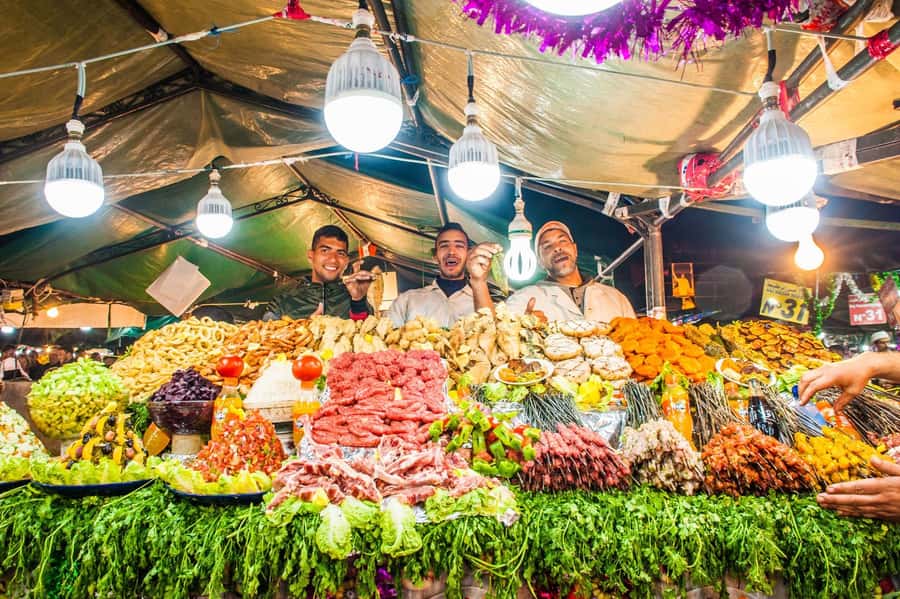
The walk also includes stops in neighborhoods listed on the route such as Riad Zitoun Jdid and the Mellah. These areas add context to the food you’re eating. Marrakech doesn’t run on one culture or one tradition; it’s layered, and the Medina reflects that.
What I like about visiting these areas with a guide is the everyday scale of it. You’re not trying to photograph a landmark. You’re seeing how life is organized around trade—where people buy, where food moves, where kitchens and shops connect.
The Mellah, in particular, is one of those places where food culture and community history overlap. Even when you’re focused on tastings, you’ll understand why certain foods, vendors, and traditions show up the way they do.
Dinner at Chez Lamine Hadj Mustapha: eat in the middle of the story
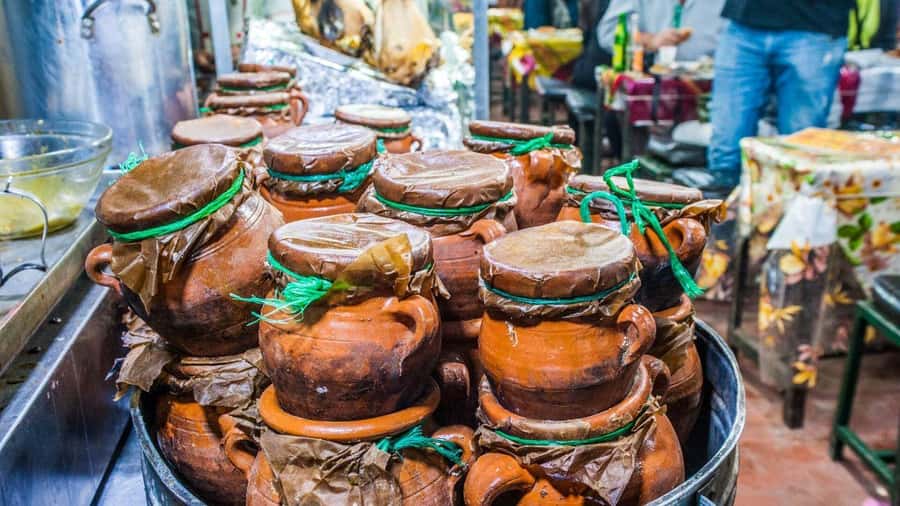
The tour’s final anchor is Moroccan dinner at a local restaurant connected to Chez Lamine Hadj Mustapha in the Jemaa el-Fnaa area. This part matters because you’re not only sampling. You’re resetting your appetite and then eating a proper meal in the same environment that shaped the snacks.
From past experiences on this tour, I’ve seen guides bring groups to try dishes like tangia (often slow-cooked and famous in Marrakech), harira soup with sides, and other classic Moroccan preparations. You may also encounter lamb dishes such as sheep-based tagine depending on the day’s menu.
Two practical tips help here:
- If you can, eat light earlier in your day. The tour is designed to feed you in stages.
- Bring patience for the atmosphere. The square area can be noisy and chaotic, but dinner is also when you get to sit down and slow the whole Medina down for a moment.
Your guide will also help you manage the moment when you’re tempted to snack past the included items. Extra food can be easy to justify when everything smells good. Stick with the tour plan unless you truly want more.



Guides make or break Medina navigation (and yours can be a character)
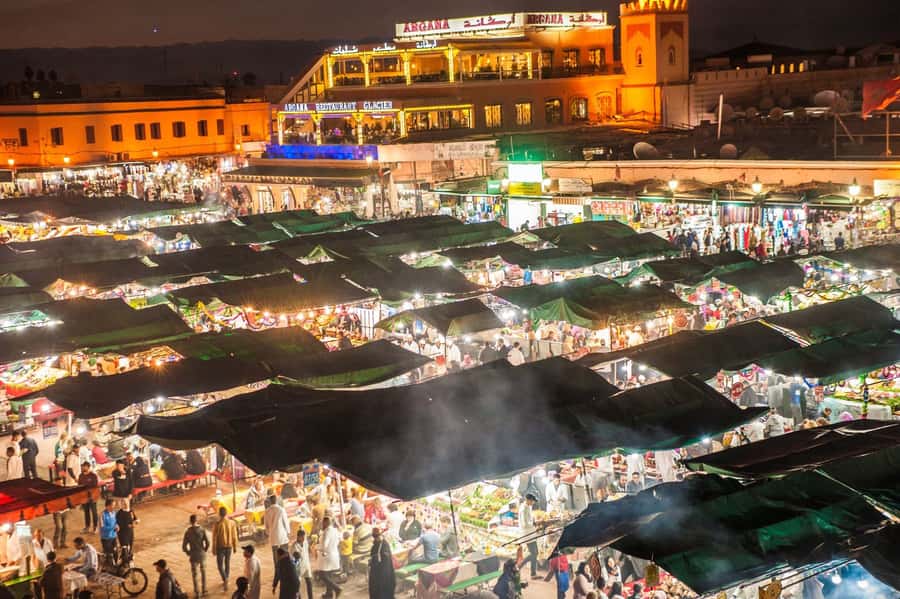
This is a small-group or private setup, with a maximum of 12. That matters in the Medina because the “right path” changes with crowd flow, vendor traffic, and where the group needs to stop for tastings.
A repeat theme in guide performance is confidence and people skills. Guides have been named on recent tours such as Najib, Ibrahim, Ayoub, Brahim Abouamou, Youssef, Anicta, Atika, Omar, and Mustafa. You should expect someone local who:
- keeps the group moving safely through crowded lanes
- explains what you’re tasting and why it’s made this way
- helps with practical visitor issues like bargaining pressures so you don’t feel cornered
- gives you time for questions without making the tour feel like a lecture
One small but real benefit: if you’re nervous about navigating crowds, the guide’s presence turns the Medina from stressful to manageable. It’s not magic, but it does reduce the mental workload.
Price and value: what $46 buys you in real terms
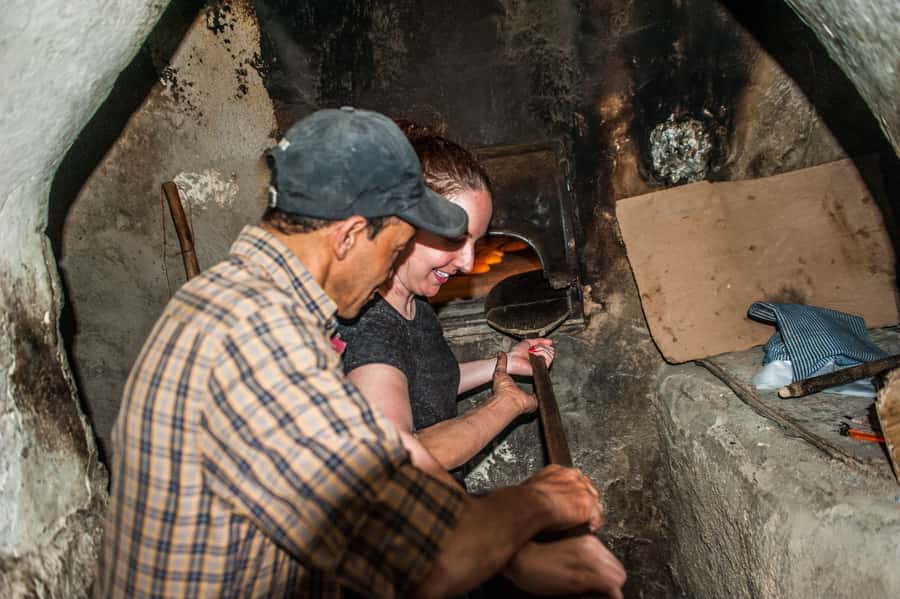
At $46 per person for about 210 minutes, you’re paying for a guided walking route plus:
- a local guide
- the walking tour experience
- 3 included tastings
- a Moroccan dinner at a local restaurant
The value here isn’t only the total food. It’s the matchmaking. You’re getting taken to places that make sense for what you want to learn that night—olives and pastries in one pocket, spice education in another, then a sit-down dinner where the square’s energy doesn’t disappear.
If you’re the kind of traveler who likes structure on day one (or if you’re eating solo and want a built-in social moment), this is a strong use of time. It’s also good value compared to trying to recreate the same route on your own, because Medina navigation plus correct vendor selection is hard without local help.
Dietary fit and what to tell your guide before you start
You can usually plan well for most people, but there are limits.
What this tour can cater to:
- vegetarians
- vegans
What it can’t cater to:
- gluten intolerance
That’s important. If gluten-free is non-negotiable for you, don’t assume you can swap tastings. Instead, look for a different tour that specifically supports gluten-free needs.
Also, dress and comfort affect the experience. For Morocco, you’ll want to cover shoulders and knees and avoid shorts and low-cut tops, especially since the tour can include entry into religious spaces and family homes. Bring long sleeves and long pants. And because it can get cool after dark, pack a jumper.
Who this Marrakech food tour suits best
This is a great pick if:
- you want a first-night plan that shows you the Medina through food
- you like learning how ingredients connect to local cooking
- you want someone to help you handle crowds and keep the route from feeling chaotic
- you’re okay with street-food style sampling and sitting down for dinner afterward
It might be a poor fit if:
- you need a strict gluten-free meal plan
- you strongly dislike busy, loud environments
- you prefer ultra-quiet sightseeing over lively nighttime eating
The good news: since the group is small, you’ll have better odds of getting the kind of guidance that helps you enjoy it, not just survive it.
Should you book this Jemaa el-Fnaa food tour?
If you’re spending even a short time in Marrakech, I think this is one of the smarter ways to spend an evening. You get a clear structure: tastings that make sense, a spice education that pays off later, and a dinner that places you right where the city’s food culture breathes.
Book it if you want a guided route that reduces the guesswork and helps you eat well without getting stressed by bargaining or crowd flow. Skip it if gluten intolerance rules your choices, or if you know you can’t handle the noise and closeness of nighttime Medina walking.
If you do book, come hungry and dress respectfully. Then let your guide do the heavy lifting—Marrakech is better when you’re tasting, not just trying to find your way.
FAQ
How long is the Marrakech Jemma El Fnaa food tour with dinner?
It runs for 210 minutes, about 3.5 hours.
Where does the tour start and end?
Meeting point can vary depending on the option you book, and the tour lists drop-off back at 11 Derb Zaari for one of the options.
What’s included in the price?
You get a guide, a walking tour, 3 tastings, and a Moroccan dinner at a local restaurant.
Is this a small group tour?
Yes. It’s available as a small-group tour with a maximum of 12, and there’s also a private group option.
Can the tour accommodate vegetarians or vegans?
Yes, it can cater to vegetarians and vegans.
Will it work for someone with gluten intolerance?
No. Gluten intolerance isn’t listed as something the tour can cater to.
What should I wear and bring?
Bring long-sleeved clothing and long pants. It also notes dressing with shoulders and knees covered. You should bring a jumper in case it gets cool after dark.
Is the tour child-friendly?
Yes. Infants age 0–5 are free, and you should notify the operator if you have a child under 12.
Is it easy to cancel or change plans?
The tour offers free cancellation up to 24 hours in advance for a full refund, and you can reserve now and pay later.