REVIEW · MARRAKESH
From Marrakech: 3-Day Merzouga and Sahara Desert Tour
Book on GetYourGuide →Operated by MOROCCO TRIP · Bookable on GetYourGuide
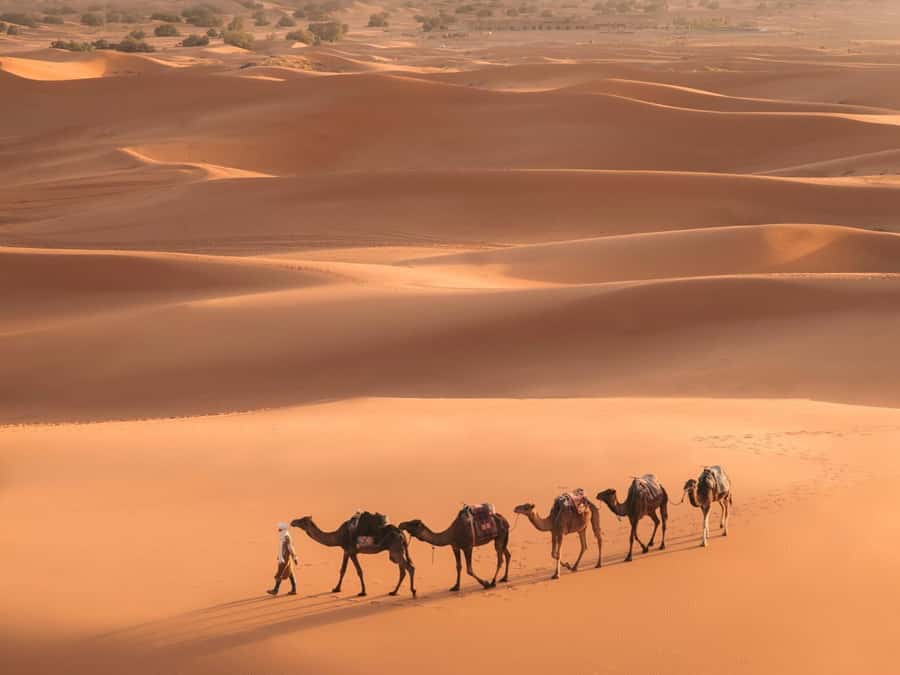
Sand dunes and camel sunrises hit hard. This Marrakech-to-Merzouga tour pairs iconic stops like Kasbah Ait Ben Haddou with the jaw-dropping sand world of Erg Chebbi, then wraps it up with nights under Berber music and stars. My two favorite parts are the camel rides at sunset and sunrise, and the way the route breaks up a long drive with real sightseeing; the main drawback is that you spend a lot of hours in the vehicle, so plan for long road days and bring a warm layer for desert nights.
What also matters is who you get in the driver-seat. In many groups, guides such as Ayoub and Hanan are noted for keeping people informed and making the schedule feel smooth, while drivers like Hakim or Rachid are described as calm and safety-focused on the road. If you’re traveling during Ramadan, some guides have even arranged special iftar meals when asked.
In This Review
- Quick take on this Marrakech to Merzouga 3-day desert tour
- The 3-day Marrakech to Merzouga route: what you’ll actually spend your time on
- Kasbah Ait Ben Haddou and Ouarzazate: UNESCO stops with movie-set energy
- Day 1 Atlas Mountains drive: comfort, stops, and scenery that builds momentum
- Kelaat Mgouna to Boumaln Dades: the night that makes the next day easier
- Todra Gorges and the lead-in to the Sahara: day 2’s big scenery day
- Erg Chebbi desert camp night: dinner, drumming, and the sleeping setup
- Camel ride at sunrise and the return to Marrakech: the final emotional payoff
- Price and value at $134: what you’re getting and what you’ll still need to budget
- What to pack (and what to plan for) so the desert days feel easy
- Who this tour suits best: first-timers, families, and comfort-minded desert seekers
- Should you book this Marrakech to Merzouga 3-day desert tour?
- FAQ
- How long is the tour?
- Where does the tour start and end?
- What’s included in the price?
- Are meals included?
- Is lunch included?
- Do I need to bring cash?
- Is sandboarding included?
- How cold does it get in the desert?
- What should I pack for the desert night?
- What languages is the live guide available in?
Quick take on this Marrakech to Merzouga 3-day desert tour
- Ait Ben Haddou + Ouarzazate: UNESCO sites tied to famous movie sets, with photo-worthy views along the way
- Atlas Mountains road trip pacing: comfort-focused stops so the long drive doesn’t feel punishing
- Todra Gorges on day 2: dramatic canyon scenery before you reach the dunes
- Erg Chebbi desert camp night: Berber drumming, dinner, and sleeping under the stars
- Sunrise camel ride back to the village: one last dune moment before returning to Marrakech
- Cold-night reality check: standard tents often lack heating (luxury options may include it)
The 3-day Marrakech to Merzouga route: what you’ll actually spend your time on
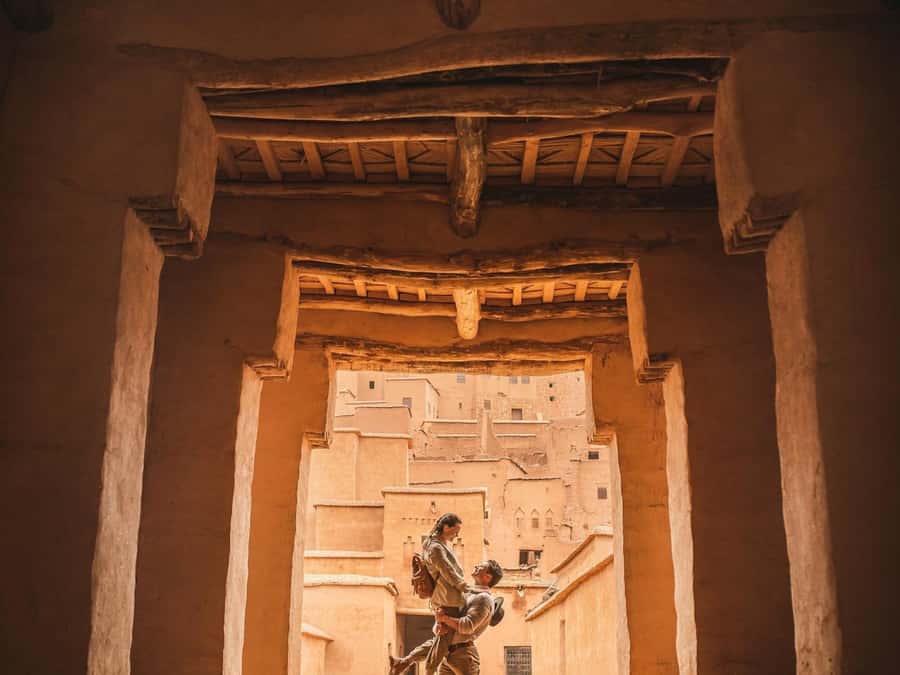
This is a classic Sahara sprint. You start in Marrakech with hotel or riad pickup, then spend two full days moving through southern Morocco toward the dunes of Drâa-Tafilalet. The desert part is the headline, but the fun is that you see Morocco change as you go: mountains, kasbahs, canyon walls, then sand as far as the eye can track.
The “value” of this tour comes from how much you get for one fixed price. You’re not just buying a night in a camp. You’re paying for guided transportation with an experienced driver-guide, meals (breakfasts and dinners), included activities like camel rides and sandboarding, and luggage handling so you can travel lighter for the dunes.
The only real consideration is the time on the road. Even with a comfortable air-conditioned vehicle and planned stops, you should still expect long stretches of driving. If you get restless easily, bring snacks, water (where allowed), and a warm jacket for evenings, because temperatures can swing hard.
You can also read our reviews of more tours and experiences in Marrakesh.
Kasbah Ait Ben Haddou and Ouarzazate: UNESCO stops with movie-set energy
Kasbah Ait Ben Haddou is the kind of place that makes you understand why filmmakers keep coming back. This UNESCO site is part of the route on day 1, and it’s also one of the easiest stops on the trip to appreciate even if you’re not a history buff. The clay-gated shapes and layered architecture look cinematic in real life, and it’s a strong “Morocco moment” early in the journey.
Ouarzazate follows the same vibe. You’ll explore this UNESCO area too, and it’s known as a film-making location, which helps explain why the scenery feels so constructed and memorable. Practically, these stops also function as a break from the road. You stretch your legs, take photos, and reset before you head further south.
A small note on guides here: a local guide at Ait Ben Haddou is not included, but it’s available for an extra €2 per person. If you like walking into a place with stories attached, this can be worth it.
Day 1 Atlas Mountains drive: comfort, stops, and scenery that builds momentum
Between Marrakech and the UNESCO stops, you’ll travel through the Atlas Mountains zone. The driving itself is part of the experience: you’re watching the scenery shift, learning where the road is heading, and getting that slow build toward the Sahara.
Why I like this structure for you: it avoids the feeling of “arrive, rush, disappear.” You’re not only doing one big scenic stop. You’re stacking several meaningful sights while the vehicle gets you farther than you could manage on your own in a short time.
Also pay attention to what’s included for stress control. Transportation is air-conditioned, you get a driver-guide, and onboard Wi-Fi is included. In desert-country tours, those little perks matter because your phone and maps can be useful even when you’re mostly following the group.
Kelaat Mgouna to Boumaln Dades: the night that makes the next day easier
On the first night, you stay in an air-conditioned room/suite with a private bathroom in the Kelaat Mgouna – Boumaln Dades area. That detail is more important than it sounds. After a long drive, having a real bathroom and a comfortable room helps you wake up ready for the gorges and the dune activities on day 2.
Food is also handled for you. Breakfast and dinner are included, and the tour lists vegetarian, vegan, and gluten-free options. If you have dietary limits, you’ll just want to tell your driver-guide on the first morning, rather than doing extra admin.
Based on what I’ve seen from recent guest experiences, the food quality is generally good along the route, but your best bet is to treat lunches as your own budget item and keep your expectations realistic for “on-the-road” meals.
Todra Gorges and the lead-in to the Sahara: day 2’s big scenery day
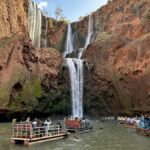
Day 2 is where the scenery turns dramatic. You’ll experience Todra Gorges, a canyon environment that feels tall, narrow, and instantly impressive. Even if you’ve seen cliffs elsewhere, this one lands because you can really feel the scale up close.
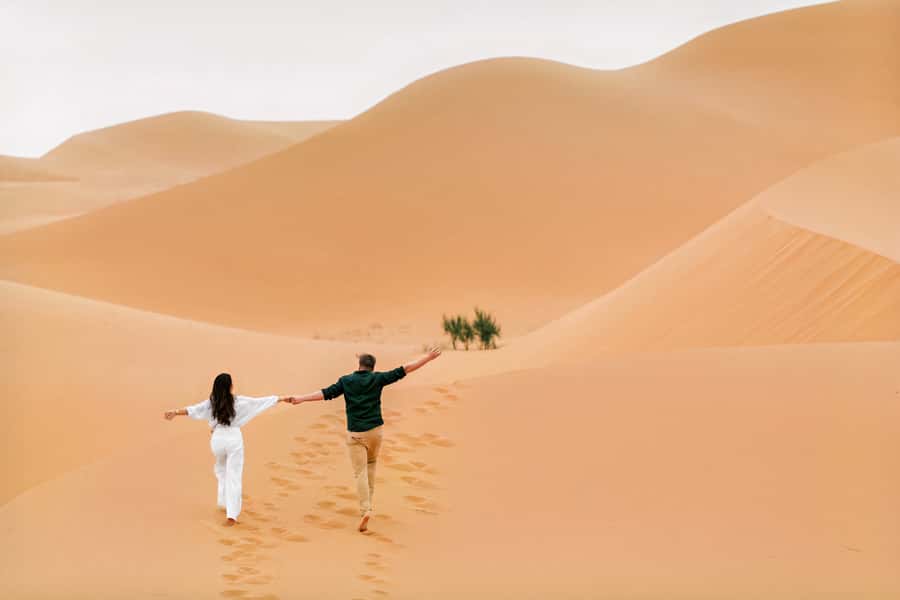
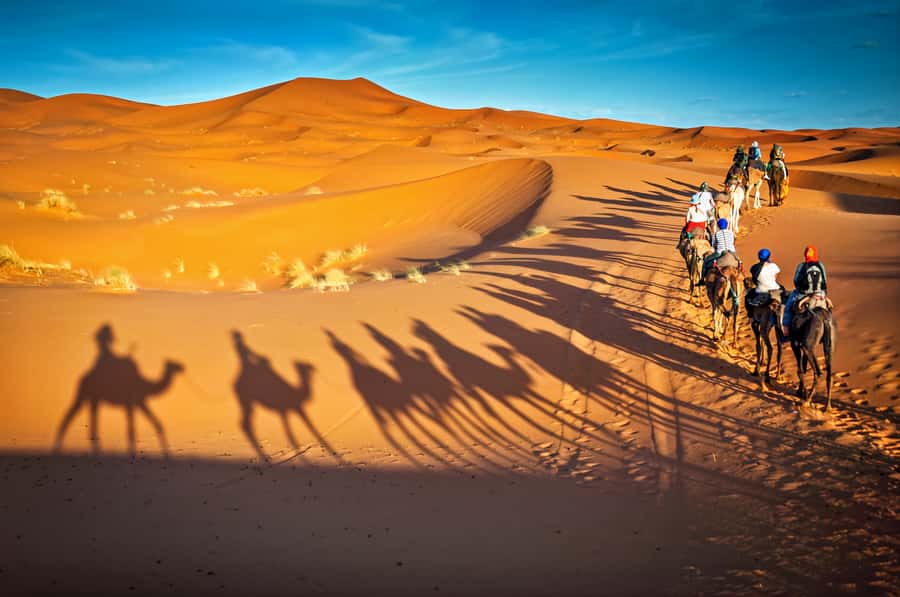
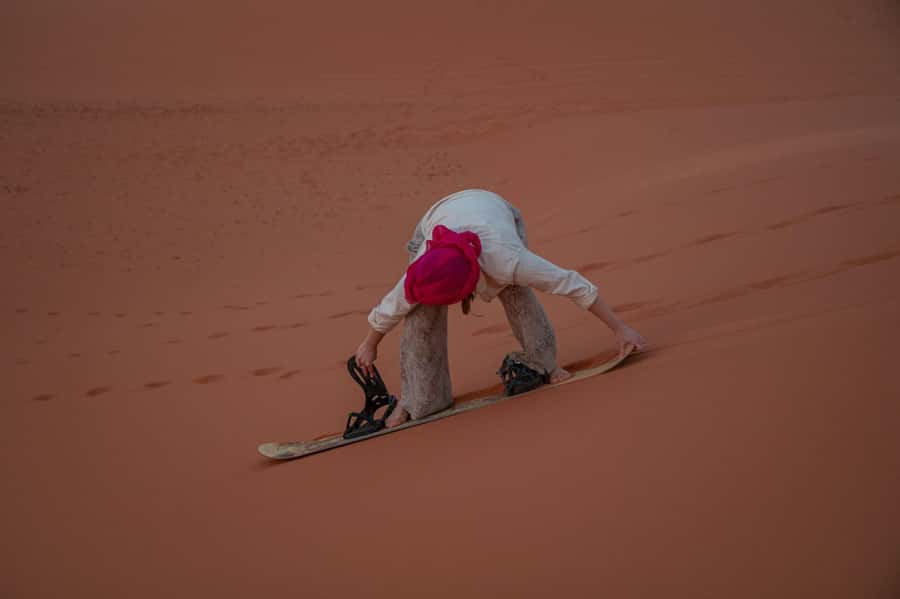
Then you transition toward the Sahara activities. You should expect a camel ride at sunset, plus sandboarding if it’s available on the day. In other words, the desert isn’t just your sleeping location. It’s also your playtime portion of the trip.
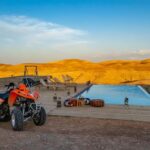
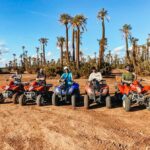
Some groups choose extra adrenaline options on top of the included activities. ATV or quad rides show up frequently as an add-on in the dunes, and some people end up doing them at sunrise for extra payoff. If you see quad rides offered, treat it as optional and only choose what fits your comfort and budget.
Logistically, camel rides are usually the moment that determines what kind of footwear and clothing you’ll feel best in. Closed-toe shoes are strongly recommended in the packing list, and breathable layers help because mornings and afternoons can feel very different.
Erg Chebbi desert camp night: dinner, drumming, and the sleeping setup
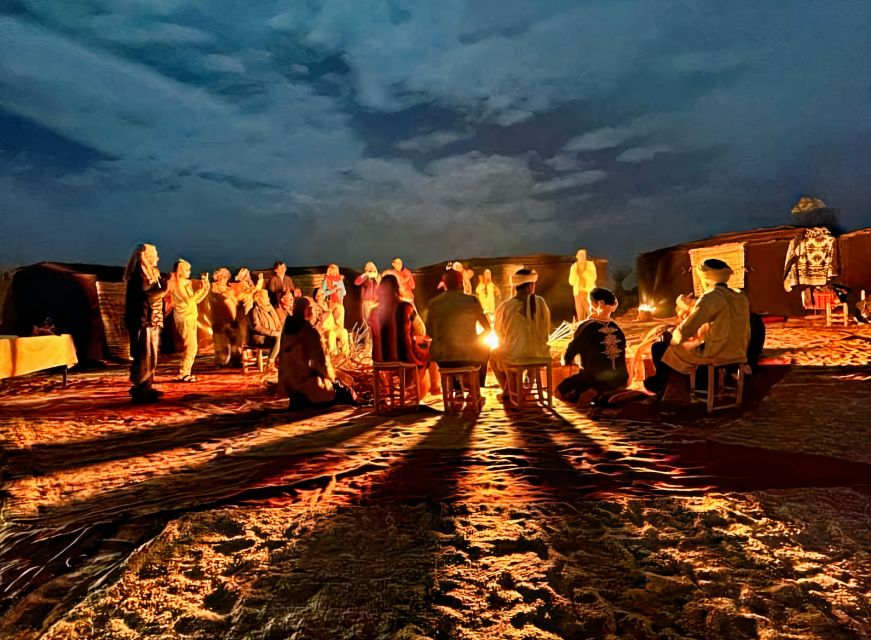
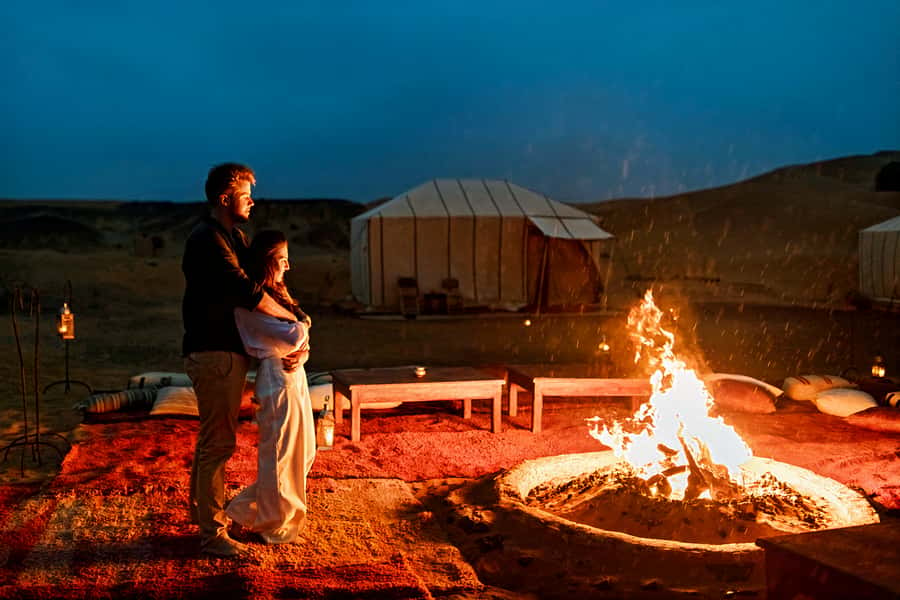
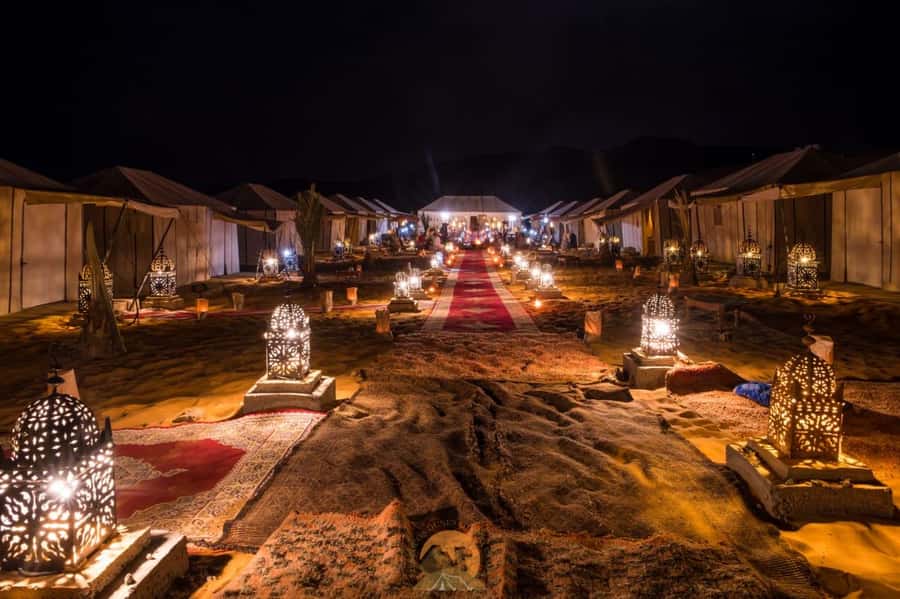
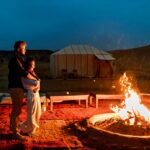
Erg Chebbi is the main desert area on this route. On day 2, you overnight in a Berber desert camp there. The camp experience includes dinner, and it also includes a Berber drumming and music experience, which helps the evening feel like more than just a bed and a bonfire moment.
What to know about tents and comfort is simple: desert nights can get cold in winter. The tour notes that from Nov–Feb, temperatures can run around 0°C to 5°C. Standard tents do not have heating, and warm blankets are provided instead. Luxury tents, if you select that option, are equipped with heating.
This matters for your planning. If you’re doing winter travel and you run cold easily, you’ll likely feel more comfortable choosing the heated tent option. And even in warmer months, packing a warm layer is smart because nights in the desert can cool down fast.
One more practical detail: ATMs are not available in the desert. You’ll want cash ready for lunches, drinks, and tips. The tour estimates about €10–13 per meal, and you’ll also be asked to cover small extras that pop up along the way.
Camel ride at sunrise and the return to Marrakech: the final emotional payoff
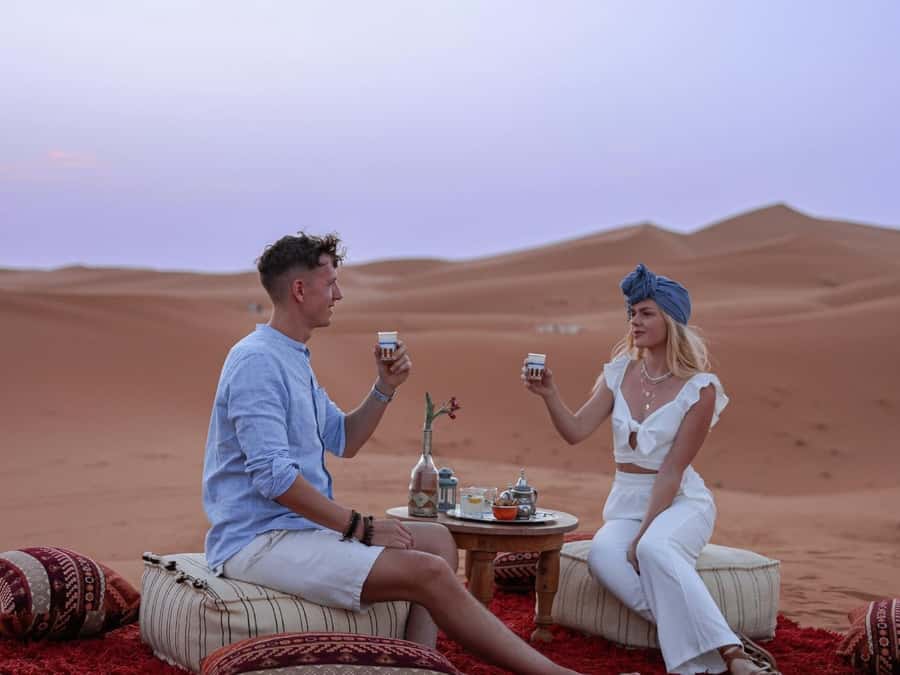
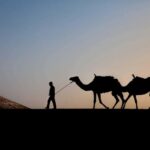
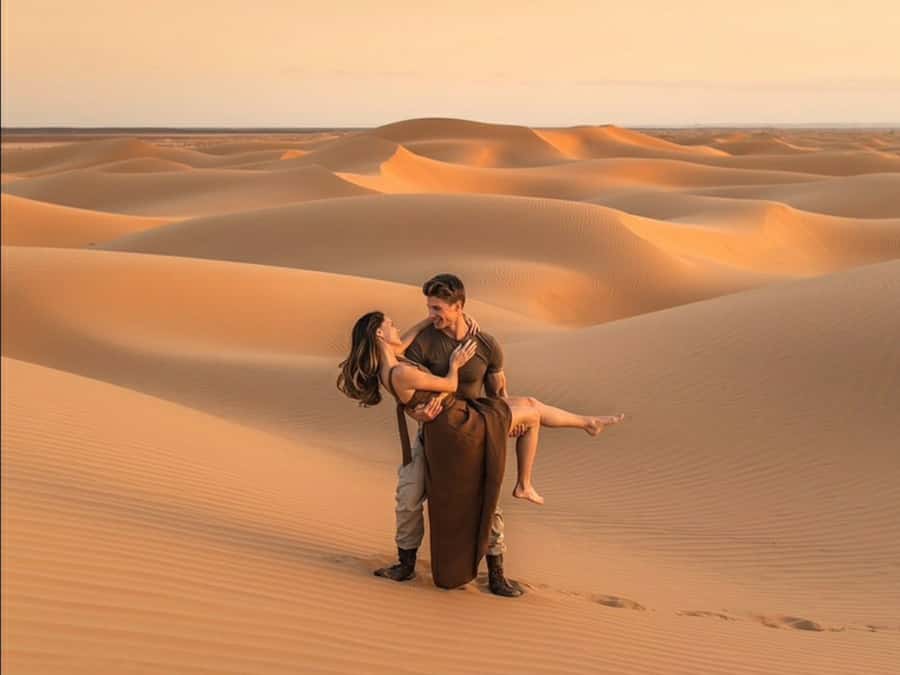
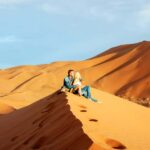
Day 3 starts early, with a sunrise moment over the dunes of Erg Chebbi. You’ll enjoy a camel ride at sunrise, then ride back to the village after the dunes cool down and the light turns dramatic.
This is the part of the tour that tends to stick in your head. The Sahara is huge, and sunrise is the time when it feels even bigger. If you’ve never tried camel travel before, this is a beginner-friendly way to do it because it’s framed as a short, scenic ride tied to a specific time window.
After breakfast, you return to Marrakech for hotel drop-off.
Price and value at $134: what you’re getting and what you’ll still need to budget
At $134 per person for 3 days, the value comes from a bundle of things that normally cost separate money. You’re getting:
- Marrakech pickup and drop-off
- Air-conditioned transportation plus a driver-guide
- One night in a hotel with private bathroom
- One night in a desert camp at Erg Chebbi
- Breakfasts and dinners (with vegan/vegetarian/gluten-free options)
- Camel rides and sandboarding (sandboarding if available)
- Berber drumming and music experience
- Luggage service
So you’re not paying just for the dunes. You’re paying for the whole pipeline: getting there, seeing major highlights, sleeping comfortably enough on the first night, then switching to desert camping for the second.
What you should budget beyond the headline price is mostly lunch and drinks. Lunch isn’t included, and cash is needed because you won’t be relying on card payments in the desert. Tips may also come up, and the tour specifically flags that ATMs aren’t available in the dune area.
If you’re trying to travel efficiently, this tour is a strong fit because it reduces planning friction. You’re not researching transport between stops, hiring separate guides for every site, or coordinating meals in remote areas.
What to pack (and what to plan for) so the desert days feel easy
The packing list is practical, and you should follow it closely:
- Comfortable shoes for walking at kasbahs and gorges
- Sunscreen, sunglasses, and a hat for sun exposure
- A jacket (especially for desert nights)
- Breathable daytime clothing
- A small backpack for the desert night
- Passport or ID (a copy is accepted)
- Cash for lunches, drinks, and tips
Here’s the desert-specific rule that changes what “light packing” means. Large suitcases stay securely in the vehicle during the tour. Camels can’t carry large luggage, so you’ll want a small day bag for the overnight camp night.
Also make sure you have WhatsApp working. Pickup confirmation arrives the evening before the tour (between 5:00 PM and 6:00 PM) via WhatsApp and GetYourGuide chat. If your phone number won’t work, it’s easy for communication to slow down.
Who this tour suits best: first-timers, families, and comfort-minded desert seekers
This tour is built for first-timers to Morocco and first-timers to the Sahara. You get a guided ride through the iconic stops, plus real desert time without needing to plan overnight logistics yourself.
Families can do it too, and the trip format is designed to break up long drives with stops and activities. That matters when you’re traveling with kids, since you want frequent chances to stretch and reset.
If you’re choosing between options, think about your comfort tolerance more than anything. If you run cold in winter, the luxury heated tent option is worth considering. If you care more about classic camel travel, the included camel rides at sunset and sunrise are the core of the experience.
And if you want extra cultural texture, you’ll get Berber drumming and music plus chances to see local life patterns through the kasbah and desert camp setting.
Should you book this Marrakech to Merzouga 3-day desert tour?
Book it if you want a structured, low-stress route that hits the big Morocco highlights fast: Marrakech pickup, Atlas Mountains driving, Kasbah Ait Ben Haddou and Ouarzazate, Todra Gorges, then Erg Chebbi with camel rides, sandboarding, and a true desert camp night. The price-to-inclusions ratio is strong because transport, lodging, most meals, and key activities are bundled.
Skip it or choose a different style if you hate long driving days. This tour trades time in the vehicle for time in the desert, and you’ll feel that trade. Also, if you’re traveling in cold months, take tent heating seriously and pack a real warm layer.
If you’re ready for a “big Morocco weekend” feel, this is one of the cleanest ways to get it—especially if you communicate dietary needs early and show up with cash for lunch and drinks.
FAQ
How long is the tour?
It runs for 3 days, starting with pickup in Marrakech and ending with drop-off back in Marrakech after breakfast on the final day.
Where does the tour start and end?
The tour starts with pickup at your hotel or riad in Marrakech and ends with hotel or riad drop-off in Marrakech.
What’s included in the price?
Hotel/riad pickup and drop-off, air-conditioned transportation, a driver-guide, onboard Wi-Fi, 1 night in an air-conditioned room with private bathroom, 1 night in an Erg Chebbi desert camp (option-dependent), breakfast and dinners, camel rides (or 4×4 transfer), sandboarding, luggage service, and Berber drumming and music.
Are meals included?
Yes. Breakfasts and dinners are included, and vegetarian, vegan, and gluten-free options are available if you tell your driver-guide on the first morning.
Is lunch included?
No. Lunch and drinks are not included, and you should bring cash for them.
Do I need to bring cash?
Yes. The tour notes that ATMs aren’t available in the desert, so you’ll need cash (EUR or MAD) for lunches, drinks, and tips. Lunch is estimated at about €10–13 per meal.
Is sandboarding included?
Sandboarding is included if it’s available, along with camel riding and the desert camp experience.
How cold does it get in the desert?
In winter (Nov–Feb), desert nights can be cold, around 0°C to 5°C. Standard tents do not have heating (warm blankets are provided), while luxury tents have heating.
What should I pack for the desert night?
You should pack a small backpack for the night in the desert. Large suitcases stay in the vehicle because camels can’t carry them. Bring warm layers, closed-toe shoes, sunglasses, sunscreen, and a hat.
What languages is the live guide available in?
The live guide is available in Arabic, French, English, and Spanish.