REVIEW · DURBAN
Durban: 1-Hour Boat Cruise from Wilson’s Wharf
Book on GetYourGuide →Operated by Isle of Capri Cruises Whale watching · Bookable on GetYourGuide
Durban looks different when you’re floating above it. This 1-hour harbour cruise from Wilson’s Wharf lets you watch Durban’s port in motion, with the golden beachfront and skyline sliding past like a moving postcard.
I especially like two things: the hands-on, explained-by-the-crew look at how the harbour works, and the viewpoint that turns Durban’s shoreline and skyline into real, usable photos. You’re not just sightseeing—you’re getting bearings fast, because everything from ships to coastlines has context.
One consideration: the cruise is weather dependent. If the sea’s rough, you may stay closer to the harbour, and you can get splashed at times.
In This Review
- Quick hits before you cast off
- Getting to Wilson’s Wharf and actually finding the right boat
- What Durban looks like from the Indian Ocean
- Durban harbour in action: ships, routes, and the work of the port
- The Durban beachfront viewpoint you can’t fake on land
- Skyline photos: when angles matter (and motion helps)
- How the ride feels: comfort, music, and safety briefing
- Timing, cost, and why one hour can be the smart move
- What to bring (and what to plan for since food isn’t included)
- Who this cruise fits best (and who might want to skip)
- Weather rules: how far you go from the harbour
- Final call: should you book this Durban boat cruise?
- FAQ
- How long is the Durban boat cruise from Wilson’s Wharf?
- How much does it cost?
- Where do I meet the cruise?
- Will the cruise run in bad weather?
- Are food and drinks included?
- What languages is the live guide available in?
- Is the cruise suitable for everyone?
Quick hits before you cast off
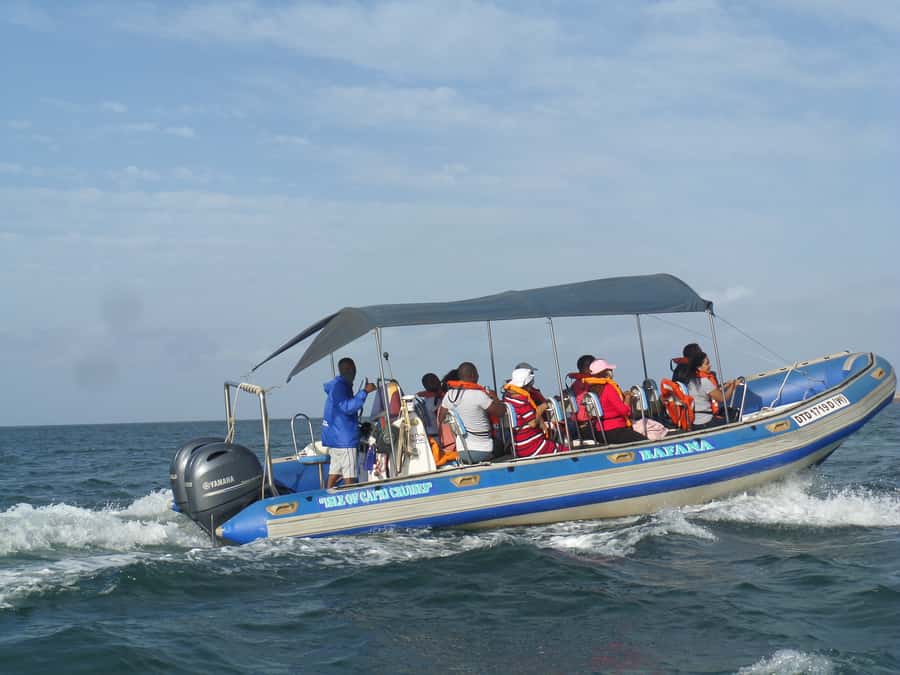
- Wilson’s Wharf start point: easy to plan around, with a clear meeting setup at Isle of Capri Cruises
- Port action on view: container ships and other vessels coming and going up close
- Back-and-forth skyline views: Durban’s beachfront and skyline look better from a moving deck
- Dolphins are a possibility: keep an eye out for pods during the coastal stretch
- Music plus commentary: onboard tunes and an informative guide in Afrikaans, Zulu, and English
- Short, good-value timing: one hour is long enough to learn and photograph without eating your whole day
Getting to Wilson’s Wharf and actually finding the right boat
This cruise starts at 11 Boatman’s Road, right by the Wilson’s Wharf Marina complex. The practical move is to arrive early and treat it like a “check-in first, relax second” situation.
Your best target is to show up 30 minutes ahead. You’ll enter the marina complex, then head to the Isle of Capri Cruises stall. The booking kiosk has a big red flashing sign you can spot coming in from the Casadena Spur entrance. It’s the kind of detail that prevents that last-minute sprint where you’re asking strangers for directions with your heart racing.
Also, if you’re sensitive to delays: some departures can involve a wait on the dock before the boat pulls in. I’d still plan your day so you’re not rushing to catch a connection right after your cruise ends.
You can also read our reviews of more tours and experiences in Durban.
What Durban looks like from the Indian Ocean
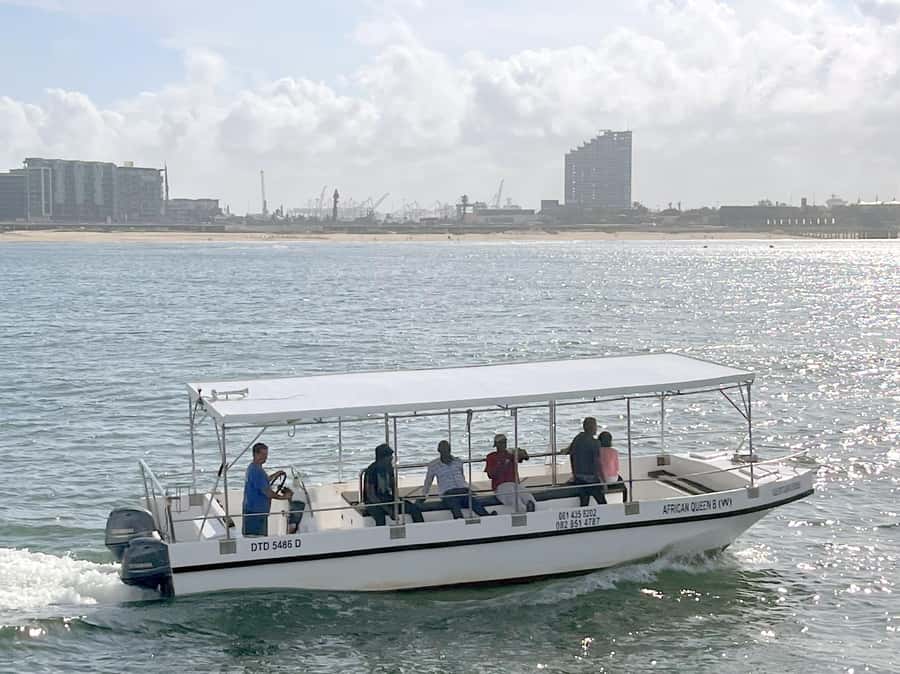
Once you’re aboard, the point is simple: Durban from the water. You’ll feel the ocean breeze right away, and the ride gives you perspective that land-based viewpoints don’t. The port sits right where you can see the work behind the scenes: ships maneuvering, crews doing their jobs, and the harbour constantly shifting.
What I like is that the cruise doesn’t just float past scenic spots. The crew talks you through what you’re seeing—so you understand why a ship is positioned a certain way, why the harbour activity matters, and what makes Durban such a key maritime hub in South Africa.
You also get that “I get it now” feeling about the coastline. From the water, Durban’s waterfront stops being a background and becomes the route your eyes follow, from beach to city to sea.
Durban harbour in action: ships, routes, and the work of the port
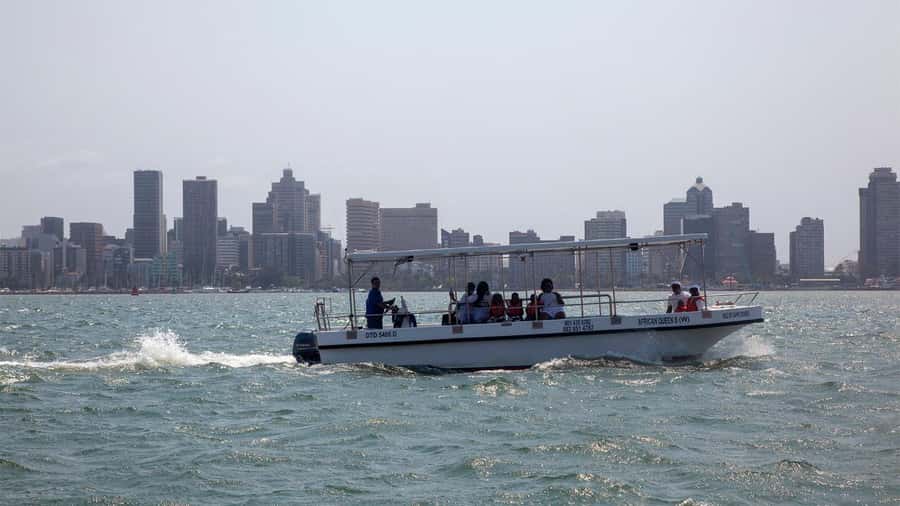
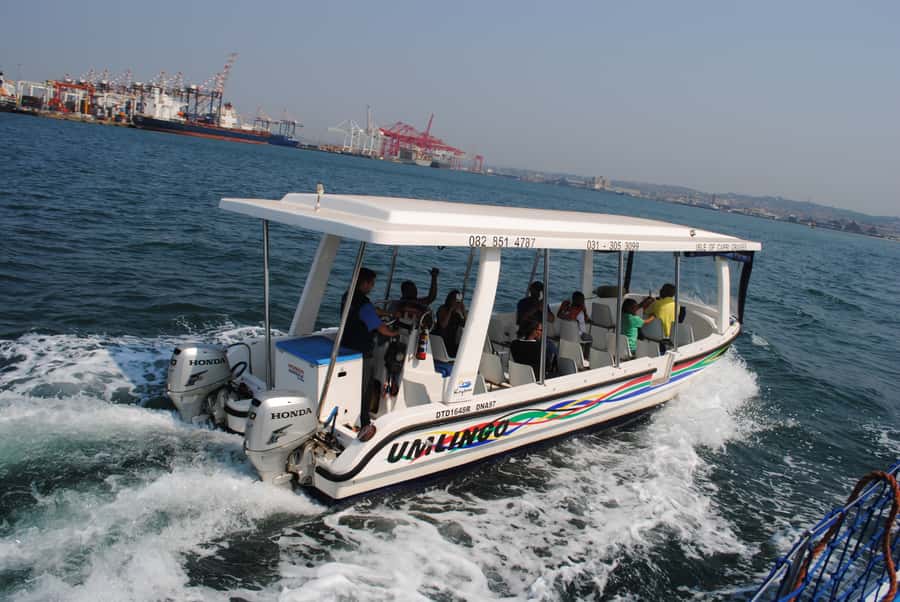
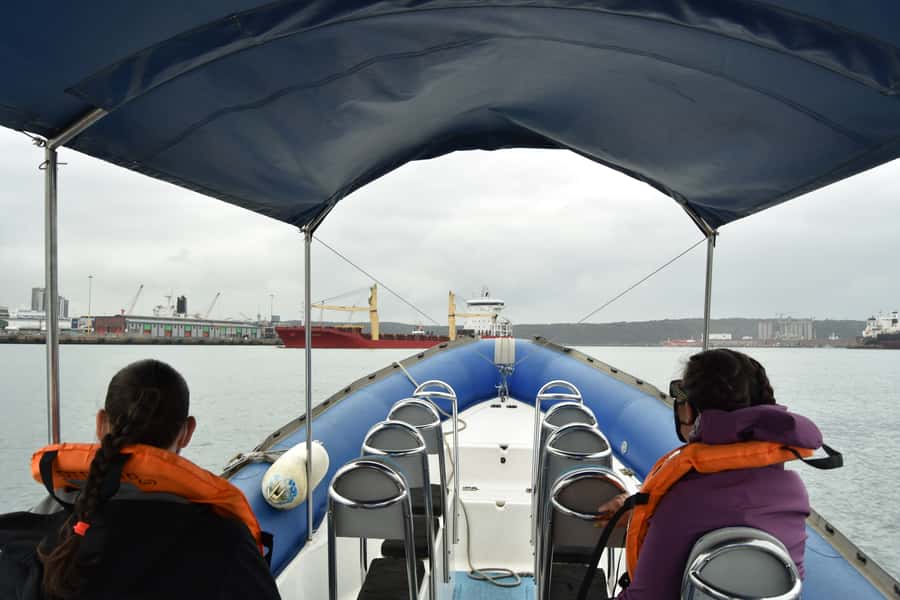
This is the big draw: watching the port operate. You’ll see massive container ships and other large vessels moving in and out of the harbour, plus an up-close look at the scale of Durban’s maritime traffic.
The experience works best if you actively look, not just take photos. Track what’s moving: one ship arrives, another departs, and you start noticing patterns—where ships line up, how movement flows, and what the harbour environment looks like from the deck.
The guides also add the “why.” Expect commentary that explains harbour operations and what you’re seeing around you. Some of the onboard hosts referenced in feedback include guides such as Mr Zulu umfo ka Mageba, and captains like Sandile and Michael, who stand out for communicating clearly and keeping things lively while still staying focused on safety.
If you’re the type who loves logistics—how places function, not just how they look—you’ll get a lot out of this hour.
The Durban beachfront viewpoint you can’t fake on land
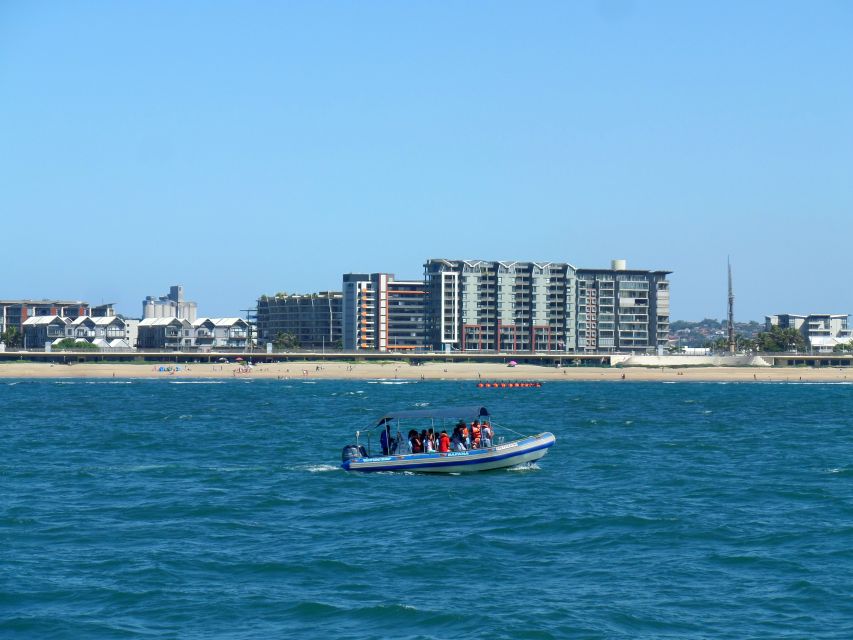
After the harbour segment, the route gives you coastal views. This is where Durban starts to look like a holiday, not just a working port.
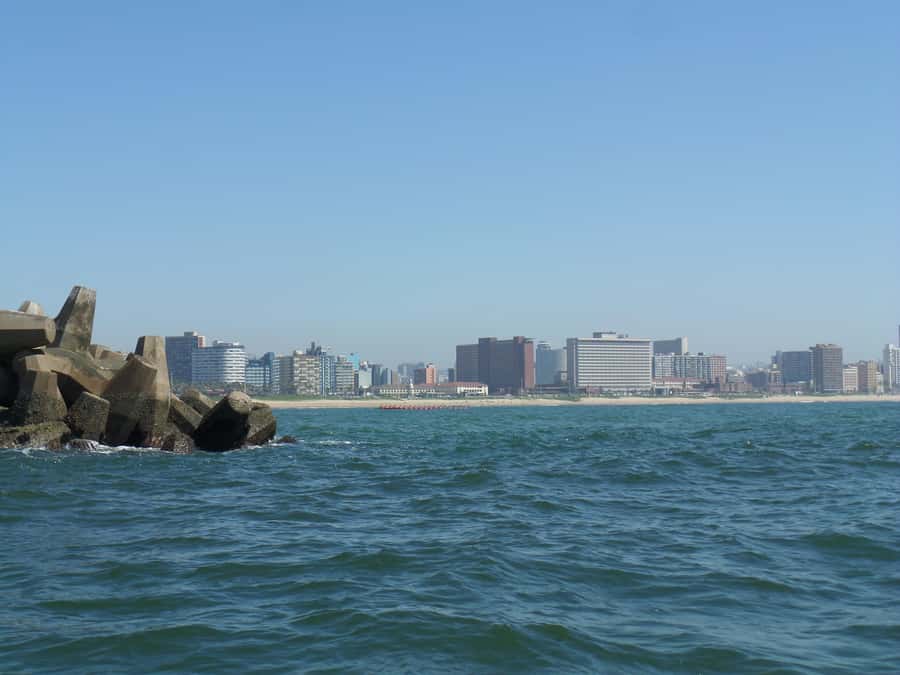
You’ll get views of the Durban beachfront as the boat cruises along the coast. It’s not a far-away “look, ocean” kind of view. You’re close enough to feel connected to the shoreline, and the angle makes the coastline feel longer and more detailed than you’d guess from a road.
One nice detail: the boats have semi-covered areas. That means you can stay shaded if the sun gets strong, while still keeping panoramic views. It’s a good setup if you’re trying to balance comfort with still being able to see and photograph.
And if you’re in a mood for movement: some people enjoy the onboard music during departure. It’s not a party cruise, but it does have a relaxed, upbeat feel when the music kicks on.
Skyline photos: when angles matter (and motion helps)
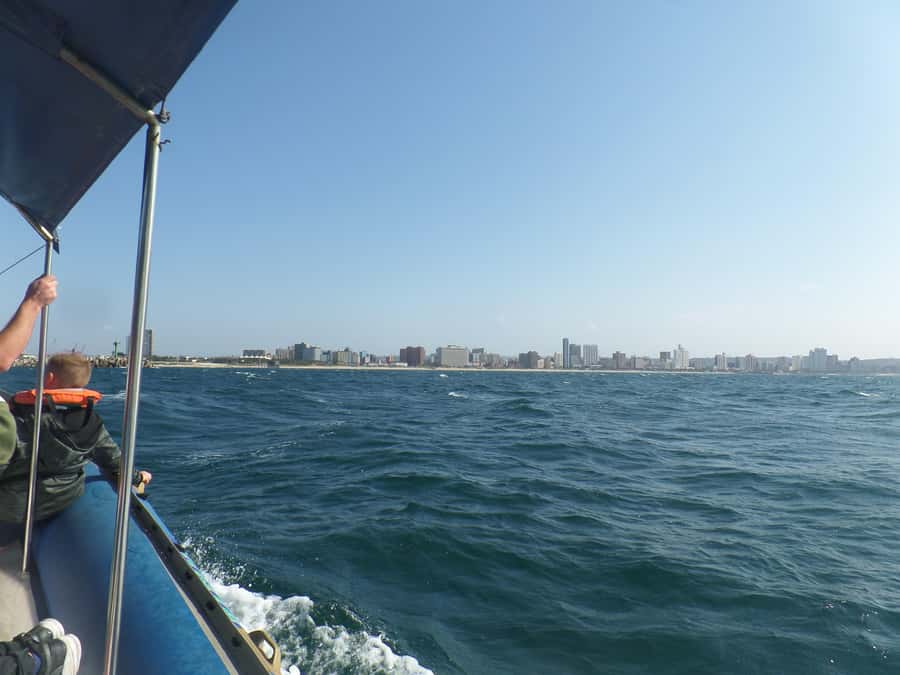
Durban’s skyline looks good from shore, but from the water you get better geometry. Buildings appear with depth. The harbour structures and the beachfront sit in the same frame. And because the boat moves, the perspective changes constantly—so you’re not stuck with one boring view.
This is also where the crew can help. In feedback, captains and crew members are described as willing to assist with photos—especially when you want a cleaner shot but your hands are already full with a phone, your camera, and a life jacket you’d like to pretend you don’t need.
A small reality check: on a moving boat, your best photos usually come from short bursts, steady posture, and giving yourself time to frame. If you’re using a phone, bracing your elbows against your body can reduce shake.
How the ride feels: comfort, music, and safety briefing
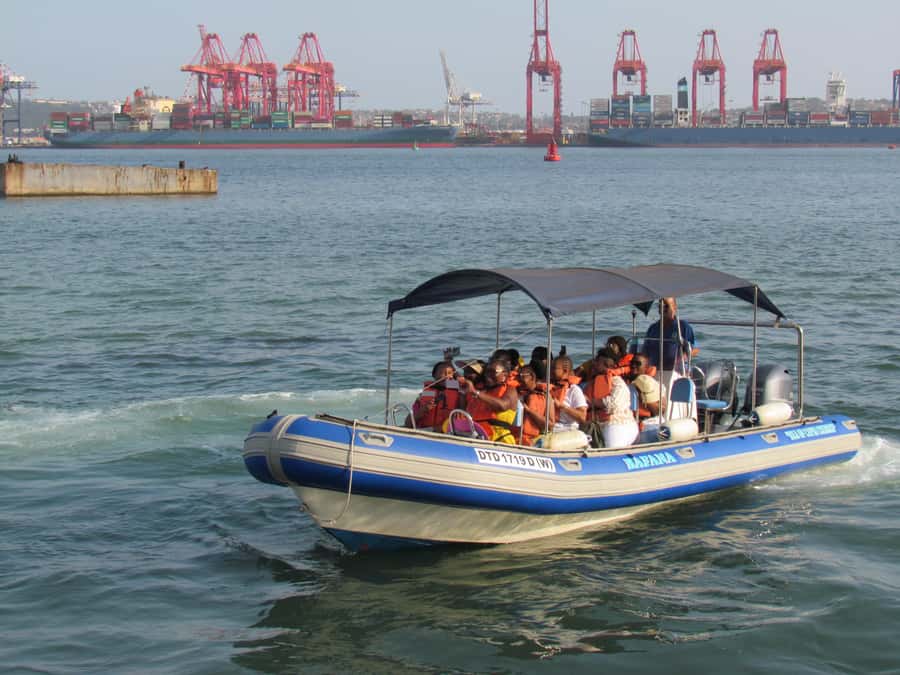
The cruise is designed to feel comfortable for a short outing. Boats feature semi-covered space for sun protection with open sightlines around you. The vessels are fully certified and maintained to a high standard, and you’ll have a safety briefing before setting out.
The vibe varies with conditions. On calm water, it can feel smooth and easy. On choppier water, the ride can be more dramatic—some passengers report getting wet when waves splash the boat. If that’s the kind of thing that makes you nervous, wear clothes you don’t mind getting a little damp.
The onboard education tends to be a mix of facts and clear guidance, plus the occasional fun moment. A few highlights that show up in feedback:
- music plays during departure
- some people like the idea of dancing on board
- crews communicate what’s coming, including how rough water can feel when it happens
One practical tip: if tips are part of your travel style, there may be a tipping cup. Feedback also suggests having cash on hand can make that easier.
Timing, cost, and why one hour can be the smart move
At around $11 per person for one hour, this is priced for real value. It’s not a long, expensive day of transport and waiting. You get a focused slice of Durban: harbour operations, coastal views, and skyline sightseeing in a timeframe that fits almost any itinerary.
For many people, the best value angle is mental: this cruise helps you understand the city quickly. You’ll see what Durban looks like when you remove the roads and buildings as barriers. That context makes the rest of your Durban time easier—where you’ve been, what you’re seeing, and why the waterfront is where it matters.
And if your preferred departure is sold out, there’s a shorter alternative (a 30-minute cruise) that still includes information and a similar sightseeing aim.
What to bring (and what to plan for since food isn’t included)
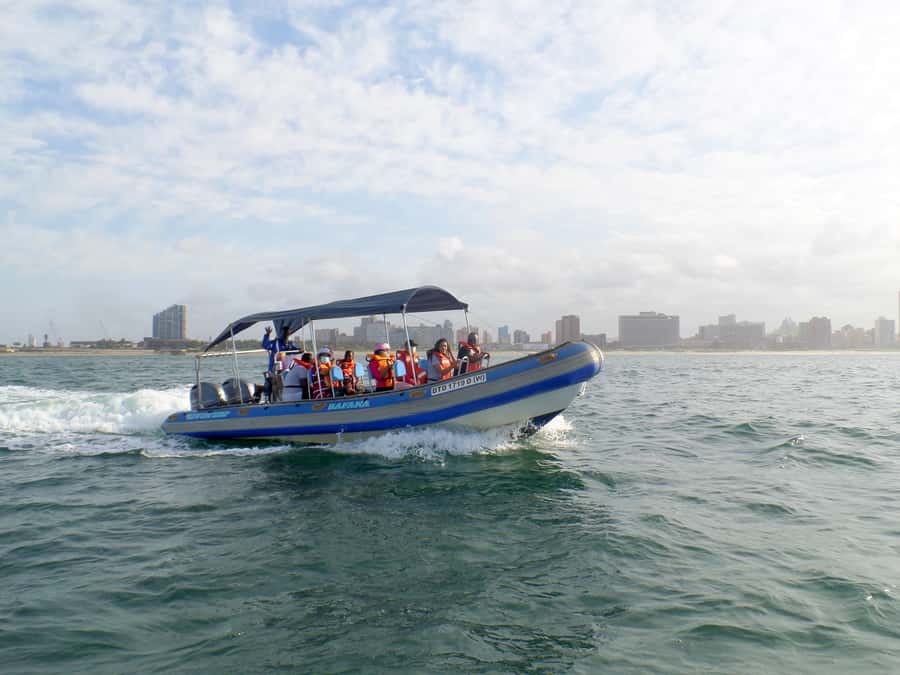
This cruise runs rain or shine, so your clothing should match the weather. Wear comfortable clothes you can move in. If you’re worried about splashes, consider a light rain layer.
Food and drinks aren’t provided aboard. That means you should plan snacks separately if you’ll want a bite during the hour. There’s also a restaurant where you can buy food afterward, plus plenty of choices nearby once the cruise ends.
If you’re trying to keep your day smooth, I’d bring:
- a small snack (and water, if you like having it with you)
- a phone/camera strap or lanyard (boats + motion = dropped gear is easy)
- light protection for sun or rain, depending on the day
Who this cruise fits best (and who might want to skip)
This works well for families, couples, and solo travelers who want a simple, scenic, explained outing. It’s also a good choice if you enjoy watching big ships and understanding how the harbour operates.
Two groups should think twice:
- people with mobility impairments
- people with back problems
Because the tour is on a boat deck with movement, it can be uncomfortable even when the ride is smooth. If you fall into either category, it’s worth considering your comfort on uneven footing and changing boat motion before booking.
Language support is solid for South Africa and visitors: live guidance is available in Afrikaans, Zulu, and English, so you’re not stuck missing the story behind what you’re seeing.
Weather rules: how far you go from the harbour
This one matters. The cruise runs all year, but it’s weather dependent. If the sea is too rough, the skipper stays within the safety of the harbour.
Translation for you: your “ideal map” of the route depends on conditions that day. Even if you don’t go far out, you still get the core experience—harbour operations, coastal views when possible, and skyline moments from the deck.
So don’t worry if the day looks a bit gray. The cruise still happens in rain. Just treat the route as flexible, and focus on what you can see in front of you rather than what you hoped for on a perfect-weather postcard day.
Final call: should you book this Durban boat cruise?
Book it if you want a short Durban experience that’s both scenic and explained. The price makes it easy to fit in, and the harbour setting gives you something you can’t replicate from a viewpoint on land. I’d especially recommend it if you enjoy ports, big ships, and learning what you’re looking at while you’re on the move.
Skip it if you’re dealing with mobility or back issues, or if you strongly dislike boat motion and possible splashes. Also, if you hate any chance of waiting around, build in buffer time—arriving early helps, but docks don’t always run like clockwork.
If you want one confident, value-packed way to see Durban from the sea, this is a solid choice.
FAQ
How long is the Durban boat cruise from Wilson’s Wharf?
It lasts 1 hour, including the sightseeing portion on the water and returning to the same area.
How much does it cost?
The price is listed as $11 per person.
Where do I meet the cruise?
Meet at the Wilson’s Wharf Marina complex. Enter the marina and report to the Isle of Capri Cruises stall near the booking kiosk with the big red flashing sign.
Will the cruise run in bad weather?
It operates rain or shine, but it is weather dependent. If the sea is too rough, the skipper will stay within the safety of the harbour.
Are food and drinks included?
No. Food and drinks are not provided aboard, though you can bring snacks. There are restaurants available after the excursion.
What languages is the live guide available in?
The live tour guide offers commentary in Afrikaans, Zulu, and English.
Is the cruise suitable for everyone?
It is not suitable for people with mobility impairments or people with back problems. Comfortable clothes are recommended, and you should be ready for possible splashes depending on sea conditions.