REVIEW · REUNION ISLAND
Guided tour of the 2004 lava tunnels
Book on Viator →Operated by Tunnel de lave: reunionmeretmontagne · Bookable on Viator
A single walk turns dark rock into something you can read. The guided 2004 lava tunnels near Piton de la Fournaise feel like a science class in a Jules Verne set, with a slow, safe crawl-through pace and real explanations of how this volcanic world forms.
Two things I really like: you get full safety equipment (helmet, headlamp, gloves, knee pads) so you can focus on the cave, and the guide-led format makes the formations make sense fast. Even if you end up with a guide like Fred, the tone tends to be relaxed and clear.
One consideration: you need moderate physical fitness. You’ll move slowly, sometimes bent and sometimes squatting, with no long breaks inside, so plan for a bit of effort in the dark.
In This Review
- Key Highlights You’ll Care About
- Why Réunion’s 2004 Lava Tunnels Feel Like a Rare Kind of Walking Tour
- Gear, Group Size, and Pace Before You Enter
- The 15-Minute Approach on Lava Ropes
- First Look in the Dark: Where Your Brain Goes From Fear to Wonder
- How the Tunnel Moves: Standing, Bending, Squatting, Repeating
- The Best Part for Real Geology Fans: Volcanic Speleology With Practical Explanations
- The Color and Texture Shift You’ll Notice After 2 Hours Underground
- The View Outside: A Final Look at Piton de la Fournaise
- Price and Value: What $75.31 Gets You in Real Terms
- What to Bring: Clothing, Shoes, Water, and the Camera Question
- Weather Rules: When It Runs and When It Doesn’t
- Who Should Book This Lava Tunnel Tour (and Who Might Want to Think Twice)
- Should You Book the 2004 Lava Tunnels Tour?
- FAQ
- How long is the guided tour of the 2004 lava tunnels?
- Where does the tour start and end?
- What equipment is included?
- What should I wear for the tour?
- Is this tour for people with limited mobility?
- How big is the group?
- Do I get a ticket on my phone?
- What happens if the weather is bad?
- Can I cancel and get my money back?
Key Highlights You’ll Care About
- Small group size (max 6) keeps the experience controlled and makes it easier to get help with footing in tight spots.
- Helmet + headlamp means you see the tunnel as you go, not after the fact.
- A short 15-minute rope walk gets you to the entrance with a real sense of transition from daylight to darkness.
- Your eyes adjust in the tunnel before the big sights, so stalactites and lava benches pop more than you’d expect.
- Guide explanations on volcanic speleology turn strange shapes (like the dodo and shark) into real science.
- 2 hours underground, then a final look at Piton de la Fournaise, so you leave with both scale and detail.
Why Réunion’s 2004 Lava Tunnels Feel Like a Rare Kind of Walking Tour
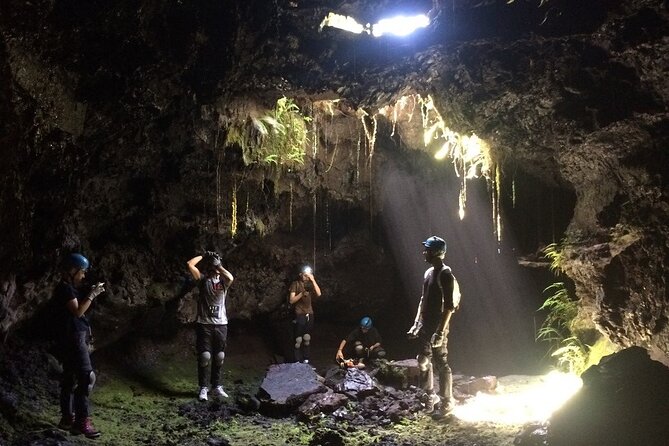
Réunion Island sits on a volcanic hot spot, and few places let you step inside the result. These lava tunnels are the kind of underground route that’s hard to find anywhere else, and that scarcity is the whole point of going.
In this tour, you’re not just passing time underground. You’re getting a guided read on what you’re seeing, with volcanology explained in a way that fits inside a cave: slow, practical, and visual.
You can also read our reviews of more tours and experiences in Reunion Island.

Gear, Group Size, and Pace Before You Enter
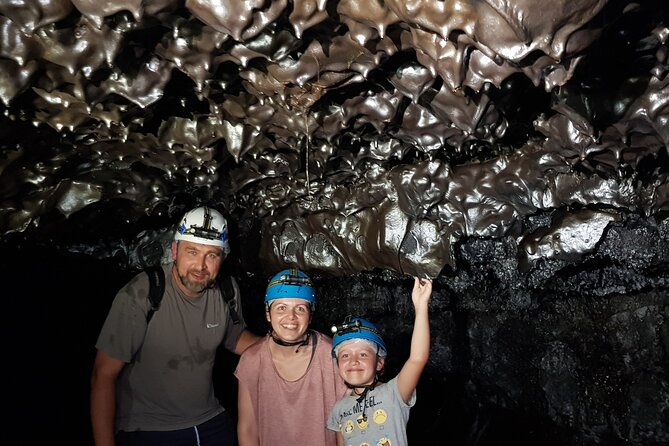
Before you go into the tunnel, you’ll be outfitted on the spot. You get a helmet, a headlamp, plus gloves and knee pads. That matters because lava rock can be tough on skin and knees, and dim footing is not the moment to improvise.
The group is capped at 6 travelers. That small number keeps things calm and lets the instructor manage spacing, lighting, and any slow-moving moments without rushing you.
You should bring moderate physical fitness to the table. The pace is slow, but movement changes: you’ll progress standing, then sometimes bent, then from time to time squatting. Plan for a workout that feels like careful hiking, not a stroll.
The 15-Minute Approach on Lava Ropes
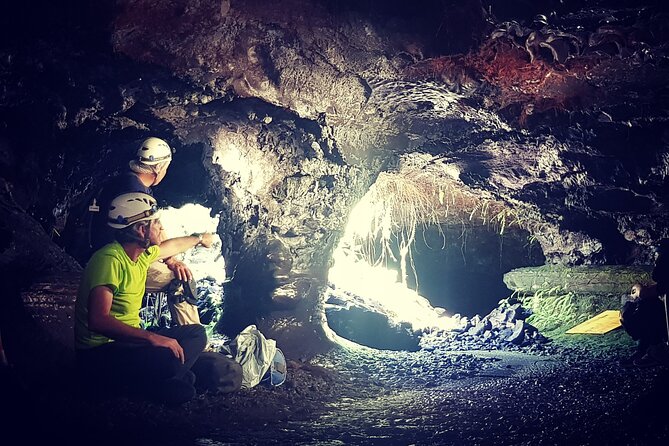
Right after gearing up, you walk for about 15 minutes on lava ropes to reach the entrance. This isn’t long, but it’s an important part of the experience because it sets expectations: you’re moving on volcanic ground, getting used to the environment, and letting your instructor give context before you go fully dark.
During that approach, your guide describes what’s around you. Even if you’re not a geology person, these first minutes help you notice patterns once you’re underground.
First Look in the Dark: Where Your Brain Goes From Fear to Wonder
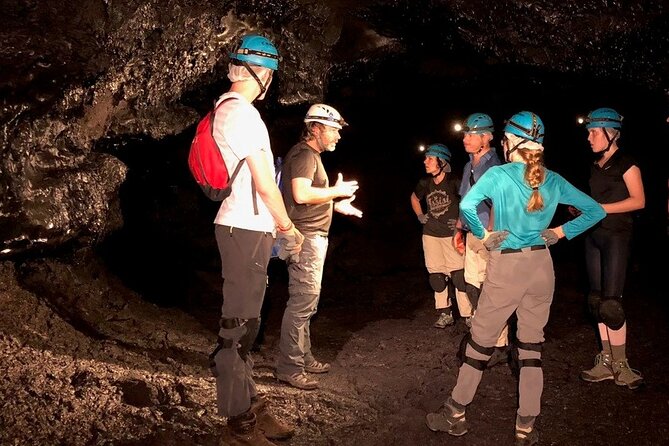
Once you enter, the process is timed for your eyes. After the initial explanations, you’ll spend a bit of time letting your sight adjust in darkness. This is where the tour turns from intimidating to fascinating.
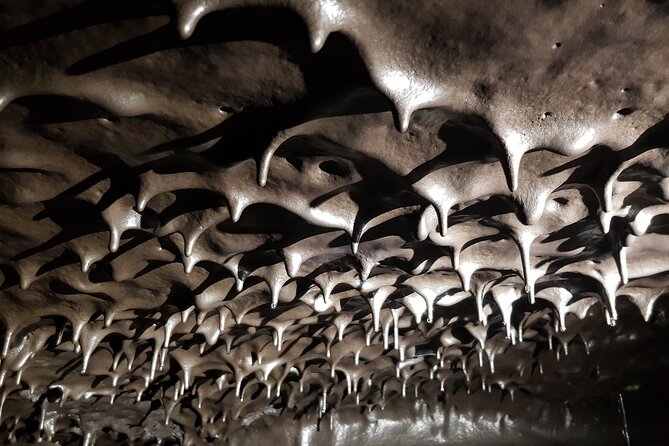
Then the tunnel reveal starts. The ceilings look like melting dark chocolate flowing in slow motion, described as stalactites. You’ll also see lava benches and formations that resemble small forests—stalagmites that grow up from the ground into something ghostly.
And yes, there are playful names tied to shapes you’ll recognize. Expect a formation called a dodo and another compared to a shark. The names aren’t the science, but they help you remember what you’re looking at.
How the Tunnel Moves: Standing, Bending, Squatting, Repeating
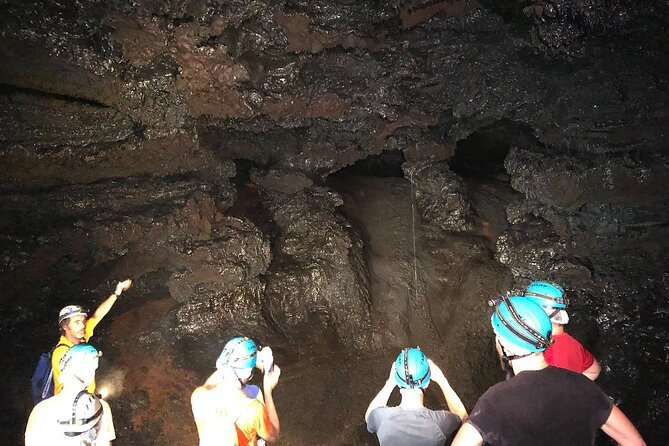
Inside, you move slowly and at your own pace. The walking style is simple but not uniform: sometimes you’ll be upright, sometimes you’ll be bent, and sometimes you’ll squat to get through or around the cave’s contours.
That matters for comfort. If you know you can handle slow, awkward movement for long stretches, you’ll likely be fine. If you hate kneeling or crouching, this is the part to think about ahead of time.
The good news is that the guide manages the flow. You’re not forced into a fast line, and the equipment—especially knee pads and gloves—turns a potentially uncomfortable crawl into a controlled walk.
The Best Part for Real Geology Fans: Volcanic Speleology With Practical Explanations
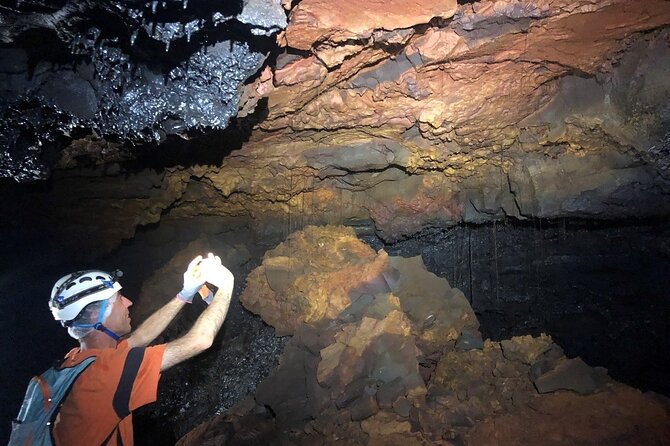
The tour is framed around what the guide calls volcanic speleology. Translation: you’re learning how lava tunnels form, not just admiring the walls.
As you progress, your instructor explains the formation process behind what you see. That’s what turns the tunnel from a dark corridor into a place with a story you can actually follow—how the lava behaved, how the spaces formed, and why the shapes look the way they do.
This is also why the guide matters. One review specifically highlighted a relaxed, informative guide named Fred. Even if you don’t get Fred, the tone you want is the same: calm explanations that match what you’re standing in.
The Color and Texture Shift You’ll Notice After 2 Hours Underground
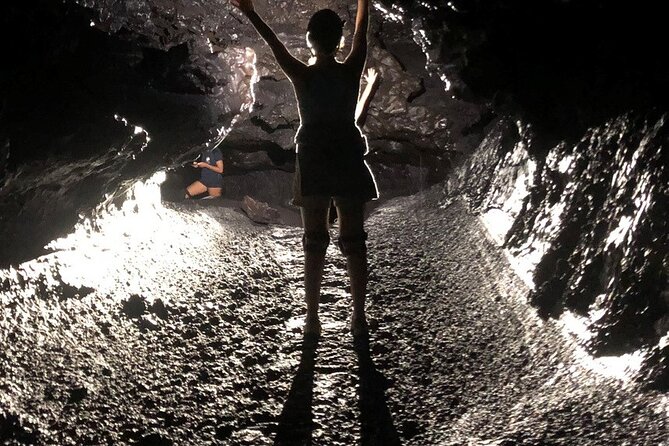
A lava tunnel isn’t just black rock. As you spend time underground, the colors start to register: anthracite gray, brown, red, and black. Those tones come from the minerals and the history of the flow, and they make the formations feel less like a single-tone cave and more like a whole world.
You’ll be down there for about 2 hours. That’s long enough for your eyes to adjust fully and for the guide’s explanations to land, but not so long that you’re stuck with one steady posture for hours.
The View Outside: A Final Look at Piton de la Fournaise
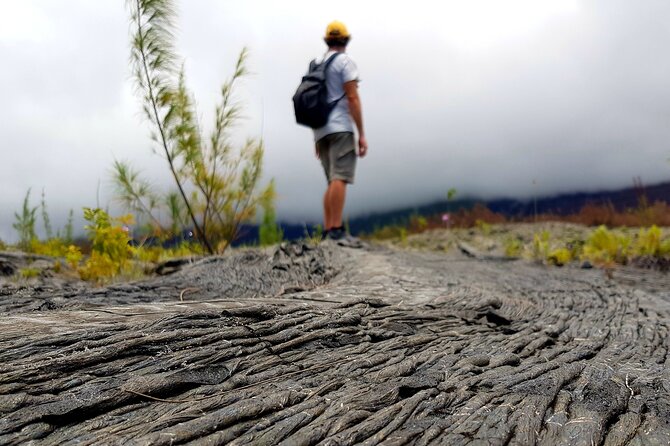
After the tunnel portion, you step back out into daylight and get another look at Piton de la Fournaise. That second viewpoint matters, because it gives context to what was happening underground.
Inside, you’re focused on details—stalactites, stalagmites, lava benches, and those playful shapes like the dodo and shark. Outside, you reconnect the tunnel to the larger volcano system and the scale of Reunion’s volcanic landscape.
It’s the kind of close-the-loop moment that makes the underground time feel more meaningful.
Price and Value: What $75.31 Gets You in Real Terms
At $75.31 per person, you’re paying for three things that add real value: guided interpretation, safety gear, and a small-group, controlled route.
First, you’re not relying on guesswork. You get explanations during the walk, with timing that supports what you’re seeing. In caves, that’s huge. Without a guide, many details stay confusing because you don’t know what to look for.
Second, the tour provides core safety and comfort items: helmet, headlamp, gloves, and knee pads. If you’ve ever tried to do anything similar without the right gear, you know it can quickly turn into a “why did I bother?” situation.
Third, the experience runs with a maximum of 6 travelers. That usually translates into fewer bottlenecks and better pacing, which matters for squatting and bent-over sections.
Also, the tour is often booked about 34 days in advance on average. If you want a specific date when conditions are good, don’t wait too long.
What to Bring: Clothing, Shoes, Water, and the Camera Question
The tour lists clear clothing needs, and you should listen. Wear long pants and a T-shirt (no tank top). Use hiking or basketball shoes—something with grip and support, because lava rock and cave surfaces aren’t forgiving.
Bring a small backpack and a water bottle. A camera is allowed, but plan for the fact you’ll be wearing a helmet and moving carefully. If you’re bringing extra batteries or electronics, keep them protected from damp conditions.
Bring a change of clothes. Not because you’re expected to get soaked like a beach day, but because underground tours can leave you needing a reset afterward.
Don’t skip the rain suit. The experience requires good weather, but having rain protection helps you get through the approach and any post-tour drizzle.
Weather Rules: When It Runs and When It Doesn’t
This activity requires good weather. If it’s canceled due to poor weather, you’ll be offered a different date or a full refund. That’s one of those practical realities of volcanic sites and underground access.
So here’s the smart move: pick your plans with buffer time. If your schedule is tight, you may end up adjusting. A lava tunnel tour isn’t something you want to put in a day with zero flexibility.
Who Should Book This Lava Tunnel Tour (and Who Might Want to Think Twice)
This tour is best for you if:
- you like guided nature experiences with clear explanations
- you’re curious about how volcanic features form
- you can handle slow movement and occasional squatting
- you want full safety gear provided, not rented at the last second
It may feel like hard work if you have trouble with crouching or you don’t do well moving in low-light conditions. The guide paces the group, but the cave shapes still dictate body positions.
If you’re traveling with a friend who’s into science, this is also a nice shared experience. You’ll see strange shapes (dodo and shark) and then learn what’s behind them, which makes the whole walk more satisfying.
Should You Book the 2004 Lava Tunnels Tour?
Book it if you want a rare, guided underground experience on Réunion Island with a small group and actual volcanology explanations. The combination of helmets and headlamps, plus the slow walk matched to your eyes adjusting in the dark, is built for people who care about seeing details—not just taking photos.
Don’t book it if you’re expecting an easy, fully seated visit. This is a real walk, sometimes bent over, sometimes squatting, and it lasts about 2 hours underground.
If you can meet the clothing requirements and bring moderate fitness, you’re likely to enjoy it a lot. And if you’re lucky enough to get a guide like Fred, you’ll probably appreciate the relaxed, clear teaching style as much as the tunnel itself.
FAQ
How long is the guided tour of the 2004 lava tunnels?
The duration is about 2 hours 30 minutes.
Where does the tour start and end?
It starts at Route des Laves, Sainte Rose 97439, Réunion, and ends back at the same meeting point.
What equipment is included?
You’ll receive helmets, gloves, knee pads, and headlamps.
What should I wear for the tour?
Wear long pants and a T-shirt (no tank top), plus hiking or basketball shoes. Bring a small backpack and a water bottle.
Is this tour for people with limited mobility?
The tour recommends travelers have moderate physical fitness because you’ll walk slowly and sometimes be bent or squatting.
How big is the group?
The maximum group size is 6 travelers.
Do I get a ticket on my phone?
Yes, it’s listed as a mobile ticket.
What happens if the weather is bad?
The experience requires good weather. If it’s canceled due to poor weather, you’ll be offered a different date or a full refund.
Can I cancel and get my money back?
Yes. Cancellation is free. You can cancel up to 24 hours in advance for a full refund, and cancellations within 24 hours won’t be refunded.