REVIEW · BAWITI
White Desert – Overnight Tour
Book on Viator →Operated by Desert Safari Home · Bookable on Viator
Sleeping under stars beats any city day. This overnight in Egypt’s Western Desert lets you move through White Desert scenery for two days, not just a quick stop. You’ll hit the Black Desert, Crystal Mountain, and the Valley of Agabat first, then finish with a soak in hot springs at Be’er Sejamm.
What I like most is how personal the experience feels once you’re out there. A Bedouin family style camp means you’re not just “watching” the desert—you’re living the rhythm: cooking around an open fire, sharing the night, and sleeping under a sky that feels close enough to touch.
One consideration: you’re trading comfort for time. The morning start and the long road out from the Cairo area can be tiring, but that distance is also what buys you real quiet, real night skies, and the kind of desert that doesn’t show up on postcard routes.
In This Review
- Quick hits before you go
- How this overnight tour really works (and why it’s worth it)
- Getting to the start point: the 7:00 am reality check
- Day 1: Black Desert basalt viewpoint (your first big view)
- Day 1: Crystal Mountain—seeing how crystals show up in sand
- Day 1: Valley of Agabat—panoramic views with camel history vibes
- Overnight in the White Desert: camp where you choose, live by the fire
- Day 2: White Desert exploration in two hours of moonlike terrain
- Hot springs at Be’er Sejamm: the best kind of tired
- Guide care and family energy: what Mohammed brings to the trip
- Meals and included gear: what you don’t need to stress about
- Price and value: is $235 per group fair?
- What to pack and how to handle desert comfort
- Who this tour suits best (and who might want a different option)
- Should you book this White Desert overnight?
- FAQ
- What time does the tour start?
- Where is the meeting point?
- Is pickup offered?
- How long is the overnight tour?
- What meals are included?
- Are entrance fees included?
- What happens at the end of the tour?
- Is this a private tour?
- What is the cancellation policy?
Quick hits before you go
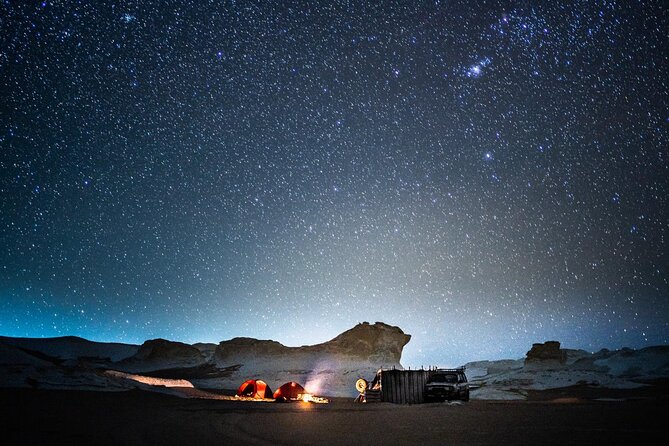
- Bedouin-family camp experience with set-up support and meals included
- Sunrise and stargazing potential after dark skies over the White Desert area
- Big-name stops in two days: Black Desert, Crystal Mountain, Valley of Agabat, White Desert
- Hot springs reset at Be’er Sejamm after a day of sand and walking
- Photo-friendly terrain: basalt viewpoints, crystal scatter scenes, and wind-sculpted rock
How this overnight tour really works (and why it’s worth it)
This is a true overnight, which changes everything. Day trips can be rushed; you’re always thinking about getting back before dark. Here, you get the second half of the story: camp life, stargazing, and a more unhurried pace between stops.
You start early (7:00 am) and you’re in a small, private setup for your group. Transfers are part of the plan, and the meeting point is on El Wahat Road. Once you’re moving, the day is designed as a sequence of terrains: black basalt, crystal-studded sand, then the pale, moonlike White Desert.
The practical payoff is simple: you get more variety than you’d expect from a two-day trip. And you also get the moment most people remember most—quiet time under the stars—because you’re staying out in the desert, not returning the same day.
Getting to the start point: the 7:00 am reality check
The tour starts at 7:00 am from El Wahat Road (Al Wahat Al Baharia area). If you’re coming from Cairo, plan your schedule like this is a full-day commitment. The drive can be long, and you’ll feel it more than you think—especially if you’re doing other Cairo sightseeing the same day.
The upside is that early departure helps you avoid the worst heat during the daytime stops. Also, it keeps the day structured: you’ll reach the key viewing areas while the light is still good for pictures and climbing to viewpoints feels easier.
If you like a smooth plan, this schedule helps. You’re not stuck trying to figure out transport on your own once you’re in the Bahariya area. If you hate early starts, this might feel like a price, but it’s also what makes the desert time work.
Day 1: Black Desert basalt viewpoint (your first big view)
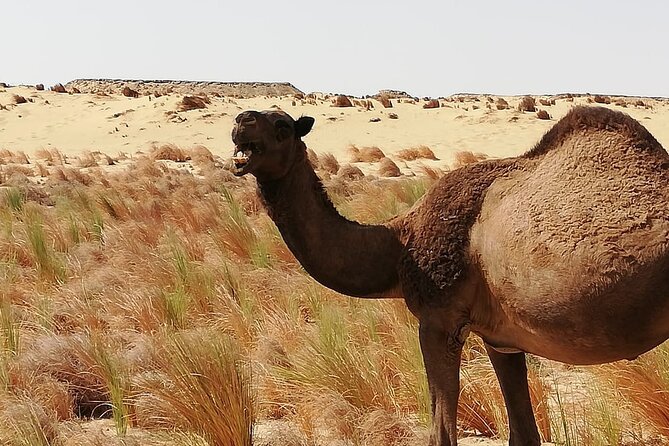
Your first stop is the Black Desert, an area formed from black basalt—volcano country in spirit, with mountains of dark stone shaped over time. You’ll climb up for views, and the time on this stop is about an hour.
Why this matters for your trip: it’s your visual warm-up. After black stone and long sight lines, the next day’s pale sand hits harder. You’ll also get the feel of how the Western Desert “reads” in photographs: strong contrast between sky and rock, with shadows doing a lot of the work for you.
A practical note: basalt climbs can be uneven. Wear shoes that handle sand and rock, and keep your pace steady. This is not technical climbing, but the ground isn’t “city smooth.”
Day 1: Crystal Mountain—seeing how crystals show up in sand
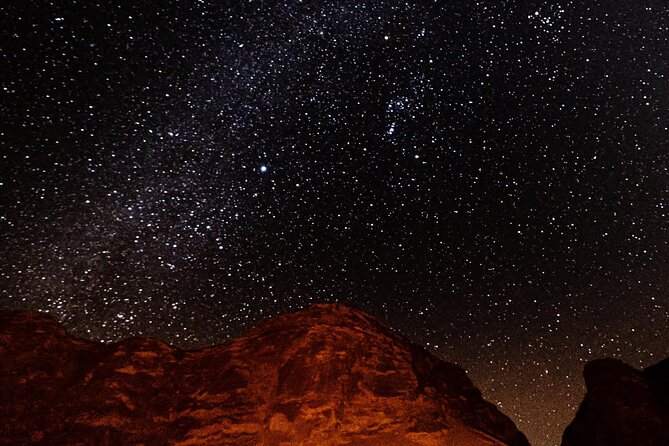
Next up is Crystal Mountain, where you explore a mountain of crystals and look for them scattered across the sand. The time here is also about an hour.
What you’re really experiencing isn’t just the crystals—it’s the way they sparkle when the light hits them. It’s the kind of scene where even if you’re not a “crystal person,” you’ll still enjoy the search process. The best photos usually come from low angles and close-to-ground framing, because the sand texture adds a lot.
If you’re traveling in a group, this stop can be a fun break from constant walking. But it still takes attention—look around, not just straight ahead. The crystals can appear in small clusters.
Day 1: Valley of Agabat—panoramic views with camel history vibes
Your third stop is the Valley of Agabat, known for panoramic views. It’s described as a route that was once crossed by camels on travel between Farafra and Bahariya.
Even without getting lost in ancient-details mode, this stop works because it gives your eyes distance. After the tighter feel of basalt and crystal hunting, a wide valley view is a reset. You’ll also get that “we’re really out here” sensation, because there’s less to break the horizon.
This is also a good spot for stretching and slow photos. Take a few minutes to just look—this valley kind of scenery is where your brain finally treats the desert as the main event.
Overnight in the White Desert: camp where you choose, live by the fire
Then comes the heart of the trip: you camp in the White Desert area. The experience includes camping gear, dinner, and the kind of open-fire setup that turns a “night in a tent” into an actual memory.
A standout detail is that you can set up camp in a location of your choice. That matters more than it sounds. In the desert, small changes in where you place your tent can affect wind exposure, how the sky faces you, and how good your star-viewing will be.
Food is part of this too. Dinner is included and it’s prepared as part of the camp setup, with warmth and storytelling energy. In multiple accounts, Mohammed and his family (and at times a cousin guide) are described as welcoming and careful with guests. They also bring cultural moments into the night, including singing, which adds a human layer beyond the scenery.
For sleep, you’ll have blankets. It can get chilly at night, even if daytime feels mild, so pack for cooler temps. I’d rather you bring warm layers than regret it at 2 am.
Day 2: White Desert exploration in two hours of moonlike terrain
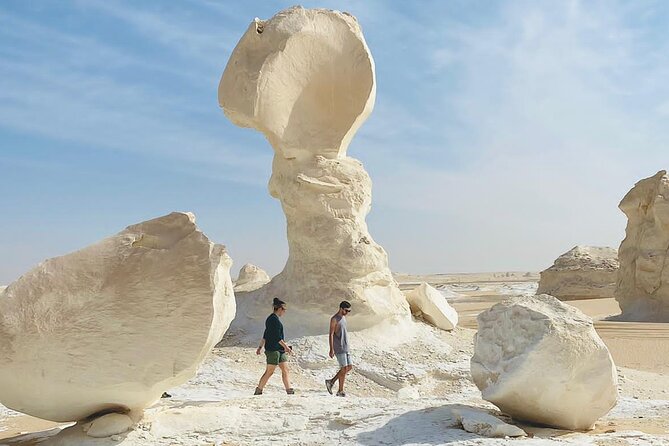
On day two, you go back out into the White Desert for about two hours of exploring. This is the part people describe as moonlike: pale, eerie-feeling rock formations shaped by wind.
This is when you’ll do the most walking on the tour, and it’s also when you’ll want to be ready for picture opportunities. The time window is long enough to wander and find interesting angles, but short enough that you won’t feel stuck out there all day.
A smart approach: slow down for photos early, then shift into “explore” mode without constantly stopping. That way you experience the place, not just your camera.
If you’re hoping for night-sky visuals, the schedule means you’re likely to catch stars after dark on the first night, with people also describing memorable stargazing moments like the Milky Way and bright night lighting.
Hot springs at Be’er Sejamm: the best kind of tired
After the White Desert exploration, you finish with a soak at Bath Hospitalization Be’er Sejamm. The hot springs time is about an hour, and this is the feel-good ending that makes the hard travel worth it.
This stop acts like a reset button. After sand, walking, and sleeping outdoors, warm water helps you loosen up and stop feeling “desert stiff.” It also gives the trip a clean conclusion: you don’t end on a long drive into chaos; you end in a calmer, restorative setting.
Even if you’re not a spa person, hot springs are one of those experiences that works because it’s practical. It improves how you feel for the rest of your travel day.
Guide care and family energy: what Mohammed brings to the trip
A big theme is how guided this experience is. You’ll have a local guide who knows where to go, how to pace the day, and how to make it feel welcoming rather than transactional.
Mohammed is specifically mentioned in accounts as an excellent guide, with strong English, good stories, and attention to detail. In some cases, he’s supported by a cousin guide. That matters because you want the photography help and the calm guidance at the same time.
You’ll also benefit from how they handle camp life. People mention that dinner is really good and that the team makes fire and keeps things comfortable with blankets. In a desert tour, that’s not small. It’s the difference between surviving the night and actually enjoying it.
Meals and included gear: what you don’t need to stress about
This package includes lunch, dinner, and breakfast, plus camping gear and the guide. For you, that means less planning. No hunting for food after arrival, no worrying about where supplies come from, and no “what do we do at night?” anxiety.
That also means you can travel lighter. If you’re the type who hates packing extra food and cooking gear, this tour design matches that mindset.
The tour also includes transfers from the Bahariya bus station area. So you’re not left figuring out how to get to remote desert trailheads after a bus ride. Meeting point details are clear and you start at 7:00 am.
Price and value: is $235 per group fair?
At $235 per group (private for your group), this is one of those prices that only makes sense when you compare the full package, not just the “tour ride.” You’re paying for:
- Two days of guiding and transport through multiple desert stops
- Meals for lunch, dinner, and breakfast
- Camping gear and camp setup support
- An overnight experience with real nighttime time in the desert
- Hot springs entry (per the itinerary’s listed inclusion)
If you’re doing this as a shared group, it’s easier to justify. But even for solo or small group travel, the overnight + meals + included guiding is usually where the value comes from, because you’re not paying separately for each part.
The only cost you should expect outside the package is entrance fees for the White Desert National Park, which are at your own expense. Budget for that rather than being surprised at the gate.
What to pack and how to handle desert comfort
You’re outdoors for long stretches, and conditions shift between day and night. Even during summer, people mention that mornings and evenings are pleasant, but nights can get chilly—so pack warm clothes.
Beyond warmth, think practical: shoes that handle sand and rock, clothing that you don’t mind getting dusty, and layers you can remove in the day. You’ll be walking and climbing in places like the Black Desert viewpoint.
Also, plan for the fact that the best photos and the best moments often come when you pause. Desert tours reward patience.
Who this tour suits best (and who might want a different option)
This is a great fit if you want more than sightseeing. You want the full overnight feeling: camp life, guided stops with time to look around, and a real night sky.
It also suits couples and friends who enjoy a shared, small-group pace. It’s described as private for your group, and the overall vibe tends to be warm and family-run.
If you hate early mornings or you really don’t do well with long drives, this might feel like a struggle. The itinerary starts early and you’re committing to the road time to reach the Western Desert.
Should you book this White Desert overnight?
I’d book it if you want two full days of desert instead of a rushed photo stop, and if you like the idea of finishing with hot springs. The camp dinner, blankets, and the fact that you’re welcomed like family are the difference-makers here.
I’d think twice if your schedule is tight or you’re fragile about early starts. The drive time is real. But if you can handle that morning, the payoff is strong: you’ll see black basalt viewpoints, crystal-scattered sand scenes, panoramic valleys, and then the pale, moonlike White Desert with stargazing time that most day trips can’t give you.
FAQ
What time does the tour start?
The tour starts at 7:00 am from the meeting point on El Wahat Road.
Where is the meeting point?
The meeting point is El Wahat Road (El Wahat Rd, Al Wahat Al Baharia, Giza Governorate 3035025, Egypt).
Is pickup offered?
Yes, pickup is offered.
How long is the overnight tour?
It’s listed as 2 days (approx.).
What meals are included?
Dinner, lunch, and breakfast are included.
Are entrance fees included?
Entrance fees for the White Desert National Park are not included and are at your own expense.
What happens at the end of the tour?
You end back at the meeting point after the hot springs stop at Be’er Sejamm.
Is this a private tour?
Yes. It’s described as private, so only your group participates.
What is the cancellation policy?
Free cancellation is available up to 24 hours before the start time for a full refund. If it’s canceled due to poor weather, you’ll be offered a different date or a full refund.