REVIEW · MARRAKECH
Moroccan Cooking Workshop LAMAI CHEF
Book on Viator →Operated by LAMAI CHEF · Bookable on Viator
Spice lessons start before you cook. At LAMAI CHEF in Marrakech, you’ll begin with a mint tea ceremony and then learn the real nuts-and-bolts behind Moroccan flavor. What I love most is how hands-on it feels, especially when you get to work on the chicken tagine with candied lemon and olives, not just watch it happen.
One thing to consider: this is an active workshop. You’ll spend most of the 3 hours 30 minutes cooking, tasting, and learning, so it’s better if you’re ready to roll up your sleeves instead of wanting a slow, purely observational class.
In This Review
- Key highlights you’ll actually use later
- Where LAMAI CHEF fits in Marrakech (and why that matters)
- The first half: spices, mint tea, and pastry-driven learning
- Bread and tagine: the hands-on centerpiece of the class
- Salads (one cooked, one fresh): a quick way to understand Moroccan meals
- The vegetarian Berber tagine demo: useful even if you eat meat
- Pancakes with honey and almonds: the sweet finish that teaches flavor
- Tasting your work: lunch or dinner plus a wrap-up ceremony
- Price and time: does $69.52 feel fair for what you get?
- Who should book this cooking workshop (and who might not love it)
- Should you book Moroccan Cooking Workshop with LAMAI CHEF?
- FAQ
- Where is the meeting point for Moroccan Cooking Workshop LAMAI CHEF?
- How long is the cooking workshop?
- Is pickup offered?
- Is this a private tour or shared group activity?
- Do you provide a mobile ticket?
- What dishes do you cook in this workshop?
- Is there a tasting included?
- Is there a mint tea ceremony and spice lesson?
- What’s the cancellation policy?
- What happens if the minimum number of travelers isn’t met?
Key highlights you’ll actually use later
- Spices explained with Moroccan context: a guided start that links the flavors to Morocco’s spice routes and trade.
- Mint tea plus pastry, then spice workshop: you learn before you chop, so the cooking makes more sense.
- Hands-on tagine, bread, and salads: you’ll practice techniques, not just recipes.
- Chicken tagine with candied lemon and olives: a sweet-salty combo that teaches balance.
- Vegetarian Berber tagine demo: clear ideas for adapting spices and methods.
- A full meal from what you prepared: lunch or dinner, then a small graduation moment to wrap it up.
Where LAMAI CHEF fits in Marrakech (and why that matters)
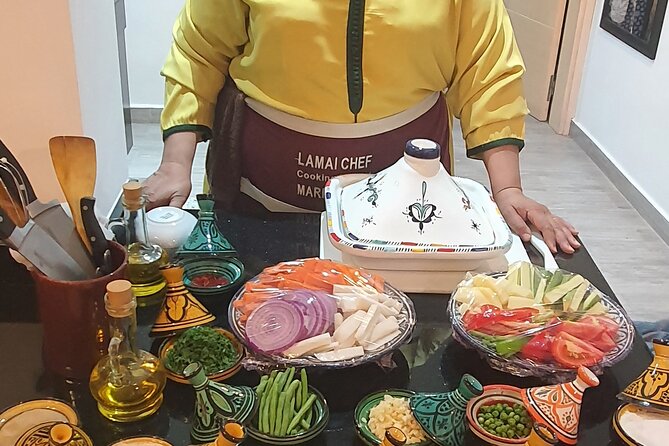
This class happens in a cooking school set in a residence in Marrakech. That sounds simple, but it changes the vibe. You’re not learning to cook in a commercial kitchen meant to churn out tourists. Instead, it feels like a home base for Moroccan cooking traditions, which makes it easier to pay attention to the details.
The workshop is private, meaning only your group participates. That matters if you want questions answered without waiting your turn. It also tends to make the pace more comfortable, since the instructors can adjust to your group.
Location-wise, it starts at Lamai Chef Marrakech, 177 lot riad de palais, Marrakech 40150. It’s also near public transportation, which is helpful when you’re juggling taxi rides and timing in a busy city. Pickup is offered too, so you can plan with less stress if you’re staying a bit farther out.
Finally, the experience runs within a broad daily window (9:00 AM to 10:00 PM). That means it’s often easier to fit into your schedule than tightly timed activities.
You can also read our reviews of more tours and experiences in Marrakech.



The first half: spices, mint tea, and pastry-driven learning
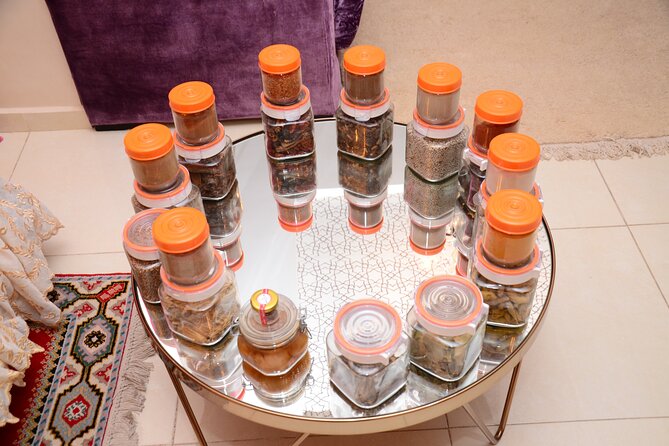
The workshop begins with a presentation on spices, and it’s not just a list of what goes into Moroccan food. You’re shown why these flavors are so central to Moroccan cooking. The explanation connects Morocco’s geography to historic spice caravans that traveled through the region, leaving their mark on ingredients and techniques. It’s a practical way to understand why the spice mix doesn’t feel random.
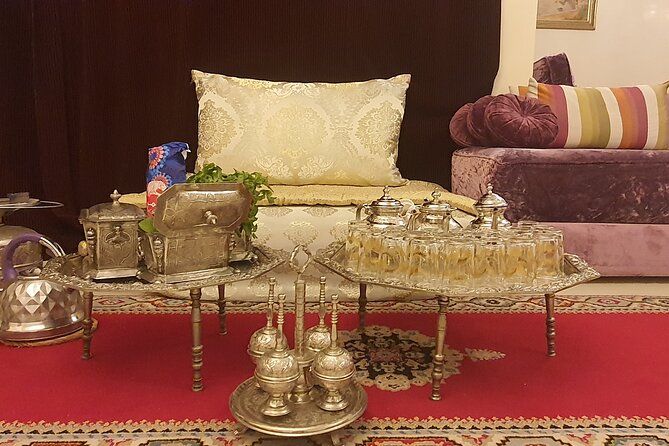
Then comes the mint tea ceremony with Moroccan pastry, paired with a spice workshop. This part is more than a warm welcome. Tea and pastry create a moment to slow down and focus, and you get a head start on understanding aroma and timing. When you later smell spices heated in a tagine, you’re not guessing which one does what—you’ve already been taught how to think about them.
This structure also builds confidence. If you’ve ever cooked only from measurements, Moroccan spices can feel like a black box. Here, you’re given a sense of how people use spices as a system: layering flavor, warming aromatics, and building complexity dish by dish.
If you like food that tastes balanced (not just hot or sweet), you’ll appreciate this early foundation. It helps the rest of the class click fast.
Bread and tagine: the hands-on centerpiece of the class
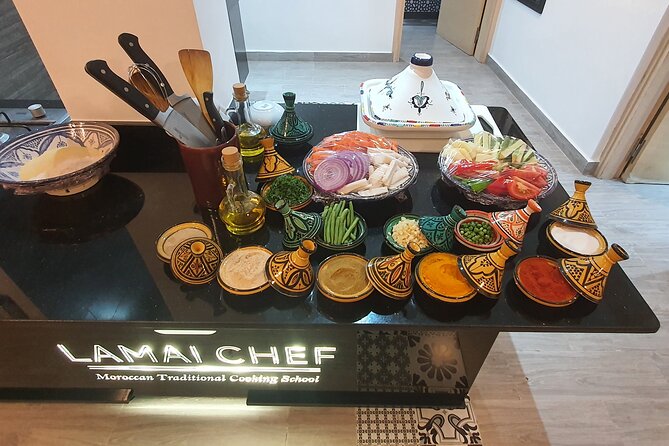
The practical portion is where your kitchen skills turn into real Moroccan meals. You’ll prepare bread and work on a centerpiece dish: chicken tagine with candied lemon and olives, finished with Taliouine saffron.
Why that dish is such a big deal: tagines are about more than cooking in a special pot. They’re about gentleness—slow, steady heat that turns ingredients into something cohesive. Chicken tagine also teaches texture and seasoning. You’ll learn how to get flavor into the dish without drowning it in sauce.
The candied lemon and olives combo is a classic lesson in balance. Sweet shows up, salty shows up, and the dish still feels harmonious. It’s one of those Moroccan flavor patterns you’ll recognize once you’ve tasted and repeated it a few times.
You’ll also notice how the instructors guide you through steps while you’re actually doing the work. That’s important for value. A class like this is worth paying for when it turns you into someone who can cook again later without starting from scratch.
Salads (one cooked, one fresh): a quick way to understand Moroccan meals
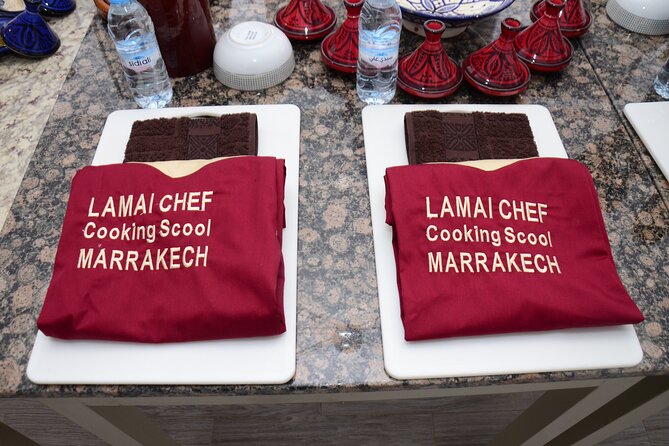
After the tagine work, the workshop moves into salads—two of them, including one cooked and one fresh. This is a smart section because salads in Moroccan cooking aren’t always the plain-sidekick you might expect. They’re flavor systems: acidity, herbs, spices, and fresh texture all doing their jobs.
One cooked salad helps you understand that even vegetables can be treated like warm ingredients. You learn how heat changes their taste and how spices behave when they sit and soften.
The fresh salad helps you compare that with what happens when herbs and raw ingredients keep their bite. Put together, those two salads teach you a key principle: Moroccan meals often move between warm and fresh elements rather than treating them as separate worlds.
If you’re the type who wants to recreate meals at home, this part is gold. You can practice the salad lessons without owning special equipment. And you’ll leave with a sense of how to build a plate: something warm, something cool, something punchy with herbs.
The vegetarian Berber tagine demo: useful even if you eat meat
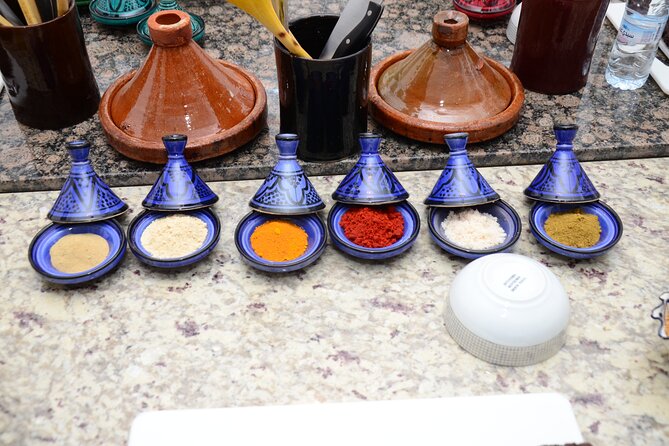
You’ll see a demonstration of a vegetarian Berber tagine. It’s not presented as an afterthought. A demo format means you watch the method and see how the instructor manages timing and seasoning without relying on the same proteins as the chicken dish.
Even if you’re not vegetarian, this is valuable because tagine technique is transferable. The underlying approach—how spices are introduced, how ingredients are layered, and how the tagine method develops flavor—still applies.
And Berber-style cooking is often about substance: ingredients that hold up, spices that create depth, and combinations that feel satisfying rather than decorative. Watching how the instructor balances the dish helps you understand what to substitute if you want to cook a similar style with whatever seasonal vegetables you can find.
This is also where you get a safer way to experiment. You can watch first, then ask questions. If your goal is learning to cook confidently, that demo is a helpful checkpoint.





Pancakes with honey and almonds: the sweet finish that teaches flavor
Toward the end of the practical segment, you’ll prepare pancakes with honey and almonds. Sweet Moroccan dishes can feel simple, but the technique matters. You’re learning how ingredients work together: honey for warmth and gloss, almonds for richness and texture.
This course doesn’t stop at savory. That’s one of its strengths. Moroccan meals often finish with something sweet, and it helps to experience that rhythm. It makes the workshop feel like a real meal path, not a random set of recipes.
If you’re someone who likes dessert but doesn’t want a complicated one, this section is a practical win. Almonds and honey are widely available, and you’ll have a clearer idea of how to balance sweetness without making it cloying.
Tasting your work: lunch or dinner plus a wrap-up ceremony
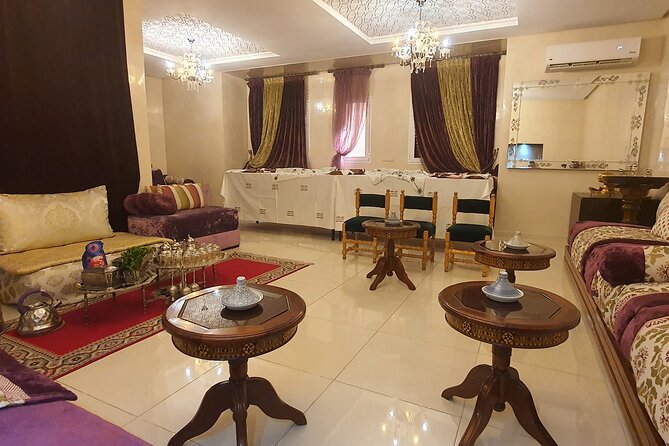
After cooking, you move into the tasting part. You’ll have lunch or dinner based on what you prepared. That choice matters more than it sounds. If the timing matches your day, the meal feels like closure rather than an interruption. It also confirms the food is meant to be enjoyed as a group sitting together, not just a quick sample.
This is where the learning becomes real. You taste and connect what you did—spice layers, heat level, ingredient balance—to the final result. When you’ve made tagine and salads, tasting isn’t just about hunger. It’s about feedback.
Then there’s a graduation ceremony and the end of services, and the activity finishes back at the meeting point. That structure is simple, but it gives the experience a clean ending. You’re not left wondering what to do next, or whether you missed the key moment.
The overall effect is a full cycle: learn the logic, cook the dishes, eat them, and then leave with enough confidence to repeat the method.
Price and time: does $69.52 feel fair for what you get?
At $69.52 per person, the price sits in the middle of what food classes in Marrakech often cost, but it feels fair because the time and workload match the fee. You’re getting:
- A structured spice lesson before cooking
- Mint tea and Moroccan pastry as part of the start
- Hands-on cooking for multiple items
- A tasting meal you produced
- A private-group setup
The duration is about 3 hours 30 minutes, which is long enough to actually cook, not just gather ingredients. It’s also short enough that you won’t feel like your whole day disappears.
Also, the fact that the school is booked fairly far in advance on average (around 28 days) is a hint: people treat this as a priority activity, not a casual add-on. If you want a specific time slot, planning ahead helps.
In short, you’re paying for instruction plus an actual meal. If your goal is to leave with dishes you can repeat, this workshop has the right shape.
Who should book this cooking workshop (and who might not love it)
This is a great match if you:
- Want hands-on cooking rather than watching from the sidelines
- Enjoy Moroccan flavors like tagines, spiced salads, and sweet finishes
- Like learning with a built-in explanation of spices and why they’re used
- Prefer a private setting where you can ask questions freely
It may feel less perfect if you:
- Want a purely relaxing experience with minimal cooking effort
- Have strict dietary needs that aren’t addressed in the provided details (the class includes specific dishes like chicken tagine and honey-almond pancakes)
If you’re cooking-curious, this gives you a grounded start. And if you’re already a confident cook, the spice-to-method approach still helps.
Should you book Moroccan Cooking Workshop with LAMAI CHEF?
If you want one Marrakech activity that feeds you and teaches you at the same time, I’d book it. The best part is the full arc: spices and tea at the front, real cooking in the middle, and tasting what you made at the end.
You’ll get the classic Moroccan dishes you came for—bread, tagine, salads, and sweet pancakes—with enough structure that you can recreate the flavors later, not just remember them.
The only reason to hesitate is if you dislike active participation. This isn’t a sit-and-snack class. You’ll be working. If you’re okay with that, you’ll likely walk away satisfied, full, and with practical skills you can use back home.
FAQ
Where is the meeting point for Moroccan Cooking Workshop LAMAI CHEF?
The workshop starts at Lamai Chef Marrakech, 177 lot riad de palais, Marrakech 40150, Morocco.
How long is the cooking workshop?
It lasts about 3 hours 30 minutes.
Is pickup offered?
Yes, pickup is offered.
Is this a private tour or shared group activity?
This is a private tour/activity, so only your group participates.
Do you provide a mobile ticket?
Yes, the activity includes a mobile ticket.
What dishes do you cook in this workshop?
You’ll prepare bread, chicken tagine with candied lemon and olives with Taliouine saffron, a vegetarian Berber tagine demonstration, two Moroccan salads (one cooked and one fresh), and pancakes with honey and almonds.
Is there a tasting included?
Yes. You’ll have lunch or dinner tasting what you prepared.
Is there a mint tea ceremony and spice lesson?
Yes. The start includes a presentation on spices, plus a mint tea ceremony with Moroccan pastry and a spice workshop.
What’s the cancellation policy?
Free cancellation is available up to 24 hours in advance for a full refund.
What happens if the minimum number of travelers isn’t met?
If the activity is canceled because the minimum isn’t met, you’ll be offered a different date/experience or a full refund.