REVIEW · MARRAKECH
Medina Walking Tour Secrets
Book on Viator →Operated by Marrakech WITH Locals · Bookable on Viator
A good city walk is how you learn a place fast. This one strings together Marrakech landmarks and side streets in 3 to 4 hours, with a real guide and helpful pacing. I love the Koutoubia area orientation (that 70m minaret does the heavy lifting) and the way the route blends famous stops with quieter neighborhood corners. One thing to plan for: entry tickets cost extra, and one major sight has limits for non-Muslims.
This is also the kind of tour that works well when you only have one afternoon and you don’t want to play detective with a map app. I especially liked the small touches—pastries and bottled water—and the fact that you’re walking, so you actually notice details along the way. Just know it’s weather-dependent, and you’ll be on your feet most of the time.
In This Review
- Key highlights worth your time
- A 3–4 hour Medina walk that makes sense at 3:00 pm
- Koutoubia Mosque: the 70m minaret wayfinding lesson
- Medina of Marrakesh: learning the back streets without getting lost
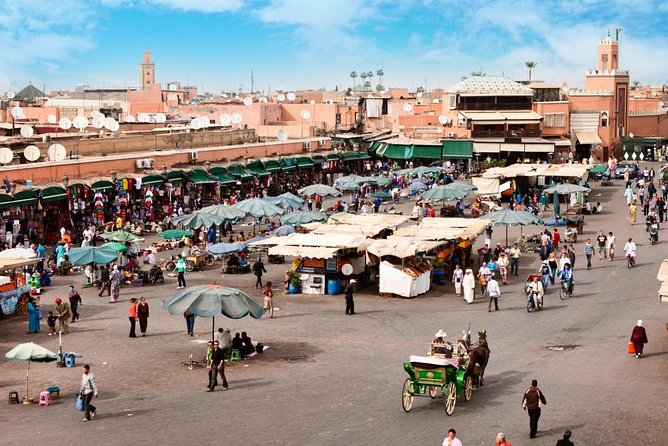
- Jemaa el-Fnaa: the square that changes mood over the day
- Mouassine fountain and the foundouks around it
- Souk Haddadine: crafts you can actually watch
- Medersa Ben Youssef: 16th-century school architecture (ticket extra)
- What $46.34 per person really buys you
- Logistics that affect your comfort (and enjoyment)
- Who this tour is best for
- Should you book Medina Walking Tour Secrets?
- FAQ
- Where does the tour start?
- What time does the tour begin?
- How long is the walk?
- What’s included in the price?
- Are monument entrance fees included?
- Is Koutoubia Mosque open to non-Muslims?
- Is this a walking tour?
- What’s provided for tickets?
- Can the tour be canceled?
- Is the tour offered as private?
Key highlights worth your time
- Koutoubia Mosque garden access: get the setting and context even if you can’t go inside
- Guided Medina navigation: learn the layout so the back streets stop feeling random
- Jemaa el-Fnaa context at the right time: see how the square shifts from morning energy toward evening height
- Souk Haddadine craft stops: watch trades like metalwork and leather markets up close
- Ben Youssef Medersa architecture: 16th-century school design with a quick stop built in
- Guide flexibility: a real human running the show, not a rigid checklist
A 3–4 hour Medina walk that makes sense at 3:00 pm
Starting around 3:00 pm is smart. In Marrakech, the day can feel like it’s running on two different clocks: cooler morning movement, then warmer afternoon wandering, then the square’s big evening shift. This tour uses that timing well, giving you time to tour without rushing while still positioning you for the atmosphere building around Jemaa el-Fnaa.
The duration—about 3 to 4 hours—is also a sweet spot. Long enough to hit multiple real sights, short enough that you don’t end up “sightseeing fatigue” before you even reach the souks. And because it’s a walking route, you get the lived-in texture of the Medina: doorways, fountains, workshop noise, and the general rhythm of daily life.
You should go in with a good mindset: you’re not just collecting photos. You’re learning how locals read the city. That’s the point, and it’s exactly where guided walking tours earn their keep.
You can also read our reviews of more tours and experiences in Marrakech.


Koutoubia Mosque: the 70m minaret wayfinding lesson
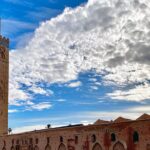
You’ll begin with Koutoubia Mosque, a 12th-century landmark where the minaret’s height (about 70m) becomes your navigation tool. Even if you’ve never been in Marrakech before, that tower helps you orient yourself quickly. It’s one of those places where the city’s geography feels practical instead of confusing.
Here’s the key detail to understand: non-Muslims can’t enter the mosque interior, but you can still walk in the garden. That means you’re not stuck with a “quick look from outside only” approach. You’ll still get atmosphere, layout, and a chance to slow down.
What I find most valuable in this stop is the explanation your guide gives you. You’ll get a talk about Islam’s five pillars, plus what to notice about Moorish-style architecture and local habits of worshipping. Even if you’re not trying to become an expert by the end of the afternoon, these basics help you read what you’re seeing instead of treating it like scenery.
Time check: the stop is short (around 10 minutes), so it’s designed for orientation and context more than a long on-site visit.
Medina of Marrakesh: learning the back streets without getting lost
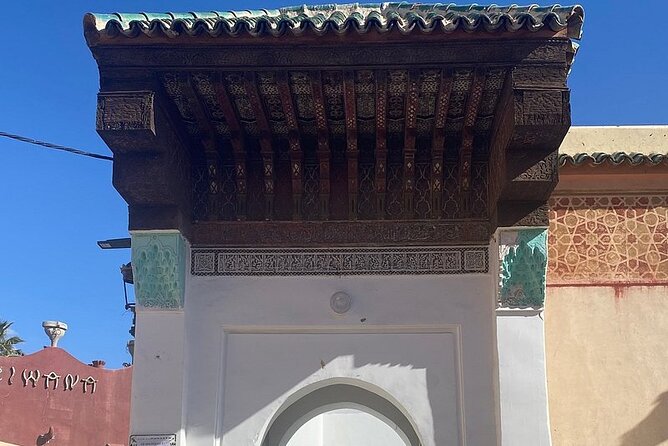
After Koutoubia, you move into the Medina of Marrakesh, where the real superpower is not “seeing the right sights.” It’s learning the streets between them.
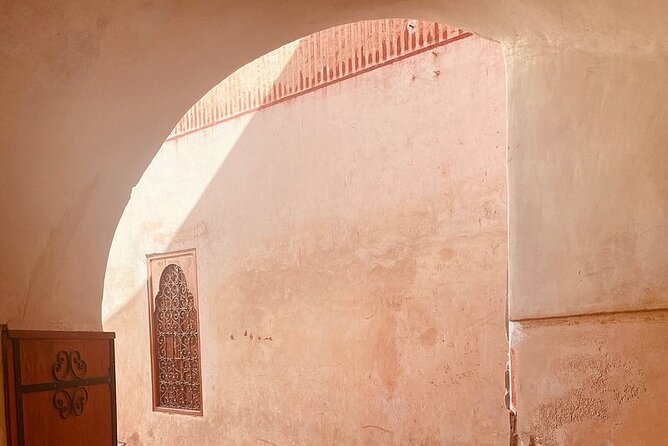
This part is roughly one hour of walking through narrow lanes—old alleyways, local houses, fountains, and artisanal life. The goal is simple: you should come away feeling like you can navigate a bit on your own afterward. A guide turns the Medina from a maze into a set of recognizable patterns.
One practical benefit: you’re not alone in making decisions. Marrakech has a lot going on—sound, smells, crowd flow, and constant offers. With a guide leading the way, you spend your attention where it matters: on the city’s everyday design, how neighborhoods function, and what makes this part of town feel different from the main tourist routes.
If you like “side street” travel—less about big ticket sights, more about how people actually live—this is the section to pay attention to. You’ll be surprised how quickly small details start to make sense.
Jemaa el-Fnaa: the square that changes mood over the day
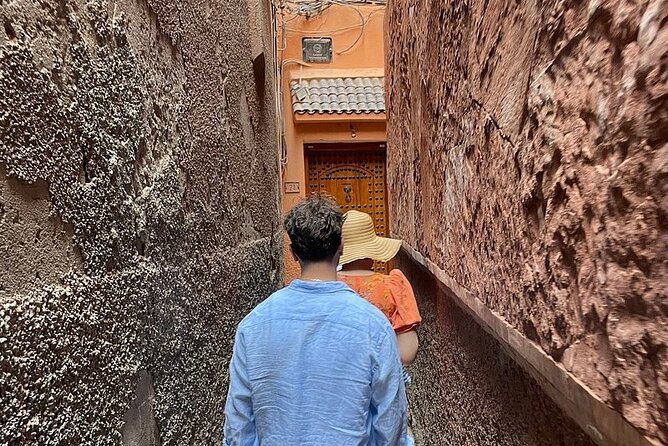
Next up: Jemaa el-Fnaa. This square is famous for a reason, but the real value of the guided stop is knowing what you’re looking at and why it matters.
You’ll spend about 30 minutes here, and the timing matters. The square begins drawing crowds in the morning and reaches its peak in the evening. During the afternoon, you can still feel the build-up—storytellers, dancers, water sellers, and snake charmers all part of what the space signals to the world.
The tour also adds context about the square’s place in Moroccan chronicles written between the 11th and 14th centuries. You’ll hear references to an esplanade connected with the palace area near Koutoubia (and the idea that public punishments were imposed publicly since the 12th century). That kind of background can make the experience feel less like spectacle and more like a living public stage with historical layers.
A quick note for how to enjoy this stop: don’t treat it like a museum exhibit. Let it move at human speed. Watch what performers do, but also watch how people flow in and out of the square.
Mouassine fountain and the foundouks around it
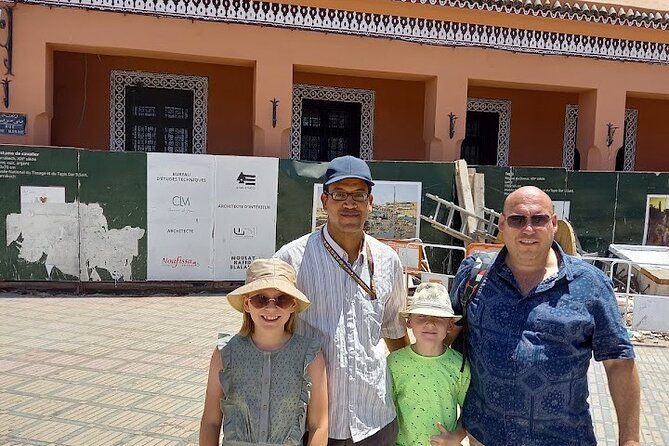
From the big open square, you’ll shift gears into something more intimate at Mouassine fountain. This stop is about 15 minutes, and it works well as a reset after the intensity of Jemaa el-Fnaa.
You’ll visit the Mouassine Complex, where the focal point is a historical fountain plus nearby foundouks and the surrounding neighborhood. Foundouks—those older trading and lodging spaces—help explain how commerce shaped the city. They’re part of why the Medina feels like it has a “business heartbeat,” even today.
This stop is picturesque, but it’s also practical. It’s where you get visual proof of the Medina’s design logic: water features, trade spaces, and street life all interlock.
If you want a moment to breathe and also learn something real, this is it.




Souk Haddadine: crafts you can actually watch
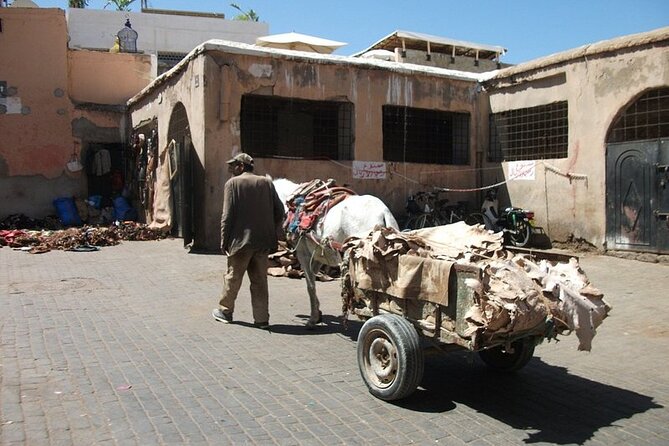
Then comes the part many people come for: Souk Haddadine. Your guide will take you close to craftsmen and the trades in the area—specifically described markets like the Blacksmiths market, plus related leather and leather-supply sections such as the Sheep leather market and the Leather Souk.
This segment takes about 30 minutes, and it’s one of the best ways to experience Marrakech beyond monuments. You get to see the workshop side of the city: the focused work, the tools, and the way trades cluster together.
It’s also a good place to remember what a guide does for you. In busy market areas, you can lose time quickly—getting pulled in different directions, trying to decide where to go next, or ending up in the wrong lane for what you want. Here, you’re guided to the right zones, and you can keep your curiosity oriented instead of scattered.
If you’re someone who likes artisan markets but hates feeling like a target, this tour’s paced approach can feel calmer than wandering alone.
Medersa Ben Youssef: 16th-century school architecture (ticket extra)
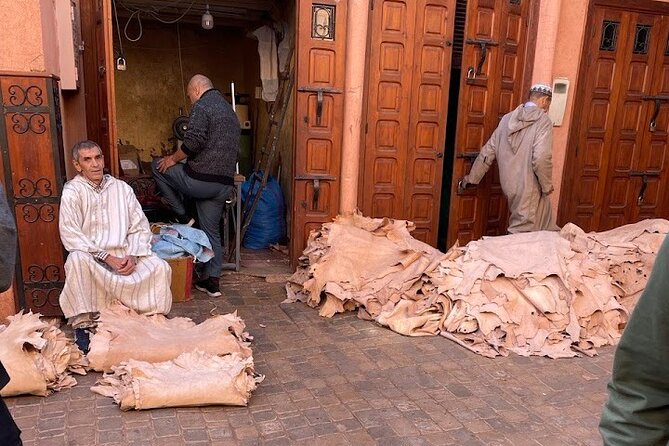
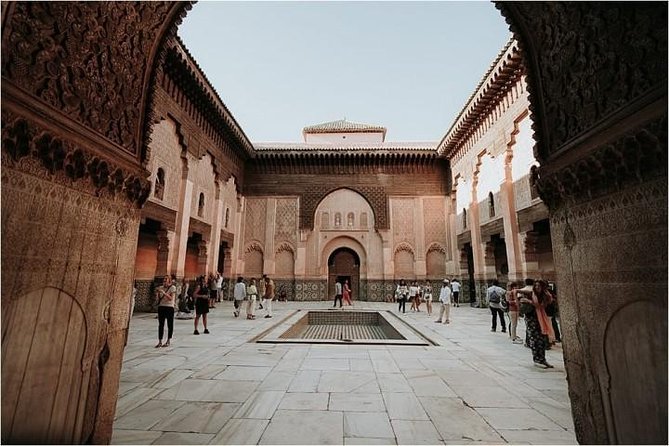
Your last major sight stop is Medersa Ben Youssef, a 16th-century theological school. This is scheduled for about 20 minutes, so it’s a focused visit.
The architecture here matters. Medersas are more than pretty buildings; they show how education, religion, and art intertwined in Moroccan city life. You’ll walk through enough of the space to understand the scale and design style your guide explains.
One important catch: entry fees are not included, so you’ll want to budget for the ticket at the time. Also, the tour is structured so you’re not stuck waiting—this is a “quick look with guidance” format, not an all-afternoon museum session.
What $46.34 per person really buys you
At $46.34 per person, this tour sits in a midrange zone for guided walking experiences. The value isn’t just the guide—it’s the way the route is built.
Many of the stops are admission ticket free on the tour’s schedule, including Koutoubia garden time and the Medina/souk/major square segments. The only clear “not included” cost you should expect is attractions entry fees, and the itinerary specifically notes Medersa Ben Youssef as not included.
On top of that, you get small comfort items that matter in Marrakech: local pastries and bottled water. Those aren’t huge, but they’re exactly what turns a hot walk into a manageable afternoon. You’re also using a mobile ticket, which keeps things simple at the start.
If you’re deciding whether it’s worth it, the easiest way to judge is this: do you want to spend your limited time figuring out where to go inside the Medina? If the answer is no, a guided route like this pays off quickly.
Logistics that affect your comfort (and enjoyment)
This is a walking tour. That means your biggest comfort variables are shoes and pace.
The tour lasts 3 to 4 hours, and it moves through changing street environments—from open areas to narrower back lanes and market zones. You’ll be near public transportation, but the main “movement” is still on foot.
Also, it’s weather-dependent. If conditions are poor, you’ll be offered a different date or a full refund. In practical terms: go with the weather forecast in mind, and don’t plan a heavy second excursion immediately afterward.
One more detail worth knowing: it’s listed as a private tour/activity, meaning only your group participates. Even with that private setup, you still get the guide’s routing advantages, which is the heart of the experience.
Who this tour is best for
This works especially well if you fall into any of these categories:
- You want Marrakech orientation fast, not just photo stops
- You prefer guided walking over private car sightseeing
- You like context—why a place matters, not only what it looks like
- You’re interested in Morocco’s city life: crafts, public square culture, and education spaces
- You’re okay with paying small extras for monument entry when needed
It’s also a good choice for people who want a calmer way into the souks. Instead of walking in blind, you go with a plan and an explanation.
Should you book Medina Walking Tour Secrets?
If your goal is to understand Marrakech in one afternoon, I’d lean yes. The tour’s strength is that it pairs the obvious landmarks—like Koutoubia Mosque and Jemaa el-Fnaa—with the streets and market areas that make the city feel real. Add in pastries, bottled water, and a guide who can adjust the pace, and you get a serious amount of value for your time.
Two reasons you might hold off: if you strongly want to spend lots of time inside attractions, remember that entry fees are extra and time inside is limited. And if weather is unstable, be ready to reschedule since the tour depends on good conditions.
If you want your first afternoon in the Medina to feel guided, structured, and still authentic, this is a solid pick.
FAQ
Where does the tour start?
It starts at Jemaa Al Fna – Groupe L’Adresse – Cafe & Restaurants Marrakech, at 5 rue de la Koutoubia, place Jemaa El Fna, Marrakech 40000, Morocco.
What time does the tour begin?
The start time listed is 3:00 pm.
How long is the walk?
The duration is 3 to 4 hours (approx.).
What’s included in the price?
You get a certified tour guide. The experience also provides local pastries and bottled water.
Are monument entrance fees included?
No. Any entry fees to attractions cost extra. This is specifically noted for Medersa Ben Youssef.
Is Koutoubia Mosque open to non-Muslims?
The mosque interior is not open to non-Muslims, but you can still visit the garden.
Is this a walking tour?
Yes. It’s designed as a walking tour, so comfortable walking shoes help.
What’s provided for tickets?
You receive a mobile ticket.
Can the tour be canceled?
Yes, with free cancellation. You can cancel up to 24 hours in advance for a full refund.
Is the tour offered as private?
It’s listed as a private tour/activity, meaning only your group will participate.
If you’d like, tell me your travel dates and whether you want more craft focus or more monument focus, and I’ll suggest how to pair this afternoon with the rest of your Marrakech day.