REVIEW · MARRAKECH
De Marrakech: Visite des montagnes de l’Atlas avec un guide
Book on Viator →Operated by Marrakech Dream Tours · Bookable on Viator
The Atlas Mountains day trip is a quick escape. I love the women’s argan oil cooperative stop and the fact that you get a family-style Moroccan lunch high in the High Atlas. The only real drawback: the walking can feel steep and the downhill can get slippery, so good shoes matter.
You’ll start in Marrakech with pickup (or a clear meeting point) and ride out toward the High Atlas with your guide. Camel rides are listed as an add-on on some versions, but for animal welfare reasons they are no longer part of the experience, so don’t plan around them.
Your walk portion is about 2 hours total, but the whole day runs roughly 8 hours with driving and meal breaks. The tour finishes with tea in Imlil, then you’re back in Marrakech with the mountains still in your head.
In This Review
- Key things I’d plan around
- From Marrakech to the Atlas: what the ride sets up
- Azrou + argan oil cooperative: the food stop with real purpose
- Imlil valley: where the scenery turns from views to daily life
- The High Atlas walk: shorter than you fear, but plan for steep bits
- Tea at Imlil and the finish: what you do after the climb
- Lunch in a Berber home: the value case for $18.54
- Group size, guides, and how to get the best day
- Should you book this Atlas day trip?
- FAQ
- FAQ
- How long is the experience?
- Is pickup from Marrakech included?
- How much walking is involved?
- Will I be able to ride a camel?
- What food is included during the tour?
- Do Imlil and tea time happen after the hike?
- What stops are included before the hike begins?
- Is this tour only for adults?
Key things I’d plan around
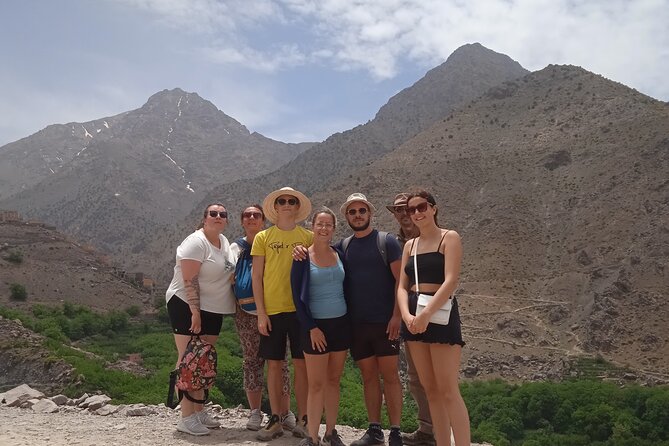
- Small-group feel with local guides (max 10 noted, with an overall cap of 40)
- Argan oil tasting with Moroccan tea, plus the bread-and-oil “how it’s made” context
- A 2-hour walk that’s shorter than you think, but can be steep and rocky
- Traditional lunch served after you reach the top, not as a rushed roadside snack
- Stops beyond the mountains like Azrou and the Imlil valley views
From Marrakech to the Atlas: what the ride sets up
This is not a “sit on a bus, take selfies, done” day. The drive out of Marrakech matters because it gradually flips your brain from city mode to mountain mode. You’ll leave the hubbub and head toward the High Atlas, with time built in to get your bearings and enjoy the change in terrain.
Pickup is part of the package, either from your hotel/riad or at a meeting point in/near the Medina. Guides and drivers run this as a coordinated team—people in past groups have mentioned guides such as Hassan and Omar, and drivers like Hisham, Hichame, and Salah—so the day tends to flow smoothly.
Also, pay attention to the timing reality: you’re out for about 8 hours, because driving eats time even when the distance isn’t huge. If you’re someone who likes a clean schedule, this one gives you enough structure: viewpoints, a guided walk, tea at the end, then back to Marrakech.
One more practical point: the route includes passes and short stops before you even begin the main climb—so it’s a good day for travelers who want more than just one hike moment.
You can also read our reviews of more tours and experiences in Marrakech.
Azrou + argan oil cooperative: the food stop with real purpose
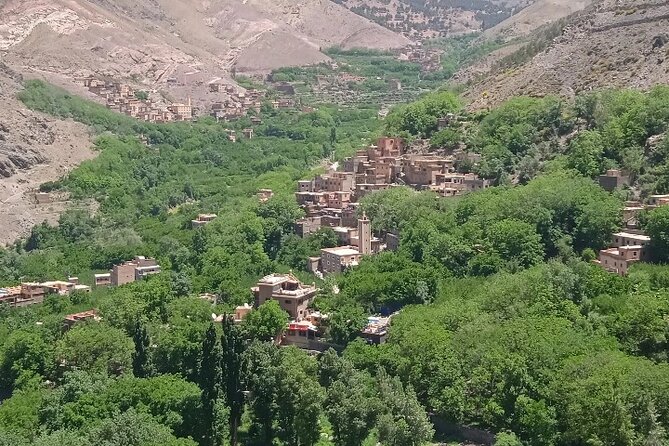
Before you reach the main mountain walking area, you’ll go through a couple of meaningful stops that set the theme of the day: Berber life, local production, and how communities survive in a rugged place.
First up is Azrou, described as a picturesque village stop along the way. This is one of those breaks that gives you a stretch and a chance to swap hot bus air for mountain air. You’re not there long, but it gives context for what you’ll see later.
Then comes the big “why we’re here” food moment: a women’s argan oil cooperative. The tasting usually includes fresh bread and oil with Moroccan tea—simple, very local, and much more interesting than just watching a storefront show.
Why I like this stop for your money: it explains the mountain economy in a way a guide can actually connect to daily life. You’ll also learn how argan oil fits into the area’s routines, not just as a souvenir product. And from the reviews, you can count on this being handled with low-pressure sales energy—meaning you can taste and learn without feeling pushed to buy.
Heads-up: this type of cooperative stop sometimes overlaps with tourist shopping zones. If you’re not into browsing, it’s fine to keep moving. You’re really paying for the tasting and the cultural explanation.
Imlil valley: where the scenery turns from views to daily life
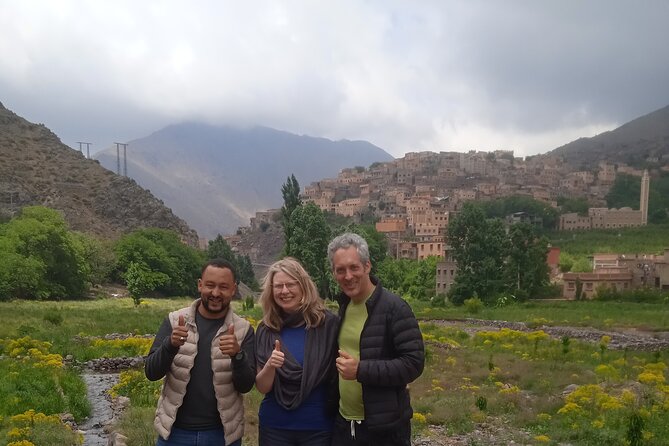
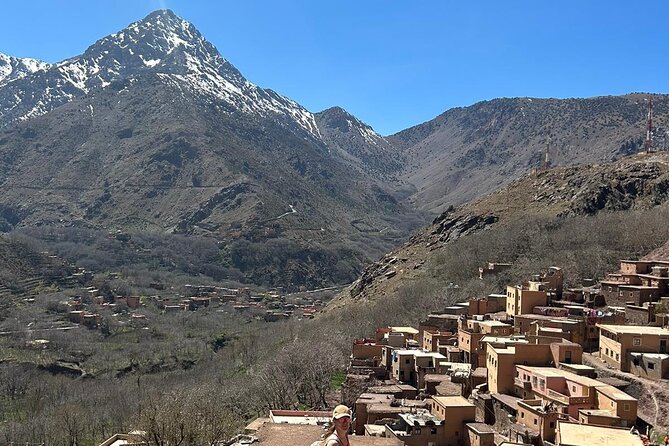
Once you reach the Imlil area, the day shifts from “getting there” to “seeing how people live.” The valley is known for traditional Berber villages, nuts, and a fast-flowing river, so you get that water-and-green-bands feeling even before you climb.
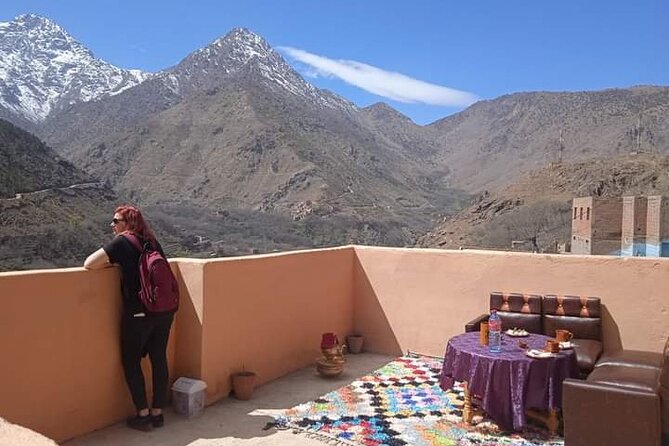
The tour often includes a quieter moment before the main hike—sometimes described as meeting at or near a guide’s home base with views from a rooftop terrace. That kind of pause is worth it. It lets you slow down, look around, and understand that you’re not just walking through scenery—you’re moving through a community.
One of the best parts of the Imlil stretch is that it feels like a real place, not an outdoor theme park. Even if you only have a short time here, you’ll notice how the valley connects daily needs: farming, food, transport between villages, and seasonal routines.
If you’re traveling with kids or someone who’s anxious about terrain, this is also psychologically helpful. You can see the route vibe before committing to the climb. And since there’s an option for transport for non-walkers, the day doesn’t feel like a punishment if you’d rather not take every step.
The High Atlas walk: shorter than you fear, but plan for steep bits
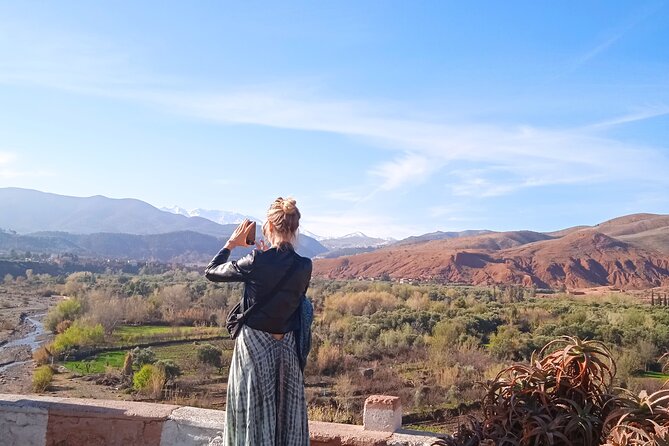
Let’s talk feet. The actual walking time is about 2 hours total, and you’ll do an uphill portion from the Imlil area. That sounds friendly—until you realize “2 hours” can include steep ground, uneven paths, and a decent amount of climbing for altitude.
This is where your shoe choice becomes your best decision. Reviews mention that the hike can feel more difficult than expected for non-hikers, and that the downhill steps can be challenging and can get slippery. Even if you’re in decent shape, bring grippy footwear and expect some rock-and-stair moments.
The good news: the tour is flexible. Transport is provided for people who don’t want to walk the whole way. So if you’re traveling as a mixed group—one eager hiker, one cautious friend—this setup can work better than many “only-the-trail” tours.
A key detail: the day’s pace is guided by your mountain guide, who knows where to pause, where the footing is better, and where the views open up. People have especially praised guides like Hassan and Omar for taking groups at a comfortable pace and for being helpful with questions as you go.
Optional camel rides used to be part of some versions, but again: animal welfare rules mean you should not count on camel riding on this one.
Tea at Imlil and the finish: what you do after the climb
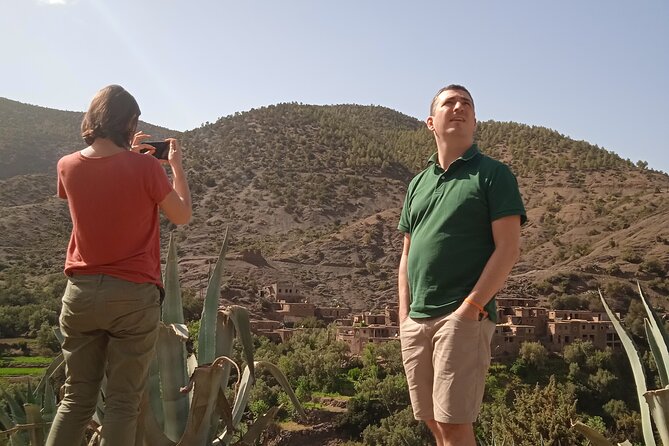
The end of the hike is not just “walk back and go home.” You’ll finish in the Imlil centre area with a cup of tea, and you’ll have time to look at how local Berber people live in the valley. It’s a real breather moment.
Then you return to Marrakech. Based on past schedules, the drive back typically lands you in the early-to-mid afternoon window, not late-night chaos. It makes this tour a smart pick if you still want to enjoy Marrakech that evening—especially if you plan dinner in the Medina afterward.
This tea stop is also the moment where the whole day’s meaning clicks. You’re no longer thinking about the climb. You’re thinking about daily life, food, and community routines—and you have a cool drink in hand. That contrast is part of why this experience sticks.


Lunch in a Berber home: the value case for $18.54
At about $18.54 per person, this is one of those “how is this so cheap?” day trips—because the total package doesn’t just include a guide and transport. You also get a traditional Moroccan lunch prepared for you, typically served after you reach the top of the hill.
I love meal-in-the-right-place experiences. A mountain lunch isn’t just sustenance; it turns the climb into a complete story. You arrive hungry, your guide brings you to the meal moment, and you eat with a sense of time slowing down.
From the accounts you provided, lunch is often described as tagine, served at the guide’s family home. There’s also mention of vegetarian care in at least one case, so it’s worth telling your operator about dietary needs when you book.
The lunch value is the big trade-off you’re getting. You’re paying less money than many full-day private hires, but you’re also not getting a high-end hotel feel. Instead, you’re getting something more real: food that’s part of the house routine, served where locals actually gather.
Bring a light appetite and good attitude. This meal is not a buffet with 20 choices. It’s a meal with a point: mountain hospitality.
Group size, guides, and how to get the best day
This is marketed as a small group experience—max 10—which is exactly what you want for a mountain day. A smaller group means less waiting around and more ability for your guide to adapt. The activity cap is listed as 40 travelers, so on busier days you may see more people overall across the operator’s schedule, but the walk experience is designed for small-group flow.
Guides make the biggest difference. In your info and reviews, names like Hassan and Omar keep coming up, plus local drivers such as Hisham, Hichame, and Salah. What you should look for is how the guide handles pacing and questions—because the best moments often happen in the pauses: at rooftops, by river views, at the tea stop, and around the lunch table.
A good trick: plan to ask one or two questions about everyday Berber life while you’re walking. Guides typically have enough local context to make your answers make sense—why farming works the way it does, how people use local products like argan oil, and what daily routines look like in the valley.
Also plan for photos, but don’t turn it into a photo marathon. The views are great, yes. The point is the walk and the shared rhythm. If you try to document everything, you’ll miss the calmer moments.
Should you book this Atlas day trip?
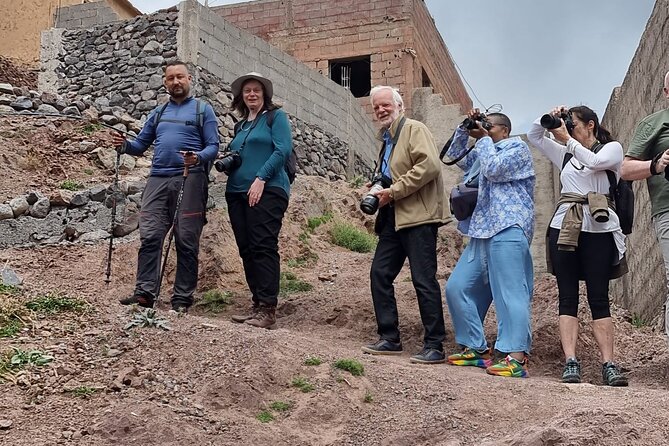
I’d book it if you want a half-day hike that’s short in time but real in feel, plus a chance to eat an actual mountain lunch rather than settling for a roadside sandwich.
I’d think twice if you:
- hate steep, uneven ground and don’t want to rely on footwear grip
- need a totally low-impact outing (the walking portion is about 2 hours, and downhill steps can be tough)
Because the experience includes pickup, a guided route, argan oil tasting with Moroccan tea, a mountain lunch, and a tea finish in Imlil, the value per dollar is strong for Marrakech. And if you’re someone who likes culture that shows up through food, farming, and home hospitality, this one plays to your strengths.
FAQ
FAQ
How long is the experience?
It runs for about 8 hours 10 minutes total, with around 2 hours of walking time.
Is pickup from Marrakech included?
Yes. Pickup from your hotel/riad is offered, or you can meet at a designated meeting point.
How much walking is involved?
The walking portion totals about 2 hours. The tour also notes that transport can be provided for people who prefer not to walk.
Will I be able to ride a camel?
No. Even though camel rides can be offered on some versions, camel rides are no longer included for animal welfare reasons.
What food is included during the tour?
You’ll have traditional Moroccan lunch prepared for you and served after you reach the top of the hill. There is also tea during the experience.
Do Imlil and tea time happen after the hike?
Yes. The day finishes in Imlil’s centre with a cup of tea, after you complete the walk.
What stops are included before the hike begins?
You’ll drive from Marrakech and make stops such as Azrou and a women’s argan oil cooperative with a tasting of fresh bread and oil with Moroccan tea, then continue to the Imlil valley area.
Is this tour only for adults?
No. It’s listed as suitable for ages 3 to 65.