
REVIEW · AGADIR
Agadir: Taghazout Beach Surf Lesson with Lunch and Transfer
Book on GetYourGuide →Operated by Original Surf Morocco · Bookable on GetYourGuide
Surf lessons in Taghazout feel surprisingly easy.
This Agadir-to-Taghazout experience mixes real coaching with time in the water at a beach setting that’s made for learning.
I especially like the small group setup (limited to 8), plus the fact instructors stay involved while you paddle, pop up, and try to get your first ride.
I also like that the longer option builds in lunch on the beach with water and fruit, so you’re not racing around half-dressed all day.
One thing to consider: if you choose the shorter option, lunch and the afternoon supervised session aren’t included, so check the package you’re booking before you show up hungry.
In This Review
- Key things you’ll notice
- Taghazout Beach: The Setting That Makes Beginners Want to Try
- Price and Value: What You’re Really Paying For at $48
- Agadir Pickup at 9:15 a.m.: The Logistics That Keep the Day Calm
- The Lesson Flow: Theory, Warm-Up, Then Controlled Practice
- Stage 1: Theory class
- Stage 2: Warm-up
- Stage 3: Practice in the water with the instructor
- Two In-Water Sessions: How You Improve Without Getting Worn Out
- Lunch on the Beach: Simple Food, Real Recovery
- Gear and What to Bring (So You Don’t End Up Borrowing Stuff)
- Who This Is Best For in Agadir and Taghazout
- The Most Praised Part: In-Water Coaching That Actually Fixes Things
- Small Group Size: Why Limited to 8 Feels Like a Real Lesson
- Should You Book the Taghazout Surf Lesson With Lunch and Transfer?
- FAQ
- How long does this surf lesson last?
- What time is the pickup from Agadir?
- What’s included in the Taghazout surf lesson with lunch and transfer?
- Is lunch included, or is it optional?
- What languages are the instructors?
- Is this lesson a small group?
- What should I bring to the beach?
Key things you’ll notice
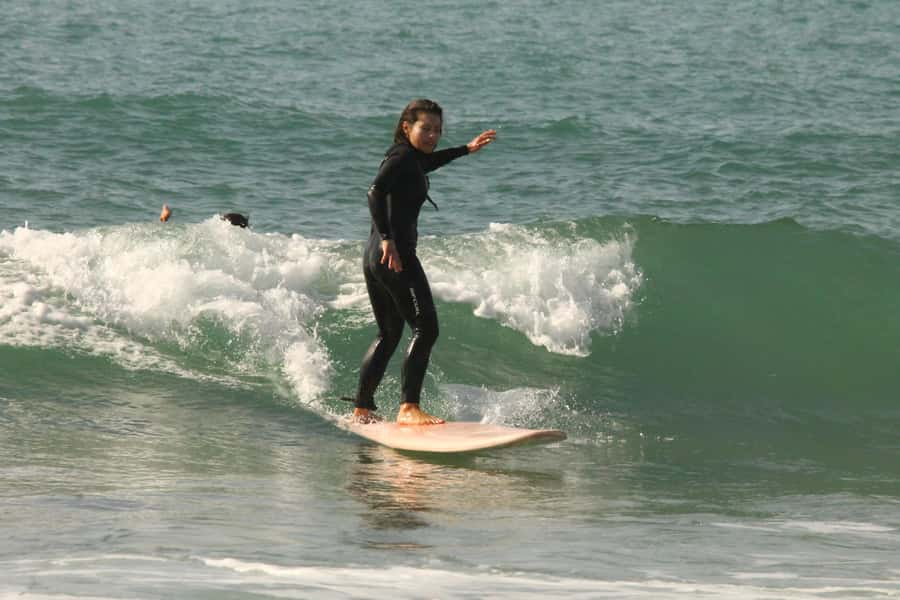
- Pickup from Agadir at 9:15 a.m. makes the day feel simple and structured
- Small groups up to 8 means you’re not lost in a big crowd
- Two coached sessions: sand-theory and warm-up first, then in-water instruction both times
- Lunch on the beach (with water and fruit) keeps energy up for round two
- English and French instruction helps you understand technique fast
- Instructors watch you in the water and give quick corrections on what to do next
Taghazout Beach: The Setting That Makes Beginners Want to Try
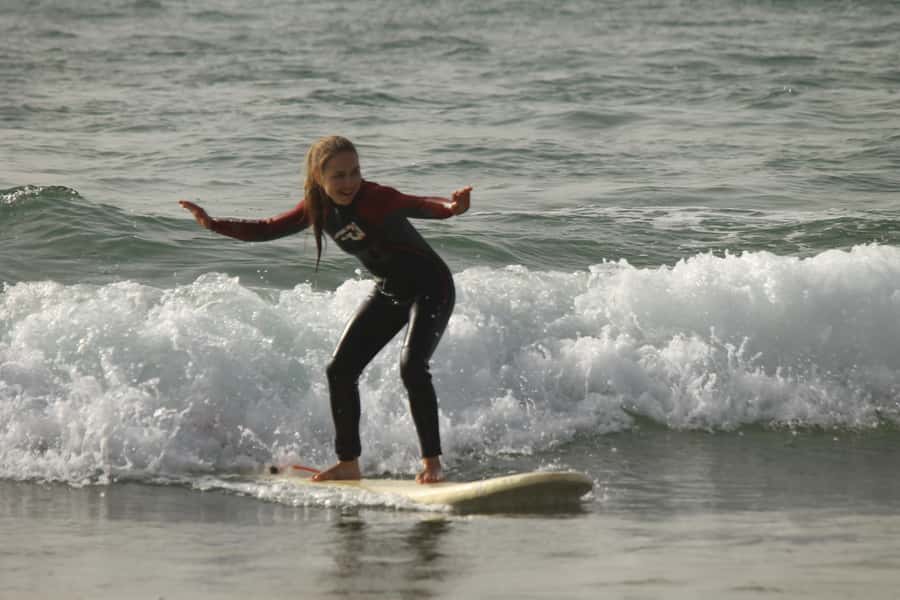
If your idea of surfing is a whole lot of wipeouts and zero progress, this kind of lesson is built to change that. Taghazout’s shoreline is perfect for a first surf day because it’s wide, sunny, and easy to access once you’re there. You’ll spend real time going from “watching” to “doing,” with your instructor right there helping you read what’s happening in the water.
The best part is how practical the whole experience feels. You’re not just paying for a board and a location. You’re paying for a step-by-step pathway: theory on land, warm-ups, then controlled practice with coaching. And because the group is capped at 8 people, the instructor can actually adjust their advice to your level instead of talking into the void.
This is for you if you want waves with training wheels. Even if you’ve surfed before, the lesson can still sharpen technique—especially things like paddling rhythm, timing your pop-up, and positioning yourself for the next set.
You can also read our reviews of more tours and experiences in Agadir.



Price and Value: What You’re Really Paying For at $48
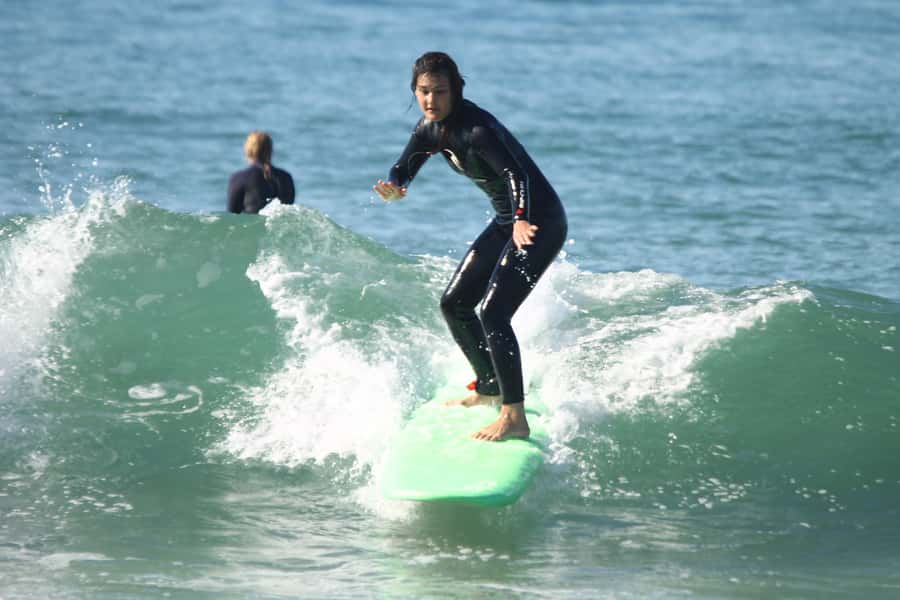
At about $48 per person for the Taghazout surf lesson with lunch and transfer, what you’re buying is not just “fun.” You’re paying for logistics handled for you, plus gear and instruction that keep the day safe and efficient.
Here’s where the value shows up:
- Transfer from your Agadir hotel (pickup and drop-off) saves you from figuring out timing and transport to Taghazout on your own.
- Board + wetsuit included means you don’t need to hunt down rentals, and you show up ready.
- Qualified instructor support matters most for beginners. Surf is learnable, but you need the right cues—otherwise you just collect falls.
- The longer option includes lunch and an afternoon supervised session, which stretches your learning time. If you pick the shorter lesson, lunch and the second coached block don’t come with it.
One smart move: if you’re even slightly unsure whether you want “just the basics,” choose the full experience. You’ll get two chances to apply what you learned—morning to afternoon is usually where things click.
Agadir Pickup at 9:15 a.m.: The Logistics That Keep the Day Calm
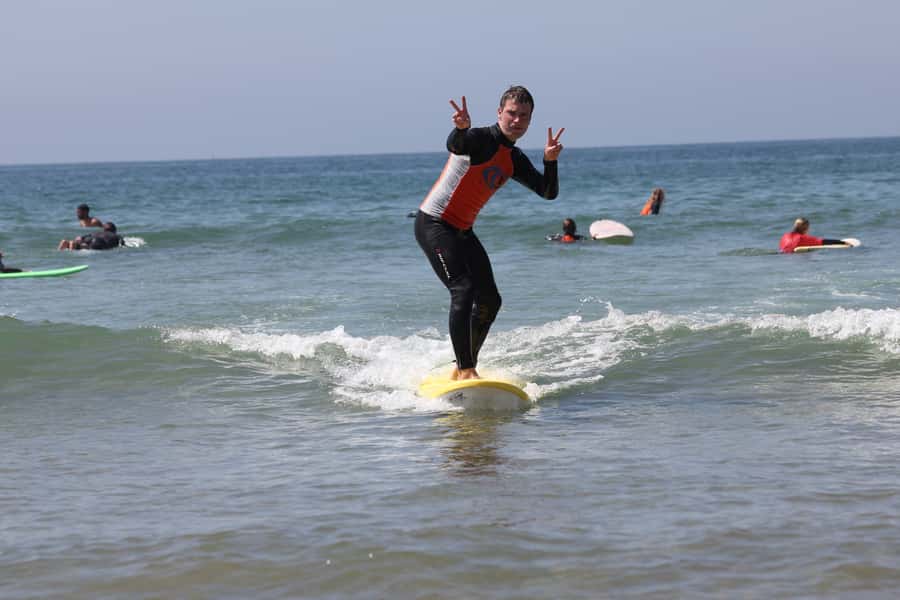
The day starts with a 9:15 a.m. hotel pickup from the lobby. That sounds routine, but it’s a big deal. Surf lessons work best when you’re not rushing. You arrive, get kitted out, and have time to warm up mentally before the water.
Once you’re transferred to the area, you’ll typically stop to get your wetsuit and then head to the beach. The goal is to match the spot and conditions to the group’s level—some days that means going to a location with better waves than the one you first expect.
Timing is also clear. You return around 4:00 p.m. That gives you a complete morning-to-afternoon surf plan without turning the rest of your trip into “maybe we’ll get back before dinner.”
The Lesson Flow: Theory, Warm-Up, Then Controlled Practice
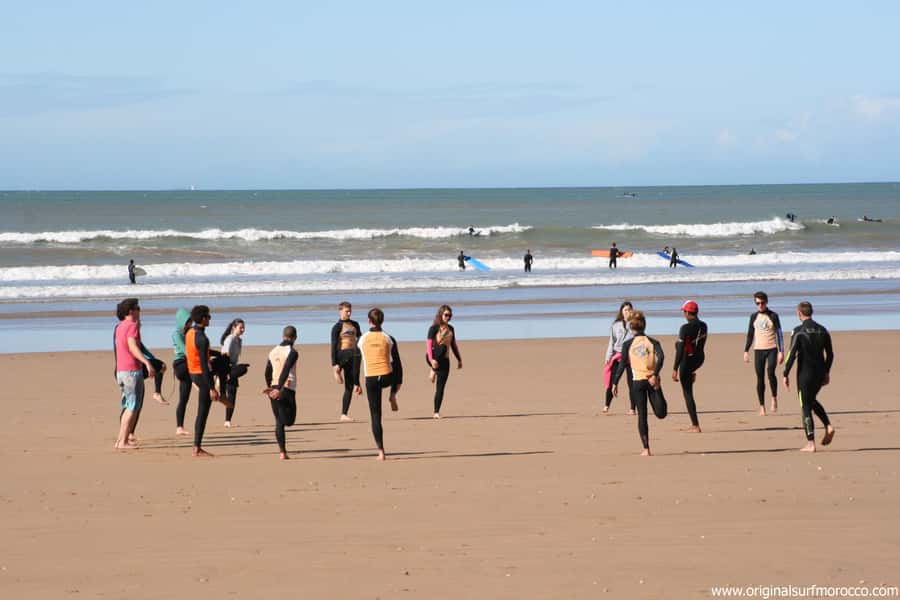
This surf class runs in structured stages, and that’s exactly what makes it beginner-friendly. Instead of throwing you into the ocean and hoping for the best, the instruction is staged.
Stage 1: Theory class
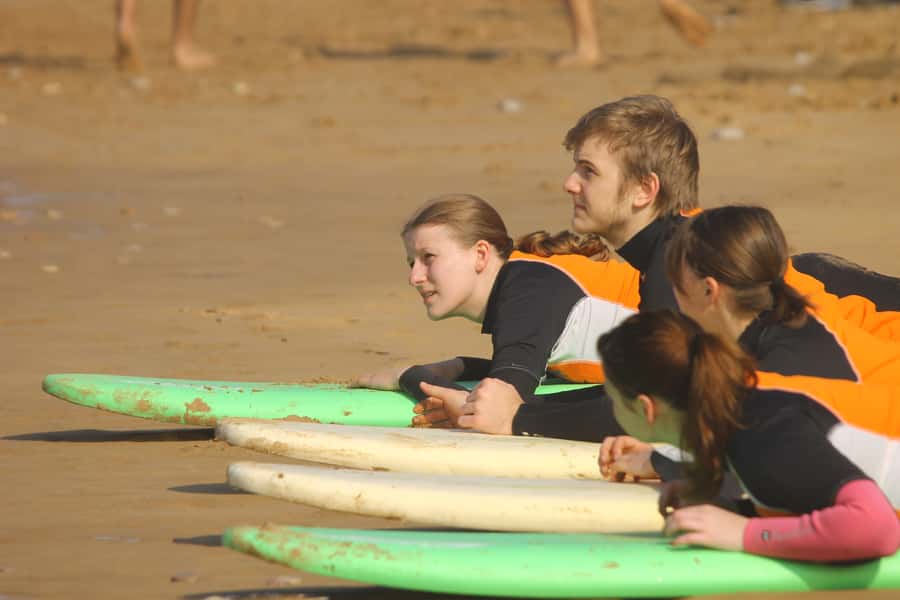
You’ll go over key ideas that prevent the most common mistakes. Expect basics like how to handle the board, paddling fundamentals, and how to position yourself for your first attempts.
This is also where instructors help you understand what to watch for—like when to paddle harder, when to ease off, and how to read the wave shape. If you’ve ever felt stuck because nobody explained what you were supposed to do, this theory step is why the lesson works.






Stage 2: Warm-up
Next comes a warm-up on land, followed by practical practice on technique. The warm-up isn’t just “stretching.” It’s your setup for popping up and balancing on the board without panic.
Stage 3: Practice in the water with the instructor
Then you get into the water. The instructor stays with you and gives corrections in real time. You’ll either be coached on your first wave attempts or guided on how to progress based on what you’re doing.
A helpful sign of quality here is this: you’re not left waiting your turn. The coaching is active, and the feedback is designed to help you change something immediately.
Two In-Water Sessions: How You Improve Without Getting Worn Out
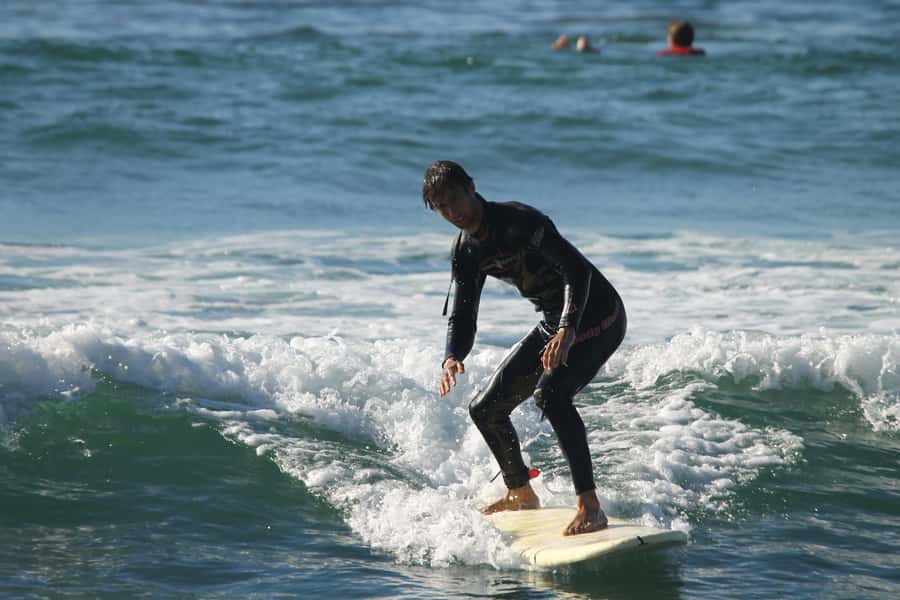
The full experience is more than one quick dip. After an initial session of about 2.5 hours, you take a lunch break, then head into a second supervised surf block.
The second session matters because it’s where you apply what you learned earlier. You’re not starting over. You’re refining. Expect the instructor to adjust where you’re aiming, how you’re timing paddles, and what you need to tweak for balance.
One practical reality: surf conditions change. Some days the water is more forgiving. Other days waves can be stronger than you expect. When that happens, the instructors adapt by where they place you and how they guide you through the set. That’s why it’s better to treat the lesson as a learning day, not a guarantee of multiple rides every minute.
If you’re brand-new, this structure gives you a fair shot at standing up. If you’ve surfed before, you’ll likely still benefit because technique gets corrected rather than repeated.
Lunch on the Beach: Simple Food, Real Recovery
After the morning coaching, you break for lunch on the beach. It’s eaten under umbrellas, which is a great setup for cooling down and resetting before the second wave session.
For the longer option, lunch includes a healthy packed meal, plus water and fruit. In practice, the lunch is often sandwiches and fruit, and it’s set up to handle dietary preferences when requested ahead of time. Some people have even mentioned vegetarian options being accommodated, and that attention to allergies can happen too.
Two tips for getting the most out of lunch:
- Eat enough so you don’t feel weak for the afternoon. Surf burns calories fast.
- Don’t pack sunscreen-free optimism. The beach sun can sneak up while you’re eating and relaxing.
And if you’re thinking, Wait, lunch is part of the surf lesson, not an afterthought—that’s the point. The day is paced so you’re not exhausted before you’ve had a real second try.
Gear and What to Bring (So You Don’t End Up Borrowing Stuff)
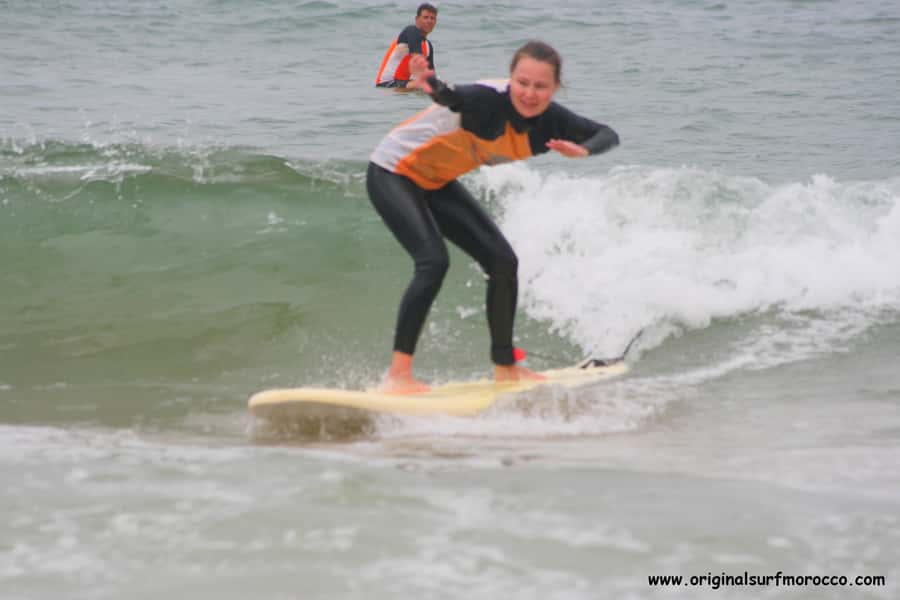
You’ll get a surfboard and wetsuit, which removes a big headache. But you still need your own basics.
Bring:
- Swimwear
- A towel
- Sunscreen
- Comfortable shoes (you’re walking on sand and around equipment)
- Comfortable clothes for before and after the water
If you want to be extra smart, pack a spare layer for the ride back and for when you get out. After surfing, even warm weather can feel cooler with wetsuit skin drying off.
One comfort note: surfing can be physically awkward at first. Wearing something you can move in helps during the warm-up and theory moments.
Who This Is Best For in Agadir and Taghazout
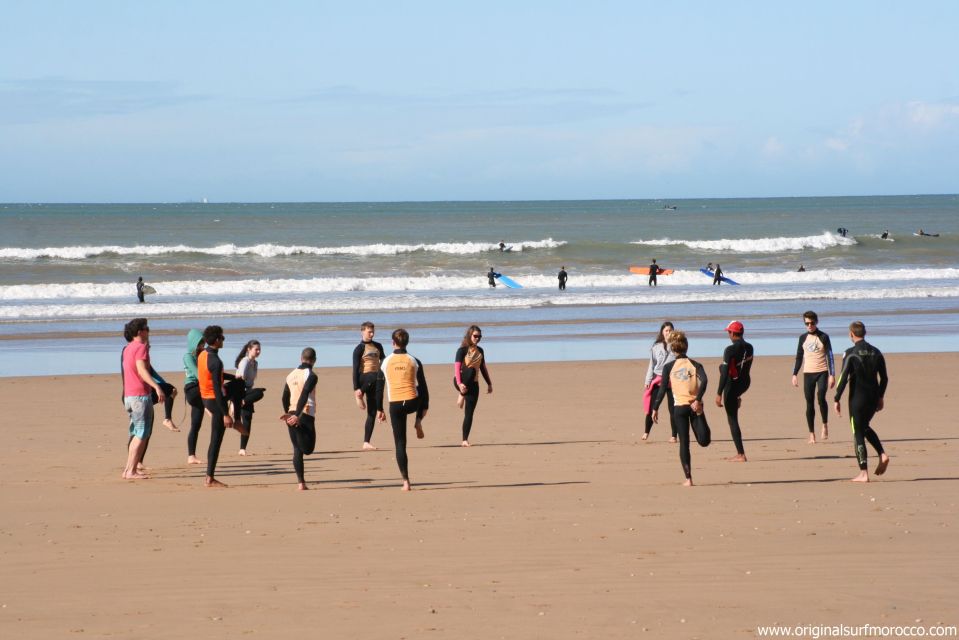
This surf lesson fits a wide range of people, as long as you’re okay being in the ocean. The group is small and the instructor is actively in the water, which tends to work well for beginners and intermediate surfers alike.
It’s a particularly good match if:
- You’re new to surfing and want safety plus clear technique
- You want instruction in English or French
- You’d like a full day format with lunch and a second coached session
- You prefer a smaller group (limited to 8) over a big crowd situation
It’s not suitable for pregnant women or wheelchair users, based on the tour’s stated limits.
Also keep expectations realistic. Surf is hard. Even with great coaching, you might not catch every wave. The lesson is designed to help you improve, not to guarantee constant standing rides.
The Most Praised Part: In-Water Coaching That Actually Fixes Things
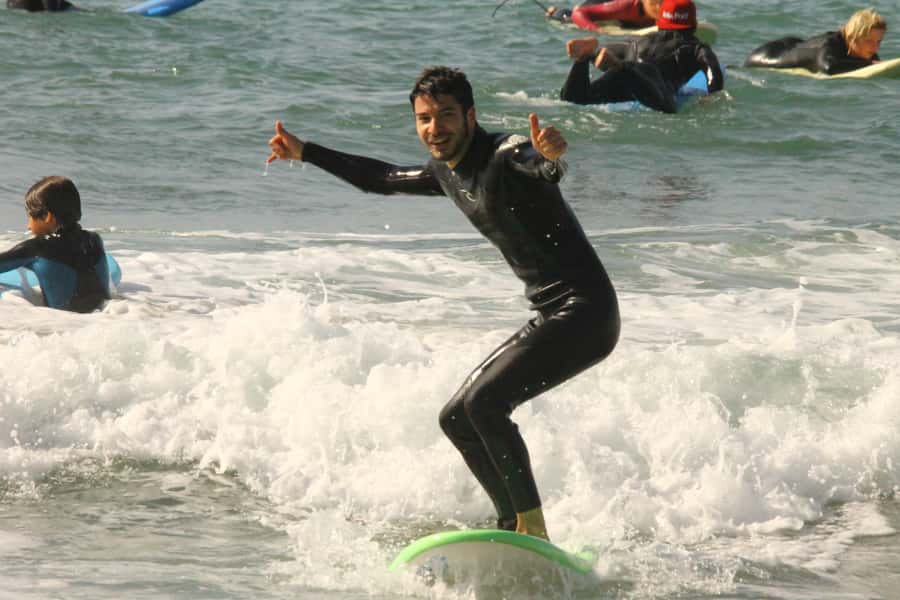
The standout theme from the experience is how much instructors focus on direct support. Names that show up in the instructor stories include Youssef / Yousef, Ussef, Sami, Omar, Ayoub, Hussein, and Abdellah. People consistently describe them as motivating, patient, and focused on making sure you feel safe.
A few specific coaching patterns you can hope for:
- Help to stand up and balance, not just advice from the shore
- Quick corrections while you’re trying your next attempt
- Encouragement when the water feels too intense
- Adjusting the plan if the group struggles to catch waves
That last point matters. Some surf days shift quickly. Stronger waves, flatter water, different sets—good instructors adapt. The goal is to keep you learning and confident instead of frustrated.
Small Group Size: Why Limited to 8 Feels Like a Real Lesson
Surf lessons can become assembly-line experiences when groups are too large. Here, the group size is limited to 8 participants, which changes how the day feels.
You get:
- More individual attention
- More chances to practice in between coaching moments
- Faster feedback loops
- Better positioning, because the instructor isn’t juggling too many people at once
Even if you’re with friends, the setup still tries to match your skill level within the group, so beginners don’t get ignored and experienced surfers don’t get held back too long.
Should You Book the Taghazout Surf Lesson With Lunch and Transfer?
I think you should book if you want a surf day that’s organized, coach-led, and paced for real progress. The big wins are the Agadir pickup, the small group, and the two coached sessions that give you a chance to improve from morning to afternoon. Add lunch on the beach with water and fruit, and it becomes a complete half-to-full-day activity rather than a quick slap of “try it.”
Book it with a careful expectation if you’re sensitive to strong waves. Surf conditions can vary, and you may spend more time practicing technique than riding every minute. That doesn’t mean it’s a bad lesson—it often means the instructor is keeping you safe while you build the skills that pay off.
If you’re on the fence, choose the version that includes lunch and the supervised afternoon session. You’ll maximize your learning time and your comfort, and you’ll leave with more than just saltwater stories.
FAQ
How long does this surf lesson last?
The total duration is listed as 3 to 6 hours, depending on the option and start time availability.
What time is the pickup from Agadir?
Pickup is included and the pick-up time is 9:15 a.m. from the lobby of your hotel each morning.
What’s included in the Taghazout surf lesson with lunch and transfer?
Included features are pickup and drop-off, a live qualified instructor, surfboard and wetsuit, and a healthy packed lunch with water and fruit (plus an afternoon supervised surf session as part of the longer option).
Is lunch included, or is it optional?
For the longer option, lunch is included. The 2-hour surf lesson option does not include lunch and the afternoon supervised session.
What languages are the instructors?
The instructor languages are listed as English and French.
Is this lesson a small group?
Yes. The group is limited to 8 participants.
What should I bring to the beach?
Bring swimwear, a towel, sunscreen, comfortable shoes, and comfortable clothes.