REVIEW · MARRAKECH
Authentic Moroccan Food Tour in Marrakech with Dinner
Book on Viator →Operated by One Life Trips · Bookable on Viator
Marrakech food hits different at night. This small-group tour takes you through the maze-like Medina near Jemaa el-Fna with local tastings you’ll miss if you go solo, then wraps it up with a sit-down rooftop Moroccan dinner.
What I like most is the mix of food and context. You’re not just eating sweets and savory snacks; you’re getting the story behind classics like harira and mint tea, plus the why behind street favorites such as sfenj (those airy, chewy donuts).
One thing to think about: the Medina can get tight and slow. A few guests noted the herbalist-shop stop can feel like a sales pitch, and the walking can involve uneven steps—so if you’re traveling with a stroller or need extra comfort, plan for slower moments.
In This Review
- Key Takeaways Before You Go
- Why This Marrakech Food Tour Works in the Medina
- Price and What You Really Get for $54.45
- Where You Start: Poste du Maroc and the Medina Orientation
- The Medina Tasting Route: Harira, Snails, Mint Tea, and Msemmen
- Jemaa el-Fna Snacks: Sfenj, Shakshouka-Style Eggs, and Cactus Fruit
- Old Medina Stretch and the Herbalist Shop Detour
- Rooftop Dinner: The 3-Course Moroccan Finish
- Guides, Pacing, and Group Dynamics (What You Can Expect)
- Should You Book This Marrakech Food Tour?
- FAQ
- How long is the Marrakech food tour?
- What’s the meeting point and where does the tour end?
- What’s included in the price?
- Is hotel pickup and drop-off included?
- What if I’m vegetarian or have dietary needs?
- Is the group size small?
- Does the tour use a mobile ticket?
- Can I cancel for free?
- The Bottom Line
Key Takeaways Before You Go
- Small group (max 15) keeps the evening more human than cattle-line tours
- About 10 food stops around Jemaa el-Fna means real variety, not just one big meal
- Mint tea + snack culture helps you understand what locals actually sip between bites
- 3-course rooftop dinner gives you a proper finish with city views and a calmer pace
- Route varies by guide and flow so your evening won’t feel copy-paste
- Herbalist shop may appear depending on pacing, so decide in advance what you’re okay with
Why This Marrakech Food Tour Works in the Medina
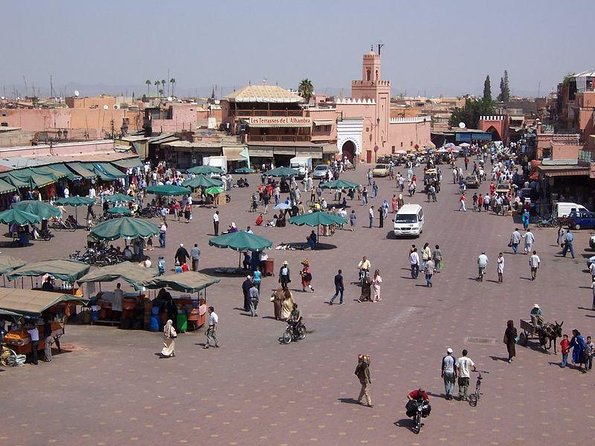
Marrakech’s Medina at night has a special rhythm: the smells hit first, then the sounds, then the tiny hand gestures as vendors call out what they’re cooking. This tour is built for that reality. You’re guided through the maze with a plan, but you’re not stuck in a script.
I like that you get two things at once: food samples and local meaning. The guide doesn’t treat mint tea as a garnish. You’ll learn how harira fits into daily rhythms, what certain pastries are for, and how families share sweets during celebrations. That context turns your tasting from random eating into something you can actually remember.
Also, you’ll eat foods that are bold by Moroccan standards—snails in herbal broth, gazelle-ankle style pastries, and sheep’s head preparations show up on the menu. If you’re the type who wants to say yes to adventure (within reason), this tour delivers.
The main consideration is simple: the Medina is not designed for fast movement or wide walking paths. A few people found the experience uncomfortable if the group gets packed into tight stalls. If you’re sensitive to crowds or have mobility needs, bring a little patience and plan to move slowly.
You can also read our reviews of more tours and experiences in Marrakech.


Price and What You Really Get for $54.45
At $54.45 per person for about 3 hours, the value isn’t just the dinner. It’s the combination: multiple tastings across the Medina plus a guided evening plus mint tea plus a roof-terrace sit-down meal.
Let’s be practical. In Marrakech, eating well takes either (a) local connections or (b) lots of time wandering and guessing. This tour pays for that time. Instead of you trying to figure out what’s worth it on your own, you’re guided to places where locals already eat and where the food is served in a way that makes sense.
You also get small-group dynamics. With a maximum of 15 people, you’re more likely to actually hear the guide and keep up with the pace, rather than just being moved along.
That said, you should have clear expectations about pacing. With a 3-hour window, stops are shorter than a full-food crawl. If you love lingering, you might want to add time on your own after the tour ends.
Where You Start: Poste du Maroc and the Medina Orientation
You meet at Poste du Maroc, Rue Beni Marine, Marrakech 48000, right in the heart of the Medina. This matters because the tour starts where the action is, not at some far-away pickup point.
The vibe at the start is practical: you’re getting your bearings fast and moving into alleyways where getting lost would be easy. One of the underrated values here is simple navigation. Marrakech’s street layout can feel like a puzzle, and a good guide helps you understand where you are without making you memorize maps.
Stop 1 is also a “launchpad” moment. Even when the tasting lineup changes depending on the route, you’ll begin with the tour’s pace and rhythm—the order of stops, how long you’ll spend at each place, and when you’ll have breaks for tea and restroom needs.
If you’re a solo traveler, this starting point can feel even better. You join a small group, get introduced to the evening plan, and then you’re eating with people instead of just trailing behind your own curiosity.
The Medina Tasting Route: Harira, Snails, Mint Tea, and Msemmen
After the start, you move into two possible sets of tastings. Either way, this part is where the tour earns its keep: multiple classic Moroccan flavors in small bites, plus a sense of how Moroccans eat throughout the day.
One route features:
- Moroccan coconut macaroons (sweet, and a great confidence-builder if you’re new to Moroccan desserts)
- Kaab Ghzal (gazelle ankles): almond paste filled pastries scented with orange blossom water
- Harira soup served with dates & chebakia, tied to the Ramadan-style breaking moment
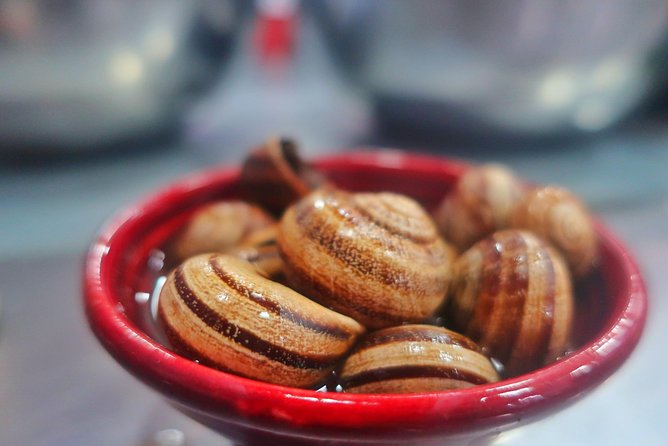
- Babbouche (Moroccan snails) in a slowly cooked aromatic herbal broth
- Authentic mint tea with msemmen—pan-fried pancakes with honey and cheese
- Fakya, a festive mix of dried fruits and nuts, often shared during family celebrations
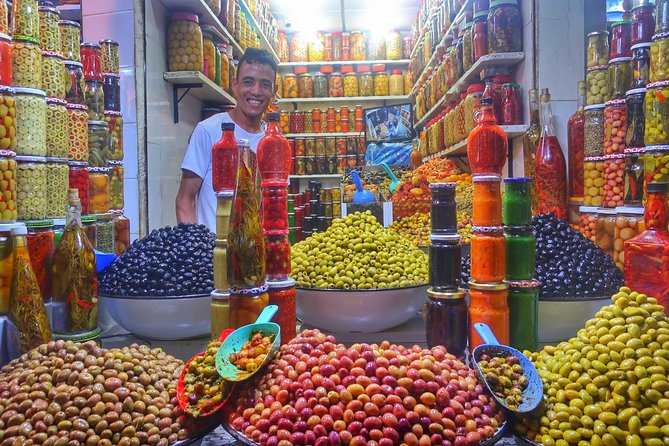
- Moroccan olives, including green varieties
What I like about this selection is the balance. You’re getting savory, spicy-adjacent, sweet, and aromatic, all in a format that helps you learn flavor fast. Harira gives you a warm, comforting baseline. Mint tea helps reset your palate. Msemmen lets you taste something hearty—like bread meets dessert meets snack culture.
And the strangest-but-best items? The tour doesn’t shy away. Snails and the gazelle ankle pastry can sound intimidating. But because they come as tastings (not a full plate you have to commit to), they’re approachable.
Jemaa el-Fna Snacks: Sfenj, Shakshouka-Style Eggs, and Cactus Fruit
Jemaa el-Fna is where the evening gets louder and more alive. This stop is another reason the tour feels different than just eating at restaurants: you’re tasting the street foods people recognize, not just tourist menu staples.
On the Jemaa el-Fna portion, you may find favorites like:
- Msemen Amer, savory Moroccan pancakes stuffed with spiced vegetable fillings
- Harira & chebakia again as a classic combo
- Makkla bel kefta, a Moroccan twist on shakshouka-style flavors
- Sfenj, Moroccan donuts—crispy outside, airy and chewy inside
- Lhindiya, refreshing cactus fruit (great when the heat lingers)
- Rass Mbekher, delicately steamed sheep’s head seasoned with cumin
- Panaché, a colorful fruit smoothie
- Hot pastries/snacks listed on the route (the exact form can vary)
If you’re trying to understand Moroccan food quickly, this is the section. It teaches you how street food fits the day: tea-time snacks, quick bites, and cooling drinks that make sense in Marrakech weather.
One small piece of real advice: pace yourself. Sfenj and the fruit smoothies can pile up fast. I recommend you treat the tour like a tasting sequence, not a full dinner sprint. Save your biggest appetite for the rooftop meal at the end.





Old Medina Stretch and the Herbalist Shop Detour
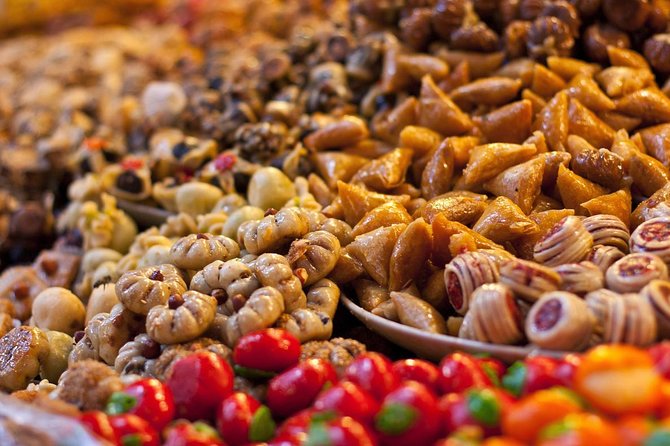
Depending on the pace of the evening, you may take a short break at a traditional herbalist’s shop. This is usually framed as a quick lesson: Moroccan spices, mint tea, and a restroom stop if needed.
Here’s the catch. Some people love this kind of cultural pause. Others found it a sales pitch and wished it was shorter. So if you’re not into shopping-style demonstrations, you can decide beforehand that you’re okay with a brief stop—then don’t get derailed if it runs long.
I’d also consider your personal comfort with time. This portion is often where the tour can feel a little more “structured” rather than purely food-focused. Still, it can be useful if you want to understand how Moroccan herbal traditions are marketed and explained.
If you’re sensitive to discomfort in crowded spaces, plan for uneven surfaces and stairs. One review noted challenges with a stroller and many stairs. The Medina is historic and tight. No tour can fully change that.
Rooftop Dinner: The 3-Course Moroccan Finish
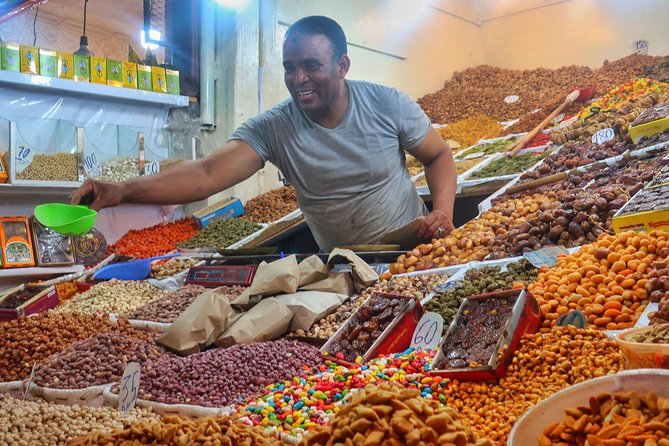
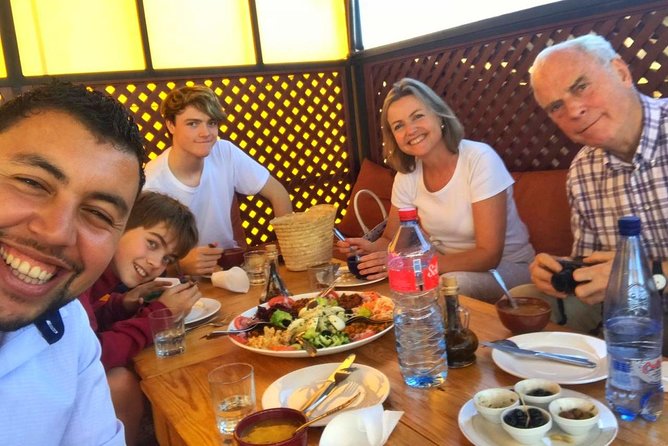
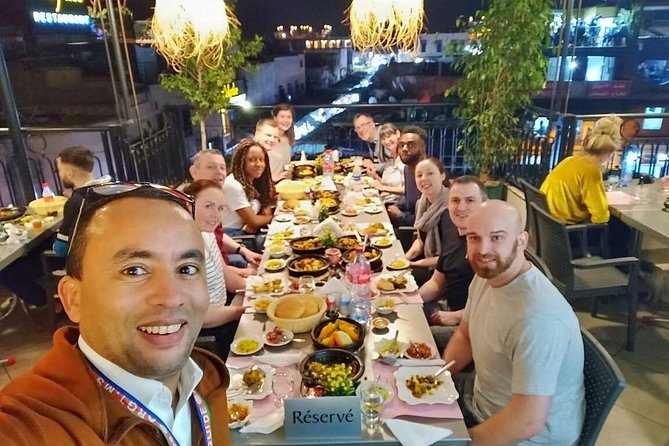
The ending is the emotional payoff. You sit down at a rooftop restaurant with your group and eat a 3-course Moroccan dinner. It’s also where the evening slows down. After alleyway snacks, you finally get breathing room, table service, and a calmer atmosphere.
This dinner is served with menu options available, so you’re not always locked into one single version of the meal. If you’re picky, or if you have dietary needs, it’s worth letting the operator know after booking so they can take care of you.
A practical tip: consider this your “main event.” Even though you’ll have eaten a lot by then, the rooftop meal is where you should expect a more complete Moroccan flavor experience—proper portions, familiar dishes, and that slow, satisfying end to your walking.
If you’re coming hungry, you’ll leave happier. If you snack constantly and ignore your own fullness, you might feel stuffed before dessert. The tour moves fast enough that listening to your body really helps.
Guides, Pacing, and Group Dynamics (What You Can Expect)
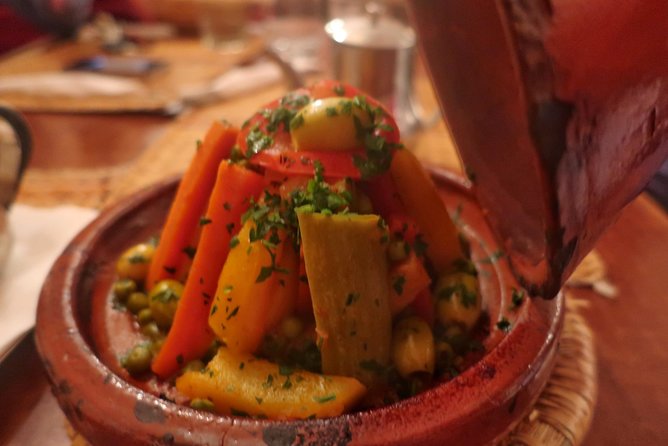
The best part of this kind of tour is the human element. Multiple guides have shown up in guest comments—Medhi and Houssaine, plus Hamza, Ali, Mohammad, Mo, and Mohamed. Across those names, the common theme is energy and storytelling: the guide connects food with local culture so you taste with understanding.
Group size matters too. With a maximum of 15, you’re more likely to keep together and get attention when you ask questions. That matters in the Medina, where things move quickly and directions get confusing.
Still, pacing can vary by guide and by how the evening flows. The tour itself says routes can change depending on the guide, season, and day rhythm. That flexibility is part of what keeps it feeling real, not factory-produced.
One more reality check: timing can slip. One review described a late start due to communication and waiting. The guide team handled it by getting you into the flow quickly. I’d still plan to stay flexible. This is the Medina—life happens.
Should You Book This Marrakech Food Tour?
I think this tour is a strong match if:
- you want to eat your way through the Medina near Jemaa el-Fna without guessing
- you like trying foods you’ve never ordered before (snails, sheep’s head, unique pastries)
- you want a guided explanation so the evening feels educational, not just random
- you want a proper sit-down rooftop dinner at the end, not just street food
I’d think twice if:
- you hate crowded, tight spaces and need lots of personal breathing room
- you’re very sensitive to shopping-style detours like an herbalist stop
- you’re traveling with a stroller or mobility device and can’t handle stairs and uneven alleyways
If you want an easy win, aim for an evening where you can stay patient, wear comfortable shoes, and treat it like a tasting journey. Done right, you’ll finish stuffed, satisfied, and able to talk about Moroccan food like you lived there for years.
FAQ
How long is the Marrakech food tour?
The tour runs about 3 hours.
What’s the meeting point and where does the tour end?
You start at Poste du Maroc, Rue Beni Marine, Marrakech 48000, and the experience ends back at the meeting point.
What’s included in the price?
You get a certified local tour guide, sampling specialty foods at multiple stops, authentic Moroccan mint tea, and dinner.
Is hotel pickup and drop-off included?
No. Hotel pickup and drop-off are not included.
What if I’m vegetarian or have dietary needs?
Tell the operator after booking. The tour says they’ll take great care of you if you have specific dietary needs.
Is the group size small?
Yes. The tour has a maximum of 15 travelers.
Does the tour use a mobile ticket?
Yes. A mobile ticket is part of the experience.
Can I cancel for free?
Free cancellation is available up to 24 hours in advance for a full refund.
The Bottom Line
Book this tour if you want real Medina food, guided tasting stops, and a rooftop dinner finish. Bring comfort-focused expectations for the walking, and you’ll likely leave with a belly full of Morocco and stories you can’t get from a restaurant menu alone.