REVIEW · MARRAKECH
3 days Merzouga desert trip from Marrakech
Book on Viator →Operated by Maroc Expedition Travel · Bookable on Viator
Atlas roads lead to real desert quiet. This 3-day Merzouga desert trip knits together Tizi-n-Tichka mountain scenery, the UNESCO Ait Ben Haddou kasbah, and the dunes of Erg Chebbi with one overnight in a traditional camp. You move in a small group (up to 17) by air-conditioned vehicle, then slow down on camelback for that classic sand-and-sky feeling.
I really like the way this route balances big sights with hands-on time: a walk inside Todra Gorge, then a camel ride that actually puts you out into the Erg Chebbi dunes at dusk. I also like that you get two nights’ accommodation plus both camel rides (to the camp and back), and most of the day-to-day meals are included.
The main thing to think about is weather at the camp. Nights in the desert can get cold, and there’s no heater mentioned—so pack for real temperature drops, not just “cool evening” vibes.
In This Review
- Key things to know before you go
- Marrakech to Merzouga: how this trip really feels on the road
- Tizi-n-Tichka Pass: the high-altitude “wow” stretch
- Ait Ben Haddou kasbah: UNESCO filming locations, in real life
- Todra Gorge: where the walking is the payoff
- Riding into Erg Chebbi: camelback at sunset hits different
- Desert camp comfort: what’s included, what’s not, and what to pack
- Morning in Merzouga: sunrise, breakfast, and the ride back
- Rissani and the route back: oasis stops and acacia views
- Price and value: what $173.79 buys you here
- Who this Merzouga trip fits best (and who should rethink)
- Should you book this 3-day Merzouga desert trip?
- FAQ
- What is the duration of the Marrakech to Merzouga trip?
- Where does the tour start and what time is pickup?
- What does the tour cost per person?
- Are accommodations included for both nights?
- Are camel rides included?
- What meals are included?
- Which major stops are included?
- Is free cancellation available?
Key things to know before you go
- Tizi-n-Tichka pass: expect high-altitude mountain views on one of the most twisted roads around.
- Ait Ben Haddou without a guide included: you’ll get the place, but not narration from a local guide.
- Todra Gorge canyon walk: you’ll stretch your legs in a deep 300-metre canyon.
- Erg Chebbi camel ride at sunset: you’re not just visiting the dunes—you’re riding into them.
- Cold camp nights: plan layers for after dark at the desert camp.
Marrakech to Merzouga: how this trip really feels on the road
This is the kind of desert trip that works because it doesn’t feel like one long, boring transfer. You start early in Marrakech (pickup at Hôtel Restaurant Café de France starting 7:30am), then your day one drive is part sightseeing, part transportation.
The early hours matter. You’ll be fresh enough to enjoy the mountain shifts as the road climbs and bends. And along the way, you get repeated chances to stop for photos and stretching—because this route is built around stops, not just nonstop driving.
Group size is capped at 17, so you’ll usually get that sweet spot: friendly enough for conversation, not packed so tight that you feel stuck with strangers. The vehicle is air-conditioned, which is a big deal on Moroccan roads when the temps outside climb.
You can also read our reviews of more tours and experiences in Marrakech.
Tizi-n-Tichka Pass: the high-altitude “wow” stretch
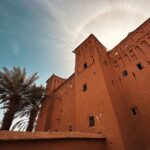
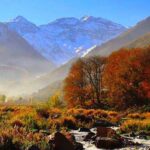
Day one’s backbone is the run through the Atlas Mountains via Tizi-n-Tichka. The pass sits at about 2,260m. That height brings cooler air and wide views—plus the sense that Morocco’s countryside changes shape right in front of you.
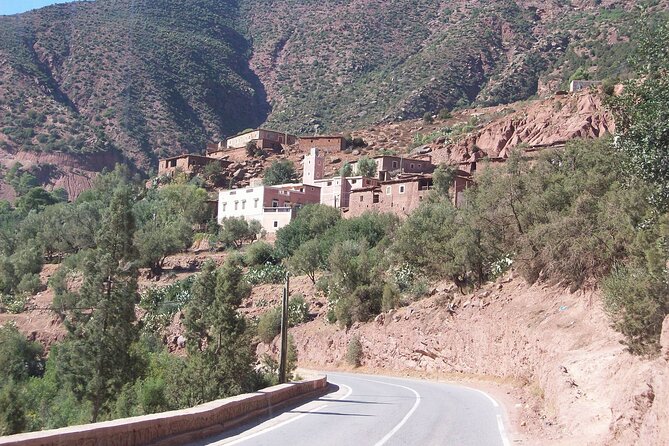
What you should expect to notice: terraced Berber villages and fields along the slopes, mountain streams, and trees like oaks and walnuts. In winter, the pass can be snow-covered, so consider that seasonality can change the mood of the trip.
Also, this is where good driving makes a difference. A bunch of the strongest feedback ties the experience to reliable drivers who are punctual and calm on the road—people like Hassan and Mustapha come up often with that exact vibe. If your driver is the chatty type (names like Karim and Ghassan show up here), you can get extra context without it feeling like a classroom.
Ait Ben Haddou kasbah: UNESCO filming locations, in real life
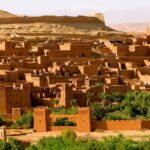
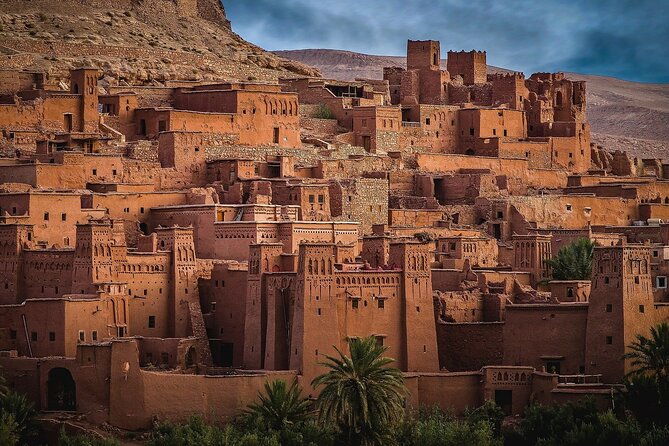
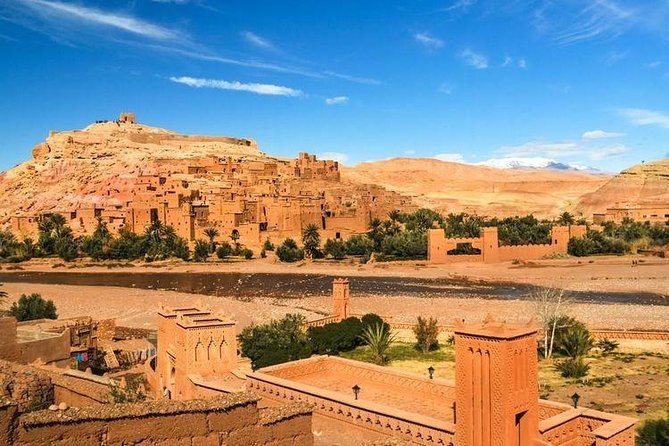
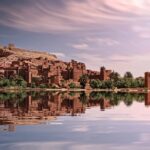
Once you’re down from the pass, the day pivots to Ait Ben Haddou, a UNESCO World Heritage Site. This kasbah is famous because filmmakers love it, but it’s still impressive even if you never saw a single movie shot there.
It’s the structure and materials that pull you in: earthen architecture, tight geometry, and that dramatic way the buildings sit in the landscape. You’ll have time to experience the place as more than a quick photo stop. And because it’s tied to productions like Lawrence of Arabia, Gladiator, and The Mummy, it can help you connect what you’re seeing with familiar scenes.
One important practical point: a local guide at Ait Ben Haddou isn’t included. The entry itself is listed as free in the tour summary, but you may not get interpretive storytelling unless your group has time or your driver can fill in. If you want the history explained step-by-step, plan to ask questions on arrival or consider arranging a local guide there.
Todra Gorge: where the walking is the payoff
After breakfast, day two heads to Todra Gorge, about 14 km inside the mountains from Tinghir. This is one of the better parts of the trip for people who like to move a little instead of only sitting in a vehicle.
You’ll walk in a canyon with walls that reach roughly 300 metres. It’s not a long hike described as a trek; it’s more like a focused walk that lets you feel the scale. The canyon walls create a natural corridor that changes the light as you go. Even if you’re not a “hike person,” this stop tends to feel satisfying because it’s short, scenic, and easy to enjoy.
Then you transition out toward Merzouga, heading toward the dunes and the southern oases. This is the mental shift: Todra gives you rock and shadow; Merzouga gives you sand and silence.
Riding into Erg Chebbi: camelback at sunset hits different
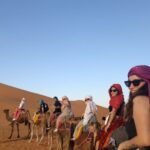
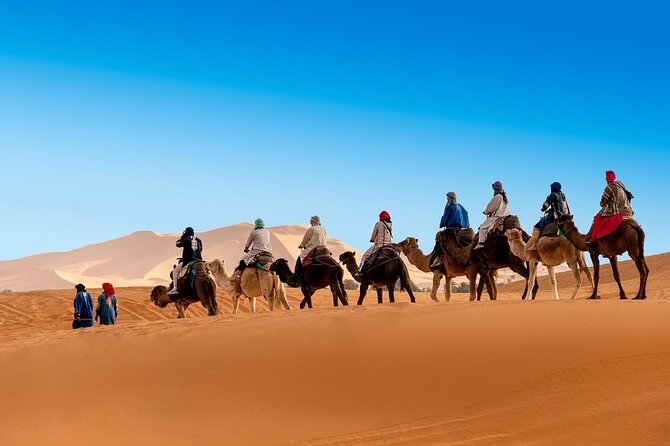
Arriving near Merzouga, the big moment comes: camel rides to the desert camp. The ride carries you across the sand dunes into the Erg Chebbi area, which is exactly what you came for.
A nice detail in the flow is the pacing for sunset. The schedule notes that there can be a stop (sometimes halfway) for sunset views. That means you’re not always rushing forward with no timing. You’re reaching the camp around dusk, which sets you up for evening magic rather than arriving when it’s dark and you’re exhausted.
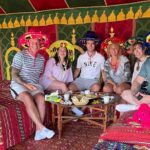
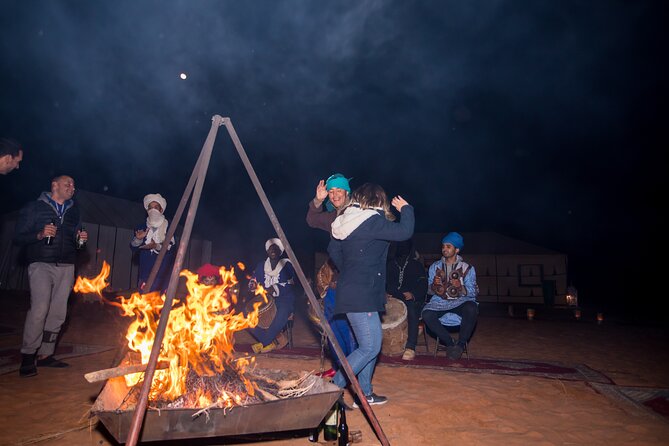
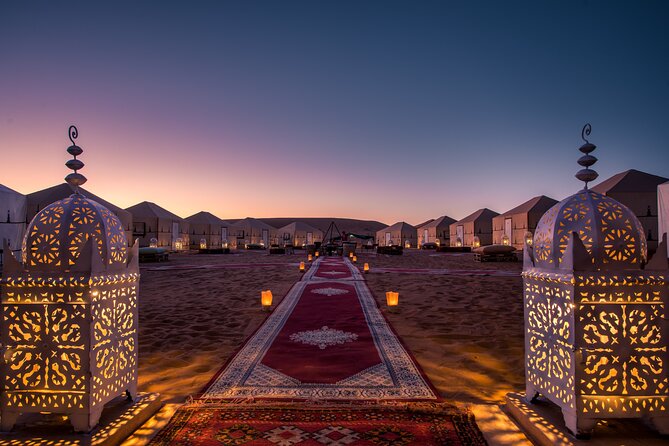
Once you get there, you’re greeted with tea, you’re shown your tents, and you get time to decompress before dinner. After dinner, there’s a musician soiree by the fire. Then you can walk up the dunes and look at the starry sky—plus the guide notes include shooting-star possibilities.
Two small reality checks here:
- You’re sleeping outdoors or in a basic camp setup, so your comfort depends on your clothing and expectations.
- Don’t assume it’ll stay warm. Desert nights cool off quickly.
If you’ve ever worried about whether the “camel night” is touristy, this tour’s biggest strength is how it builds in real time at the camp: tea, dinner, fire music, and then night sky time.
Desert camp comfort: what’s included, what’s not, and what to pack
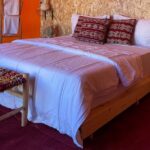
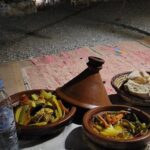
This tour includes dinner and breakfast for the camp night. That’s a real value because you’re not doing a restaurant hunt after a long day.
But your comfort will be mostly on you. One review detail that matters: the camp can be cold at night with no heater. So pack layers even if the day felt warm. Think: a warm jacket, something cozy for after dark, and something that works when the breeze picks up.
Also plan for practical basics. This trip doesn’t list extras like charging stations, Wi-Fi, or late-night comforts. The trade is worth it for many people: the desert at night can feel quiet in a way cities can’t do.
If you care about the guide atmosphere, this is also where your driver/guide personality can shape your night. Names like Rashid pop up tied to making sure you’re taken care of, staying flexible with stops, and keeping the mood light. People also mention bringing a dongle to play music in the car—handy if you’re the type who likes a shared soundtrack during the ride.
Morning in Merzouga: sunrise, breakfast, and the ride back
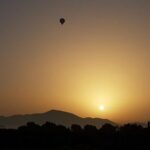
Day three starts early, again leaning into timing rather than rushing. You get sunrise, then breakfast. After that, it’s back to camelback for the ride from camp back toward the vehicle.
That morning part is worth appreciating even if you’re not a sunrise person. In the desert, it changes the colors and light fast. It also breaks up the day so the “main event” isn’t only the night before.
Then the drive becomes about returning through Morocco’s inland regions rather than straight back to Marrakech.
Rissani and the route back: oasis stops and acacia views
After you leave Merzouga, you head to Rissani, the ancient name Sijilmasa. It’s described as Morocco’s largest oasis, with adobe kasbahs and palm groves. This stop gives you a different kind of Morocco: more greenery and historic texture, less dune-only scenery.
Beyond Rissani, there’s a detour—about 150 km—across mountains and acacia trees to Tinghir. You stop for lunch in a village en route to Ouarzazate.
Then you continue through the Atlas Mountains again and arrive in Marrakech early evening. By then, you’ll likely feel that “road trip glow”—tired, yes, but with a clear sense that the journey wasn’t wasted time.
Price and value: what $173.79 buys you here
At $173.79 per person, this trip can feel like a bargain compared to other options you’ll see because a lot of the heavy lifting is handled for you.
Here’s what’s included in the deal:
- Air-conditioned transportation in a comfortable vehicle
- Fuel and tolls
- Two nights total: one in the Dades valley area (with dinner and breakfast) and one in the Merzouga desert camp (with dinner and breakfast)
- Camel riding to and from the camp
- Breakfast and dinner are covered (two each across the two nights)
What’s not included is where the budget planning comes in: lunches, drinks, and entrances fees. Also, a local guide in Ait Ben Haddou isn’t included.
So here’s the value math I’d use: if you want the core “Marrakech to Erg Chebbi” loop with meals and camel transfers handled, you’ll probably feel good about the cost. If you’re the type who hates extra add-ons and wants everything guided and ticketed with no surprises, you’ll want to budget for lunches and any entrance fees you choose to pay.
Who this Merzouga trip fits best (and who should rethink)
This works best for:
- First-timers in Morocco who want Ait Ben Haddou + Todra Gorge + Erg Chebbi in only three days
- People who like group travel but still want real experiences, not only quick photo stops
- Anyone who values timing: sunrise and sunset moments are part of why the trip feels special
It may not fit as well if:
- You hate cold nights and want a guaranteed warm setup at the desert camp
- You need meals to be fully included beyond dinner/breakfast (lunch and drinks aren’t listed as included)
- You strongly prefer a guided museum-style explanation inside every historic site (Ait Ben Haddou local guide isn’t included)
Should you book this 3-day Merzouga desert trip?
If you want a classic Merzouga experience with camel rides, two nights, and major sights packed into one efficient route, this is a solid option. The strongest part of the trip isn’t just seeing the desert—it’s the way it builds the journey with mountain passes, canyon walking, then sand and night sky time.
My advice: book it if you’re okay with basic camp comfort and you pack for cold. Bring layers. Keep expectations realistic for desert lodging. And if you’re picky about explanations at Ait Ben Haddou, plan to ask questions on-site since the local guide there isn’t included.
FAQ
What is the duration of the Marrakech to Merzouga trip?
It’s a 3-day tour (about 3 days) with two nights included.
Where does the tour start and what time is pickup?
The meeting point is Hôtel Restaurant Café de France J2G7+G2G in Marrakech, and pickup starts at 7:30am.
What does the tour cost per person?
The price listed is $173.79 per person.
Are accommodations included for both nights?
Yes. You get one night with dinner and breakfast in the Dades valley area and one night with dinner and breakfast in a desert camp near Merzouga.
Are camel rides included?
Yes. Camel rides are included to the desert camp and then back the next morning.
What meals are included?
Breakfast and dinner are included (two breakfasts and two dinners total). Lunches and drinks are not included.
Which major stops are included?
The tour includes Ait Ben Haddou, Todra Gorge, the Merzouga/Erg Chebbi desert camp experience, and a stop in Rissani, plus a return route that passes through the Atlas Mountains.
Is free cancellation available?
Yes. You can cancel up to 24 hours in advance for a full refund, and the experience may be rescheduled or refunded if it’s canceled due to poor weather.