
REVIEW · CAPE TOWN
Cape Town: Robben Island Ferry Ticket and Guided Prison Tour
Book on GetYourGuide →Operated by Beyond Africa Safaris · Bookable on GetYourGuide
This prison tour changes how you see freedom. Robben Island is a UNESCO World Heritage Site tied to apartheid, and this experience gets you from Cape Town’s waterfront to the prison grounds with prebooked ferry entry and a guide who lived the story. You’re also there to follow Nelson Mandela’s footsteps, including the cell he occupied for 27 years.
I love the way the tour uses first-hand accounts from an ex-prisoner—it’s not just dates on a page. I also like that you get an island-to-prison flow, so the Nelson Mandela cell lands with context, not as a random stop. (In real life, you’ll hear it told with emotion and sometimes even a bit of humor, depending on the guide.)
One thing to plan around: this isn’t a private visit. You’ll share the ferry and the island transport, and you may still face waits at the boarding point, plus the boat can feel rough depending on conditions and the day.
In This Review
- Key highlights
- Robben Island from the sea to the prison cell: what this tour actually gives you
- Getting to the Nelson Mandela Gateway and walking in without the ticket line
- The shared ferry crossing: timing, motion, and how to make it easier
- Island orientation by bus: setting context before the prison walls
- The former-inmate prison tour: why this part is the whole point
- Nelson Mandela’s cell and the long walk to freedom
- Time management: where the 4 hours tend to go
- Price and value: does $79 feel fair for what you get?
- Who this tour fits best (and who might want to rethink it)
- Booking call: should you book this Robben Island ferry + prison tour?
- FAQ
- How long is the Robben Island ferry and guided prison tour?
- Where do I meet and where does the tour end?
- Is hotel pickup or drop-off included?
- Does this include the ferry tickets?
- Do I still need to wait in line?
- Who provides the guided tour, and what language is it in?
- What should I bring on the day?
- Are food and drinks included?
- Is this tour for South African citizens too?
- Can I cancel, and what happens if weather is bad?
Key highlights

- Prebooked ferry entry for international visitors to help you skip the ticketing line
- Ex-inmate prison guide giving you the story from the inside
- Mandela’s cell visit after an orientation that makes the prison make sense
- Bus tour of the island sites before you walk through the prison section
- Shared boat crossing that can be choppy, so pack for wind and motion
Robben Island from the sea to the prison cell: what this tour actually gives you

Robben Island is one of those places where you learn history with your feet. The main reason to do Robben Island isn’t only that Nelson Mandela was held there for 27 years. It’s the way the site turns abstract apartheid-era policies into something physical—thick walls, guarded routines, and the limits placed on human lives.
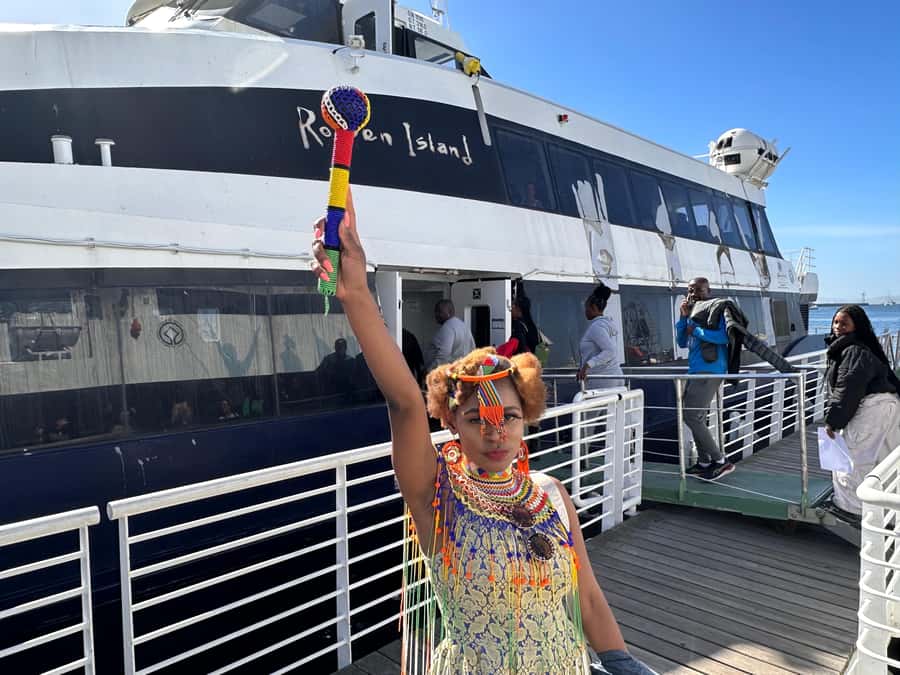
This tour works well because it doesn’t drop you into the prison first and hope you connect the dots. You start at the Nelson Mandela Gateway, take a boat crossing, then get an island tour by bus before you reach the prison itself. That order matters. It helps you understand the island as a whole working system—why it was built, how it functioned, and why it became a symbol.
And you’ll feel the difference of having an ex-prisoner guide. More than any scripted talk, that lived perspective can make the visit feel real and specific: daily rhythms, fear and endurance, and what small details meant when you were trying to survive behind bars.
You can also read our reviews of more tours and experiences in Cape Town.



Getting to the Nelson Mandela Gateway and walking in without the ticket line
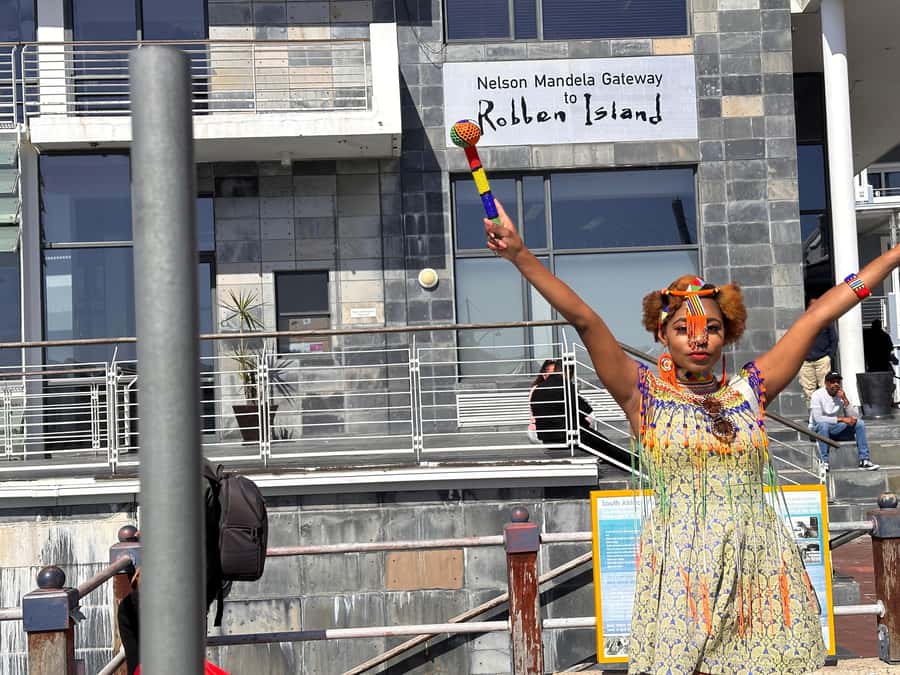
Your day starts and ends at the Nelson Mandela Gateway to Robben Island. That’s helpful because it keeps the logistics simple: no hotel pickup, no long transfer across town, and you just show up where the ferry departures happen.
The biggest practical win here is the skip-the-ticket-line approach. For international travelers (non–South African citizens), this can save time and hassle versus trying to sort out ticketing on the spot. Still, keep expectations realistic: even with skipped ticketing, you’ll likely queue at the boarding area. So you want to arrive ready to stand, scan, and follow directions.
What also matters is the communication. Tickets are sent via WhatsApp or iMessage or email, usually the night before. You’ll want to double-check your country code and mobile number so the message actually reaches you. If your phone details are wrong, you could lose time right when you’re trying to catch the ferry.
The shared ferry crossing: timing, motion, and how to make it easier

The boat part is roughly a half hour of shared crossing to Robben Island. In practice, days vary—one review experience mentioned a ride closer to 45 minutes, so treat it as a flexible window rather than a perfect countdown.
This is also the moment to decide how you’ll handle motion. The ferry is sometimes described as enclosed and crowded, but it still moves. If you get seasick, plan ahead. And even if you don’t, bring something for wind. Several visitors noted it can get chilly on the water, especially when you’re sitting near open air or breezy edges.
One more bonus: wildlife sightings can happen. People have reported whales on the route, and you may also see sea life from the boat. It’s not guaranteed, but it’s a nice reminder that this island is more than the prison story.
Island orientation by bus: setting context before the prison walls
Once you dock, you meet your guides and begin with an island orientation by bus. This is not filler. Done well, it gives you the spatial logic of the place—where major buildings sit, how the compound is laid out, and what the prison was designed to control.
The bus portion usually runs on a tight schedule, and you’ll be part of a group. You’ll hear commentary in English, and many guests highlight how the bus guide’s presentation helps the day feel paced rather than rushed. For example, one group mentioned bus guide Yasien Mohammed, and others praised guides who connected history to what you were seeing through clear storytelling.
A small heads-up: bus time can feel quick, and a couple of experiences referenced short stops on the island, including a brief coffee break and quick penguin viewing when timing allowed. Since the visit is structured around getting everyone through the prison visit, these little pauses can be short. So if you love slow sightseeing, you’ll want to treat this as a “focused experience,” not a free-roam island day.
The former-inmate prison tour: why this part is the whole point

The prison tour is led by an ex-political prisoner. This is where the experience becomes unforgettable, and also where you should expect emotion. The guide’s first-hand accounts are what turn Robben Island from a museum into a living memory.
Your group typically boards transport around the prison complex, and then you reach the main cell area and other key points. From what’s been described, the highlight is walking the prison spaces and hearing what daily conditions were like—how prisoners were treated, how control worked, and how the struggle for freedom played out behind bars.
Several visitors specifically noted how heartbreaking the storytelling could be. They also called out how the guides were friendly and open to questions, which matters because you’ll likely think of follow-ups during the walk. One guest credited the ex-inmate guide Monde with a thought-provoking prison tour, and others mentioned former prisoner guides such as Terrence and Mr Sipho. Different guides, different tones—but the shared element is their direct connection to the place.
If you’re visiting with kids or teens, it can still work. More than one review mentioned younger visitors benefiting from the visit. The key is how you handle the emotional weight of what you’ll hear. This is one of those “learning with impact” days—worth it, but not the time for a casual mindset.






Nelson Mandela’s cell and the long walk to freedom
The tour’s centerpiece is Nelson Mandela’s prison cell, the place he called home for 27 years. This is the moment where your brain stops treating Mandela as a global icon and starts seeing him as a human being inside a system built to break people down.
The value here isn’t just seeing the cell. It’s how the visit is framed by what you learned earlier—why the prison existed, how apartheid relied on repression, and how prisoners endured. When you hear the story of life under segregation and then stand in the specific room Mandela was held in, it becomes harder to dismiss apartheid-era oppression as distant or abstract.
This is also why the tour format matters. Doing the cell after the island orientation and before the day ends helps you process the prison as part of a larger machine, not isolated architecture.
Time management: where the 4 hours tend to go
This experience runs about 4 hours total. That includes your ferry crossing, island orientation, the prison tour, and the return boat trip to Cape Town.
Here’s how that schedule usually feels in real terms:
- Ferry time sets the tempo. Plan to be on the move and follow boarding instructions quickly.
- Bus orientation gives you the layout and big context. It’s structured, and it moves.
- Prison walking is the emotional core. This is where you’ll spend the time you’ll remember.
- Return trip wraps the day, leaving you with a strong sense of closure.
A couple of visitors noted logistics can get busy, especially with crowds and shared transport. So if you’re the type who wants to be late-free, arrive early at the Nelson Mandela Gateway. It reduces stress and makes it easier to enjoy the experience once it starts.
Price and value: does $79 feel fair for what you get?
At $79 per person, you’re paying for three main things: prebooked ferry entry for international visitors, a guided museum/prison experience, and an ex-prisoner guide component.
The value is in the human piece. A typical Robben Island visit is memorable because of access and interpretation, but what you’re buying here is guided storytelling from someone who lived the era of confinement. That kind of guide is hard to replicate, and it’s one of the reasons guests consistently rate this experience highly.
You’re also paying for reduced friction. Skipping the ticket line helps you protect time in a schedule-heavy trip to Cape Town. And because hotel pickup isn’t included, you’re not paying for a transfer you don’t control anyway—your time goes directly to the island experience.
That said, you should know what’s not included: no meals or drinks, and you don’t have a private tour. Some guests noted that bus conditions and sound clarity can vary (one comment mentioned the bus feeling older and harder to hear from the back). So the value is great if you’re focused on the prison story and less focused on comfort.
Who this tour fits best (and who might want to rethink it)

This is a strong choice if you:
- Want a half-day, high-impact learning experience tied to Mandela and apartheid
- Prefer guided interpretation over self-paced roaming
- Value having an ex-prisoner explain what you’re seeing from lived reality
- Don’t need hotel pickup and are fine meeting at the waterfront
You might want to reconsider or prepare more carefully if you:
- Have serious seasickness issues. The ferry can be rough.
- Are extremely sensitive to uncomfortable seating or crowded group transport, since this is shared.
- Need perfectly clear signage for meeting points. A couple of experiences said directions to the meeting area weren’t as clear as they could be, so it helps to arrive early and ask staff on site.
Booking call: should you book this Robben Island ferry + prison tour?
If Robben Island is on your Cape Town list—and it should be—this is one of the more practical ways to do it with less ticketing friction and stronger guidance. The standout reason to book is simple: the prison tour is led by a former political prisoner, and multiple visitors point to that first-hand storytelling as the part they’ll remember most.
I’d book it if you’re looking for a focused, structured visit where the Nelson Mandela cell is the emotional centerpiece and you want enough context to understand what you’re seeing. I’d also pack for wind and motion, arrive early at the Nelson Mandela Gateway, and plan to be in a shared group setting.
If you want total freedom and silence, choose a different style of visit. But for most people, this hits the sweet spot: prebooked ferry entry for international travelers plus the prison story from the inside.
FAQ
How long is the Robben Island ferry and guided prison tour?
The experience runs for about 4 hours.
Where do I meet and where does the tour end?
The tour starts and ends at the Nelson Mandela Gateway to Robben Island.
Is hotel pickup or drop-off included?
No. Hotel pickup and drop-off are not included.
Does this include the ferry tickets?
Yes. It includes return Robben Island ferry tickets.
Do I still need to wait in line?
You skip the ferry ticketing line, but you still have to queue to board the ferry boat.
Who provides the guided tour, and what language is it in?
You’ll have a live guide in English, including an ex-prisoner guide for the prison portion.
What should I bring on the day?
Bring a passport or ID card. A copy is accepted.
Are food and drinks included?
No. Food and drinks are not included.
Is this tour for South African citizens too?
This offer is for international travelers only (non–South Africans). South African citizens are encouraged to purchase directly from Robben Island.
Can I cancel, and what happens if weather is bad?
Free cancellation is available up to 3 days and 1 hour in advance for a full refund. The provider may cancel in bad weather and offer a full refund.