REVIEW · FES
From Fes: Meknes Volubilis and Moulay Idriss Day Trip
Book on GetYourGuide →Operated by 3t Travel · Bookable on GetYourGuide
Roman ruins and holy streets in one day. This day trip strings together three very different Moroccan worlds: Volubilis’ Roman remains, Moulay Idriss’ sacred alleys, and Meknes’ imperial-city feel, all with easy pickup and air-conditioned driving. It’s the kind of route that makes Fes feel less like a destination and more like a launch point.
I especially like how the day is built around meaning, not just checklist stops. With guides such as Majid at Volubilis and Rashid in Meknes, you get explanations that help the ruins and gates make sense. I also love the comfort and timing: drivers like Mustafa (and others on this route) handle the long road calmly, with photo-friendly viewpoints when the scenery opens up.
The main drawback is simple: it can be a long, full day, and the holy stop has practical limits. If you’re visiting on a day when shops or schedules run differently (like a Friday), or if you’re non-Muslim and can’t enter the mosque, you’ll feel the time squeeze a bit.
In This Review
- Quick hits before you go
- Why this day trip works from Fes
- The drive to Volubilis: scenery stops without the hassle
- Volubilis Roman ruins: seeing the remains with the right guide
- Moulay Idriss: holy town streets and the mosque time limit
- Meknes medina: Lahdim square, Bab Mansour, and the gates that tell stories
- City walls, Moulay Ismail’s mausoleum, and the museum stop
- Timing and pace: a packed day, but usually well run
- Price and value: what $23 really buys
- Who should book this Meknes and Volubilis day trip
- Practical tips that make the day smoother
- Should you book this tour, or build your own route?
- FAQ
- How long is the Fes to Meknes, Volubilis, and Moulay Idriss day trip?
- How much does the tour cost?
- Is hotel pickup and drop-off included?
- Is transportation air-conditioned?
- Are entry fees included?
- Are food and drinks included?
- Are local guides included?
- Does the tour skip the ticket line?
- What languages can the driver speak?
- Is private group service available?
- Is there free cancellation?
Quick hits before you go
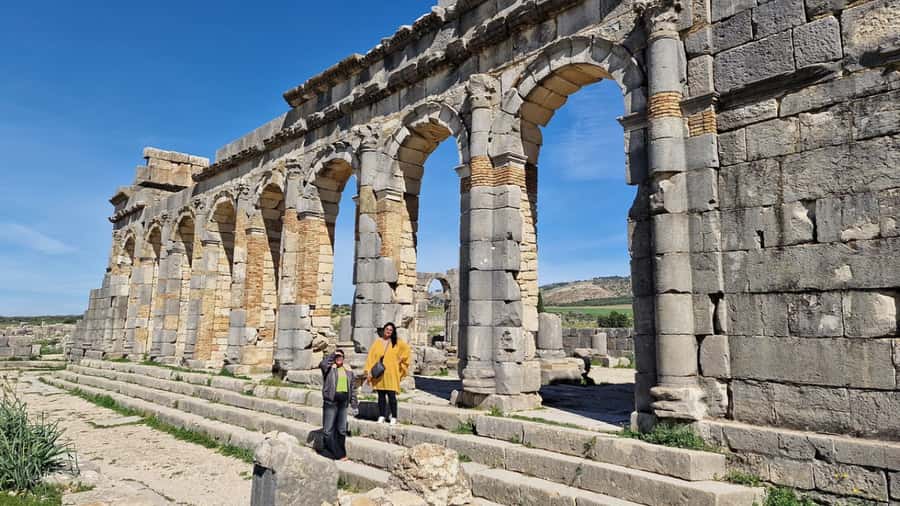
- Volubilis with a local guide (like Majid): the Roman site lands better when someone points out what you’re actually seeing.
- Moulay Idriss short visit reality check: non-Muslims can’t enter the mosque, so plan on seeing the town and exterior areas more than the interior.
- Meknes highlights in tight form: you’ll hit places like Lahdim square and Bab Mansour without getting lost in the medina maze.
- City walls + royal legacy: the walk-and-stop mix brings you to major imperial anchors, including the mausoleum of Moulay Ismail.
- Comfort matters: air-conditioned vehicle plus an English/French/Spanish-capable driver keeps the day from wearing you out too fast.
Why this day trip works from Fes
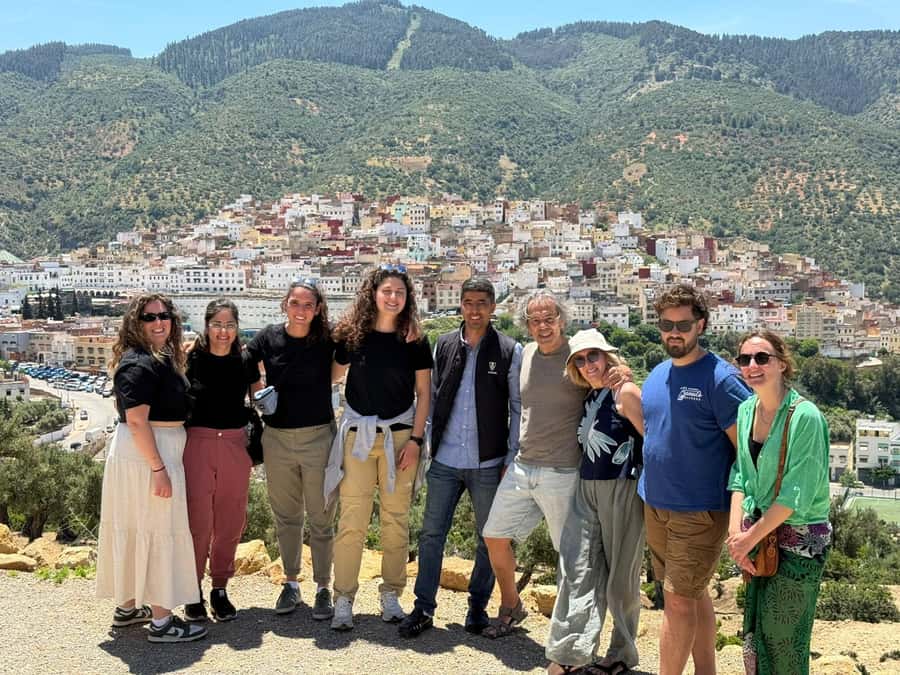
If you only have one full day outside Fes, this route is a solid use of time. You’re touring part of Morocco’s imperial story in one loop: Roman-era power at Volubilis, Islamic beginnings in Moulay Idriss, then the later Almoravid and Alaouite influences in Meknes. The rhythm is straightforward: ride out, walk a historic site, switch towns, then come back before evening.
What makes it feel efficient is the mix of modes. You get vehicle time where it counts (between towns and down-road transitions), then focused walking when the sights are concentrated. Meknes in particular can be tricky to navigate on your own, and having a guide helps you avoid spending the best part of your day simply hunting for the next landmark.
You can also read our reviews of more tours and experiences in Fes.


The drive to Volubilis: scenery stops without the hassle
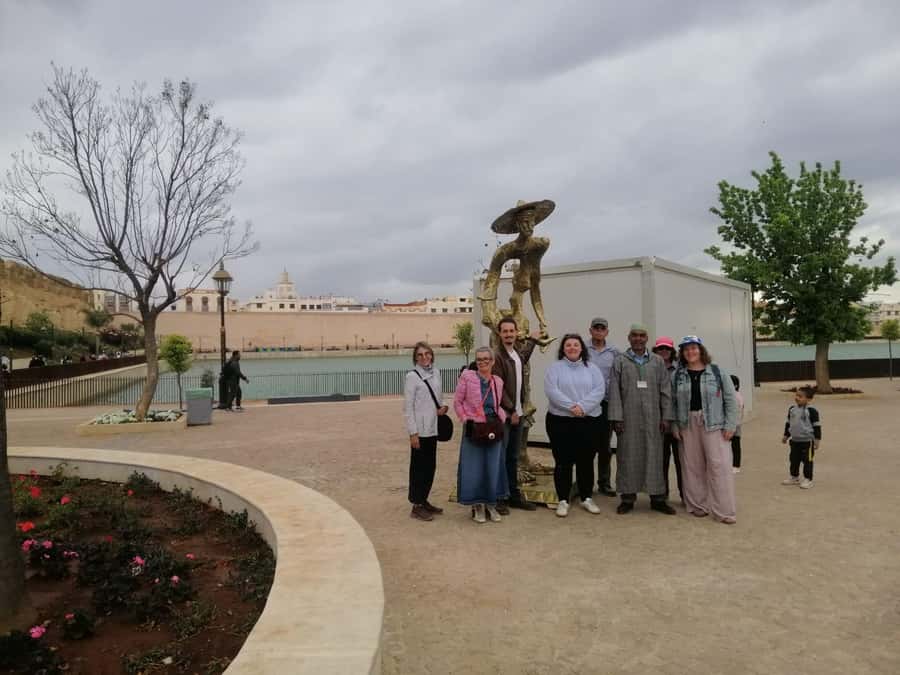
You start with pickup in Fes, then settle into an air-conditioned car. One big advantage here is that the trip doesn’t treat the road like a waste of time. Drivers often make occasional stops for photos—views over valleys, mountains, and olive-tree country show up along the way.
That matters more than it sounds. Volubilis is the emotional anchor of the day. If you arrive tired and frazzled, the ruins can blur. If you arrive calm, you’ll appreciate the scale and the fact that this is a site with about 2000 years of history behind it.
I’d suggest bringing a light layer for the car ride. The day is hot enough in Morocco that you’ll want comfort in transit, but the timing at ruins can still feel cool or windy depending on the season.
Volubilis Roman ruins: seeing the remains with the right guide
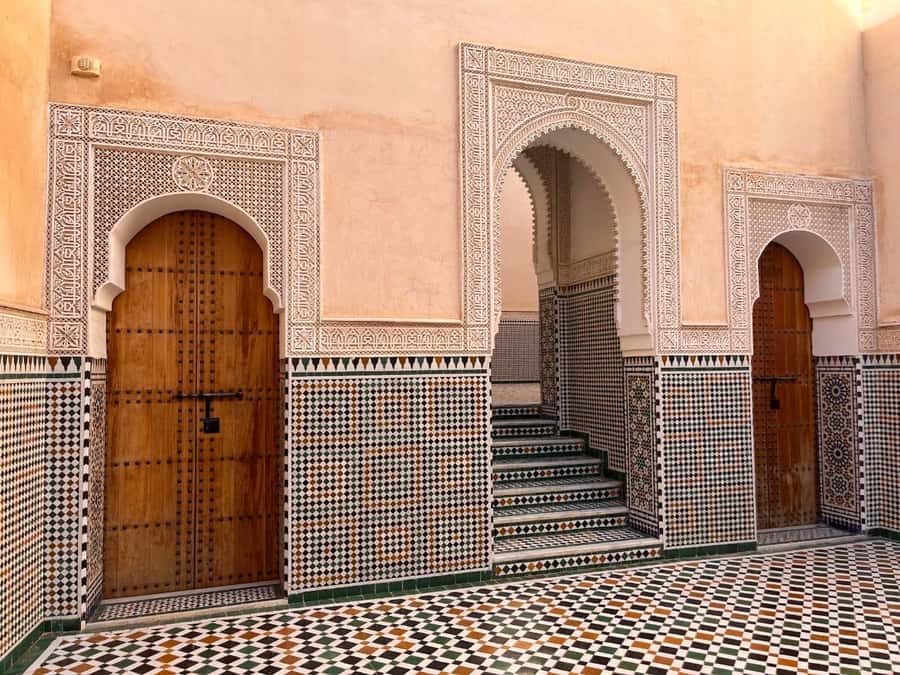
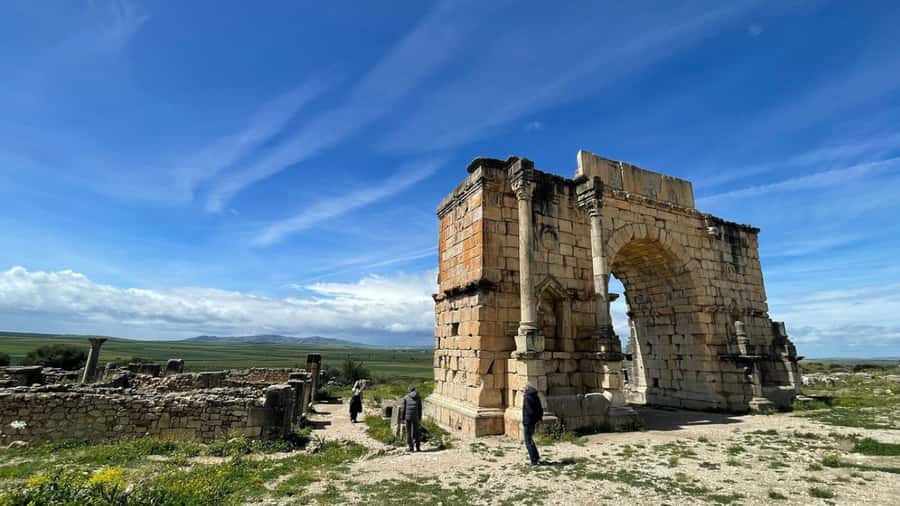
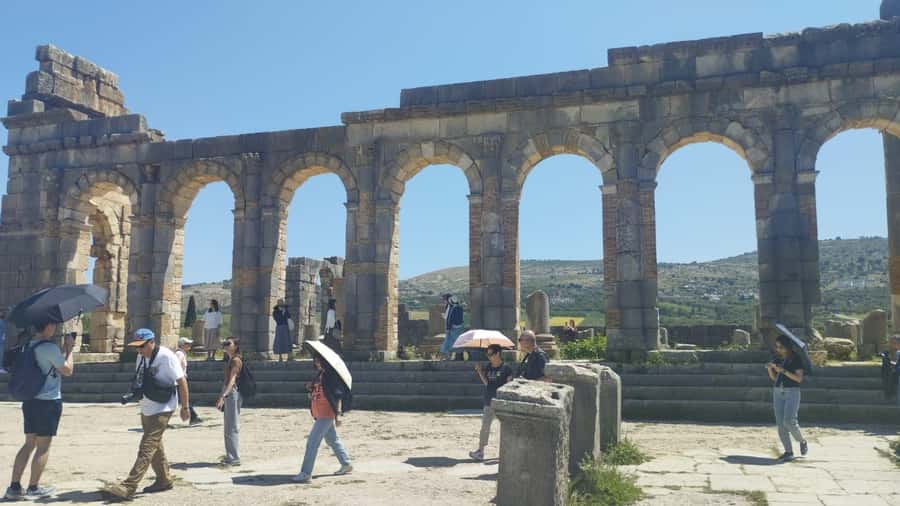
Volubilis is the reason most people book this day trip, and with good reason. This is not a museum stop; it’s an archaeological complex that lets you walk through the remains of an ancient kingdom in the region. The site is old enough that you’ll feel it right away, even if you don’t consider yourself a Roman-history person.
Here’s the practical truth: without interpretation, Roman ruins can feel like scattered walls. With a guide—many travelers get local experts such as Majid—the visit becomes clearer. You start noticing how the layout and architecture point to everyday life: what a “complex” really means on the ground, and how the different parts relate.
If you like asking questions, this is the time to do it. Ruins can turn into a photo session quickly, but a local guide gives you the context to look longer. That turns Volubilis from a quick look into the kind of stop you remember when you’re back in Fes.
Moulay Idriss: holy town streets and the mosque time limit
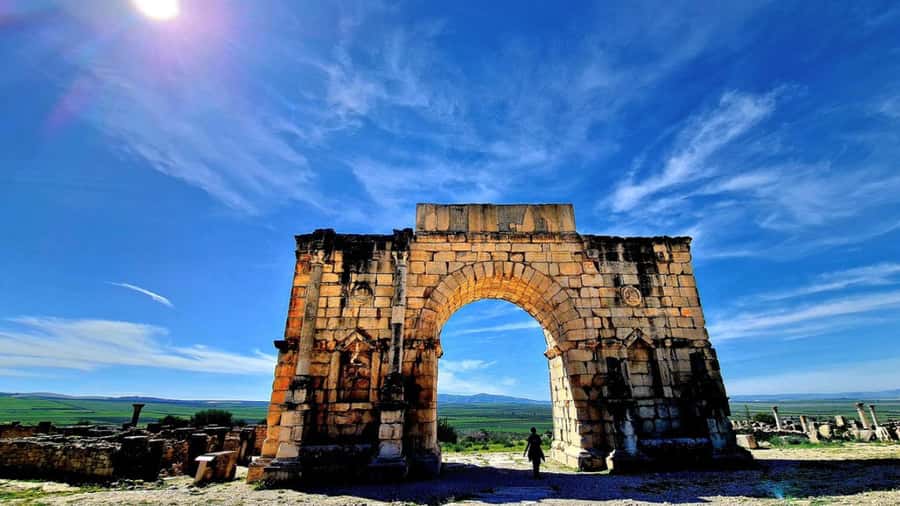
Next comes Moulay Idriss, described on the tour as one of Morocco’s holiest towns. The key detail here is the origin story: Moulay Idriss I introduced Islam in 789 AD, and the town’s compact layout reflects that sacred role.
The experience is more about atmosphere than big monuments. You’ll walk narrow streets in a town that feels intentionally small and focused. The visit is also short, and that’s not a weakness—it’s a planning reality. One important note: non-Muslims aren’t allowed inside the mosque, so you’ll spend more time in the town/exterior areas and less time at the interior.
If you’re a photography person, plan to linger briefly at viewpoint moments. If you’re a slower walker, keep your pace steady here. This town doesn’t reward sprinting; it rewards being quiet and noticing.
Meknes medina: Lahdim square, Bab Mansour, and the gates that tell stories
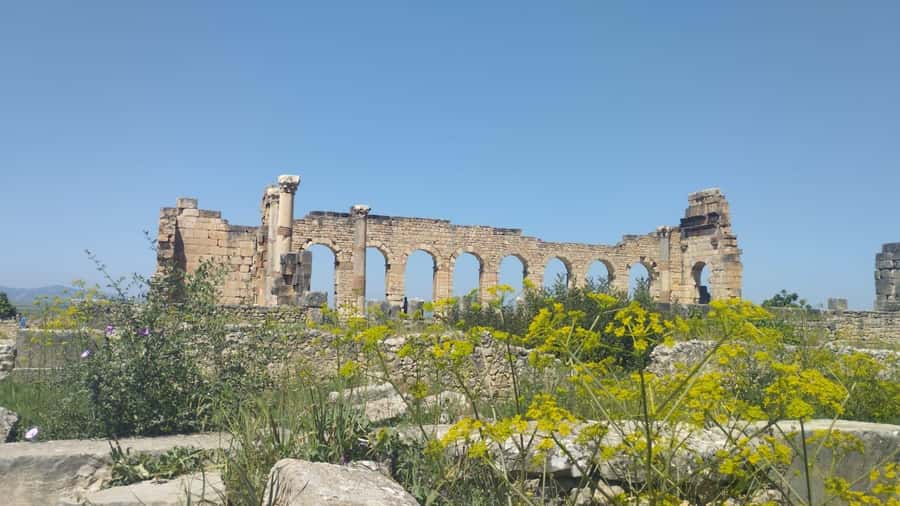
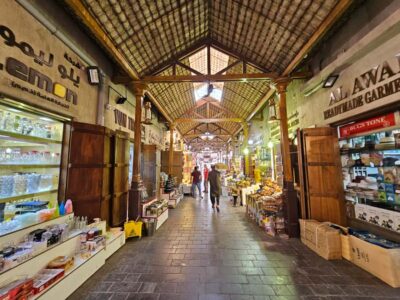
Then you roll into Meknes, founded in the 11th century by the Almoravids as a military settlement. You can feel that layered purpose in the city design. Meknes is one of those places where the highlights are built into the city walls and monumental gates, so having a route matters.
The tour focuses on several “anchor” stops:
- Lahdim square: a key center point that makes it easier to orient yourself.
- Bab Mansour: the grand gate that gives Meknes its imperial wow-factor.
- Spanish-Moorish style architecture elements: ornamental decorations show up around these monumental structures, and you’ll see the design language more clearly when a guide connects it to the city’s era.
Meknes’ medina can be tough to navigate without local help. A good guide helps you avoid the annoying part of independent exploration: wandering until you find something, then doubling back because you guessed wrong. With guided time, you get a cleaner line between stops.
Also, this is one of those days where a “good enough” route beats an “I’ll figure it out” approach. You’ll still have time to breathe and look around, but you won’t burn your momentum.




City walls, Moulay Ismail’s mausoleum, and the museum stop

After the medina core, the itinerary shifts to the city’s imperial backbone: walls and royal memory.
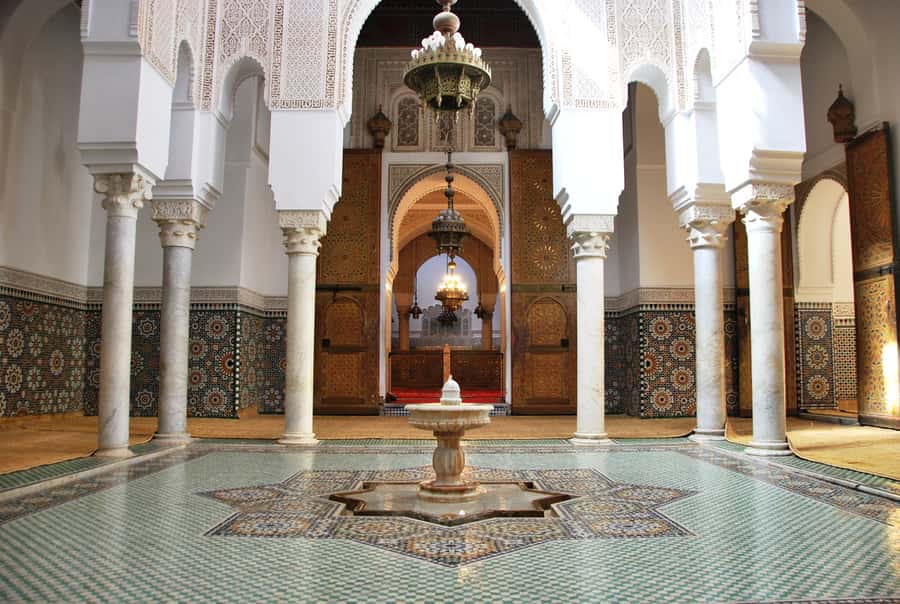
You’ll tour the city walls and stop at the Mausoleum of Moulay Ismail, founder of the Alaouite dynasty and the sultan when Meknes was the capital city. Even if you don’t know his biography, the stop works because it gives the city a “why.” Meknes didn’t just happen to become important; it was built and ruled in a way you can still trace.
Then there’s a museum-style break: the Museum of Moroccan Art. The tour description frames it around handicrafts, and in practice that’s a nice pause after walking outdoors. It’s also a chance to spot the craft traditions you might only half-recognize when you see them sold in market stalls.
If you’re the type who likes to compare what you see in one place to what you’ll see later elsewhere in Morocco, this museum stop can help you put language to the patterns and techniques.
Timing and pace: a packed day, but usually well run
This is an 8-hour day trip on paper, but in real life it can run long, depending on traffic and how long you linger at each stop. Some visitors note getting back later than expected, and that’s not unusual when you add walking, ticket timing, and quick transitions.
The good news: the route is designed to keep moving without rushing you off the sites. The pattern is typically:
1) pickup and drive
2) Volubilis time (often with a local guide option)
3) quick Moulay Idriss town stop
4) Meknes walking and landmarks
5) return to Fes
One small detail that improves the day: the driver often helps manage “micro-breaks.” People report pauses for photo moments and practical stops along the way. That sounds basic, but for a full-day outing it helps you avoid the end-of-day crankiness.
If you’re traveling with limited stamina, treat Volubilis as your priority. If you’re worried you’ll be tired, put your energy into the first ruin stop and use the later stops for shorter, calmer looking.
Price and value: what $23 really buys
At $23 per person, the headline price is attractive. But the real value depends on what you choose to add, and what’s excluded.
Here’s the practical breakdown:
- Included: hotel pickup/drop-off in Fes, air-conditioned transportation, and a professional driver.
- Not included: entry fees, food and drinks, and local guides.
In other words, $23 covers the transportation and the “getting you there safely and on time” part. Many people find the day gets dramatically better when they add local guides at the sites. That’s where explanations can turn ruins and gates into something you understand instead of something you just photograph.
Also, the tour includes skip the ticket line, which can save time at the sites where queues form. Since entry fees are separate, you’re still paying to get in—you’re just spending less time stuck.
For me, the value equation is this: if you’re willing to pay entry fees and you add a guide where it matters (Volubilis and Meknes), this day trip becomes a high-return history circuit. If you skip guides and only self-explore, you might feel the day is still enjoyable, but less satisfying.
Who should book this Meknes and Volubilis day trip
This trip is a great fit if:
- You want an imperial-city sampler without a multi-day plan
- You like history that you can walk through—Roman ruins, royal sites, and Islamic holy-town streets
- You want a driver who speaks multiple languages (the driver can work in English, French, Spanish, Arabic, Italian)
It may be less ideal if:
- You hate long days and want a slow pace (this one is a full schedule)
- You need lots of free time in each city without structured stops
- You’re visiting on a day when local closures limit browsing in the Meknes medina (some travelers note many shops are closed on Fridays)
Practical tips that make the day smoother
Pack like you’re doing three mini-walks, not one museum visit:
- Wear shoes you trust for uneven stone and medina streets.
- Bring water, because food and drinks are not included.
- If you can, plan to eat in Meknes at the lunch break. Several reports mention restaurant recommendations and a proper sit-down meal.
Also, think about your expectations for Moulay Idriss. If you’re non-Muslim, you should plan for a short mosque-related stop due to access restrictions. The town experience still works, but it’s not built like a long guided interior tour.
One more small bonus: some itineraries add extra stops on the return drive, such as a mosaic-related cooperative near Fes. Don’t count on it as guaranteed, but it’s the kind of add-on that turns “just a drive back” into something more interesting.
Should you book this tour, or build your own route?
Book it if you want maximum history in one day with minimal hassle. The transportation, pickup/drop-off, and guided stop options make it hard to beat—especially if you’re not fluent in navigating Meknes on your own.
Skip it if you want a slower, deeper exploration of just one place. Volubilis deserves real time, and Moulay Idriss is better when you can sit with the town mood. For a one-day sampler, though, this route is a strong choice.
If you do book, I’d focus your decision on one thing: whether you’ll add guided time at Volubilis and Meknes. That’s what turns this from sightseeing into understanding, and it’s where many people feel the trip really pays off.
FAQ
How long is the Fes to Meknes, Volubilis, and Moulay Idriss day trip?
The tour is listed as 8 hours (one day).
How much does the tour cost?
The price is $23 per person.
Is hotel pickup and drop-off included?
Yes. Hotel pickup and drop-off in Fes are included.
Is transportation air-conditioned?
Yes, transportation is by air-conditioned vehicle.
Are entry fees included?
No. Entry fees are not included.
Are food and drinks included?
No. Food and drinks are not included.
Are local guides included?
Local guides are not included. The tour description notes guides locally for the sites are not part of what’s included, though guided options at Volubilis and Meknes are commonly chosen.
Does the tour skip the ticket line?
The tour includes skipping the ticket line.
What languages can the driver speak?
The driver can work in English, French, Spanish, Arabic, and Italian.
Is private group service available?
Yes, a private group is available.
Is there free cancellation?
Yes. You can cancel up to 24 hours in advance for a full refund.