REVIEW · FES
Fes: Volubilis Roman Ruins, Mouly Idriss, & Meknes Day Trip
Book on GetYourGuide →Operated by El ouarti voyagistes & tourisme · Bookable on GetYourGuide
Three hills, one ancient glow.
This day trip threads together Volubilis Roman remains, the hilltop town of Moulay Idriss, and Meknes Medina with its Spanish-Moorish mix. I love how the stops feel spaced out: photo breaks on the drive, time to wander Volubilis at your own speed, and a real afternoon to roam Meknes. The trade-off is simple: there’s no included guide inside the sites, so you’ll mostly self-explore, and you’ll still need to budget for the 10 EUR Volubilis entry ticket.
You start with hotel pickup in Fes and a comfortable, air-conditioned vehicle. I like that the route includes scenic roadside pauses (think Ain Lah, Zagotta, a dam view, and the Rif Mountain area), because it breaks up the day so it doesn’t feel like you’re just commuting.
Finally, you should like a day where you’re given freedom, not a scripted lecture. If you want heavy, site-by-site storytelling, you may wish you had a dedicated guide.
In This Review
- Key things you’ll notice on this Fes to Meknes day trip
- How the drive connects Volubilis, Moulay Idriss, and Meknes
- Volubilis Roman Ruins: what you see and how the 10 EUR ticket fits
- Moulay Idriss hilltop town: green tiles, panoramic views, and quick wandering
- Meknes Medina: gates, Royal Palace areas, El Hedim, and Spanish-Moorish details
- What makes it feel smooth: driver skill and well-timed photo pauses
- Price and logistics: why $17 can work out well
- Time breakdown you should plan around (without overthinking it)
- Photo tips and small comforts that make a big difference
- Should you book this Fes to Volubilis, Moulay Idriss, and Meknes trip?
- FAQ
- Is hotel pickup and drop-off included?
- How much does Volubilis entry cost?
- Is a guide included for the sites?
- What’s included in the price besides transport?
- What’s the duration of the trip?
- Are food and drinks included?
- Can I cancel for a refund?
- Is the tour wheelchair accessible?
Key things you’ll notice on this Fes to Meknes day trip
- Pickup-to-drop-off convenience right from your accommodation in Fes
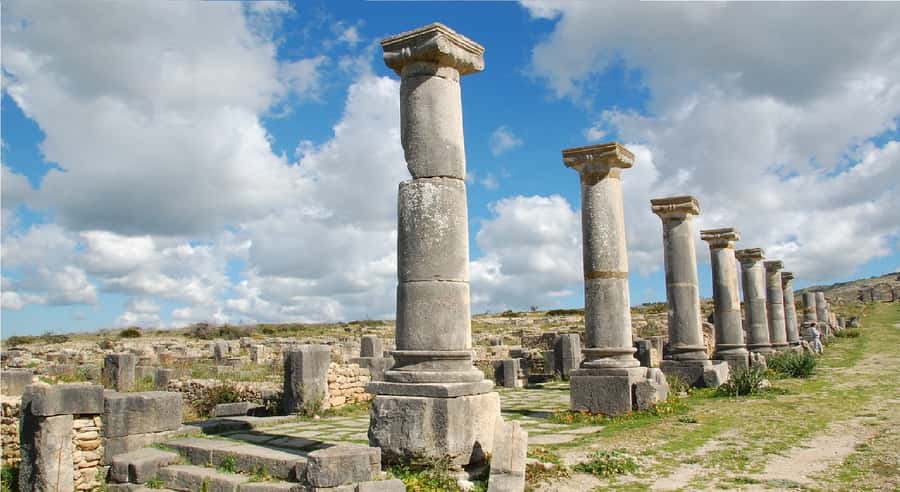
- Volubilis ruins you can explore independently, including the Arch of Caracalla and major temple areas
- Moulay Idriss panoramas from the hilltop town on two scenic heights
- Meknes walking time for gates, the Royal Palace area, El Hedim Square, and the Heri es-Souani granaries
- Scenic photo stops on the drive through Ain Lah, Zagotta, and Rif Mountain viewpoints
- Driver-led day, not a full guided tour, so plan to read signs and ask quick questions
How the drive connects Volubilis, Moulay Idriss, and Meknes
This is an 8-hour day that starts with pickup in Fes and uses a spacious, air-conditioned vehicle. The drive itself matters here. You’re not stuck on a straight road the whole time. Instead, you get several short stops that are mainly for photos and quick looks—Ain Lah, Zagotta, a dam viewpoint, and the Rif Mountain area.
Those breaks are helpful for three reasons. First, it keeps your energy up before Volubilis. Second, you get a sense of the region beyond the postcard version of Morocco. Third, when the day includes multiple old cities, a little rhythm prevents the whole thing from feeling rushed.
Expect the day to feel like a sequence of chapters: road → ruins → sacred hilltop town → imperial-city afternoon → back to Fes. It’s a good format if you like seeing variety in one go without constantly changing hotels.
You can also read our reviews of more tours and experiences in Fes.


Volubilis Roman Ruins: what you see and how the 10 EUR ticket fits
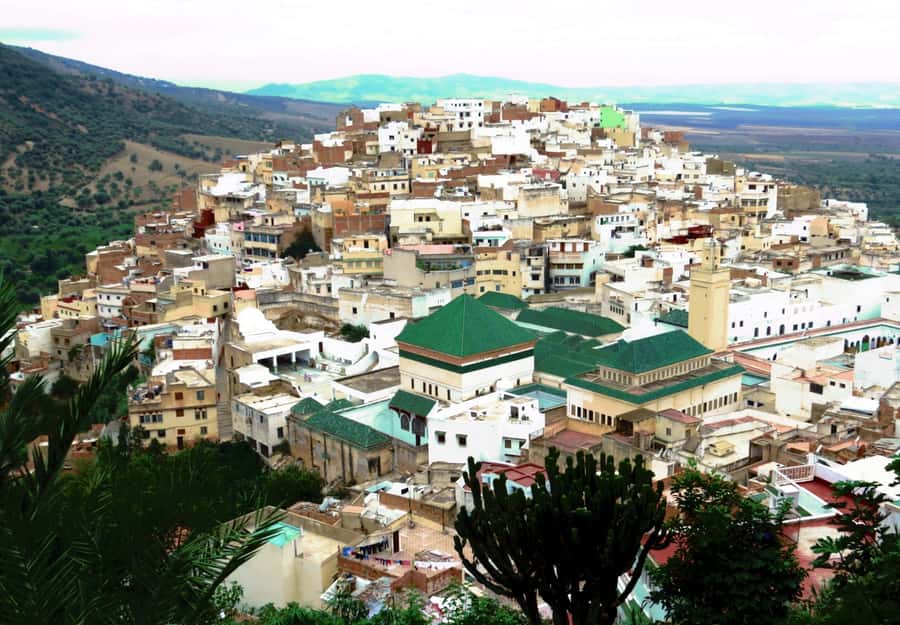
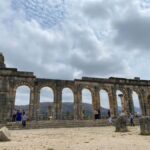
Volubilis is the headliner. This 2,000-year-old Berber-Roman complex is the kind of place where you can walk among real remains and actually picture how a Roman city worked—without needing to imagine everything from scratch.
You’ll arrive and have free time to purchase your ticket to enter. The entry cost is 10 EUR. It’s an extra cost, yes, but it’s also a reminder that this day trip is good value because the transportation and driver service are already built in. Think of your spend as: you pay entry for Volubilis, and everything else is handled as part of the transport plan.
Inside, you can expect key architectural highlights such as the Arch of Caracalla, a Basilica, and the Capitoline Temple. Even if you’re not a Roman-architecture nerd, you’ll still feel it. The scale of the ruins and the way the site is laid out makes it easy to turn “I saw ruins” into “I understood what I was looking at.”
One practical point: this is largely a self-guided experience. That’s not bad—it’s often the best way to tour ruins, because you can stop for photos or pause when the details catch your eye. But it does mean you’ll want to be comfortable reading at your own pace.
My tip for the ticket moment: try to carry cash if you can. People often get stuck at entry points when payment options are limited, and you don’t want your whole morning to become a transaction puzzle.
Moulay Idriss hilltop town: green tiles, panoramic views, and quick wandering
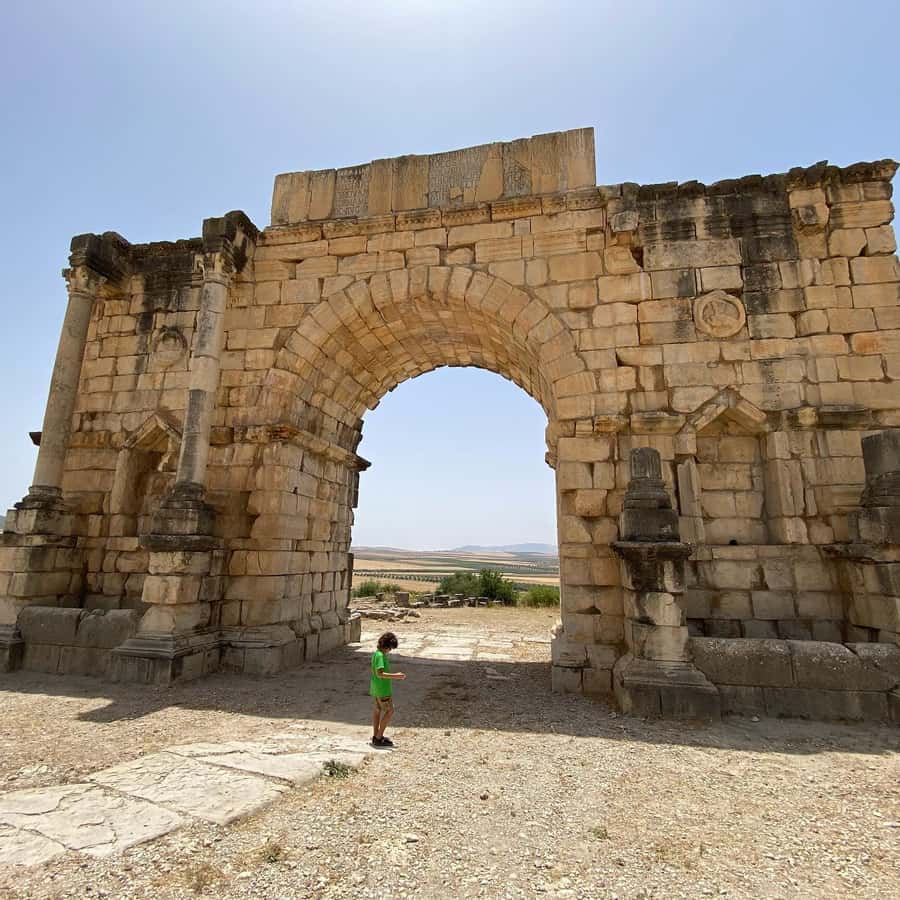
After Volubilis, you head to Moulay Idriss, a town stretched across two hills. It’s an Islamic town with a strong sense of place, and the layout is part of the attraction. You don’t just arrive and walk flat streets. You get viewpoints that make the town feel layered.
You’ll have free time to wander squares, take in panoramas from the hilltop areas, and look for the distinctive green-tiled pyramids of the Zaouia. This is one of those sights that reads clearly in photos but also feels more meaningful once you’re standing near it—because you see how the town’s religious architecture anchors the skyline.
A quick consideration: the time you get here is meant to be enough for views and wandering, not for a deep cultural immersion. If you want long mosque history or a long sit-down conversation, you may feel slightly limited by the schedule. Still, as a stop that breaks up the day, it’s strong.
Best use of your time in Moulay Idriss: move slowly, find a viewpoint, and then keep walking. The town rewards you for not rushing straight to the biggest photo spot.
Meknes Medina: gates, Royal Palace areas, El Hedim, and Spanish-Moorish details
Then comes Meknes, and this is where the day shifts from ruins and hilltop views into street-level wandering.
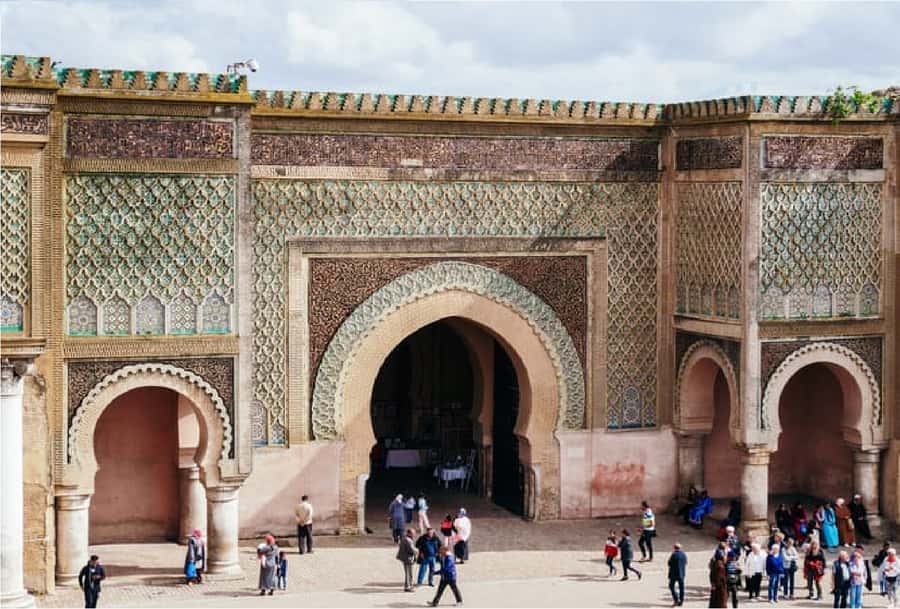
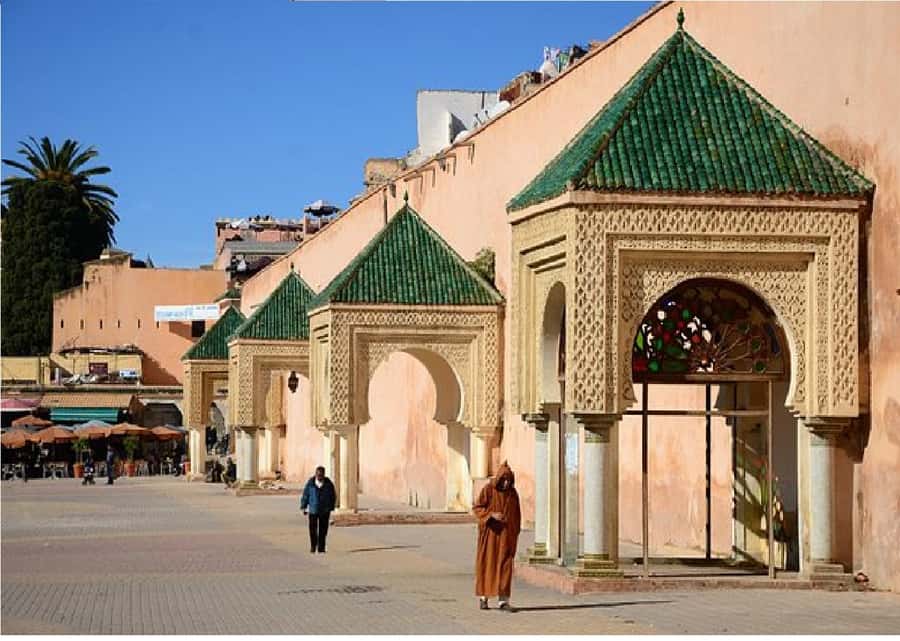
You’ll have free time in the Meknes Medina, with plenty to see at your own pace. The tour plan highlights key areas like the 17th-century city gates, the Royal Palace zone, and the Spanish and Moorish architectural influences that show up throughout the city.
It’s a nice pairing: after Roman stone and sacred hilltop tiles, Meknes gives you living urban architecture. Even when you’re not reading every detail, the street forms and building styles help your brain switch gears.
Specific named stops you may encounter include:
- El Hedim Square, a central open space that’s often busy and good for a quick reset
- Heri es-Souani granaries, a monumental structure that helps you see Meknes beyond its souvenir image
- Museum of Moroccan Art, which you can use as a break from walking and as a focused cultural pause
- An optional look at the Mausoleum of Moulay Ismail, tied to the Alaouite dynasty and a key figure when Meknes was the capital
One small budgeting note: lunch is on you. The plan suggests buying a local lunch in Moulay Idriss before heading to Meknes, but you’ll still want to be flexible depending on what you find. If you’d rather eat in Meknes, you can use your free time there to hunt for something that feels local.
Also, a reality-check from how the day tends to run: Meknes gets a longer stretch than you’d expect. That’s good for wandering, but it can feel like a lot if you only want the biggest sights and then want to go home early. For many people, though, that extra time is exactly what makes this tour feel worthwhile.
What makes it feel smooth: driver skill and well-timed photo pauses
The most praised part of this kind of trip is usually not the ruins. It’s the driver. And here, the pattern in feedback is consistent: people value safe driving, clear timing, and helpful commentary at the stops.
You may be with drivers like Hamza, Momo, Imad, Aziz, Saad, Tarik, or Ismael—names that come up again and again. The common thread is that they don’t just drive. They also help you understand what you’re seeing, in whatever language fits your group best. Some drivers even support photo stops actively, steering you toward scenic pull-offs so you don’t miss the good angles.
This is especially important on Moroccan roads. Even when you’re not doing anything complicated, you want your time to feel protected: pickups should be on track, drop-offs should work smoothly, and you shouldn’t have to negotiate the route yourself.
One more practical benefit: if the weather turns, you’re not stuck. People mention the day still works even during rainy spells, and that drivers can keep plans moving so you can still see the key sites when the skies cooperate.




Price and logistics: why $17 can work out well
At $17 per person, this is a budget-friendly way to cover three major stops with pickup and drop-off from Fes. Here’s why that price makes sense.
Included basics:
- Hotel pickup and drop-off in Fes
- Transportation in an air-conditioned vehicle
- A driver
Not included:
- Volubilis entry ticket (10 EUR)
- Food and drinks
- Guide (so you rely on self-wandering plus any quick explanations from the driver)
So your real extras are mainly the 10 EUR ticket plus whatever you choose to spend on lunch and water. For a full-day excursion that covers Volubilis and two additional towns/areas, that’s strong value—especially if you don’t want the headache of arranging separate transportation.
A drawback to keep in mind: since there’s no included guide, you’re responsible for turning the ruins into understanding. The site is still excellent without a guide. But if you’re hoping for a structured, lecture-style experience, you may want to consider adding a local guide at Volubilis (if available) or choosing a different tour format.
Time breakdown you should plan around (without overthinking it)
The day is long enough to do the three highlights without feeling like you sprint through everything. Still, it’s smart to think in time blocks.
Volubilis usually gets around an hour and a half for many groups. That’s often the sweet spot for walking key areas, taking photos, and still having enough energy to enjoy the layout rather than just counting monuments.
Moulay Idriss tends to be a shorter stop aimed at viewpoints and wandering, so treat it as a chance to get the panoramic feel and see the green-tiled Zaouia features—not as a full-day deep dive.
Meknes typically gets a longer afternoon stretch—often around three hours for exploring squares, gates, and at least one or two named spots. If you love museums, you can use part of that free time to visit the Museum of Moroccan Art. If you’d rather keep it street-level, focus on El Hedim Square and the areas around the city gates and palace zones.
How to make the timing work for you: pick one “must-see” in Meknes (for example El Hedim Square or the granaries) and one “bonus” if you still have energy (like the museum or Mausoleum of Moulay Ismail).
Photo tips and small comforts that make a big difference
This trip is packed with photo moments. But the photos will look better if you prepare for how the day actually feels.
Wear shoes with grip. Volubilis is uneven in places, and you’ll do real walking. Bring a light layer for early or late parts of the day, since Morocco can feel cooler than you expect once you’re out of the city.
If rain shows up, don’t panic. One reason people like this tour style is that the day can still function even when skies change. Still, bring something for sudden weather—an umbrella or rain jacket—so you can keep walking instead of retreating.
For photos:
- Use the roadside viewpoint stops as quick reset points.
- In Moulay Idriss, don’t shoot only from one spot. Walk a little to vary angles of the hillside and rooftops.
- In Meknes, El Hedim Square and the granary area can give you strong architecture shots, especially in softer light.
And since you’ll likely buy the Volubilis ticket on arrival, keep your payment ready and your brain calm. This is a place where rushing makes you miss details.
Should you book this Fes to Volubilis, Moulay Idriss, and Meknes trip?
I think you should book it if you want a high-impact day without complicated planning. It’s ideal for first-time visitors in Fes who want to see more than one Moroccan “face” in a single trip: Roman ruins, a sacred hill town, and an imperial-city medina.
It’s also a smart choice if you’re comfortable self-exploring. You get plenty of free time at each main stop, and you can enjoy the sites at your own pace rather than being herded.
You might want to skip or adjust if you need a deep guided lecture at every stop. With no included guide and your time at Volubilis set aside for free exploration, this is more driver-led + self-paced than “fully guided history tour.”
If you’re flexible, bring a rain layer, and go in ready to wander, this day trip is a solid value pick.
FAQ
Is hotel pickup and drop-off included?
Yes. This tour includes hotel pickup and drop-off in Fes.
How much does Volubilis entry cost?
Entry to Volubilis is 10 EUR.
Is a guide included for the sites?
No. The guide is not included. You’ll have free time to explore, with the driver providing help as available.
What’s included in the price besides transport?
The included parts are hotel pickup and drop-off, transportation in an air-conditioned vehicle, and a driver.
What’s the duration of the trip?
The trip runs for 8 hours.
Are food and drinks included?
No. Food and drinks are not included.
Can I cancel for a refund?
Yes. You can cancel up to 24 hours in advance for a full refund.
Is the tour wheelchair accessible?
The activity is listed as wheelchair accessible.