REVIEW · FES
Fez Medina Guided Tour
Book on GetYourGuide →Operated by 3t Travel · Bookable on GetYourGuide
Fès Medina can feel like a living maze. This guided walk turns the confusion into a clear route, with major sites plus real local trades, all in one day. You’ll get the story behind the streets and the practical know-how to not lose your bearings.
I especially love the focus on craftsmanship. You’ll see the tanneries for leather work and stop at artisan cooperatives to watch how carpets, ceramics, woodwork, or other goods are made, without the hard sell. I also like how the route hits key heritage spots like Medersa Bouaanania and the Nejjarine Museum of Wooden Arts and Crafts, so you’re not just shopping your way through the medina.
One drawback to plan for: this is a walking tour inside narrow lanes, and some religious sites have access limits. Non-Muslims are not permitted to enter the mosques, and you’ll also want small cash for any entrance fees or basic purchases along the way.
In This Review
- Key highlights worth your time
- Why Fès Medina feels doable with a guide
- Pickup, timing, and how a 3.5 to 6 hour walk really plays out
- The mosques you’ll see from the street (and what entry means)
- Nejjarine Museum: the indoor reset you’ll be grateful for
- Bouaanania Medersa and Batha Palace: where the architecture teaches
- Tanneries and leather work: practical, intense, and unforgettable
- Artisan cooperatives: how to watch without feeling trapped
- Shops, bargaining, and how not to spend your whole day buying
- What’s not included (and why budgeting still matters)
- Where this tour fits best (and who should skip it)
- Should you book the Fez Medina Guided Tour?
- FAQ
- How long is the Fez Medina guided tour?
- Where does the tour start?
- Is the tour guided in English and other languages?
- Can non-Muslims enter the mosques during the tour?
- Are entrance fees included?
- Is food and drinks included?
- Will I be forced to buy things at the artisan stops?
Key highlights worth your time
- Guides who turn the medina into a story like Houda, Moustapha, Kamal, Jamal, and Mustafa, who explain what you’re seeing as you walk.
- Tanneries and leather work up close, with a real look at an old trade.
- Nejjarine Museum (wooden arts) as a calmer, indoor stop between street scenes.
- Bouaanania Medersa and Batha Palace, where architecture and arts traditions are the main event.
- Artisan cooperatives, not pushy shopping, with time to observe and politely decline if you’re not buying.
- A practical way to avoid getting stuck wandering in circles through one of the world’s largest walled medinas.
Why Fès Medina feels doable with a guide
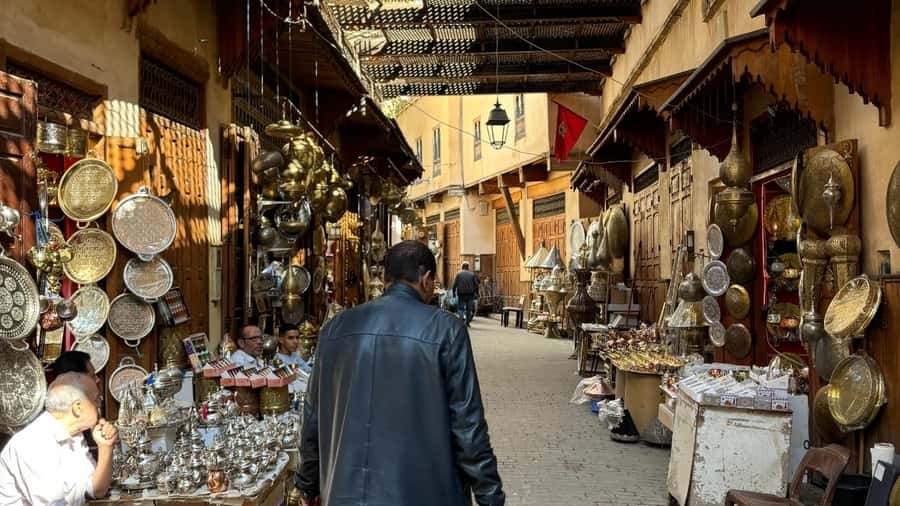
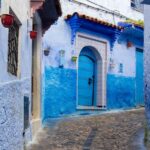
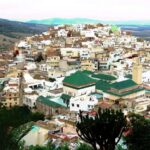
Fès Medina is famous for a reason: it’s huge, walled in, and packed with tight corridors where every turn looks the same. Going alone can mean you spend your energy on navigation instead of discovery. With a guide, you get a route that keeps you moving while still giving you time to look.
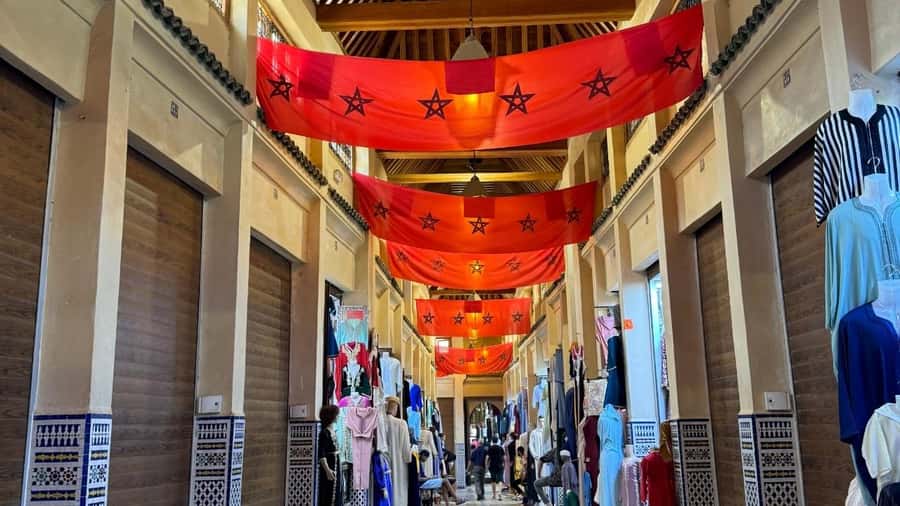
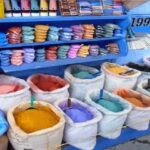
This tour is built around the classic medina “hits” but delivered in a way that makes sense on foot. After pickup from your hotel or riad (optional, depending on what you book), your guide leads you into the network of lanes where local life plays out around you. Fruit stalls, spice sellers, handwoven carpets, metalwork, and smaller craft shops create a steady rhythm as you walk.
The best part is that you’re not treating these stops like checkboxes. Your guide’s job is to connect the buildings, crafts, and neighborhoods, so what looks random becomes meaningful.
And yes, you’ll see the shops. The difference is that you’ll understand why certain trades cluster where they do, and you’ll have permission to slow down, ask questions, and move on.
You can also read our reviews of more tours and experiences in Fes.
Pickup, timing, and how a 3.5 to 6 hour walk really plays out
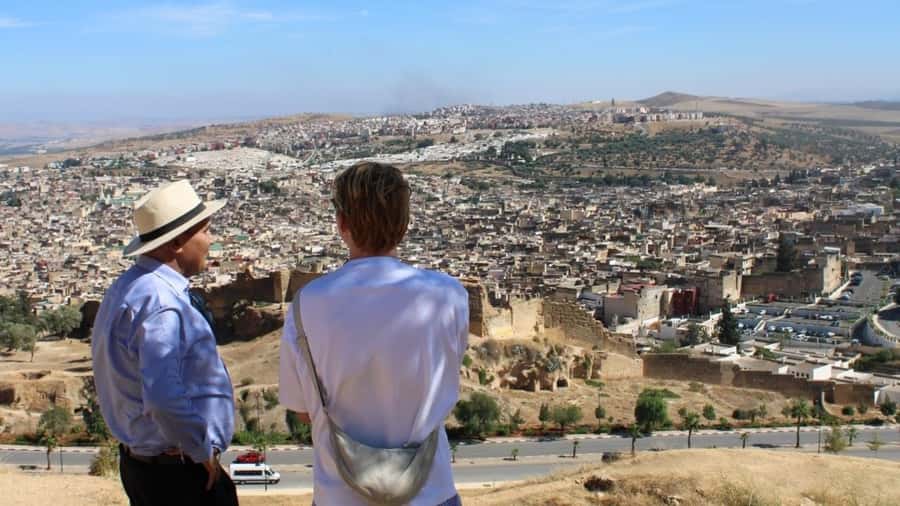
The tour runs 210 minutes to about 6 hours, usually starting around 09:00 AM. That range matters because the pacing changes: a shorter version feels like you’re collecting the big landmarks, while the longer version tends to add more stops and more time to absorb them.
If you choose a pickup option, you’ll start directly from your hotel or riad in Fez, which helps a lot. In the medina, finding a meeting point can be tricky; pickup reduces that stress before you even begin walking.
Group size is also part of the experience. You can find private or small groups, which typically makes the tour feel less rushed. In the medina, slow beats fast. Even if your day is packed, you’ll want moments to stop, look up at doorways and arches, and take in the architecture.
You should also plan for practical walking reality: the lanes are narrow, and the ground can vary. Comfortable shoes are not optional. If you come in wearing dress shoes, you’ll feel it by the second major stop.
The mosques you’ll see from the street (and what entry means)
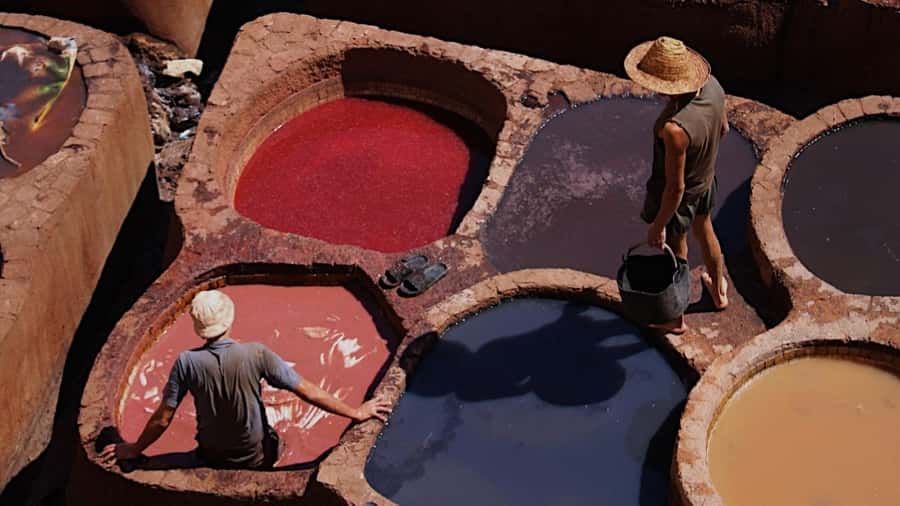
A key moment on this route is time around two of Fès’s most important religious landmarks: the Quaraouiyine Mosque and the Andalusian Mosque.
- The Quaraouiyine Mosque is associated with a founding date of 859, connected to Fatima el Fihri.
- The Andalusian Mosque dates to 860.
Here’s the important part for planning: non-Muslims are not permitted to enter. You may still see the exterior, the courtyards from appropriate viewpoints, and the surrounding medina life. Your guide can help you understand what you’re looking at so you don’t feel like you’re just passing by big buildings with no context.
If you’re visiting as a respectful observer, this is still a powerful stop. Mosques in Fès are not only religious sites; they’re also anchors of education and community. Even when you can’t go inside, you’ll learn to read the architecture and symbolism in the way the complex sits within the neighborhood.
Nejjarine Museum: the indoor reset you’ll be grateful for
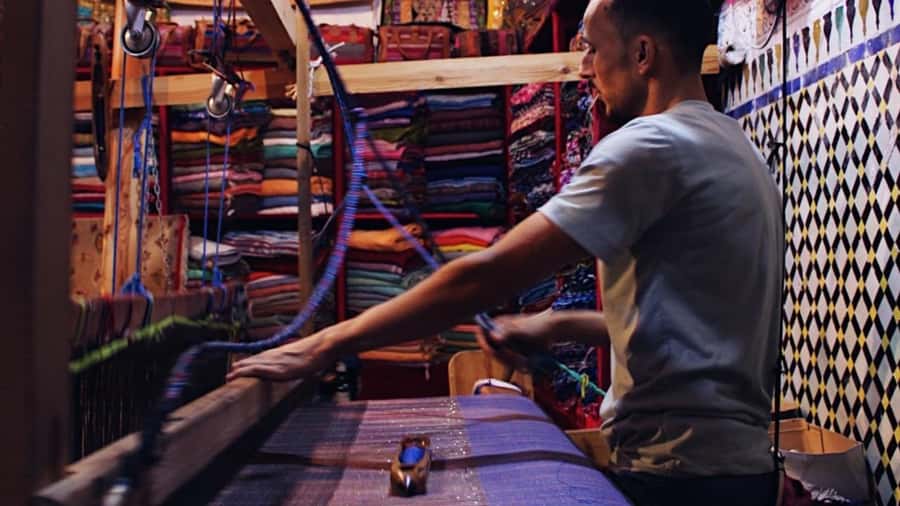
After hours of walking under constant visual motion, the Nejjarine Fountain and the Nejjarine Museum of Wooden Arts and Crafts act like a mental break. The museum stop matters because it slows you down at the moment you most need it.
The Nejjarine Museum is focused on wooden arts and crafts, which pairs nicely with the rest of the tour’s theme: traditional skills that have been passed down for generations. You’ll get to see work in a different format than the storefront frenzy. Instead of “buy this, buy that,” it’s more about craftsmanship and design.
This is also one of those stops where your guide earns their fee. A good guide helps you notice details: joinery, patterns, and the way materials are used. Even without an arts degree, you’ll come away understanding why people in Fès still care about these objects.
If you’re the kind of person who likes to understand how things are made, the museum gives you a better lens for what you’ll see next in artisan cooperatives.
Bouaanania Medersa and Batha Palace: where the architecture teaches
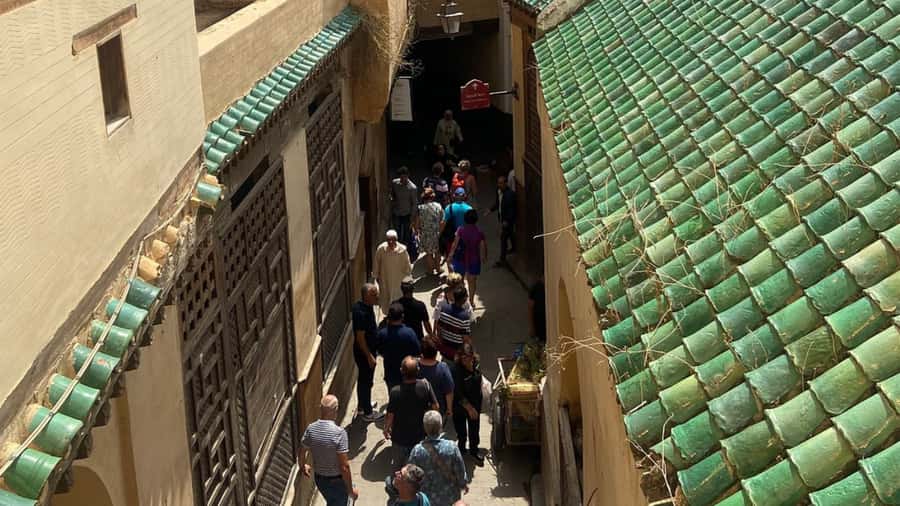
Two of the most memorable cultural stops are the Bouaanania Medersa and the Batha Palace, which is now a museum of arts and traditions.
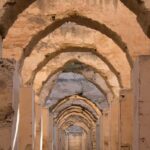
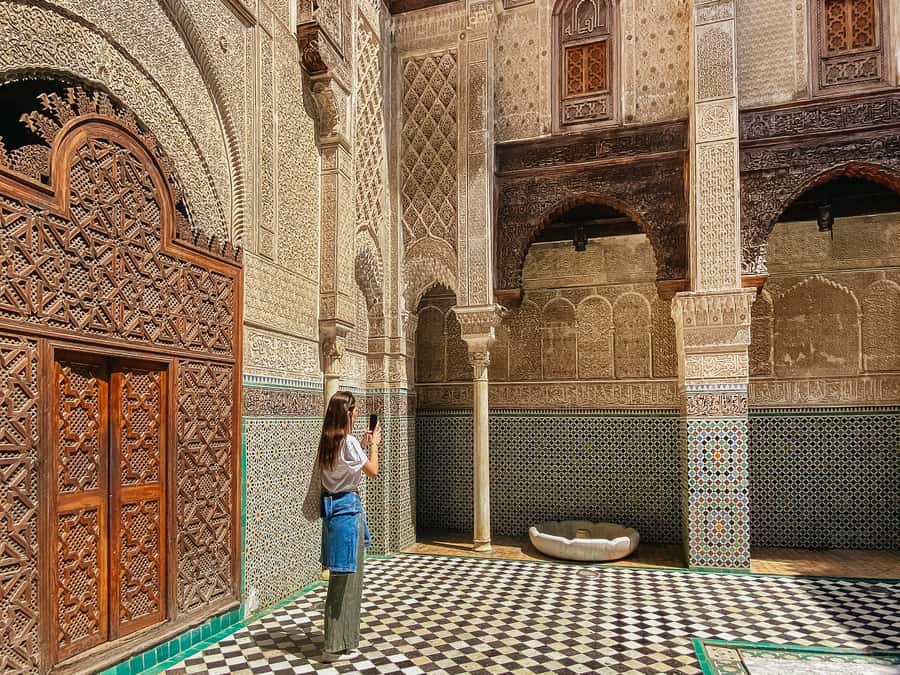
The Bouaanania Medersa is described as dating from the 13th century. That age is not just trivia. When you see it in person, you start to understand how Fès built institutions around learning, religion, and skilled labor. Medersas aren’t only buildings; they’re statements about who the city educated and what it valued.
Then comes the Batha Palace, now used as a museum of arts and traditions. This is where the tour shifts from “look at the craft” to “understand the culture behind it.” You’ll see the way decorative arts and everyday traditions blend together in Moroccan design.
If you’re worried the medina will all blur into similar facades, these architecture-focused stops are your reset. They also give you photo opportunities that feel more grounded than the typical street snapshots.



Tanneries and leather work: practical, intense, and unforgettable
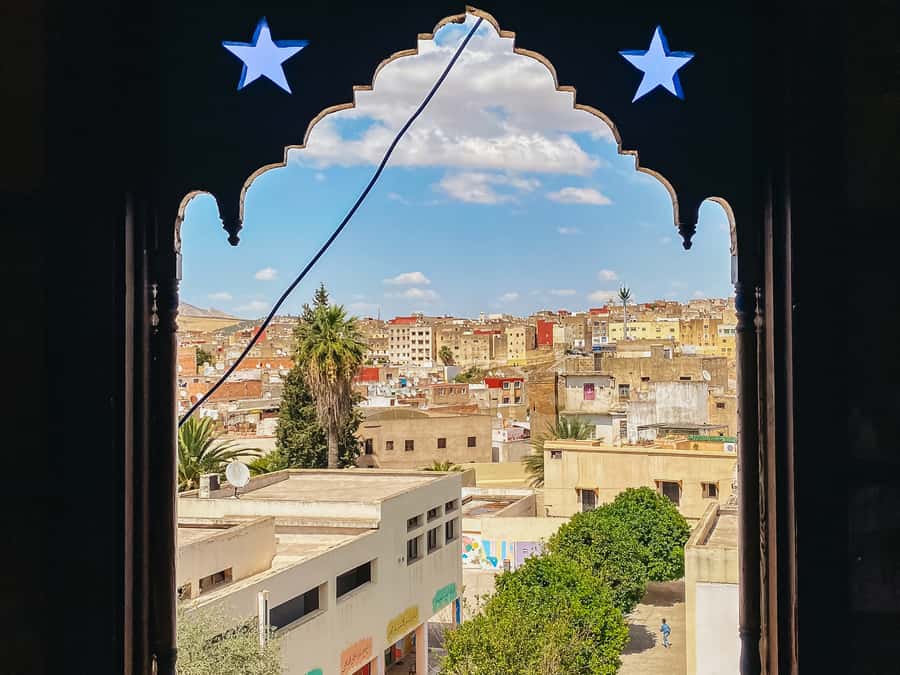
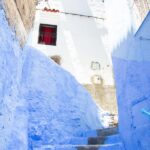
Let’s talk about the tanneries. This tour includes the tanneries to see leather work, and it’s usually the most intense sensory experience on the route.
Even if you’ve seen leather processing in other countries, the view into the workflow here is different because it’s tied to an old local system still connected to how people live. Expect a busy atmosphere around the processing areas, with activity that looks both traditional and industrial.
A guide helps for two reasons:
- You’ll know what you’re looking at instead of only reacting to the scene.
- You’ll manage the timing so you don’t get stuck in the noisiest areas for too long.
It’s also worth saying this clearly: leather processing can involve smells and a certain level of visual intensity. If you’re sensitive, you can still enjoy the historical and cultural value, but you’ll want to keep your expectations realistic and take short breaks when you need them.
Artisan cooperatives: how to watch without feeling trapped
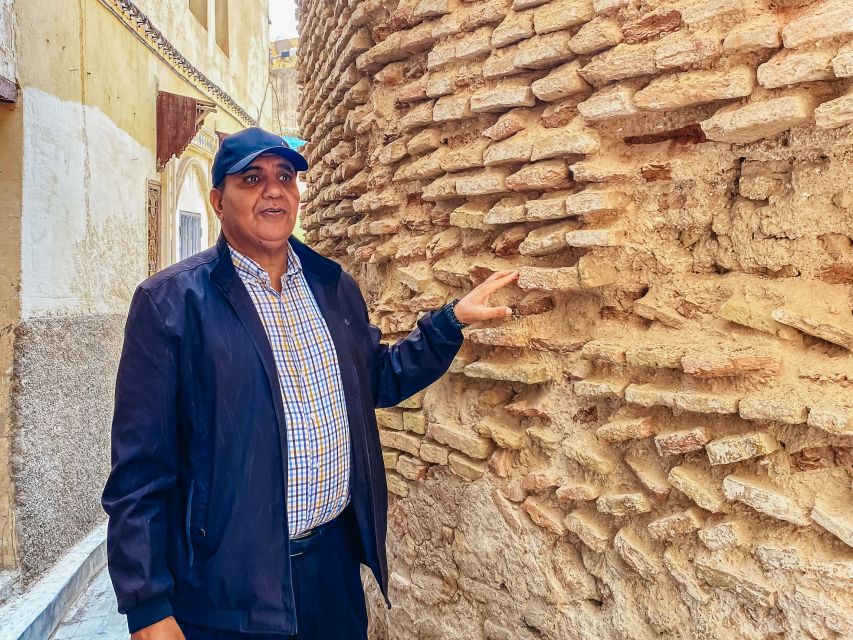
A big part of the “why this is worth it” equation is the tour’s approach to artisan cooperatives.
You’ll visit workshops or cooperative settings where traditional crafts are made. The key detail is that these are not framed as commercial shopping stops. Your guide’s role is to facilitate observation and explanation. If demands to buy come up, you’re encouraged to decline politely—and you don’t have to justify anything.
In practice, this experience tends to go well when your guide is respectful and confident. Many guides you’ll see for this tour are praised for leading visitors through crafts without pressure. People often highlight that they can learn, ask questions, and move on without feeling like the day is turning into a sales pitch.
Still, be smart. If you genuinely don’t want to buy, keep your guard up. If you do want something, compare prices after the tour, because medina items can vary a lot by shop and bargaining skill. Even when the cooperative visit is “educational,” it’s still a place where sellers operate.
Shops, bargaining, and how not to spend your whole day buying
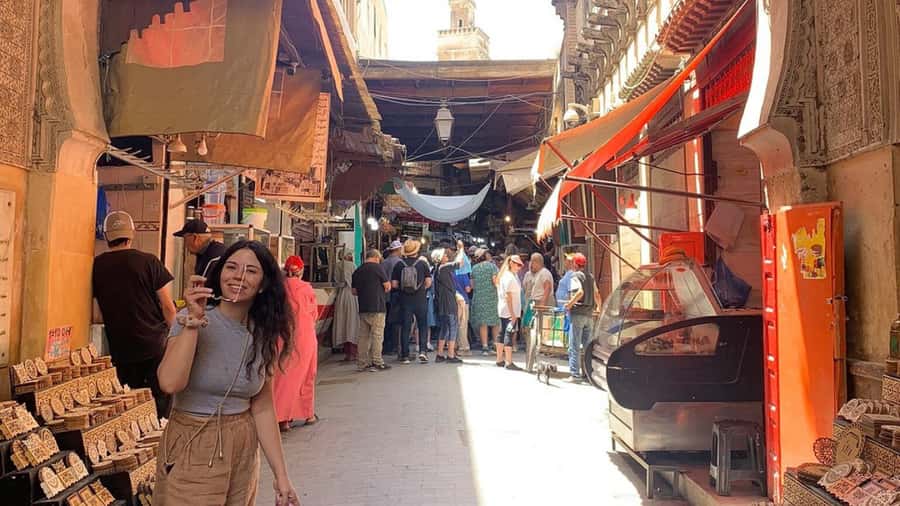
Fès Medina is a market culture. You’ll walk past stalls selling fresh fruits, spices, Berber carpets, textiles, and lots of small goods. Bargaining is expected, but it’s also normal to set boundaries and keep walking.
Here’s a practical way to handle it:
- Ask questions and look closely.
- If something catches your eye, negotiate once, calmly.
- If it doesn’t feel right, just say no and move on.
The tour description specifically emphasizes that bargaining is part of the experience and that you should not feel pressured to buy. That matches what makes a guided day enjoyable: you get to look without turning your day into a negotiation marathon.
Also, keep some dirhams small cash on hand. Some places may require small payments for entry, restrooms, or simple snacks, and having small bills prevents friction mid-walk.
What’s not included (and why budgeting still matters)
The tour price is $9 per person, which is a standout deal for a guided walk that can last up to around six hours. You’re getting a professional guide and, if you select it, pickup and drop-off. If you book the full-day option, you may also have access to a car and driver.
What you should budget separately:
- Food and drinks
- Entrance fees
Entrance fees matter because some stops can involve ticket costs. For example, one madrasa entrance fee is cited as 20 DH in the information you’ll see shared for a common route variation. Even if the exact fees vary by your day and chosen sites, the point stays the same: bring extra money so you’re not scrambling during the tour.
If you like eating while traveling, plan for a lunch break outside the tour’s included costs. If you don’t eat much, you can still enjoy the day fully, but you’ll want water and a snack plan so you don’t fade halfway through.
Where this tour fits best (and who should skip it)
This guided medina walk is a great fit if:
- You want to see the big cultural anchors without wasting time getting lost.
- You like context—history, architecture, and craft processes—rather than only photos.
- You don’t want to be stuck negotiating alone in a maze of stalls.
- You prefer small groups or private guiding, where questions are easier.
It may not be the best choice if:
- You hate walking for long stretches on uneven, narrow lanes.
- You get overwhelmed by sensory experiences like the tanneries.
- You want a fully independent day with zero structure. This tour includes multiple stops and cooperative visits, even if purchases are optional.
Should you book the Fez Medina Guided Tour?
I’d book it if your goal is to understand Fez fast and see the places that make the medina famous—especially the tanneries, Bouaanania Medersa, and Nejjarine Museum—with a guide who can explain what you’re seeing as you walk.
If you go, come with a simple mindset: observe first, bargain calmly, and don’t treat cooperative visits like a shopping task. Guides named like Houda, Moustapha, Kamal, Jamal, and Mustafa are repeatedly praised for making the day feel efficient and safe in a place where getting lost is easy. Choose this tour when you want the medina to make sense, not just look impressive.
FAQ
How long is the Fez Medina guided tour?
It runs 210 minutes up to about 6 hours, depending on the option and start time.
Where does the tour start?
Pickup is offered from your hotel or riad in Fez if that option is selected. The exact meeting point can vary based on the option booked.
Is the tour guided in English and other languages?
Yes. Live guides are available in Spanish, English, French, Italian, and Arabic.
Can non-Muslims enter the mosques during the tour?
No. The tour notes that non-Muslims are not permitted to enter the mosques.
Are entrance fees included?
No. Entrance fees are not included, and you may need to pay for some sights separately.
Is food and drinks included?
No. Food and drinks are not included.
Will I be forced to buy things at the artisan stops?
No. The artisan cooperative visits are described as not commercial shops, and you can observe, learn, and decline politely if you’re not interested in purchasing.