REVIEW · GIZA
Private guided tour to Giza Pyramids, and Great Sphinx
Book on Viator →Operated by Travel Door Tours · Bookable on Viator
Pyramids, minus the stress. This private guided trip hits the Giza Plateau fast, with pickup from your location and a clear plan: Khufu, Khafre, Menkaure, then the Sphinx, plus a camel ride for those classic desert photos. I really like that the day feels organized without turning into a rushed checklist.
Two things I especially love: the tour includes key basics like entrance to the Giza plateau, traditional lunch, and bottled water—so you’re not juggling extras in the heat—and you also get real time for photos from the main viewpoints. One consideration: if you want to go inside the pyramids, you’ll need an extra ticket, and the guide isn’t permitted inside.
In This Review
- Quick take
- Price and Logistics: Why $35 Can Actually Feel Like a Deal
- Getting From Cairo to the Giza Plateau Without the Grind
- The Flow of the Half-Day: What the Tour Really Optimizes
- Pyramids of Khufu, Khafre, and Menkaure: What You’ll See and How It Feels
- Khufu’s Great Pyramid: the biggest presence
- Khafre’s Pyramid: a classic “why it looks taller” moment
- Menkaure’s Pyramid: smaller, but still worth the pause
- Choosing Pyramid Time: Exterior Views Are Included, Interior Takes Extras
- The Camel Ride and the Photo Point: Where the Tour Hits Its Peak
- Great Sphinx: The Moment You’ll Keep Thinking About
- Lunch, Water, and On-the-Go Comfort That Matter at Giza
- What Makes the Guide Part Shine: Real Strengths to Look For
- Photo and Camel Ride Tips That Stay Practical
- Who This Tour Fits Best (and Who Might Want a Different Pace)
- Should You Book This Private Giza Pyramids and Sphinx Tour?
- FAQ
- FAQ
- How long is the private guided Giza Pyramids and Great Sphinx tour?
- What is included in the tour price?
- Do I get to enter the pyramids?
- Is pickup available?
- Is the tour only outdoors?
- What happens if the tour is canceled due to poor weather?
Quick take
- Door-to-door pickup across Cairo and Giza keeps you out of long public-transport routes
- No hidden extras approach: plateau entry, lunch, water, and the camel ride are built in
- Camel ride + photo plateau gives you the iconic trio backdrop on your schedule
- Egyptologist guidance with flexible pacing helps you understand what you’re seeing
- Great Sphinx time lets you slow down at the most famous guardian of the plateau
Price and Logistics: Why $35 Can Actually Feel Like a Deal
At $35 per person, this tour is positioned as a budget-friendly way to see the Giza highlights without wasting half your day figuring out transport, tickets, and timing. The value gets real because the essentials are included: entrance to the Giza plateau (based on the tour option you book), a traditional lunch, and bottled water.
You’re also not just buying a map of stops. You’re buying a guide who helps you understand what you’re looking at and a driver who handles the back-and-forth so you can focus on the sights. Add in the camel ride (about 20 minutes) and you have a big “first-time Egypt” bundle for the money.
The duration—about 4 to 5 hours—matters too. In a country where plans can stretch, a half-day structure is often what keeps the experience enjoyable rather than exhausting.
You can also read our reviews of more tours and experiences in Giza.

Getting From Cairo to the Giza Plateau Without the Grind
Giza sits just outside Cairo, and the practical problem is getting there. Public transport can be slow, confusing, or just plain time-consuming once you factor in walking and transfers. This is why I like that the tour offers hotel pickup and drop-off from locations across both Cairo and Giza.
In real life, it’s the little details that make a difference: being picked up on time, having someone else manage the route, and not having to worry about getting back once you’re done at the plateau. One reason so many guides get praised is that they help you stay calm and on track in a busy area—where you really do want your head clear for the big visuals ahead.
The Flow of the Half-Day: What the Tour Really Optimizes
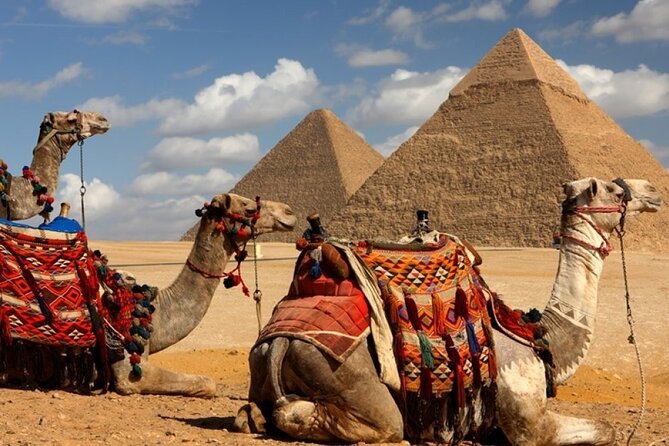
This is built around a simple logic: see the pyramids as a group first, then spend focused time at each major landmark, with photo moments and a camel ride worked into the day.
The big benefit of this pacing is that it prevents the common mistake of arriving, sprinting, and leaving with photos but no context. Here, you get expert guidance while still having enough room to move at a human pace.
If you’re the type who likes a plan—but not a forced march—this half-day rhythm usually fits well. If you prefer a long, slow day with lots of inside-pyramid time, you may feel the time limits. The tour is short on purpose; it’s designed to be efficient.
Pyramids of Khufu, Khafre, and Menkaure: What You’ll See and How It Feels
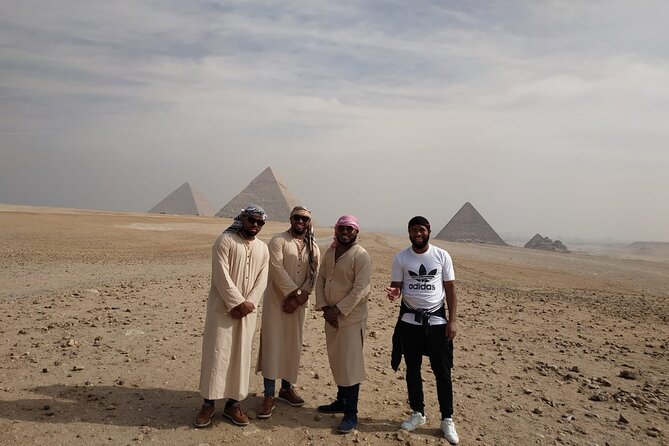
You start at the main Pyramids of Giza area and get a guided introduction to Cheops (Khufu), Khafre, and Menkaure. This is where your guide’s job is most useful: they help you connect the visuals—the shapes, the scale, the layout—with what these structures meant for the people who built them.
Then the experience splits into the “look and learn” part and the “make it real” part with time on the plateau for photos and free exploration.
Khufu’s Great Pyramid: the biggest presence
At 146.6 meters (about 481 feet), Khufu’s pyramid is the largest of the three and the one that usually hits you first, even before you understand all the details. You’ll get time to stand back and take in the size without feeling like you’re just passing through.
Inside access is a separate choice. The tour offers free time to enter, but an extra ticket is required, and guides can’t accompany you inside. So think of this as: you can do the interior if you want, but the group flow will still stay outside-focused.
Khafre’s Pyramid: a classic “why it looks taller” moment
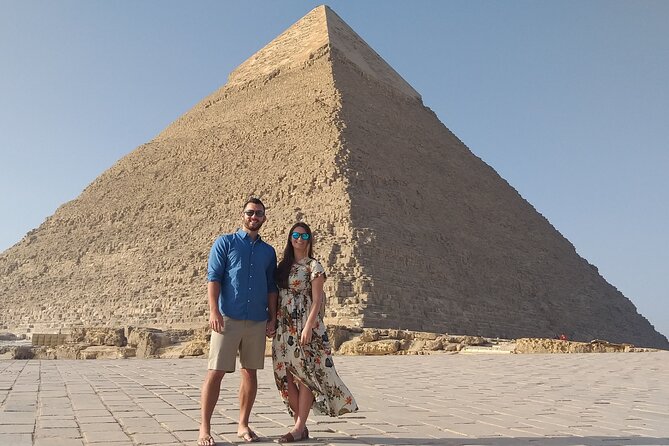
Khafre’s pyramid is slightly smaller at 143.5 meters (about 471 feet), yet it can look taller. The reason you’ll likely hear on the tour is the elevated position and remnants of the smoother limestone casing that once made the pyramid shine.
Khafre’s area also has the emotional gravity of the Sphinx association nearby. This stop helps you connect the plateau’s symbols: the pyramid as a royal tomb and the Sphinx as a guardian figure.
Menkaure’s Pyramid: smaller, but still worth the pause
Menkaure’s pyramid is the smallest at 65 meters (about 213 feet). But “small” here still means giant. This is one of those places where the tour timing helps—because you’re not exhausted yet, so you can actually notice the differences in scale and materials, and how the plateau’s view works as a whole.
If you go inside (again, extra ticket), you may find the interior arrangements less dramatic than the exterior expectations. That’s normal. What makes this stop valuable is how it completes the trio and helps your photos make sense.
Choosing Pyramid Time: Exterior Views Are Included, Interior Takes Extras
Here’s the practical truth: you’ll have free time to enter pyramids, but it’s not automatic. An additional ticket is required, and guides aren’t permitted inside.
This matters for two kinds of travelers:
- If you mainly want the iconic visuals, the tour’s plateau time is usually enough.
- If you have your heart set on going inside, you should budget energy and plan your priorities. The guide can help with decision-making, but you still have to manage the extra ticket step.
If you’re easily claustrophobic or prefer open spaces, you may prefer spending the time on viewpoints and photography rather than inside chambers. The tour still gives you a strong experience either way, because the best “wow factor” at Giza comes from standing back and seeing the pyramids together.
The Camel Ride and the Photo Point: Where the Tour Hits Its Peak
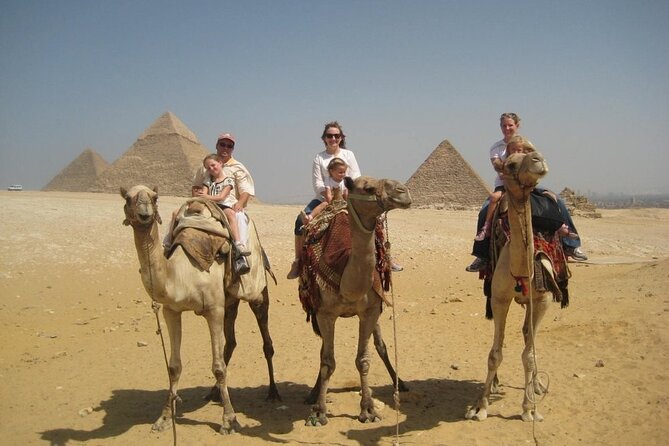
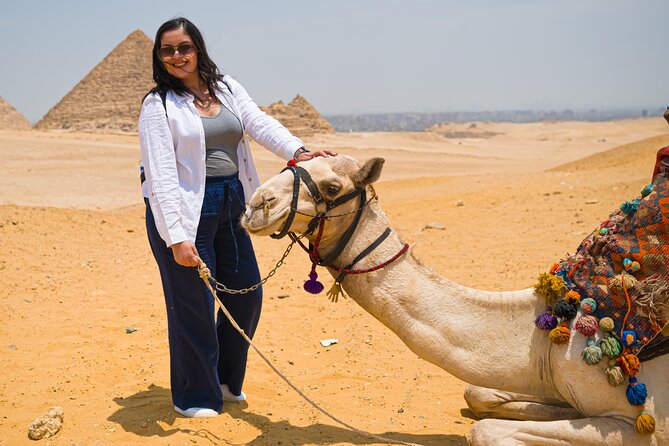
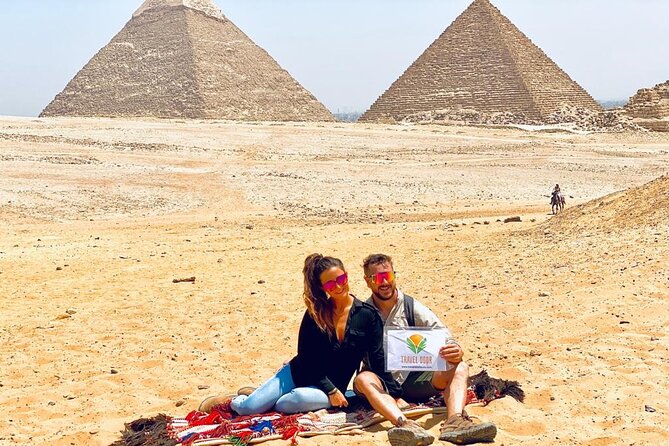
One of the easiest highlights to understand is the 20-minute camel ride. It’s short enough to feel doable, but long enough to do something with it—especially because you’re in the right place for that classic desert-with-pyramids framing.
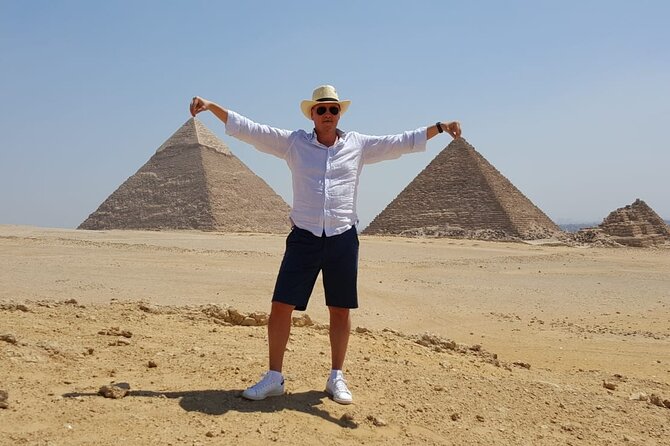
You’ll also get time at the panoramic view point where the trio—Khufu, Khafre, and Menkaure—lines up against the desert backdrop. This is where the tour becomes about photography, even if you’re not a “serious camera” person. Being able to stop, pose, and breathe for a few minutes is the difference between decent pictures and the ones you actually keep.
From the reviews, a big theme shows up: guides often take initiative with timing and angles, and they’ll help you set up shots so you’re not stuck handing your camera to strangers in a chaotic spot.
Great Sphinx: The Moment You’ll Keep Thinking About
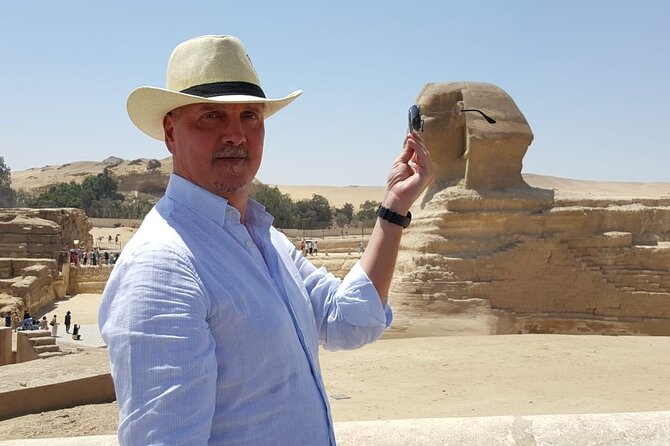
After the pyramid focus, the tour finishes at the Great Sphinx. It’s carved from limestone and measures about 73 meters long (240 feet) and 20 meters high (66 feet). Even if you’ve only seen it in photos, seeing it at scale is still a punch to the senses.
The Sphinx is tied to Khafre in the story visitors usually hear: the body of a lion with the head of a pharaoh figure. Next to it, you’ll also have a chance to connect the setting with the nearby Valley Temple of Khafre area, a place associated with rituals and monumental stonework.
This is also where a good guide helps most. The goal isn’t just to point at the Sphinx. It’s to help you understand why it became the most famous “guardian” image of the Giza Plateau—and how the surrounding structures reinforce that message.
Lunch, Water, and On-the-Go Comfort That Matter at Giza
This is not a comfortable place to spend hours without planning. The tour includes an Egyptian traditional lunch, bottled water, and—per the tour description—onboard Wi‑Fi.
Those inclusions are worth more than they sound. In the heat, water stops becoming a “nice-to-have.” It becomes a keep-you-happy necessity. Lunch also matters because a lot of half-day tours skip proper food and then you’re stuck trying to find something quickly while everyone gets cranky. Here, you’re fed and ready to enjoy the rest of the plateau.
What Makes the Guide Part Shine: Real Strengths to Look For
This tour’s success depends heavily on the guide, and the reviews show consistent strengths. In past outings, guides such as Habeba, Nada, Mohamed, Eino, Islam, Ahmed, Mona, Sameh, Haitham, Mohsen, and Mustafa have been praised for clear explanations, a friendly tone, and practical help with staying organized in busy areas.
Here’s how that translates for your day:
- You’ll get help understanding what you’re seeing, so the pyramids feel less like random big rocks.
- You can expect photo help, including taking pictures of your group and guiding you to viewpoints that work.
- Many guides help you avoid hassle with locals who try to sell, distract, or push you into purchases. You’re still in a public site—but having a confident guide reduces the chaos.
One balanced note: not every pacing style fits every traveler. In at least one case, the tour felt too heavy on extended explanation rather than on photo time, especially for a solo visitor. If you know you prefer more time to wander and less lecturing, tell your guide early. The best outcome comes when you and your guide set a rhythm that matches your style.
Photo and Camel Ride Tips That Stay Practical
You don’t need to be an expert photographer to get great shots, but you do need a plan for the most in-demand angles:
- Take your pyramid photos first, before you feel rushed. The best viewpoint time is built into the day.
- Wear sunscreen and a hat. You’ll be outside at multiple points for breaks and photos.
- For the camel ride, treat it like a ride, not a long photo session. You’ll get the time; use it well.
- Bring a phone strap or camera strap. Wind and movement happen in desert wind.
Also, consider how you want to handle pyramid interior time. Since guides can’t enter with you, you’ll want to decide whether you’re going in early, and whether you want to prioritize photos outside afterward.
Who This Tour Fits Best (and Who Might Want a Different Pace)
This is a great match if you:
- want a stress-free half day with a plan and pickup handled for you
- are seeing Giza for the first time and want the trio plus the Sphinx
- like the idea of a camel ride without taking a full day to arrange it
- have limited time, like a layover window—some reviews mention exactly that kind of scenario
It might be less ideal if you:
- want long, deep interior time inside multiple pyramids (extra tickets and guide restrictions apply)
- prefer a slower pace with fewer stops and more lingering in one place
- know you’ll be unhappy if the guide leans too talk-heavy for your taste (you can fix this with early expectations)
Should You Book This Private Giza Pyramids and Sphinx Tour?
I’d book it if you want the classic Giza experience delivered with less hassle: door-to-door pickup, plateau entry included, lunch handled, and a camel ride plus Sphinx time. At $35 per person with those basics included, it’s built for good value—especially if you’d otherwise spend money and time figuring out logistics on your own.
I’d hesitate if your priority is maximum time inside the pyramids. The tour structure is strong for exterior views, photos, and orientation, and interiors require extra tickets with guide access restrictions. If you still want interiors, go in with a clear plan before you arrive.
One last thing: this experience is weather-dependent. If conditions aren’t good, you may be offered an alternative date or a full refund.
FAQ
FAQ
How long is the private guided Giza Pyramids and Great Sphinx tour?
It runs about 4 to 5 hours.
What is included in the tour price?
You get entrance fee to the Giza plateau (based on the option booked), a qualified Egyptologist guide, traditional lunch, bottled water on board, hotel pickup and drop-off, a 20-minute camel ride, and all taxes and service charge.
Do I get to enter the pyramids?
You’ll have free time to enter the pyramids, but an extra ticket is required. Also, the guide is not permitted inside.
Is pickup available?
Yes. Pickup and drop-off are offered from your choice of location across both Cairo and Giza.
Is the tour only outdoors?
It includes time at the pyramids and Sphinx (outdoors), plus lunch. The tour is described as requiring good weather.
What happens if the tour is canceled due to poor weather?
If it’s canceled because of poor weather, you’ll be offered a different date or a full refund.