REVIEW · BAKU
Baku Oil Heritage & Old Town Walking Tour
Book on Viator →Operated by Azerbaijan Traveller · Bookable on Viator
Baku’s oil legends hide in plain sight. This Baku Oil Heritage & Old Town Walking Tour uses short stops and street-level stories to connect oil barons, everyday life, and Soviet-era influence to places you can actually see in a morning or afternoon. You start and finish at Fountains Square, and a real guide steers you through the city’s big turning points.
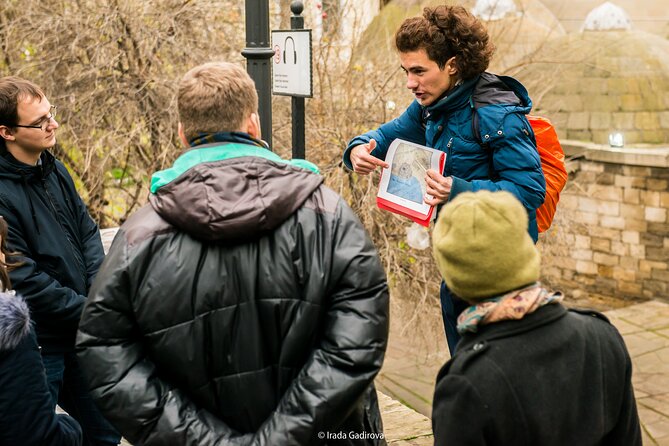
I love the way the tour covers the Old City (Icherisheher) from the outside. You get the main UNESCO landmarks in one walk—Gosha Gala gate, citadel walls, and the areas around the Maiden Tower and Shirvanshakh’s Palace—without losing time to entry lines. I also like the guide style: in past tours, guides such as Gani brought the streets to life with historical photos/diagrams, strong pacing, and practical tips like food recommendations, a few Azerbaijani phrases, and even suggestions like baklava and vegetarian options.
One thing to plan for: this experience is weather-dependent, and many sights are explained at viewing points rather than entered. If you want museum time inside every building, you’ll likely need extra time after the walk.
In This Review
- Key highlights to know before you go
- Fountain Square: where the tour sets the oil-boom scene
- Icherisheher (Old City) walk: UNESCO stops you understand from the street
- Istiglaliyyat Street: oil barons, European influence, and Baku’s upgrade
- Philharmonic Fountain and Ali and Nino: the story behind the setting
- Town Hall and “executive power”: why the Oil Boom era looks European
- Saadet Sarayi: the oil baron marriage story (and a building still in use)
- Former Taghiyev School for Girls: modernization, independence, and women’s education
- Ismailiyya Palace: Venetian Gothic style and the memory of a son
- How the tour feels in real life: pace, group size, and your guide
- What you get for $70: value compared to DIY
- Quick planning tips for your day in Baku
- Should you book this tour?
- FAQ
- How long is the Baku Oil Heritage & Old Town Walking Tour?
- Where is the tour meeting point and where does it end?
- What does the tour cost?
- Is bottled water included?
- What is not included in the tour price?
- Do I need to pay admission fees for the stops?
- How large is the group?
- Is the tour affected by weather?
- Is the guide’s narration in English?
Key highlights to know before you go
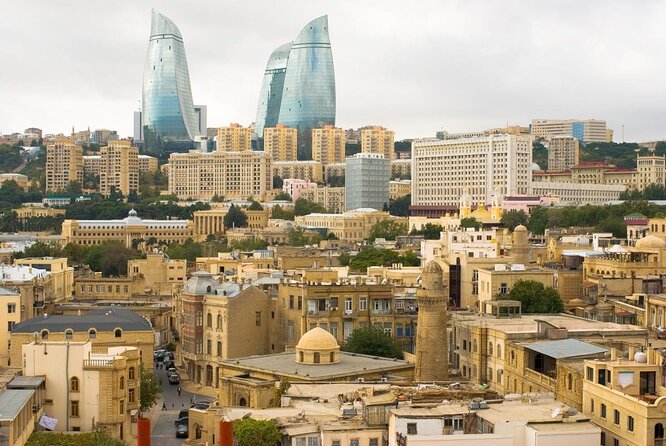
- Street-level UNESCO coverage in Icherisheher without entering every site
- Oil-boom stories tied to real buildings, not just names on plaques
- Photo-led explanations that help you picture earlier Baku
- A guide who keeps tempo so you don’t feel stuck waiting around
- Old City plus outside neighborhoods, including Town Hall and Saadet Sarayi
Fountain Square: where the tour sets the oil-boom scene
Fountains Square is more than a meeting point. It’s the downtown social and leisure hub, but it also ties directly to the early oil boom era, when this area grew into a major trading street in the late 1800s and early 1900s. Even before you step into the Old City, you get the key idea: Baku’s oil wealth didn’t just build monuments—it reshaped daily life, money, and power.
The practical win here is time. Starting and ending at the same area means you can plan your other Baku stops with less stress. You also get a simple anchor point: the meeting location is listed on Nizami St near KFC (KFC9RCP+28F).
You can also read our reviews of more tours and experiences in Baku.
Icherisheher (Old City) walk: UNESCO stops you understand from the street
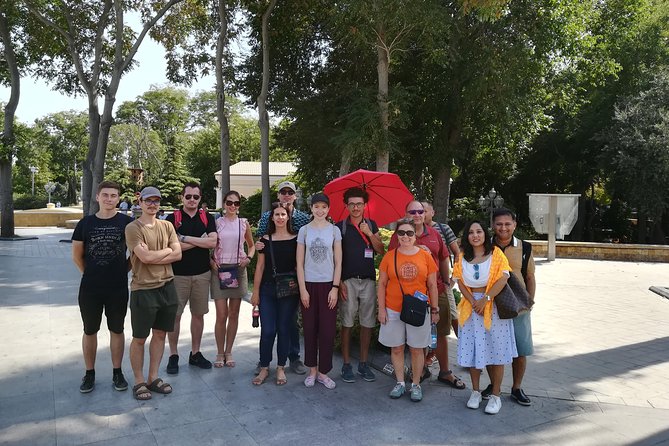
The heart of the tour is Baku Old City, known as Icherisheher. This area is home to four UNESCO World Heritage sites, and the tour is designed to help you grasp what you’re looking at without turning it into a long museum day.
Here’s what you’ll cover, in the order you’ll experience it on the ground:
- Gosha Gala gate (the main entry into the Old City): you start with the threshold idea—how the Old City works as a fortified space.
- Citadel walls (from the 12th century): you’ll get the context for how walls signal control, defense, and status.
- Maiden Tower area (12th century): you won’t enter, but the guide explains what’s important at the entry point, so the tower doesn’t feel like just a pretty landmark.
- Muhammad Mosque (11th century): you’ll learn why an old religious site matters in a city later shaped by oil.
- Narrow streets: this is where the “everyday life” part comes through—tight lanes, close views, and that feeling of walking through a living old quarter.
- Shirvanshakh’s Palace (15th century): again, no entry on this walk, but you’ll still get the story tied to what you’re seeing.
- Museum of Miniature Books: you’ll stop here as part of the Old City character—small-scale culture alongside grand architecture.
A key limitation, though: the plan is explanation without entering most of the sights. That’s a trade-off. The payoff is speed and flow, but if you were hoping to spend a long time inside the Shirvanshahs Palace or at the Maiden Tower museum spaces, you’ll probably want to add that later on your own.
Istiglaliyyat Street: oil barons, European influence, and Baku’s upgrade
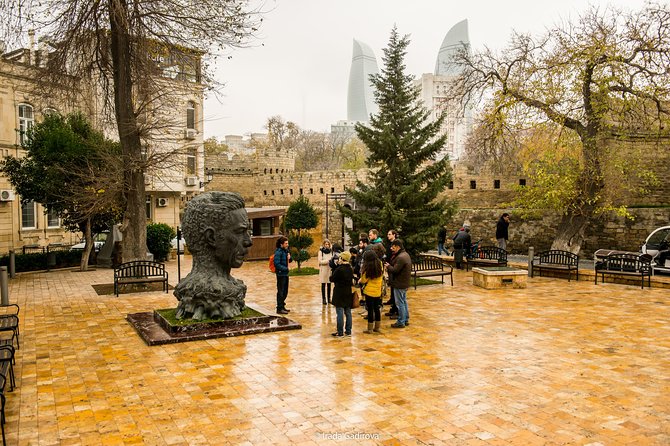
After Icherisheher, the tour shifts outward along Istiglaliyyat Street, a major Imperial Russian-era street that later reflected Baku’s oil-driven transformation. This is where you start seeing the city’s “cosmopolitan” side—buildings and institutions influenced by Europe, built on wealth created by oil.
Along the street stops, you’ll get explanations tied to power and prestige, including:
- Governor’s Garden
- Town Hall
- Philharmonic Hall
- Palace of Happiness
- Institute of Manuscripts of Azerbaijan
- Ismaliyya Palace (linked to the Muslim Charitable Society)
- Literature Museum
- A statue of Nizami
This stretch is valuable because it connects the dots. You’re not just looking at facades; you’re learning why these buildings exist and what kind of people they served. If your Baku plan is short, this is the part that helps you understand how “modern” Baku got built so quickly—and why it looked the way it did.
Philharmonic Fountain and Ali and Nino: the story behind the setting
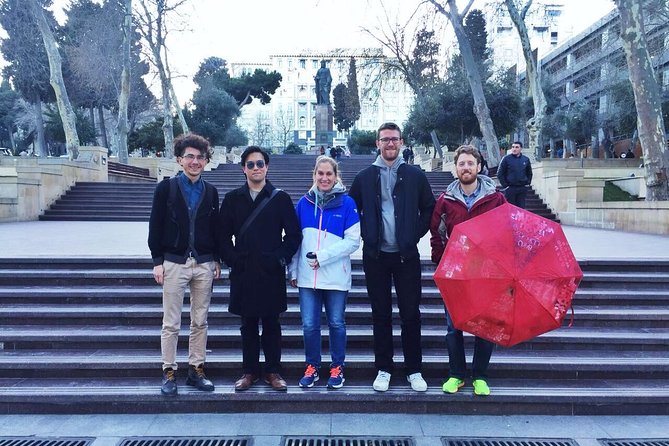
Next is Philharmonic Fountain, tied to the garden story associated with the book Ali and Nino. This stop is short, but it matters for two reasons.
First, it shows how Baku’s identity isn’t only political or economic—it’s also cultural and literary. Second, it’s a nice breather before the architectural heavy hitters, letting you reset while still learning something specific.
Town Hall and “executive power”: why the Oil Boom era looks European
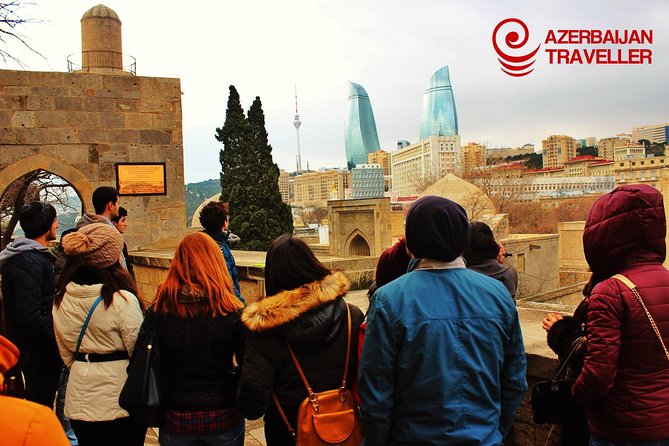
When you reach Baku City Executive Power (the Town Hall), the tour focuses on the landmark architecture from the oil boom era. The point isn’t just to admire a building. It’s to understand the influences: European-style ideas mixed into Baku’s local needs and ambitions.
This stop is a great moment if you like architecture as a language. You start seeing how oil money funded institutions that made Baku feel like it belonged on the international map—not just a regional trading port.

Saadet Sarayi: the oil baron marriage story (and a building still in use)
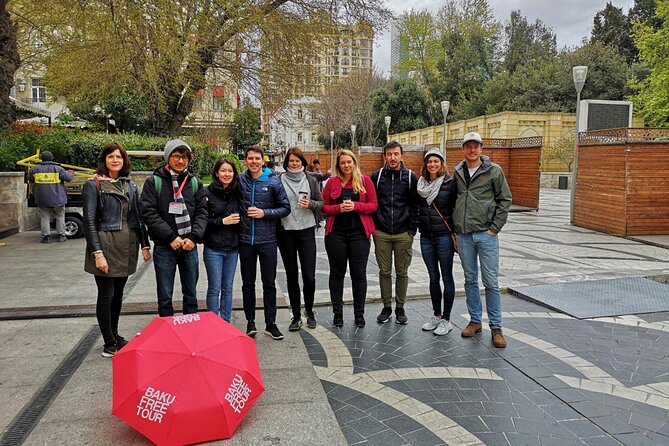
At Saadet Sarayi, the tour slows down just enough to land a human story. The guide explains an oil baron and his wife—and how the romance gets retold through weddings today. The mansion serves as a marriage registry, so the building isn’t frozen in time. It’s still part of modern life.
This stop is where the tour feels especially “Baku.” The city’s wealth comes through, but it also connects to family rituals and local meaning. It’s one of those places where a quick explanation changes how you interpret the whole neighborhood.
Former Taghiyev School for Girls: modernization, independence, and women’s education
The walk continues to the Former Taghiyev School for Girls, now the Institute of Manuscripts of Azerbaijan. Here, the story is about modernization in Baku—and about how education changed the social structure.
You’ll hear about it as the first secular school for Muslim women, and how this broader shift links to Azerbaijan’s first independence. Even though this is a short stop, it gives you an important angle on how people used oil wealth to push social change, not only build impressive buildings.
Ismailiyya Palace: Venetian Gothic style and the memory of a son
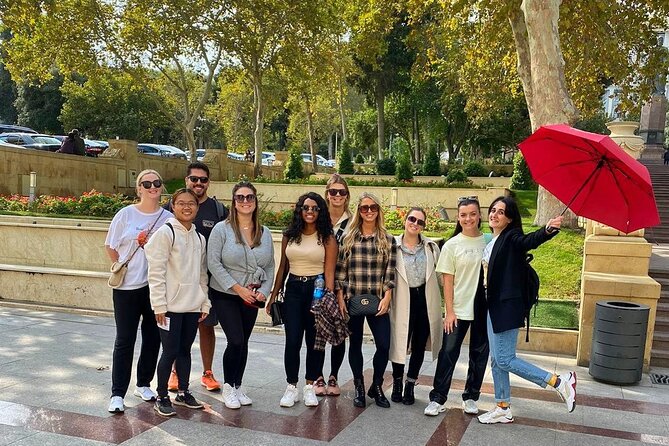
Near the end of the tour, you’ll reach Ismailiyya Palace. This stop is focused on one oil baron’s commission—built in memory of his son—and its architectural style. The design is described as Venetian Gothic, which is exactly the kind of contrast that makes Baku so easy to remember.
If you’ve been wondering why Baku looks different from other places you’ve visited, this is the payoff moment. It helps you see the city as a mash-up of influences: old fortifications and mosques, Russian-era streets, oil-era institutions, and European-style architecture all coexisting in a walk you can finish in about 2.5 hours.
How the tour feels in real life: pace, group size, and your guide
The tour runs about 2 hours 30 minutes. That length is a sweet spot: long enough to learn real context, short enough not to drain your day in between major sights.
Your group size is capped at 30 travelers. The experience is positioned as a private-tour style approach, meaning the guide keeps the pace moving so you’re not constantly waiting around. In practice, what stands out from the best runs of this tour is how smoothly it moves through varied locations—Old City lanes, then wider streets and architectural stops.
The guide can make or break a walking tour, and this one has a track record of strong narration. Guides such as Gani (and sometimes Lina) have been praised for English clarity, storytelling with historical photos/diagrams, humor, and patient answers to questions. If you like asking why something is here, or what a building meant when it was new, you should feel right at home.
What you get for $70: value compared to DIY
At $70 per person, this isn’t the cheapest way to see Baku. But it’s priced like a learning-focused walk, not a basic transfer around town. You’re paying for a guide to connect the architecture and landmarks to oil-era power, everyday life, and shifting political influence.
Here’s what supports the value:
- You cover a lot of ground in 2.5 hours.
- You get street explanations of major UNESCO-linked sites without buying multiple admissions during the walk.
- You receive bottled water.
- You get practical next-step ideas, including food and language tips, from the guide’s own recommendations.
Where it may not be worth it: if your plan is mainly “take photos and wander” with no interest in oil barons, Soviet influence, or how streets and buildings reflect changing control. In that case, you might do fine with a self-guided Old City route.
Quick planning tips for your day in Baku
You’ll want to go in with the right mindset: this is a walking history lesson. The tour includes stops with free entry tickets, and you’ll often get explanations without entering the sights. Still, plan time for the Old City’s street layout, and expect a steady walk rather than a slow stroll.
Bring comfortable shoes, and keep an eye on weather. The experience specifically requires good weather, and if it’s canceled due to poor conditions you’ll be offered a different date or a full refund. Also, you can use a mobile ticket, and service animals are allowed. The meeting area is near public transportation, which helps if you’re pairing this with other parts of the city.
Should you book this tour?
Yes, I think you should book it if you want a fast, structured introduction to Baku that explains why the city looks the way it does. The combination of Icherisheher Old City sights plus oil-boom architecture stops (Town Hall, Saadet Sarayi, Ismailiyya Palace) is a strong match for first-timers.
Skip it—or at least pair it with extra time—if you’re determined to enter every major site inside. This walk is built around explanations from the street, so you’ll finish with context but not necessarily with museum hours.
If you’re heading to Baku on a tight schedule, this tour is one of the best ways to turn a few blocks of buildings into a story you’ll actually remember.
FAQ
How long is the Baku Oil Heritage & Old Town Walking Tour?
It runs about 2 hours 30 minutes.
Where is the tour meeting point and where does it end?
You meet at KFC9RCP+28F, Nizami St, Baku, Azerbaijan, and the tour ends back at the meeting point.
What does the tour cost?
The price is $70.00 per person.
Is bottled water included?
Yes. Bottled water is included.
What is not included in the tour price?
Lunch, private transportation, and admission fees are not included.
Do I need to pay admission fees for the stops?
Admission fees aren’t included, but the stops listed for this walk are marked as free tickets, and the plan includes explanations without entering many of the sights. If you choose to enter museums or other sites on your own, that would be separate.
How large is the group?
The maximum group size is 30 travelers.
Is the tour affected by weather?
Yes. The experience requires good weather. If it’s canceled due to poor weather, you’ll be offered a different date or a full refund.
Is the guide’s narration in English?
The provided information doesn’t specify languages, but guide names like Gani and Lina have been highlighted in past experiences, and strong English performance is part of what’s been praised.