REVIEW · CAIRO
Cairo: Archeological Day-Trip to Alexandria
Book on GetYourGuide →Operated by Ramses tours · Bookable on GetYourGuide
Alexandria in one day feels almost unbelievable. This trip strings together Kom el Shoqafa Catacombs, the Library of Alexandria area, and the Lighthouse site in a single Mediterranean sweep. It’s history underground, history on foot, and history with sea views—plus just enough local texture to keep it from feeling like a checklist.
I love how much of the day is guided, not just toured. You get story and context at the Catacombs, the Library compound, and the mosque, and it tends to land well because guides like Mohammad and Shaimaa are known for clear explanations and quick fixes when timing gets tight. I also love the mix: underground tombs, Roman remains, then royal gardens and the harbor walk.
One caution: it’s a long 12 hours and the schedule is packed, so not every site gets a full entry-and-stroll experience. Also, the Library of Alexandria is closed on Fridays and public holidays, so if your dates fall there, you’ll want to adjust expectations (or ask what alternative time inside the complex is possible).
In This Review
- Key things that make this Alexandria trip work
- Cairo to Alexandria: the 12-hour rhythm you should plan for
- Kom el Shoqafa Catacombs: underground art and a real sense of discovery
- The Library of Alexandria complex: statues, open courts, and museum stops
- St. Mark Church: why the oldest church matters here
- Roman Alexandria walk-by: Kom el-Dikka, Serapeum, and amphitheater ruins
- Qaitbay Castle and the Lighthouse site: the ancient wonder through a modern lens
- Montaza Palace Gardens and King Farouk’s sea air
- Abbo al-Abbas al-Mursi Mosque and the corniche: grandeur plus real street life
- Price and value: what $85 buys you (and where you might spend extra)
- Who this day trip suits best
- Should you book this Alexandria day trip?
- FAQ
- FAQ
- How long is the Alexandria day trip from Cairo?
- Where can I choose pickup from?
- What is the maximum group size?
- What languages are available for the live tour guide and audio?
- Does the tour skip the ticket line?
- Are entrance fees included?
- Is there a lunch stop?
- Is the Library of Alexandria always open?
- Can I enter the Roman excavation sites?
- Can I cancel and get a refund?
Key things that make this Alexandria trip work
- Kom el Shoqafa Catacombs: a subterranean necropolis discovered when a donkey fell into the ground
- Library of Alexandria area: open court views plus museum stops inside the complex grounds
- Old Roman City walk-by stops: you get external views of villas and amphitheater remains, not interior wandering
- Montaza Palace Gardens: King Farouk’s royal garden atmosphere with sea-breeze photo moments
- Abbo al-Abbas al-Mursi Mosque + corniche: grand mosque design paired with old-harbor scenes and a strange little funfair outside
Cairo to Alexandria: the 12-hour rhythm you should plan for

This is a full-day trip—12 hours is the goal, but the day’s real length depends on Cairo-to-Alexandria traffic. If you’ve ever driven in a big city, you already know the deal: morning tends to be manageable, and the return can be slower. The good news is the whole point of this tour is that you don’t have to navigate schedules, ticket lines, or public transport. You just show up, then the guide and driver handle the route in an air-conditioned vehicle.
You also get a small group experience. The max is 10 travelers, which matters because it keeps photo stops and museum pacing from turning into herding cats. And because there’s a live guide plus an audio guide in many languages, you’re less likely to lose key details when groups shift between places.
Bring comfortable shoes and a hat. You’ll be walking in shaded and sunny stretches, and Alexandria can feel bright even when the wind is cool. Sunglasses help too. This isn’t the day for sandals that look nice but hate stairs.
You can also read our reviews of more tours and experiences in Cairo.

Kom el Shoqafa Catacombs: underground art and a real sense of discovery
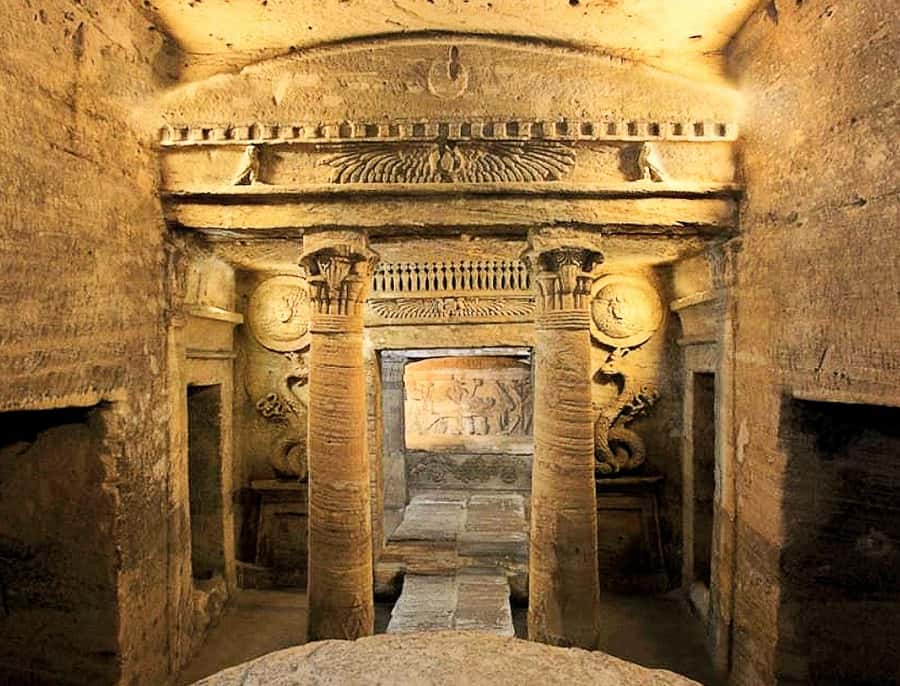
The day begins by going below street level—straight into Kom el Shoqafa Catacombs. Think of it as Alexandria’s underworld museum, with a subterranean setting that automatically slows your pace. It’s a necropolis, so you’re seeing burial architecture and burial symbolism, but what makes the site stand out is how layered it is.
The tomb style is often described as a blend of Egyptian, Greek, and Roman influences. In plain terms: you’re not looking at one “type” of decoration. You’re seeing how Alexandria absorbed cultures and kept mixing them. And there’s a story tied to how the place was found. The account you’ll hear here is that a donkey disappeared into the ground, uncovering access to the catacombs. It’s the kind of detail you remember because it makes the site feel less like a static ruin and more like something that was literally waiting to be found.
What you’ll love most: the way the guide explains what you’re seeing as you move through the underground spaces. You don’t just stop for photos; you get orientation—what each chamber likely meant and how the design communicates status and ritual.
Possible downside to keep in mind: catacombs are walk-through environments. If you’re sensitive to enclosed or uneven areas, wear shoes with solid grip, and take it slow on steps.
The Library of Alexandria complex: statues, open courts, and museum stops
Next you move to the Library of Alexandria area—one of the most iconic modern sites in the city, built on the idea of Alexandria as a knowledge center. The big win here is efficiency. The tour is set up to help you avoid ticket-line headaches, so you’re not spending your limited time stuck waiting.
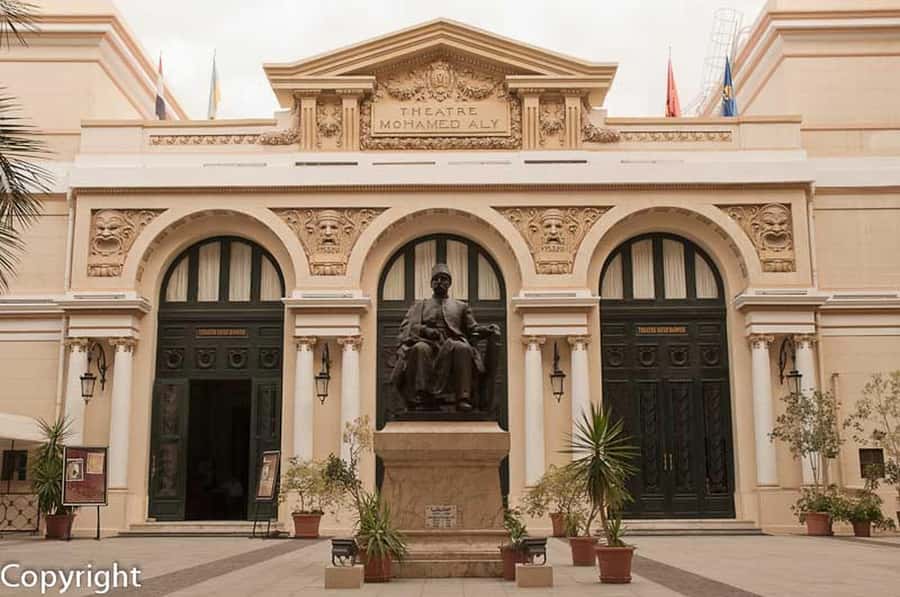
Inside the Library compound, you’ll have guided time plus access to the open court, where you can see statues connected to the city’s ancient rulers. The tour focuses on the statue of Alexander the Great and the statue of Ptolemy I, presented as coming from underwater discovery in the Sunken city of Cleopatra. Even if you’re not a hardcore historian, it’s a nice way to connect the “today” Library design to the older Alexandria myth and archaeology.
There are also museum-style impressions within the library area—specifically stops described as the President Sadat Museum and Impressions of Alexandria Museum. That mix is useful if you like your history in layers: architecture outside, interpretation inside, and short guided context that helps you connect the dots.
One practical reality: the Reading Hall in the Library involves an extra ticket. The tour notes this directly, so if that’s the highlight you’re chasing, don’t assume it’s automatically included. And if your day trip lands on a Friday or a public holiday, the Library is closed. If your schedule is flexible, you can save yourself frustration by steering your booking away from those days.
St. Mark Church: why the oldest church matters here
After the Library stop, the route shifts to the Church of St. Mark, described as the oldest church in Africa. That framing matters because it turns the visit into more than architecture viewing. You’re stepping into a place tied to early Christian identity and Alexandria’s long role as a crossroads city.
In the itinerary flow, this is a guided stop—so instead of just walking past, you’re likely to get the story behind the church’s place in the city. That’s especially helpful because Alexandria’s religious landscape includes layers: pagan-era memories, then centuries of Christian and Islamic landmarks, all stacked within the same urban area.
This is a good moment in the day to slow down. After catacombs and a museum-heavy Library compound, a church visit can reset your pace with quieter attention to design and symbolism.
Roman Alexandria walk-by: Kom el-Dikka, Serapeum, and amphitheater ruins
Roman Alexandria is often harder to visualize than it sounds. A lot of the evidence is scattered—ruins, foundations, excavated zones. That’s why these stops work well on a day trip: you get guided explanations to make the remains feel readable.
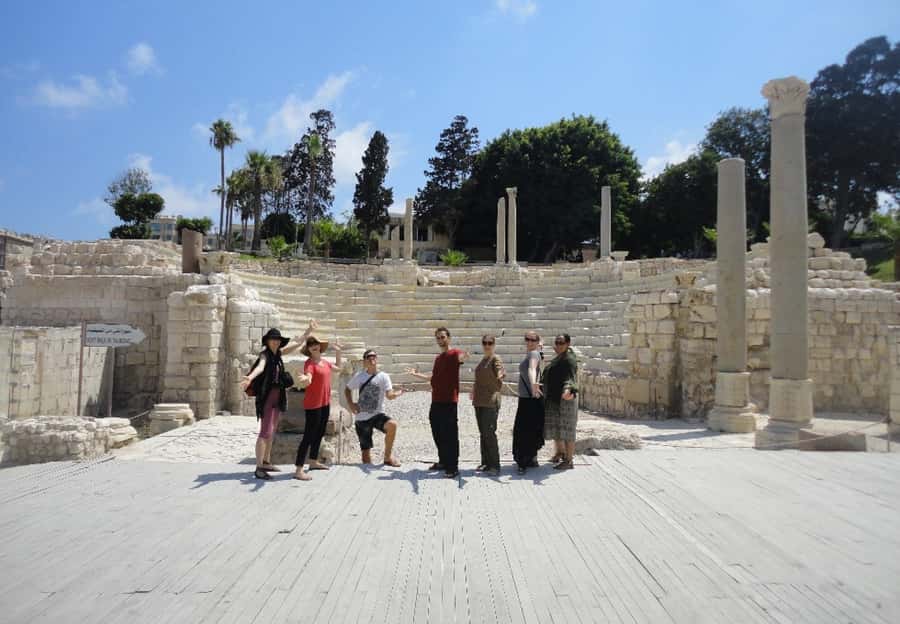
You’ll pass or walk by several locations tied to the Roman city, including Roman theater in Kom el-Deka and the Serapeum of Alexandria, with additional Roman-area viewpoints around the Old Roman City excavation area. You’ll also see the Alexandria Great Tomb excavation area and the Amphitheater Ruins from outside.
Important: the tour notes that it’s not allowed to visit inside those excavation sites. That doesn’t make the stop pointless—it just changes your job. You’re observing and understanding from the permitted viewing areas. The guide’s role becomes even more important here, because they help you connect external ruins to what the structures likely were.
One detail you might enjoy if your guide uses the space well: the amphitheater areas can be used for quick acoustics-type demonstrations. Some guides have a habit of turning the stop into a practical experience—how sound behaves in theaters built for crowds—so you leave feeling like you understood something, not just saw it.



Qaitbay Castle and the Lighthouse site: the ancient wonder through a modern lens
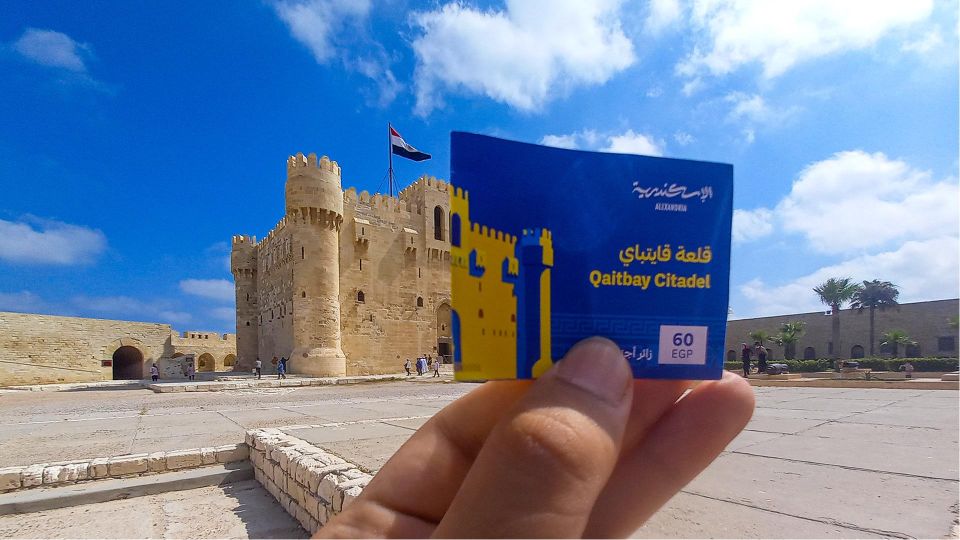
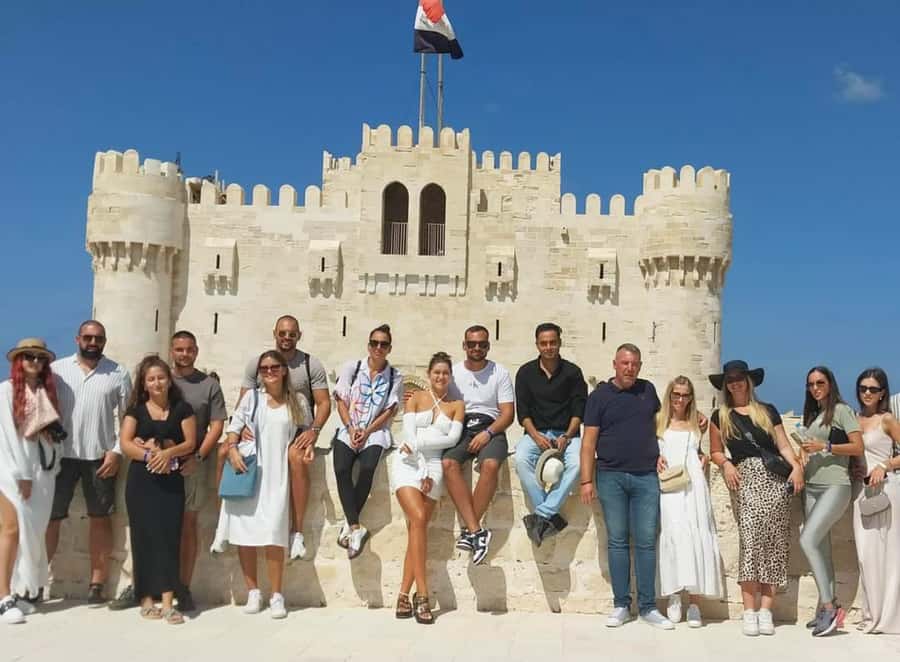
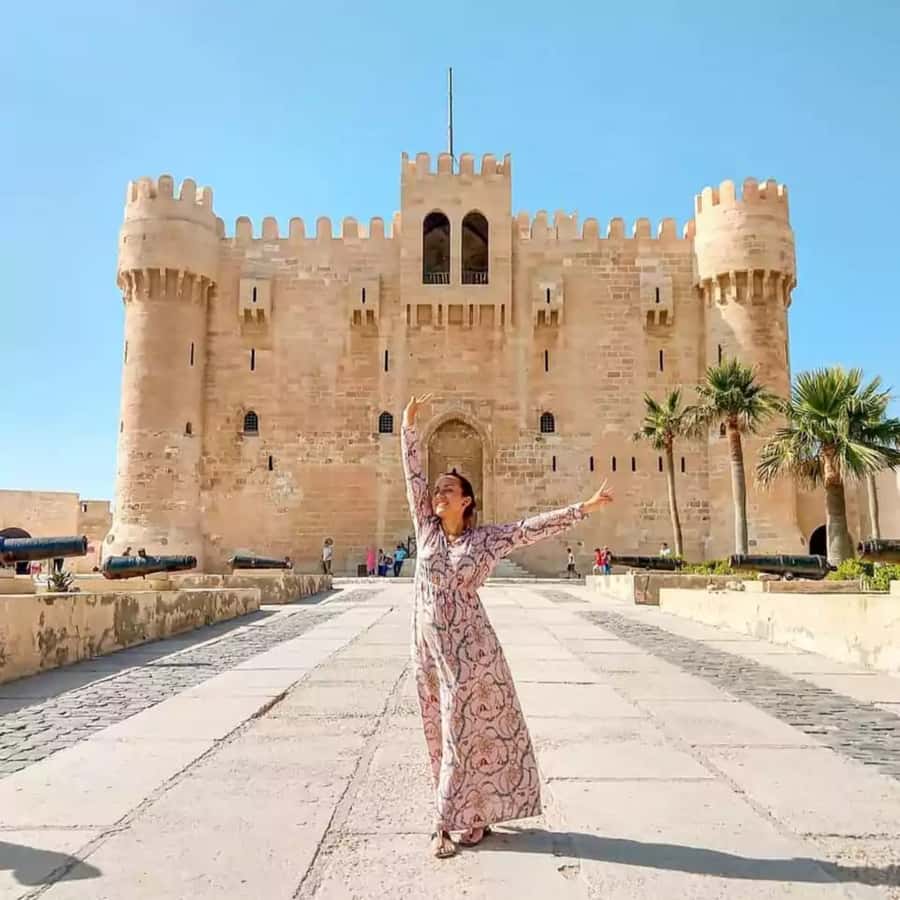
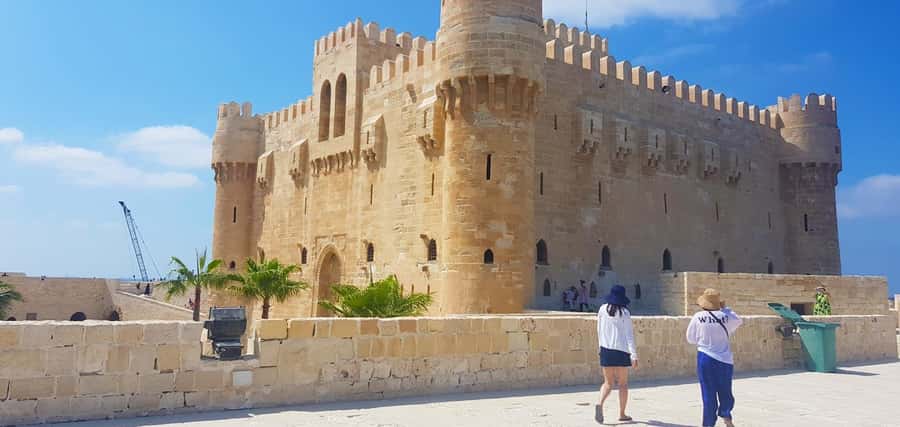
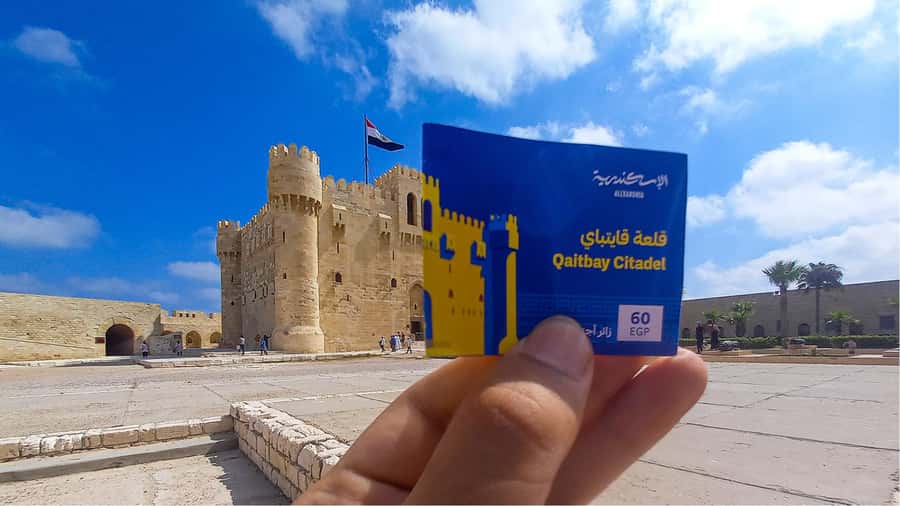
One of the strongest photo themes in this day is the ancient Lighthouse site story, and the tour ties it to Qaitbay Castle, built on the same location. Even if you never entered the citadel (and the tour’s wording leans toward exterior viewing), the stop still works because it connects the legend of the Seven Wonders to a place you can actually stand near.
This is the kind of viewpoint that helps you think in layers: what was once a navigational icon for sailors becomes a fortress location in later eras. Alexandria is full of this kind of continuity, and the Lighthouse-to-Qaitbay framing is an easy way to make it click.
If you’re the type who likes to take photos with context, this is a great stop for that. You can also ask your guide to give you the “what would be here” comparison while you’re looking at the exterior.
Montaza Palace Gardens and King Farouk’s sea air
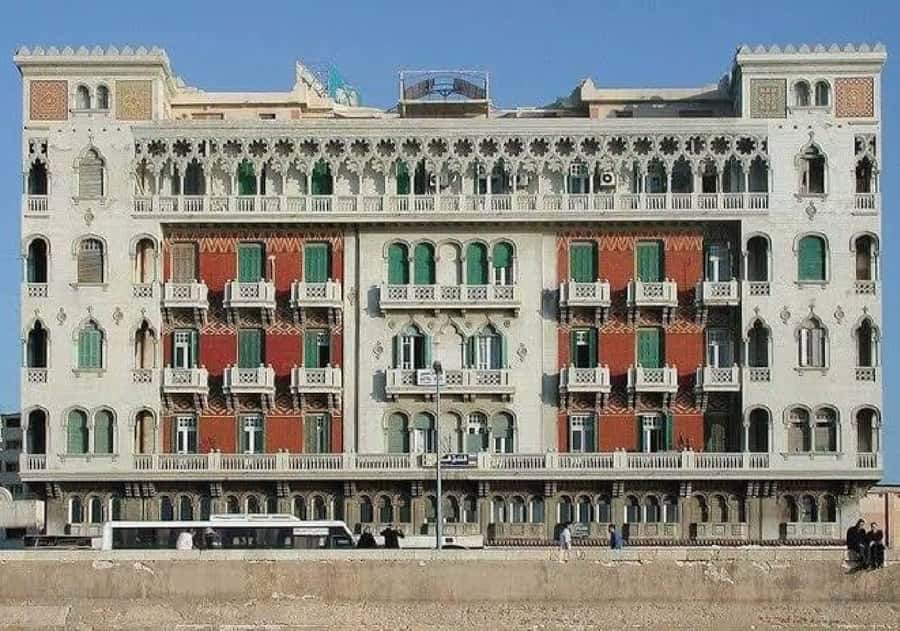
Then you hit the royal-garden part of the day: Montaza Palace Gardens, connected to King Farouk. This is where the pace can feel different. After tombs, churches, ruins, and museum spaces, you get air, green space, and a more relaxed walking feel.
The gardens are described as royal property, and the visit is set up for both strolling and photo pauses. The stops are timed so you can capture moments near the palace and also look toward the serene areas associated with the palace’s waterfront setting—portrayed here as beaches once graced by queens.
This is also a good break for your brain. You’re letting your eyes rest and letting the city show a modern identity: Alexandria’s coastal light, its garden spaces, and the way royal architecture integrates with landscape.
If you’re sensitive to heat, Montaza can still be bright. Wear your hat and take the guided shade breaks when they appear.
Abbo al-Abbas al-Mursi Mosque and the corniche: grandeur plus real street life
The last “big architecture” moment is Abu al-Abbas al-Mursi Mosque, described as the biggest and prettiest mosque in Alexandria. The tour style here is guided sightseeing, which is exactly what you want. Mosque architecture carries details that you’ll miss if you just walk by. With a guide, you’re more likely to notice the design logic and the patterns rather than just admire the scale.
There’s also a fun contrast right outside. The tour mentions an old funfair near the mosque—children playing on antique rides and snacking on candy floss. That kind of scene is why Alexandria never feels like a theme park. It’s ancient places sitting in a living neighborhood.
From there you head toward the corniche and old harbor area. You’ll be able to see old fishing boats, men fishing, and traditional net-making. It’s not a guided fishing lecture, but it’s visually strong and gives you a sense of how the sea economy still shapes daily life.
Then you wrap up with the outside view of Qaitbay Castle again in the broader route arc, which helps reinforce the Lighthouse-to-fortress connection before you head back toward Cairo.
Price and value: what $85 buys you (and where you might spend extra)
At $85 per person for a 12-hour day, the value is mostly about organization. You’re paying for:
- a professional live guide
- transportation in an air-conditioned vehicle
- site access and entrance fees when selected
- and help avoiding some ticket-line time
The big question is entrance fees. The tour says entrance fees are included if you select that option, which means your final cost can vary depending on what’s ticked in your booking flow. If you care about specific indoor access (like certain library components), double-check what’s included so you don’t get surprised later.
You’ll also want to budget for the lunch stop. The schedule includes an optional lunch at a local restaurant. Some people love a seafood-focused lunch with sea views when the route lines up that way, but you should treat it as a meal stop you pay for, not a guaranteed included lunch.
One more “value” angle: speed. You see a lot in one day, but you also accept that some stops are exterior-only viewing. If you want a slower travel pace—more time in each site—this tour gives you highlights efficiently, not depth-per-hour.
Who this day trip suits best
This is a smart choice if:
- you’re in Cairo for a short window and want a big Alexandria hit
- you like guided context, not solo wandering
- you want a mix of major landmarks and archaeology without planning logistics
It may be less ideal if:
- you struggle with long car rides and tight schedules
- you need lots of time inside every stop (especially excavation zones where interior access is restricted)
- you’re visiting on a Friday or public holiday when the Library is closed
Should you book this Alexandria day trip?
I think you should book it if you want the best odds of getting the city’s key stories—catacombs, Library symbolism, an old church, Roman-area remains, Montaza gardens, and the mosque-and-harbor atmosphere—without spending your vacation figuring out transport. The guide component is the real engine here, and the route is built to keep you moving while still explaining what you’re seeing.
If you hate packed days, consider staying in Alexandria overnight instead. But if you’re short on time and want a guided, high-value day at roughly $85 with a clear highlight order, this one makes practical sense. Just align your expectations with the reality of a long day and the Library closure rules.
FAQ
FAQ
How long is the Alexandria day trip from Cairo?
The duration is listed as 12 hours.
Where can I choose pickup from?
Pickup options include Cairo (Ahlan Cairo airport) and Cairo accommodation pick-up. A supplement may apply for some areas such as Heliopolis airport area or 06th of October.
What is the maximum group size?
The tour has a maximum of 10 travelers.
What languages are available for the live tour guide and audio?
The live guide languages include English, French, Spanish, Italian, and Arabic. Audio guide is included in many languages. If your preferred live-guide language is unavailable, you’ll get live English support plus audio in your desired language.
Does the tour skip the ticket line?
Yes, it includes skip-the-ticket-line service.
Are entrance fees included?
Entrance fees are included if you select that option.
Is there a lunch stop?
The schedule includes a local restaurant lunch stop as an optional part of the day.
Is the Library of Alexandria always open?
No. The Alexandria Library is closed on Fridays and on every public holiday. The Reading Hall requires an extra ticket.
Can I enter the Roman excavation sites?
No. It notes that you cannot visit inside the excavation sites; you’ll view them externally.
Can I cancel and get a refund?
You can cancel up to 24 hours in advance for a full refund.