REVIEW · MARRAKECH
Half-Day Cooking Class with Local Chef Laila in Marrakech
Book on Viator →Operated by Chef Laila cooking classes · Bookable on Viator
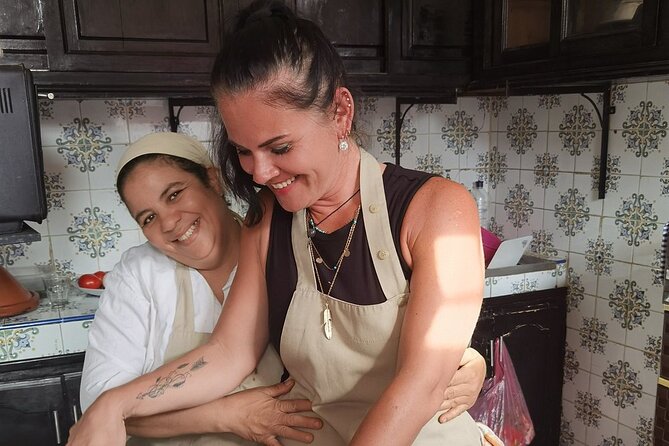
One-on-one with Morocco’s flavors starts with a smile. This half-day class with Chef Laila is built around a real Marrakech food rhythm: shop for spices and produce, learn what makes ingredients good, then cook a 3-course Moroccan meal you’ll eat right there. I love that it’s not just theory—it’s practical, social, and easy to follow, even if you’ve never cooked Moroccan food before.
A quick heads-up: while the plan includes a market stop, a few past participants noted that their specific session didn’t include it when the chef leading the class changed. Still, the class is designed to flex for people’s needs, including vegetarian and vegan options, and there’s a strong track record of fun, clear instruction from the host family.
In This Review
- Quick reasons to book this Marrakech cooking class
- Rue Riad Zitoun el Jdid: where the class begins (and how it starts well)
- The market step: picking herbs, spices, and produce the right way
- Breakfast location and Moroccan tea: a small lesson with big payoff
- Ras el Hanout main course: hands-on cooking you can repeat
- Appetizer to dessert: how the 3-course meal shapes your day
- Kitchen setup and group size: why the class stays fun (not chaotic)
- Vegetarian, vegan, and allergy needs: how the class protects your meal
- Price and value in Marrakech: what $34.76 buys you
- Who should book this class (and who might not)
- Should you book Chef Laila’s half-day cooking class?
- FAQ
- How long is the Half-Day Cooking Class with Local Chef Laila in Marrakech?
- Where does the class start and where do you end?
- Does the class accommodate vegetarians or vegans?
- What’s included in the class meal?
- Do they visit the market?
- What if the experience is canceled due to weather?
Quick reasons to book this Marrakech cooking class
- Hands-on 3-course cooking: appetizer, main, and dessert, with a full workflow you can recreate later
- Market-to-kitchen structure: you learn how to judge produce quality and pick herbs and spices
- Moroccan tea lesson included: a teach-you style break before you start cooking
- Dietary tailoring: menus can be adapted for allergies and for vegetarians/vegans
- Small-group feel (max 20): enough social energy to chat, not so big you feel lost
- Laughter and personality: the chef and family style teaching shows up in the reviews again and again
Rue Riad Zitoun el Jdid: where the class begins (and how it starts well)
The class starts at 3 Rue Riad Zitoun el Jdid and ends back at the same point. That matters more than it sounds. Marrakech can be a maze, and having the activity return you to your starting area keeps the timing simple and helps you plan the rest of your day (or evening).
Right at the beginning, the focus is on your food needs. You meet up, then check whether anyone in your group has an allergy. After that, the menu gets chosen to fit everyone, including vegetarian and vegan participants. This is one of the reasons the class works so well for mixed groups: it’s not a separate “special” option that someone gets stuck with. The plan is to pick a menu that suits the whole table.
Also, the class has a clear time block—about 4 hours 30 minutes—so you’re not dragged through a long day with too little payoff. It’s a half-day commitment, but it aims to deliver a full Moroccan meal experience, not just a snack-and-learn session.
You can also read our reviews of more tours and experiences in Marrakech.



The market step: picking herbs, spices, and produce the right way
In Marrakech, you can buy spices almost anywhere. What you can’t always learn is how to judge what’s truly fresh and good. This class is designed to teach you that. The plan calls for going to a local market to select fresh produce, herbs, and spices, and then learning how to determine the quality of what you’re choosing.
Here’s why that’s a big deal for value. When you return home, you’ll likely cook with spices you can find in local shops. Knowing what to look for—smell, color, and overall quality—helps you translate Moroccan flavors more accurately than just copying a recipe.
One practical note: the class description includes a market visit, but at least one group reported that their class didn’t include that stop when the session leader was different. So if a market walk is a top reason you’re booking, I’d consider confirming with the provider when you book (or right after you receive confirmation) that your exact session includes the market portion.
Breakfast location and Moroccan tea: a small lesson with big payoff
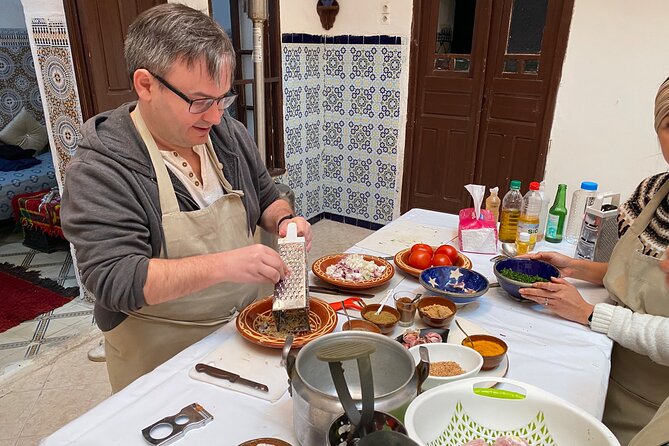
Before you cook, there’s a break tied to Moroccan tea. The plan takes you to a location where you have breakfast, and the chef teaches you how to make Moroccan tea. It’s not just a nice pause—it’s a flavor lesson and a cultural one.
Moroccan tea is one of those things that seems simple until you actually learn the technique. In a cooking class, it’s a great “warm-up” because it sets the tone: the session is about learning how Moroccan cooking is paced, not just what the dishes are.
Also, tea time helps the group settle in, especially if you’re arriving from the market area or from different directions in town. You’ll be ready to cook, not rushing hungry through the first steps.
Ras el Hanout main course: hands-on cooking you can repeat
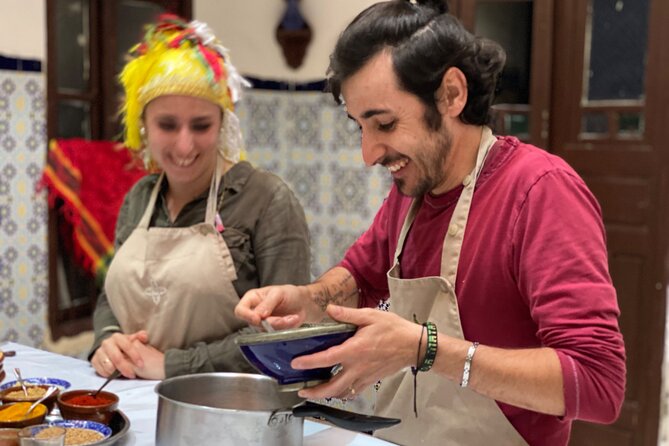
Once the tea and break are done, the cooking portion turns fully hands-on. The class starts with a main course using Ras el Hanout—a Moroccan spice blend that shows up often in traditional cooking and can taste very different depending on the blend quality.
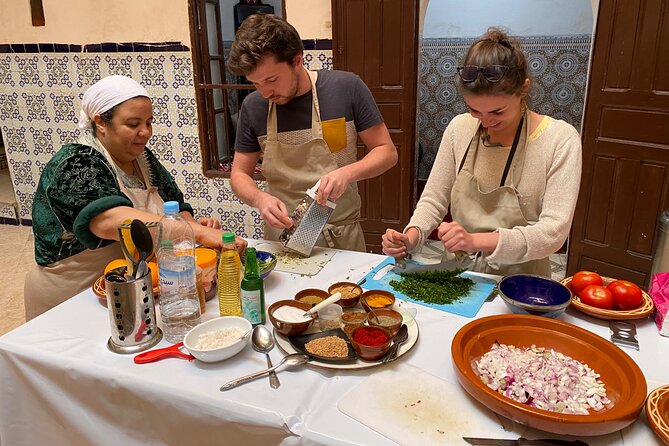
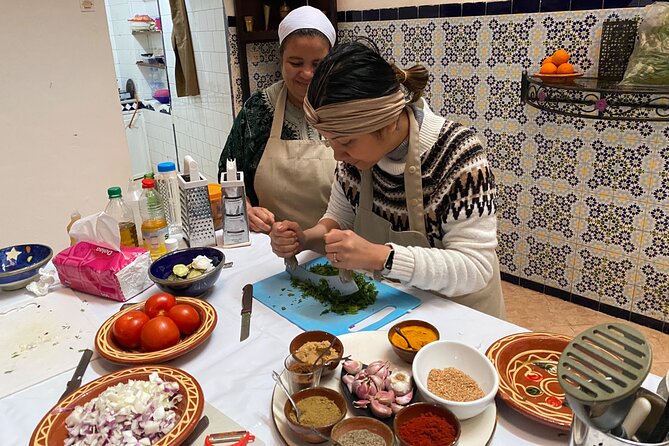
This is where the class style matters. You’re not just watching someone cook behind a counter. The experience is built for doing: preparation, chopping, cooking steps, and then eating what you make. Reviews highlight that there’s hands-on fun and that people who don’t have cooking experience can still follow along.
From what’s described, you’ll learn the ingredient flow and how the spice blend fits into the dish, which is exactly what you want if you’re the type who buys spices and then gets nervous about using them. When you make the main course as part of a 3-course set, you also get a sense of portion and timing—how Moroccan meals build from course to course.
And yes, there’s a social energy here. Several reviews mention the chef’s family teaching vibe, with good humor and patient explanations, including explanations in more than one language (some sessions include English and French support).
Appetizer to dessert: how the 3-course meal shapes your day
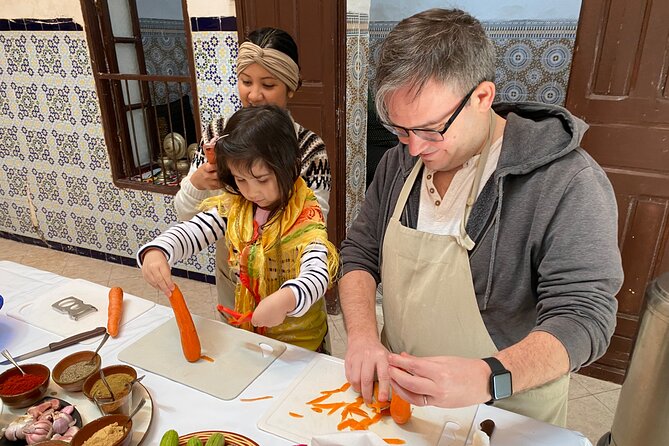
The class is structured around a full 3-course meal: an appetizer, a main course, and dessert. Even though the exact dishes can vary depending on the menu selection for your group, the workflow stays consistent: you build flavors, cook, and then sit down together to eat.
That’s a key reason this experience is worth considering over a basic “cooking demo.” You don’t leave with only a couple of bites or a plate you didn’t build. You leave with an actual meal—plus the skills to reproduce at least the core ideas.
Dessert is part of the plan too. Moroccan desserts can be ingredient-driven (sweet spices, honey, nuts, and pastry techniques depending on what’s chosen), and having dessert included means you taste the full arc of Moroccan sweetness, not just the savory side.
Also, the class is designed to be adaptable. If someone is vegan or vegetarian, the menu can be adjusted ahead of time rather than “skipping” a course. That turns the class from a potentially frustrating experience into one where everyone gets to cook and eat the same meal.





Kitchen setup and group size: why the class stays fun (not chaotic)
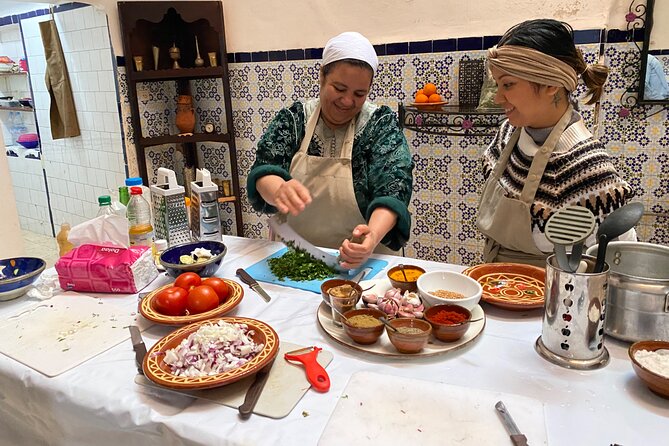
This experience caps at 20 travelers. That size is a sweet spot. It’s big enough to feel like an event, but small enough that you can still get attention when you need it.
One review specifically called out the kitchen setup as well organized with plenty of space to cook and then enjoy the food afterward. That matters because cooking classes can go two ways: cramped chaos or clear stations. A kitchen built for actually cooking makes it easier for beginners to do the steps without feeling overwhelmed.
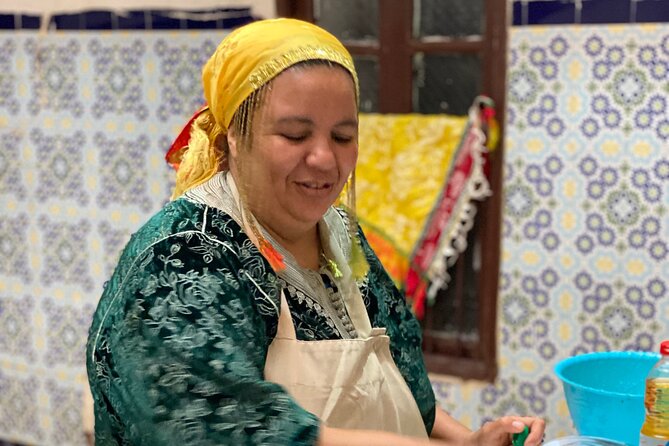
A second theme in the reviews: the family vibe. When the chef leading the class is available, Chef Laila’s personality shines through—passionate, humorous, and good at making people feel included. When she isn’t available, instruction may shift to another family member (for example, Hamza led one class). The good news: the overall teaching approach stays friendly and structured.
Finally, a reality check: one review mentioned that a session felt more preparation-focused than cooking-focused, with lots of chopping and less stove time. That might depend on the group size and the exact day. If you’re hoping for a lot of direct hands-on cooking at the stove the entire time, you may want to set expectations around what “hands-on” means in practice—especially during larger groups.
Vegetarian, vegan, and allergy needs: how the class protects your meal
If you’re traveling with dietary needs, this is one of the strongest parts of the experience. The class process includes checking allergies at the start and then choosing a suitable menu for everyone in the group, including vegetarians and vegans.
That approach is practical. Many cooking classes either:
- provide a separate dish, or
- ask dietary travelers to watch while others cook.
Here, the menu selection happens up front, with the goal of serving everyone. That makes the class more enjoyable for you and less stressful for the organizers.
If you’re gluten-free or have other restrictions beyond what’s mentioned, the safest move is to share them clearly at the start (the class explicitly includes an allergy check). Based on how the class adapts menus, it’s designed to take food needs seriously, not as an afterthought.
Price and value in Marrakech: what $34.76 buys you
At $34.76 per person, this half-day class is priced like a budget-friendly activity that still aims to deliver a full meal experience. The value comes from three big items you get for the cost:
- a structured lesson (market-quality selection and cooking instruction)
- an included 3-course meal
- an outcome you can take home: recipes, techniques, and a stronger sense of how Moroccan flavors fit together
Also, booking in advance (it’s commonly booked about 16 days ahead) can be a sign of popularity, which usually correlates with consistent demand and organization.
Duration matters for value too. 4 hours 30 minutes is long enough to learn and cook multiple dishes, and short enough to fit into a Marrakech itinerary without swallowing your whole day.
One small consideration: the experience requires good weather. If weather affects the day, you’ll be offered a different date or a full refund. So if your trip is weather-sensitive, it’s smart to build this activity early enough that you have flexibility to reschedule.
Who should book this class (and who might not)
You’ll likely enjoy this cooking class if you want:
- a fun, social food experience with real people
- a hands-on activity where you can learn spice and produce selection
- a straightforward way to get a Moroccan meal without hunting down the right ingredients and cooking steps yourself
- a class that can work for mixed groups, including vegetarians and vegans
I’d think twice if your main goal is a deep, quiet, slow-paced culinary school lecture. This experience has energy. One review even mentioned laughter and meeting people as part of the value. If you want a very calm, minimal-interaction cooking lesson, the family-led teaching style may feel too lively.
Also, if market walking is non-negotiable, remember the note about possible session variation. The description includes a market step, but your specific day depends on who’s leading and how the schedule runs.
Should you book Chef Laila’s half-day cooking class?
Yes, you should book it if you want a practical, flavorful Marrakech experience with a strong track record of 98% recommendation and an overall 4.9 rating. The biggest reason to choose it is simple: you don’t just taste Moroccan food—you learn how the flavors get built, and you leave with a meal that feels worth the time.
Book it especially if you’re cooking-curious but nervous about “doing it right.” A class that teaches spice blending (like Ras el Hanout) and includes Moroccan tea gives you a head start you can use again at home.
The only reason to hesitate is if you need the market stop guaranteed, or if you strongly prefer stove time over prep work. If those are deal-breakers, confirm the plan for your specific date before you go.
FAQ
How long is the Half-Day Cooking Class with Local Chef Laila in Marrakech?
It runs for about 4 hours 30 minutes.
Where does the class start and where do you end?
It starts at 3 Rue Riad Zitoun el Jdid, Marrakesh 40000, Morocco, and ends back at the meeting point.
Does the class accommodate vegetarians or vegans?
Yes. The menu can be adapted for vegetarians/vegans, and the group is given a suitable menu for everyone.
What’s included in the class meal?
You cook and then eat a 3-course Moroccan meal, including an appetizer, main course, and dessert.
Do they visit the market?
The experience is planned to include a local market visit to shop for herbs, spices, and fresh produce.
What if the experience is canceled due to weather?
The experience requires good weather. If it’s canceled due to poor weather, you’ll be offered a different date or a full refund.