Marrakech has a second city, if you walk. This Hidden Sights of Marrakech tour uses a local guide to pull you off the postcard path and into the medina’s working lanes. You’ll see places that don’t show up on the typical circuit, and you get a mobile ticket plus bottled water to keep your morning comfortable.
I especially love the food-and-street culture stops—from a local bakery to a tangia cooking oven where locals plan their dishes slowly. I also like the navigation help: you learn how to move through souks and back areas without feeling like you’re guessing your way through a maze.
One thing to consider: the name can make you expect huge “secret” detours, but this is mostly a focused walking tour around the medina’s real everyday corners. If you only want big standalone monuments, set your expectations for streets, workshops, and markets rather than a list of famous buildings.
In This Review
- Key things I found most useful
- Why This Hidden Sights Walk Works Better Than the Main Circuit
- A quick note on timing and comfort
- Finding the Start Point at Café Argana in Jamaa el-Fnaa
- Bab Ftouh: The Old Gate That Sets the Tone
- Mouassine: Local Bakery Time (Not Just Looking)
- El Mouassine Mosque: Age, Neighborhood Memory, and Storytelling
- Foundouk Sarsar: Caravan Inn History You Can Still Feel
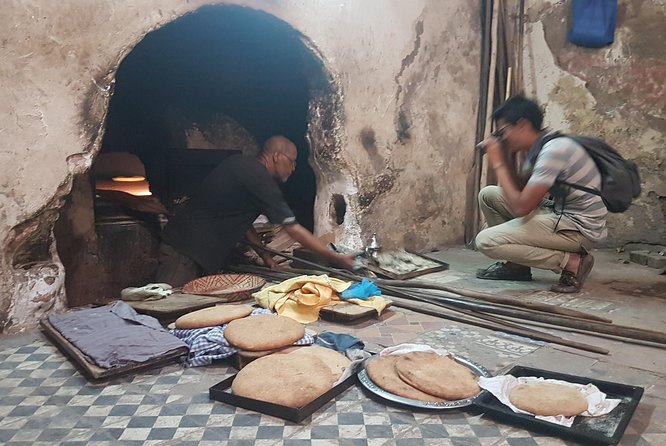
- The Tangia Cooking Oven Stop (Sidi Abdelaziz Tabaa Area Route)
- Sidi Abdelaziz Tabaa Mausoleum: One of Marrakech’s Seven Saints
- Talaa Souk: Auction Rituals That Still Happen
- Souk Haddadine: Blacksmith Workshops and Real Craft Work
- Rahba Kedima Square Spice Market: Smells First, Buying Optional
- Souk Semmarine: The Main Souk You Still Can Handle
- Jemaa el-Fnaa Finale: Street Performance Energy, With Less Stress
- The Guides Make or Break the Experience
- Price, Group Size, and What You’re Really Paying For
- What to Know Before You Go (So You Don’t Waste Your Morning)
- Who This Tour Suits Best
- Should You Book This Hidden Sights of Marrakech Tour?
- FAQ
- How long is the Hidden Sights of Marrakech tour?
- What is the tour price?
- What time does it start, and where do you meet?
- Is the ticket mobile?
- Is bottled water included?
- What about food and drinks?
- Does the tour include hotel pickup and drop-off?
- Is there admission cost for the listed stops?
- What fitness level do I need?
- Can I cancel for a full refund?
Key things I found most useful
- Small group (max 6 travelers) keeps the pace calm and questions easy
- Local bakeries and tangia oven give you an actual taste of how people eat and cook
- Historic stops with function, like a caravan inn and a working spices square
- Souk navigation + bargaining tips so you don’t get pushed around
- Free entry at each listed stop makes the walk feel good value
- Ends back at Jamaa el-Fnaa, so you can keep exploring without a reset
Why This Hidden Sights Walk Works Better Than the Main Circuit
The big sights of Marrakech are worth it. But after a few hours of the same crowds and the same photo angles, the medina can start to feel like a stage set.
This tour takes you in the other direction: into the parts of the medina that exist for daily life. That means you spend time near working businesses—oven-kitchens, artisans, caravan-inn history, spice sellers—and you learn what those places were for. It’s not just sightseeing. It’s learning how the city runs.
At $39 per person for about 3 to 4 hours, it also sits in a sweet spot for value. You’re not paying for a vehicle or a long day trip. You’re paying for a guide who can read the streets, explain what you’re seeing, and keep your morning on track. Add bottled water and free entry at the stops, and the math stays sensible.
You can also read our reviews of more tours and experiences in Marrakech.

A quick note on timing and comfort
It starts at 10:00 am from Café restaurant Argana in Jamaa el-Fnaa. That timing matters. You’re walking before the medina gets fully chaotic, and it helps you enjoy the quieter back streets. The route calls for moderate physical fitness, so comfortable walking shoes matter.
Finding the Start Point at Café Argana in Jamaa el-Fnaa
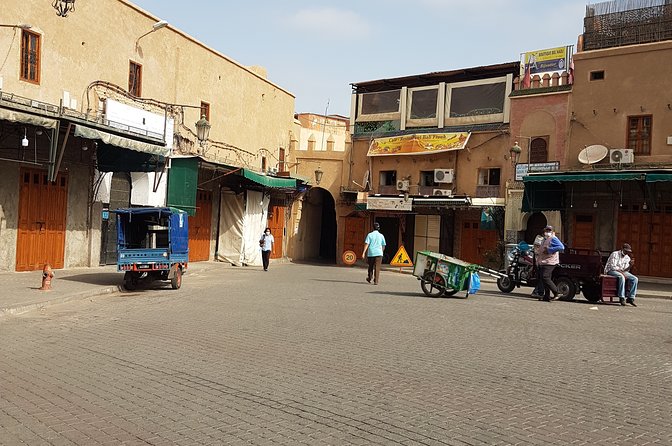
Your morning begins in the big public square: Jemaa el-Fnaa, at Café restaurant Argana (Number 18, Znikat Rahba). This is one of the best places to start a medina tour because it’s a known landmark.
From there, your guide leads you toward an older gateway and the souk entrances—so you’re not just wandering randomly. You get that first win fast: you’re oriented, you understand where you are, and you stop feeling like you’ll get lost the second you step off the main square.
Also, with a maximum of 6 travelers, the group doesn’t spill into a giant slow-moving crowd. It makes the walk feel like a real stroll with structure, not a cattle-herding exercise.
Bab Ftouh: The Old Gate That Sets the Tone
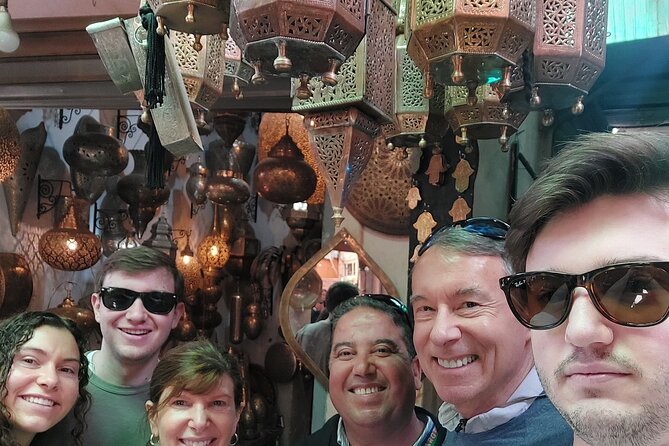
Stop 1 is Bab Ftouh, described as one of the oldest gates inside Marrakech and an entrance to souks. Even if you’ve seen other medina gates, Bab Ftouh works as a good opener because it reminds you that the medina isn’t just streets—it’s history built into infrastructure.
This is the kind of stop where a guide really matters. If you don’t have context, a gate is just a gate. With explanation, it becomes part of why the souk lanes developed where they did.
It’s listed as about 5 minutes, and since admission is free, you can treat it as a quick orientation moment rather than an extended detour.
Mouassine: Local Bakery Time (Not Just Looking)
Stop 2 is Mouassine, where you visit a local bakery. This is a highlight for a simple reason: it’s the easiest way to understand everyday Marrakech without needing a “food tour” label.
You’re not just seeing what’s on display. You’re stepping into how people buy bread and pastries and how the day’s rhythm works. It’s also a morale boost. If you’re going to walk through a maze, you want your morning to have something real and comforting built in.
This stop is short—about 5 minutes—but it does something big for the tour: it adds a human scale.


El Mouassine Mosque: Age, Neighborhood Memory, and Storytelling
Next is El Mouassine Mosque, noted as dating to the 16th century. The tour also points out that this area used to be a residential quarter associated with Moroccan Jews (the listing includes Toshavim).
Even if you’re not religious, older mosques carry city memory. The guide’s job here is to help you connect the architecture to a neighborhood story, not just a date in a book.
It’s listed at around 10 minutes, with free admission. Treat it as a stop where you learn to look—materials, layout, and the way the medina grew around sacred space.
Foundouk Sarsar: Caravan Inn History You Can Still Feel
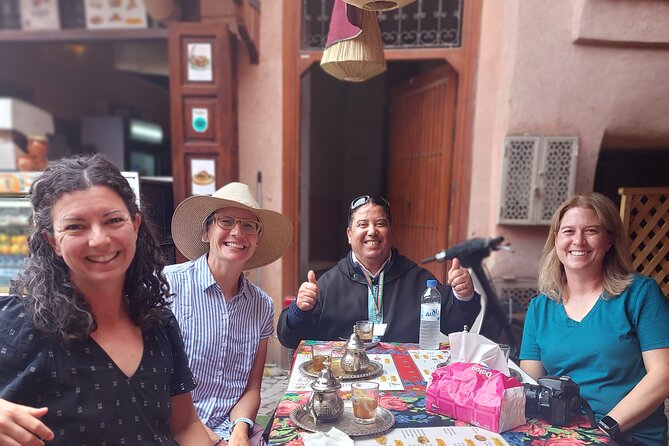
Stop 4 is Foundouk Sarsar, described as one of the oldest caravan inns in Marrakech. Caravan inns are easy to misunderstand if you only think of hotels. In old trading cities, these were functional hubs where people and goods moved together.
Walking past doors like this is one of those moments where you start seeing the city differently. Instead of “shops everywhere,” you notice the old logistics: lodging, storage, movement, commerce.
This stop is about 10 minutes and free to enter per the listing, so it’s a good “value pause” inside the tour’s walking pace.
The Tangia Cooking Oven Stop (Sidi Abdelaziz Tabaa Area Route)
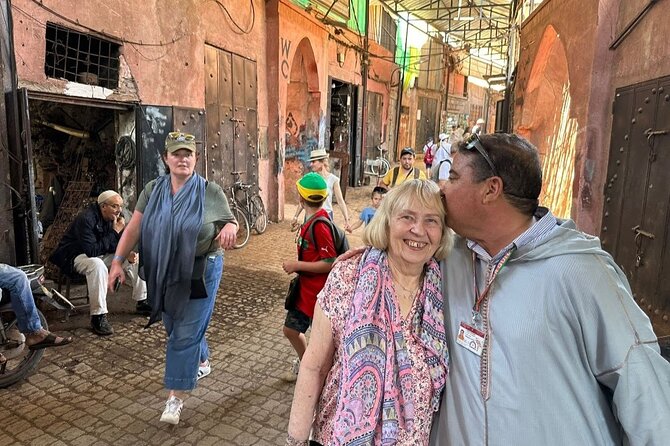
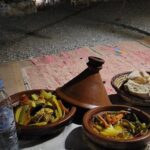
Stop 5 takes you to a cooking oven connected to tangia, described as a dish locals bring to be slow-cooked. Tangia is the kind of food idea that makes Marrakech feel lived-in. It’s not fast street snacking; it’s planned cooking.
This is another reason the guide matters: tangia only makes sense with context. Without it, you might just think it’s an oven in a wall. With it, you understand why timing, heat, and routine are built into the dish.
It’s listed for about 5 minutes and free admission. Even a short stop can land if the explanation is good.
Sidi Abdelaziz Tabaa Mausoleum: One of Marrakech’s Seven Saints
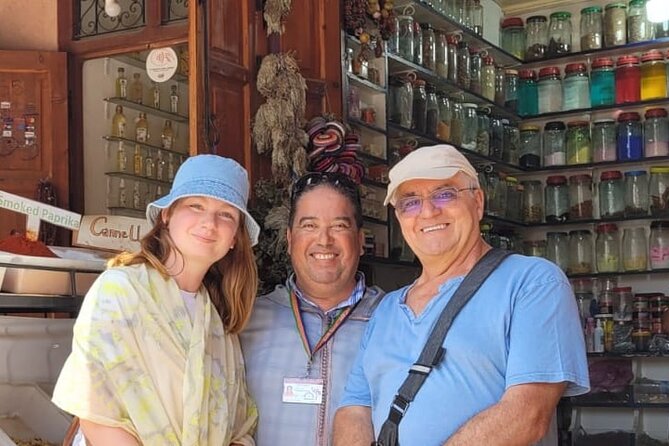
Stop 6 is the Mausoleum of Sidi Abdel Aziz Tabaa, described as one of the seven Saints of Marrakech. This is a spiritual landmark, but for many visitors it also becomes a history marker: a way to understand how cities remember people, not just dynasties or empires.
The guide helps you connect the site to the broader city network—who Sidi Abdelaziz was, why that kind of reverence mattered, and how it shows up in local culture.
Again, about 10 minutes, free admission, so it doesn’t hijack your morning.
Talaa Souk: Auction Rituals That Still Happen
Stop 7 is Talaa, described as a souk where an auction of leader skins still takes place (it says apart from Friday). The listing doesn’t give more detail, so I’d treat this as a moment where your guide points out how old trading systems can persist.
What I like about stops like this: they remind you that Marrakech is not frozen in time. Trade patterns can continue in some form, even as the look of the shops changes around them.
This is another about 10 minutes stop with free entry.
Souk Haddadine: Blacksmith Workshops and Real Craft Work
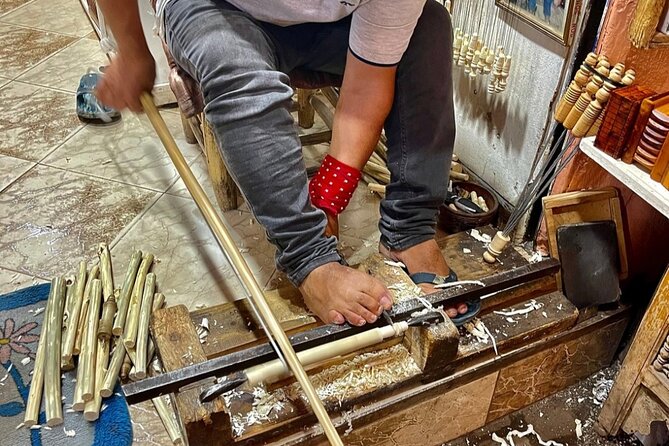
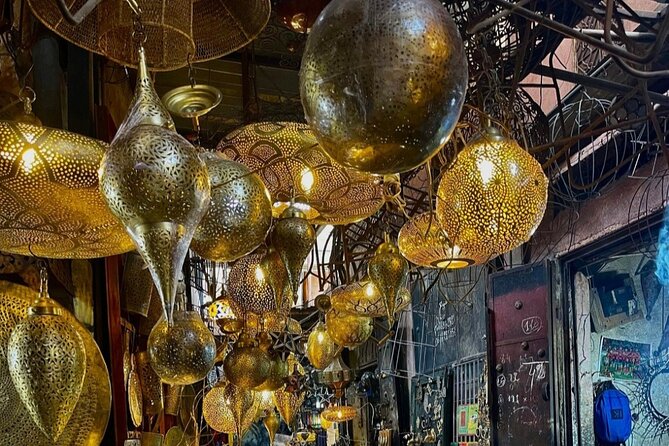
Stop 8 is Souk Haddadine, leading you through blacksmith workshops. This is one of the best categories for an “authentic feeling” tour, because craft work has visible inputs and outputs: metal, tools, shapes, and processes.
When the guide walks you through places like this, you start noticing details you’d otherwise miss—what’s being made, how craftsmen organize work, and why these workshops cluster where they do.
It’s listed around 10 minutes and free. Even if you don’t buy anything, the walk through working spaces is worth your time.
Rahba Kedima Square Spice Market: Smells First, Buying Optional
Stop 9 is Rahba Kedima Square, where you enjoy the fragrances of a genuine fresh spices market (la place des épices). Visiting a local spice stall is optional.
This is a nice mid-tour reset. By the time you reach the spices square, your senses are already working overtime from walking and noise. Spices give you something tangible without turning the stop into a sales push by default.
If you do choose to buy, I’d keep it simple: small quantities, practical ones you’ll actually use, and ask how to store them. The guide’s experience in the market helps, especially if you’re trying to avoid overpaying.
Souk Semmarine: The Main Souk You Still Can Handle
Stop 10 is Souk Semmarine, described as the most famous and busiest section of the souks. Even with a guide, this part can feel intense because it’s central and crowded.
But this stop is useful because it contrasts with the back lanes you saw earlier. You learn how Marrakech can switch from quiet specialty streets to dense shopping corridors without breaking the medina’s overall flow.
It’s listed as about 10 minutes, free entry. Think of it as your “compare and calibrate” moment.
Jemaa el-Fnaa Finale: Street Performance Energy, With Less Stress
Finally, you end back at Jemaa el-Fnaa, described as a public square where performances take place: snake charmers, musicians, storytellers, and more.
Since you return here, you don’t need to plan your next move. You’re already in the main landmark zone, ready to grab tea, wander more, or pivot to your next plan.
It’s listed for about 19 minutes. The goal isn’t to trap you in a final show—it’s to close your loop so the morning ends where most people naturally gather.
The Guides Make or Break the Experience
This tour runs with local guides, and the name that pops up in the experience feedback is Mohamed. Another name you’ll see connected to the provider is Azim (Marrakech Guide Azim). Across guide styles, there are a few consistent strengths:
- They explain what you’re looking at, not just where to walk.
- They set a gentle pace so you can see details and ask questions.
- They share practical market advice, including when prices seem too high and how to handle bargaining.
- They help you feel less like a target in the souk.
If you care about learning how to interact respectfully—without getting pushed into panic buying—this is where you get value. One person’s feedback mentioned advice about bargaining, and that kind of guidance can change your whole medina experience.
Price, Group Size, and What You’re Really Paying For
At $39 for 3 to 4 hours, you’re not paying for a bus, a museum ticket, or a meal. You’re paying for:
- a guide who can take you through lanes cars can’t go
- structured stops across ovens, inns, mosques, workshops, and markets
- orientation so you can keep exploring after the tour ends
- a small group size (up to 6) that keeps the walk manageable
In other words, the money mostly buys time, context, and the shortcut that comes from not getting lost.
Also, each stop lists free admission, which means you aren’t surprised by extra entry costs mid-walk.
What to Know Before You Go (So You Don’t Waste Your Morning)
A few practical points help you enjoy this type of medina tour:
- Expect walking and uneven surfaces. The tour asks for moderate physical fitness.
- Bring a bottle mindset. Bottled water is included, but you still want to pace yourself.
- Souks can be crowded. The morning timing helps, and your guide will help you navigate.
- If you want only famous monuments, this may feel like less than you expected. The tour is about working streets and local culture, not only big-name landmarks.
One mixed comment criticized the title, saying it felt more like a walking tour around the Medina than big “hidden” sites. That’s a fair calibration to make. The “hidden” part here is mainly about access and context: you’re going where many people won’t spontaneously go, and you understand what you’re seeing while you’re there.
Who This Tour Suits Best
This is a strong match if you:
- want a first-medina morning that gives you bearings fast
- like food culture and everyday crafts (bakery, ovens, blacksmith workshops)
- prefer small-group walks over large guided buses
- want help navigating souks and understanding bargaining dynamics
It may be less satisfying if you:
- only want standalone, iconic buildings
- dislike markets and prefer quiet neighborhoods
- want a car-based sightseeing route with minimal walking
One person noted the tour was highly accessible for people with disabilities. Since that’s the only accessibility comment provided, I can’t promise it covers every situation, but it’s a positive signal that the pace and structure can work for some needs.
Should You Book This Hidden Sights of Marrakech Tour?
Book it if you’re planning Marrakech like a normal person who wants to understand the city, not just tick boxes. This tour gives you a workable sense of the medina’s logic—gates, inns, ovens, workshops, and spice squares—plus the kind of guide support that keeps you from feeling lost.
Skip it (or adjust expectations) if your dream Marrakech day is all about the headline monuments and long museum time. This is about streets and city life, at a good morning hour.
If you do book, I’d do it early in your trip. The big win is that you’ll learn how to move through the medina while you’re there—and you can use that confidence later.
FAQ
How long is the Hidden Sights of Marrakech tour?
It runs for about 3 to 4 hours.
What is the tour price?
It costs $39.00 per person.
What time does it start, and where do you meet?
It starts at 10:00 am at Café restaurant Argana in the Jamaa el-Fnaa square (Number 18, Znikat Rahba, Marrakech).
Is the ticket mobile?
Yes, the tour uses a mobile ticket.
Is bottled water included?
Yes, bottled water is included.
What about food and drinks?
Food and drinks are not included, and there’s no lunch included.
Does the tour include hotel pickup and drop-off?
No, hotel pickup and drop-off are not included. The tour ends back at the meeting point.
Is there admission cost for the listed stops?
Each listed stop has free admission in the tour details.
What fitness level do I need?
The tour notes a moderate physical fitness level.
Can I cancel for a full refund?
Yes. You can cancel up to 24 hours in advance for a full refund. If you cancel less than 24 hours before the start time, the amount paid is not refunded.