REVIEW · TEL AVIV
Jerusalem and the Dead Sea from Tel Aviv
Book on Viator →Operated by Bein Harim Ltd · Bookable on Viator
Jerusalem plus the Dead Sea in one long day. This day trip strings together the big spiritual sights of Jerusalem and then gives you a slow, floaty reset at the lowest point on Earth.
I really like the guided Old City route: you’re not just wandering—you’re shown where things are, what to look for, and how the quarters connect. I also love the Dead Sea break: about two hours to swim, sunbathe, and (if you want) try a mud bath.
The main drawback is that it’s a long, early, walking-heavy day, and you need to follow a moderate dress code (no shorts; knees and shoulders covered) to get into holy sites.
In This Review
- Key takeaways before you go
- Jerusalem First, Dead Sea Second: the logic of this day trip
- Getting out of Tel Aviv: coach, comfort, and an early departure
- Mount Scopus: the quick viewpoint that sets the stage
- Inside the Old City: Western Wall, quarters, and how the route moves
- Jewish Quarter and the Byzantine Cardo
- The Western Wall
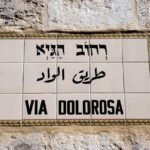
- Christian Quarter, Via Dolorosa, and the Stations of the Cross walk
- Church of the Holy Sepulchre
- Muslim Quarter and the bazaar stroll
- The payoff stop: floating the Dead Sea (and not messing up your camera)
- How to make the most of your two hours
- Lockers and towel options
- Jericho on the way back: a quick history marker from the bus
- What you’re paying for: value of this $133 day trip
- The guides and why their style affects your day
- Who should book this trip (and who should rethink it)
- Should you book? My honest decision guide
- FAQ
- What time does the tour start from Tel Aviv?
- How long is the Jerusalem and Dead Sea trip?
- What’s included in the price?
- What food or drinks should I plan for?
- What dress code do I need for the holy sites?
- How much time do I get at the Dead Sea, and can I do a mud bath?
- Is free cancellation available?
Key takeaways before you go
- Old City structure with a guide so you don’t waste time figuring out where to meet back up
- A full sweep of quarters from Jewish and Christian areas to the Muslim Quarter bazaar
- Time in the Via Dolorosa corridor including key stops tied to the Stations of the Cross
- About two hours at the Dead Sea for floating and optional mud bath time
- Coach comfort and included entrances, plus hotel pickup/drop-off to reduce hassle
Jerusalem First, Dead Sea Second: the logic of this day trip
This tour is built for one thing: first, you get Jerusalem’s most famous religious sights in an efficient guided run. Then you swap altitude and stone streets for warm salt water and mineral mud at the Dead Sea. The pacing works because Jerusalem is active and crowded; the Dead Sea is the payoff where you can finally slow down.
You’ll spend the morning in Jerusalem proper, walking through multiple areas of the Old City. By the time you reach the Dead Sea, your brain is full and your body is ready for rest. That contrast is the real value of doing both in one ticket.
You can also read our reviews of more tours and experiences in Tel Aviv.

Getting out of Tel Aviv: coach, comfort, and an early departure
You leave from central Tel Aviv by air-conditioned coach at 7:15am. It’s an early start, but it’s also how you beat some of the day’s busiest moments in Jerusalem. This is one of those trips where being prompt really helps the schedule.
The ride is part of the experience. Your guide talks as you travel, explaining how Jerusalem connects the Jewish, Christian, and Muslim faiths and why the city’s history still shows up everywhere you look.
Small detail, big comfort: one review noted Wi-Fi and charging ports on the bus. Even if yours doesn’t have those, you can expect an air-conditioned vehicle and a professional guide handling the day.
Mount Scopus: the quick viewpoint that sets the stage
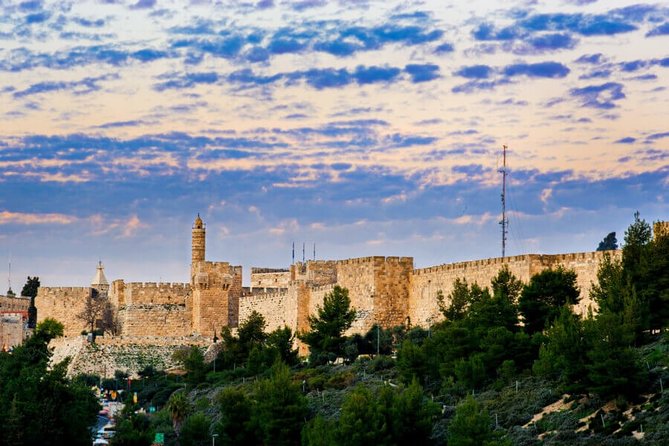
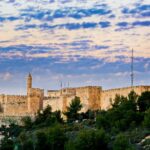
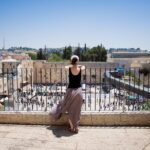
Before you’re swallowed by the Old City, you stop at Mount Scopus National Botanical Garden for about 30 minutes. This is a smart move. You get a panoramic feel for Jerusalem, plus a clearer idea of where Temple Mount sits in the wider picture.
From there, you’ll look toward big landmarks such as the Dome of the Rock and Temple Mount, along with stops like Gethsemane and the Church of All Nations. You’ll also pass through areas like the Kidron Valley as part of the route.
Why this matters: when you’re later inside the Old City, it’s easier to understand what you’re seeing because you’ve already been given a geographic frame.
Inside the Old City: Western Wall, quarters, and how the route moves
Once you enter the Old City, you’ll walk and look through key areas that represent different communities. The idea isn’t to cover everything. It’s to hit the most important points and show you what they mean.
Here’s the flow you can expect:
Jewish Quarter and the Byzantine Cardo
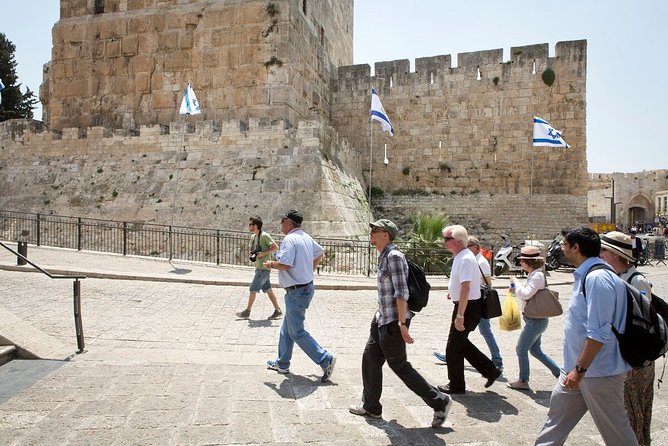
You’ll spend about 40 minutes in the Jewish Quarter, including time walking the Byzantine Cardo. This is where the Old City’s street-level texture comes through—narrow lanes, historic architecture, and constant life around you.
In practical terms, this stop is good for getting your bearings fast. If you’re the type who likes context before landmarks, this is your moment.
The Western Wall
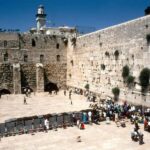
Next comes the Western Wall stop, about 20 minutes. It’s short by design because the tour has multiple quarter transitions, but it’s long enough to pause, read your surroundings, and take in the atmosphere.
It’s also a reminder that this isn’t a museum stop. People come here to pray, and you’ll feel that rhythm nearby.
Christian Quarter, Via Dolorosa, and the Stations of the Cross walk
You’ll move into the Christian Quarter for about 30 minutes, then continue into the Via Dolorosa area with time for roughly 40 minutes walking along parts of the pilgrimage route and seeing key Stations of the Cross markers.
Two things to know before you go:
- This part is active walking in a dense area.
- You’ll want comfortable shoes and a slower pace than you’d use on an open-air promenade.
If you’re curious about Christian tradition, this is the part where the story gets turned into visible street-level stops. The guide will help you connect the dots.
Church of the Holy Sepulchre
You’ll have about 30 minutes at the Church of the Holy Sepulchre. This is one of those places where time can feel weird. Inside, it’s easy to get pulled in different directions because the building holds layers of tradition in one dense space.
So yes, it’s important to look around—but also important to stay aware of where your group meets again. A few reviews mention regrouping confusion at times, which is exactly why you should keep an eye out for your guide’s next instructions.
Muslim Quarter and the bazaar stroll
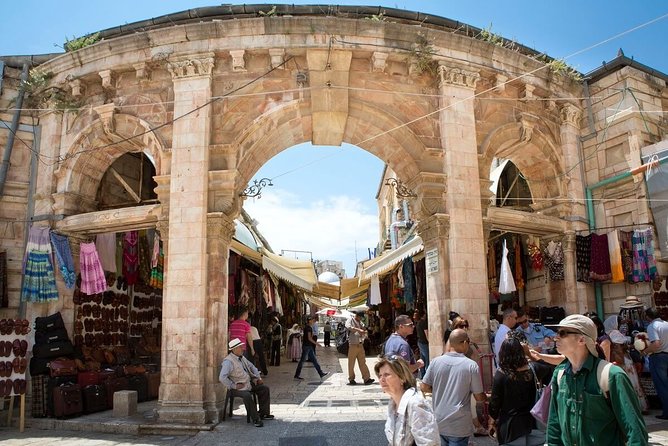
Finally, you’ll visit the Muslim Quarter for about 30 minutes, including walking through the bazaar area. This is your change of pace. You’re still in a religiously significant zone, but the feel becomes more everyday and marketplace-driven.
It’s a nice counterweight to the heavier symbolism earlier in the morning.
The payoff stop: floating the Dead Sea (and not messing up your camera)
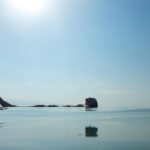
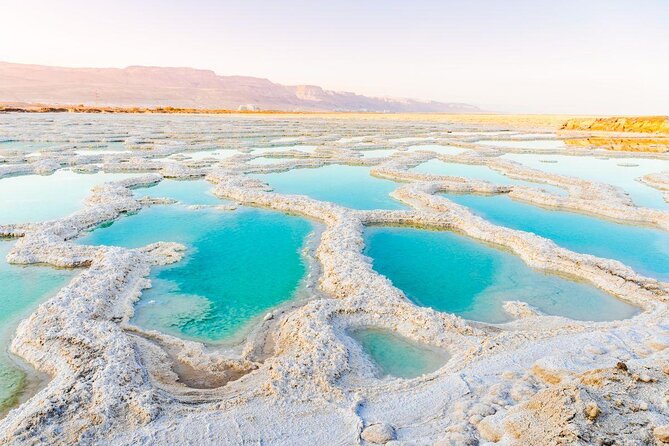
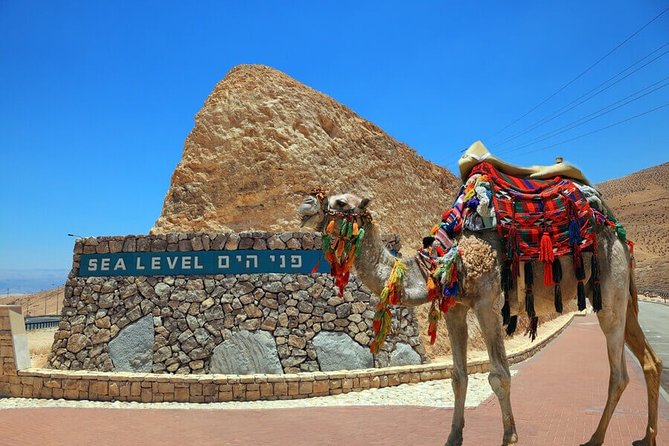
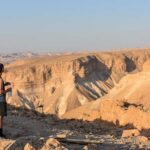
After Jerusalem, the drive heads to the Dead Sea, located about 400 meters (1,312 feet) below sea level. When you arrive, you’ll have roughly two hours to bathe and relax on the mineral beach.
This is the moment you came for if you want the famous “I’m floating” feeling. The water is so salty that it supports you in a way that feels almost unreal.
How to make the most of your two hours
Here’s how I’d spend it if I were planning your time:
- Start with the float first, while you still feel energetic.
- Then move into a slower rinse and mud-play session if you’re trying the mud bath option.
- Save sun time for after you’ve had the water experience, so you’re not rushing to get everything done at once.
Also, bring your own bathing suit, towel, sun protection, and a hat. The tour specifically recommends these items, and they’ll make your stop much less stressful.
Lockers and towel options
One helpful tip you’ll be glad you know: changing rooms have lockers that take a credit card. Towels may be available to buy or rent for a cost, in case you show up without one.
Jericho on the way back: a quick history marker from the bus

On the return trip, you’ll pass by Jericho. It’s not a long stop, but it adds a sense of the wider region beyond Jerusalem and the Dead Sea. Think of it as a moving footnote—just enough to connect place names you’ve heard before.
What you’re paying for: value of this $133 day trip
At $133 per person, this isn’t a budget “hop on and off” deal. But it also isn’t just transportation. You’re paying for:
- Hotel pickup and drop-off (less time wasted wrestling with public transport)
- A professional guide for the whole route
- Air-conditioned coach
- Entrance fees for the included sites
- The Dead Sea visit time (about two hours)
Food and drinks are not included, so you’ll likely spend extra there. Still, if you were trying to stitch together transport, paid entrances, and a guided walk for Jerusalem on your own, the total usually climbs fast. The price makes the most sense if you want the big highlights covered in one day with minimal planning.
The guides and why their style affects your day
This tour’s reviews repeatedly praise guides for pacing and clarity. Names that come up include Udi, Roy, Erez, Lior, Ami, Telma, and Jacob. The common theme: they explain what you’re seeing and keep the day from feeling like a checklist.
That matters because Jerusalem can turn frustrating fast if you’re left to figure things out alone. A good guide helps you understand what you’re looking at, but they also help you move as a group through crowded, tight spaces.
Who should book this trip (and who should rethink it)
This works well for:
- First-time visitors to Israel who want major Jerusalem highlights plus the Dead Sea in one day
- People who like structured walking routes and guide-led storytelling
- Anyone comfortable with a long day and moderate exertion
It may not be ideal if:
- You or someone in your group has mobility limits. The tour includes a reasonable amount of walking and can involve grueling stretches, especially for elderly visitors.
- You hate early mornings. The start time is 7:15am, and the day runs about 10 hours.
- You can’t follow the dress code. You’ll be turned away in some places if knees and shoulders aren’t covered.
One more note: the tour is not suitable for children under age 4.
Should you book? My honest decision guide
Book this tour if you want the fastest way to see Jerusalem’s headline sites and then get your Dead Sea float. The combo is what makes it worth your time: the Old City stops give you context, and the Dead Sea gives you a physical reset.
Skip it (or look for a different format) if you’re worried about walking distances, regrouping, or a rigid schedule. This route moves through multiple quarters and sacred sites, so you’ll feel the day in your legs.
If you do book, do two things to protect your day: wear comfortable walking shoes, and pack your Dead Sea kit in advance (bathing suit, towel, hat, sun protection). You’ll thank yourself when you’re standing at the waterline and the clock is already moving.
FAQ
What time does the tour start from Tel Aviv?
The tour starts at 7:15am.
How long is the Jerusalem and Dead Sea trip?
It runs for about 10 hours (approximately).
What’s included in the price?
Hotel pickup and drop-off, a professional guide, an air-conditioned vehicle, entrance fees, and the Dead Sea visit (about two hours) are included.
What food or drinks should I plan for?
Food and drinks are not included, so you’ll need to budget for meals on your own.
What dress code do I need for the holy sites?
A moderate dress code is required: don’t wear shorts, and keep knees and shoulders covered for men and women.
How much time do I get at the Dead Sea, and can I do a mud bath?
You get about two hours at the Dead Sea to float and relax. You can also enjoy a mud bath if you wish.
Is free cancellation available?
Yes. You can cancel for a full refund up to 24 hours before the experience’s start time.