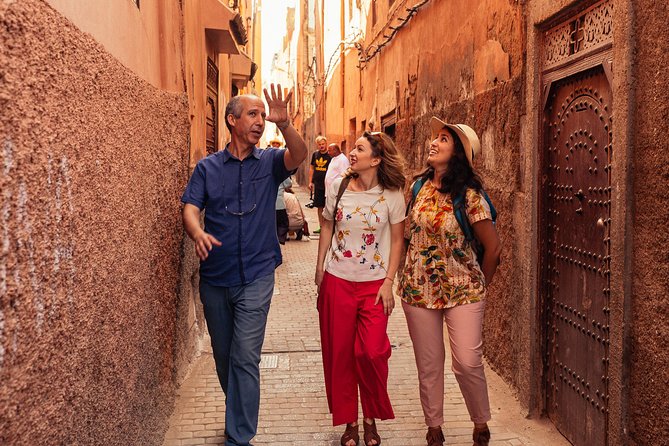
Marrakech feels bigger when you walk with locals. This private tour gives you a local host who sets the pace, covers key sites, and adds lesser-known corners that big group tours usually skip. I especially like the mix of culture stops with practical, street-level guidance, plus a real snack break instead of rushing past everything. One thing to consider: most major attractions are seen from the outside, and a few route variations can include extra shop time, so it’s worth stating your priorities up front.
For about three hours, you’ll walk the medina with someone who can explain what you’re actually seeing and help you not get tangled in the alleys. I also like that you can adjust what you do based on food, history, or architecture, rather than being locked into one script. The group size is just you and your guide, so the “crowds” problem usually fades fast.
In This Review
- Key highlights worth knowing before you go
- Why this private Marrakech medina walk works better
- Starting at Jemaa el-Fna: your orientation moment
- First stop: Bab Agnaou gate and the stories behind the stone
- Mellah in detail: spice souk smells, cou cou sweets, and fresh bread
- Bahia Palace views: dramatic architecture without the ticket line
- The flexibility part: tailoring your day without chaos
- Price and value: what $68.36 gets you in Marrakech time
- What I’d do with this tour during your trip
- Who should book this private tour (and who might not)
- Should you book this Marrakech private tour?
- FAQ
- What’s included in the private tour?
- How long is the tour?
- Where does the tour start and end?
- Which places do you typically visit?
- Are attraction entrance fees included?
- Do I need hotel pickup?
- Is cancellation free?
Key highlights worth knowing before you go
- A true private tour with only you and your multilingual local guide
- Bab Agnaou, Mellah, and Bahia Palace as your core route, mostly without ticket lines
- Mellah street culture: spices souk time plus local bakery stops
- A snack or drink built into the walking plan
- Flexible interests: food, history, or architecture can steer the day
- CO2-neutral approach with emissions offset, listed as B-Corp related
Why this private Marrakech medina walk works better
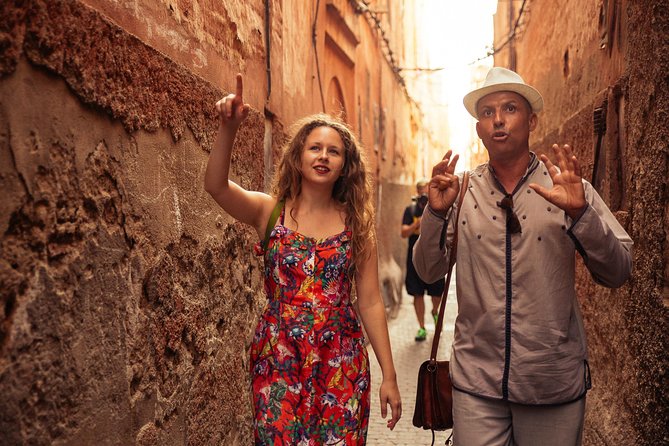
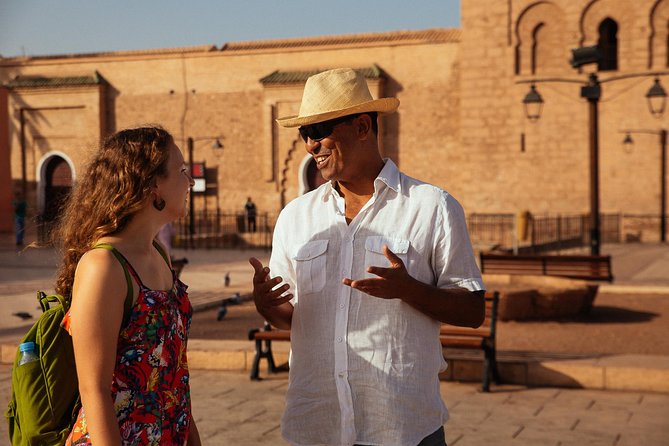
If your first instinct is to avoid tour groups in Marrakech, you’re thinking the right way. The medina rewards slow looking. And it punishes the “power walk and take photos” approach. With a private local guide, you get time to ask questions, pause for orientation, and understand the signs, doorways, and street rhythms without feeling rushed.
This setup also helps with the biggest practical issue in Marrakech: getting lost. One of the best aspects of this tour style is that your guide can steer you through narrow lanes in a way that feels natural, not like a maze solution. That matters at Jemaa el-Fna too, because the energy there is intense and easy to misread the first time.
You can also read our reviews of more tours and experiences in Marrakech.

Starting at Jemaa el-Fna: your orientation moment
You’ll meet back at Jemaa el-Fna (the main square), and you’ll finish there as well. That simple loop is handy. It means you can treat the tour as your “medina map lesson” and then head out on your own afterward with better instincts.
In practice, this is the kind of tour you do early in your trip—on day one if you can—because it gives you a mental layout quickly. Guides like Mohammed and Redouan, based on how they’re described, are the kind of people who help you figure out where things are relative to each other, not just what’s famous.
First stop: Bab Agnaou gate and the stories behind the stone
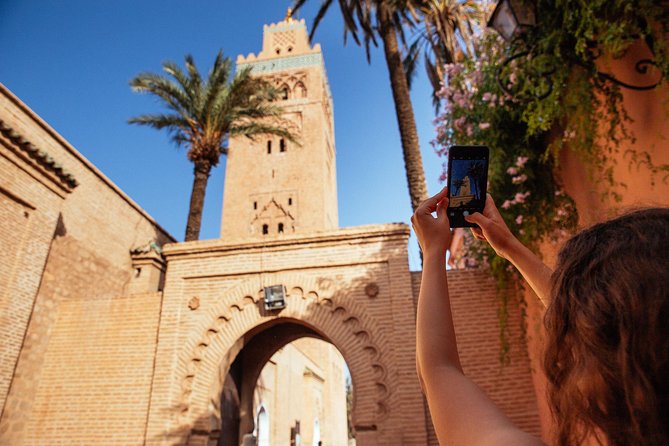
Bab Agnaou is one of those landmarks that looks like a postcard but also carries a lot of history if someone points it out. You’ll spend about 30 minutes here, mostly focused on stories and context, not ticketing.
What you’ll get: a better sense of how Marrakech grew and why certain gates mattered. Gate stops also work well in early tours because they give you a “fixed point” to anchor the rest of your walking. You’re not just drifting.
A practical note: because the tour is built to keep entrances out of the plan, your time at big sites is often about seeing details from outside rather than touring interiors. If you’re hoping to spend a lot of time inside palaces or museums on this day, you’ll likely need to plan a separate ticketed visit later.
Mellah in detail: spice souk smells, cou cou sweets, and fresh bread
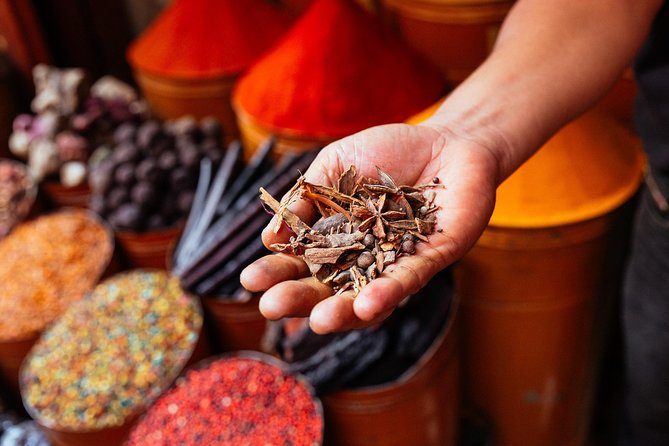
The most memorable stop for many people is Mellah, the old Jewish quarter area. You’ll spend about 50 minutes here, and it’s more than a sightseeing block. It’s a sensory education.
Here’s what your guide is set up to show you:
- The spices souk, so you understand Moroccan cooking through what people actually trade
- A tasting moment with Jewish sweets called cou cou
- A local bakery stop, including seeing the baker at work and tasting warm fresh bread
This is exactly the kind of stop that turns “I saw a place” into “I learned something about daily life.” Spices are one thing. But pairing them with stories about food culture—and then ending with bread warm enough to tug at your attention—makes the whole experience click.
One more tip: if you have dietary concerns or allergies, mention them early. You’re eating as part of the tour (there’s also a snack/drink included), and you’ll want your guide to steer you to the safest options.
Bahia Palace views: dramatic architecture without the ticket line
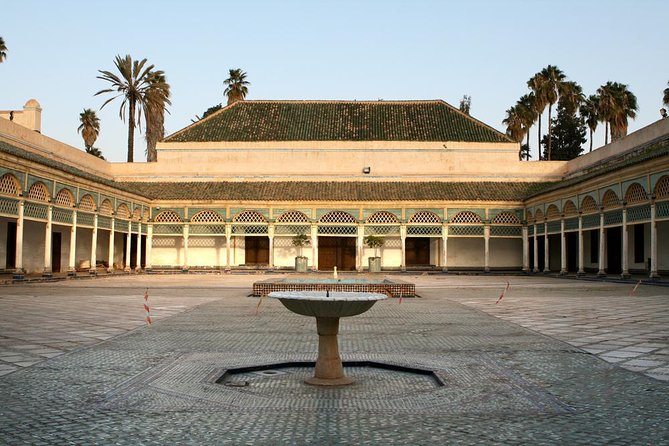
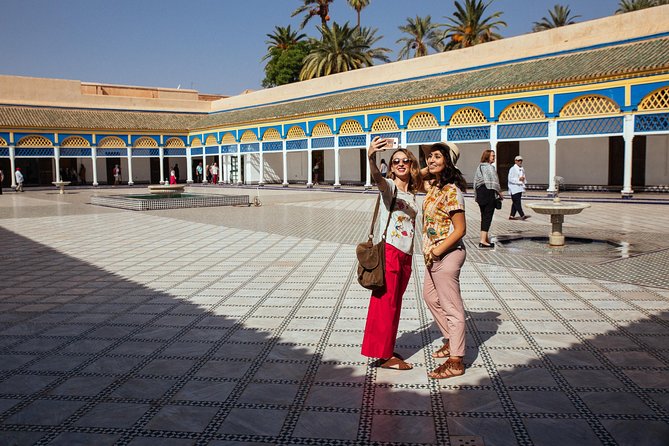
Next up is Bahia Palace, with about 30 minutes. Even when you aren’t going inside, this is still a strong stop because the architecture is the point. Your guide will talk through its design and history so you’re not just staring at walls and wondering why people care.
Why it works in a walking tour:
- You get cultural and architectural context fast
- You can keep moving without losing half a day to queues
- You learn what to notice (courtyard layout, ornament styles, and the way the space is organized)
Keep your expectations aligned with the format. The tour doesn’t include attraction entrances, so you’ll be viewing from the outside. That’s not a deal-breaker—especially if your goal is to understand the city’s landmarks quickly—but it’s important if Bahia Palace interior details are your must-see.


The flexibility part: tailoring your day without chaos
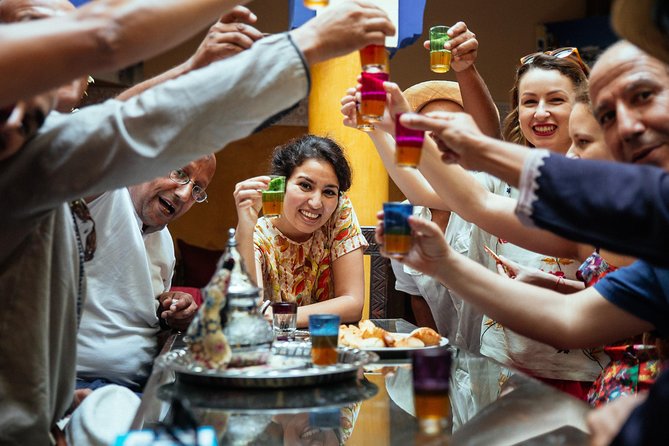
One of the best promises here is that the tour can be adjusted to your interests—food, history, or architecture. This is a real advantage in Marrakech because your day can change based on heat, hunger, and what you notice as you walk.
You also have a key control lever: you can set expectations before you start or early into the tour. If you want mostly history and streetscape, say so plainly. If you’re excited about learning how crafts and trade work, you can lean that way too.
A balanced reality check from the range of experiences people report: some guides may add extra time at shops or product demonstrations. That doesn’t mean the tour is “bad.” But it can change the feel from cultural walk to sales-heavy stop. To protect yourself, tell your guide what you want to prioritize and what you want to avoid. A good guide will work with that.
Price and value: what $68.36 gets you in Marrakech time
At $68.36 per person for roughly three hours in a private format, the value comes from what you buy: time with a local who can help you navigate and interpret the city, plus a built-in snack or drink.
Compared with group tours, you’re paying for:
- no crowd pressure
- direct Q&A
- pacing that fits your stamina and interest level
- a route that can include tastings and a bakery stop
Compared with hiring a guide for a custom day on your own, you’re also paying for a structured plan that keeps the walking efficient. The fact that major stops like Bab Agnaou, Mellah, and Bahia Palace are free from a ticket standpoint (you’re visiting from outside) helps keep costs predictable.
Where value can slip is when your actual experience drifts away from your stated interests. If you hate shopping detours, that’s the main “watch out.” Your best insurance is clear communication at the start.
What I’d do with this tour during your trip
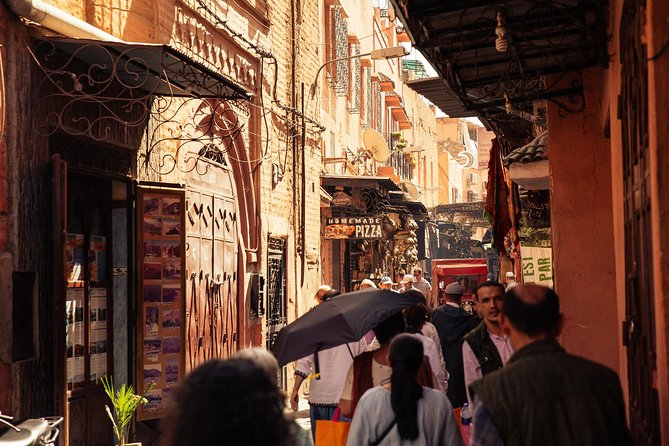
If it’s your first time in Marrakech, I’d do this early. Use it as your orientation pass:
- Get a feel for the square, lanes, and gate areas
- Learn what Mellah is and why it mattered
- Leave knowing which landmark areas are worth revisiting later
Then, after the tour, you can plan your next blocks of time with your own pace. A private introduction like this tends to make the rest of Marrakech easier to enjoy, because you’re not constantly searching for where you are.
Who should book this private tour (and who might not)
This tour fits best if you:
- want a private guide instead of crowds
- like learning through streets, markets, and food
- want a first-day framework for navigating the medina
- appreciate that entrances aren’t included, so the pace stays efficient
It may not be your ideal choice if you:
- mainly want to spend lots of time inside major ticketed sites
- dislike any shop or product demonstration stops
- expect every stop to run exactly the same way every day, every time
Should you book this Marrakech private tour?
I think you should book it if your goal is a smart first look at Marrakech with a local voice guiding you through the medina’s key areas—especially Mellah’s food culture and the sensory souk-bakery-bite rhythm. The price is reasonable for the private time, and the route makes good use of a short day.
Before you lock it in, do one simple thing: message your priorities. Tell your guide you want history/architecture and real local culture, and ask how much time you’ll spend in shops or demonstrations. If you align your expectations, this kind of private walk can turn Marrakech from confusing to workable fast.
FAQ
What’s included in the private tour?
You get a private tour with only you and your local guide, plus 1 local drink or snack. You’ll also have a private multilingual local guide, and the tour is described as without the crowds. Entrance tickets to attractions are not included.
How long is the tour?
The tour lasts about 3 hours.
Where does the tour start and end?
It starts at Jemaa el-Fna in Marrakech and ends back at the same meeting point.
Which places do you typically visit?
The core stops listed are Bab Agnaou, Mellah (with a spices souk and bakery tasting elements), and Bahia Palace. Additional stops may depend on your host and route.
Are attraction entrance fees included?
No. The tour states you’ll visit attractions from the outside, and attraction entrance tickets are not included.
Do I need hotel pickup?
No. Hotel pickup and drop-off are not included.
Is cancellation free?
Yes. You can cancel up to 24 hours in advance for a full refund.