REVIEW · MARRAKESH
Marrakesh: Moroccan Dishes Cooking Class with a Local Chef
Book on GetYourGuide →Operated by Marrakesh Local Experiences · Bookable on GetYourGuide
Mint tea, six tagines, and market shopping. This half-day Marrakesh experience mixes a quick local food market run with hands-on cooking at a home kitchen, then ends with the meal you made and a chance to buy spices.
I love how the class teaches the basics behind Moroccan flavor, starting with a proper mint tea ceremony and moving into practical chopping, peeling, and spice building. I also like the team setup: you work together to cook a multi-dish Moroccan feast, not just one recipe that you rush through.
One consideration: it is not suitable for people with onion or garlic allergies.
In This Review
- Key highlights you should care about
- A Marrakesh cooking class that starts where flavor starts
- Meeting point and the market stop: learning to shop like a local
- What to expect at the market
- Moroccan mint tea ceremony: the skill you’ll use for years
- What you’ll learn that actually helps at home
- The cooking phase: tagines, preserved lemons, kefta, and seasoning technique
- The usual menu (you may see 4 to 6 dishes depending on group size)
- Dietary options: what’s supported
- Why the buffet format is more than just convenient
- What makes the meal feel special
- Spices to buy at the end: a smarter souvenir
- Timing, group size, and language setup (so you’re not guessing)
- Group size
- Languages
- Comfort tips that make the class easier
- Who should book this Marrakesh cooking class?
- Should you book it?
- FAQ
- Where is the meeting point?
- How long is the class?
- What dishes do you usually cook?
- Does the class include mint tea?
- What dietary needs are accommodated?
- What’s included in the price?
- What languages is the class taught in?
Key highlights you should care about
- Market shopping with your guide so you know what to buy and why
- Traditional Moroccan mint tea with a clear, repeatable method
- Hands-on tagine technique focused on seasoning and prep skills
- A full buffet spread from the dishes you cooked together
- Recipes sent after the class so you can cook it again at home
- Spice shopping at the end to help you recreate the flavors later
A Marrakesh cooking class that starts where flavor starts
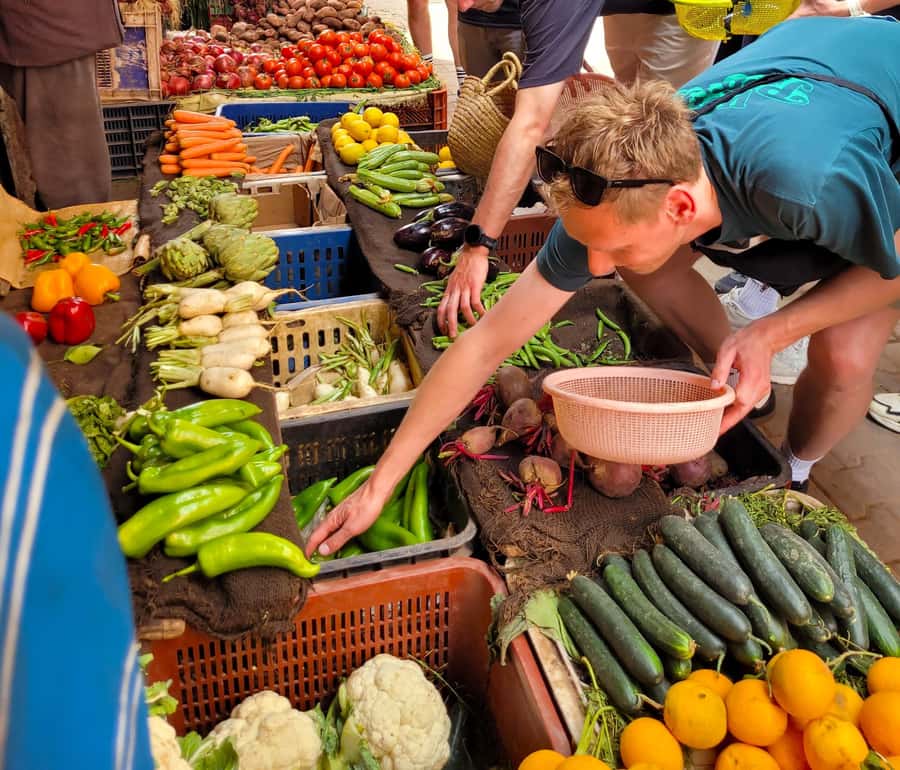
The most helpful thing about this experience is the order of events. You don’t begin in a kitchen guessing what spices go where. You start in the market, then learn tea, then cook as a group—so everything you make has a reason behind it.
The vibe is relaxed, too. It runs about 4 hours from meeting to eating, and the format is designed so you are not stuck staring at a clock. Since it is a small group (limited to 10, sometimes 9 with occasional exceptions), you actually get roles and attention instead of sitting on the sidelines.
You can also read our reviews of more tours and experiences in Marrakesh.



Meeting point and the market stop: learning to shop like a local
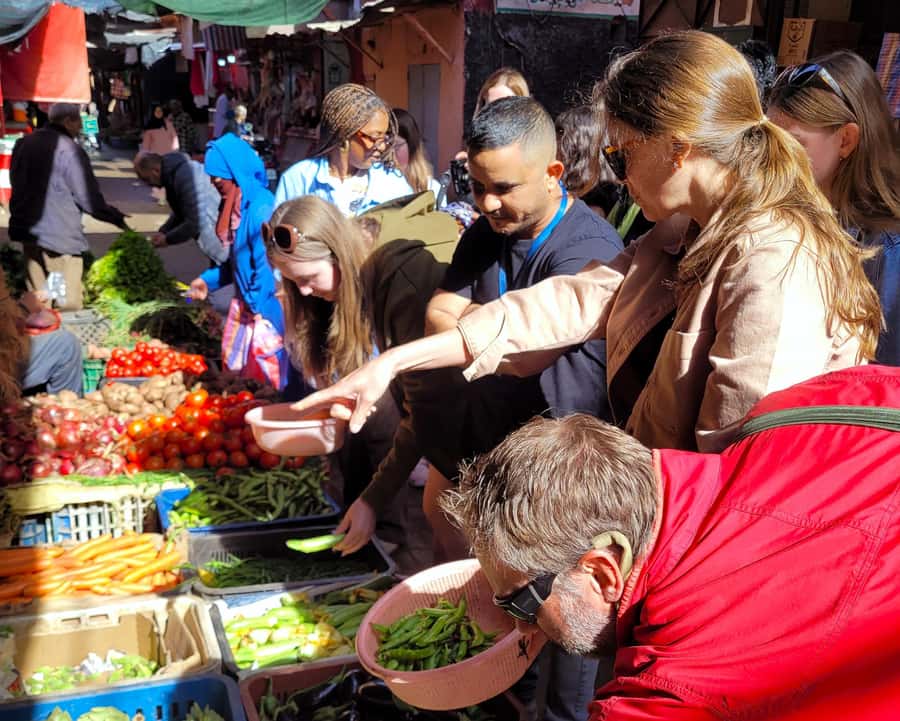
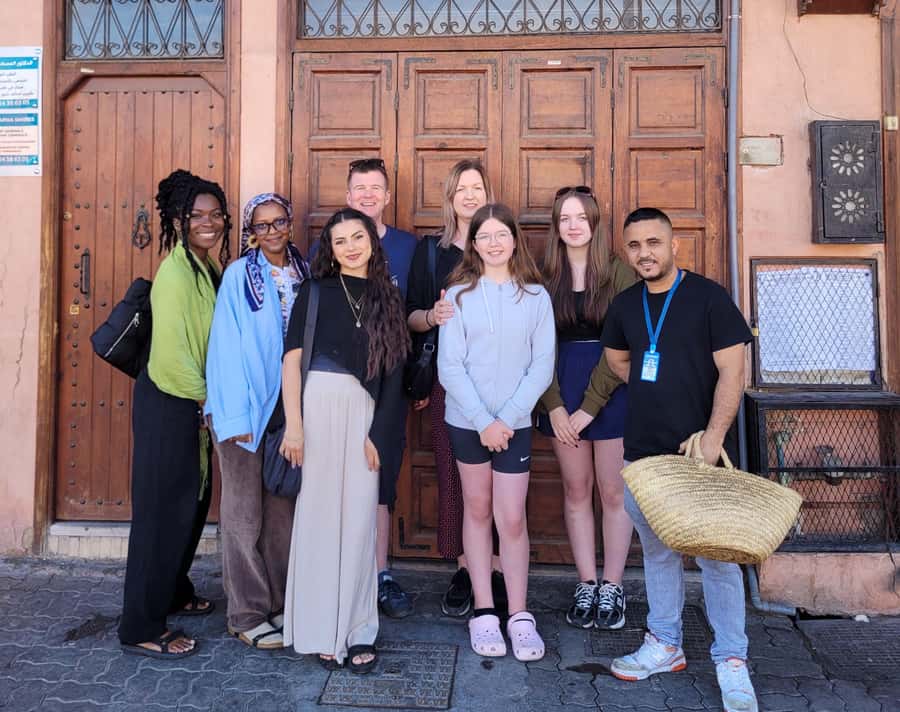
You meet at Pharmacie Bab Doukkala in Marrakesh. From there, your guide takes you to a nearby food market for roughly 15 minutes to pick up vegetables and the other ingredients for the dishes you will cook.
This isn’t a long stroll where you just watch vendors. The goal is practical shopping. In past classes, participants were involved in choosing ingredients, which makes a big difference when you later try to recreate the recipes at home.
What to expect at the market
- A fast, focused sweep for produce and key ingredients
- Time to see how ingredients are selected for the dishes you’ll cook
- A short “what matters” explanation from your guide
If you tend to get overwhelmed in souks, this short format is a good match. You get the “real market” feel without losing your whole evening.
Moroccan mint tea ceremony: the skill you’ll use for years
Next comes tea, and it is not an afterthought. The class includes a 30-minute tea ceremony where you learn the traditional way of making Moroccan mint tea and you drink it while getting to know your group.
Mentor types here matter. In the classes I’m drawing from, Ahmed is often the one guiding the tea side and explaining the cultural meaning. Chef Hassan is frequently the main engine for the cooking instruction and group energy.
What you’ll learn that actually helps at home
This part is valuable because it gives you a repeatable routine. Even if you never cook everything from the menu again, learning the tea method gives you something authentically Moroccan you can make anytime—especially when you have friends over.
Tip: because this is a home-kitchen style setup, ask questions about the ratios and technique during the demonstration. If you do that, you will leave with more than vibes.





The cooking phase: tagines, preserved lemons, kefta, and seasoning technique
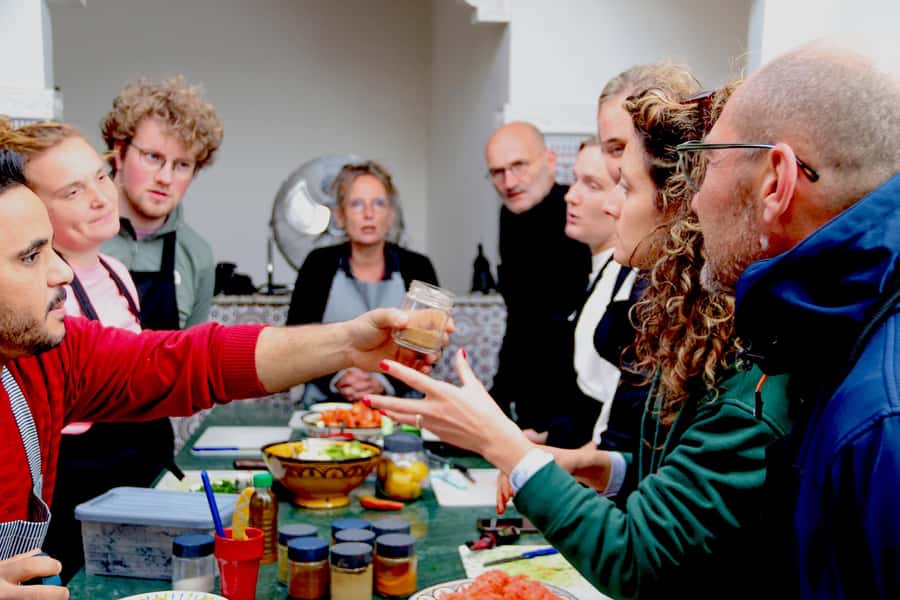
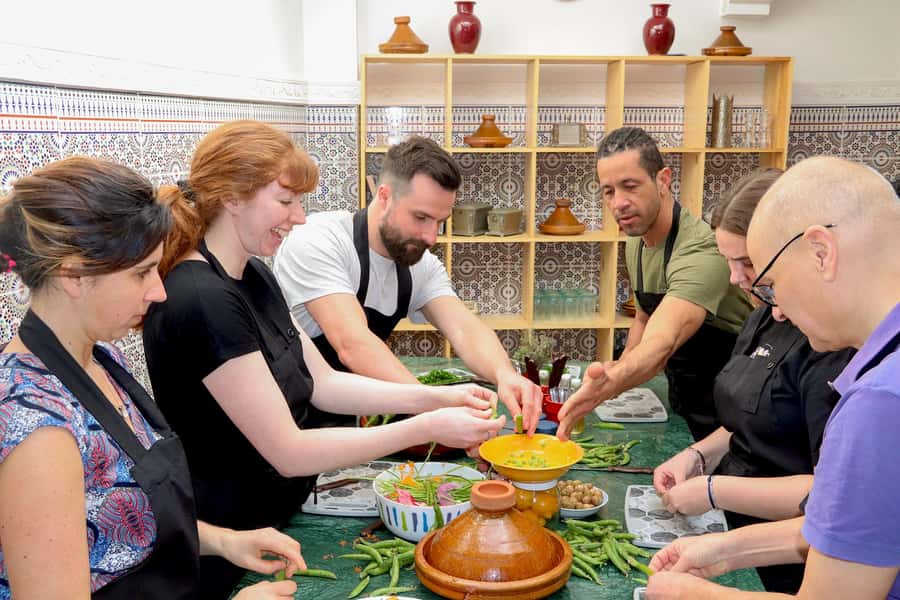
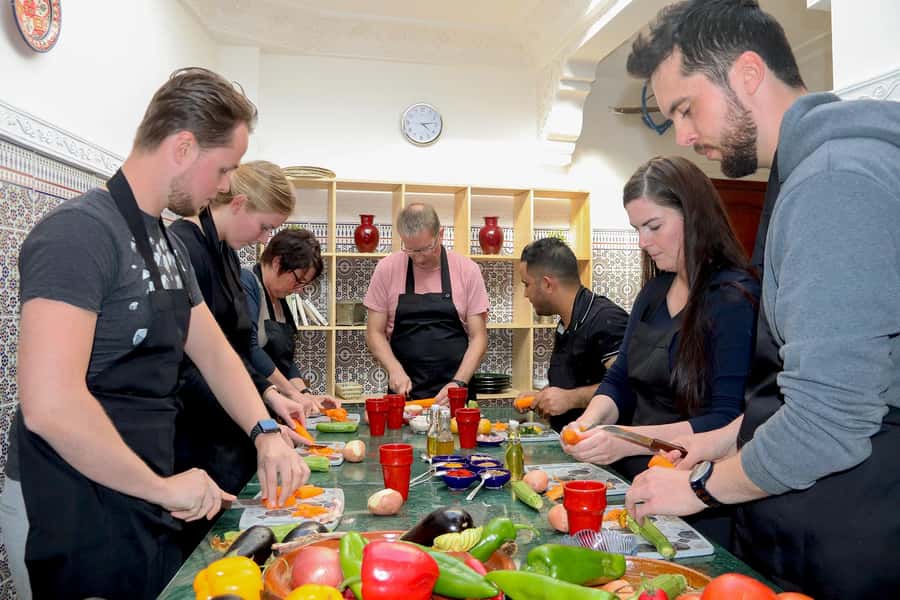
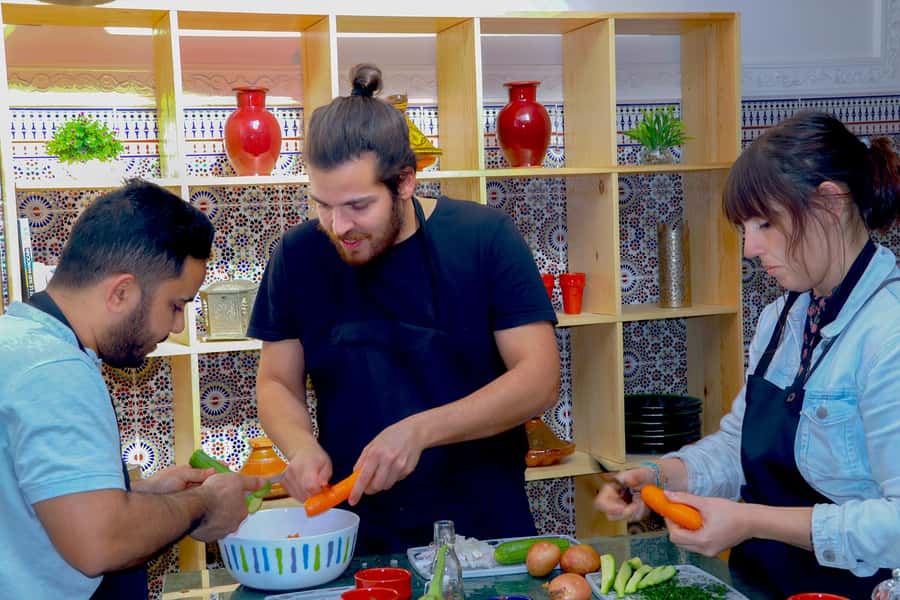
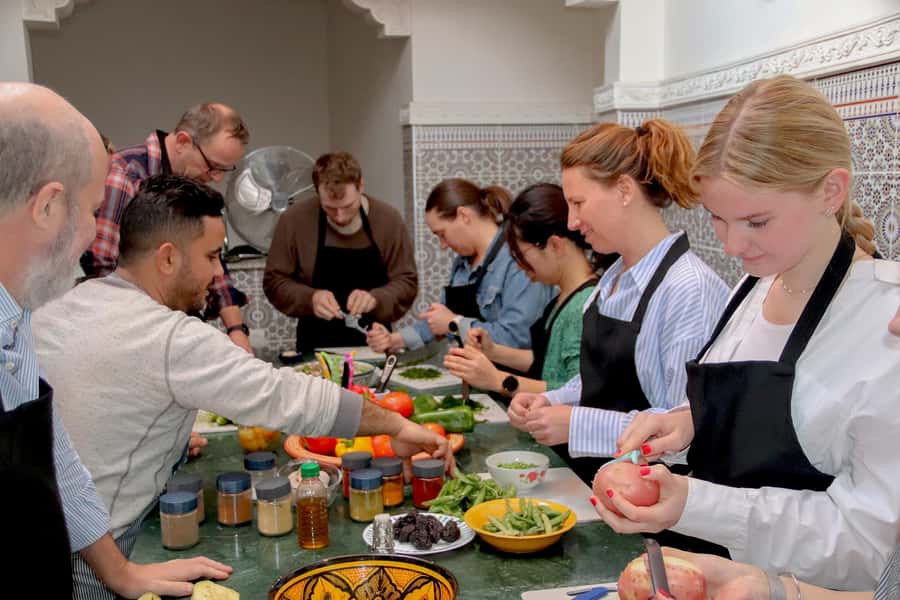
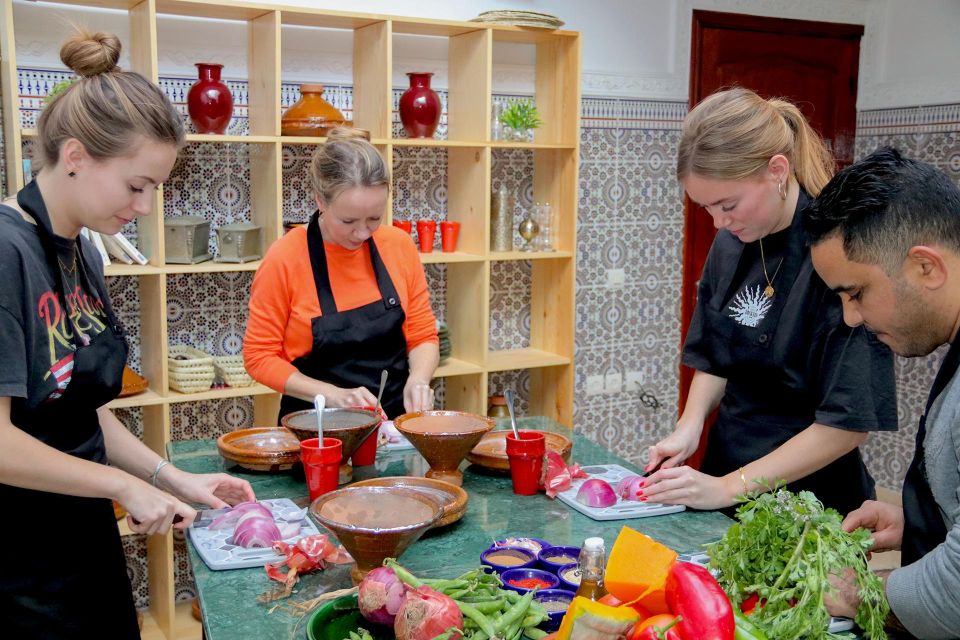
After tea, you move into the cooking area and start the real work—peeling, chopping, and seasoning tagines with the right spices. The class runs about 3.25 hours of cooking time within the total 4 hours, and the pacing is meant to keep you involved.
The structure is team-based. Instead of everyone doing one station for one dish, you rotate through tasks and help on multiple components across the menu. That matters because Moroccan cooking is all about building flavor in layers, not just throwing ingredients together.
The usual menu (you may see 4 to 6 dishes depending on group size)
The standard spread is typically 6 dishes, and it often includes:
- Beef with prunes tagine
- Chicken with preserved lemon tagine
- Vegetables tagine
- Meatballs with tomato sauce and eggs (Kefta)
- Shakshouka (sweet peppers)
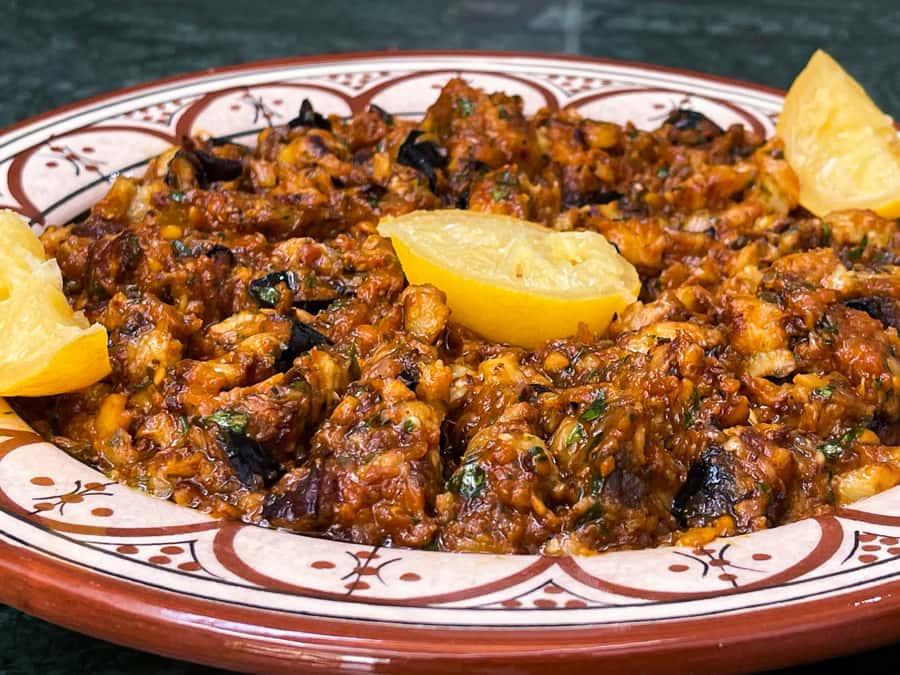
- Fried or grilled aubergine salad (Zaalouk)
If the group is smaller than a threshold (for example, fewer than 8 participants), the class may make fewer than 6 dishes. On the other hand, some groups add 1 or 2 side dishes depending on the group and dietary needs.
Dietary options: what’s supported
The class is set up to cook vegan, vegetarian, and gluten-free options. Since the exact adjustments are not listed dish-by-dish, the best move is to tell them your needs at booking so they can plan what goes where.
Also note: onion/garlic sensitivity is not accommodated. If that affects you, skip this class.
Why the buffet format is more than just convenient
At the end, the food is served as a buffet so you can taste everything you cooked. This is one of those “sounds normal” features that becomes a real win in practice.
When dishes are made together and served buffet-style, you can compare flavors across the menu right there at the table. You’ll notice how preserved lemon brightens one tagine, how prunes add sweetness and depth to another, and how zaalouk lands differently when aubergine is fried or grilled.
What makes the meal feel special
- You eat what you helped make
- Multiple dishes mean you can taste a wider range of Moroccan flavor
- Bread and water/tea are included with the meal
And yes, in the classes I’m basing this on, people consistently call the food the highlight of the trip—often saying it can outshine meals they had in restaurants later.
Spices to buy at the end: a smarter souvenir
At the end of the class, there’s time to buy spices from their workshop. This is one of the best “souvenir” outcomes you can hope for because spices are shelf-stable and they translate directly into cooking back home.
If you do this, you’ll want to pay attention to what each spice is used for during the cooking. The recipes you receive later will help, but the best results come when you connect each jar to the dish where it mattered.
Timing, group size, and language setup (so you’re not guessing)
This is a half-day experience. You’ll be done in about 4 hours total, from meeting to when you eat. It’s planned so you feel like you’re at home rather than rushing from one check-in to the next.
Group size
It is described as small group, limited to 10 participants. The class also notes a maximum of 9, with occasional cases where it could reach 10.
In practical terms, that small size is why the teaching feels hands-on. You are more likely to get tasks that match your comfort level and to actually hear explanations.
Languages
The class is bilingual (English & French) depending on who is in your group. If everyone speaks the same language, it stays in one language. Otherwise, it switches between English and French to keep everyone included.
Comfort tips that make the class easier
Even with an air-conditioned cooking area, one participant noted the room felt cold and suggested bringing a sweater. That’s not a reason to skip—just pack one light layer and you’ll be comfortable.
Also, wear clothes you don’t mind getting a little kitchen-scented. Cooking involves hands, spices, steam, and lots of time working close to ingredients.
And if they suggest you go somewhere specific in the house (like upstairs), follow their cue. In at least one class, people were happy they did because the space felt nicer.
Who should book this Marrakesh cooking class?
This works best if you:
- Want more than one Moroccan recipe to bring home
- Like practical cooking instruction (how to chop, season, and assemble)
- Enjoy market time and learning what ingredients matter
- Prefer a small-group format where you actually participate
It may not be the right fit if you:
- Have onion or garlic allergies
- Need wheelchair access (wheelchair users are not included)
- Have back problems that make standing or bending difficult
- Have kids under 6 (kids are allowed at +6)
It can also be a great first foodie activity in your trip because it gives you a framework for ordering tagines afterward. If you book later, you’ll already know what you like and you’ll cook with more confidence.
Should you book it?
If your goal is to leave Marrakesh with usable cooking skills—and a meal you’ll remember—this class is a strong yes. The best value comes from the combination: market shopping + mint tea + hands-on tagine technique + a buffet you can actually compare across dishes, plus recipes sent after.
I’d book it unless onion/garlic is an issue or your mobility needs mean a home-kitchen setup will be uncomfortable. If those fit, this is the kind of experience that turns “I want to try Moroccan food” into “I can cook Moroccan food.”
FAQ
Where is the meeting point?
Meet at Pharmacie Bab Doukkala in Marrakesh. It’s recommended to search for the exact pharmacy name in Google Maps.
How long is the class?
The full experience is about 4 hours from meeting time to when you eat.
What dishes do you usually cook?
The class usually makes 6 dishes: beef with prunes tagine, chicken with preserved lemon tagine, vegetables tagine, kefta (meatballs with tomato sauce and eggs), shakshouka (sweet peppers), and zaalouk (aubergine salad). The exact number can be lower or sometimes include extra side dishes depending on group size and dietary restrictions.
Does the class include mint tea?
Yes. There is a mint tea ceremony that teaches the traditional way to make Moroccan mint tea, and you drink the tea during the session.
What dietary needs are accommodated?
The class can cook vegan, vegetarian, and gluten-free options. Note that it is not suitable for people with onion or garlic allergies.
What’s included in the price?
Included are the guide, the cooking class, meal and bread, water and tea, an apron, and recipes sent after the workshop.
What languages is the class taught in?
The class can be English and French depending on the group. If everyone speaks the same language, it’s taught in one language only.