REVIEW · CAIRO
Old Cairo: Full-Day Islamic and Coptic Cairo Tour with Lunch
Book on GetYourGuide →Operated by OceanAir Egypt · Bookable on GetYourGuide
Old Cairo can feel like three centuries stacked on top of each other. This tour is interesting because it moves through Islamic Cairo and Coptic Cairo in a tight, well-paced day, with stops that explain how Egypt’s different faiths have shaped the same streets. I especially like the way the day pairs the Salah al-Din Citadel and Muhammad Ali Mosque with the Old Cairo churches, so you get context, not just photos.
I also like that you’re not stuck on a bus all day. You get real walking time on El Moez Street and at the church complex areas, then you break up the day with lunch in Old Cairo before heading to Khan El Khalili Bazaar. One consideration: it is not wheelchair-friendly, and you’ll do enough walking inside and outside sites that comfortable shoes matter.
In This Review
- Key highlights in plain terms
- Salah al-Din Citadel and Muhammad Ali Mosque: the skyline lesson
- El Moez Street: where Islamic Cairo’s details are the main event
- Abu Serga, Fort of Babylon, and St George: the Old Cairo cluster that connects the dots
- Hanging Church (Al-Muallaqa): the Coptic stop people remember
- Saints Sergius and Bacchus Church: the layered Coptic story
- Lunch in Old Cairo: included, local, and timed to keep the day enjoyable
- Khan El Khalili Bazaar: shopping with less stress and more strategy
- Pacing, guides, and the part most tours quietly get wrong
- Price and value: what $76 really covers
- Practical tips that make this day easier
- Should you book this Old Cairo Islamic and Coptic tour with lunch?
- FAQ
- How long is the Old Cairo Islamic and Coptic Cairo Tour with Lunch?
- Where does pickup happen?
- Is lunch included, and are drinks included too?
- What languages are available for the live tour guide?
- Do entrance fees and transportation costs are included?
- Is this tour wheelchair accessible?
Key highlights in plain terms
- Salah al-Din Citadel and Muhammad Ali Mosque: big views, plus the chance to understand how rulers used architecture as power.
- El Moez Street stroll: Islamic Cairo’s stonework, arches, and street-scale details up close.
- Old Cairo church circuit: Abu Serga, Fort of Babylon, and St George area help connect the Coptic sites.
- The Hanging Church (Al-Muallaqa): a focused stop with a very distinct look and history.
- Lunch included in Old Cairo: a real local meal stop, with vegetarian options reported in the experience.
- Khan El Khalili Bazaar time: shopping with your guide’s help so you can navigate without getting overwhelmed.
Salah al-Din Citadel and Muhammad Ali Mosque: the skyline lesson
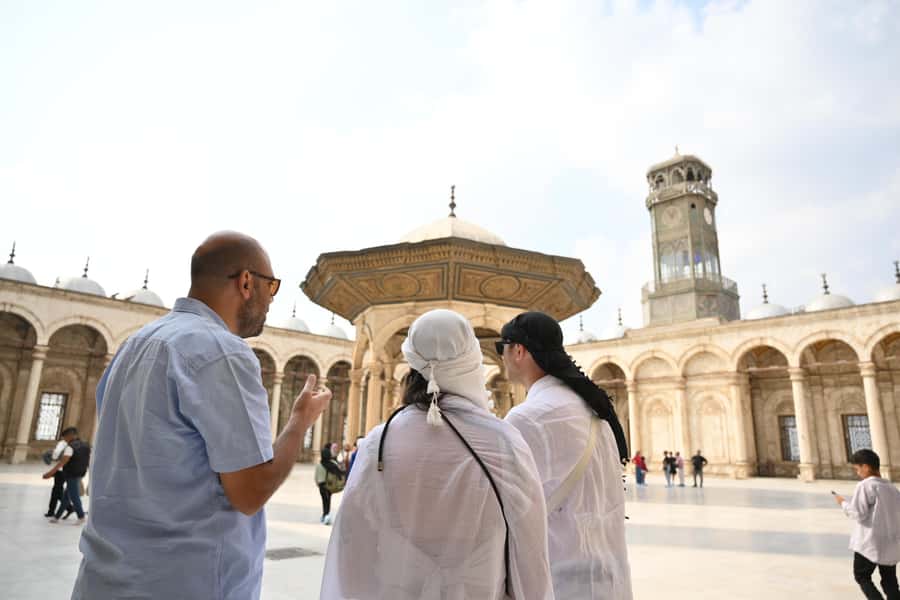
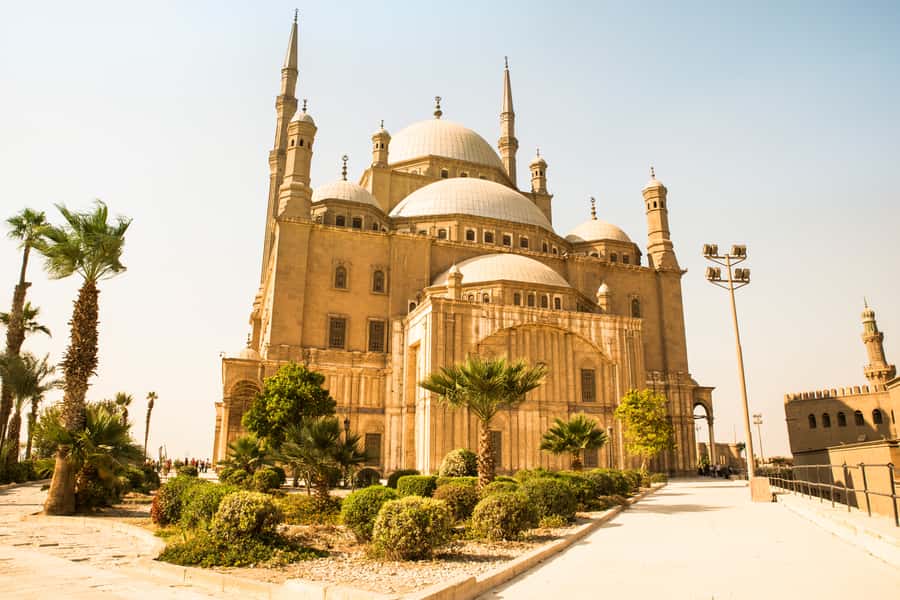
You start with one of Cairo’s most dramatic statements: the Salah al-Din Citadel. Even if you’ve seen palace gates in other countries, this one feels different because you’re looking at military + religious symbolism working together. From the citadel grounds, you get the kind of city view that helps everything else later make sense.
Then comes the Mosque of Muhammad Ali, the iconic white-and-rose look that many visitors instantly recognize. The value here is not the landmark itself, but what a good Egyptologist guide helps you notice: how design choices communicate authority and identity, and how styles in Islamic Cairo created a visual language people still read today. Expect time for questions, not just a quick stop.
A practical note: the citadel setting can mean uneven surfaces and steps. Plan for a bit of climbing, and don’t pack your day so tightly that you feel rushed by the time you reach the next stop.
You can also read our reviews of more tours and experiences in Cairo.
El Moez Street: where Islamic Cairo’s details are the main event
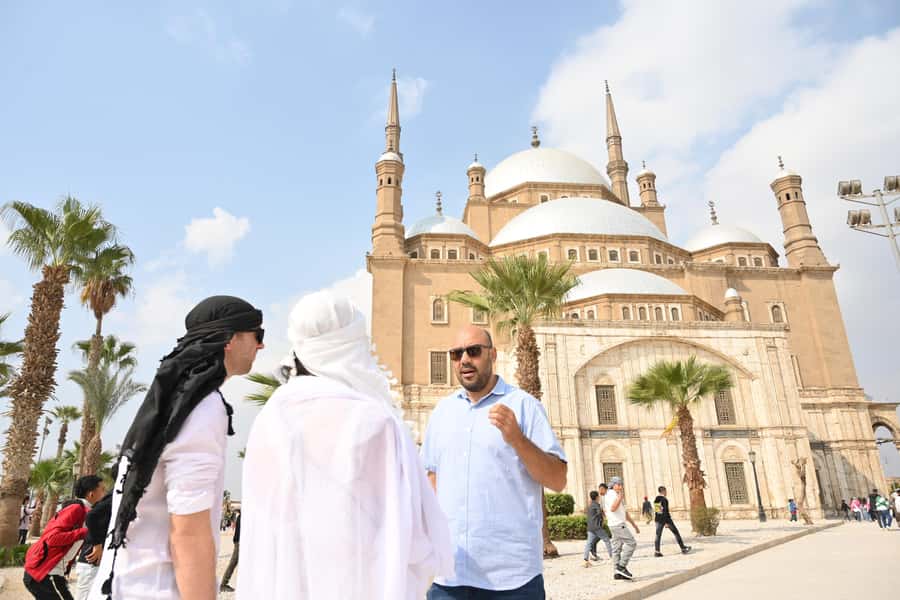
After the citadel, you’ll head toward El Moez Street, one of the best places to understand Islamic Cairo at street level. This is where you see architecture that isn’t just on a postcard. The street scale matters: windows, carved stone, arch shapes, and the way buildings sit close to the road all make the area feel lived-in rather than staged.
What I like about this stop is how it changes your perspective. When you later walk among churches in Old Cairo, you’ll spot parallels and differences in how communities built sacred space. It’s a fast lesson in how Cairo grew by layering beliefs and styles rather than replacing them.
If you’re the type who stops to look at doors, borders, and inscriptions, you’ll enjoy El Moez Street most. If you want everything to feel perfectly efficient, you might need to mentally switch gears: this is a slow-looking kind of street.
Abu Serga, Fort of Babylon, and St George: the Old Cairo cluster that connects the dots
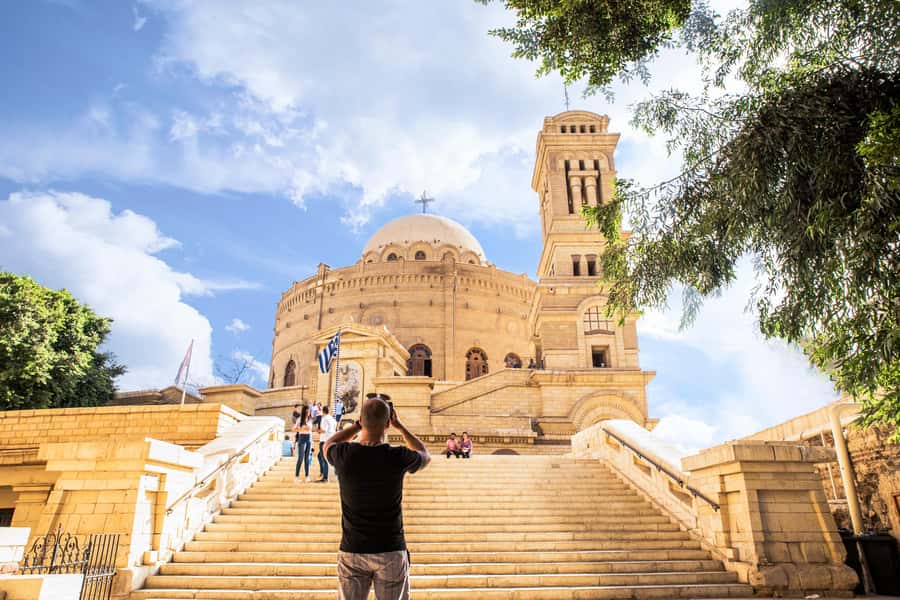
Old Cairo is easiest when you treat it like a set of linked neighborhoods. This tour does that by building a church-and-fort circuit around key religious points.
First up is Abu Serga (often tied to St Sergius). Next you pass the Fort of Babylon, the historical anchor that helps explain why this area became such a significant meeting place over time. Then you move to St. George’s Church, where your guide’s storytelling becomes useful because the complex names and timelines can blur without context.
The drawback here is not the sites. It’s your attention span. If you jump between stops without listening, you’ll miss the connections your guide is drawing. The good news: the pace is set up so you get guided time at each place, plus walking breaks.
Also, you’ll want to remember that this is a functioning religious area. Dress and behavior should be respectful, and you’ll get more out of the experience if you slow down.
Hanging Church (Al-Muallaqa): the Coptic stop people remember
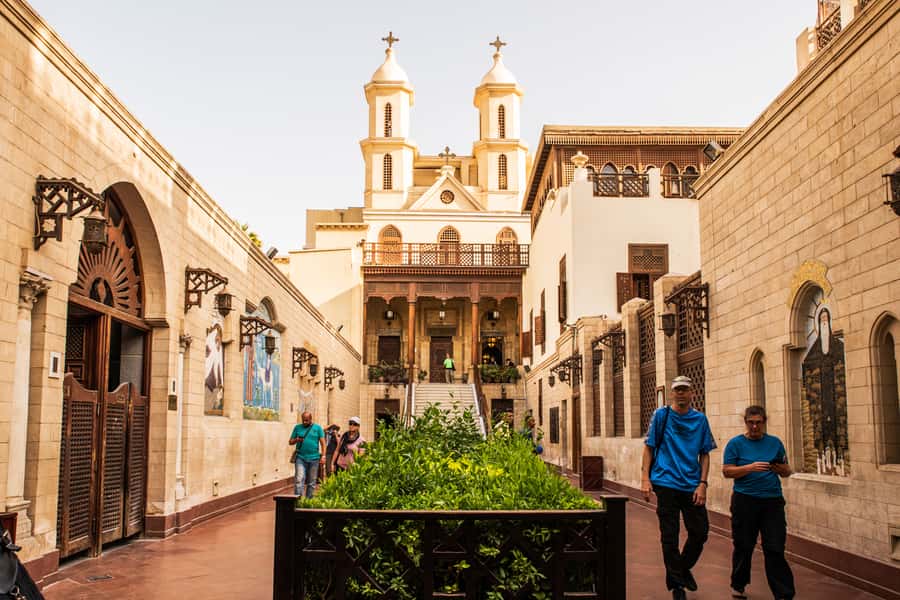
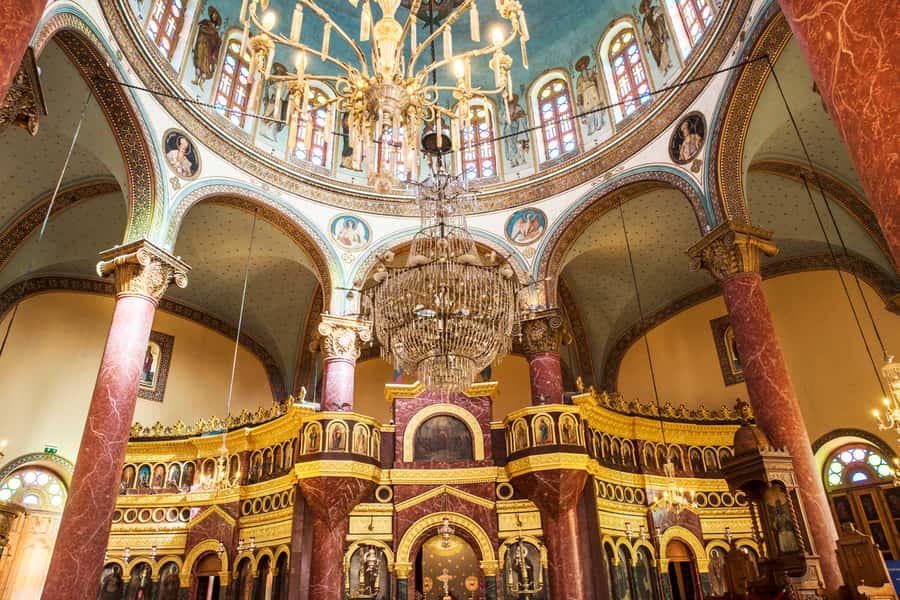
Then you reach one of Cairo’s most distinctive Coptic sights: the Hanging Church, also known as Al-Muallaqa Church. It’s called Hanging for a reason, and the space feels different from the surrounding streets as soon as you’re inside.
This stop is often the emotional center of the day because it’s compact but unforgettable. Your guide can help you understand what you’re looking at beyond the basics, so it doesn’t become a quick interior photo spree. If you care about the human side of history, you’ll likely appreciate how Coptic Christianity here remains part of daily religious life, not just museum time.
Give yourself the time to look up, look around, and then look again. The first minute can feel like you’re orienting. The second is where it clicks.
Saints Sergius and Bacchus Church: the layered Coptic story
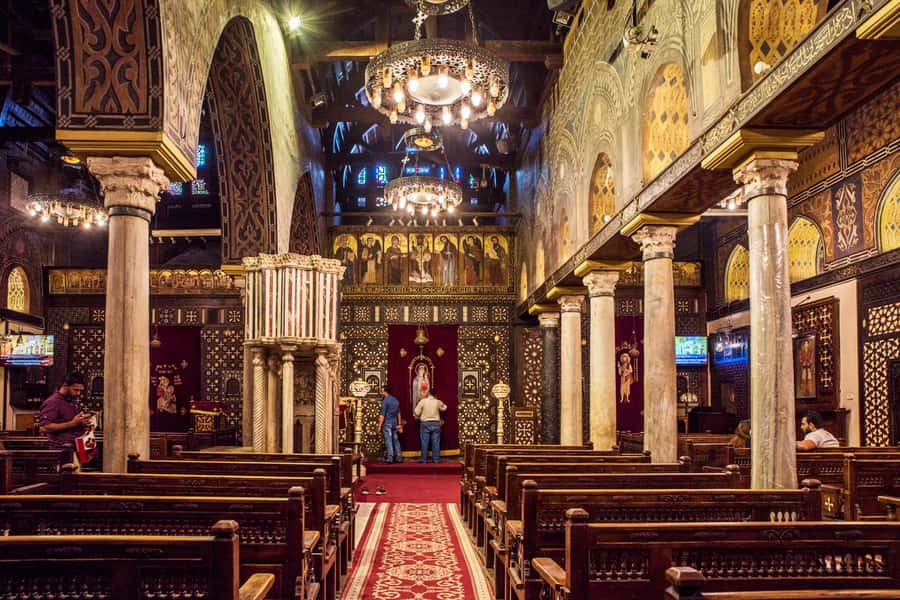
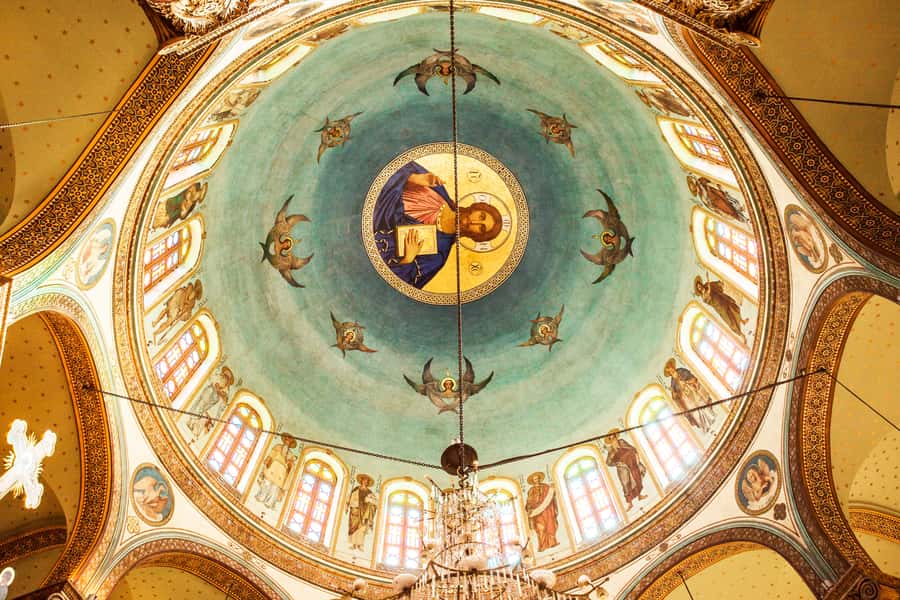
The tour also includes Saints Sergius and Bacchus Church, one of the key Coptic landmarks in the area. This is where the Coptic timeline feels more personal. The church isn’t just a building; it’s a point where tradition, identity, and devotion show up in daily practice.
What makes this worthwhile is pairing it with the other nearby stops. When you’ve already seen the broader Old Cairo context, Saints Sergius and Bacchus lands with more meaning. You’re not treating each site as a separate checkbox.
If you’re sensitive to long indoor time, this can still work because the schedule includes walking between churches and breaks for lunch.


Lunch in Old Cairo: included, local, and timed to keep the day enjoyable
Lunch is part of the deal, and it’s not just a filler stop. It’s scheduled as a local restaurant meal inside the flow of Old Cairo exploring, so you’re not dragged to far-away places just to eat.
The food choice varies by restaurant, but a theme comes up in the experience: meals tend to be hearty, and vegetarian options have been handled when needed. Expect traditional Egyptian dishes rather than a tourist buffet. If you’re curious, ask your guide what you’re eating and how it’s commonly used. That’s often where the meal becomes part of the story, not just fuel.
One consideration: drinks during lunch are not included. If you like water or juice with your meal, plan to purchase it on-site.
Khan El Khalili Bazaar: shopping with less stress and more strategy
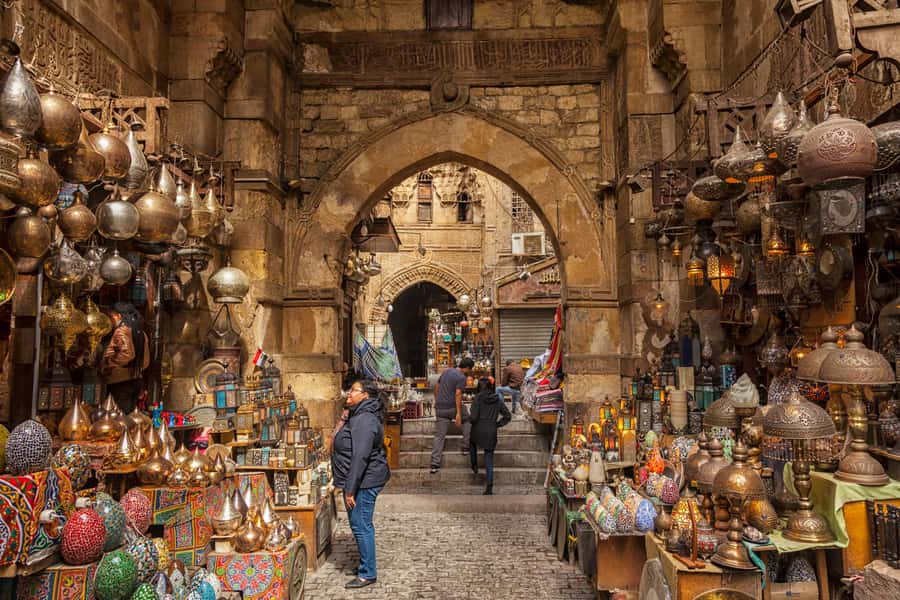
After churches and lunch, you’ll head to Khan El Khalili Bazaar, the famous market area where Cairo’s trading life feels concentrated. This stop is fun for three reasons: you can watch everyday commerce, you can pick up small gifts, and you can get a sense of how Cairo people spend time.
I like that your guide helps you navigate. Markets can become overwhelming if you wander without any plan, especially when you’re also trying to avoid getting pulled in every direction. With a guide, you can set a baseline for what to look for and how to approach vendors calmly.
What to focus on here:
- small crafts you can pack
- spices and sweets you can share
- items that make sense as souvenirs instead of bulky souvenirs
One more smart move: if you want to do serious shopping, treat this as your first round. Once you understand the prices and quality ranges, you’ll shop with more confidence later.
Pacing, guides, and the part most tours quietly get wrong
A lot of Cairo tours fail on one basic thing: pacing. This one tends to work better because you’re moving by car in between major sites, then spending time on foot where it counts.
The included air-conditioned vehicle matters in Cairo, and the experience reports consistently mention comfort and a clean vehicle. You also get cold mineral water, which sounds minor until the day turns hot and you realize you forgot to buy bottles. The driver is part of the experience too: Cairo traffic can be chaotic, and having someone who makes the route feel manageable changes your mood.
Your Egyptologist tour guide is the other big factor. In the experience details, guides such as Samo and Zee, Mohammed Moussa, Jermin, Nahed, Ruby (Rehab), Hoda, and others are repeatedly praised for clear explanations and keeping things organized. You’ll feel the difference most when you ask questions, because the guide can connect what you’re seeing to what it means.
Group size can vary by booking type, but you should expect enough structure that you’re not lost. Still, wear shoes you can walk in for real, and keep your phone handy for guide-led photo moments.
Price and value: what $76 really covers
At $76 per person, this tour can feel like a deal if you’re thinking beyond just the big names. You’re getting:
- pickup and drop-off from Cairo or Giza
- air-conditioned transport
- a live Egyptologist guide
- lunch at a local restaurant
- cold mineral water
- entrance fees to the included sites
- service tax
If you tried to recreate this yourself, the costs add up fast. Entrance fees alone can be annoying, and the guide is what turns the day from sightseeing into understanding. Lunch included is also a real time-saver. You avoid hunting for a place that fits your schedule and your budget while also staying near Old Cairo’s rhythm.
Where the price won’t protect you: lunch drinks, personal shopping, and any extra activities. Also, since you’re doing multiple religious sites, plan for modesty and practical comfort costs like water purchases if you run low.
Practical tips that make this day easier
A few things will make your visit smoother.
Dress and behavior:
- Wear clothing that works for mosques and churches. Covered shoulders and modest bottoms are the safest bet.
- Keep your pace respectful inside sanctuaries. No rushing for photos.
What to bring:
- Your passport or ID card (a copy is accepted).
- Comfortable walking shoes.
- A light layer if you get cold in the car between stops.
What not to bring:
- Pets
- Luggage or large bags
Who this tour fits best:
- You want a compact “Islamic + Coptic” day without logistics stress.
- You like guided context, not just big-photo stops.
- You can handle walking in religious-site areas.
Who should reconsider:
- Wheelchair users, since the tour is not suitable for this group.
Should you book this Old Cairo Islamic and Coptic tour with lunch?
I’d book it if your goal is to understand Cairo beyond the pyramids and to see how Islamic and Coptic spaces coexist in the same older city fabric. The value is strongest when you want guidance: the citadel-to-church circuit works because a good guide helps you connect meanings, names, and architecture.
I would pause if you prefer a slower, more open-ended style of travel with fewer stops and extra time to wander independently. This is a structured day with walking and set site time, so it rewards visitors who like a plan.
If you’re trying to fit Old Cairo into a limited schedule, this is one of the more balanced ways to do it: major landmarks, real meal break, and a final market stretch that feels like Cairo, not just history.
FAQ
How long is the Old Cairo Islamic and Coptic Cairo Tour with Lunch?
The tour lasts 6 hours.
Where does pickup happen?
Pickup is included from your accommodation in Cairo or Giza.
Is lunch included, and are drinks included too?
Lunch at a local restaurant is included. Drinks during lunch are not included.
What languages are available for the live tour guide?
The live tour guide is available in French, German, Italian, Spanish, and English.
Do entrance fees and transportation costs are included?
Yes. The price includes transportation in an air-conditioned vehicle and entrance fees to the sites mentioned, plus cold mineral water.
Is this tour wheelchair accessible?
No. It is not suitable for wheelchair users.