REVIEW · CAIRO
Old Cairo Guided Walk Tour: History, Culture & Street Bites
Book on GetYourGuide →Operated by OceanAir Egypt · Bookable on GetYourGuide
Three hours can change how you see Cairo. This Old Cairo guided walk takes you through Bab al-Futuh and the city’s big mosque landmarks, with an Egyptologist guide and time for street food.
I also love the way the tour mixes architecture with daily life, from the Ottoman Bayt al-Suhaymi house to the maze of El Moez Street. You’ll get clear context instead of just walking past stones.
One drawback to plan for: this is real walking on uneven streets and you’ll encounter stairs, so it’s not great for wheelchair users or anyone who struggles with rough ground.
In This Review
- Key things I’d prioritize on this Old Cairo walk
- Entering Bab al-Futuh: your guided start inside Cairo’s old walls
- Al-Hakim Mosque: Fatimid scale and a calmer courtyard pause
- Bayt al-Suhaymi: stepping into a 17th-century Ottoman home
- El Moez Street on foot: historic Islamic architecture with real street life
- Sultan Barquq Mosque and the Al-Nasir Faraj Ibn Barquq complex: Mamluk artistry in stone
- Qalawun Complex: the medieval Cairo triple-threat of mosque, madrasa, and mausoleum
- Al-Hussein Mosque: a spiritual pause before the markets
- Khan el-Khalili Bazaar: spices, souvenirs, and the guide’s market value
- Price and value: why $31 can work out well
- Timing, walking comfort, and what to wear in Old Cairo
- Who should book this Old Cairo guided walk (and who should skip it)
- Should you book this Old Cairo guided walk?
- FAQ
- Where does the tour start?
- How long is the Old Cairo guided walk tour?
- What is the price per person?
- What attractions are included in the walk?
- What food is included during the tour?
- Does the tour include entrance fees?
- Is pickup available?
- What languages are offered for the guide?
- What should I wear for mosque visits?
- Who should not book this tour?
Key things I’d prioritize on this Old Cairo walk
- Start at Bab al-Futuh: you’re entering the walled city from a landmark gate, not just wandering.
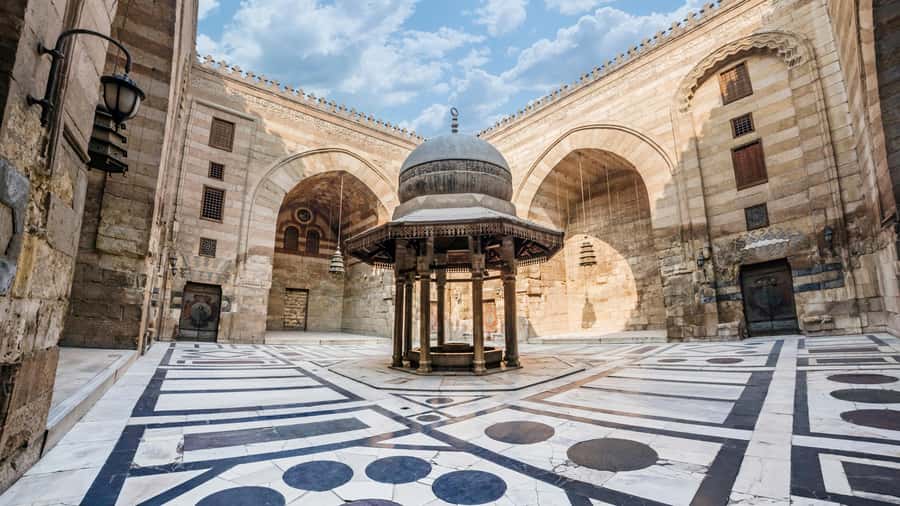
- Fatimid and Mamluk mosques in one loop: Al-Hakim Mosque, Sultan Barquq, and the Qalawun Complex give you different eras in close range.
- Bayt al-Suhaymi for Ottoman domestic life: a break from religious monuments that shows how people actually lived.
- El Moez Street as an open-air “timeline”: historic facades, street vendors, and cafes under the same old street rhythm.
- Khan el-Khalili as a practical finale: spices, jewelry, textiles, plus bargaining skills you can use right away.
- Food is part of the point: koshary or Egyptian pie, plus local snacks like zalabya or halabessa.
Entering Bab al-Futuh: your guided start inside Cairo’s old walls
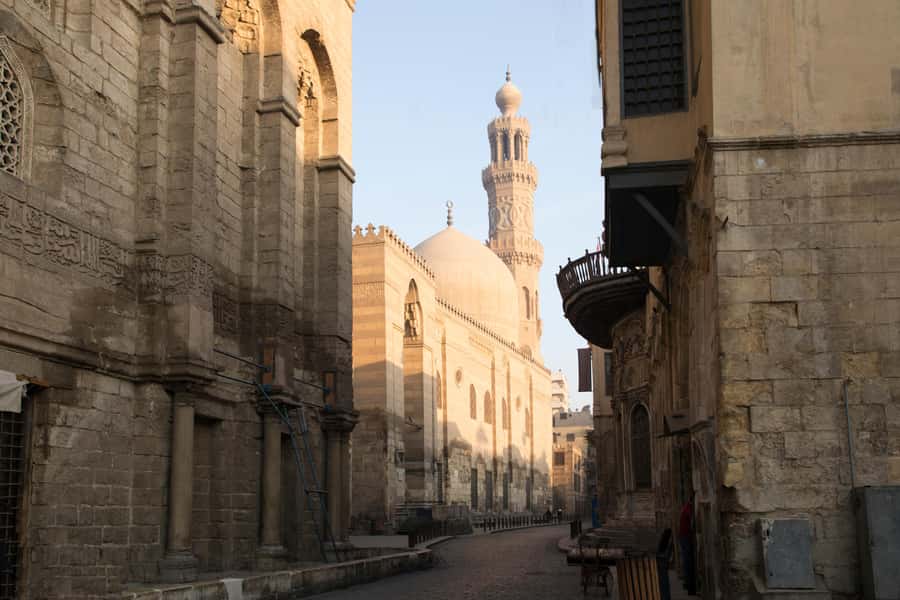
Your day begins at Bab al-Futuh, one of the main gates of Cairo’s ancient city walls. I like meeting at a real, recognizable landmark because it helps you orient fast—then the tour turns into a story you can follow without guesswork.
From there, your Egyptologist guide sets the tone: where you are, why this area matters, and what to notice as you move. The best part of starting here is that the walls and gate aren’t just scenery; they frame how Cairo expanded, defended itself, and organized life.
You should also know the walk is paced for a 3–4 hour experience. That means you’ll get stops with guiding time, but you won’t linger for long breaks. If you’re the type who likes slow museum drifting, wear comfortable shoes and think of this as a “see a lot, understand the essentials” route.
You can also read our reviews of more tours and experiences in Cairo.



Al-Hakim Mosque: Fatimid scale and a calmer courtyard pause
Next up is Al-Hakim Mosque, one of Cairo’s oldest and largest Fatimid mosques. Expect massive minarets and historic stone walls, plus a courtyard that gives you a breather from street-level bustle.
What makes this stop valuable is the guide’s focus. You’re not just looking at big shapes—you’re learning how the Fatimid era left a signature style, and how later Cairo layers its architecture over older foundations. It’s also a good moment for photos, because the mosque’s layout offers clear angles and a sense of order.
Practical note: religious sites mean dress matters. Plan for loose clothing that covers shoulders, arms, legs, and knees. Women should use a scarf for religious sites, so carry one even if you can wear it easily.
Bayt al-Suhaymi: stepping into a 17th-century Ottoman home
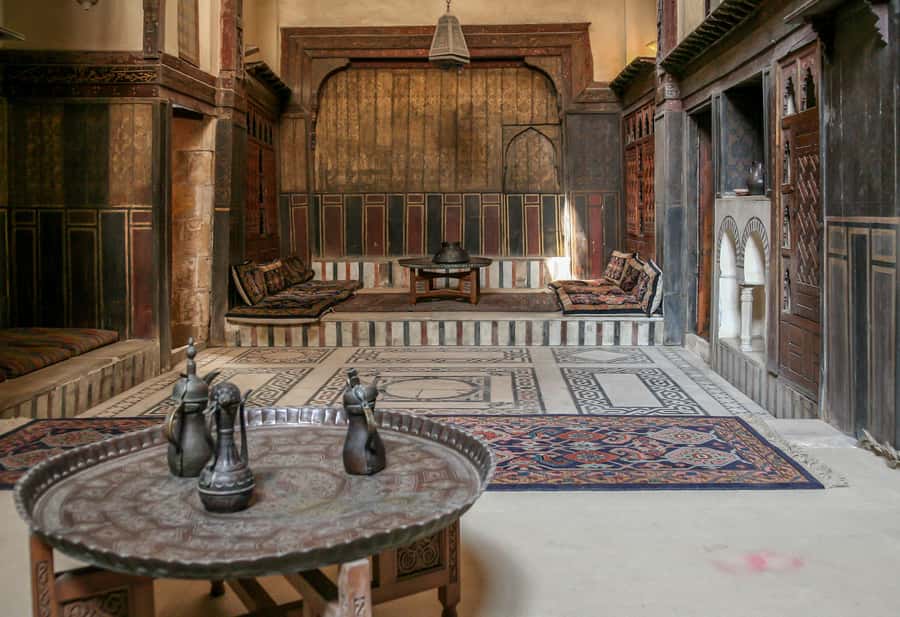
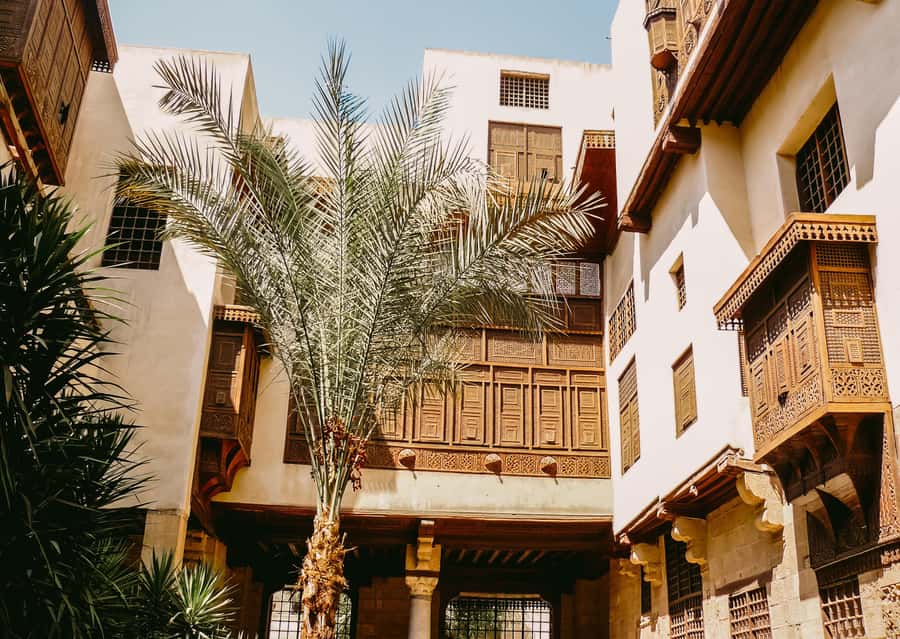
After the mosque stop, the tour shifts gears to Bayt al-Suhaymi, a standout 17th-century Ottoman residence. I really like this kind of break because it widens the lens: you get religious and political monuments, then you get domestic architecture—rooms, courtyards, and the kind of spaces people used every day.
Your guide walks you through what you’re seeing and ties it to lifestyle. The courtyard setting is especially helpful for understanding traditional Islamic architectural logic—light, privacy, and how rooms connect around open space.
This is also where the tour feels more human. Instead of only asking what a building represents, you start thinking about how people moved through their day here. It’s one of those stops that makes the rest of Cairo’s sights feel less random.
El Moez Street on foot: historic Islamic architecture with real street life
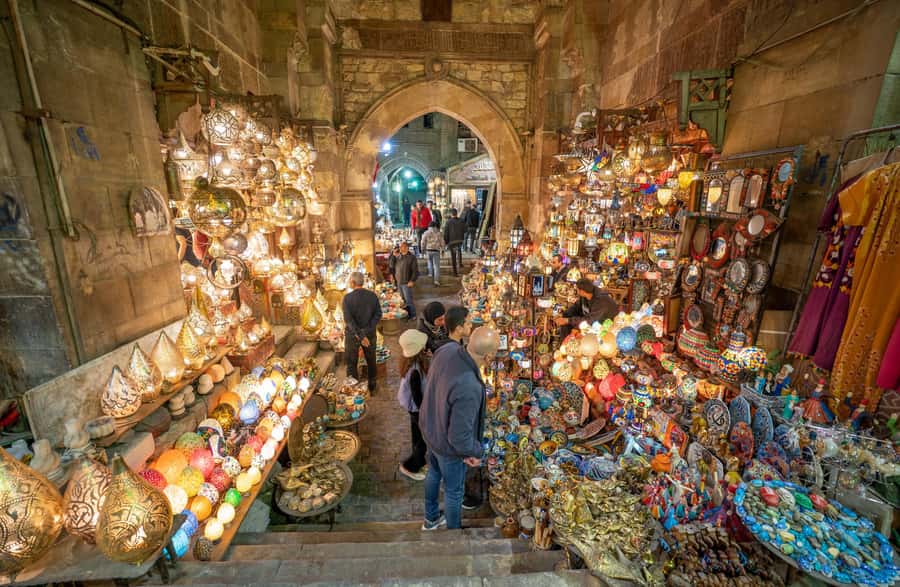
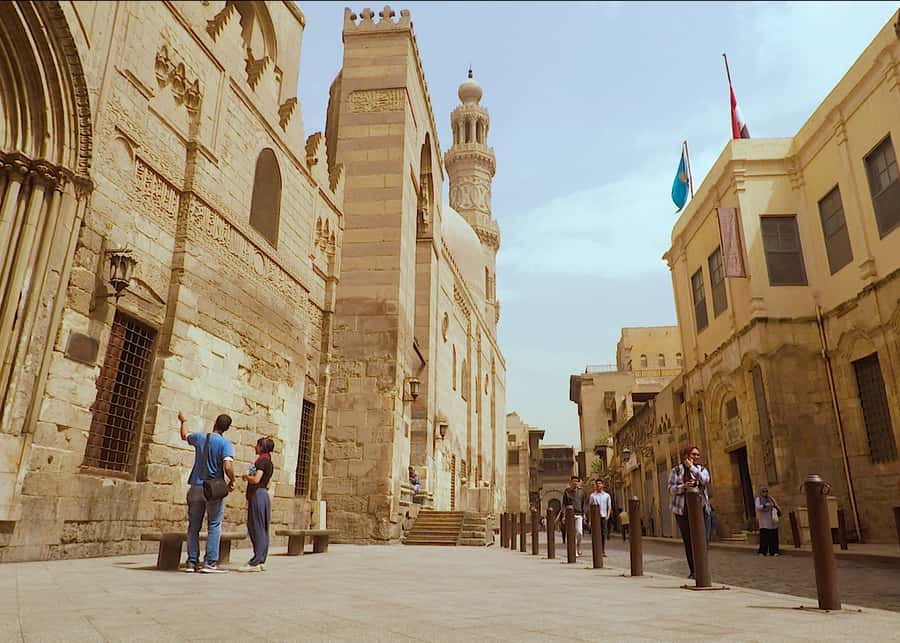
Then you’re on El Moez Street, often called one of the best stretches for seeing centuries-old Islamic architecture in one place. The advantage of walking here with a guide is that you’re not just taking in facades—you’re learning what’s important about the street’s preserved buildings and the patterns of what you see.
You’ll pass local vendors, cafes, and historic structures that have survived generations. That’s the point: Cairo isn’t a frozen historic park. It’s a living city where old stones still sit next to commerce and conversation.
You’ll also want to read the street carefully. On busy market streets, people will approach you. A strong guide helps you keep a polite distance, understand what is worth browsing, and avoid wasting time on hard-sell moments.
Sultan Barquq Mosque and the Al-Nasir Faraj Ibn Barquq complex: Mamluk artistry in stone
Now the tour leans into Sultan Barquq Mosque, famous for its elaborate Mamluk designs. This is a stop where details matter—intricate patterns, strong architectural presence, and a sense of grandeur that feels deliberate rather than accidental.
Your guide explains the mosque’s role as more than a single religious building. It functioned as a mosque, madrasa, and Sufi lodge, so you’re seeing how education, worship, and spiritual life were connected in medieval Cairo.
Next to it, you visit the Mosque & Khanqah of Al-Nasir Faraj Ibn Barquq. This pairing works well because it keeps the theme consistent while showing how different institutions shared the same cultural language.
If you’re short on time in Cairo, this section is a big reason to do the tour. You’re stacking major monuments in a way that builds understanding instead of bouncing around randomly.



Qalawun Complex: the medieval Cairo triple-threat of mosque, madrasa, and mausoleum
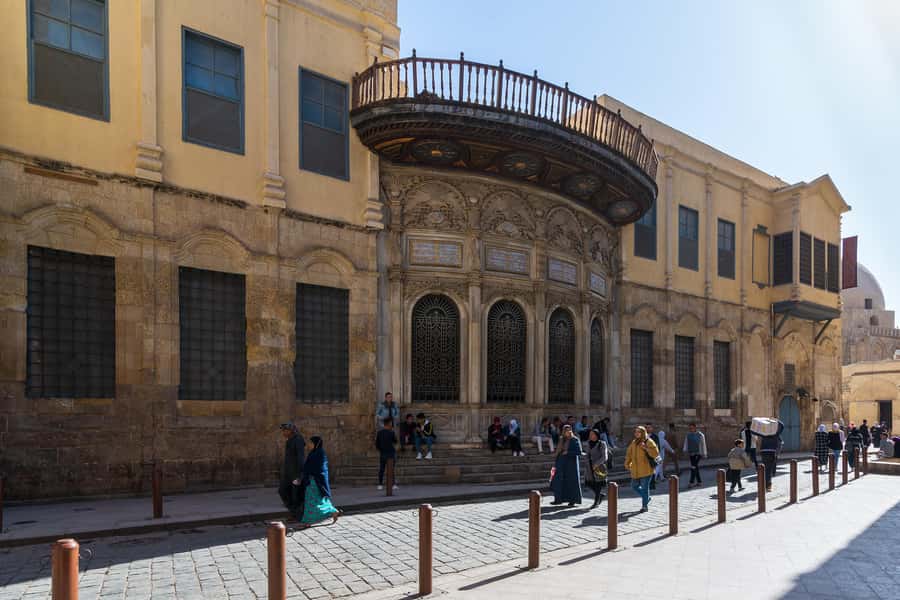
Right after the Sultan Barquq area, you’ll see the Qalawun Complex, another medieval powerhouse. This site includes a mosque, a madrasa, and a mausoleum, which makes it especially good for visitors who want the “why does this look like this?” answer.
Here’s what I think you’ll appreciate: the complex shows architectural and cultural achievements as one integrated design problem. It’s not one building trying to impress; it’s a whole system meant to serve religious practice, learning, and remembrance.
Your guide helps you connect those functions to what you see in the space. That turns what could be a quick photo stop into something that actually sticks in your memory.
Al-Hussein Mosque: a spiritual pause before the markets
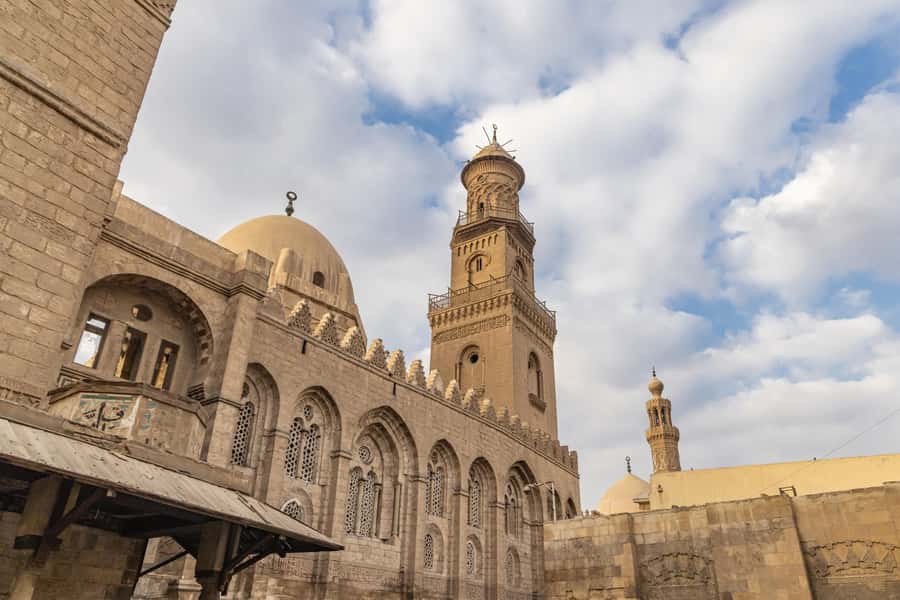
The tour’s spiritual segment ends at Al-Hussein Mosque in the heart of Islamic Cairo. Expect an atmosphere of tranquility and spiritual significance, with a chance to slow down a bit before the market portion gets loud, crowded, and very tempting.
This mosque stop is useful even if you’re not a religious-history expert. It gives contrast. You go from mosaics and architectural systems to a place that people still treat as meaningful today.
Dress requirements still apply here, and you’ll want to bring that scarf logic again if needed. Comfortable shoes matter too—standing still for reflection is nice, but you’ll still be moving through active areas.
Khan el-Khalili Bazaar: spices, souvenirs, and the guide’s market value

Your finale is Khan el-Khalili Bazaar, one of Cairo’s most famous marketplaces. This is where the tour becomes fun in a practical way: spices, jewelry, textiles, and plenty of souvenirs—plus the chance to bargain with local vendors.
I like ending here because you can turn knowledge into action. If your guide has explained how markets work, how people price items, and what respectful bargaining looks like, you’ll feel more confident once you’re surrounded by stalls.
Food is part of the finish line too. The tour includes street food such as authentic koshary or an Egyptian pie, often paired with local snacks like zalabya or halabessa. That’s a smart value addition because Cairo street snacks can be easy to miss if you’re wandering without a plan.
Also, many guides on this route are praised for helping keep you safe in market crowds. Some are especially known for using humor and patience to manage the energy around you—so if that kind of guidance matters to you, this tour is a strong fit.
Price and value: why $31 can work out well
At about $31 per person for a 3–4 hour guided walk, the value comes from what’s included. You’re not just paying for a talking guide. Entrance fees are covered, and you get bottled water plus local snacks and street food.
That matters because Cairo tours can nickel-and-dime you with extra ticket costs. Here, entrance fees to the attractions are included, which makes the trip feel more predictable.
You also get a real Egyptologist guide and skip-the-ticket-line access. For many people, that time savings adds up fast, especially when you’re in older sites where queues can eat your schedule.
If pickup is selected, you’ll be picked up and dropped off from your hotel in Cairo or Giza (within city limits). It’s optional, but if you’re relying on taxis and want to avoid navigation headaches, it’s a practical perk.
Timing, walking comfort, and what to wear in Old Cairo
This is a walking tour, and that means you should plan for uneven streets and stairs. One review note that comes up repeatedly is that the terrain can be tough, so treat comfortable footwear as non-negotiable.
Dress for mosques: loose clothes that cover shoulders, arms, legs, and knees. For women, bring a scarf you can use quickly. Hot weather can make fabric choices matter, so light layers that still follow the rules are your best friend.
Bring basics: sunscreen, a hat, and water (bottled water is included, but you’ll still benefit from thinking ahead). Also carry some cash for optional purchases, because Khan el-Khalili is not a window-shopping zone.
Important limits: no baby strollers, no luggage or large bags, and it’s not suitable for wheelchair users. If you’re traveling with any mobility gear or bigger items, you’ll need a different plan.
Who should book this Old Cairo guided walk (and who should skip it)
This tour is ideal if you want a structured way to see Old Cairo’s highlights without getting lost in translation—architecture, eras, and meaning explained while you walk.
It’s also a great fit for solo travelers. Many guests credit guides with making them feel safe and comfortable in the market areas, which is exactly what you want when crowds and sellers are part of the scenery.
If you hate walking, have knee or foot limitations, or need step-free access, then this one may frustrate you. The route is built around older streets and religious sites.
If your goal is street food plus top monuments, you’ll likely enjoy the flow. You’ll end your day with market time when you have both energy and context—so bargaining and browsing feel less random.
Should you book this Old Cairo guided walk?
I’d book it if you want the best “first Old Cairo circuit” in a single morning/afternoon: Bab al-Futuh, Al-Hakim Mosque, Bayt al-Suhaymi, El Moez Street, the Sultan Barquq and Qalawun areas, Al-Hussein Mosque, then Khan el-Khalili with street bites.
Skip it if you want a slow-paced museum day, step-free mobility, or a low-walking itinerary. In Old Cairo, comfort depends on your shoes and your stamina, and this tour leans into the walking.
If you care about guide quality, pay attention to which language you book and choose the option with pickup if you’d rather not manage Cairo logistics on your own. For many people, that’s the difference between a good day and a confident day.
If you want, tell me your travel month and your walking comfort level, and I’ll suggest the best time of day to do this route and what to pack for heat and mosque stops.
FAQ
Where does the tour start?
You meet your guide in front of Bab al-Futuh.
How long is the Old Cairo guided walk tour?
It lasts about 3 to 4 hours.
What is the price per person?
The price is $31 per person.
What attractions are included in the walk?
You’ll visit Bab al-Futuh, Al-Hakim Mosque, Bayt al-Suhaymi, Al-Mu’izz Street (El Moez Street), Sultan Barquq Mosque, the Qalawun Complex, Al-Hussein Mosque, and Khan el-Khalili Bazaar.
What food is included during the tour?
The tour includes local snacks (like zalabya or halabessa) and street food such as authentic koshary or Egyptian pie.
Does the tour include entrance fees?
Yes. Entrance fees to all attractions are included.
Is pickup available?
Pickup and drop-off are optional if you book that option, from your hotel in Cairo or Giza (within city limits). Pickup time is confirmed the day before by WhatsApp, email, or phone.
What languages are offered for the guide?
Guides are available in French, Spanish, English, Arabic, and German.
What should I wear for mosque visits?
Wear loose clothing covering shoulders, arms, legs, and knees. Women should carry a scarf for religious sites.
Who should not book this tour?
It is not suitable for wheelchair users, and it does not allow baby strollers or luggage/large bags.