REVIEW · MARRAKESH
From Marrakech: High Atlas Mountains and 5 Valleys Day Trip
Book on GetYourGuide →Operated by Morocco Inspiring Tours · Bookable on GetYourGuide
The High Atlas day trip turns the dial way past sightseeing. You’ll leave Marrakech fast, then spend the day in Berber villages and mountain valleys, ending with a meal in a local home. What I like most is the hands-on stop for argan oil (plus tea), and the fact that lunch isn’t a scripted buffet.
One small caution: the Ourika Valley stop can feel a bit quiet or dry depending on the season and water levels. I still think the overall day works, especially if you’re here for real village life, not just chasing a waterfall.
In This Review
- Key moments that make this trip worth your time
- From Marrakech to Ourika: fast escape, mint tea, and red mountains
- Argan oil in the cooperative: not a souvenir stop, a real workflow
- Oukaimeden roads at 1,800 meters: higher air, village walls, and slow turns
- Sidi Fares hike: the 60–90 minutes that turn the tour into a day, not a drive
- The Berber family lunch in Sidi Fares: what you eat and why it matters
- Asni and the fruit hills: when snow shows up, the timing feels magical
- The return via Tahanaout: a calm ending after a full day
- Price and logistics: is $93 good value for an 8-hour Atlas day?
- Who should book this High Atlas and 5 Valleys trip
- Should you book Morocco Inspiring Tours for this Atlas day?
- FAQ
- How long is the High Atlas and 5 Valleys day trip from Marrakech?
- What’s included in the price?
- How long is the hiking part?
- What should I bring?
- Do they offer vegetarian or vegan options?
- What languages are the guides available in?
Key moments that make this trip worth your time
- Argan oil cooperative visit with Berber women and the story behind the process
- A guided hike through Sidi Fares Valley that stays scenic without turning into a marathon
- Home-cooked Berber lunch served by a family, in mountain scenery
- High-altitude village roads in Oukaimeden around 1,800 meters
- Multiple valleys in one day: Ourika, Oukaimden, Sidi Fares, Asni, and the return via Tahanaout
- A small-group feel or private option (often the difference between a calm day and a loud one)
From Marrakech to Ourika: fast escape, mint tea, and red mountains
Your day starts with pickup from your hotel or riad in central Marrakech. If you’re staying inside the Medina, expect to be met at the nearest place a vehicle can reach. From there, you’ll ride in an air-conditioned minivan or SUV with your driver-guide.
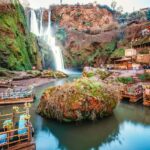
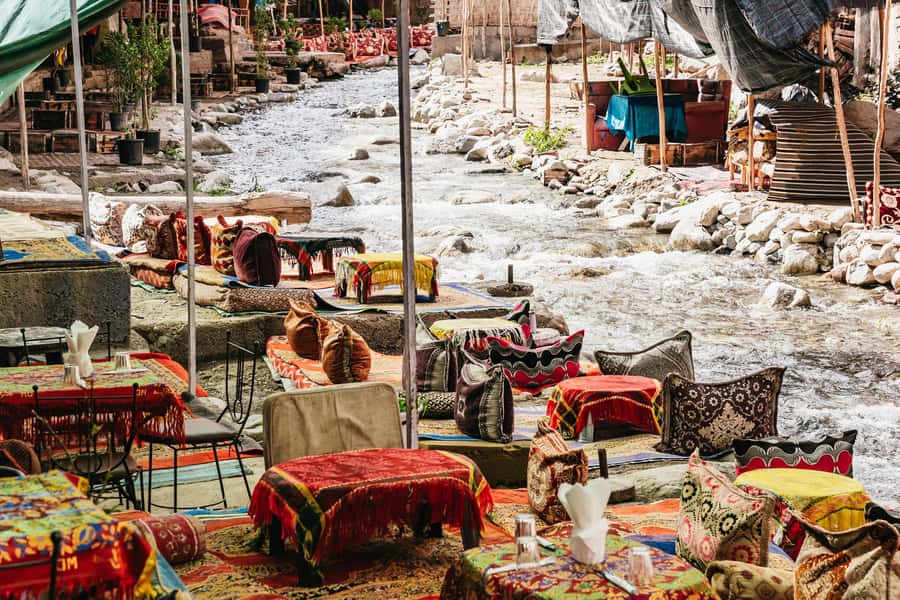
The first big payoff is the change in air and scenery. You move from city noise into the Atlas foothills pretty quickly. The Ourika Valley portion gives you that first taste of the mountain setting, with photo stops and a guided look before you slow down by the river for mint tea. One thing I like here is that the tour doesn’t just point at views and rush off. You get a moment to sit, drink tea, and watch the day happen.
Possible drawback: the Ourika stop isn’t guaranteed to be lush or lively in every month. Some people find it a little deserted or short on water. If you’re going specifically for waterfall energy, calibrate your expectations. If you’re here for mountains plus village culture, this part still sets the tone well.
You can also read our reviews of more tours and experiences in Marrakesh.


Argan oil in the cooperative: not a souvenir stop, a real workflow
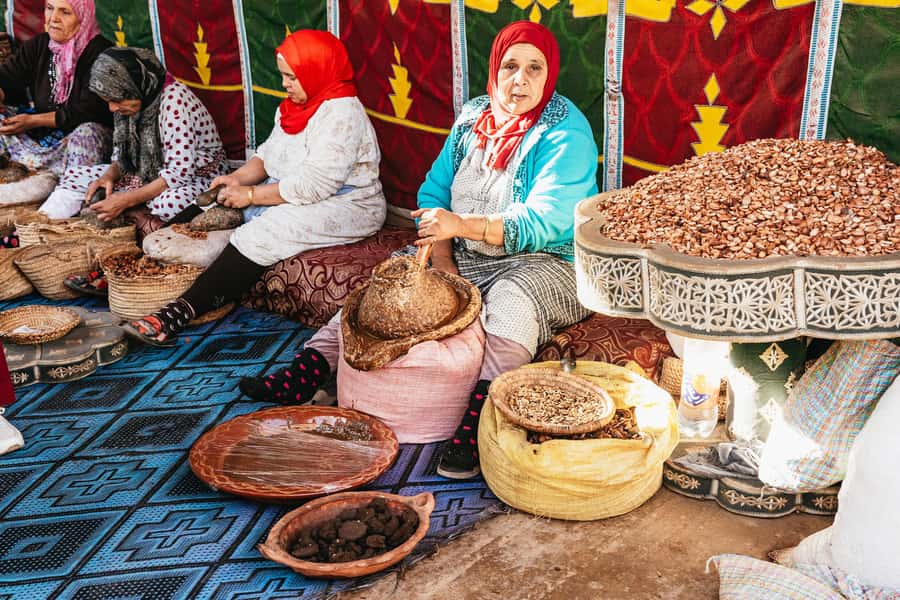
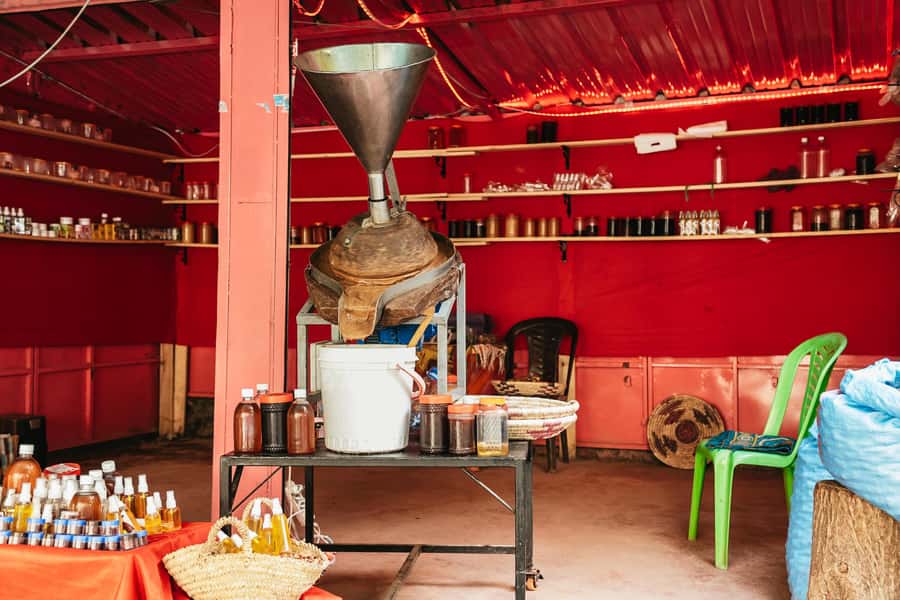
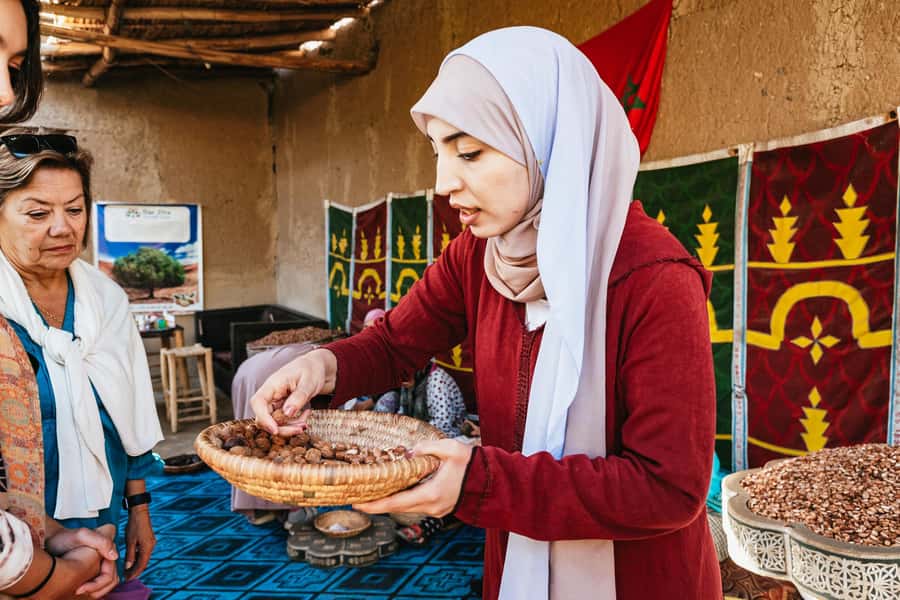
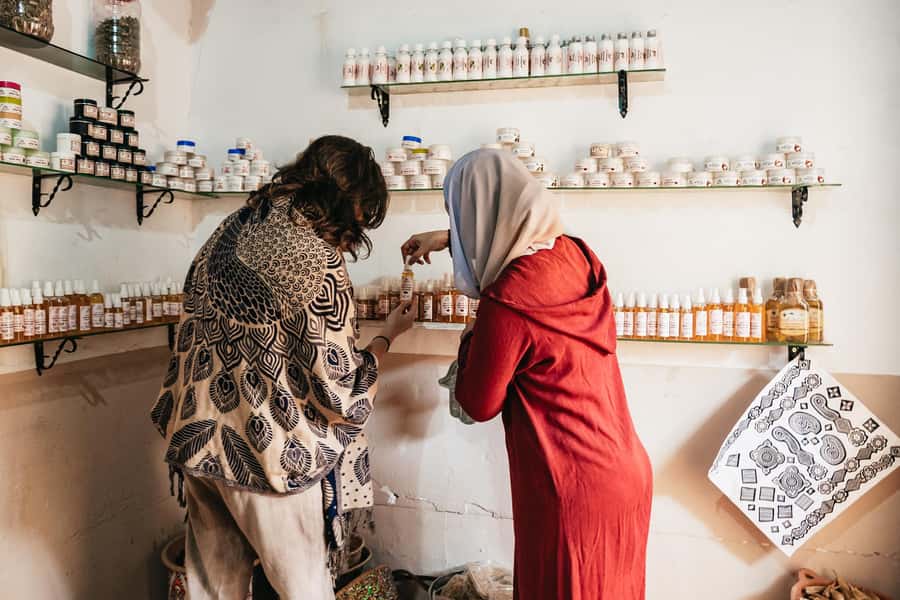
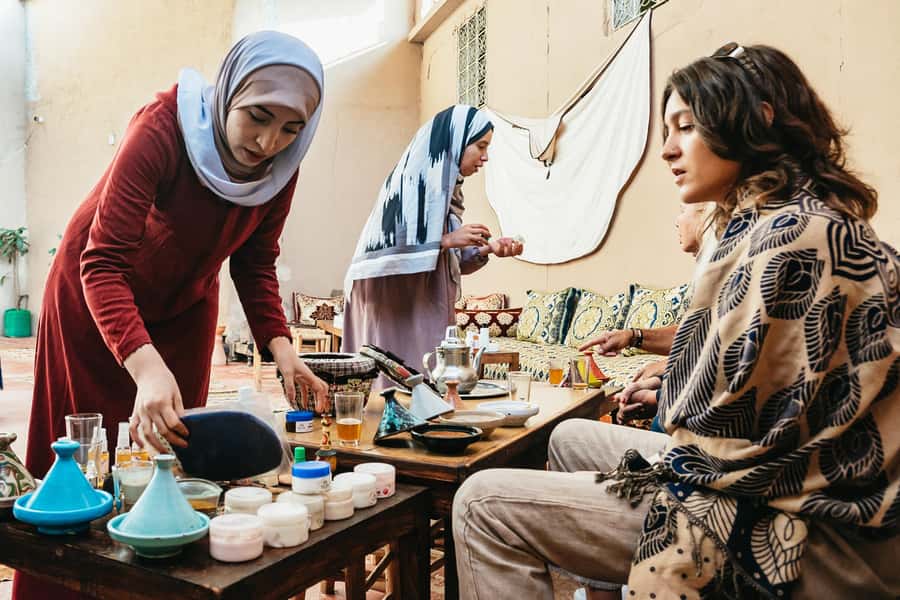
After that first valley break, the tour heads to an Argan oil cooperative where Berber women practice and pass on the process. This is one of the stops that feels most “real” because you’re not buying a product out of a shop window. You’re seeing how it’s made and why it matters locally.
The experience is framed in a way that makes you understand the work behind the bottle: the cooperative approach, the skills, and the daily effort. You may also get something to nibble as part of the morning rhythm—think typical Moroccan breakfast-style tastings—along with tea. If you’re the type who likes to connect food and products to people, you’ll enjoy this.
This is also where the guide names and small details help a lot. Different guides pop up in guide lists for this tour—Abdullah, Mohammed, Ismail, Ismael, Abdul Rahim, and even Redwan for the hike sections in some cases—and the common theme is how they tie culture to what you’re seeing, not just facts.
Oukaimeden roads at 1,800 meters: higher air, village walls, and slow turns
Next comes Oukaimden. The big detail here is altitude: you travel up to around 1,800 meters, which changes the feel of the day. The road becomes more “secluded mountain road,” and you start noticing how villages sit in relation to the terrain.
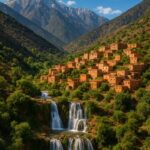
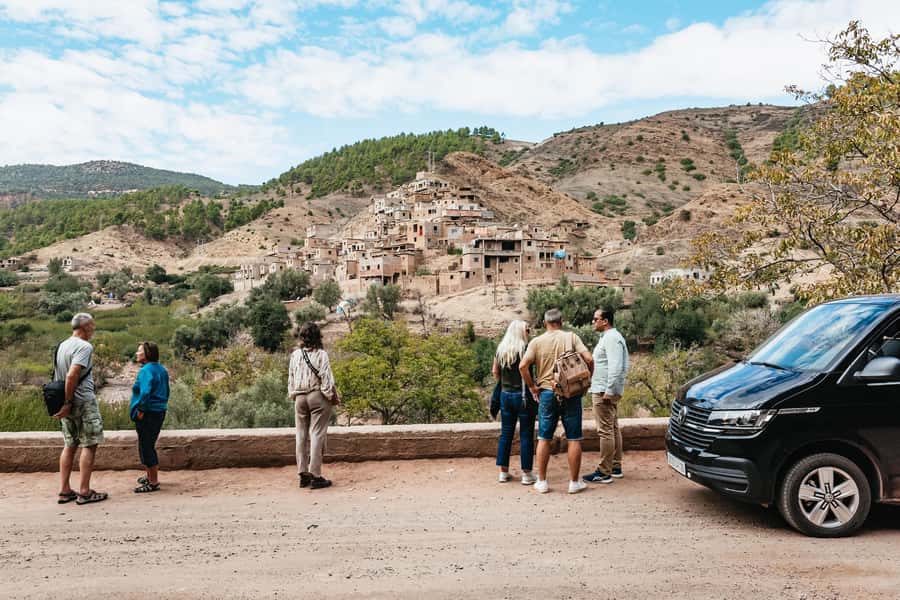
As you pass traditional Berber villages made from adobe and stone, you’ll get a view of daily life rather than staged scenes. This part of the day works best if you enjoy watching how people adapt their homes and routines to the mountains—where the settlement sits, how the streets and walls follow the contours, and how small-scale life fits the geography.
Timing matters too. You’re not stuck here forever. It’s designed as a “see, learn, move” section so you don’t lose the day to car time—though yes, it’s still a long drive total. If you easily get restless in vehicles, bring something small for comfort: sunglasses, water, and a layer. The Atlas can cool down fast after midday.
Sidi Fares hike: the 60–90 minutes that turn the tour into a day, not a drive
The heart of the day is the Sidi Fares hike. You’ll arrive in the third valley and then set out with a hiking guide for roughly 60–90 minutes. This is a scenic valley walk threaded between Berber villages and mountain views.
I like this format: you don’t just get a lookout. You get to move through the valley in a way that lets you feel the geography. That guided pacing is also important. People in some hikes can get overconfident on uneven ground, then feel slow or nervous later. Here, the hike guide helps keep you safe and keeps you pointed at the right things to notice.
How hard is it? The tour isn’t positioned as an extreme trek, but it isn’t flat either. A few comments highlight that scrambling or steep-ish bits can show up depending on conditions. If you can handle uneven trail and you’re wearing decent hiking shoes, you’ll likely be fine. If you expect strolling on smooth paths, you might find the hike more work than you want.
Either way, this is where you’ll get that sense of being away from Marrakech’s pace, with mountain air and village steps under your feet.
The Berber family lunch in Sidi Fares: what you eat and why it matters
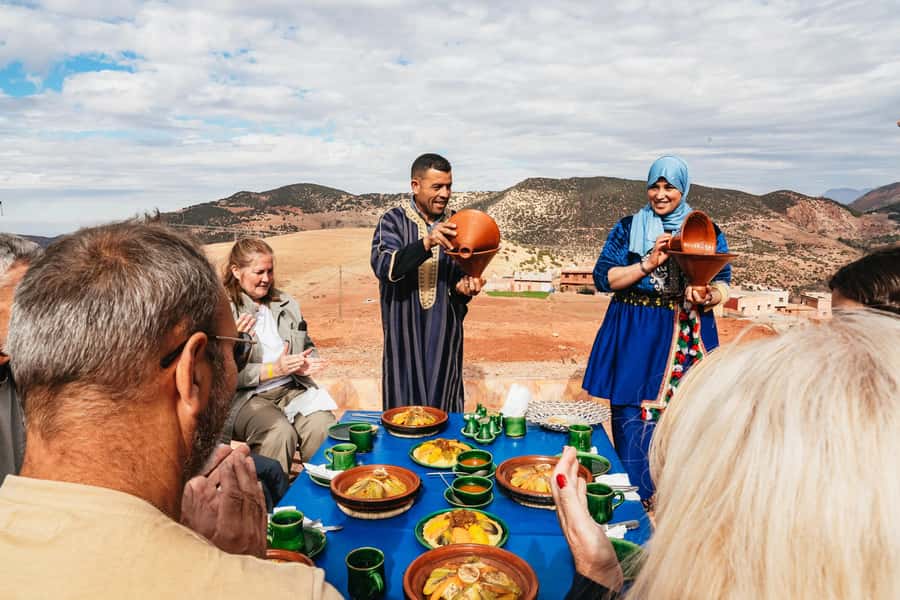
After the hike, you get the meal. This is served at an authentic Berber family house with breathtaking mountain scenery. And yes, it’s home-cooked in the clearest sense: soup, salad, Berber tajine, couscous, dessert, mint tea, and mineral water.
What makes the lunch special isn’t only what’s on the table. It’s the setting and the hospitality rhythm. You’re not eating in a restaurant designed for tour groups. You’re eating in someone’s home context, which changes how the whole day feels. Conversations tend to be relaxed, tea keeps flowing, and the meal becomes part of the cultural exchange rather than a checkpoint.
Vegetarian, vegan, and gluten options are available, so you can plan without playing menu guessing games. If you have a serious allergy, you’ll still want to tell the operator ahead of time, but the tour is set up to accommodate different eating styles.
If you care about value, this lunch is a big part of it. A day trip that includes real transport plus a guided hike plus a full meal at a home is doing more than just handing you “views and photos.”

Asni and the fruit hills: when snow shows up, the timing feels magical
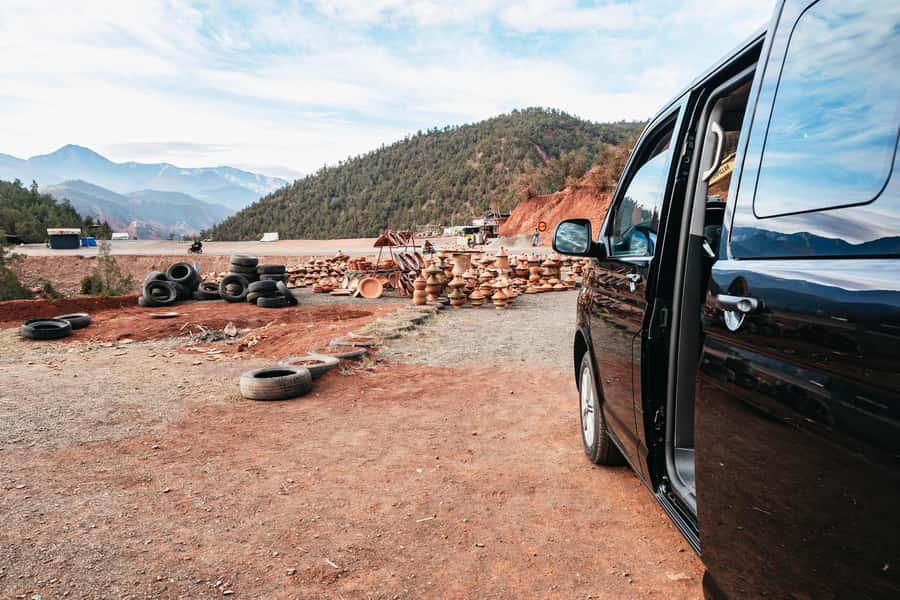
After lunch, the tour shifts to Asni. This is where you start noticing fruit trees and the broader High Atlas silhouette. On clear days, you can also catch snowy summits in the distance—season-dependent, of course. When snow appears, it turns the scene into that classic Atlas contrast: warm valley foreground, cool mountain caps.
There’s also a practical option here. If your timing lands on Saturday, you can visit the weekly souk in Asni. That’s a nice touch because it gives you a lived-in village pulse rather than only looking outward at scenery. Even if you skip the souk, Asni still functions as a “breathe and take it in” stop before the drive back.
The return via Tahanaout: a calm ending after a full day
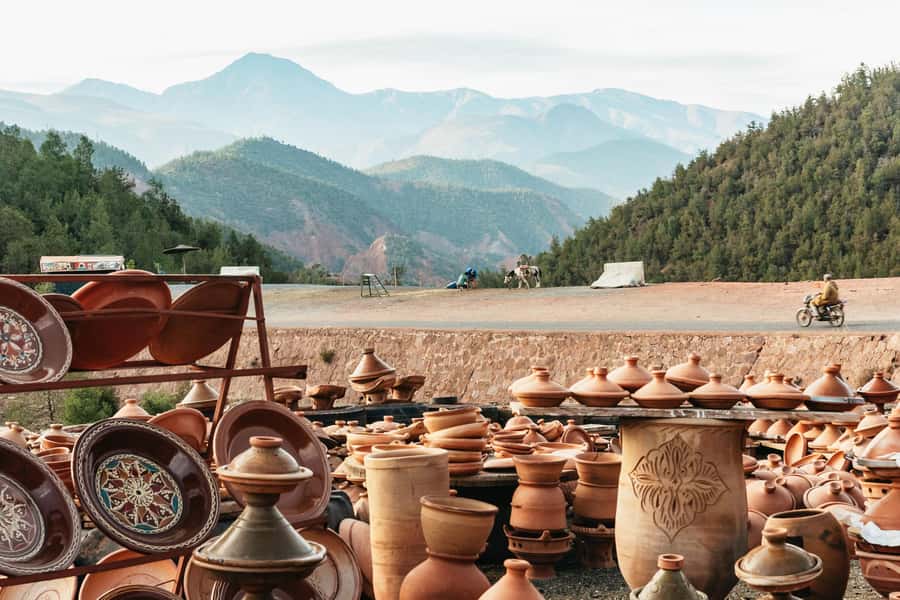
On the way back to Marrakech, you pass through Tahanaout as part of the route. By then, the day usually feels complete: you’ve walked a valley, eaten a proper meal, seen how people make and use Argan oil, and visited multiple altitude-and-village zones.
The final part is also about convenience. You’ll get dropped off back at your accommodation, so you don’t have to figure out the last-mile logistics after a long day.
One gentle reality check: this is an eight-hour outing. Even with comfortable vehicles, it’s still a long day out of Marrakech. If you’re the kind of person who wants slow travel with minimal driving, you might prefer staying in one valley for a half day or hiring a private driver for a narrower route. But if you want variety and you’re okay spending time on the road, this tour hits a good mix.
Price and logistics: is $93 good value for an 8-hour Atlas day?
At $93 per person for an 8-hour day, the value comes from what’s included, not the sticker price. You get:
- pickup and drop-off from your Marrakech area lodging
- round-trip transportation in a comfortable vehicle
- a driver-guide and a hiking guide
- lunch in a Berber home setting
- entry fees
- the structured multi-valley flow (not just one stop)
The lunch alone is a big chunk of the experience value. The guided hike is also hard to replicate on your own without local help. Add transport and it becomes more like a “local day plan” than a bus excursion.
My advice: compare this type of day trip to other Marrakesh tours that stop at scenic viewpoints and then send you off to find your own food. This one keeps the day connected: you eat with a family, you walk with a guide, and you learn the meaning behind everyday life like Argan oil production.
If you’re booking for a group, the small-group or private option can be a real win. Less crowding means better pacing and more time for questions. Some comments also highlight how smaller groups make it feel more personal than a packed vehicle day.
Who should book this High Atlas and 5 Valleys trip
This is a strong fit for you if:
- you want a full Atlas day without complicated planning
- you like the combination of mountain views plus Berber culture
- you’re comfortable with moderate hiking for 60–90 minutes
- you care about eating somewhere local, not only scenic stops
It’s less ideal if:
- you only want waterfall-hunting energy and the Ourika portion feels underwhelming
- you hate uneven ground or you’re not confident with scrambling
- you expect a very short day with minimal driving
If you’re visiting in colder months, you may get snowy peaks in the distance. If you’re visiting in warmer months, expect more “valley life and colors” vibes. Either way, the Argan cooperative and the home lunch anchor the day.
Should you book Morocco Inspiring Tours for this Atlas day?
If your priority is a real cultural day in the High Atlas—Berber villages, a cooperative visit, a guided hike, and a family lunch—then I’d say yes, book it. It’s one of those day trips where the best moments are the ones that happen slowly: tea by the river, walking with a local guide, and eating in a home setting.
If you’re mainly chasing a single big natural spectacle like a famous waterfall, you might feel the Ourika segment doesn’t hit the exact target for you. But for most people who want mountains plus everyday Berber life, this is a balanced day that’s good value for Marrakech.
One last practical tip: pack hiking shoes and be mentally ready for a full day. That mix of walking and driving is the tradeoff for seeing several valleys in one stretch.
FAQ
How long is the High Atlas and 5 Valleys day trip from Marrakech?
It runs about 8 hours.
What’s included in the price?
Pickup and drop-off, air-conditioned transportation, a driver-guide, a hiking guide, the hike, lunch, and all entry fees.
How long is the hiking part?
The hike in Sidi Fares is about 60–90 minutes.
What should I bring?
Wear hiking shoes.
Do they offer vegetarian or vegan options?
Yes. Vegetarian, vegan, and gluten options are available.
What languages are the guides available in?
The tour guide can speak English, Arabic, and French.