REVIEW · MARRAKESH
Marrakech: Bahia Palace, Ben Youssef Medersa, & Souks Tour
Book on GetYourGuide →Operated by Marrakech Guided Experience · Bookable on GetYourGuide
Three monuments in three hours.
This is a tight, well-paced Marrakesh walk that gets you into Bahia Palace and Ben Youssef Medersa, then rolls right into the old Medina souks so you can make sense of what you’re seeing and what to buy (and why).
I love how the guide turns architecture into something you can actually spot: cedar ceilings here, stucco and zellij patterns there. I also like that you get real time for photos and short shopping breaks instead of only rushing from wall to wall. One thing to plan for: monument entrance fees are extra (Bahia Palace and Ben Youssef), on top of the tour price.
In This Review
- Key points before you go
- Bahia Palace courtyards: what to notice during the hour inside
- Ben Youssef Medersa: why this Qur’anic school hits hard on a short tour
- Koutoubia photo stop and Mellah: the Medina context you need before souks
- Souk Semmarine and shopping stops: how to buy without getting played
- Jemaa el-Fnaa finish: getting your bearings in the biggest square
- Price and entrance fees: does $17 really work out?
- Logistics that can make or break your morning
- What to bring for a 3-hour walking day
- Who should book this tour, and who might skip it
- Should you book this Bahia Palace, Ben Youssef Medersa, and Souks tour?
- FAQ
- Are entrance fees included in the $17 price?
- How long is the tour?
- Where do I meet the tour?
- Do I need to wait in line for the monuments?
- What languages are available for the guide?
- Is this tour wheelchair accessible?
- Can I cancel and get a full refund?
Key points before you go
- Bahia Palace in about an hour of focused wandering through 19th-century courtyards and rooms
- Ben Youssef Medersa for details: stucco work, zellij mosaics, and cedarwood carvings
- More than two monuments: Koutoubia photo stop, Mellah, Souk Semmarine, and a brief finish at Jemaa el-Fnaa
- Skip-the-ticket-line with a guide inside so you waste less time and get more context
- Guides can make it feel personal if your group is small, with names like Lahsen, Hassan, Charif, and Abdul showing up in past tours
Bahia Palace courtyards: what to notice during the hour inside
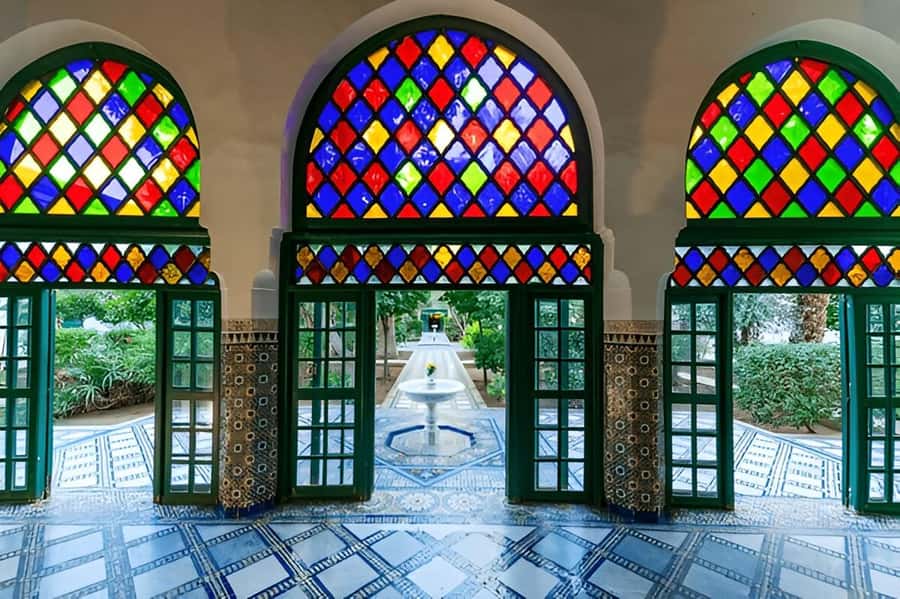
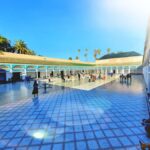
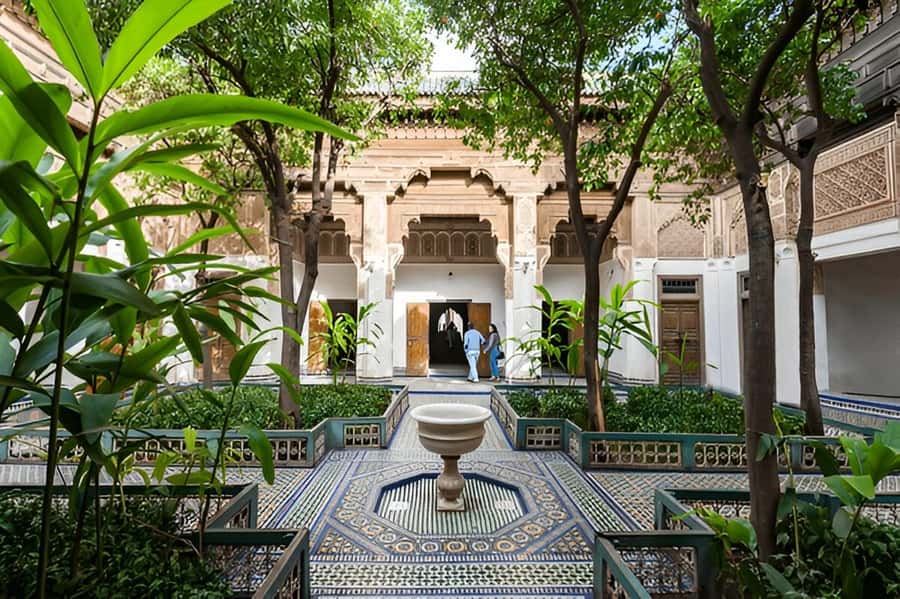
Bahia Palace is the kind of place where your brain needs a map. The good news: the tour gives you one. You start with a guided visit that helps you read the palace like a story—how rooms connect to courtyards, how decoration shifts by space, and why the layout matters.
You’ll spend roughly an hour at Bahia Palace, and that time is built for what visitors actually need. You get enough structure to understand the big picture, then you still have room to pause for photos. The highlights people tend to love here are the small-but-specific details: stucco ornament, colorful zellij tiles, and the carved cedar ceilings. When a guide points these out, you stop seeing Bahia Palace as just pretty walls and start seeing it as a system of light, craft, and status.
One practical caution: Bahia Palace can have accessibility limits when there’s work happening. In past visits, people have noted the site can be under maintenance after events like earthquakes. If you’re unlucky, you may not see every corner at full capacity. That said, the core courtyards and signature design elements are usually still the main focus, and a good guide will steer you toward what’s accessible.
Tip that saves time: wear comfortable shoes and keep your water handy. Even though it’s only about an hour inside, you’ll still walk between rooms and courtyards more than you expect.
You can also read our reviews of more tours and experiences in Marrakesh.


Ben Youssef Medersa: why this Qur’anic school hits hard on a short tour
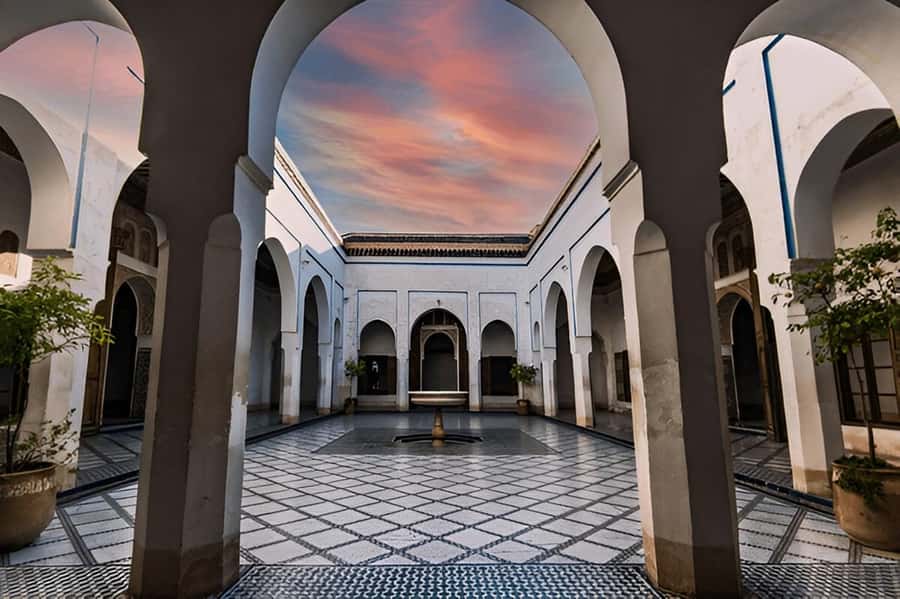
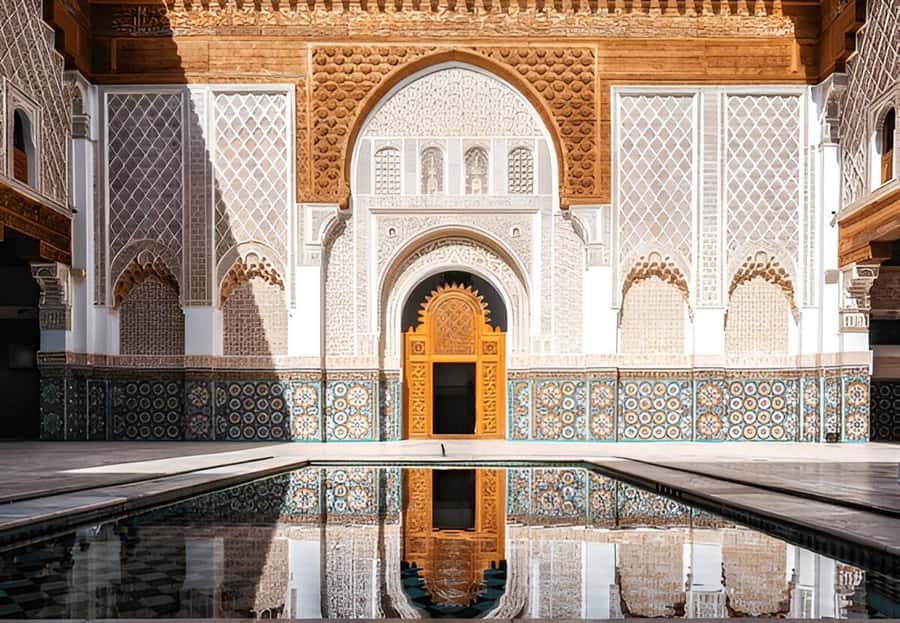
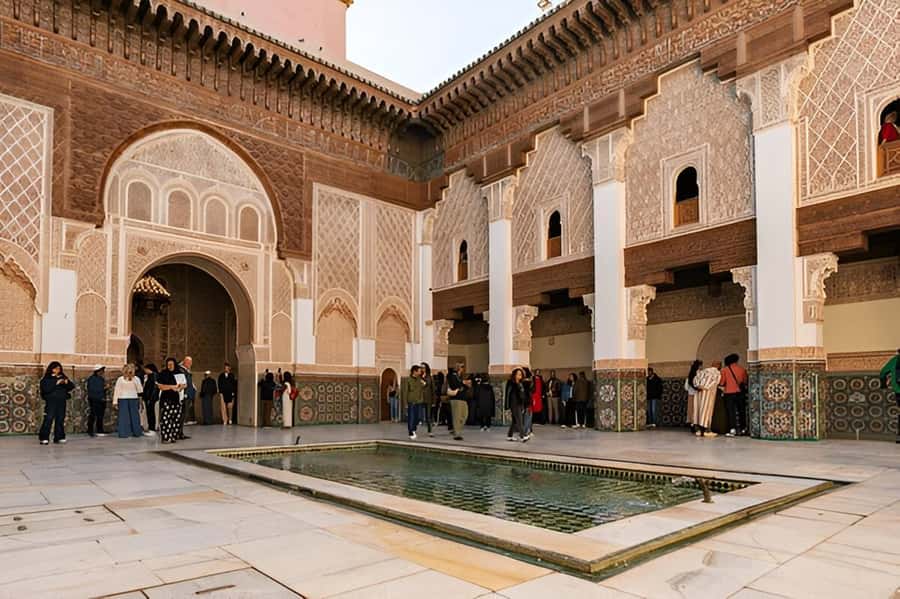
Ben Youssef Medersa is one of North Africa’s standout Islamic schools, and the tour takes advantage of that in a smart way. You’re not sent there just to take pictures from the doorway. You get a guided look at what makes the building special, then you get a quieter moment to absorb it.
This visit is timed for about 30 minutes on the ground, which sounds short until you realize the architecture does the talking. The centerpiece details include intricate stucco, zellij mosaic work, and cedarwood carvings. Those aren’t random decorations. They reflect a tradition where art supports learning, atmosphere matters, and craftsmanship is part of daily life.
When the guide brings it to life, the place becomes more than a monument. You’ll stand in the courtyard and think about the students who studied there, how instruction moved through the spaces, and why the design feels calm even with the medina outside. That contrast is a big reason this stop works so well on a short itinerary.
Pay attention to the design layers as you walk:
- Look for repeating patterns and borders that help orient you.
- Notice how the courtyard changes how you experience sound and light.
- Let the cedar carving details be your “visual anchor” as you move through rooms.
If you care about architecture, this is the stop where the guide can make the biggest difference. Names like Hassan, Medhi, Muhammad, and Houcine have come up for their clear explanations and patient pacing.
Koutoubia photo stop and Mellah: the Medina context you need before souks
A lot of Marrakech tours jump straight into the souks. This one earns its place first. After meeting up near Jemaa el-Fnaa, you start with a Koutoubia Mosque photo stop (with guided context and a bit of free time). Even if you can’t linger like you would at a full guided visit, this pause helps you orient yourself. You see a recognizable landmark early, which makes later maze-walking feel less like chaos.
Then you pass through the Mellah, the historic Jewish quarter. On paper it’s only a short stop, but it matters because it gives you a second layer of Marrakech’s story. The Mellah isn’t just a “quick look” area—it’s a reminder that the medina has held different communities over time, and that those histories shaped neighborhoods and trade.
The tour structure keeps Mellah brief (about 10 minutes), so you won’t get a deep dive on every detail. Still, it’s enough to help you understand why certain alleys, storefront rhythms, and local crafts feel the way they do. If you want to spend longer here, use your shopping time later to circle back on your own.
Souk Semmarine and shopping stops: how to buy without getting played
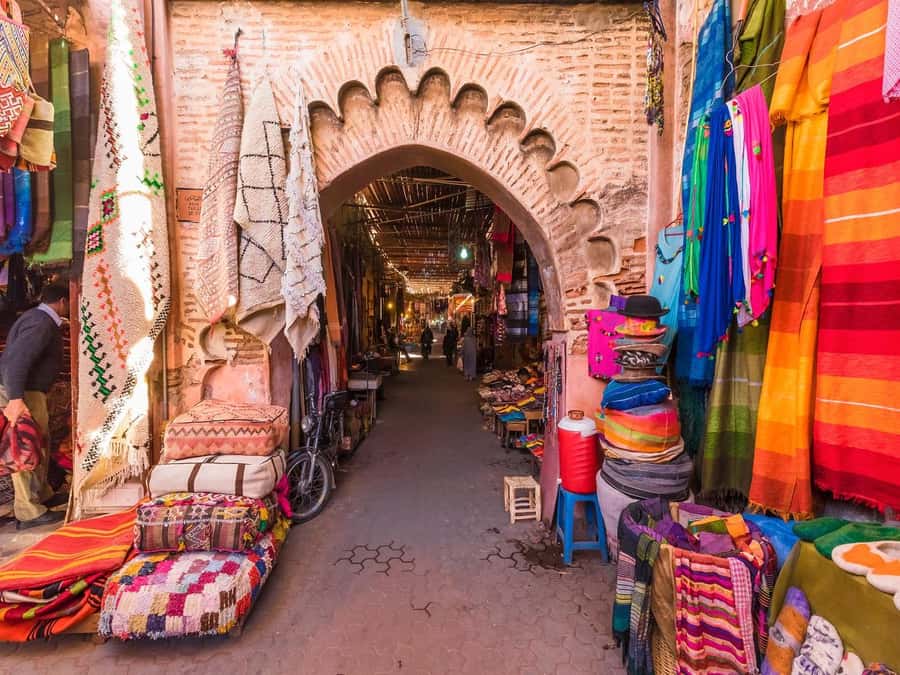
Now we get to the part most people came for: Souk Semmarine and the nearby Medina shopping lanes. This is where a guide matters, because the souks can be a lot of noise and motion. A good guide doesn’t just point. They help you interpret what you’re seeing and who you’re looking at.
You’ll have a shopping window in the Medina (about 30 minutes) and another dedicated souk shopping period at Souk Semmarine (about 20 minutes). That timing is useful because it prevents two common problems:
1) You rush purchases before you understand what you’re actually paying for.
2) You over-shop because you keep wandering with no plan.
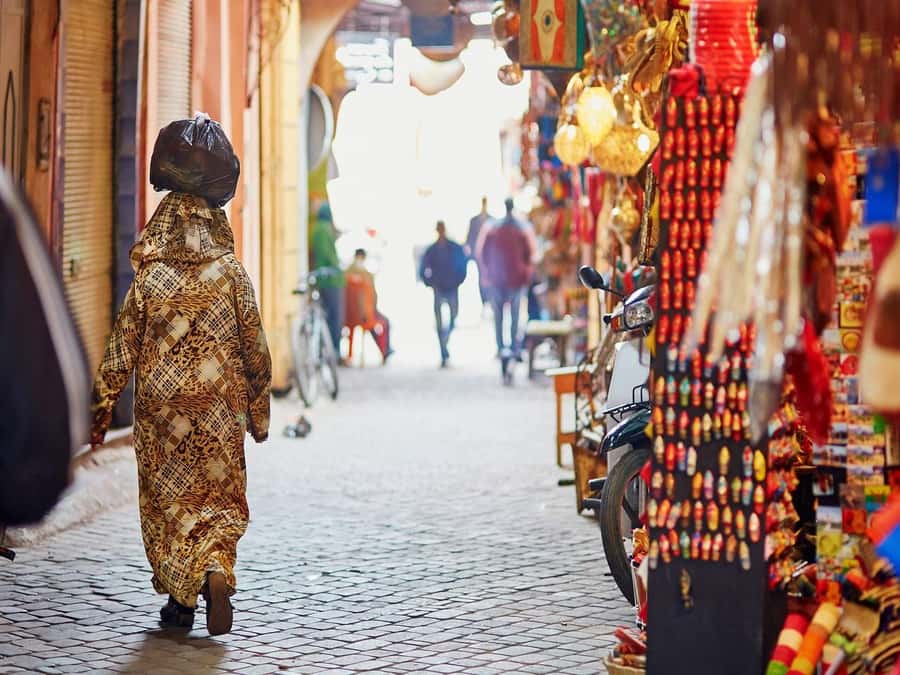
During the souk time, expect a mix of crafts and materials. The tour aims to take you past different kinds of work, including areas associated with leather crafting and metalworking, along with sections where you’ll see textiles, pottery, spices, and traditional Moroccan lanterns.
Here’s how to shop smarter on this kind of guided stroll:
- Pick one category to focus on (spices, lanterns, or a small leather item).
- Decide your budget early, then compare. You don’t need to bargain blind.
- Treat the guide as your translator for value: ask what a piece is made from and what the pattern usually means in local terms.
Some guides also steer people toward places they know well, sometimes by introducing you to shopkeepers who can explain materials and give product demos. That can save you time from random storefront guessing. In real-world tours, guides like Charif and Abdul are especially praised for keeping shopping relaxed and helping people understand what they’re looking at.
Jemaa el-Fnaa finish: getting your bearings in the biggest square
You end with a stop at Jemaa el-Fnaa, one of Marrakech’s main public squares. On this tour, it’s brief—about 10 minutes—so don’t plan on turning it into a full evening plan.
Instead, use it like a checkpoint. You’ll get guided context and a photo stop moment. This is your chance to:
- Confirm which direction feels right to you for dinner.
- Spot landmarks so you can navigate back to your lodging later.
- Decide if you want to return for the performances, food, and nighttime energy on your own schedule.
If you’re worried about getting overwhelmed, the smart move is to do this tour early in your trip. After, you’ll recognize major lanes and know which areas feel comfortable to revisit.




Price and entrance fees: does $17 really work out?
The tour price is $17 per person for a shared, guided experience lasting about 3 hours. That base price covers the guide and the tour format, including the key benefit of a skip-the-ticket-line approach at monuments and the guide accompanying you inside.
But two major entrance fees are separate:
- Bahia Palace: 100 DH
- Ben Youssef Medersa: 50 DH
So you should budget for those additional costs. Still, the total tends to make sense if you value guided interpretation. A palace and medersa visit without context can feel like you’re just collecting photos. With a guide, you’re learning what those surfaces and spaces were built to communicate—craft skill, social power, religious education, and the design logic of the medina era.
Value also comes from time efficiency. In 3 hours you hit multiple must-see sites—Koutoubia as a landmark orientation, Bahia Palace, Mellah, Ben Youssef, Souk Semmarine, and a short Jemaa el-Fnaa finish. If you’d try to assemble that yourself, you’ll spend more time figuring out entrances and routes than you think.
My practical take: if you’re short on time in Marrakech and you want your first day in the Medina to feel understandable, this is a good use of money. If you’re already a confident medina navigator and you only care about one monument, you might prefer to pay less and go solo.
Logistics that can make or break your morning
Meeting point matters here. The tour meets in front of Hôtel Restaurant Café de France near Rue des Banques by Jemaa el-Fnaa. Because the square is surrounded by many tour groups, the location can feel chaotic when several meetups happen at once.
Here’s how to reduce stress:
- Arrive a bit early and scan for your guide instead of assuming you’ll be picked out instantly.
- If you’re traveling with people, keep everyone together before the group starts moving.
- Bring your patience. The medina edge is crowded, and that part is outside anyone’s control.
Language is another detail to consider. You can request an English, French, Spanish, or Italian speaking guide, though availability isn’t guaranteed. The tour also lists Arabic, English, French, and German as possible languages. If language clarity is a must, set your expectations early and be ready to adapt.
Pacing is designed for a short visit, with plenty of guided time plus small free-time blocks for photos and shopping. In past experiences, guides like Lahsen, Hassan, Mo, and Muhammad are praised for answering questions and adjusting pace so you don’t feel like luggage moving through rooms.
What to bring for a 3-hour walking day
This tour is manageable, but you’ll be on your feet in heat and crowds. Bring:
- Comfortable shoes (non-slip if you have them)
- Water
- Sports shoes if your feet get tired easily
If you’re visiting during hotter months, plan for more frequent sips and shorter photo stops. One guest specifically mentioned handling extreme heat while still covering all the key sites, which is a good reminder to dress for walking, not for photos.
Also, have a small plan for payments. Entrance fees are separate, so keep cash ready for those monument tickets if you’re asked to pay on the spot.
Who should book this tour, and who might skip it
This tour is ideal if you want a guided introduction to Marrakech without spending an entire day in planning mode. It’s especially good for:
- First-time Marrakech visitors who want context fast
- People who care about architecture and want help spotting details
- Families and small groups that need structure and short free-time breaks
You might skip it if you:
- Want a slow, hours-long Medina shopping mission with no monument stops
- Prefer totally independent travel with zero guiding
- Only want one site (for example, only Bahia Palace or only Ben Youssef), since you’ll still pay for the whole circuit
Should you book this Bahia Palace, Ben Youssef Medersa, and Souks tour?
Yes, if your goal is to make your first Medina day click. The combination works because each part supports the next: Koutoubia gives orientation, Bahia teaches you how to read a palace, Ben Youssef shows how design serves education, and the souks finish the day with craft and shopping reality.
Book it especially if you like the idea of having a guide point out what to look for in stucco, zellij, and cedar carving instead of just wandering past them. The main downside is cost add-ons for entrances and the chance that meeting times can feel busy near Jemaa el-Fnaa—simple issues if you show up with a little buffer.
FAQ
Are entrance fees included in the $17 price?
No. The tour price includes the guide, but monument entrances are not included. Bahia Palace is 100 DH per person, and Ben Youssef Medersa is 50 DH per person.
How long is the tour?
It runs for about 3 hours, with guided time at each stop plus short free-time windows for photos and shopping.
Where do I meet the tour?
Meet in front of Hôtel Restaurant Café de France, Rue des Banques, near jamaa el-fnna, Marrakech 40000, Morocco.
Do I need to wait in line for the monuments?
The tour includes skip-the-ticket-line, and your guide accompanies you inside each monument.
What languages are available for the guide?
You can select a preferred language (English, French, Spanish, or Italian). The tour also lists Arabic, English, French, and German as available languages, but availability can’t be guaranteed.
Is this tour wheelchair accessible?
Yes. The tour is wheelchair accessible.
Can I cancel and get a full refund?
Yes. You can cancel up to 24 hours in advance for a full refund.