REVIEW · MARRAKESH
Marrakech: Cultural Bicycle Tour with Pastry and Tea
Book on GetYourGuide →Operated by Pikala bikes · Bookable on GetYourGuide
This ride turns Marrakech into something you can feel. I love the clay-oven bakery stop (bread is a daily obsession here), and I also like how the tour builds in zellige tile craft and hammam culture so you understand more than just landmarks. Guides such as Hamid and Rabab are praised for being friendly and for keeping the group moving with care, which matters a lot once you’re in traffic.
The one thing to keep in mind is that the cycling is for people who are road-aware and comfortable sharing space. The first stretches through narrow souk lanes can feel intense because Marrakech has mopeds, carts, pedestrians, and zero patience for panic.
In This Review
- Quick Hits: What Makes This Tour Worth Your Time
- Price and What You Actually Get for $34
- Meeting at Pikala Bikes: Bikes, Support, and a Realistic Pace
- Entering the Medina: Traffic Chaos You Learn to Read
- Zawiya of Sidi Bel Abbas: The First Stop That Sets the Tone
- The Clay-Oven Bakery: Bread in Morocco Is a Big Deal
- Place des Ferblantiers: Snack Break With Local Energy
- Mosaic and Zellige Tile Craft: Seeing the Work Behind the Icon
- Hammam Tradition: A Social Ritual, Not Just a Bathroom
- Royal Palace Gardens (Dar El-Makhzen): Impressive Views Without the Inside Ticket
- Church of the Holy Martyrs and Koutoubia Mosque: Marrakech’s Layers in One Route
- Hidden Gems Between Stops: Why Short Pass-Bys Are Part of the Point
- Modern Marrakech (Gueliz & Hivernage): The Contrast Ride That Helps You Understand the City
- The Final Stop at Pikala Cafe: Mint Tea and a Chance to Breathe
- Who This Tour Is For (and Who Should Skip It)
- Should You Book This Marrakech Cultural Bicycle Tour?
- FAQ
- Where is the meeting point?
- How long is the bicycle tour?
- How much does it cost?
- What languages are the live guides?
- What’s included in the price?
- Is hotel pickup or drop-off included?
- Do I need to be a confident cyclist?
Quick Hits: What Makes This Tour Worth Your Time
- Clay-oven bread: you taste fresh Moroccan bread and learn why it matters every day
- Zellige tile history in real workshops: see how the iconic mosaics are made, not just photographed
- Royal Palace gardens from the outside: you get context on Morocco’s monarchy without a ticket maze
- Hammam culture as a social ritual: you learn how public baths fit daily life
- A contrast ride into Gueliz and Hivernage: wide roads and modern Morocco after the medina
Price and What You Actually Get for $34
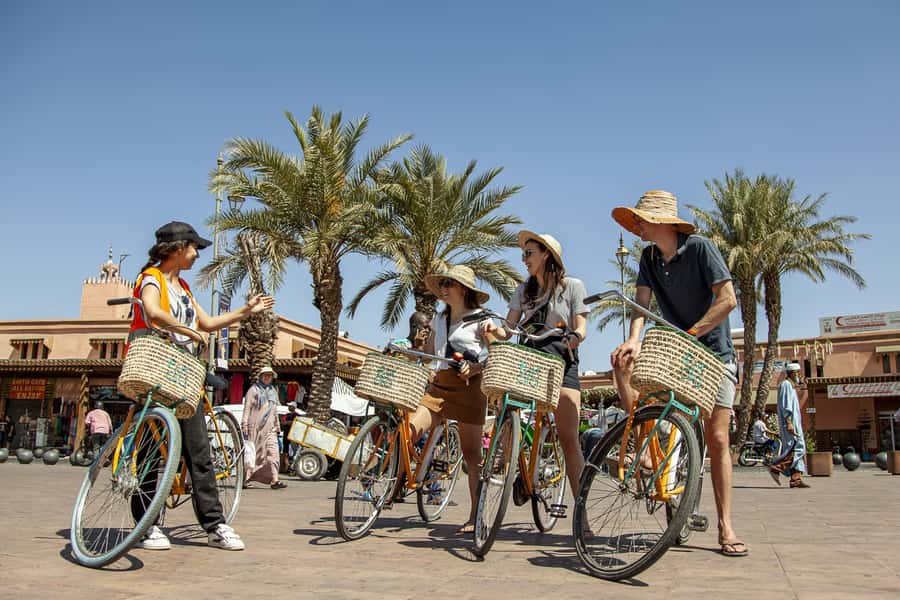
At $34 per person for about 3 hours, this tour feels like good value because it blends several stops you’d otherwise piece together yourself. You’re not just getting bike time; you’re also paying for guided context and for entry to the local sites that the route is built around.
You also get a practical food-and-water setup: water and fruits, plus juices and Moroccan pastries during a cultural café break. Add sunscreen and free entrance to the local stops, and the total experience starts to look like a well-priced day activity rather than a sightseeing-only stroll.
The trade-off is simple: you’re paying to ride and learn efficiently. That means the pace is active, and you’ll want to be comfortable getting around on a bike in traffic.
You can also read our reviews of more tours and experiences in Marrakesh.


Meeting at Pikala Bikes: Bikes, Support, and a Realistic Pace
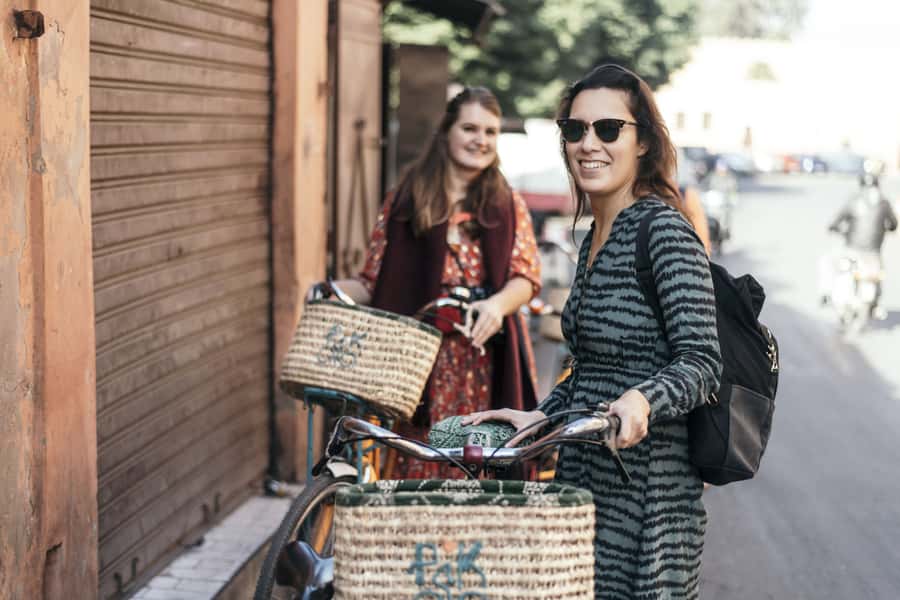
You start at Pikala Bikes. From there, expect a route that mixes short photo stops with longer stretches where you’re simply riding and absorbing the city’s rhythm.
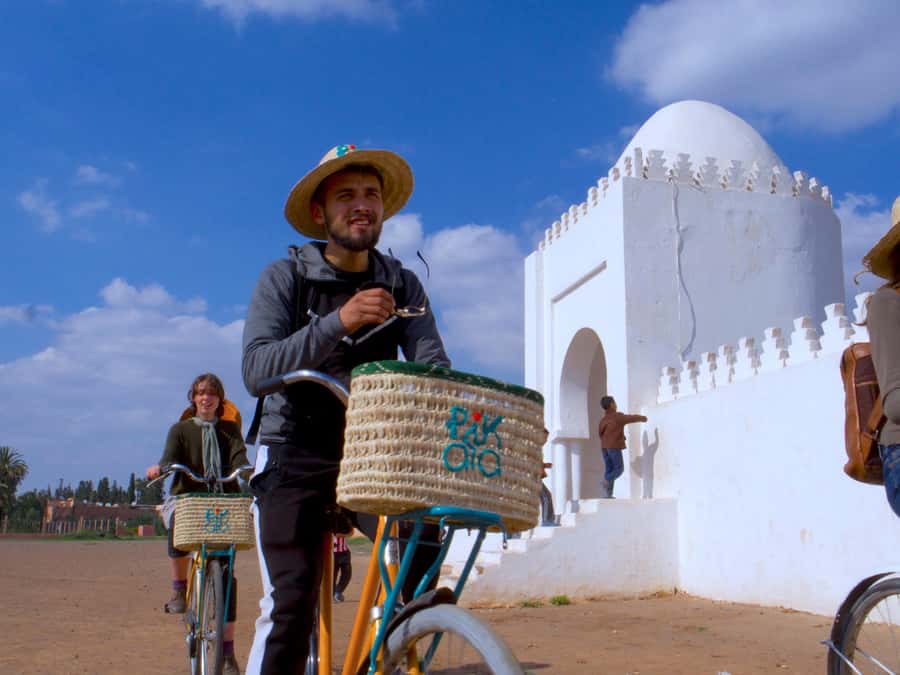
Bike-wise, the recurring theme is that the bikes feel solid (some riders call them a bit heavy), but they’re set up for comfort, including comfortable saddles. This is not a speed tour. It’s slower, stop-and-go, with time built in so you don’t feel like you’re sprinting through Marrakech.
One more practical point: guides are attentive about safety and about keeping everyone together. People specifically mention guides watching crossings and checking the group, which becomes essential once you enter the medina’s tight lanes.
Entering the Medina: Traffic Chaos You Learn to Read
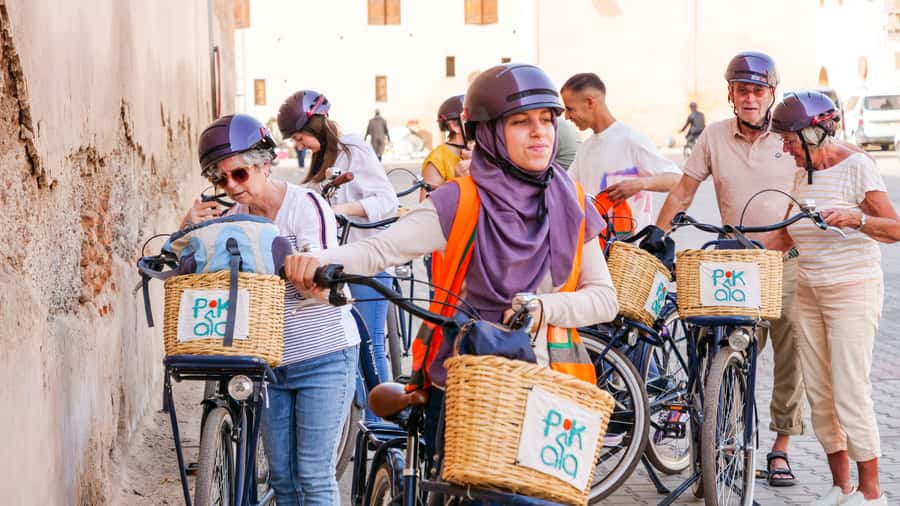
Here’s the honest part: Marrakech traffic can feel like organized chaos. It looks random at first, but you’ll quickly learn the local rhythm—drivers and pedestrians are working off different rules than you’re used to.
In the review feedback, cyclists warn that you need to be road aware and confident, especially during the first hour when the route threads through narrow alleys and souks. You’ll share space with mopeds, donkeys with carts, and plenty of pedestrians who may step into the road without looking like they’re planning to pause.
The good news is that the tour format helps. Guides lead the group in a way that keeps you from guessing alone, and they help you cross key moments as a unit. If you’re new to busy-city riding, build your confidence early, and don’t try to hero your way through it.
If you can choose a time slot, an earlier departure (like a 9:30am start mentioned in feedback) can make the streets feel quieter. That can help your first-hour nerves.
Zawiya of Sidi Bel Abbas: The First Stop That Sets the Tone
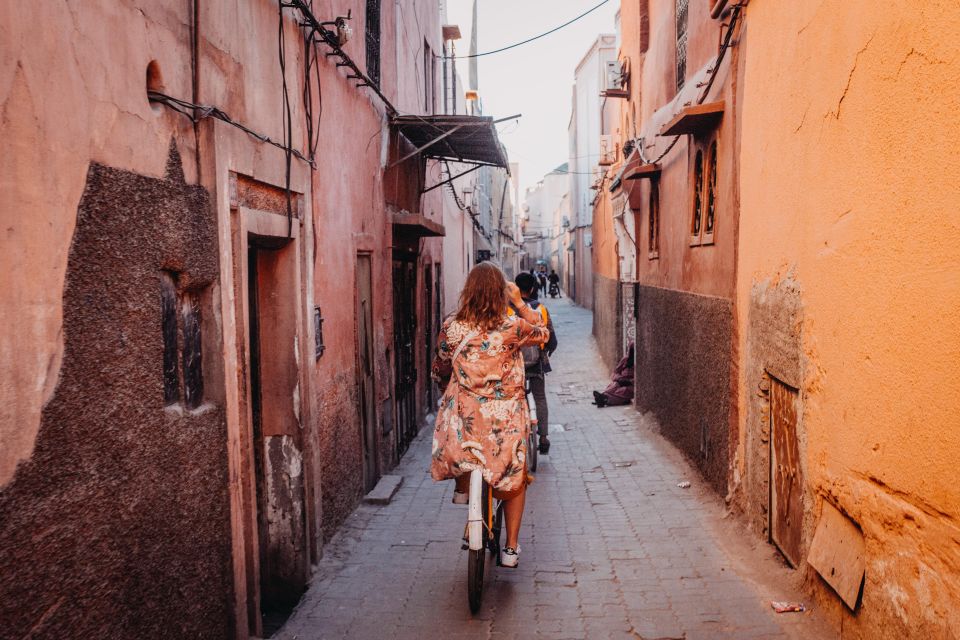
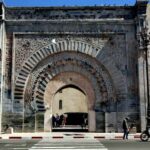
After meeting up, you start with a visit and photo stop at the Zawiya of Sidi Bel Abbas. This is your “orientation” moment—small, historic, and tied to the way neighborhoods in Marrakech organize around faith and community spaces.
It’s a short stop (about 15 minutes), so don’t expect a deep museum-style experience. Instead, use it as a mental warm-up: notice the details, ask what you can, and let the guide translate what you’re seeing into local meaning.
Why it’s useful: it helps you understand that the medina isn’t just a tourist corridor. It’s still lived-in, and religious sites sit inside real streets, not behind ropes.
The Clay-Oven Bakery: Bread in Morocco Is a Big Deal
One of the most rewarding parts of this tour is the traditional Moroccan bakery stop. You’ll step inside and watch bread being baked in a clay oven, then taste fresh Moroccan bread.
This matters more than it sounds. Bread here isn’t an afterthought—it’s tied to daily routines, family life, and the rhythm of markets. Watching the process gives you a concrete way to understand how food culture works on the street, not just in restaurants.
Practical tip: come ready to smell warm bread as the ovens heat up. The tour includes tasting, so you’ll get that sensory payoff without needing to hunt down an extra snack stop later.



Place des Ferblantiers: Snack Break With Local Energy
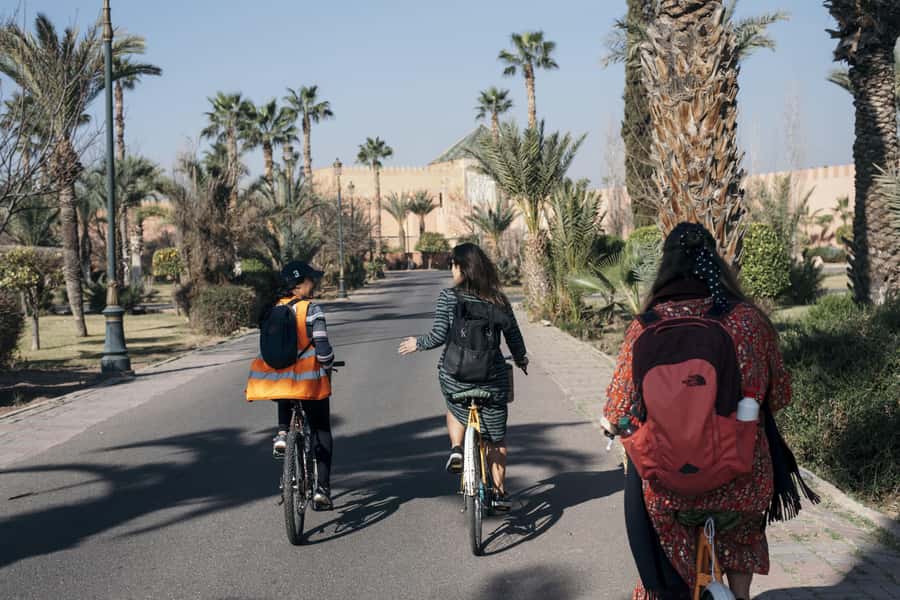
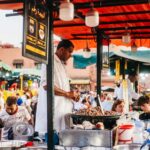
Midway through the ride, you hit Place des Ferblantiers. This is where you get a break time—plus scenic views on the way in and out (about 20 minutes total).
Why this stop works: it’s not framed as a formal attraction. It functions like a city pause. You can reset, regroup, and watch real-world activity without turning the whole ride into nonstop motion.
Because it’s a short break, you’ll want to use it smart:
- grab water and take a moment off the bike
- ask any quick questions you’ve been saving for the guide
- get ready for the next street sections while you still feel fresh
Mosaic and Zellige Tile Craft: Seeing the Work Behind the Icon
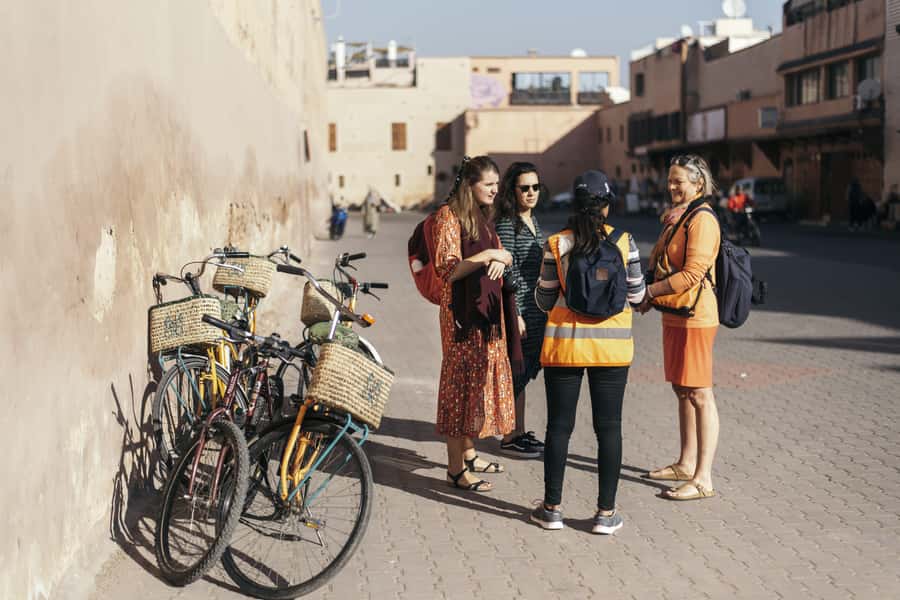
Morocco’s zellige tiles are famous, but photos don’t show the labor. This tour includes a tile-focused craft experience—built around how the mosaics are made and the cultural meaning behind the tradition.
Even if the stop itself is brief, you’ll come away with better context than you would from a quick souvenir shop visit. You’ll learn the art and history side in plain language and connect it to how these decorative arts show up across palaces and mosques.
What I like about including this mid-ride: it gives your brain something to focus on besides traffic and street noise. After this kind of stop, the medina feels less random. You start seeing patterns and craft wherever you look.
Hammam Tradition: A Social Ritual, Not Just a Bathroom
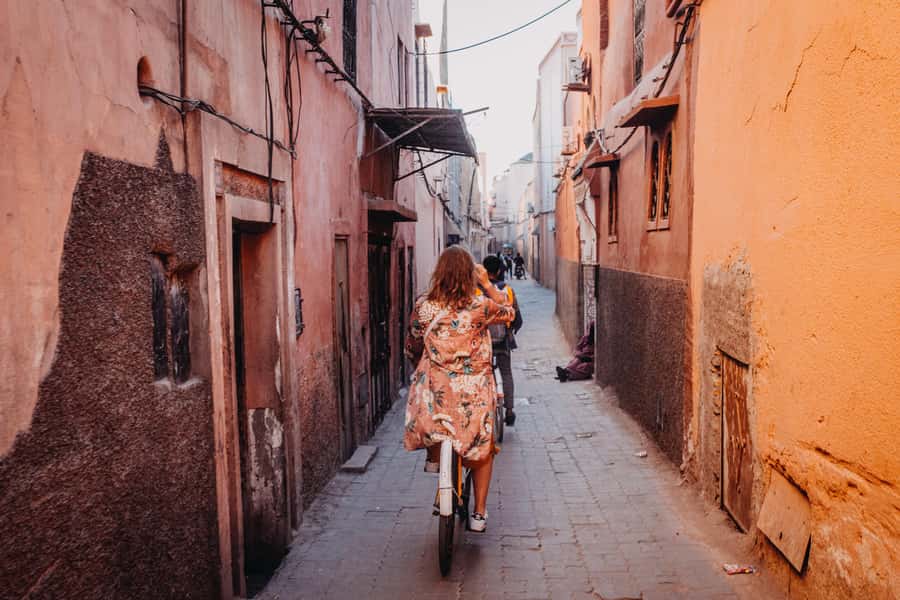
Another core piece of the experience is the traditional hammam stop. The tour explains the rituals and the social role of public baths in daily life.
This is one of those cultural moments that’s easy to misunderstand if you only think of it as hygiene. The better way to look at it is as a place where people meet, talk, and follow routines tied to the rhythms of family and neighborhood.
Why it’s valuable on a bike tour: the hammam stop breaks the route into something more than sightseeing. It gives you a window into how people handle comfort and care in everyday Morocco—right where the culture is practiced, not staged.
Royal Palace Gardens (Dar El-Makhzen): Impressive Views Without the Inside Ticket
You also ride past the public gardens around the Royal Palace (Dar El-Makhzen). This is an outside look, but it’s still meaningful.
You’ll admire the architecture from the outside and learn why the palace gardens matter in Moroccan monarchy and history. Even without entering, the setting helps you understand scale, layout, and the idea that power in Marrakech is anchored in place.
One practical note: since this is a pass-by viewing, you’ll want to keep your eyes up and follow your guide’s cues. Your photo will be good, but only if you’re paying attention during the riding moments around the gardens.
Church of the Holy Martyrs and Koutoubia Mosque: Marrakech’s Layers in One Route
Your ride includes a stop near Koutoubia Mosque. You’ll see it as part of the city’s street landscape rather than as a standalone destination.
You also make time for the Church of the Holy Martyrs. This mix matters. Marrakech isn’t only one story; it’s multiple communities sharing space, reflected in the religious buildings you pass.
Keep your expectations realistic: these are short stops. Use them to notice differences in design and setting, then rely on your guide to translate what you’re looking at so it clicks.
Hidden Gems Between Stops: Why Short Pass-Bys Are Part of the Point
There are a few “hidden gem” moments that are mostly pass-by and photo stops. At first, they can feel like filler if you’re expecting constant monument time.
But here’s why they work: they keep you from treating Marrakech like a checklist. You see the texture of the neighborhoods—small lanes, storefront rhythms, and street life that doesn’t sit still for tourists.
Think of these pass-by sections as your visual training wheels. They help you learn the city’s scale and movement before the route shifts into wider roads.
Modern Marrakech (Gueliz & Hivernage): The Contrast Ride That Helps You Understand the City
After the medina, you ride into modern Marrakech, including Gueliz and Hivernage. This is one of the tour’s best “aha” moments because it shows how the city balances old structures with newer life.
You’ll glide through wide boulevards, trendy cafés, and luxury hotels—less chaotic than the narrow alleys, and a reminder that Marrakech is not stuck in the past.
Why I think you’ll like this part: it changes your brain state. You get a different view, and you can compare what you learned in the old city to how daily life looks outside the walls.
The Final Stop at Pikala Cafe: Mint Tea and a Chance to Breathe
After the ride, you return to Pikala Bikes and the tour ends with a café segment at Pikala Cafe. You’ll have coffee or tea and local snacks (about 20 minutes).
This is a smart ending. By then, your legs are tired enough to appreciate a break, and your head is ready to process what you saw. Plus, tea gives you a natural way to ask one last question without feeling rushed.
In the feedback, people specifically mention spiced cookies and mint lemonade as welcome refreshment, which is a good sign: this isn’t just a token drink. It’s part of the lived experience.
Who This Tour Is For (and Who Should Skip It)
This tour fits best if you:
- like active sightseeing and can handle short rides between stops
- feel comfortable cycling in a busy city environment
- want culture through everyday habits like bread-making and hammam rituals
- prefer small-group guiding with real local context
You might skip it if you:
- aren’t confident navigating scooters, carts, and pedestrians
- want a slow walking pace without traffic exposure
- get stressed easily by moving through narrow streets
One more note from rider feedback: people describe it as fun, but also as an adventure. If you’re the kind of person who loves learning by doing, you’ll probably come away grinning.
Should You Book This Marrakech Cultural Bicycle Tour?
If you want a Marrakech experience that goes past the obvious photo spots, I’d book this. The value isn’t only the sites—it’s the way the route connects bread, craft (zellige), and daily rituals (hammam) with the real layout of the city, plus a contrast ride into modern neighborhoods.
Just be honest about your cycling comfort. If you’re ready to be road aware and treat traffic like part of the journey, you’ll get more out of every stop. If you’re not, consider a less traffic-heavy tour style.
FAQ
Where is the meeting point?
You meet at Pikala Bikes headquarters.
How long is the bicycle tour?
The tour lasts 3 hours.
How much does it cost?
The price is $34 per person.
What languages are the live guides?
The live tour guide is available in English and French.
What’s included in the price?
It includes water and fruits, juices and Moroccan pastries at a cultural café, sunscreen, and free entrance to the local stops.
Is hotel pickup or drop-off included?
No, hotel pickup and drop-off are not included.
Do I need to be a confident cyclist?
You should be road-aware and confident. The first hour through souks and narrow alleys can be more challenging due to traffic like mopeds and pedestrians, though the ride is described as not fast with regular stops.