REVIEW · LUXOR
Full Day Tour to East and West Banks of Luxor
Book on Viator →Operated by Emo Tours Egypt · Bookable on Viator
Luxor in one long, well-planned day. This private East and West Banks tour strings together the Valley of the Kings, Hatshepsut’s temple, Karnak, and Luxor Temple, with door-to-door A/C pickup from your hotel or cruise ship. It’s a practical way to see the big hitters without spending your time figuring out crossings, timing, or local transport.
What I like most is the value built into the format: you start with private transfers and bottled water, so you’re not sharing rides with strangers all day. Then you can upgrade to add a licensed guide and (optionally) entry fees and lunch, which is the difference between showing up and actually understanding what you’re looking at.
One thing to consider: it’s a packed 8-hour circuit with lots of standing and walking, and heat can make it feel rushed if you’re starting later than ideal.
In This Review
- Key things to know before you go
- The value of a private Luxor day that hits both banks
- West Bank start: Valley of the Kings and picking the right tomb time
- Hatshepsut at Deir el-Bahari: why this temple stops people in their tracks
- Colossi of Memnon: the giant leftovers of Amenhotep III
- Luxor Temple: Amunhotep III to Ramses II in one walking circuit
- Karnak Temple: where the scale hits you
- Upgrades that actually change the day: guide, entry fees, lunch
- Timing and heat: how to avoid the rushed-feeling version
- Shopping stops and staying polite-but-firm
- What the day feels like in the car
- Who this tour is best for (and who might want two days)
- Should you book the Full Day Tour to East and West Banks of Luxor?
- FAQ
- What does the base price include?
- How long is the tour?
- Where does pickup happen?
- Is the tour private or shared?
- Are entry fees included?
- Can I visit Tutankhamun’s tomb?
- Does the tour include lunch?
- What sites are included in the itinerary?
- Is there a mobile ticket?
- Is there free cancellation?
Key things to know before you go
- Private hotel or cruise pickup/drop-off in a late-model A/C vehicle means less hassle.
- A tight 8-hour route: West Bank monuments, Nile crossing, then East Bank temples.
- Entrance and guides are optional add-ons depending on the package you choose.
- Tutankhamun tomb entry can be added at the Valley of the Kings stop.
- Some departures include shopping stops (like alabaster) where you’ll want to be firm about your preferences.
The value of a private Luxor day that hits both banks
This tour is designed for people who want the classic Luxor experience without turning the day into a logistics project. You get private 2-way transfers from your hotel or cruise ship, so you’re not negotiating meeting points, taxis, or schedules. That matters in Luxor, where a small delay can snowball fast once you start moving between sites.
Price-wise, it starts at $15 per person—but that number is best understood as the base deal: transportation and bottled water are included, while entry fees and the guide depend on the option you select. If you don’t choose the upgrade, you’ll still see the monuments, but you’ll be handling tickets yourself at sites.
For me, the decision point is simple: if you want to know what you’re seeing and skip as much waiting as possible, the upgrade with a guide and prepaid entry fees tends to be the better value. If you’d rather go at your own pace with a more flexible budget, the base option can work—just plan for ticket lines and more self-guided time.
You can also read our reviews of more tours and experiences in Luxor.
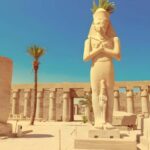

West Bank start: Valley of the Kings and picking the right tomb time
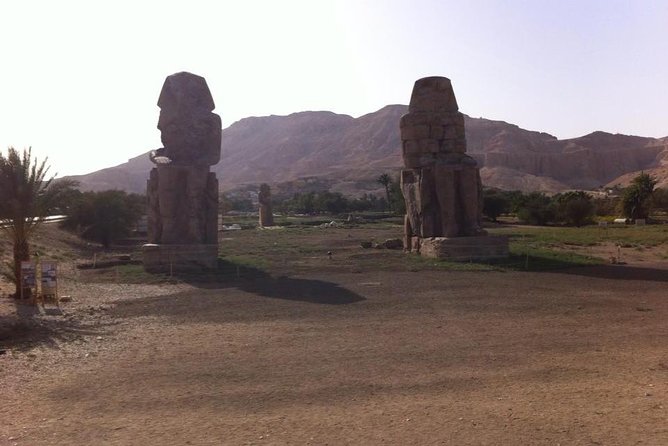
The day begins with the Valley of the Kings, one of those places that can feel both overwhelming and oddly calm once you’re inside. You’ll have about 2 hours here, and admission is not included unless you choose the option with entry fees.
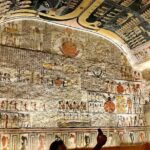
This valley is where you’ll find many royal tombs. The well-known names in this stop include Tutmosis I, Tutmosis III, Tut-Ankh-Amon (Tutankhamun), Ramses VI, Merenptah, and Amenhotep II. The tour also notes you can add admission to one of the most famous tombs, Tutankhamun, if you want to make your stop even more specific.
A practical tip: this is a high-demand site. If you’re the type who hates waiting, the prepaid-entry option (or pre-booking ahead) can be worth it. One strong theme from day experiences is that lines can be longer at certain major tomb entries, so anything that saves your time and keeps your day on track is a win.
Also, remember what you’re doing here. This isn’t a quick photo spot. You’re walking, reading, and entering tombs with a lot of detail packed into small spaces. If you’re heat-sensitive, arrive ready: water is helpful, and keeping your pace steady makes the difference between enjoying it and feeling cooked.
Hatshepsut at Deir el-Bahari: why this temple stops people in their tracks
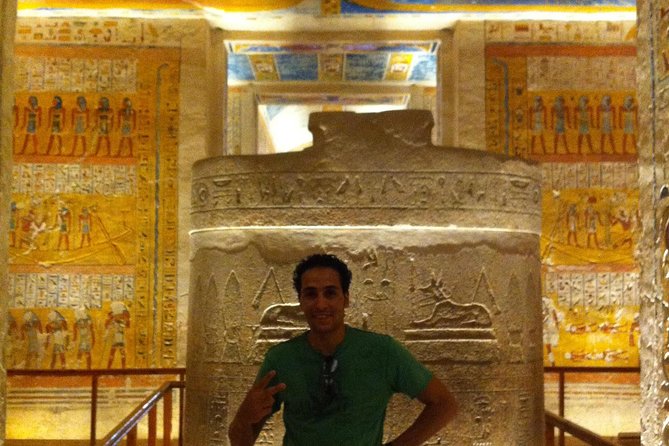
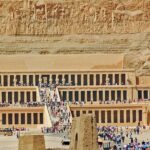
Next up is the Temple of Hatshepsut at Deir el-Bahari, with about 1 hour on the site. This is where you’ll see the work of Egypt’s only pharaonic woman, Hatshepsut, who ruled during the 18th Dynasty (around 1490–1469 B.C.).
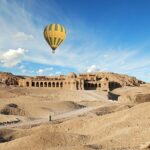
The setting is part of the power. This isn’t just a temple—it’s a staged view across the cliffs and terraces, and the architecture is built to make you look upward and outward. Even if you only give the site an hour, it’s enough time to get your bearings and notice how the complex is laid out.
What I’d watch for: don’t rush the first impressions. Spend a few minutes taking in the overall geometry before you focus on carved details. If you’ve added a guide, this is one of the best places to ask questions, because it’s the kind of site where context turns stone into a story.
If you didn’t upgrade for a guide, you can still enjoy it. Just know you’ll be relying more on what signage and your own reading can cover. Hatshepsut’s temple works best when you understand who she was and why she built what she built.
Colossi of Memnon: the giant leftovers of Amenhotep III
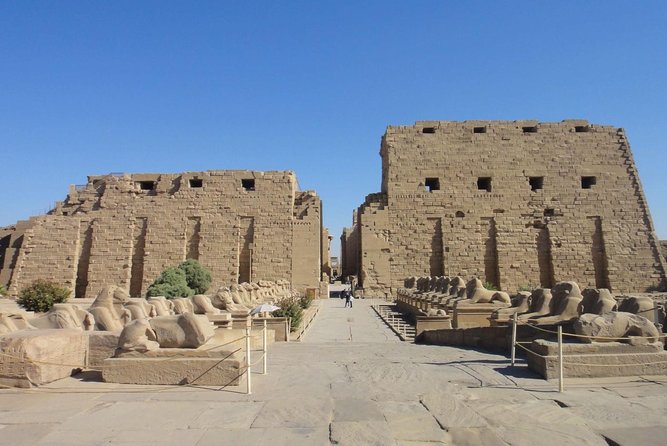
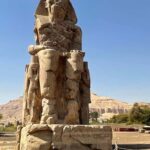
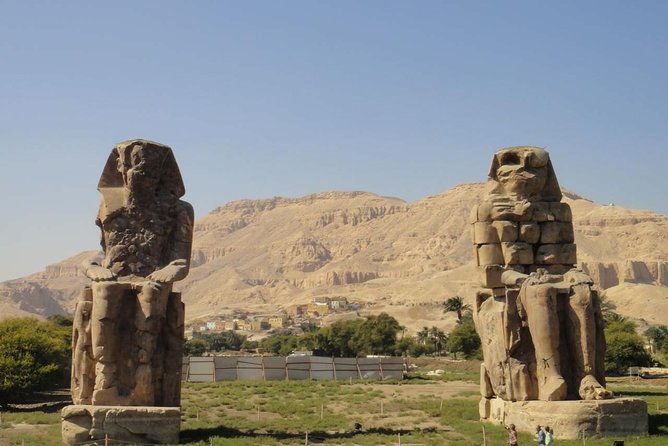
After Hatshepsut’s temple, you’ll visit the Colossi of Memnon, the two towering statues associated with the mortuary temple of Amenhotep III. You’ll have about 1 hour here.
These statues are famous because they feel almost unbelievable at eye level. They’re monumental, solid, and strangely human in scale once you stand far enough back to compare yourself to them. Even though it’s a shorter stop, it works well as a break from heavier temple walking—less time inside, more time absorbing the sheer size and shape.
If you’re the type who likes contrasts during a day, this stop delivers it. Hatshepsut is refined and structured, while the Colossi are like the last words of an older plan.
Luxor Temple: Amunhotep III to Ramses II in one walking circuit
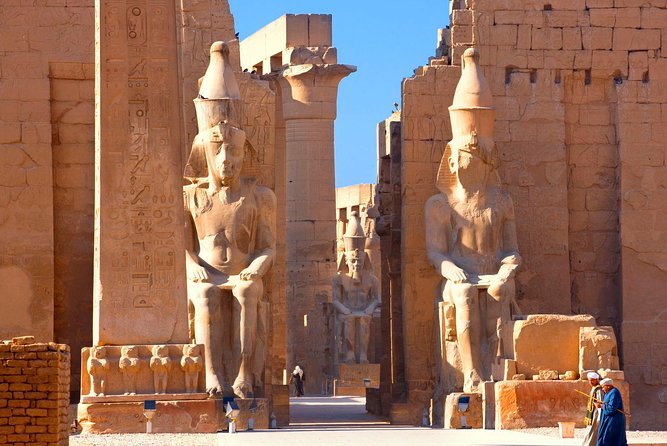
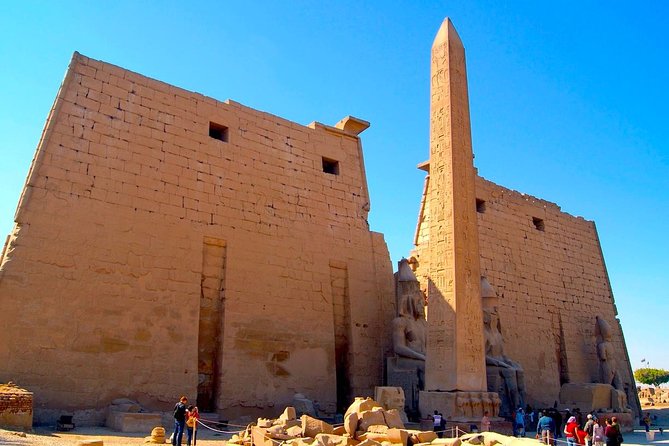
On the East Bank, you’ll next see Luxor Temple, with about 2 hours allotted. This temple was built by Amunhotep III in the 18th Dynasty, then completed by Ramses II during the 19th Dynasty.
Luxor Temple is great because it lets you connect the New Kingdom layers. It’s not one single “moment.” It’s more like Egypt editing and re-editing the same sacred space over time. If you have a licensed guide on your upgrade, this is usually where you’ll start noticing the pattern in the details—how gods, kingship, and architectural choices all reinforce each other.
One caution: if you’ve skipped the guide upgrade, Luxor Temple can still be impressive, but you’ll want to keep an eye on interpretation. Without someone to point out what matters most, you can end up walking through the greatness without learning how to read it.


Karnak Temple: where the scale hits you
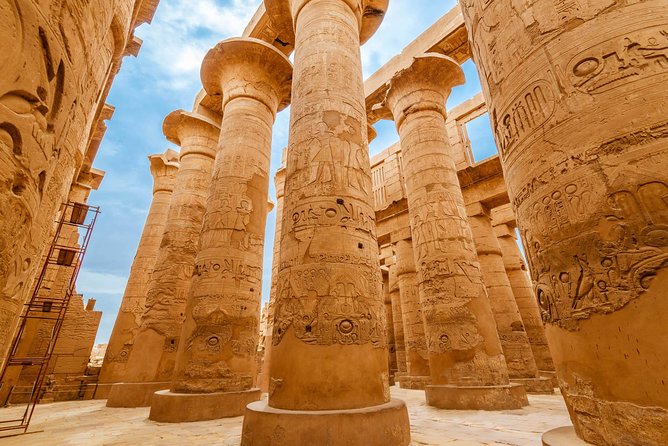
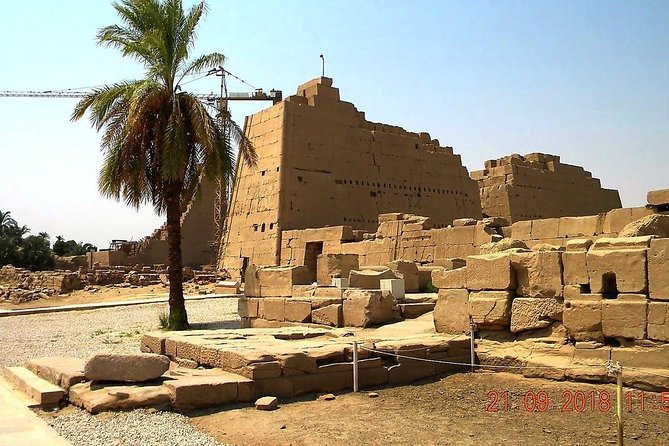
Your final major stop is Karnak Temple, typically with about 2 hours. Karnak is often described as one of the greatest examples of worship architecture in ancient Egypt, dedicated to Amon, along with Mut and Khonsu.
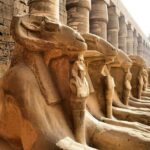
Here’s the real reason Karnak deserves time: the scale isn’t just big—it’s repetitive in a purposeful way. Rows, columns, pylons, and temple spaces create a sense that the civilization wanted you to feel small while also feeling surrounded by meaning.
If your day feels tight, Karnak is where you can accidentally rush. Try to slow down at least once inside the complex. Stand still long enough to take in how the space changes as you move from open areas into more structured corridors.
If you’ve paid for a guide and prepaid entry fees, this is a strong return on investment. You’ll get help sorting what you’re looking at: which areas are the focus, what the major connections are, and how Amon and the associated worship fit into the overall temple plan.
Upgrades that actually change the day: guide, entry fees, lunch
This tour offers several upgrade levels: licensed guide, prepaid entry fees, and lunch (each depending on the option you choose). Here’s how those options play out in real life.
- With a licensed guide, the main benefit is speed of understanding. A guide helps you move through the sites with questions already answered. You’re not just seeing walls; you’re seeing choices.
- With entry fees handled ahead, you reduce the friction that comes with buying tickets on the spot. That’s especially helpful at top-demand tomb entry spots.
- With lunch included, you’re buying back time and decision fatigue. That said, if you’re particular about food or allergies, you may still want to confirm what’s offered in advance. A “good enough” lunch can be fine, but you shouldn’t have to guess.
If you’re deciding between base and upgrade, here’s the simplest way to pick: if this is your one Luxor day, upgrade. If you’re in Luxor for multiple days and plan to return, the base might work.
Timing and heat: how to avoid the rushed-feeling version
This is an 8-hour day built on five timed stops: Valley of the Kings (2 hours), Hatshepsut (1), Colossi of Memnon (1), Luxor Temple (2), Karnak (2). That structure is good on paper, but timing in Luxor is real.
In extreme heat—some days can reach brutal temperatures—it’s easy to feel your energy drop early. If your pickup runs late, your day can turn into a “see everything fast” marathon rather than a “see everything well” museum tour.
My best advice is boring but effective: confirm your pickup time and push for an early start when possible. You’ll thank yourself later, especially at the Valley of the Kings and Karnak, where the time pressure can show up fast.
Shopping stops and staying polite-but-firm
One recurring pattern on these kinds of Luxor day routes is a stop connected to local crafts—often described as an alabaster factory, and sometimes a broader art/perfume kind of shopping stop. Some people found it interesting; others found the pressure awkward or felt the value wasn’t in line with expectations.
So go in with a mindset: you’re on a monument tour, not a sales call. If shopping isn’t your thing, be direct. Tell the driver or guide you’ll wait in the car during the stop, or that you want to keep it short. If you do like crafts, it can still be worth a quick look—but you should decide what you buy, not the other way around.
Also, don’t feel guilty for saying no. In Egypt, shopping is part of the rhythm for many tours, but you still control your own time.
What the day feels like in the car
Because it’s private, the drive time feels different than a group tour. You can usually count on a direct route from your pickup point to each site, with bottled water on hand. In some guides’ styles, you may also be offered small practical help like water refills or restroom breaks during the day.
Names come up often for high-quality service—guides such as Salwa, Tuqa Yasser, Mahmoud, Ahmed, Mohamed Hashem, and Sam are mentioned for clear English and for making the day feel smooth. Drivers like Alaa also get called out for kindness and practical pacing (snacks, stops, and general care).
You’ll get the most value from a day like this when the guide does two things: explains what matters at each stop, and keeps the schedule from turning into a scramble.
Who this tour is best for (and who might want two days)
This works best for you if you want a single-day sweep of Luxor’s key East and West Bank sights with minimal hassle. It’s also a good fit if you’re traveling with family or a small group and you don’t want to piece together transport.
It’s less ideal if you hate heat and long walking days. Even with private transfers, it’s still a heavy route. If you’d rather slow down, linger, and take photos without feeling rushed, two days can be a better match than forcing everything into one schedule.
Should you book the Full Day Tour to East and West Banks of Luxor?
If you want the classic Luxor checklist—Valley of the Kings, Hatshepsut, Colossi of Memnon, Luxor Temple, and Karnak—this is a solid way to do it in one day. The private A/C pickup and drop-off is the main comfort win, and the upgrade options (guide and prepaid entry fees) are where you can turn it from sightseeing into something you’ll actually remember.
Book it if:
- you have only one day in Luxor
- you’d rather let someone handle the driving and timing
- you want the option to add a licensed guide and entry fees
Skip or reconsider if:
- you know you struggle in extreme heat and hate tight schedules
- you’d rather avoid any chance of shopping stops, even if you can opt out
- you want lots of downtime at fewer sites
If you book, do two things: confirm the pickup time so you start early, and decide before you go whether you want the guide/entry upgrade. That one choice will shape how meaningful the day feels.
FAQ
What does the base price include?
The tour includes private A/C transfers (pickup and drop-off), bottled water, and a private tour. Entry fees, a guide, and lunch are not included unless you pick an upgrade option.
How long is the tour?
It runs for about 8 hours.
Where does pickup happen?
Pickup is offered from your Luxor hotel or cruise ship, with private transfers to and from your pickup point.
Is the tour private or shared?
This is a private tour/activity, so only your group participates.
Are entry fees included?
Entry fees are not included in the base package. They depend on the option you select, and you may have prepaid entry fees if you upgrade.
Can I visit Tutankhamun’s tomb?
Admission to one of the most famous tombs, Tutankhamun, can be added as an option during the Valley of the Kings stop.
Does the tour include lunch?
Lunch is not included by default. It depends on the option you choose.
What sites are included in the itinerary?
You’ll visit the Valley of the Kings, Temple of Hatshepsut at Deir el-Bahari, Colossi of Memnon, Luxor Temple, and Karnak Temple.
Is there a mobile ticket?
A mobile ticket is listed as included.
Is there free cancellation?
Yes, you can cancel for free up to 24 hours in advance for a full refund.