REVIEW · LUXOR
Luxor Day Tour: Valley of Kings & Queens & Hatchepsut Temples
Book on Viator →Operated by Reflections Travel · Bookable on Viator
Eight hours in the Valley beats waiting around. This private Luxor day tour strings together the big West Bank names—Valley of the Kings, Valley of the Queens, Hatshepsut, and Medinet Habu—with an Egyptologist guide and air-conditioned transfers. I like that it’s structured enough to feel efficient, but it still leaves room for the guide to explain what you’re seeing as you go, including the Book of the Dead details that show up in the nobility tombs.
Two things I really like: first, the Egyptologist guide part. I’ve seen guides like Abdo Esmael and Mohamed Awad turn hieroglyphs and burial myths into something you can actually picture. Second, the price bundles the core stuff—admission fees for the main stops, plus pickup and return by A/C vehicle, and even a bottle of water.
One thing to consider: it’s a packed day with a lot of walking and sun, so it can feel long even though it’s only about 8 hours. And while most guides keep it focused on the sights, I’d be ready to politely decline any added sales stops if you don’t want them.
In This Review
- Key highlights I’d build my day around
- West Bank Power Tour: what 8 hours really means
- Price and Logistics: $89.24 that includes the hard costs
- Valley of the Kings: 63 tombs and the Tut question
- Hatshepsut at Deir el-Bahari: meaning, power, and stone work
- Colossi of Memnon: a 20-minute statue breather
- Medinet Habu and lunch time: Ramses III’s monument mood
- Deir el-Medina: seeing the artists behind the tombs
- Valley of the Queens: Nefertari’s tomb and the Nobles’ afterlife map
- The potential curveballs: timing, sales stops, and guide behavior
- What to bring: your feet and your sun-proof plan
- Who this Luxor West Bank tour is best for
- Should you book this Luxor day tour?
- FAQ
- What sites are included on this Luxor day tour?
- How long is the tour?
- Do I get hotel pickup and return transportation?
- Is an Egyptologist guide included?
- Are entrance/admission fees included?
- Is bottled water provided?
- Is lunch included?
- Is tipping included in the price?
- Is airport pickup included?
- What is the cancellation policy?
- Is this tour private?
Key highlights I’d build my day around
- A West Bank best-of itinerary that covers Kings, Queens, Hatshepsut, Medinet Habu, Deir el-Medina, plus the Colossi of Memnon
- Licensed Egyptologist guidance—not just a driver with a phone, but someone trained to explain the tomb stories
- Admissions included for each named site (so you’re not doing constant ticket math)
- Air-conditioned round-trip transfers from your Luxor hotel (and the tour can also start from a Nile Cruise)
- Nefertari’s tomb focus in the Valley of the Queens, plus time for the Tombs of the Nobles
- Know your boundaries: some people report pushy shop stops layered onto the day, so be clear early
West Bank Power Tour: what 8 hours really means
This isn’t a slow stroll. It’s a full West Bank circuit, built around the concentration of tombs and temples on Luxor’s west side of the Nile. The timing is fairly tight: about 3 hours in the Valley of the Kings, then a steady run of one-hour and shorter stops.
For me, that makes it a good “first Luxor day” option. If you’ve only got a day and you want the major places without doing logistics yourself, this kind of plan keeps you from spending the morning bargaining with transport and the afternoon missing the key sites.
The best part is how the day is arranged thematically: royal burials (Kings), royal women and power (Queens), major temple building (Hatshepsut and Ramses III), and the everyday workers behind the scenes (Deir el-Medina). You end up with a fuller picture than the average grab-and-go sightseeing route.
You can also read our reviews of more tours and experiences in Luxor.

Price and Logistics: $89.24 that includes the hard costs
At $89.24 per person, you’re paying for more than “someone to take you places.” The package includes round-trip hotel pickup/return in an A/C vehicle, a bottle of water, the services of a qualified Egyptologist guide, and admission fees for the listed sites.
That matters because Luxor can get expensive in little pieces—transport, entrances, and guide time stack up fast. With this tour, those big line items are already folded in, so you can budget more calmly for the few extras you might choose later (like lunch).
It’s also private, which is a big quality-of-life upgrade. Your group gets the vehicle and guide time, not a big mixed crowd experience where you’re always waiting your turn.
Valley of the Kings: 63 tombs and the Tut question
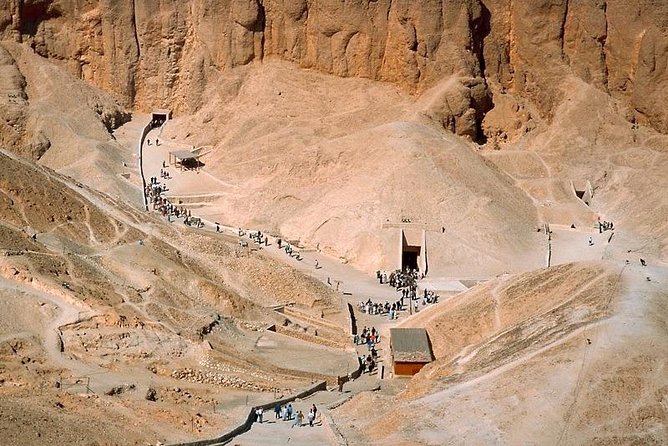
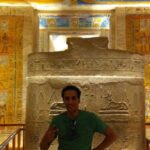
This is where the West Bank reputation turns into goosebumps. You’ll spend about 3 hours here, exploring the Valley of the Kings, which contains 63 tombs. The royal tombs are decorated with Egyptian mythology—because burial wasn’t only about a grave. It was about a plan for the afterlife.
You’ll hear about famous names, including King Tutankhamun. The practical takeaway: the Valley is huge, and what you see depends on which tombs you choose to prioritize. Even when the general entry is included, specific tombs can involve extra tickets on site, so if Tut is a must, budget time and a little extra money for that decision.
Why this stop is worth it: it’s not just a collection of holes in the hills. With an Egyptologist explaining the themes—gods, myths, and the logic of the afterlife—it becomes a story you can follow. That storytelling is exactly what people rave about when guides like Abdo and Roshdy are on point.
Tip from the vibe of the day: wear good shoes. The Valley paths are uneven, and by hour two you’ll be glad your feet are ready.
Hatshepsut at Deir el-Bahari: meaning, power, and stone work
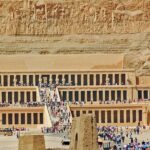
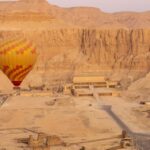
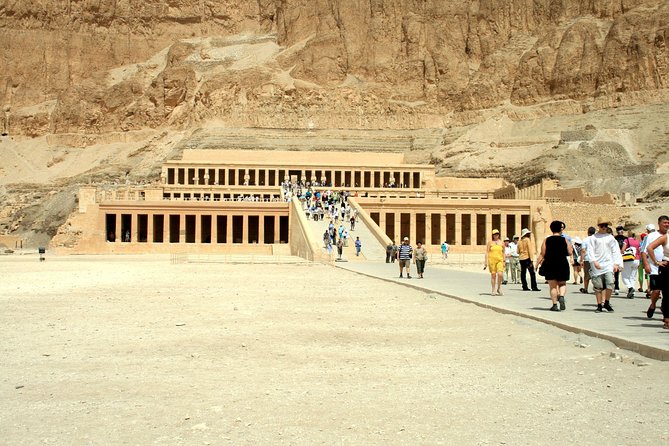
Next comes Temple of Hatshepsut at Deir el Bahari, about 1 hour. Hatshepsut’s name is tied to the idea of Foremost of Noble Ladies, and you’ll get the angle that she’s associated with early trading routes.
This is a nice counterbalance after the tomb concentration. If the Kings are about the afterlife fantasy, Hatshepsut’s temple is about the political and economic reality of a ruler shaping Egypt’s public image. Even without being a “temple person,” you’ll probably enjoy it more once your guide connects architecture choices to the message the ruler wanted to send.
Drawback to watch for: if the day is already running hot, temple shade patterns can matter. This stop is time-limited, so come with water in mind and don’t expect to wander forever.
Colossi of Memnon: a 20-minute statue breather
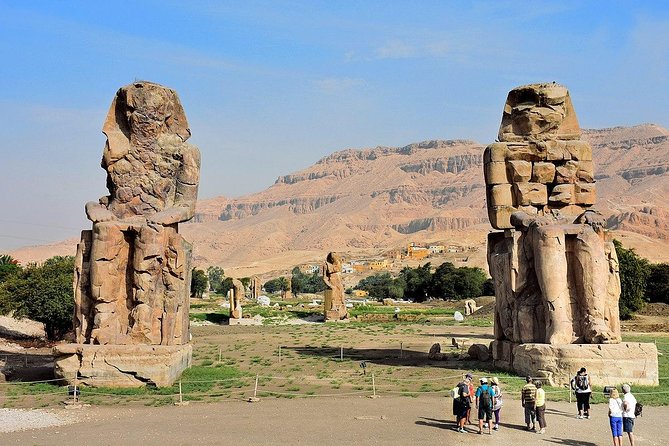
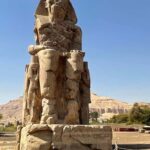
Then it’s the Colossi of Memnon, a quick 20 minutes. These are the famous huge twin statues made from blocks of quartzite sandstone.
This is one of those stops that works even if you’re tired, because the payoff is immediate. You don’t have to read a lot to get the scale. It’s a short reset before the next temple and tomb segments.
I’d treat this as your “catch your breath, take a few photos, and refocus” moment.


Medinet Habu and lunch time: Ramses III’s monument mood
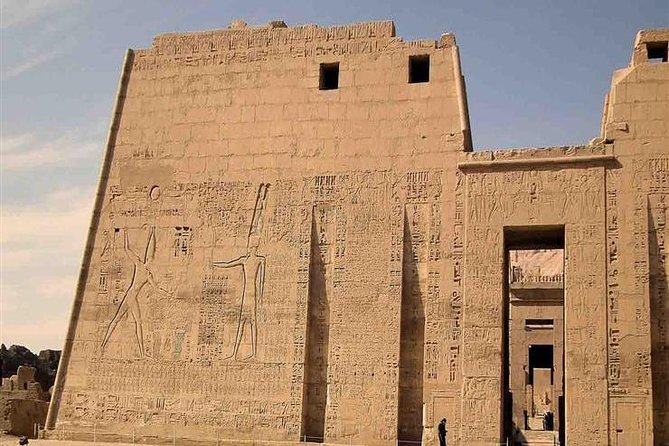
After the statues, the tour builds toward Medinet Habu (often written as Medinet Habu in the itinerary). You’ll visit the temple that commemorates King Ramses III, constructed after his death by orders of the king himself, with about 1 hour here.
Lunch time is slotted during this part of the day. The important point: lunch isn’t listed as included in the package. So plan on eating on your own during the break or using the time to grab something nearby.
This stop can feel like the “big wall of history” moment. If you like battle-era rulers and monumental temple design, it’s a solid fit. If you’re more tomb-focused, consider lunch as a chance to recharge so you still have energy for Deir el-Medina and the Queens.
Deir el-Medina: seeing the artists behind the tombs
Next up is Valley of the Artisans (Deir el-Medina), also about 1 hour. This is one of the most rewarding stops because it changes your perspective.
Instead of just kings and queens, you’re looking at the workmen’s village—a home for artists, craftsmen, and workers who built and ornamented the royal tombs in the Valley of the Kings. That’s huge. It means the story isn’t only about power at the top; it’s about the skilled labor that made the royal projects possible.
Even if the site feels more “remains” than “fully intact palace,” the context is what sells it. A good guide turns scattered structures into a picture of daily life: the people, the tools, and the pressure of producing art that had to last for eternity.
Valley of the Queens: Nefertari’s tomb and the Nobles’ afterlife map
The day finishes with the Valley of the Queens, again about 1 hour, with a major highlight on the tomb of the Great Queen Nefertari. This section is powerful because it shows how royal burial wasn’t only for kings.
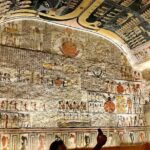
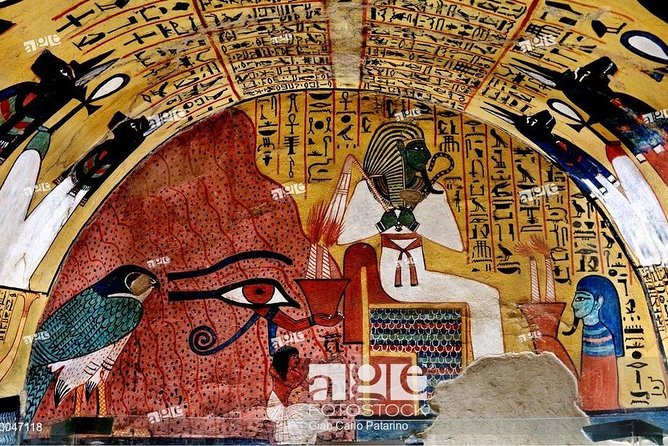
Then the tour continues to the Tombs of the Nobels. Here you’re looking at more than 400 tombs belonging to nobles, and you’ll hear about cryptic passages from the Book of the Dead—designed to guide them through the afterlife.
This pairing—Queens plus Nobles—works because it expands the “who matters” picture. You get both elite women and the wider class system tied into the afterlife beliefs.
Practical note: by this point you’ll be tired. If you want the best experience, go in with a mindset of meaning over volume. Don’t try to absorb every detail. Pick the themes the Egyptologist is emphasizing and let those be your anchors.
The potential curveballs: timing, sales stops, and guide behavior
Most of the experience reports point in a good direction: smooth pickup, air-con kept comfortable, and guides who explain clearly. People specifically mention strong English and attentive guidance from guides like Mohamed Awad, Mohsen, Barry, Roshdy, and Abdo.
Still, I’d go into Egypt day tours with eyes open. Some people reported additional shopping stops such as an alabaster shop or perfume shop, with pressure to buy. That’s not what the core itinerary is about, and it can turn a history day into a sales day fast.
My advice is simple:
- Decide in advance if you’re okay with shop stops. If not, say no early and politely.
- Keep control of your time. If a stop feels extra, ask how long you’ll be taken there.
- If anything ever feels unsafe or inappropriate, don’t bargain with it. Ask to end the tour and seek help through your hotel or local authorities.
One extra reality check: pickup times can occasionally slip. If your schedule is tight, ask for the pickup time confirmation and have a small buffer.
What to bring: your feet and your sun-proof plan
This is tomb-and-temple walking. Even when the stops are scheduled, you’ll still be on uneven ground, climbing small steps, and moving between sites.
Bring:
- Good walking shoes with grip
- Sun protection (hat, sunscreen) since West Bank afternoons can feel brutal
- Water awareness: a bottle is included, but you may still want more as the day heats up
- A small bag to manage dust, and something light for shade if you get sunburn-prone
I also like the idea of starting mentally early. One account suggested that beginning earlier helps because afternoons get hot fast, even in cooler seasons. You’ll feel it by the time you reach the later tomb areas.
Who this Luxor West Bank tour is best for
This tour fits best if you:
- Want a structured, one-day West Bank highlight plan
- Like history that connects myths, power, and everyday workers (Kings + Queens + Deir el-Medina is a smart combo)
- Prefer a private format so you can ask questions and move with your group
It’s also a good fit if you’re traveling with family and want an efficient schedule. One pair mentioned their older traveler did fine, but they also stressed the importance of comfortable walking shoes.
If you hate group pacing, long days, or you only want one type of site (only tombs or only temples), you might find it intense. But for most people doing Luxor for the first time, it’s a strong value.
Should you book this Luxor day tour?
I’d book it if your goal is a full West Bank overview with admissions included and a real Egyptologist guide, without spending your entire day solving transport and ticket logistics. At $89.24, that package structure is the real selling point.
I’d also book it with two conditions in your head: wear shoes for a long day, and be ready to set boundaries if shop stops pop up. If you want history to stay the center of the day, choose this tour—and keep your requests clear from the first meeting.
FAQ
What sites are included on this Luxor day tour?
You’ll visit the Valley of the Kings, the Temple of Hatshepsut at Deir el Bahari, the Colossi of Memnon, Medinet Habu, Deir el-Medina (Valley of the Artisans), and the Valley of the Queens. The tour also includes stops related to the Tombs of the Nobles.
How long is the tour?
It’s listed as about 8 hours.
Do I get hotel pickup and return transportation?
Yes. Pickup services from your starting point and return are included, using a modern air-conditioned vehicle. The tour states pickup from your Luxor hotel or Nile Cruise.
Is an Egyptologist guide included?
Yes. The tour includes Egyptologist guides who are qualified and fully licensed.
Are entrance/admission fees included?
Yes. Admission fees for the listed sights are included.
Is bottled water provided?
Yes. A bottle of water is included during the trip.
Is lunch included?
Lunch is not listed as included in the package.
Is tipping included in the price?
No. Tipping is not included.
Is airport pickup included?
Pick up from the airport is not included; it’s listed as $10 extra.
What is the cancellation policy?
Free cancellation is offered. You can cancel up to 24 hours in advance for a full refund; cancellations made less than 24 hours before the start time are not refundable.
Is this tour private?
Yes. It’s a private tour, and only your group participates.