REVIEW · CAIRO
Full-Day Tour to Giza Pyramids, Memphis, and Sakkara
Book on Viator →Operated by Emo Tours Egypt · Bookable on Viator
A day that checks off three ancient heavyweights. This private Cairo tour strings together Giza, Saqqara, and Memphis with an Egyptologist guide, plus air-conditioned transport and an included koshari lunch. I especially like that the stops include not just the big names, but also quieter layers like the Valley Temple views, plus Saqqara’s Step Pyramid and extra Old Kingdom tombs. One thing to watch: the schedule includes planned shop stops, and some guides can be more pushy than you want.
You’ll be on the move for about 8 hours, starting at 8:00 am, with hotel pickup and drop-off. The value is strong at $45 when you factor in a private guide, lunch, bottled water, and entrance fees for basic areas. Still, don’t assume pyramid interior access is included; the tour notes that optional pyramid entry isn’t part of the base deal.
In This Review
- Key things that make this day trip work
- A private Cairo day trip that hits Giza, Memphis, and Saqqara
- 8 hours of travel time: pace, heat, and comfort on the road
- Giza Plateau: pyramids plus Valley Temple views and the Sphinx
- Khufu, Khafre, Menkaure, and the Great Sphinx: why the short stops can still be worth it
- Memphis: the ancient capital stop you can’t skip
- Saqqara: Step Pyramid of Zoser plus Unas, Teti, and Ti
- The scheduled shop stops: art, souvenirs, and how to protect your time
- Lunch, water, and managing vendor pressure (including camels)
- What entrance fees really mean here (and what might cost extra)
- Who this tour suits best
- Should you book this Giza, Memphis, and Saqqara tour?
- FAQ
- How long is the Full-Day Tour to Giza Pyramids, Memphis, and Sakkara?
- What time does the tour start?
- Is hotel pickup and drop-off included?
- Is lunch included?
- Are entrance fees included?
- Does the tour include entering the pyramids?
- Is the tour private?
Key things that make this day trip work
- Private pacing: you can ask the guide to tailor the itinerary to your interests.
- Real historical spread: Giza Plateau, Memphis, and Saqqara in one day (no travel-overload to other cities).
- Included comfort: air-conditioned vehicle, bottled water, and lunch at a local restaurant (koshari).
- Built-in vendor management: guides are expected to help you handle hustles, though the intensity varies.
- Planned stops beyond archaeology: papyrus, perfume/cotton, and carpet weaving demonstrations are scheduled.
A private Cairo day trip that hits Giza, Memphis, and Saqqara
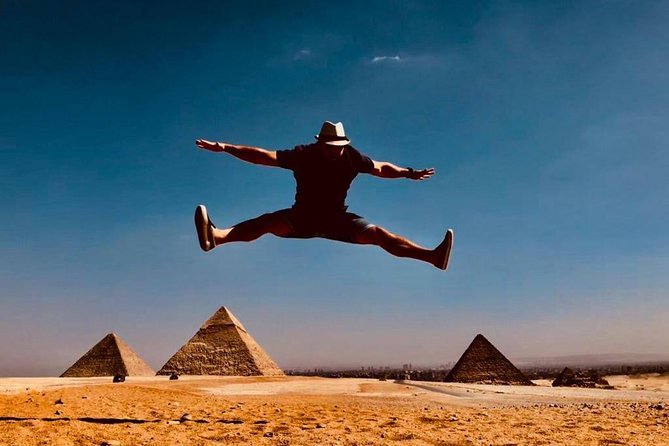
This is the kind of tour you book when you want the “big picture” of Egyptian antiquity without building a whole multi-day plan. You start in Cairo and spend the day covering three sites that usually get split across different days, or different tour types. The private format matters. With only your group, you can ask questions, shift the order if it better fits your energy, and slow down when a photo spot is worth it.
I also like that the tour is positioned as an Egyptologist-guided outing, not a bus-and-bare-minimum scan. The day is built around interpretation: what you’re looking at, who built it, and why it mattered. That’s the difference between taking snapshots and actually understanding why the pyramids are arranged the way they are.
Price-wise, $45 is low for a private day trip that includes pickup, lunch, and entrance fees for basic areas. But keep your expectations aligned: you’re paying for guided access to the main complexes, not a guarantee that you’ll go deep inside every structure unless you choose optional add-ons.
You can also read our reviews of more tours and experiences in Cairo.

8 hours of travel time: pace, heat, and comfort on the road
An 8-hour day can feel fast when you’re in the taxi in Cairo traffic, but the structure here is pretty clear: multiple stops, with time budgeted at each site. The first big block on the Giza side is longer, and then the day shifts into Memphis and Saqqara.
Two comfort notes that matter in Egypt:
- You’ll be walking a lot on uneven ground and across open-air areas. Wear shoes you can trust.
- Heat can be a factor, especially during mid-day sun at Giza and Saqqara. The tour includes air-conditioned transport for the driving segments, which helps more than you think.
Also, your start time is 8:00 am. That’s good. You’ll still hit hot weather, but earlier usually means fewer crowds and better light. If you’re sensitive to sun or humidity, plan on hats, sunscreen, and water discipline.
Giza Plateau: pyramids plus Valley Temple views and the Sphinx
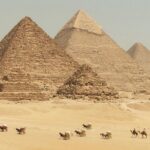
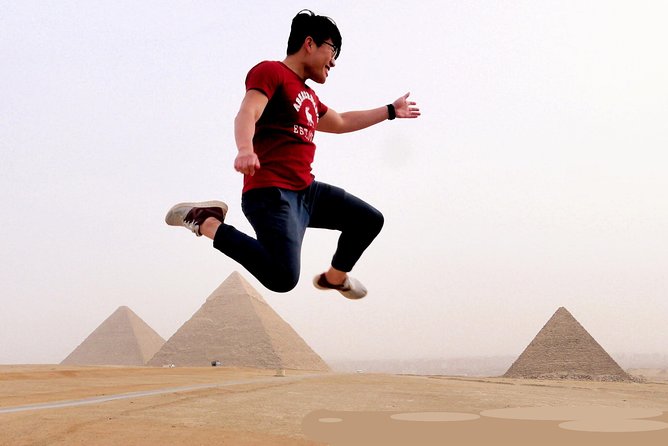
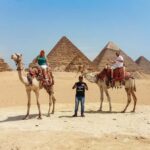
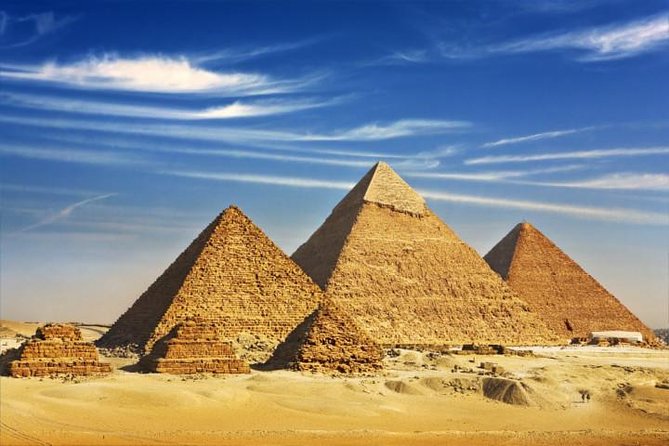
Giza Plateau is the main show, and the tour aims to get you there in a smart sequence. The first stop gives you time to take in the Great Pyramids of Giza (Cheops/Khufu, Chephren/Khafre, and Mykerinos/Menkaure) and also include the Valley Temple area tied to Khafre.
What I like about this approach is that you’re not only staring upward at pyramid faces. The Valley Temple area is a classic “context” stop, where you can see how the funerary complex functioned. The tour description also mentions the Valley Temple as a place where priests carried out mummification rites, specifically tied to the owner of the second pyramid, Khafre. Even if your guide explains it with their own emphasis, the key is the idea: this wasn’t random monument-building. It was a full system.
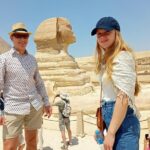
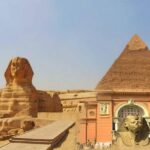
Then there’s the Sphinx. The tour frames it as the legendary guardian with the lion body and a pharaoh’s head, and the big win here is your ability to get a close look while you’re already in the right place. The Sphinx works best when your guide explains how it fits into the broader landscape, not just when you pose next to it.
Khufu, Khafre, Menkaure, and the Great Sphinx: why the short stops can still be worth it
After the initial plateau time, the day includes shorter dedicated blocks connected to each pyramid complex. The schedule is built around ticketed entry for the complexes at each step—mostly brief, timed windows rather than long free-roam hours.
Here’s how that tends to feel in real life:
- Khufu’s complex: you get a focused look at the pyramid complex elements tied to Khufu, including the mention that a valley temple exists and parts of it are now affected by later building and the village of Nazlet el-Samman. A short stop can be enough if your goal is to understand the layout.
- Khafre’s pyramid complex: you’ll spend time at Khafre’s complex with a note that includes the Sphinx temple and causeway. The tour description also references statues found in the temple area and mentions Mariette’s work in the 1860s. This is the kind of detail that helps you see the site as archaeological history, not just geometry.
- Menkaure’s pyramid complex: again, time is short. But the tour gives you the core idea of how the complex is composed—valley temple, causeway, mortuary temple, and the pyramid itself.
The Great Sphinx has its own time block too. That’s helpful because it lets your guide adjust the explanation depending on where you’re standing and what you’re seeing in that moment. One practical caution: Giza can be packed with people and sellers circling for attention. A private guide who can keep you moving and “vendor-aware” makes this part far less exhausting.
If you’re choosing this tour with older legs or mobility concerns, you’ll want to plan for walking and potential stairs if you add optional pyramid access. Some guides handle this smoothly; others may push the idea of extra paid experiences. You’re in control—ask questions, and say no calmly if you don’t want it.
Memphis: the ancient capital stop you can’t skip
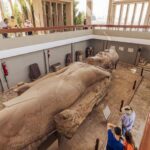
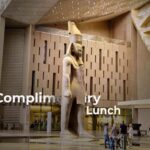
Memphis is where you trade “pyramid-only” thinking for a broader view of Egypt as an evolving civilization. The tour gives you time at Memphis City and highlights major artifacts, including the colossal statue of Ramses II and an alabaster Sphinx.
What makes Memphis feel different is the vibe: it’s less about a single monument dominating the skyline and more about ruins and remnants that point to a capital city life. The tour description even claims a date range back to around 3100 B.C., which is a useful reminder that you’re not just seeing royal tombs—you’re seeing the early arc of Egyptian history.
For me, Memphis is a strong “balance stop” between Giza’s iconic pyramid forms and Saqqara’s funerary evolution. If you want a day trip that doesn’t just check famous photos but gives you a sense of how Egypt’s power centers moved and changed, Memphis is a big part of that.


Saqqara: Step Pyramid of Zoser plus Unas, Teti, and Ti
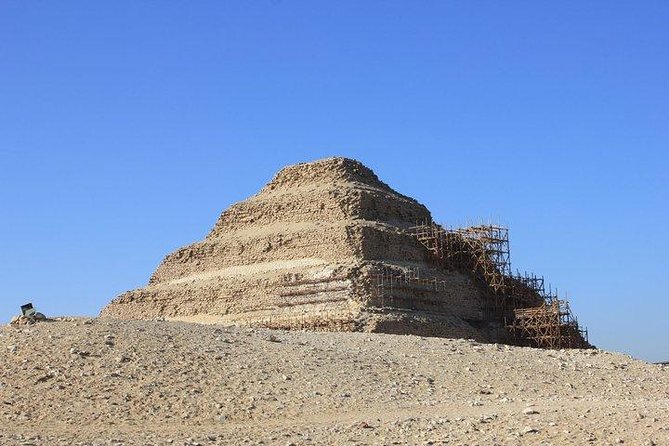
Saqqara is where Egypt turns into a study. The tour hits several structures across different eras of the Old Kingdom, starting with the Step Pyramid of Zoser—the one tied to the evolutionary leap from earlier forms toward the famous pyramid shape.
The Step Pyramid stop is your “why pyramids look the way they do” moment. Zoser’s complex is often where guides explain how the pyramid concept developed over time. Even if your guide’s style is more practical than academic, the site gives you the visual story.
Then you continue through additional Old Kingdom pyramids and tombs:
- Pyramid of Unas: the tour description points out that Unas’s pyramid is smaller and significant for the Pyramid Texts carved into subterranean chambers. This is a key detail because it explains why certain pyramids matter beyond size—the writing and beliefs about the afterlife make it historically important.
- Pyramid of Teti: this stop gets framed as the final resting place of Pharaoh Teti and highlights the idea of exploring chambers/corridors. Since the tour times for these stops are shorter, you’ll want your guide to focus your attention on what you can actually see.
- Mastaba of Ti: this is a great “human scale” stop. Mastabas are tied to everyday life scenes, and the tour describes that Ti’s mastaba includes two serdabs and tomb walls with scenes from daily activities.
A smart ordering choice here is that Saqqara isn’t just a single pyramid. It’s a whole collection of related funerary sites. That makes it feel like you’re reading a timeline in stone.
One more practical point: Saqqara can feel quieter than Giza, but it still has sellers and attention-seekers. Having a guide who doesn’t let that hijack your time makes a huge difference.
The scheduled shop stops: art, souvenirs, and how to protect your time
This tour includes planned breaks that are not strictly archaeological. The tour description names stops such as:
- Paradise Perfumes & Flower Cotton (with time for oils/soft cotton)
- Key of Life Papyrus (papyrus-making and traditional artwork viewing)
- Handmade Carpets (hand-weaving demonstrations)
- Government stops for souvenirs
Here’s how I’d play it: treat these stops as optional context, not mandatory detours. Ask your guide up front how long each stop will take, and whether you can skip any part that doesn’t interest you. Many people are fine with shopping interruptions if they’re short and transparent. Problems show up when these stops feel pushed or expanded.
I’ll also add a reality check based on what I’ve seen tourists experience on similar routes: some guides can be more persuasive than informative, and a few may steer the day toward commission-friendly stops. You’re still on a private tour—use that to set boundaries early. A calm, firm no saves your whole mood for the pyramids.
Lunch, water, and managing vendor pressure (including camels)
Lunch is included, and the tour specifies koshari at a local restaurant. That’s a practical choice. Koshari is filling and easy for many stomachs, and after hours of walking, you’ll be grateful you’re not searching for a place while everyone else is already hungry.
Bottled water is also included, plus the day is set up with short breaks and the idea of complimentary snacks. That’s not glamorous, but it’s part of why this tour works.
Now the part nobody puts in glossy brochures: vendors.
- At Giza especially, you’ll run into camel/horse owners who may pressure for tips.
- If you pose, a seller will often treat it as a tip request.
- If you walk away, they may keep circling.
A good guide reduces this stress by anticipating it, positioning you through bottleneck areas, and telling you what to expect. Some guides are also good at reminding you about hustlers—where to stand, when to ignore attention, and how to keep your group moving.
If you want a camel ride, ask your guide where to do it and how to handle payment expectations. If you don’t want it, say so early, and keep moving. Don’t debate on the spot.
What entrance fees really mean here (and what might cost extra)
The tour includes entrance fees, but with a big caveat in the wording: it’s basic area access, and it separately notes that optional tours or entering the pyramids are not included.
In real terms, that means:
- You’ll likely be able to visit the main complexes and viewpoints that are part of standard access.
- If you want pyramid interior entry or special access, you may need to pay additional costs.
This matters for value. $45 is excellent if you’re happy with the exterior complexes and the guided interpretive stops. If your priority is interior access, budget extra and confirm what’s included before you show up.
Who this tour suits best
This is a good match if you:
- Want a one-day plan that covers Giza + Saqqara + Memphis without switching vendors or re-planning.
- Like guided context—history, layout explanations, and practical navigation.
- Prefer private comfort over group bus chaos.
It might be less ideal if you:
- Want long contemplative time at just one site. This day is packed.
- Hate shop stops and shopping pressure, unless your guide is willing to cut them short.
- Expect flawless language from every guide. There can be communication gaps depending on the person assigned, so you’ll be happier if you can handle simpler explanations or ask for clarification.
Should you book this Giza, Memphis, and Saqqara tour?
Yes, I think it’s worth booking if you want a strong highlights day and you’re okay with a tight schedule. For $45, you’re getting private guiding, hotel pickup/drop-off, lunch, bottled water, and entrance fees for basic areas—good value for a Cairo day.
But book with eyes open. Ask your guide at the start about timing for the shop stops, and be clear about what you want to prioritize. Also confirm whether you’re paying extra for pyramid entry or special access, so there are no surprises.
If you get a guide who manages vendors well and keeps you moving through the sites without rambling detours, this tour can feel like a smooth and satisfying overview of Egypt’s core funerary landmarks.
FAQ
How long is the Full-Day Tour to Giza Pyramids, Memphis, and Sakkara?
The tour runs for about 8 hours.
What time does the tour start?
The start time is 8:00 am.
Is hotel pickup and drop-off included?
Yes, hotel pickup and drop-off are included.
Is lunch included?
Yes. Lunch at a local restaurant (koshari) is included.
Are entrance fees included?
Entrance fees are included, but they cover basic areas only.
Does the tour include entering the pyramids?
Any optional tours and entering the pyramids are not included in the base offering.
Is the tour private?
Yes. It’s a private tour/activity, and only your group participates.