REVIEW · MARRAKESH
Marrakech: Bahia Palace, Madrasa Ben Youssef and Medina Tour
Book on GetYourGuide →Operated by Moments in Morocco - Tour Agency · Bookable on GetYourGuide
Marrakech rewards you for noticing details. This tour strings together Bahia Palace and Ben Youssef Madrasa with a smart walk through the Medina, plus time to see how locals shop and live. When guides like Yassine or Mouhssine steer the story, the architecture makes sense fast and you come away knowing what you’re looking at.
One drawback to plan for: monument entry fees are extra. Bahia Palace costs 100 MAD and Ben Youssef Madrasa costs 50 MAD per adult, and you’ll pay those in cash, so bring small bills.
In This Review
- Key highlights worth your attention
- Why this 4-hour Marrakech circuit works
- Meeting at Café de France: the easy start and the walking reality
- Koutoubia Mosque: what you see from the outside matters
- Bahia Palace: 160 rooms of stucco, cedar, tiles, and cool courtyards
- Mellah and the Medina edge: seeing Marrakech’s layered past
- Souks and artisan workshops: shopping without losing your sense of direction
- Ben Youssef Madrasa: Saadian-era artistry in a calm courtyard
- UNESCO Medina lanes to Jemaa el-Fna: getting your bearings fast
- Guide quality: why the best day depends on who walks you through it
- Tickets and value: what you’re paying for (and what you’re not)
- Ramadan timing and other practical tips that change your experience
- Who this tour suits best (and who should reconsider)
- Should you book this Marrakech Medina and palace tour?
- FAQ
- How much walking is involved in this 4-hour tour?
- Are monument entry tickets included in the price?
- What’s the meeting point for the tour?
- Does the tour include skip-the-line access?
- Can I get hotel pickup?
- Is Koutoubia Mosque included for entry inside?
Key highlights worth your attention
- Skip-the-line access for Bahia Palace and Ben Youssef Madrasa so you lose less time waiting
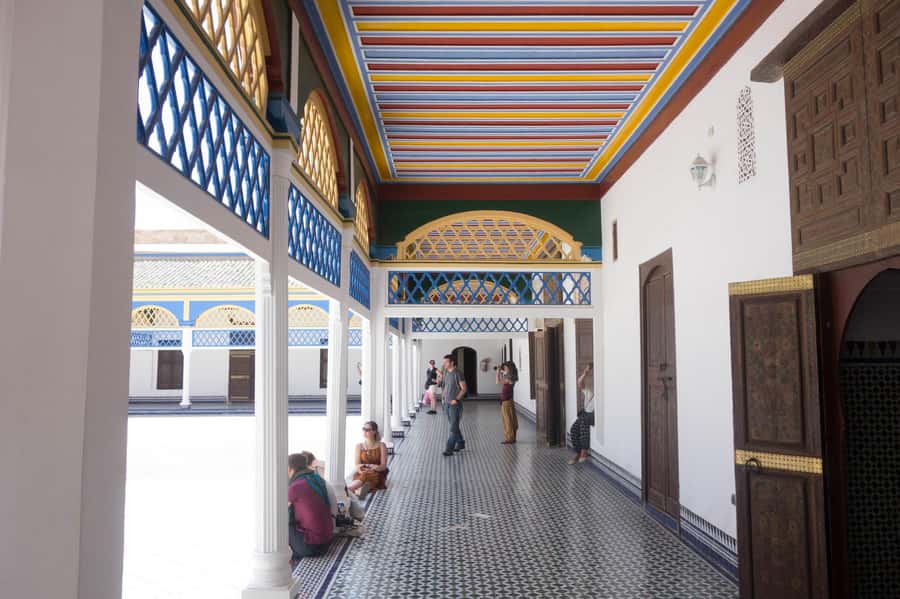
- Bahia Palace’s 160-room layout with courtyards and painted, tiled, carved interiors
- Ben Youssef’s Saadian-era artistry around a calm courtyard you can actually hear yourself think in
- Mellah walk-through that adds context to Marrakech’s multicultural past
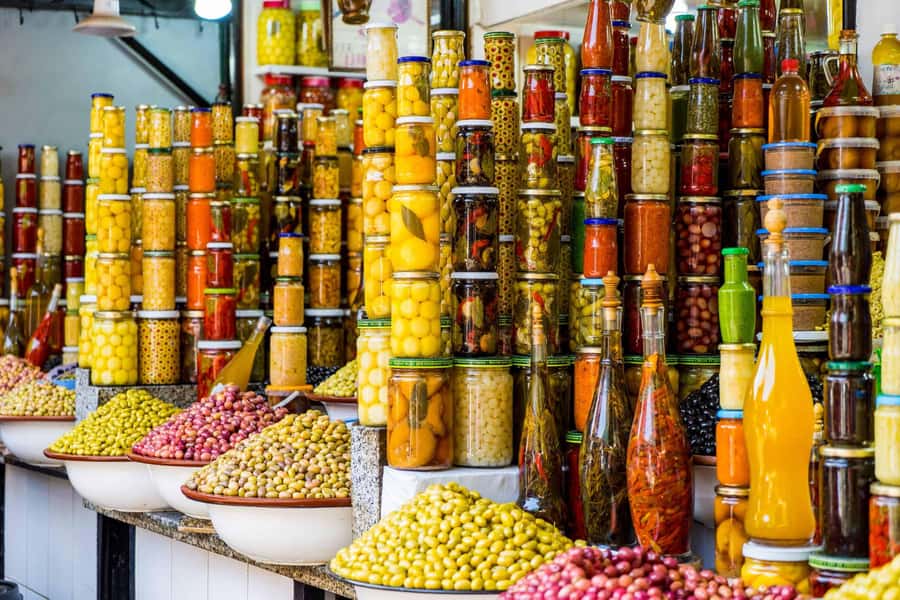
- Souk and artisan workshop stops for spices, leather goods, fabrics, perfumes, and craftwork
- Guides who keep the pace friendly, with time to roam and take photos
Why this 4-hour Marrakech circuit works
This is the kind of tour that helps you understand Marrakech, not just check boxes. You start with an iconic exterior look at the Koutoubia Mosque, then you hit two of the city’s showpieces: Bahia Palace and Ben Youssef Madrasa. After that, you connect the dots with the Medina lanes, the Mellah area, and the souks, ending near the chaos (in the best way) of Jemaa el-Fna.
What I like most is the structure: short photo stops, guided time inside the monuments, and free time to slow down on your own. The second thing I like is the “real city” layer—souks, local crafts, and neighborhood context—so you’re not just touring buildings. Reviews also repeatedly praise guides for handling the day well, even with kids: Ayoub with families and Mouhssine for keeping everyone oriented and safe come up again and again.
You can also read our reviews of more tours and experiences in Marrakesh.


Meeting at Café de France: the easy start and the walking reality
You meet your guide in front of Café de France at Djemaa el-Fna square. That’s a practical choice because it’s a landmark you can find, and your guide can rally the group quickly before the medina streets swallow everyone.
The tour runs about 4 hours, with walking throughout the UNESCO-listed Medina. Expect comfortable-shoe weather. You’ll also want water and sunglasses, because the sun hits hard and the streets can feel warmer than you’d expect. The provider sends a WhatsApp reminder (guide name, meeting point, tips) the day before, which helps a lot when you’re juggling directions in a maze.
Pick-up depends on your option. If you choose the private option and you’re staying in the Medina, the guide can meet you at your riad reception. Otherwise, you start at Café de France.
Koutoubia Mosque: what you see from the outside matters
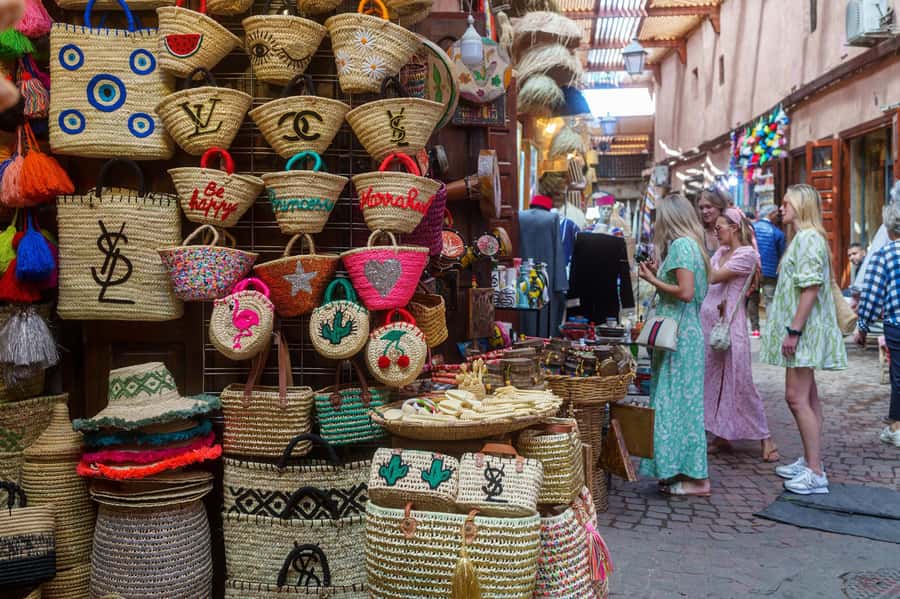
The Koutoubia Mosque is the big silhouette in Marrakech. You get a stop that’s short—about 10 minutes—but it’s timed as a photo-and-orientation moment, not a long visit. The mosque is named after the booksellers who once gathered near it, and the architecture is classic Almohad style.
The minaret is the star: it’s crowned with four copper globes, visible from many parts of the city. Even if you can’t go inside, this stop gives you a visual anchor. You’ll recognize it later when you’re turning corners, and that alone makes the next parts easier to enjoy.
One practical note: during prayer times, entry is restricted to Muslims. So plan on outside viewing only.
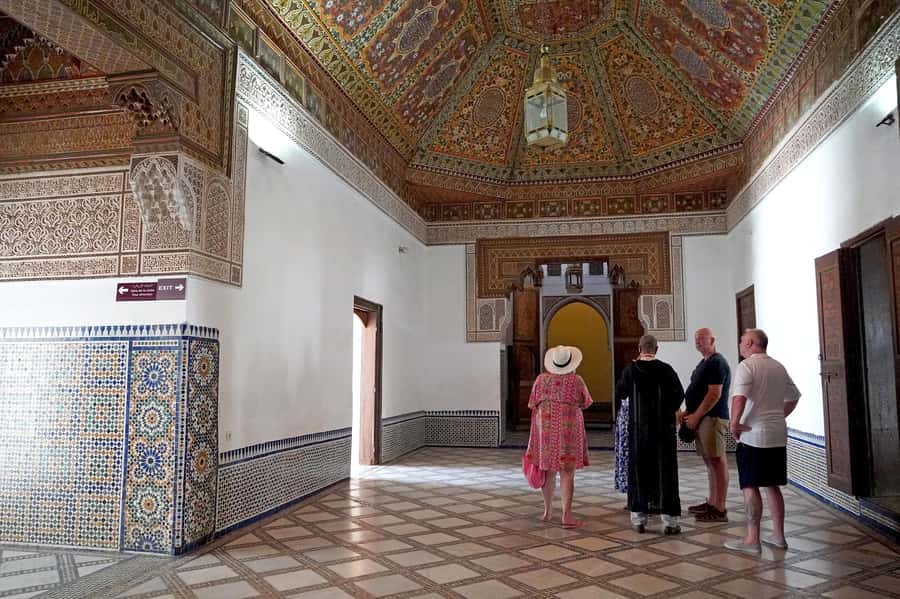
Bahia Palace: 160 rooms of stucco, cedar, tiles, and cool courtyards
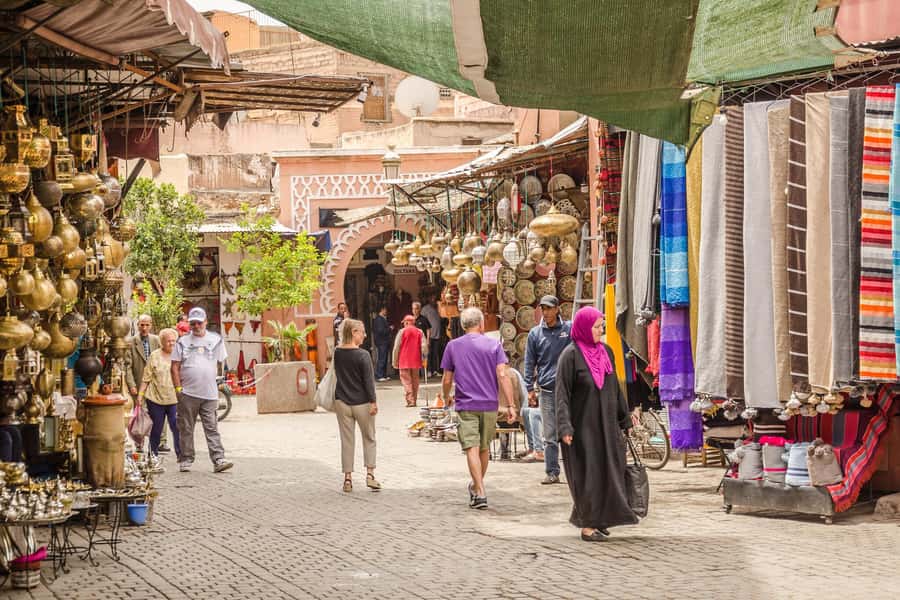
Bahia Palace is where the tour earns its keep. You get around 45 minutes here, with skip-the-line entry and a guided walkthrough, plus time to wander. Even the headline numbers impress: it’s a 19th-century palace designed around 160 rooms and tranquil courtyards.
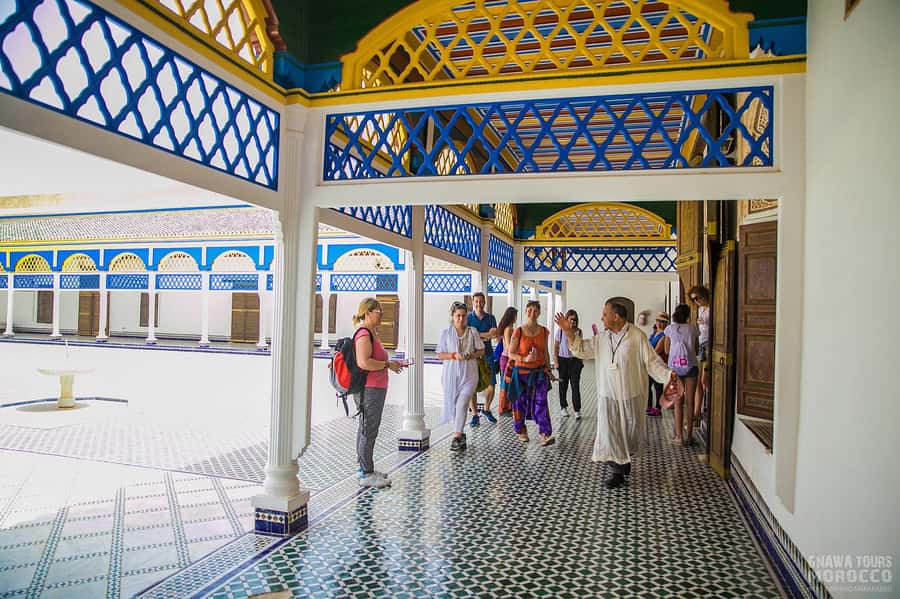
Inside, you’re meant to look up as much as you look around. The palace is famous for floor-to-ceiling stucco work, painted ceilings, and decorative details that change as your eyes adjust from shadowed corridors to bright courtyard light. You’ll also notice the craftsmanship in materials: zellij tiles and carved cedar show a style that feels both ornate and controlled.
Don’t rush. The value of the guide here is context. Without it, you might admire the beauty but miss why these rooms and courtyards were arranged the way they were. With the guidance, it turns into a lesson in Moroccan taste and power—how elite life once looked, felt, and sounded.
Heads-up: the palace is open, but some sections may be under renovation, so your path may be slightly different day to day.
Mellah and the Medina edge: seeing Marrakech’s layered past
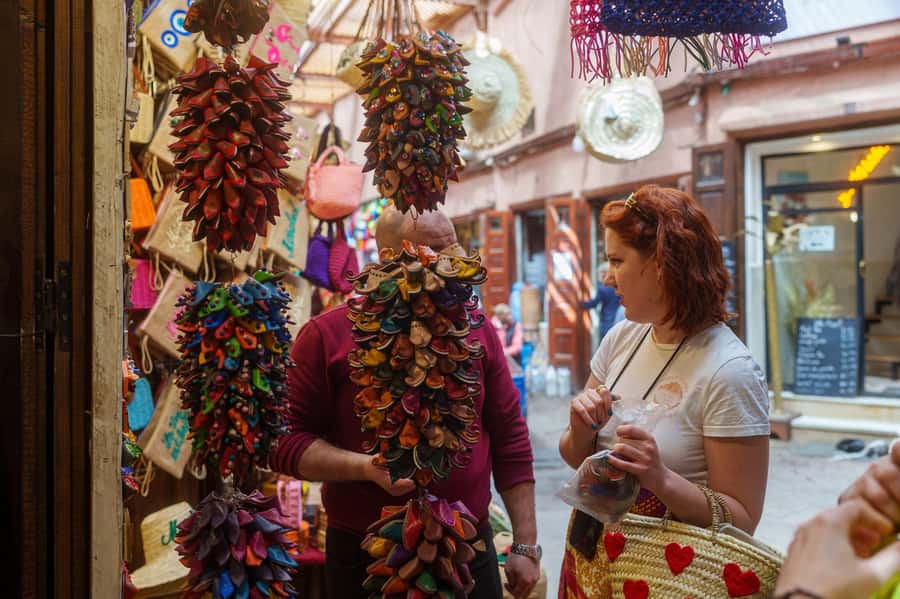
After Bahia Palace, you head toward the Mellah, the former Jewish quarter. This part of the tour is about atmosphere and context. You’ll get a guided segment (about 20 minutes) that helps you understand how the neighborhood shaped community life—how Marrakech included more than one story in its streets.
Then you move toward the market areas. This is where the tour stops being only about monuments. You start noticing how history lives alongside today’s daily routines. The Medina lanes don’t wait for you to catch up. Your guide helps you pace it and keeps you pointed in the right direction when the streets suddenly multiply.
If you’re the type who likes to understand where you are—not just what’s pretty—Mellah is the bridge that makes the rest of the day click.




Souks and artisan workshops: shopping without losing your sense of direction
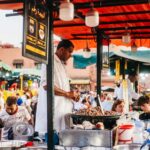
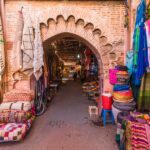
In the souks, you’ll see the full range of stalls: spices, leather goods, fabrics, perfumes, and more. You’ll also spot silver jewelry in the Jemaa el-Fna area toward the end of the tour, where the market energy is strongest.
This is not a passive stroll. The tour includes visits to artisan workshops where traditional crafts are demonstrated—things like pottery, metalwork, and woodcarving. That matters because it changes how you shop. You’re not just buying items; you’re seeing how they’re made, which makes it easier to spot quality and avoid feeling pressured.
One of the most-liked details from reviews is that the shopping portion often feels organic and not aggressive. People like Ismail and Yassine get called out for guiding shoppers without turning the day into a sales pitch. So if you want souvenirs, you can browse with your eyes open and your expectations set.
And if you’re not shopping? Totally fine. The souks still work as a “how Marrakech functions” lesson.
Ben Youssef Madrasa: Saadian-era artistry in a calm courtyard
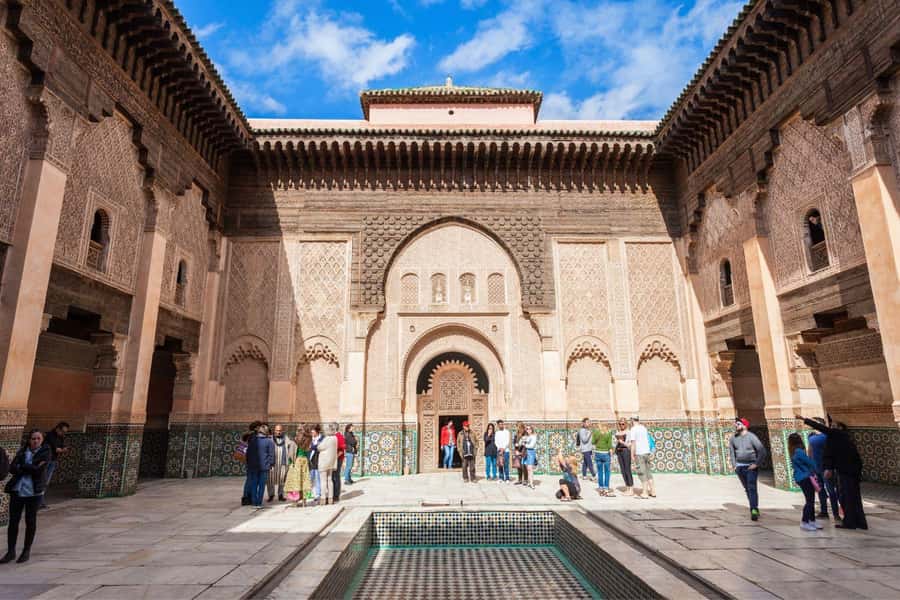
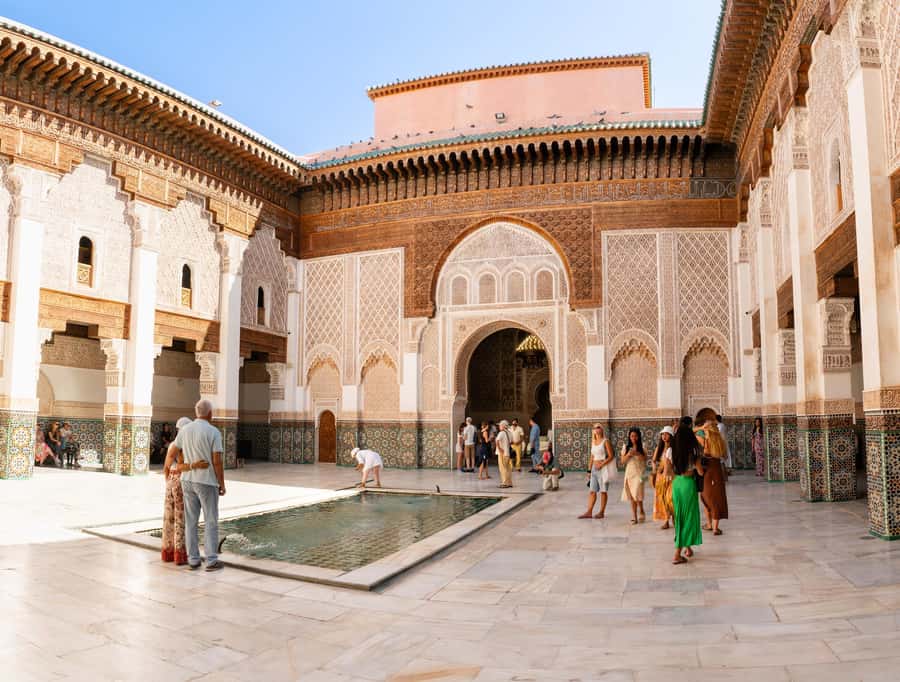
Ben Youssef Madrasa is the moment many people name as a favorite, and with good reason. You’ll spend about 45 minutes here, with guided access and time afterward to explore.
This was a Quranic school founded in the 14th century and rebuilt by the Saadians. The architecture is the point, but the experience is also about how quiet it can feel inside after the noise outside.
Look for the Moroccan details that make this place unmistakable: stucco plaster, zellij tiles, and finely carved cedar. The design centers around a courtyard that encourages a pause. You’re guided through the spaces, then you get enough free time to step back and take photos without feeling rushed.
Practical note: you’ll pay the entry ticket on-site—50 MAD per adult—in cash. The tour itself includes skip-the-line access, so you’re not standing in the first crush.
UNESCO Medina lanes to Jemaa el-Fna: getting your bearings fast
The Medina portion (around 40 minutes) is built for orientation. This is where you start understanding how the city is laid out: which lanes feel like shortcuts, where crowds funnel, and where you can breathe for a minute.
The tour emphasizes the UNESCO-listed character of the Medina, but you experience it through small, everyday scenes: handwoven textiles, street life, and traditions that are still visible while people go about their day. It’s not a lecture. It’s a guided walk where your guide points out what’s worth noticing.
You’ll then end at Jemaa el-Fna, with about 15 minutes of guided time there. This is the square where the market energy peaks and souvenirs and silver jewelry become front-and-center. It’s also a great place to orient yourself for later—because once you’ve been guided here once, returning on your own feels way less intimidating.
Guide quality: why the best day depends on who walks you through it
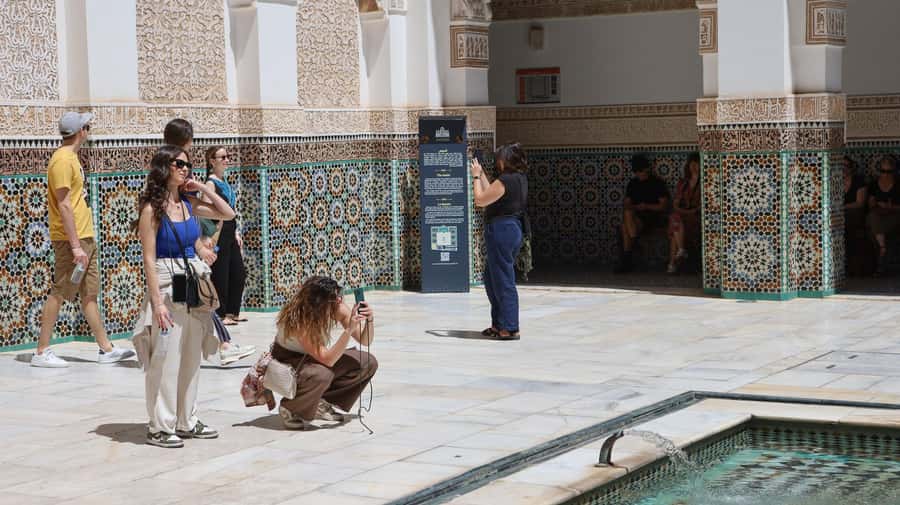
The strongest praise in the reviews isn’t about the monuments—it’s about the humans in charge. People repeatedly mention that guides keep the tour moving at a good pace, explain with clarity, and handle questions well. Ahmad, Mustapha, Hassan, Ayoub, and Lachen all show up in different reviews, and the common thread is that the day feels well managed.
You’ll also find practical help baked in. Several reviews mention that guides take good photos for the group, and others highlight how the guide waits in busy areas so you don’t get separated. One review even points out that the shopping stops feel less forced when the guide is steering the flow.
If you’re visiting Marrakech for the first time, this matters a lot. The Medina can feel like you’re walking in circles. A strong guide turns that feeling into direction.
Tickets and value: what you’re paying for (and what you’re not)
The tour price is listed at $19 per person for about 4 hours. That includes your licensed guide, skip-the-line access for the monuments, and guided walking through the Medina and souks. It also includes free time inside each monument so you can absorb details at your own speed.
What’s not included is important. You pay entrance tickets in cash:
- Bahia Palace: 100 MAD
- Ben Youssef Madrasa: 50 MAD per adult
That means you should budget an extra 150 MAD per adult for those two sites. Transportation and food/drinks aren’t included either.
Is the tour worth it? For most people, yes, because the “time saved” piece is real. Skip-the-line access plus guided interpretation makes a huge difference at Bahia and Ben Youssef—two places where the ornament can easily blur together unless someone explains what you’re seeing.
Ramadan timing and other practical tips that change your experience
Marrakech runs on prayer schedules, and this tour adjusts when Ramadan changes hours. During Ramadan (listed as Feb 18 to Mar 20), monuments close earlier. Morning tours start at 09:30 instead of 10:00, and afternoon tours start at 13:00 instead of 14:00. That’s exactly the kind of detail that prevents frustration.
Also, wear shoes you trust. The Medina walking is part of the experience, but it’s still walking on uneven ground with crowds. Bring water, and don’t plan a long sit-down meal right after if your feet aren’t used to this kind of terrain.
Finally, Bahia Palace is open but may have renovation sections, so don’t assume every room will be accessible every day. Your guide will handle the route you can see.
Who this tour suits best (and who should reconsider)
This tour is a strong fit if you want:
- a first-time Marrakech orientation
- architecture and craft details (especially at Bahia and Ben Youssef)
- a guide to help you navigate the Medina and shop with confidence
- a paced walk that includes free time for photos
It’s also been enjoyed by families. One review specifically calls out kids (ages 9 and 7) staying engaged, which usually means the guide kept things moving and interactive.
If you have mobility concerns, read this carefully: the tour is marked as wheelchair accessible, but it’s also labeled not suitable for people with mobility impairments. The Medina streets and the walking time can be tough. If you fall into that category, you’ll want to double-check how much walking and uneven terrain your day would include.
Should you book this Marrakech Medina and palace tour?
If you’re short on time, want the city’s core sights in one clean plan, and like learning while you walk, I’d book it. The value isn’t just Bahia and Ben Youssef. It’s the way the tour connects monuments to neighborhoods to markets, so you understand what you’re seeing instead of being overwhelmed.
Book it especially if:
- you hate long lines
- you want a guide to steer you through the souks without turning it into a hard sell
- you’re visiting for the first time and want to get your bearings fast
Skip it if you prefer totally independent wandering with zero structure. This tour is designed to be guided, interpreted, and paced—so if you want to set your own route minute by minute, you might find the fixed stops limiting.
Bottom line: for the price, the combination of skip-the-line access, interpretive guidance inside the two biggest stars (Bahia and Ben Youssef), and a guided Medina walk makes it a practical, high-impact way to start Marrakech.
FAQ
How much walking is involved in this 4-hour tour?
You’ll spend time walking through the Medina and also move between several stops (including the souks area and Jemaa el-Fna). Comfortable shoes and water are recommended.
Are monument entry tickets included in the price?
No. Bahia Palace is 100 MAD and Ben Youssef Madrasa is 50 MAD per adult. You pay these entry fees in cash on-site.
What’s the meeting point for the tour?
You meet your guide in front of Café de France in Djemaa El Fna square.
Does the tour include skip-the-line access?
Yes. Skip-the-line access is included for the monuments, helping reduce initial waiting time.
Can I get hotel pickup?
Pickup is optional only for the private option if you’re staying in the Medina. Otherwise, you start from Café de France.
Is Koutoubia Mosque included for entry inside?
No. You view Koutoubia Mosque from the outside only. Entry is restricted to Muslims during prayer times.