REVIEW · MARRAKESH
Marrakech: Madrassa Ben Youssef, Secret Garden & Medina Tour
Book on GetYourGuide →Operated by Moments in Morocco - Tour Agency · Bookable on GetYourGuide
Tilework that makes you stop mid-step. This guided walk through Marrakech’s Ben Youssef Madrasa and the Secret Garden turns big sights into clear stories: why they were built, how they worked, and what daily life looked like in the Medina. I especially liked the guided access inside the monuments and the calm you get right after the chaos of the souks, but there’s one catch: you’ll do a good chunk of walking and standing on uneven streets, so bring sturdy shoes.
This is also good value for time. For about 4 hours, you get a local licensed guide (French, English, Spanish, Italian), guided time inside key sites, plus free time to wander and take photos—starting at Cafe de France in Djemaa El Fna.
In This Review
- Key takeaways before you go
- Where the tour starts: Cafe de France and Medina orientation
- Koutoubia Mosque photo stop: the perfect first Marrakech landmark
- Ben Youssef Madrasa: Moroccan architecture that tells a story
- Souk Semmarine and cooperative shops: how Marrakech trade really works
- Hammam Mouassine and communal ovens: the Medina runs on water and heat
- Le Jardin Secret and the Khettara: where calm meets engineering
- Medina walking time and Jemaa el-Fna: your last look at Marrakech’s main stage
- Price and tickets: does $18 really make sense?
- Who this tour suits best (and who should rethink it)
- My bottom line: should you book this Marrakech combo?
- FAQ
- What does the tour include?
- Are monument tickets included in the tour price?
- How long is the tour?
- Where do I meet the guide?
- Is hotel pickup offered?
- Does the guide stay with you inside the monuments?
- What language is the tour offered in?
- Is it a private tour or small group?
- Is the tour wheelchair accessible?
- What should I bring?
- Are food and drinks included?
Key takeaways before you go
- Skip-the-line for Ben Youssef Madrasa and Le Jardin Secret, so you lose less time in queues.
- Stop inside each monument with your guide, then get free time to explore at your own pace.
- Khettara irrigation system: you’ll learn how underground channels helped the Medina survive and stay watered.
- Souk Semmarine and craft workshops: you’ll see how traditional making works, not just what’s for sale.
- Hammam Mouassine area + communal oven context: everyday culture tied to water, heat, and bread.
- A guided route through the UNESCO Medina that helps you get your bearings fast.
Where the tour starts: Cafe de France and Medina orientation
Your tour begins at Cafe de France in Djemaa El Fna, right in the thick of Marrakech’s main square. That’s great for convenience, but it can feel a bit chaotic at first because multiple groups gather in the same area.
My practical advice: arrive a few minutes early and use your phone to search Cafe de France so you’re not guessing. If you’re meeting someone in a crowd, a confident start matters. Once you spot the guide, the day gets smoother fast—your group follows one route, and you’re not constantly negotiating your way through the Medina’s maze.
You can also read our reviews of more tours and experiences in Marrakesh.

Koutoubia Mosque photo stop: the perfect first Marrakech landmark
Before you head deeper into the Medina, you’ll get a 15-minute photo stop at Koutoubia Mosque. It’s not a long visit, but it’s a smart teaser: it gives you a recognizable landmark so later, when you’re surrounded by alleyways and rooftops, you have a visual anchor.
Think of this part as orientation-by-eyeballing. You’ll spend more time on the interior architecture later, but this short stop helps you understand why Marrakesh’s skyline keeps reappearing in your photos.
Ben Youssef Madrasa: Moroccan architecture that tells a story
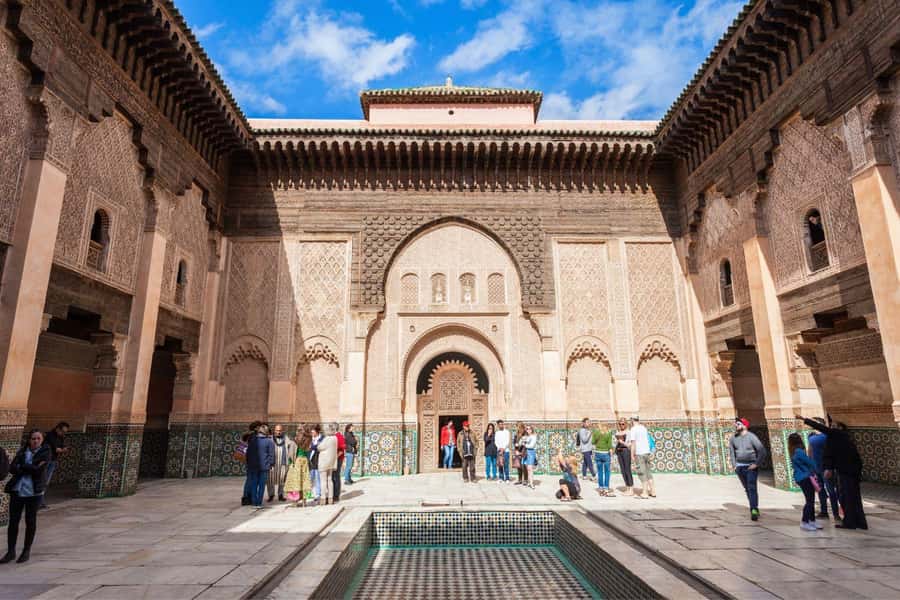
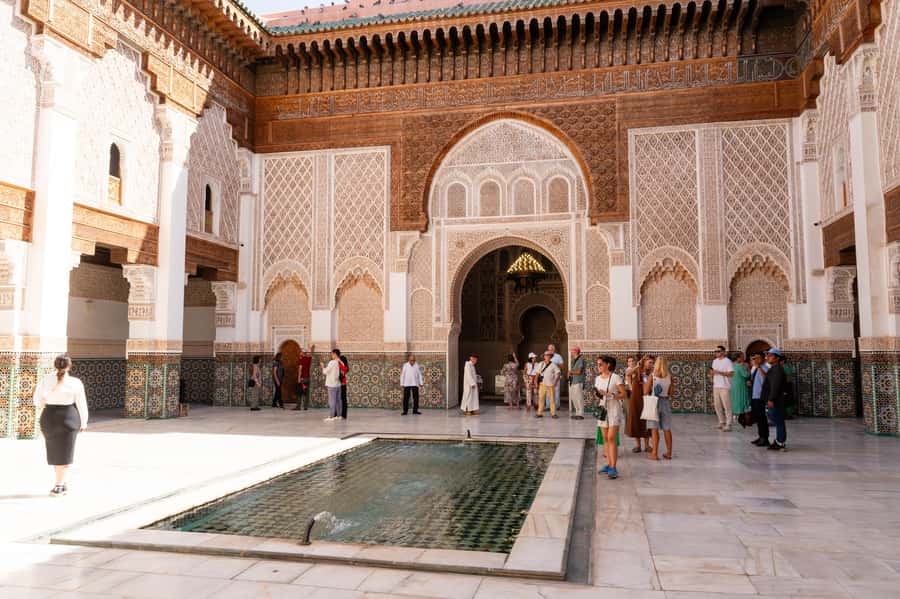
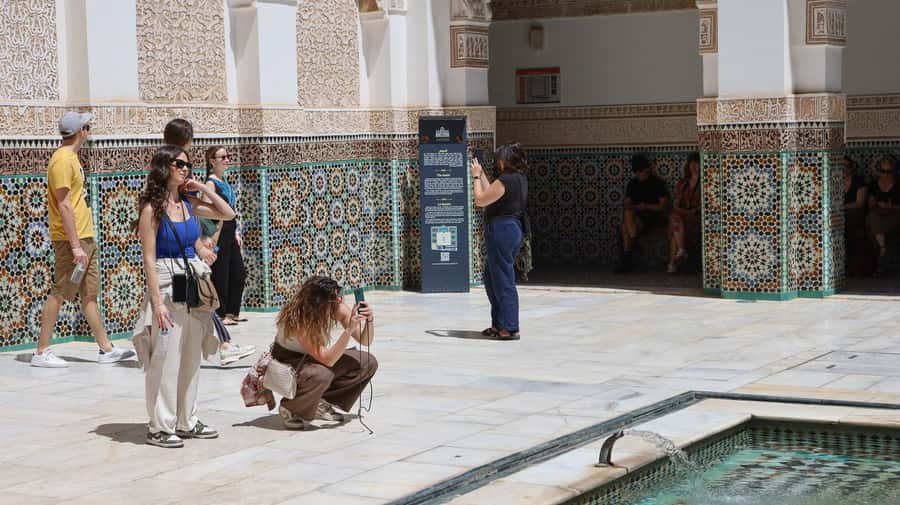
The highlight for many people is the Ben Youssef Madrasa, an old Islamic college known for its extreme detail and craftsmanship. This is where the tour earns your attention—not by throwing facts at you, but by showing you what to look for.
Inside, pay close attention to the zellij tiling, the delicate plasterwork, and the carved cedar wood details. Even if you’re not the type who reads every inscription, your eye starts to connect patterns: geometric design, repetition, and careful transitions between spaces. That’s the point. This madrasa wasn’t built to be viewed from far away. It was designed for learning, gathering, and respectful movement through a complex interior.
One more smart thing: the guide goes in with you and gives context, but you’re also given time to wander and take photos. That balance matters. You get structure first, then breathing room to look at the small things that a rushed crowd would miss.
Souk Semmarine and cooperative shops: how Marrakech trade really works
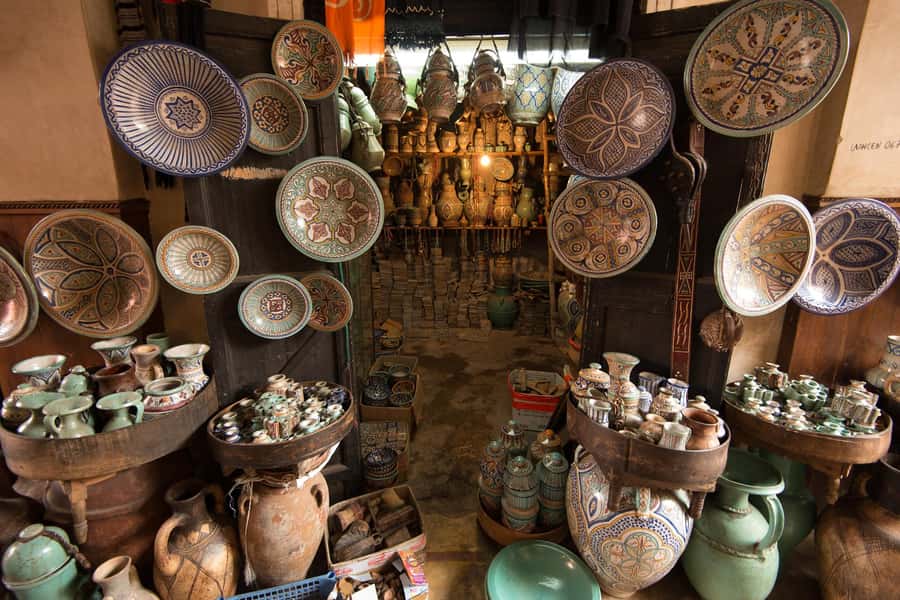
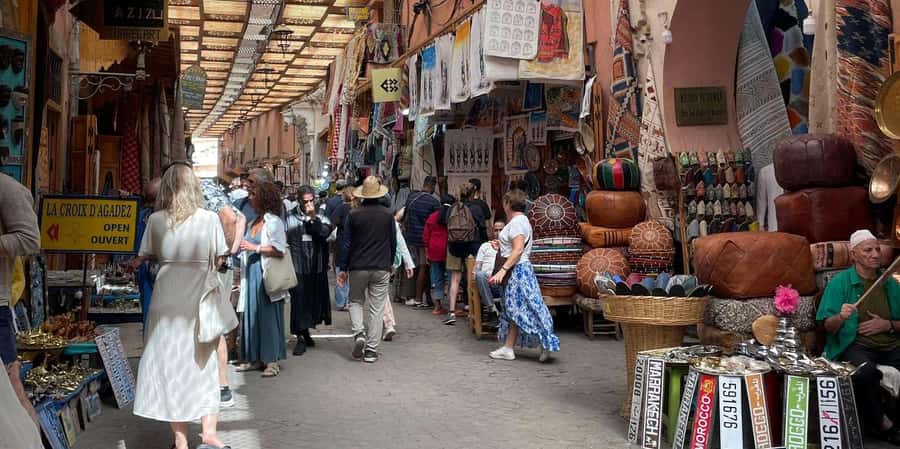
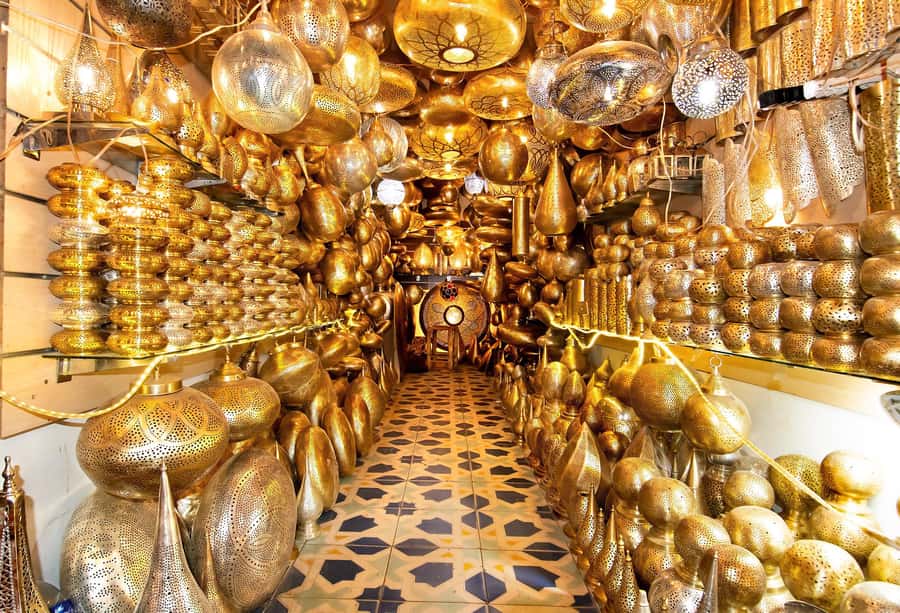
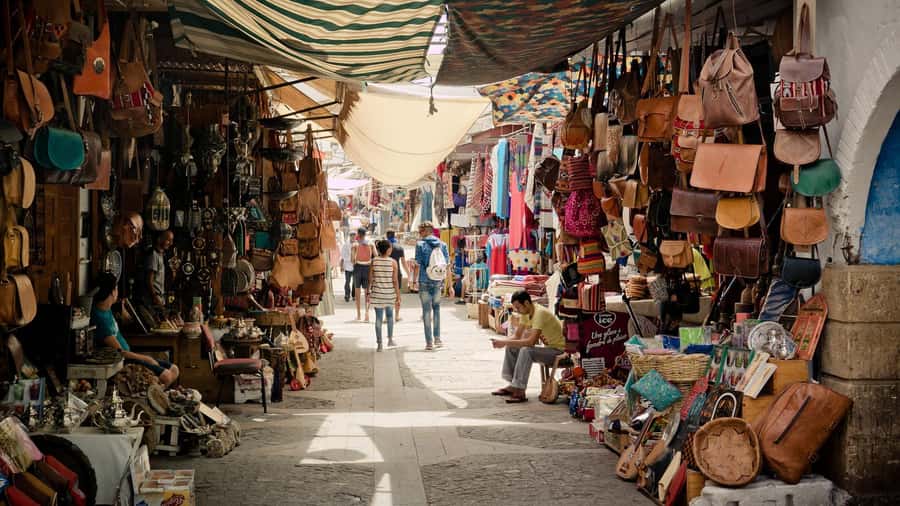
After the madrasa, you’ll shift from architectural stillness to market motion. The tour heads into Souk Semmarine, and you’ll also pass areas where traditional making happens, including stops tied to crafts like pottery, metalwork, and woodwork.
Here’s what makes this part useful: you’re not only shopping. Your guide helps you understand what you’re seeing—so a leather good isn’t just a product, it’s the end result of a process and a network of makers. You’ll also get practical walking help through the souks, which is huge if you don’t want to get sucked into the wrong alley and lose the group.
I found it calming that the tour doesn’t pretend you’ll become a Medina cartographer overnight. Instead, you’re guided through the part where knowing the layout helps, and you get just enough free time to browse without turning it into a stressful scavenger hunt.
Hammam Mouassine and communal ovens: the Medina runs on water and heat
Next comes the Hammam Mouassine area, initially as a photo stop, followed by cultural context about traditional hammams and how the Medina’s everyday systems worked. This section is more than “history talk.” It connects the built environment to routines—washing, heating, and food.
One detail that really helps you understand the city: the tour explains the traditional role of water and how it was managed in the Medina. And when possible, you may visit a communal oven where locals used to bake bread using older methods still practiced today.
From what I learned through the experience, this is where Moroccan culture becomes tangible. You see that people weren’t just building buildings for beauty. They were building systems—heat sources, shared cooking spaces, and water solutions—so life could keep going in a dense urban fabric.


Le Jardin Secret and the Khettara: where calm meets engineering
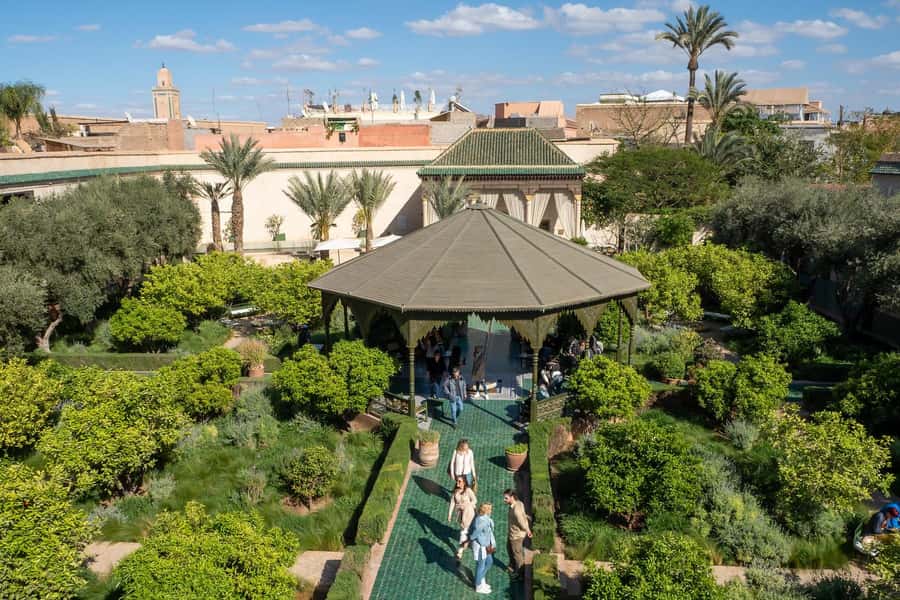
Then you get the emotional reset: Le Jardin Secret. It’s a restored garden retreat connected to the Saadian era, and it feels like stepping away from the noise rather than just changing locations.
You’ll walk through an Islamic garden with geometric layouts, flowing fountains, and lush greenery. What makes it more than a pretty stop is the explanation of the Khettara, an underground irrigation channel system designed to reduce evaporation and keep the Medina supplied with water for centuries.
That engineering detail changes how you experience the garden. You stop thinking, This is just shaded space, and start thinking, This place is a working adaptation to a real climate. It’s one of the best moments on the route for quiet attention, especially after the bustle of the souks.
And yes, you’ll get time to wander on your own inside the garden. The best use of that free time is to slow down and look across the layout, not just at individual flowers or corners. The design is meant to guide your movement.
Medina walking time and Jemaa el-Fna: your last look at Marrakech’s main stage
After the Secret Garden, you continue through the UNESCO-listed Medina, with time for guided context, shopping, and sightseeing around the lanes. This is the part that helps you build real confidence for the rest of your stay.
You’re shown how the Medina functions as a living neighborhood—crafts, daily routines, and the mix of commerce and tradition. If you’ve ever felt intimidated by Marrakech streets, this is the section that makes a difference. Your guide’s job isn’t only facts; it’s keeping you oriented so you can later explore independently.
Finally, you return to Jemaa el-Fna for a guided look. Expect lively markets and local goods as part of the square’s constant energy. The tour doesn’t include food, but it does give you the “what’s happening here” context, so you know what you’re seeing when you come back later on your own.
Price and tickets: does $18 really make sense?
The tour price is $18 per person, lasting about 210 minutes (around 4 hours). On top of that, monument entry tickets are not included: Secret Garden: 100 MAD and Madrasa Ben Youssef: 50 MAD per adult.
Here’s how I judge value for this kind of tour: you’re paying for time saved, context provided, and access handled smoothly. The big selling point is skip-the-line access to two major attractions, plus guided time inside both. In a city where queues can eat your day, that alone can be worth it—especially if it’s your first visit.
You’re also getting a licensed local guide throughout, and the tour includes free time at each monument so you don’t feel like you’re being rushed from one checkbox to the next. If you like learning while you walk—and you don’t want to figure out routes and entrances alone—this pricing structure tends to feel fair.
Who this tour suits best (and who should rethink it)
This tour is a great fit if you:
- Want a first-day route that helps you understand the Medina’s layout and culture
- Care about architecture and water systems (tilework plus the Khettara explanation)
- Appreciate a guide who helps you move through souks without getting lost
It’s less ideal if you:
- Hate walking and standing on uneven Medina streets
- Want a food-focused tour (this doesn’t include meals or drinks)
- Prefer long, unstructured stays in one place rather than a timed route
Also, the tour is wheelchair accessible, and private group options exist. If you’re traveling with mobility needs, it’s smart to discuss pacing with the operator in advance so you’re comfortable with the Medina walking involved.
My bottom line: should you book this Marrakech combo?
Yes—if you want a smart introduction that blends two top monuments with the real Medina around them. This itinerary works because it switches modes: architecture inside the madrasa, busy trade in the souks, practical daily-life context near the hammams and communal cooking, then the quiet payoff of the Secret Garden and its water engineering story.
I’d book it especially if it’s your first time in Marrakech or you only have a half-day window. The guide support and skip-the-line entry are the practical reasons. The cultural connections—how water, heat, and design all fit together—are the reasons you’ll remember it after your photos are sorted.
FAQ
What does the tour include?
You’ll visit Ben Youssef Madrasa and Le Jardin Secret, explore the UNESCO-listed Medina and the souks, and spend guided time at Jemaa el-Fna. There are also photo stops at Koutoubia Mosque and Hammam Mouassine.
Are monument tickets included in the tour price?
No. Entry tickets are not included. Secret Garden costs 100 MAD and Madrasa Ben Youssef costs 50 MAD per adult.
How long is the tour?
It runs for about 210 minutes, or roughly 4 hours.
Where do I meet the guide?
You meet your guide in front of Cafe de France in the Djemaa El Fna square.
Is hotel pickup offered?
Pickup is optional. If you’re staying in the Medina, your guide can meet you at your riad’s reception for the private option. Otherwise, the meeting point is Cafe de France.
Does the guide stay with you inside the monuments?
Yes. Your guide accompanies you inside each monument, provides the guided tour, and then you get free time to explore and take photos.
What language is the tour offered in?
The live guide speaks French, English, Spanish, and Italian.
Is it a private tour or small group?
It depends on the option you select: private or small-group walking tour.
Is the tour wheelchair accessible?
Yes, it’s listed as wheelchair accessible.
What should I bring?
Bring comfortable shoes, a sun hat, and water.
Are food and drinks included?
No, food and drinks are not included.