REVIEW · CAIRO
Cairo: Giza Pyramids, Sakkara & Dahshur All-Inclusive Tour
Book on GetYourGuide →Operated by Nice Tours · Bookable on GetYourGuide
Three pyramid eras in one day.
This is the kind of outing that makes Egypt feel stitched together: you start at Sakkara, then move to Dahshur’s early pyramid experiments, and finish at Giza for the big three plus the Great Sphinx. I like that it’s private and guided, so you’re not just wandering and hoping you guessed right. I also like the time-saver setup: hotel pickup/drop-off, entrance fees, skip-the-ticket-line help, and lunch are all included. The main drawback is that it’s a lot of outdoor walking and sun, and if you want to go inside tight pyramid passages, it can feel claustrophobic.
If you want one day that covers the major pyramid landmarks around Cairo without turning it into a logistics project, this tour is a strong fit. Expect a packed but well-paced route, with air-conditioned car time between sites and a guide who helps you understand what you’re seeing—especially why Dahshur matters before you ever look at the Giza plateau.
In This Review
- Key things I’d plan around
- A Perfect Pyramid Time-Travel Route: Sakkara to Dahshur to Giza
- Sakkara’s Step Pyramid of Djoser: Egypt’s First Major Stone Statement
- Dahshur Bent and Red Pyramids: Where Design Finally Learns
- Bent Pyramid: the first big pivot
- Red Pyramid: a clearer step forward
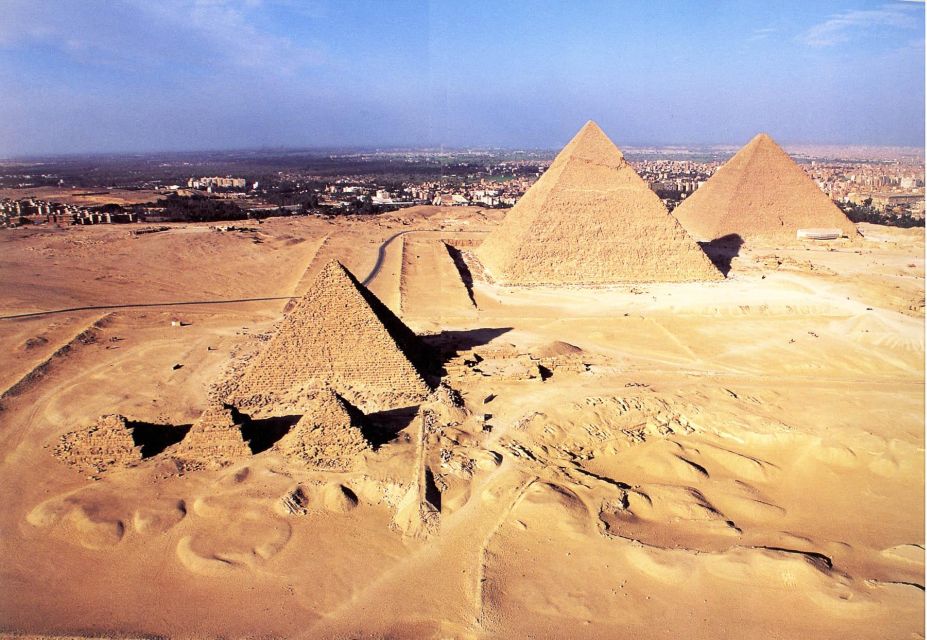
- Giza’s Great Pyramid, Chephren, Mykerinus, and the Sphinx
- The Great Pyramid of Cheops (Khufu)
- Chephren’s Pyramid: a bit of original façade left
- Mykerinus: the smallest of the trio
- The photo point that pulls it all together
- The Great Sphinx: lion body, pharaoh head
- Private Guide Energy: What Makes the Day Feel Smooth
- Price and What You Actually Get for $70
- What to Pack (and What to Watch Out For)
- Who This Tour Fits Best
- Should You Book This Cairo Pyramid Day Trip?
- FAQ
- How long is the Cairo: Giza Pyramids, Sakkara & Dahshur All-Inclusive Tour?
- What’s included in the tour price?
- Do you get help with ticket lines?
- What languages are available for the live guide?
- Where does the tour start and what sites are visited?
- Is the tour cancellable?
Key things I’d plan around
- Sakkara first, then Dahshur, then Giza gives you a smooth learning curve through Old Kingdom pyramid design
- Dahshur’s Bent Pyramid and Red Pyramid show the “experiments before perfection” stage
- Giza plateau photo views let you capture the three pyramids together from a panoramic vantage point
- Private guide + skip ticket line helps you spend your energy on ruins, not queues
- Lunch included turns a long day into a real break, not a rushed snack
- Guides who double as photo helpers show up often—people mention guides like Hesham, Hazem, Nada, and Anna for photo tips
A Perfect Pyramid Time-Travel Route: Sakkara to Dahshur to Giza
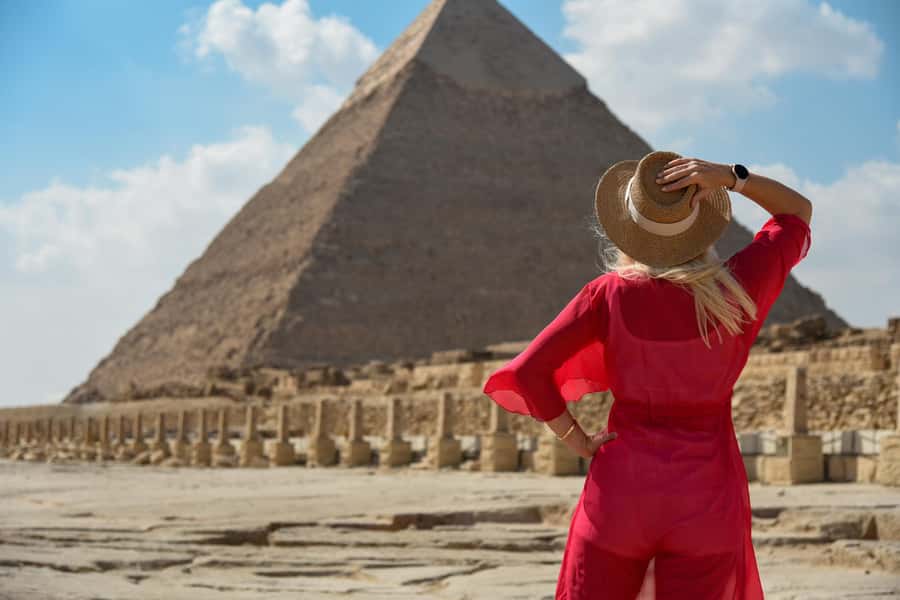
This tour works because it follows a logical story, not just a checklist of famous monuments. You begin with Sakkara, where pyramid building is still evolving into something monumental and permanent. Then you head to Dahshur, where the ancient Egyptians tested ideas that didn’t fully “click” at first—until you reach Giza, where the design has matured.
The private format matters. In Cairo’s pyramid areas, it’s easy to get swallowed by crowds, souvenir sellers, and the general noise. Having a guide who keeps you moving and explains what you’re looking at helps you get more meaning per minute. And the air-conditioned car between sites is not a luxury here—it’s what lets a 7-hour day stay enjoyable.
The tour is 7 hours long, so yes, it’s full. But people consistently praise how smoothly it runs, including the little coordination things: arriving when they said they would, keeping the itinerary efficient, and offering brief choices on viewpoints or timing when you’re at key spots.
You can also read our reviews of more tours and experiences in Cairo.


Sakkara’s Step Pyramid of Djoser: Egypt’s First Major Stone Statement
You start at Sakkara, often called the city of the dead. The centerpiece is the Step Pyramid of Djoser, built in the 3rd Dynasty around 2630 BC for King Djoser. This pyramid is famous for one simple reason: it’s the world’s oldest major stone structure, and it shows the idea of monumental royal building taking shape.
What you’ll likely feel here is the shift from idea to engineering. The Step Pyramid isn’t trying to look like a perfect smooth-sided pyramid yet. It’s more like a visual draft of what eventually becomes the classic shape—tiered steps that make the structure look like it’s building upward in stages.
A good guide makes a difference in Sakkara. I’d look for the kind of approach people describe with guides like Sherif or Nada: a steady flow of context, then small breaks where you can walk around and take in details without feeling herded. In a place with so much scale, that balance helps you actually absorb what you see.
Practical note: Sakkara is quieter than parts of Giza, and that can make it feel more authentic. If you’re the type who likes breathing room for photos and slow looking, starting here helps.
Dahshur Bent and Red Pyramids: Where Design Finally Learns
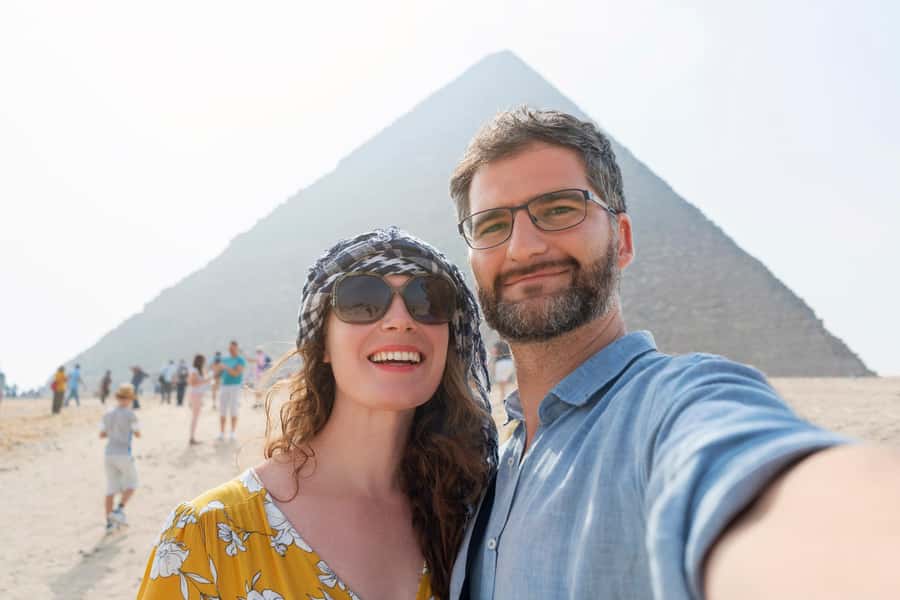
Next comes Dahshur, and this is where the day gets extra interesting for me. Dahshur is tied to King Senefru, associated with the 4th Dynasty and often described as the founder of that era. The reason these pyramids matter is that they show attempts before the final style.
Bent Pyramid: the first big pivot
The Bent Pyramid is called bent for a reason. It reflects an early effort at moving toward the smoother pyramid forms you’re about to see at Giza, but it also shows that the Egyptians were still figuring out geometry and construction choices as they went.
If you’re curious and your tolerance allows it, you might consider exploring interiors if access is available on the day. Some visitors describe the inside experience as memorable—but also physically demanding. If you’re uncomfortable with tight spaces, keep that in mind.
Red Pyramid: a clearer step forward
Then you see the Red Pyramid, another key Senefru project. Compared with the Bent Pyramid, it’s part of the story of achieving a more consistent pyramid shape. Together, these two Dahshur pyramids give you a before-and-after feeling, like watching architecture evolve across generations.
One of the best values of including Dahshur on a single day is perspective. Without it, Giza can feel like a list of perfect shapes. With Dahshur, Giza feels earned.



Giza’s Great Pyramid, Chephren, Mykerinus, and the Sphinx
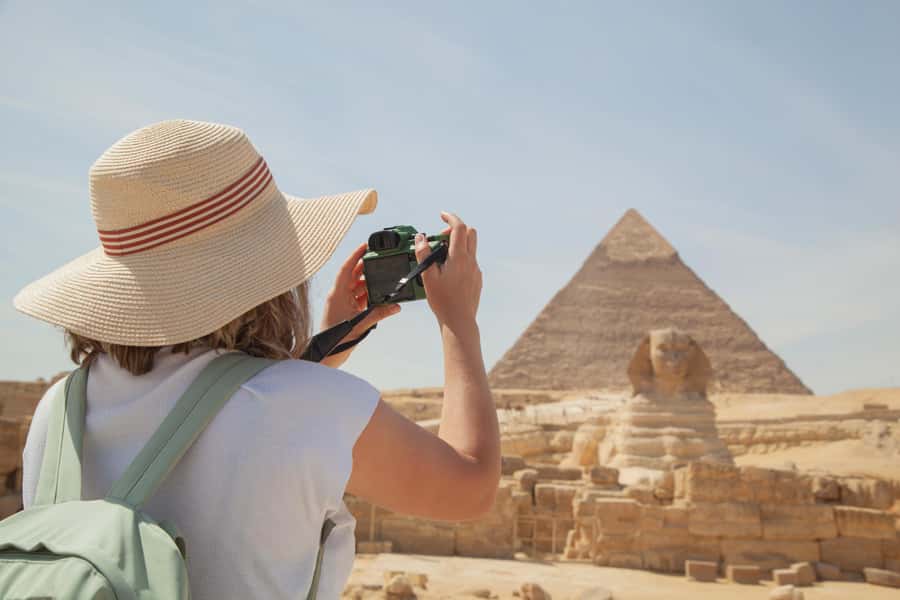
Now you hit the main stage: the Great Pyramids of Giza and the Great Sphinx. This section is the reason most people book Cairo pyramid tours in the first place, but it’s also the part where a guide can prevent wasted time.
The Great Pyramid of Cheops (Khufu)
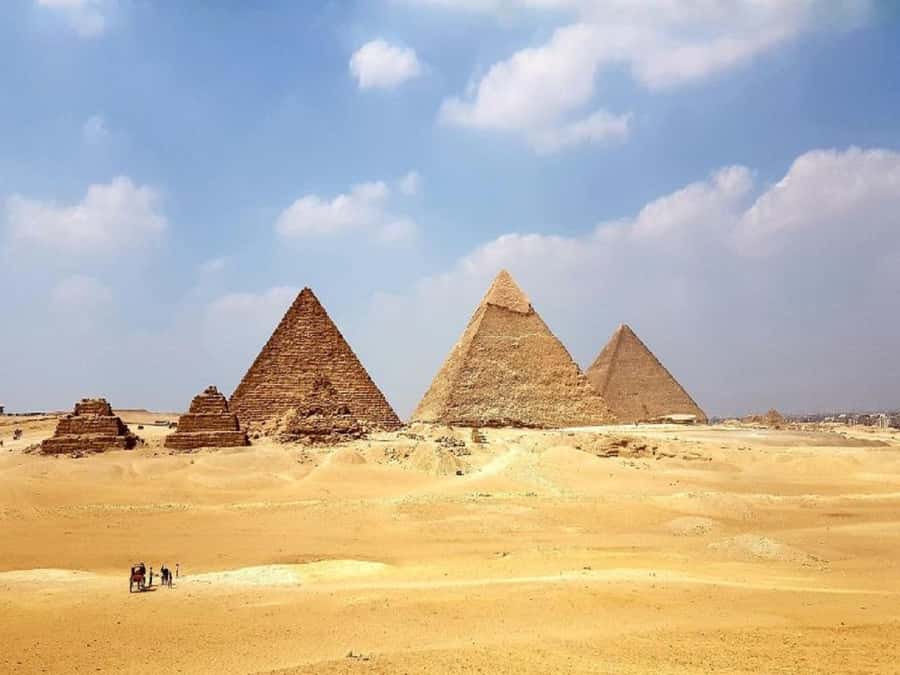
You’ll see the Great Pyramid of Cheops, the one pyramid linked to the ancient world wonder list that remains standing today. Standing here, the first impression is size—real, not abstract. It’s hard to describe, but it’s the kind of scale that makes your brain stop arguing and just stare.
Chephren’s Pyramid: a bit of original façade left
Next is the pyramid of Chephren. One feature you’ll hear highlighted is that it still has some of the original limestone façade remaining. That’s a small detail with a big effect: it gives you a sense of how the pyramids looked closer to their prime.
Mykerinus: the smallest of the trio
Then comes the pyramid of Mykerinus, the smallest of the three main Giza pyramids. It’s still worth your time because it completes the trio and helps you understand the broader layout of the plateau—more than just “the biggest pyramid.”
The photo point that pulls it all together
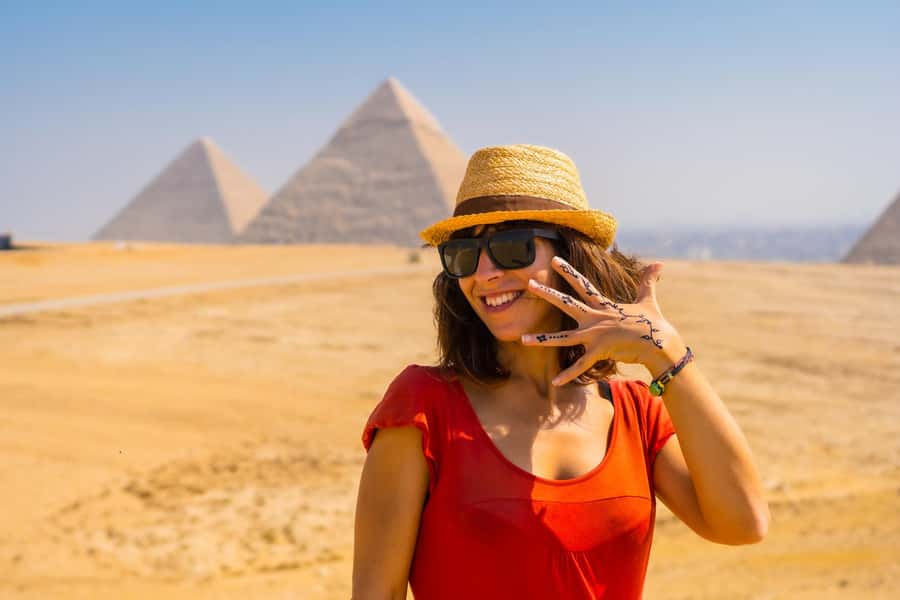
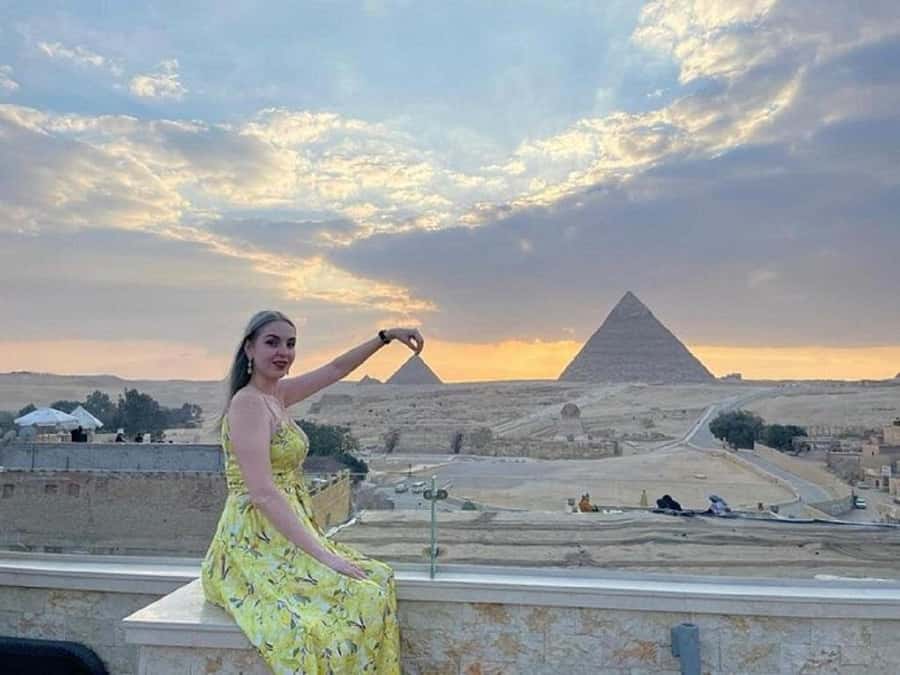
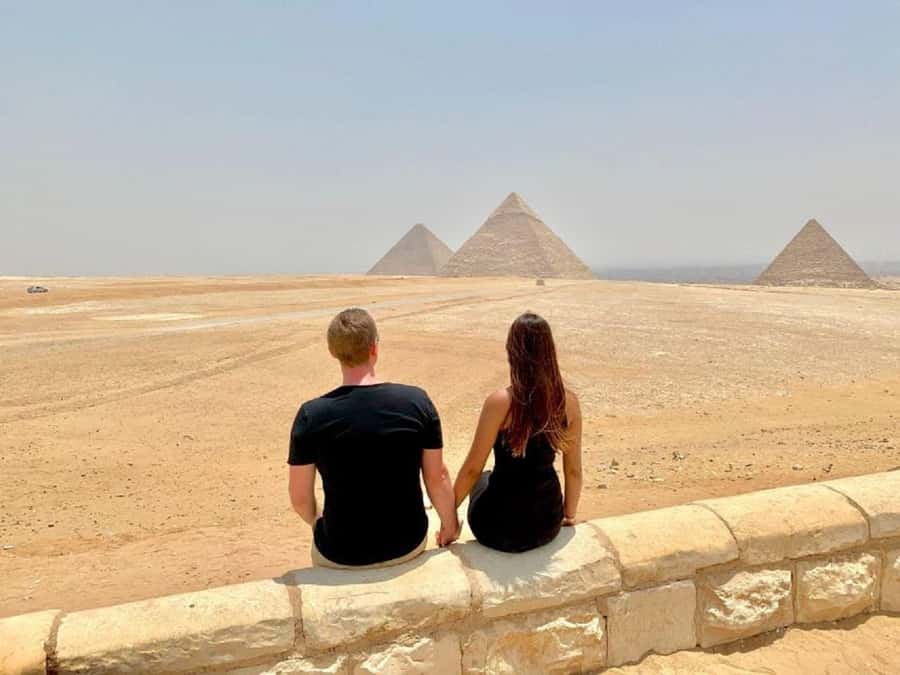
A standout moment on this kind of route is using a vantage point on the Giza plateau where you can capture all three pyramids together. This is the best place for photos because you get the geometry of the site, not just a single pyramid close-up.
If you like photography, this is where guides often earn their keep. People mention guides like Hesham, Omar, and Amir for photo suggestions and angles, which can save you a lot of trial-and-error while everyone else is sprinting for the same shot.
The Great Sphinx: lion body, pharaoh head
After the pyramids, you walk down to the Sphinx. It has the head of a pharaoh with a lion’s body, and the statue is associated with the time of Chephren. One thing to appreciate here is that the meaning and origins connected to it are still not fully explained in a simple way—so your guide’s stories help, but you don’t have to treat any single theory as the only possible answer.
The Sphinx is also a reminder of how these monuments sit in a living landscape of people, movement, and business. A guide helps you keep your focus on the sculpture itself instead of getting distracted by the side chaos.
Private Guide Energy: What Makes the Day Feel Smooth
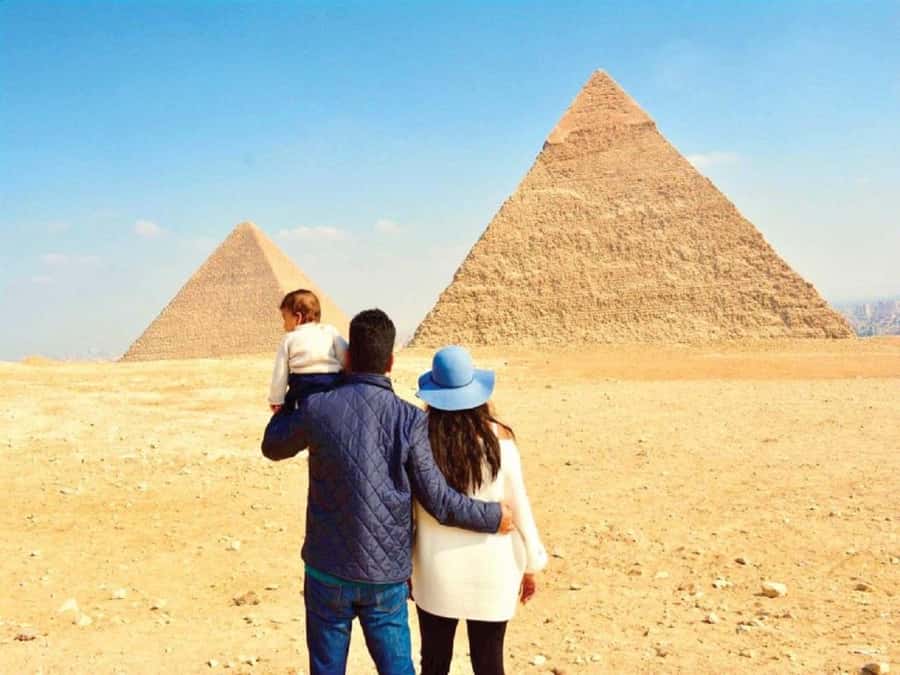
This tour is private, and that shows up in small ways. You’re not stuck waiting for strangers to finish reading signs. You can ask questions while you’re standing in front of the real thing, and you can take the time you need at the moments that hit hardest.
People also mention guide personalities that tend to work well on a fast-moving route. Examples from recent experiences include guides such as Hazem (friendly and very organized), Christine (helpful with how to visit better and where to stand for photos), Tamer (patient and detail-focused), and Miriam (expressive and kind, with a guide who can keep you calm if the day throws an unexpected moment). There are also reports of guides keeping a good rhythm—enough explanation to connect the dots, but not so much talking that you lose your own time to look.
Transportation is also part of the experience. The tour includes private English guide and transportation, and many people note that drivers were punctual, courteous, and communicative. One person specifically mentioned WhatsApp updates from their driver, which is handy if Cairo’s street situation makes meeting points feel confusing.
If you’ve ever tried to DIY a pyramid day, you know how much mental energy it takes just to manage directions, ticket timing, and getting from one site to the next. Here, that work gets handed to someone else.
Price and What You Actually Get for $70
At $70 per person, the headline value is that the tour bundles the stuff that usually adds up fast: hotel pickup and drop-off, a private guided experience, entrance fees, lunch, and transportation in an air-conditioned vehicle. It’s not just a driver with a map. You’re paying for an organized, guided day that’s designed to cover three pyramid sites without you needing to build the plan yourself.
Because entrance fees and lunch are included, you don’t have to stop mid-day to figure out logistics under heat and time pressure. And skip-the-ticket-line help can matter a lot in busy seasons, because waiting can turn an enjoyable day into a draining one.
If you’re traveling with family or someone who prefers structure, the private format can also be a quiet upgrade. Your day is more adaptable—people note guides offering small options for viewpoints and giving time to explore rather than forcing a rigid stamp-collector pace.
What to Pack (and What to Watch Out For)
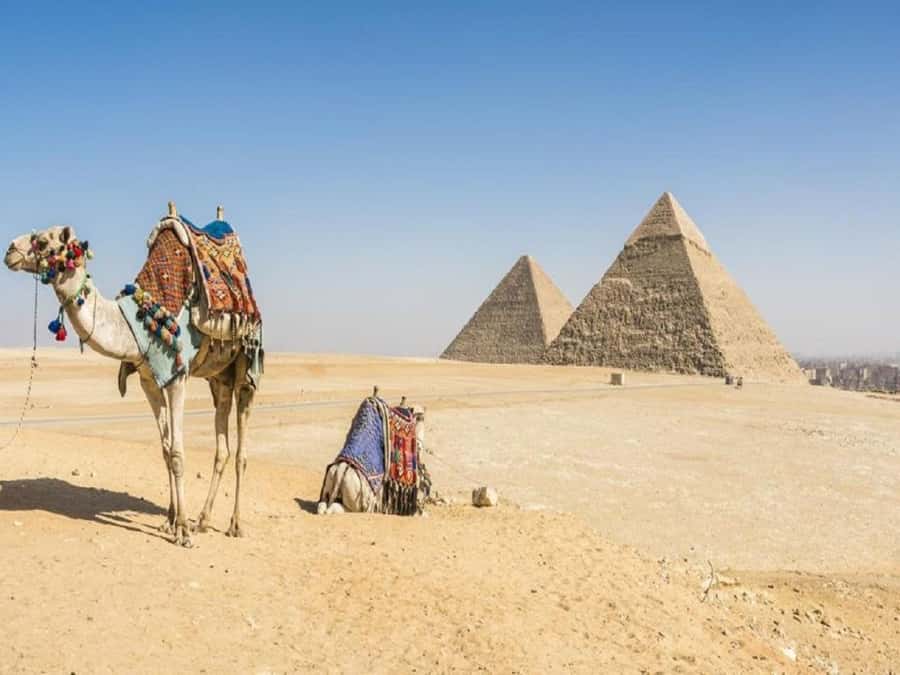
A 7-hour pyramid day is not a casual stroll. Even with air-conditioned transport between sites, you’ll spend time outdoors. Wear shoes with real grip. Expect dust, uneven ground, and stairs in some areas.
Here’s the practical stuff I’d plan around:
- Bring water. One parent recommendation was to start the day with a bottle in hand because the walking adds up quickly.
- Plan for tight spaces if you’re tempted to go inside pyramids. Some visitors specifically warn that interior access isn’t for everyone—think claustrophobia, weak legs, or anyone who doesn’t like low, narrow passages.
- Carry small cash for bathroom stops. One helpful tip was to have change on you since restroom access may involve a fee.
- Use sun protection if you’re going in hotter months. People recommend not treating summer like a mild-weather sightseeing day. The car helps, but the walking still happens in full sun.
Also, keep expectations realistic about lunch. It’s included and described as local and authentic in many experiences, but it’s still a restaurant stop during a long day. Go in hungry and ready to refuel, not expecting a fancy food tour.
Who This Tour Fits Best
This tour fits you if:
- you want a single day that hits Sakkara, Dahshur, and Giza
- you like learning while you look, especially for understanding why Dahshur’s “imperfect” pyramids matter
- you prefer private guidance over trying to manage Cairo logistics on your own
- you’re traveling with kids or older family members and want smoother pacing (many guides were praised for balancing info with personal space)
It may not be the best match if:
- you hate walking and standing for long stretches
- you strongly dislike tight interior spaces and would feel stressed by the option to go inside
- you want a slow, unstructured day where you might spend half a day in just one site
Should You Book This Cairo Pyramid Day Trip?
Yes—if you want the big three plus the “why it all evolved” context, this is a smart way to spend a day. Dahshur adds meaning, not just more monuments, and a private guide helps you avoid the common time-wasters in these areas.
If you’re sensitive to heat or confined interiors, come prepared and set expectations with yourself about what you’ll do once you’re at the entrances. With the right mindset and essentials packed, this tour gives you one of the strongest pyramid “story arcs” around Cairo in a single 7-hour block.
FAQ
How long is the Cairo: Giza Pyramids, Sakkara & Dahshur All-Inclusive Tour?
The tour duration is 7 hours.
What’s included in the tour price?
Hotel pickup and drop-off, entrance fees, a private English guide and transportation, and lunch in a local restaurant are included.
Do you get help with ticket lines?
Yes, the tour includes skip the ticket line.
What languages are available for the live guide?
Arabic, English, French, German, and Spanish are available for the live tour guide. A Spanish, German, or French guide is listed as available as an add-on.
Where does the tour start and what sites are visited?
After hotel pickup, the tour begins at Sakkara (including the Step Pyramid of Djoser), then moves to Dahshur (including the Bent and Red Pyramids), and finishes at the Great Pyramids of Giza with the Great Sphinx.
Is the tour cancellable?
The tour offers free cancellation up to 24 hours in advance for a full refund.