REVIEW · JOHANNESBURG
Ultimate Johannesburg Soweto Experience with Apartheid Museum
Book on Viator →Operated by MoAfrika Tours · Bookable on Viator
Soweto tells South Africa in one day. This full-day, guided circuit connects the hard edges of apartheid with everyday life in Soweto, while also giving you major Johannesburg stops like Constitution Hill and the Mandela Bridge.
What I especially like is that you don’t just drive past history—you get guided time in key places. I also like that the tour includes both the national story (prisons, courts, the fall of apartheid) and the local story (informal settlement visits and the streets around Hector Pieterson and Vilakazi Street).
One thing to consider: the day runs long and the stops are time-boxed. If Carlton Centre or specific timing points are affected on the day, you may have a different viewing plan than what you expect.
In This Review
- Key points worth your attention
- How a single day strings together Johannesburg and Soweto
- Constitution Hill Human Rights Precinct: where the story starts
- Newtown and Mary Fitzgerald Square: a quick breather with a point
- Apartheid Museum: the emotional core of the day
- Soweto from the road: football stadiums, towers, and real distances
- Motsoaledi informal settlement and Regina Mundi area: short, human, and respectful
- Hector Pieterson Museum and Memorial: where 1976 becomes specific
- Vilakazi Street and the Mandela House option: Nobel Peace Prize neighborhoods
- Telkom Tower, Constitution Hill views, and the Carlton Centre decision point
- Price and pacing: what $108.70 buys you in real terms
- What to bring, how to handle the emotional weight, and how to get the best day
- Who should book this Soweto and Apartheid Museum tour
- Should you book this Ultimate Johannesburg Soweto Experience?
Key points worth your attention
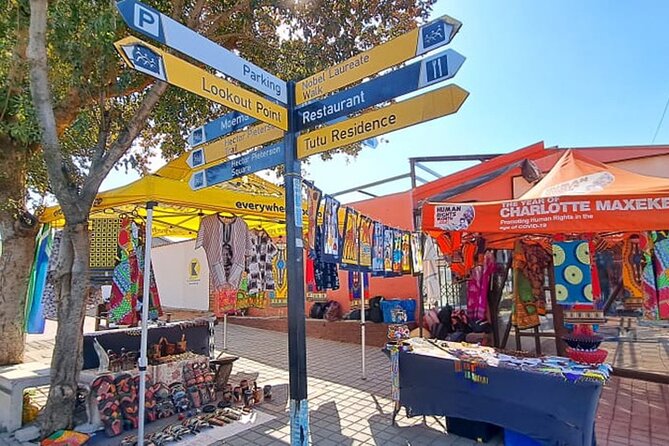
- Local-led Soweto time on streets and sites tied to the 1976 uprising
- Admission included for Constitution Hill, Apartheid Museum, and Hector Pieterson Museum
- A real-world pace: many stops, shorter breaks, one lunch break on your own
- Vilakazi Street + Mandela House option for a deeper look at Nobel Peace Prize neighborhoods
- Emotional sites: prison exhibits and the Hector Pieterson memorial are heavy, not light
- Route includes city highlights like Newtown and the Nelson Mandela Bridge
How a single day strings together Johannesburg and Soweto
This tour is designed like a guided story arc. You start with the democratic turning point at Constitution Hill, cross the Nelson Mandela Bridge into the city core, then head out toward Soweto. After a lunch break, you circle back for the Apartheid Museum before finishing with big Johannesburg sights like Telkom Tower and (time permitting) the Carlton Centre area view.
It’s also built for comfort and flow. You get hotel pickup and drop-off and travel in an air-conditioned minivan. The tour includes free onboard uncapped Wi‑Fi, plus a mobile ticket, which makes the day feel more modern than some older “ticket desk” tours.
The trade-off is time. Even though the tour is listed at about 9 hours, you’ll still feel the “move on” rhythm. This is not a slow wander with long museum time. You’ll see a lot, but you’ll also need to be okay with moving on before every room becomes your favorite.
If you want context, you’re in the right place. A strong theme from guide feedback is that the best days happen when your guide can tie dates to place—things like what was happening around 16 June 1976, and why Vilakazi Street matters beyond the postcards. Names that come up often for doing this well include Tapelo, Sello, Patience, Cipoo, Nick, Bobo, and Mo, depending on who’s assigned.
You can also read our reviews of more tours and experiences in Johannesburg.


Constitution Hill Human Rights Precinct: where the story starts
The morning begins at Constitution Hill Human Rights Precinct in Braamfontein. This is a living museum space that starts with a former prison and military fort and then shifts into the country’s democracy today through the Constitutional Court.
The guided portion matters because you’re not just reading panels. You’re shown how the place itself was used in South Africa’s turbulent past, and how the court now endorses rights for all citizens. The tour is about 2 hours, and admission is included.
A key moment is the Mandela Bridge crossing. It links two business districts and is described as the largest cable-stayed bridge in South Africa, stretching about 284 metres. Even if bridges don’t sound like your thing, this one helps you feel the “Johannesburg today” side while still staying connected to Mandela’s name and legacy.
One small practical note: the itinerary says you’ll see the court when it’s not in session. So on the day, what you can actually see may depend on timing and scheduling.
Newtown and Mary Fitzgerald Square: a quick breather with a point
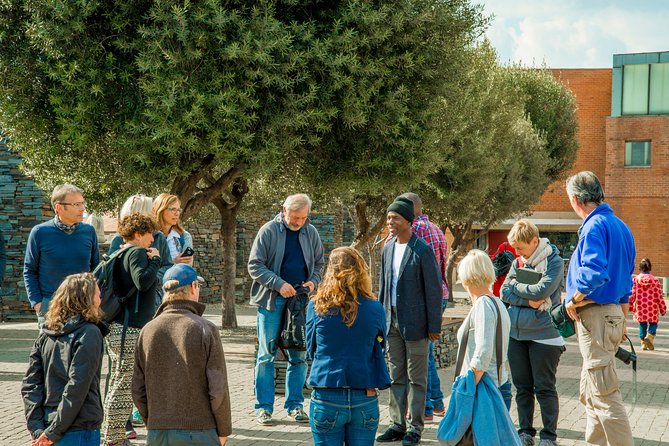
After Constitution Hill, you head toward Newtown and stop at Mary Fitzgerald Square. This is a short stop—about 15 minutes—and admission is free.
Why I like this kind of stop: it breaks up an emotional morning. It’s also a way to learn one specific thread of Johannesburg’s labor and activism story. The square is named after Mary “Pickhandle” Fitzgerald, noted as South Africa’s first female trade unionist.
The stop is also tied to the area’s street-level culture, including the Jazz Walk of Fame in Mary Fitzgerald Square. It’s brief, but it gives your brain something lighter to process before you move into the heavier museum time later.
Apartheid Museum: the emotional core of the day
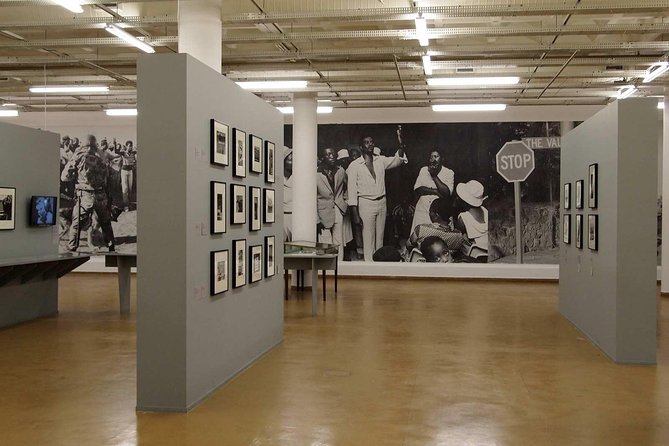
Midday is where the tour turns intense: the Apartheid Museum. Admission is included, and you typically get about 2 hours inside.
This museum runs on a clear structure: it uses 22 individual exhibitions to show the rise and fall of apartheid. The flow is built to carry you from the struggle for freedom and equality toward the climax of Nelson Mandela’s election and leadership.
You should go in prepared for an emotional hit. The prison-and-uprising themes can feel grim, not “touristy.” That’s not a criticism of the museum—it’s the point. If you’re the type who likes history that explains itself through photos and personal stories, you’ll likely appreciate how the museum is designed to guide your attention.
Also plan for food that isn’t included. The itinerary includes time around lunch, with a note that you can eat or drink at the Truth Café, but it’s own expense. I suggest treating lunch like a reset button: water, a snack, and a few minutes to step away before the township portion.
Soweto from the road: football stadiums, towers, and real distances
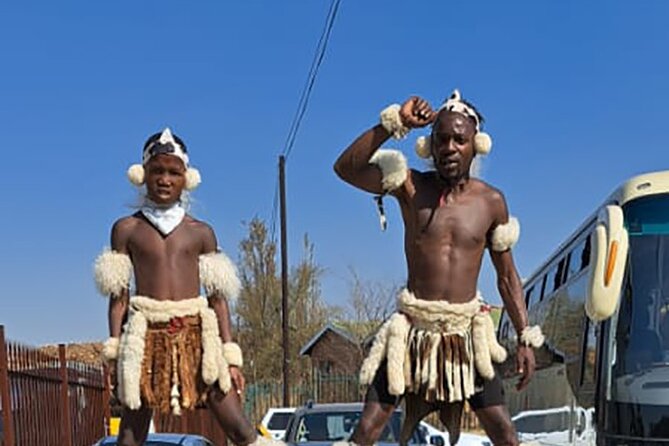
After the museum, you drive into Soweto. On the way, you pass major Johannesburg landmarks and famous sports sites. Expect to see references to the FNB Soccer Stadium, Baragwanath Hospital, and the large Soweto Towers—plus mention of the World Cup City Stadium as a stop along the route.
This “driving past big landmarks” part does a lot of work even when you’re not stepping out. It sets scale. Johannesburg can feel like a map from the highway—then suddenly you’re in Soweto streets and you realize how close these worlds sit to each other.
And because the tour uses a minivan, it helps with the logistics of getting from point to point. You don’t have to worry about navigating or haggling for transport while you’re trying to take in the story.





Motsoaledi informal settlement and Regina Mundi area: short, human, and respectful

Your first Soweto stop is at Motsoaledi informal settlement on Elias Motsoaledi Road. You get about 20 minutes here, and the day includes a walk through the streets past street cafés and craft markets.
The best part of this stop is the community component: you move toward a community centre that MoAfrika sponsors, then you greet and meet people in the settlement and learn about daily life and routines.
This is one of those moments where the time limit matters. Twenty minutes can feel quick, but it’s often long enough for a few meaningful interactions if everyone stays respectful and present. If you’re imagining long conversations, adjust your expectations. This is more like a guided introduction than a homestay.
Right before you move deeper into Soweto’s hub areas, you get a quick overview stop outside Regina Mundi Church and Freedom Square. Think of this as a viewpoint-and-context pause rather than a full museum stop.
Hector Pieterson Museum and Memorial: where 1976 becomes specific
Next comes the Hector Pieterson Museum and Memorial in Orlando West. You get about 30 minutes, and admission is included.
This site is positioned two blocks away from where Hector Pieterson was shot and killed on 16 June 1976. That proximity is why this museum is so powerful: it anchors the history in place, not just in abstract facts.
If you’re sensitive to emotionally heavy content, plan for that before you arrive. The 1976 story is described as connected to the death of a young boy named Hector Pieterson, and the memorial portion can feel difficult. But if you want to understand why South Africa’s liberation story is tied to students and resistance, this stop is a key piece.
A practical packing mindset helps here: comfortable shoes (you’ll be on foot), a camera you can use quickly, and a willingness to pause and read slowly if you’re drawn to the details.
Vilakazi Street and the Mandela House option: Nobel Peace Prize neighborhoods
Then the tour moves along Vilakazi Street, which is famous for being home to the two Nobel Peace Prize winners’ residences connected with Nelson Mandela and Archbishop Desmond Tutu.
You get about 1 hour here, and it’s described as free admission. The walk goes past iconic monuments and includes the homes of Nelson Mandela and Winnie Mandela, plus Archbishop Desmond Tutu. It’s also the street where your guide’s interpretation matters, because you’ll likely hear the history of the Soweto uprising tied back into what you’re seeing on the road.
The itinerary also includes an opportunity for an optional stop: Mandela House. It’s listed as about 1 hour and admission is not included, meaning there’s likely a separate ticket cost if you choose it.
I like optional elements like this for two reasons. First, you can follow your interest level instead of feeling trapped by a “must see” box. Second, it helps balance the day if you need a calmer pace after the heavier memorial stop.
Telkom Tower, Constitution Hill views, and the Carlton Centre decision point
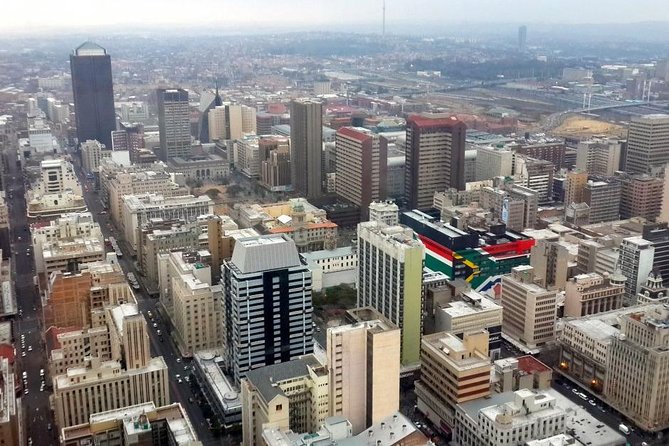
Back on the Johannesburg side, the tour incorporates a few big visual markers. Telkom Tower is mentioned as an imposing 882 feet (269 metres) tall structure. You’ll also get views and city-context time around Constitution Hill and the bridge corridor as you move through the CBD.
The itinerary also promises an ending with an elevator ride up the Carlton Centre, described as the tallest building on the continent. That’s the kind of finish that makes a long day feel like it has a reward.
But here’s the practical caution: one booking experience was affected because Carlton Centre had been closed for some time, and the tour response said the listing was updated. So on your day, treat Carlton Centre as a target, not a guaranteed finish line. If it’s closed, your guide will likely pivot within the time remaining, but the exact “top floor elevator view” may not happen.
Finally, the tour ends at Chris Hani Baragwanath Hospital, where the itinerary says your tour finishes. Even if you’ve never visited a hospital of that scale before, it’s a real, working landmark in Soweto, not a symbolic photo stop.
Price and pacing: what $108.70 buys you in real terms
At $108.70 per person for roughly 9 hours, you’re paying for three things: transportation, guided interpretation, and included entry to major sites.
Included items on paper are hotel pickup/drop-off, an air-conditioned minivan, driver/guide, and uncapped onboard Wi‑Fi. Admission is included for Constitution Hill, Apartheid Museum, and Hector Pieterson Museum. Mary Fitzgerald Square is free, which helps keep the cost focused where it matters.
That said, the day is efficient rather than relaxed. If you’re the type who wants to spend extra time reading every exhibit panel, you might feel rushed. Some guides still do a strong job managing timing, but the overall schedule is tight by design.
So for value: this is worth it if you want a guided overview that connects Soweto and Johannesburg in one pass. If you’d rather slow down in one or two places—like spending a full day at the Apartheid Museum—you might prefer splitting it into separate visits.
What to bring, how to handle the emotional weight, and how to get the best day
This is a day with multiple emotional stops: the prison-and-democracy narrative at Constitution Hill, the apartheid-focused exhibits at Apartheid Museum, and the Hector Pieterson memorial tied to the 1976 uprising. Even when it’s expertly guided, it’s not a “fun” day in the casual sense.
Here’s how I’d set yourself up:
- Wear comfortable shoes for short walks on sidewalks and in museum entry areas.
- Bring a light layer. You’ll be in a vehicle often, and indoor spaces can vary.
- Plan for an own-expense lunch break. The museum lunch option (Truth Café) is there, but you still need to budget.
- Have patience with timing. Even great tours can run a few minutes late when one guided component runs longer.
And if your guide’s style feels like it matches your learning preferences—clear storytelling, asking if you have questions, giving context while you’re standing in the right place—you’ll likely enjoy the whole day more. On this route, the guide can turn “where did this happen” into “why did it matter.”
Who should book this Soweto and Apartheid Museum tour
This works best for you if:
- You’re on a first visit to Johannesburg and want a guided overview of key sites.
- You care about understanding apartheid and its aftermath through real places.
- You like getting local perspective from someone who grew up in Soweto.
It might not be the best fit if:
- You need long, unhurried museum time.
- You’re very sensitive to heavy topics like prison exhibits and memorials.
- You’re expecting a purely sightseeing day with minimal walking and minimal emotional content.
Should you book this Ultimate Johannesburg Soweto Experience?
I’d book it if your priority is a guided, high-impact day that connects Constitution Hill, the Apartheid Museum, and Soweto’s key memorial and street areas into one coherent story. The included admissions remove friction, and the mix of city landmarks with township life gives you a fuller sense of Johannesburg than you’d get with a self-drive plan.
If you do book, go in with the right expectations: short stops, one lunch on your own, and emotional sites that require a calmer mindset. And keep one eye on the end-of-day Carlton Centre plan, since closures can change whether that elevator moment happens.
Bottom line: it’s a strong way to understand the city, not just take photos. If you want that understanding, this is a smart bet.