REVIEW · LUXOR
Full Day Tour of Luxor West Bank Temples and Tombs (Private)
Book on Viator →Operated by Luxor Egypt Tours · Bookable on Viator
West Bank Luxor turns into a full story in one day. I love the private Egyptologist guide who keeps the scenes connected, and I love the door-to-door hotel pickup that makes this side of Luxor easy. The trade-off is the day runs intensely (about 7 to 10 hours), and entrance fees aren’t included, so your final spend depends on what you choose inside the tombs.
This is a great format if you want the big West Bank hits—Kings, Queens, Hatshepsut, Deir el-Medina, Medinet Habu, and the Colossi of Memnon—without wrestling taxis or guessing your way between sites. It can also be a good day for photos, because your guide gives you time to move around on your own after the explanation. One watch-out: some stops in Luxor can feel a bit like a shopping detour, so if that bugs you, ask early and stick to your plan.
In This Review
- Key things that make this West Bank tour work
- Why do the West Bank as a single day?
- Price and logistics: what $20 covers, and what adds up
- Valley of the Kings: choosing tombs without losing the plot
- Temple of Hatshepsut at Deir el-Bahari: terraces built for drama
- Valley of the Queens (Valle Delle Regine): where the queens were laid to rest
- Deir el-Medina (Valley of the Artisans): the people behind the tombs
- Temple of Medinat Habu: Ramesses III and the bigger New Kingdom picture
- Colossi of Memnon: a quick stop that still earns its place
- Pacing, photos, and the reality of a 7 to 10 hour day
- Lunch and side stops: how to keep the day yours
- Should you book this Luxor West Bank private tour?
- FAQ
- FAQ
- How long is the private West Bank Luxor tour?
- Are pickup and drop-off from my Luxor hotel included?
- What’s included in the price?
- Are entrance fees included?
- Is lunch included?
- Does the tour include entry to tombs in the Valley of the Kings?
- Is the tour really private?
- What if the weather is bad?
- Can I cancel for free?
Key things that make this West Bank tour work
- Hotel pickup + private air-conditioned vehicle: you lose less time to heat and traffic.
- Egyptologist-led pacing: you get context before you walk into the tomb spaces.
- Multiple West Bank highlights in one run: Kings, Queens, Hatshepsut, Deir el-Medina, Medinet Habu, plus Memnon.
- Time to choose tombs thoughtfully: guides often help you decide what to see first when you enter.
- Lunch only with the entry+car+guide option: plan for an extra meal cost if you pick the basic option.
Why do the West Bank as a single day?
The West Bank of Luxor is where the Nile-famous postcard scenes turn into something more personal: burial temples, worker villages, and tomb valleys tucked into desert cliffs. Doing it in one day matters because you’ll see the whole system at once—royal burials in one valley, queens in another, and the craftspeople who helped build them not far away.
This tour is designed for that same idea: one side of Luxor, done thoroughly in a single outing. You start in the Valley of the Kings (that’s your heaviest history hour-for-hour), then you climb to the major temple at Deir el-Bahari, and you keep moving through the other valleys and temples so the geography makes sense. If you only do one West Bank day in Luxor, this route is a practical way to avoid feeling like you missed the best parts.
You can also read our reviews of more tours and experiences in Luxor.

Price and logistics: what $20 covers, and what adds up
The headline price shows $20 per person, which is attractive on paper—especially since you’re paying for private transport and a private Egyptologist guide. But two things shape your true total cost:
1) Entrance fees aren’t included for the main sites on this route (Valley of the Kings, Hatshepsut, Valley of the Queens, Deir el-Medina, and Medinet Habu).
2) Lunch is only included with the option that lists Car+Guide+Entry+Lunch. If you choose the version without lunch, you’ll need to budget for a meal.
There’s also a note that the Valley of the Kings tickets (including three tombs, per the Ministry of Tourism instruction) are not included. Translation: before you go in, you’ll want to understand what you’re allowed to enter with your ticket and how that lines up with the tombs you most want to see.
The practical win here is that you’re not just booking “a car.” You get round-trip transfers from your Luxor hotel, and you ride in a private air-conditioned vehicle with bottled water. In summer heat, that alone can make or break a day.
Valley of the Kings: choosing tombs without losing the plot
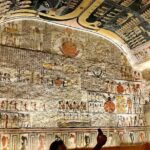
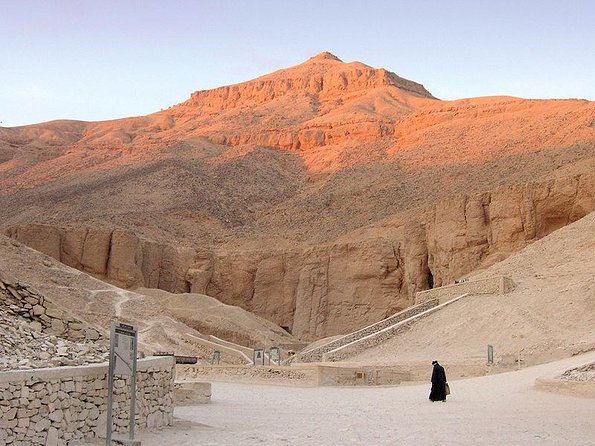
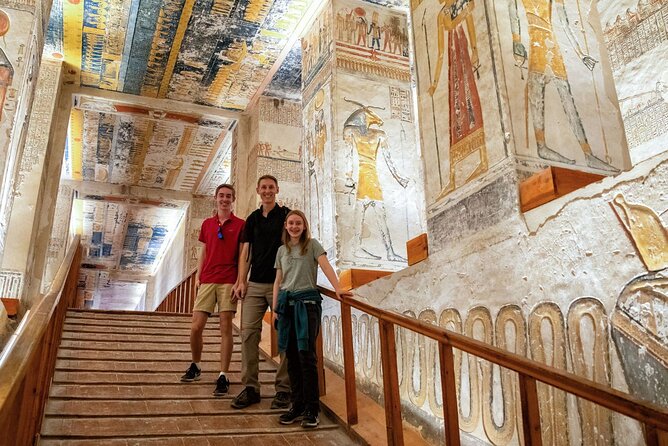
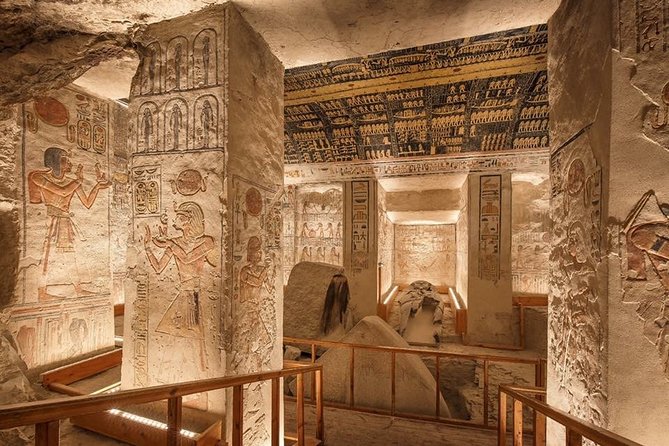
You’ll start with the Valley of the Kings, the main royal burial valley on the West Bank. You enter a desert setting made for silence and secrecy, where the tombs are tucked into the rock face like time capsules. Even if you only go into a few, the guide helps you understand what you’re looking at so you’re not just staring at walls.
The schedule gives you about 2 hours here, which is enough for a first-timer to:
- get oriented with your guide’s explanation,
- pick tombs that match your interests,
- and still have time to look carefully before you rush onward.
The key consideration is tomb choice. Some tombs are closed on certain days, and you should expect that you may not see every famous chamber you hoped for. In those moments, a good guide helps you swap to something comparable so the story doesn’t feel cut short.
You’ll likely hear guide names like Hany Yessen, Sayed Gamal, Hassan, and Besho in the way people describe their day: clear directions, help picking tombs, and smart photo timing. What to do: when you arrive at the ticket and entrance point, ask your guide what order makes the most sense for the tombs that are open and what you’ll gain from each.
Temple of Hatshepsut at Deir el-Bahari: terraces built for drama
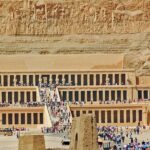
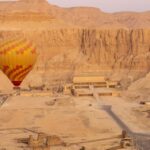
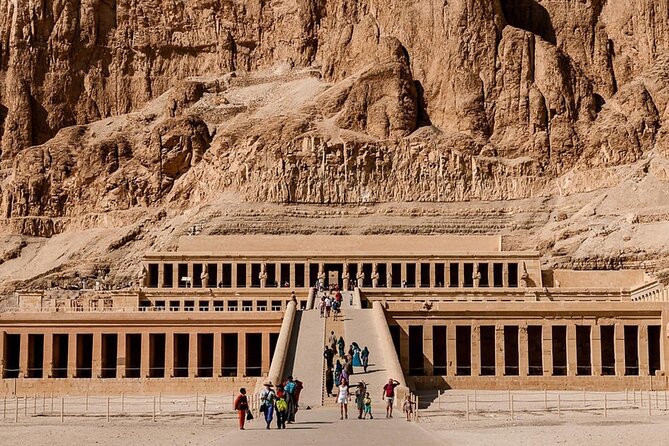
Next comes the Temple of Hatshepsut at Deir el-Bahari. This is one of those places where the setting does half the work. The temple rises in terraced shapes, and the location matters: it sits in a valley basin surrounded by steep cliffs, so the whole design feels framed and intentional.
You’ll get about 1 hour here. That’s enough time to appreciate two things at once:
- how the terraces step upward toward the sanctuary area,
- and how the cliffs and the temple layout guide your views as you move.
A practical tip: don’t rush the first overlook. Take a minute to let the layout register, then start walking with purpose. This is the part of the day where it’s worth slowing down a notch, because the temple’s architecture is the subject, not just the carvings.
Valley of the Queens (Valle Delle Regine): where the queens were laid to rest
After Deir el-Bahari, you’ll head to the Valley of the Queens, sometimes called Ta-Set-Neferu, meaning the place of beauty. This is where you understand the difference between the queens’ burial ground and the pharaohs’ burial ground.
The schedule gives you about 1 hour 30 minutes. That length matters because the visit isn’t just one entrance. You’ll want enough time to compare tomb spaces and follow the guide’s explanation of why this valley held wives of pharaohs, while the kings were buried in the Valley of the Kings.
Here’s what I’d emphasize: treat this as a story of roles in the same royal world. If you go in with that frame, you’ll notice more than surface detail. You’ll also get a better sense of why names, positions, and symbols mattered so much for royal women who were remembered across generations.


Deir el-Medina (Valley of the Artisans): the people behind the tombs
Then comes Deir el-Medina, often described as the workers’ village tied to the tombs. This stop is special because it flips the usual perspective. Instead of only focusing on royalty and temples, you’re learning about the artisans who worked on the tombs during the 18th to 20th Dynasties.
You’ll have about 1 hour here. That’s a good pace for a site like this because you don’t need nonstop walking to enjoy it—you need time to make sense of the place and how it fits into the larger tomb valleys.
One reason this stop earns strong marks is that it can feel less crowded than some of the more famous tomb entrances. If you get a calmer window, use it. Pause for photos. Ask your guide how the worker village relates to what you saw earlier in the royal valleys.
Temple of Medinat Habu: Ramesses III and the bigger New Kingdom picture
Your next temple stop is Medinet Habu, associated with Ramesses III. This is a New Kingdom temple structure on the West Bank, and it rounds out the day by shifting from tomb-focused stops to a more public, ceremonial setting.
You’ll have about 1 hour here. That’s enough for a focused walk where you can connect what you’ve seen in the tomb valleys to how rulers projected power in temple form.
People often mention Medinet Habu specifically because it can feel quieter than the busiest tomb areas, which gives you more time to pick up details without constant crowd pressure. If you like architecture and inscriptions, this is a good moment in the day to slow down and look closer.
Colossi of Memnon: a quick stop that still earns its place
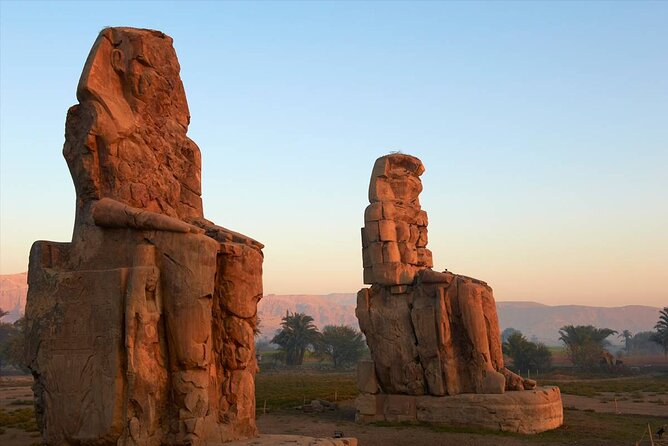
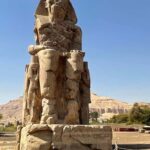
The day closes with the Colossi of Memnon. These are two massive stone statues of Amenhotep III, standing at the front of the ruined mortuary temple of Amenhotep III.
You’ll only spend about 10 minutes, and that’s normal. The value is mostly visual and contextual: you see scale, you learn who’s behind the monument, and you connect the statues to the temple complex that no longer fully exists.
Even with the short time, try to position yourself for a clean view without rushing. Photos are easy here, and it’s a good final marker that makes the West Bank feel like a single landscape of linked sites.
Pacing, photos, and the reality of a 7 to 10 hour day
A private tour can feel luxurious, but it’s still a lot of desert driving and walking. Plan for a day that moves. The stops are spaced out like this: 2 hours at the Valley of the Kings, 1 hour at Hatshepsut, 1.5 hours at the Valley of the Queens, 1 hour at Deir el-Medina, 1 hour at Medinet Habu, and 10 minutes at the Colossi.
That structure gives you time for explanation and photos without turning the day into a half-finished tour. Still, it’s worth building in a buffer mindset. Wear comfortable shoes. Bring a hat. Use the bottled water. You’ll enjoy the experience more when you’re not thinking about basic comfort.
On the people side, the day can be quite customizable. In practice, your guide often sets the tone right at pickup: names you might encounter on similar tours include Ahmed Emam (often praised for strong historical context and a good lunch stop when included), Emad, Sayed, and Beshoy. What to do: ask your guide how they handle photo time and whether you can add or swap tombs depending on openings that day.
Lunch and side stops: how to keep the day yours
Lunch is included only if you choose the option that lists Car+Guide+Entry+Lunch. When lunch is included, it’s typically a local restaurant meal at the end of the day, and people describe it as filling.
If you pick a version without lunch, don’t assume you’ll find time to eat later. Build your plan: either budget for lunch yourself or choose the package that covers it.
One small caution from real-world experience: some guides may stop at shops. Most people understand why that happens in Egypt—drivers need breaks, and shops want business. But if you don’t want a sales-feeling detour, say so at the start. Keep it simple: you want the history sites, and you’ll buy only if you truly want to.
Should you book this Luxor West Bank private tour?
Book it if:
- You want the big West Bank names in one day without dealing with transport between sites.
- You like the idea of an Egyptologist guide giving context so the tombs and temples click into place.
- You’re okay with a busy schedule and you want value in time.
Skip it or adjust your expectations if:
- You hate paying for entrance fees separately. Your final cost depends on what you choose inside the tombs.
- You want a slow, laid-back day. This one is built to cover a lot.
- You’re very attached to seeing one specific tomb, since closures can happen and you may need to swap to what’s open.
FAQ
FAQ
How long is the private West Bank Luxor tour?
It runs about 7 to 10 hours, depending on timing and site conditions.
Are pickup and drop-off from my Luxor hotel included?
Yes. The tour includes pickup service from your Luxor hotel and return transfers.
What’s included in the price?
You get a private air-conditioned vehicle, a private Egyptologist guide, and bottled water on board. Lunch is included only if you choose the option that includes Car+Guide+Entry+Lunch.
Are entrance fees included?
No. Entrance fees for the listed sites are not included.
Is lunch included?
Lunch is not automatically included. It is included only when you choose the option that lists Car+Guide+Entry+Lunch.
Does the tour include entry to tombs in the Valley of the Kings?
The Valley of the Kings tickets (including three tombs, per Ministry of Tourism instruction) are not included, so you should plan to pay for tomb entry separately.
Is the tour really private?
Yes. It’s a private tour/activity, and only your group participates.
What if the weather is bad?
This experience requires good weather. If it’s canceled due to poor weather, you’ll be offered a different date or a full refund.
Can I cancel for free?
Yes. You can cancel up to 24 hours in advance for a full refund. If you cancel less than 24 hours before the start time, the amount you paid will not be refunded.