REVIEW · LUXOR
Luxor Day Tour: Explore Valley of Kings, Queens, Hatshepsut& More
Book on Viator →Operated by Eternal Egypt Tours · Bookable on Viator
Luxor’s West Bank can fit in one day. This tour packs the Valley of the Kings plus major stops like Hatshepsut’s temple, Medinet Habu, and Deir el-Medina with a private Egyptologist guide, hotel pickup, and air-conditioned transfers. I love the way the guide helps you decide which tombs are worth any extra ticket time, and I love the pacing that still leaves room to look slowly and take in the art. One consideration: most site entry fees aren’t included, so you should expect to budget a bit more once you arrive.
You’re looking at about 7 to 10 hours on the West Bank, with a modern vehicle, a water bottle, and a plan built to keep you moving without feeling herded. It’s also truly private in the sense that it’s only your group, not a busload shuffled between strangers.
In This Review
- Key highlights worth your attention
- What this Luxor West Bank tour really feels like
- Valley of the Kings: 2 hours, 63 tombs, and smart ticket decisions
- Hatshepsut’s temple at Deir el-Bahari: queen power with a messy legacy
- Colossi of Memnon: 30 minutes of scale (and surprisingly good photos)
- Valley of the Queens plus Tombs of the Nobles: Nefertari and the afterlife texts
- Medinet Habu: Ramses III temple, Amun ties, and time to roam
- Deir el-Medina: artisan lives that make the whole West Bank click
- Price and what you’re actually getting for $10
- Transport, timing, and heat management on the West Bank
- The guide and driver difference you’ll feel fast
- Who should book this tour (and who might want a different pace)
- Should you book this Luxor West Bank day tour?
- FAQ
- How long is the Luxor West Bank tour?
- Is hotel pickup included?
- Are admission tickets included?
- Is lunch included?
- Is this a private tour?
- Do I need to tip?
- What happens if the tour is canceled due to weather?
- Can I cancel for a full refund?
Key highlights worth your attention
- Valley of the Kings in depth: 2 hours to see major tombs, including Tutankhamun, with help choosing where to spend your extra time/money
- Hatshepsut at Deir el-Bahari: long enough (2 hours) to understand why it’s both stunning and complicated
- Colossi of Memnon, no stress: only 30 minutes, and entry is free
- Valley of the Queens + Tombs of the Nobles: 1 hour that hits both Nefertari’s tomb area and the Book of the Dead connections
- Medinet Habu with time to wander: Ramses III’s temple (1 hour) plus room to explore at your own pace
- Deir el-Medina artisan village: 1 hour that shifts the story from pharaohs to the people who built the tombs
What this Luxor West Bank tour really feels like
This is a classic West Bank “big hits” day, but it’s not just a checkbox list. The stops are chosen so you get three different angles on the same world: royal power (Valley of the Kings), elite display and propaganda (Hatshepsut and Ramses III), and the everyday workforce that made it all happen (Deir el-Medina).
Most people feel the day more than they plan it. The heat can sneak up on you, the ground is uneven, and tomb walls reward patience. The value here is that you’re not stuck figuring everything out alone—your guide supports the choices that matter most, especially around tomb access.
You can also read our reviews of more tours and experiences in Luxor.

Valley of the Kings: 2 hours, 63 tombs, and smart ticket decisions
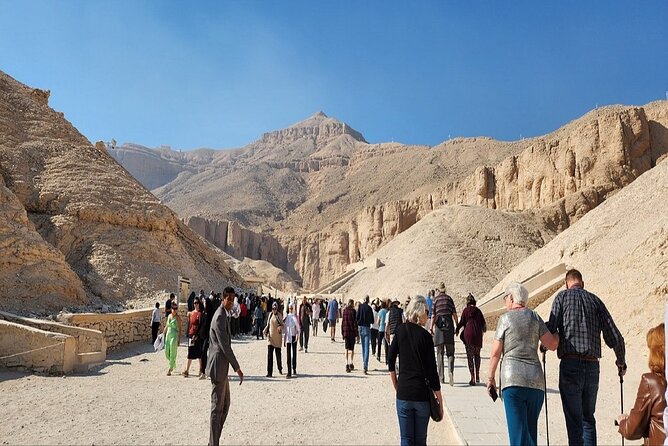
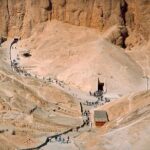
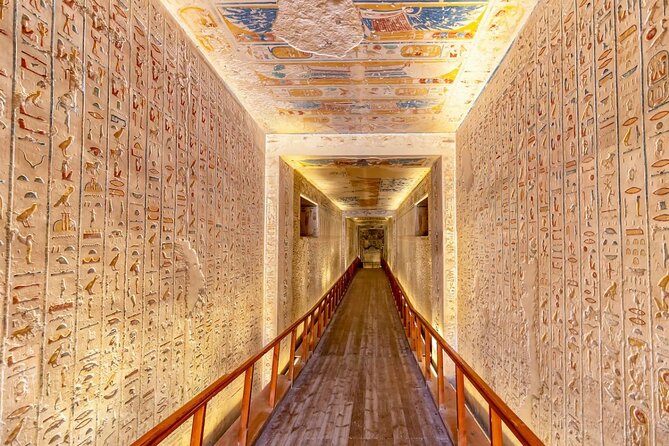
The day starts in the Valley of the Kings, one of the most focused “wow” zones on earth. You’ll have 2 hours here, which is just enough time to see more than one painted tomb without feeling rushed. The route is built around the fact that the West Bank isn’t one museum stop—it’s a necropolis with decades (and centuries) of burial history.
Expect vibrant wall scenes and hieroglyphs that help you understand funerary beliefs, not just decoration. And yes, the tour includes the famous tomb associated with Tutankhamun. Since not every tomb visit is the same in terms of cost/time, this tour’s biggest practical win is the guide’s help on priorities—people often praise how guides point you toward the tombs that are worth the extra ticket.
Practical tip: if you’re short on time once you’re inside, don’t try to “do everything.” Pick the tombs that best match what you want to photograph and understand. A calm plan beats a frantic one.
Possible drawback: you’ll want to manage expectations. Even with a well-run tour, tomb time can feel compressed if the group wants to linger in the wrong place (or if you hit a slower queue). That said, the 2-hour block gives you enough space to make real sense of what you’re seeing.
Hatshepsut’s temple at Deir el-Bahari: queen power with a messy legacy
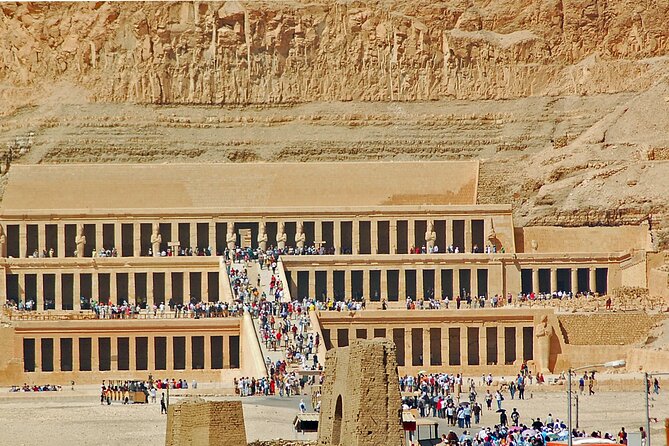
Next comes the temple complex dedicated to Queen Hatshepsut at Deir el Bahari. You get another 2-hour stop, which is a big deal here. Many trips treat this site like a quick photo stop. This one lets you walk the space and read the story in the architecture and wall scenes.
Hatshepsut is famous because she wasn’t supposed to be a pharaoh, and the temple reflects that tension. Your guide also helps explain the reality that later rulers tried to erase her presence—so you may see damage tied to those attempts, layered onto a place built to project legitimacy.
Here’s what I like about giving this stop real time: the temple makes more sense when you’re not sprinting. You can stand back to take in the cliff setting, then return to look closer at scenes and details. You start to understand why this spot is remembered as both political theater and religious space.
Wear-and-tear note: stone steps and uneven paths are common on the West Bank. Bring shoes you trust, not footwear that works only on smooth sidewalks.
Colossi of Memnon: 30 minutes of scale (and surprisingly good photos)
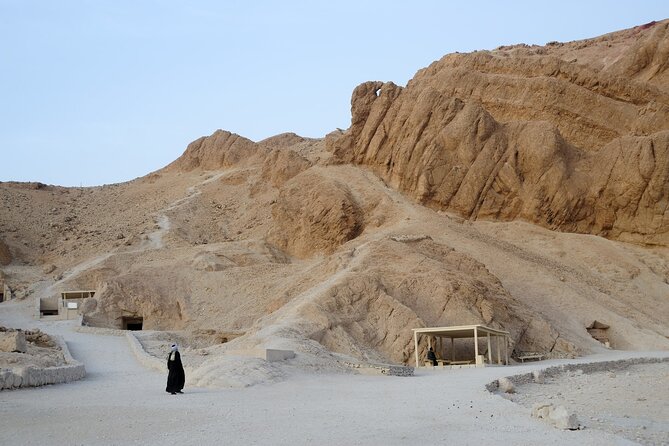
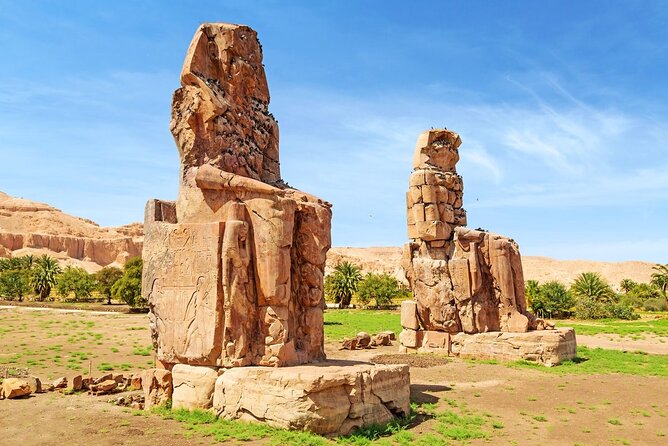
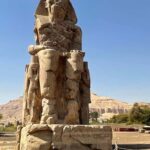
The Colossi of Memnon are a perfect breather stop: two huge stone statues tied to Pharaoh Amenhotep III, with a visit time of 30 minutes. Entry here is free, and that keeps this moment from feeling like a money tax.
What makes the statues worth the stop is scale. You can stand in front and genuinely feel how massive the stones are—and that helps you picture how monumental the wider temple complex once was.
Photo tip: go for angles that show the statues relative to you or the path. It’s the easiest way to make scale obvious in your pictures.
Valley of the Queens plus Tombs of the Nobles: Nefertari and the afterlife texts
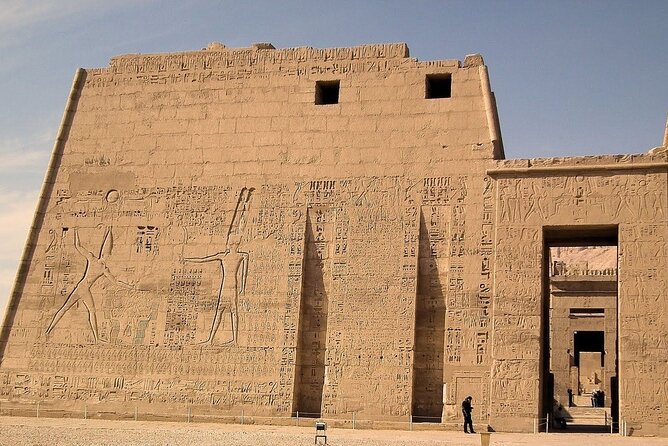
After the statues, you move into the Valley of the Queens area. The highlight here is the tomb connected with Queen Nefertari, a name that comes up again and again because of how important her story is to New Kingdom royal imagery.
Then you add the Tombs of the Nobles. This part matters because it widens the story from queens and kings to nobles who wanted to share in the afterlife. You’re looking at an area with over 400 tombs, and the tour includes the connection to cryptic passages from the Book of the Dead—the kinds of texts and religious ideas meant to guide and protect someone on the journey beyond life.
The stop is about 1 hour total. That can feel short if you’re a “read every wall” person. But it works if you use your time to compare tomb styles and understand the themes instead of trying to master every inscription.
Value angle: this is where the West Bank stops being only about famous names. You see that the idea of the afterlife wasn’t reserved for one family.


Medinet Habu: Ramses III temple, Amun ties, and time to roam
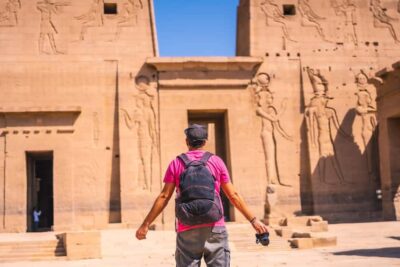
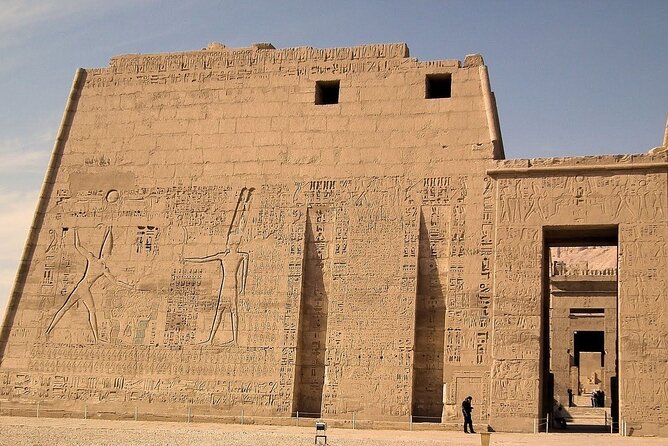
Medinet Habu is where the day starts to feel more like a full temple experience and less like a series of separate “holes in the hills.” You’ll visit the Temple of Medinat Habu, built by Ramses III, with about 1 hour on site.
This stop comes with context: the temple is tied to the local god Amun, and your guide also explains its role in Thebes’ economic life. That combination is what makes it more than pretty carvings. You’re connecting religion to real-world power and work.
Your guide leads you through key features first, then you get time to explore at your own pace. I like that format because it lets you slow down where you personally care—sometimes that’s sculpture details, sometimes it’s relief scenes, sometimes it’s just finding a quieter corner to breathe.
Good-to-know: since entry fees aren’t included here, factor that into your day budget. Many people also appreciate the guide’s advice on what’s worth paying for on the spot.
Deir el-Medina: artisan lives that make the whole West Bank click
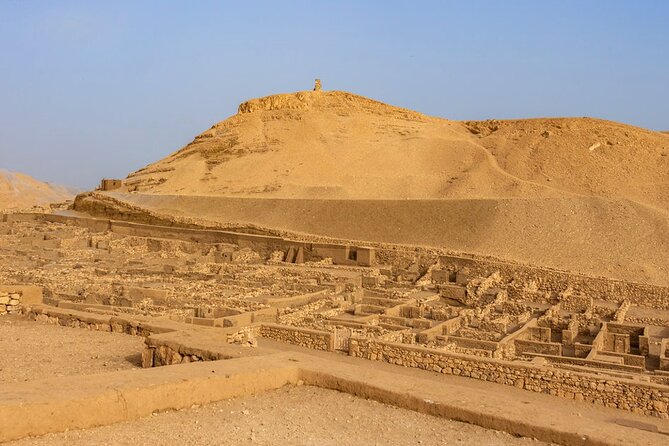
The final “big idea” stop is Deir el-Medina, the village of the artisans and workers who built and decorated the royal tombs. This is one of those places that changes how you look at everything else you saw earlier.
You’ll spend about 1 hour here, and the value is in what survives. The workers’ houses and tombs are described as well preserved, which means you’re not only learning about elite burials. You’re learning how skilled craftsmen lived while creating the tomb world of kings and queens.
If Valley of the Kings makes you think in terms of pharaohs and gods, Deir el-Medina makes you think in terms of human labor, routines, and trade. That shift is why this stop often lands as one of the most memorable parts of the day.
Who this suits: if you like history that includes real people—not just rulers—you’ll feel at home here.
Price and what you’re actually getting for $10
The headline price listed is $10 per person, which is unusually low for a full West Bank day with private guide service and hotel pickup. Here’s how I’d think about it: the cost likely reflects that some major site entry fees aren’t included, and you may need to purchase tickets separately depending on which tombs/temples you enter.
What’s included, based on the tour details:
- Hotel pickup in Luxor and return
- All transfers by a modern A/C vehicle
- Private Egyptologist guide
- Water bottle
- Taxes and service charges
- Lunch only if you choose the option that includes Car + Guide + Entry + Lunch
So the real value isn’t only the price tag. It’s that you’re not paying extra for basic logistics, and you’re getting a guide to help you prioritize tombs and manage time.
My practical advice: when you book, double-check whether you’re selecting a package that includes entry and/or lunch. If you’re going “guide only,” plan to pay for sites as you go. If you choose the entry + lunch option, you’ll likely have a calmer, more predictable day.
Transport, timing, and heat management on the West Bank
This tour is built to move efficiently between sites, with air-conditioned transfers and pickup from your hotel. That matters because Luxor’s West Bank can be brutally hot, and time lost to traffic or walking from far-away drop-offs kills your museum energy fast.
The tour includes a water bottle, and that’s a helpful start. Based on what people say they do well, I’d strongly encourage you to bring what you need to stay comfortable: cold drinks, some snacks, and good shoes that can handle stone steps and sandy paths. A shady tomb visit feels great; a sun-baked walk between stops can feel like punishment if you’re underprepared.
Also, the itinerary is long enough that you should consider what kind of day you want:
- If you like structure and education, you’ll enjoy the guided flow.
- If you prefer slow wandering with lots of breaks, you might feel the day is packed, even if the pacing is good.
The guide and driver difference you’ll feel fast
This tour stands or falls on two people: the driver who keeps you moving safely and on time, and the guide who helps you make sense of what you’re seeing.
Many visitors highlight guides like Mohammed Adly, Abdul, Hassan Moghrapy, Ahmet, Youssef Hussain, Khaled, Aza, Sayed, and others for being patient, organized, and helpful with real-world issues. Specific examples people mention include:
- helping decide which tombs are worth any extra ticket
- advising on ticket purchases for places like Medinet Habu
- suggesting good spots for lunch (often with views)
- giving photo tips so you don’t end up with only tourist-angle shots
- staying alert and helping prevent annoying scams around entrances
Your best move? Ask your guide early in the day what they recommend for your priorities. If you care most about tomb art, say so. If you want more temple detail, say so. Guides who think on their feet can save you time and money.
Who should book this tour (and who might want a different pace)
This tour is a great match if you want:
- a full West Bank day without arranging separate tickets and transport
- a private guide who can explain what you’re looking at
- a mix of royal tombs, major temples, and Deir el-Medina’s artisan perspective
It may be less ideal if:
- you hate walking and stairs
- you want very long stays in one or two tombs only
- you’re hoping for an ultra-budget day where nothing costs extra (entry fees aren’t included for many stops)
If you’re traveling as a first-timer to Luxor, this is an efficient way to get oriented. If you’ve been before, it can still feel fresh because Deir el-Medina adds a human angle most short tours skip.
Should you book this Luxor West Bank day tour?
Yes—if you want the West Bank in one organized, guide-led day. The main strengths are the range of sites and the way your guide can improve your decisions once you’re there, especially around tomb choices and ticket priorities. The private format and A/C transport also make a difference when a day is long and the sun is doing its own thing.
Before you book, do two simple checks:
- Confirm which option you’re selecting for entry and lunch, since lunch is only included in the entry + lunch package.
- Plan your budget for site entry fees since several stops explicitly say tickets aren’t included.
FAQ
How long is the Luxor West Bank tour?
The tour runs about 7 to 10 hours depending on how the day flows and the time spent at each stop.
Is hotel pickup included?
Yes. The tour includes pickup from your hotel in Luxor and return after the tour.
Are admission tickets included?
Not fully. For several stops, entry tickets are not included. The Colossi of Memnon stop is listed as free.
Is lunch included?
Lunch is included only when you choose the option that includes Car + Guide + Entry + Lunch.
Is this a private tour?
Yes. It’s described as a private activity, and only your group participates.
Do I need to tip?
Tipping is optional.
What happens if the tour is canceled due to weather?
The experience requires good weather. If it’s canceled due to poor weather, you’ll be offered a different date or a full refund.
Can I cancel for a full refund?
You can cancel for a full refund up to 24 hours before the experience starts. If you cancel less than 24 hours before, the amount you paid isn’t refunded.