REVIEW · JOHANNESBURG
Soweto: Guided Bicycle Tour with Lunch
Book on GetYourGuide →Operated by One Day Africa · Bookable on GetYourGuide
Soweto is one of those places where walking is not enough. On this 4-hour guided bicycle tour with lunch, you cover real neighborhoods and stop at major landmarks tied to apartheid resistance. I like that you don’t just point at history; you ride past daily life in Orlando West and learn how each area fits into the bigger story. I also love that lunch is practical and local: you’ll finish with a kota instead of a generic tourist meal. One thing to consider: the route includes hills and some sections feel like a workout, so you’ll need to be comfortable riding a bike.
Most tours are led in English by guides such as Thabo (sometimes spelled Teboho) or Themba/ Thembe, and the best part is how they connect the sights to people. For instance, one guide profile stood out as a young aspiring law student who clearly enjoys explaining Soweto’s past and present. If you can handle a few uphill stretches, this is an efficient, meaningful way to see Soweto without spending your whole day in cars.
In This Review
- Key things that make this bike tour worthwhile
- Why riding through Soweto feels different from a bus tour
- Meeting at Vilakazi Espresso and getting your bike sorted
- Hector Pietersen Memorial: the stop that sets the tone
- Mzimhlophe: internet café life, women’s hostel, and resistance at home
- Orlando East and Orlando Stadium: seeing the neighborhood scale up close
- Vilakazi Street: Mandela House and Tutu House in one strong corridor
- Lunch on the route: kota and a more human pace
- The ride back and what to bring for comfort
- Price and value for $52: what you’re really paying for
- Should you book this Soweto bicycle tour with lunch?
- FAQ
- Where does the tour start?
- How long is the Soweto guided bicycle tour with lunch?
- What’s included in the price?
- Is the tour guided in English?
- What food is served for lunch?
- Do I need cash?
- Is there an informal settlement visit?
- Is this tour suitable for people who can’t ride a bike or use a wheelchair?
- What are the cancellation and payment options?
Key things that make this bike tour worthwhile
- Biking beats “drive-by” sightseeing because you glide through the neighborhoods at a human pace
- Landmark stops with context: Hector Pietersen Memorial, Mandela House, and Tutu House on Vilakazi Street
- Local stops that feel lived-in such as the Mzimhlophe Internet Cafe area and Orlando community spaces
- Lunch is part of the experience with South African kota sandwiches
- Safety and pacing: multiple riders emphasized feeling well looked after, even in a mixed-age group
Why riding through Soweto feels different from a bus tour
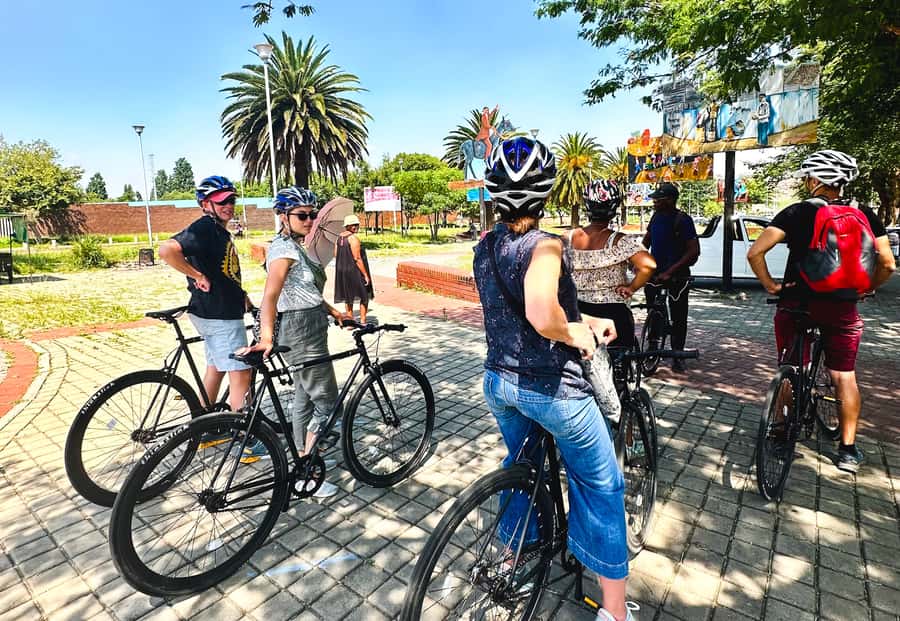
Soweto is dense, and the story moves through streets and blocks. That’s why I think a bicycle tour works so well here. You’re not stuck scanning from behind glass. You can actually slow down at photo stops, listen to the guide’s explanations, and then roll onward while the neighborhood stays in view.
I also like that this tour has a clear “half-day” shape. In 4 hours, you get a route that links several key anti-apartheid sites in one flow. The schedule is built around seeing major names—Hector Pietersen, Nelson Mandela, and Desmond Tutu—but it also includes everyday Soweto stops so it doesn’t feel like a set of isolated monuments.
The main drawback is also the main physical reality: you’ll be riding through an area with some uphill segments. In reviews, riders talked about needing reasonable fitness, bikes in good condition, and a few stretches that can make you work for the view. If you’re the type who prefers slow, flat routes, you’ll want to think twice.
You can also read our reviews of more tours and experiences in Johannesburg.

Meeting at Vilakazi Espresso and getting your bike sorted
You’ll start at Vilakazi Espresso. That matters because this tour isn’t a “grab-and-go” taxi shuffle. You begin in a place connected to the Vilakazi Street area, where the whole day’s theme—politics, people, and place—starts to click.
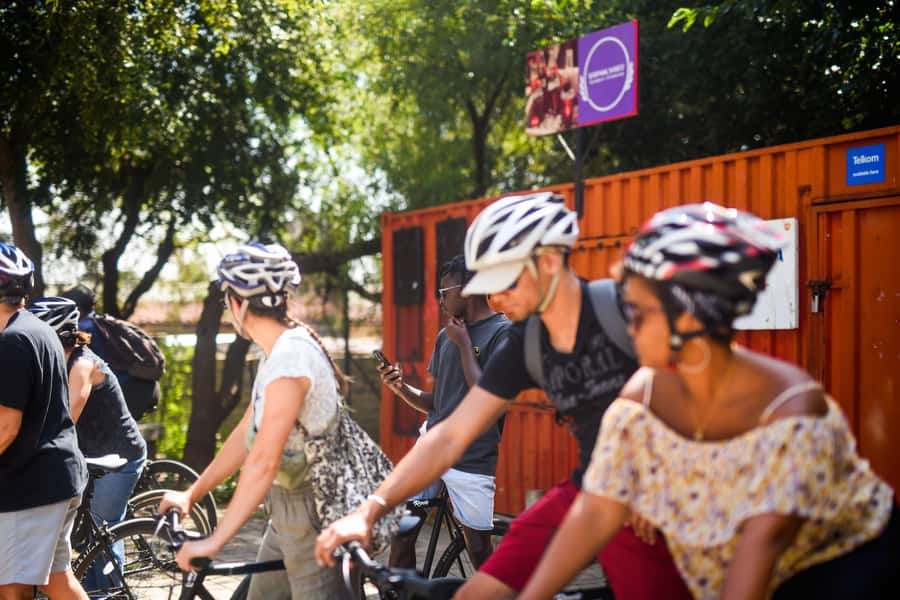
Once you meet your guide, you’ll get your bicycle and quick instruction. Multiple reviews mention that bikes are typically in good condition and that the guide makes sure you can handle the ride. One rider also specifically noted that the tour includes group instruction and that the leader stays attentive to safety while biking roads.
Practical note: bring the basics the organizers list—sunscreen and rain gear. Soweto weather can change fast, and you’ll be outside for the full experience. Also pack cash. You may want it for small purchases and for any gratuity situation that comes up during informal settlement time.
Hector Pietersen Memorial: the stop that sets the tone
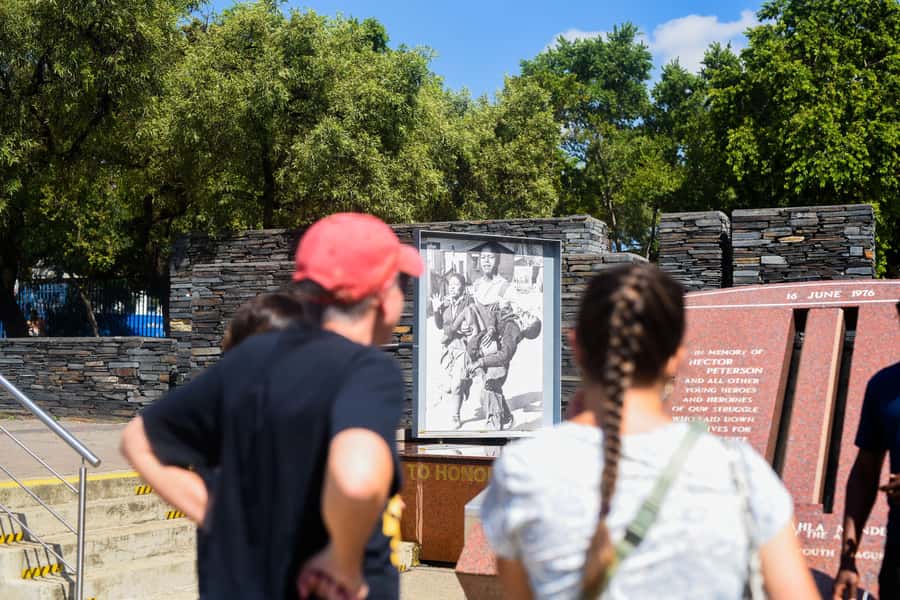
The first major landmark stop is Hector Pietersen Memorial. Plan for a photo stop plus a guided visit and sightseeing time (about 20 minutes on this stop). This is the moment where the tour shifts from “neighborhood tour” into “turning-point history.”
Hector Pietersen is tied to the Soweto uprising, described as one of the turning points of apartheid. That detail isn’t just background. It changes how you look at the street scene when you’re there, because your guide can link what you’re seeing now to what happened then.
A drawback to be aware of: memorial stops naturally bring a serious tone. This isn’t a casual sightseeing detour. If you prefer light, funny history only, you may find this section emotionally weightier than expected.
Mzimhlophe: internet café life, women’s hostel, and resistance at home
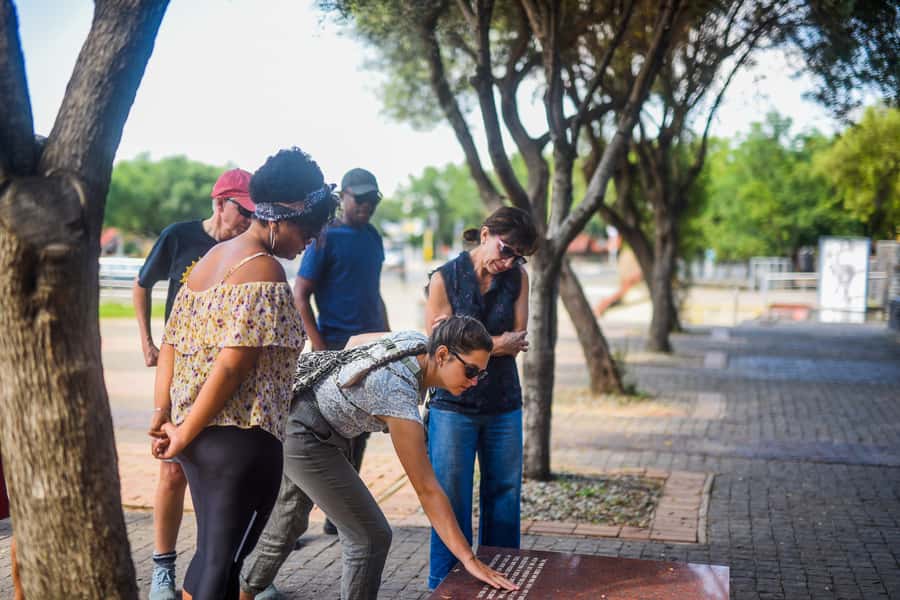
After the memorial, you’ll cycle toward Mzimhlophe, with a brief stop at the Mzimhlophe Internet Cafe area (about 15 minutes). This isn’t just a photo moment. It’s part of the tour’s point: Soweto isn’t frozen in 1970s headlines. It’s full of places where people work, connect, and move through daily routines.
From there, the route includes a visit connected to Mzimhlophe Women’s hostel. This matters because it adds a different angle to the resistance story. Instead of only focusing on public demonstrations, you get a glimpse of how anti-apartheid struggle and community life intersected in specific institutions and homes.
The tour also continues to Mama Lilian Ngoyi’s house, an anti-apartheid activist. Again, the focus is on connecting place to person. In a bike format, it’s easier to feel the “neighborhood scale” of history rather than treating each site like a separate stop on a sightseeing list.
One more practical point here: you should be ready for an informal settlement visit that is typically done with a local guide. The organizers note that it may be conducted during or at the end of the visit, and you’re welcome to offer a gratuity at your discretion (commonly R20–R50 or more). If you plan to be generous, bring a small amount of cash.
Orlando East and Orlando Stadium: seeing the neighborhood scale up close
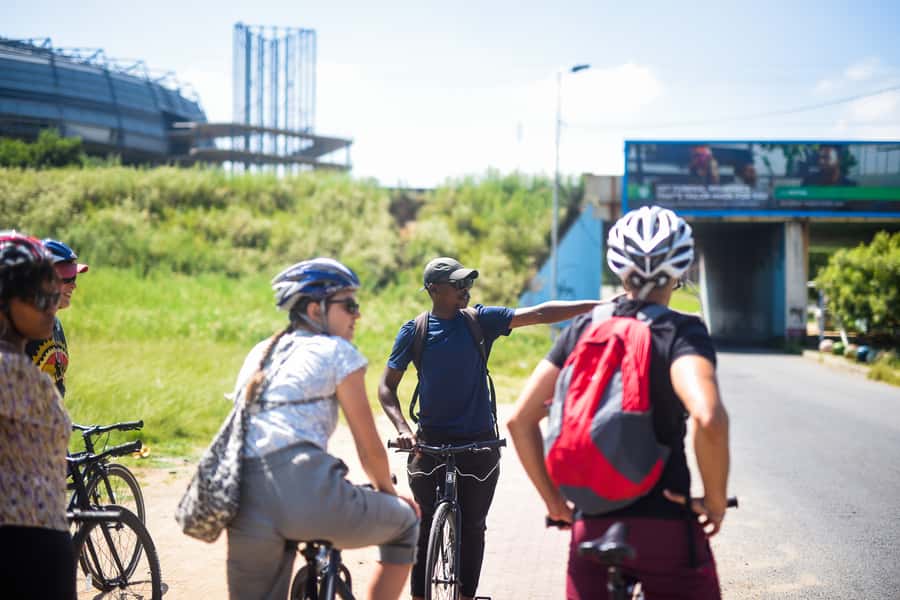
Between the big landmark clusters, the ride includes several photo stops across the Orlando areas. You’ll pass through or stop briefly around Orlando East, Orlando Stadium, and the Orlando Community Centre.
These shorter segments (ranging from about 5 to 10 minutes each) are easy to underestimate if you think only “major museums” count. But they’re often where you start understanding the shape of Soweto. Reviews highlight that the route gives a real sense of different sections and how they connect.
You should also expect some climbing. Riders repeatedly pointed out that you’ll feel hills in your legs. One review mentioned around 11 km of biking, and another noted altitude effects. That doesn’t mean it’s a race, but it does mean you should choose this tour when you want light exertion, not when you’re trying to save energy for the rest of your day.
If you’re traveling with a mixed group, the bike format can still work because the guide can set a pace. One review described a group handling different fitness levels, with the guide adjusting as needed.





Vilakazi Street: Mandela House and Tutu House in one strong corridor
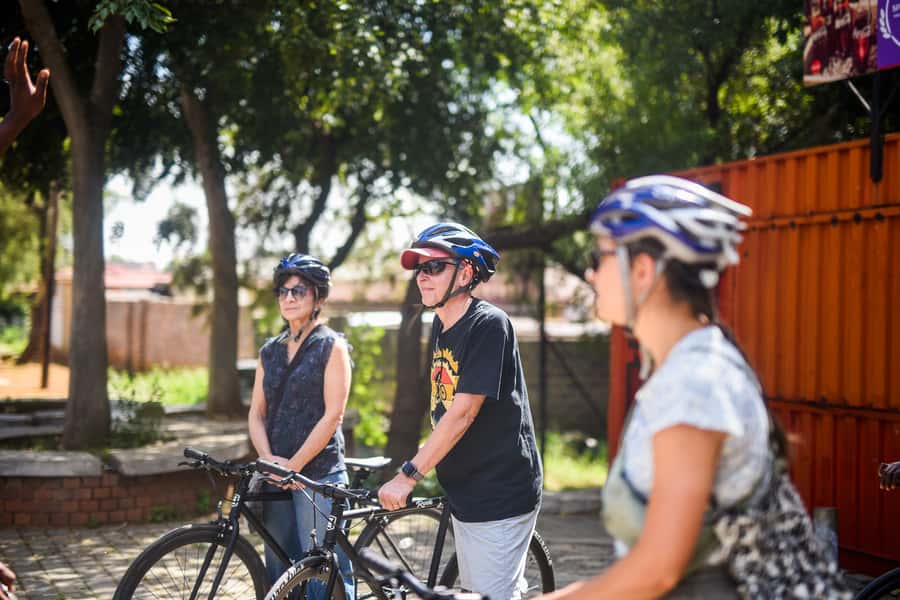
Then comes the famous part: Vilakazi Street in Orlando West. This is where the tour concentrates its most internationally recognized names, and it happens in a tight, logical sequence.
First you’ll be by or at Tutu House (Desmond Tutu’s former residence). The tour connects it directly to his role as a Nobel Laureate and how his work contributed to apartheid’s downfall. You don’t need to know everything already. The guide’s job here is to translate what these buildings represent into something you can actually picture and understand.
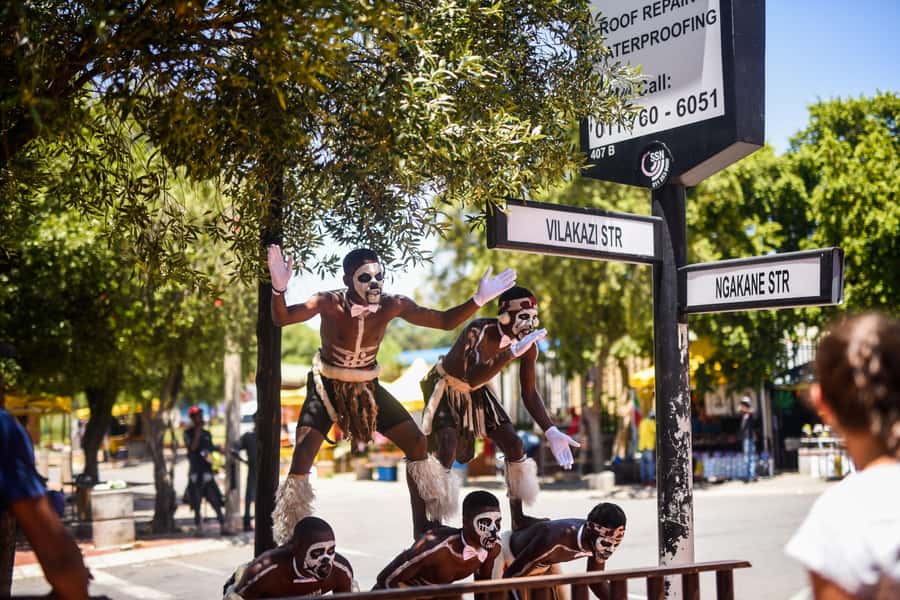
Next, the tour includes Mandela’s House, where Nelson Mandela lived from 1946 to 1962. The schedule includes guided sightseeing time (about 15 minutes at this part) and even a note about a traditional dance show during the stop. That combination—place, story, and performance—can make the lesson stick longer than a simple photo queue.
One small drawback: because these are high-demand sites, the mood can be intense and the timing tight. If you’re the type who wants to linger, ask your guide at the start if they can help you prioritize what matters most to you.
Lunch on the route: kota and a more human pace
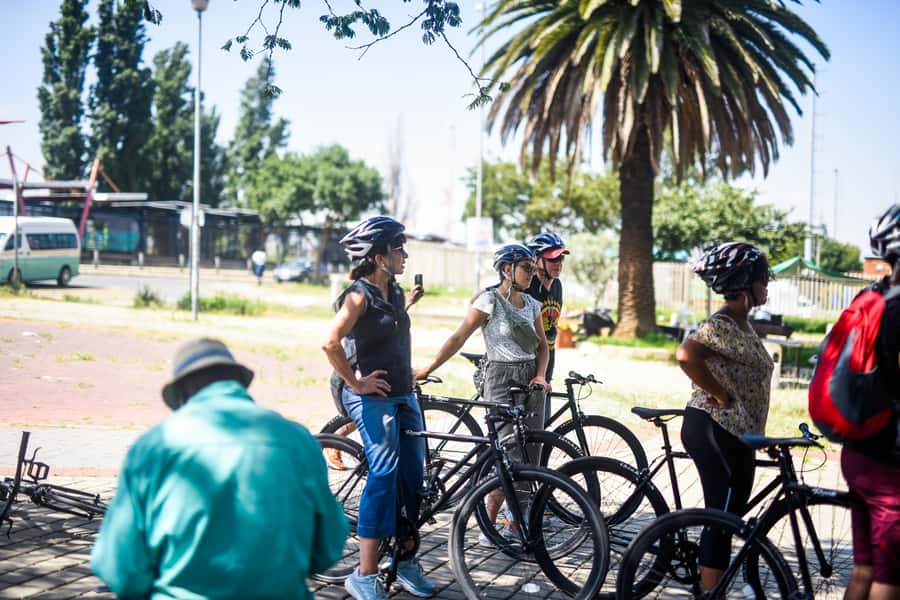
You’ll stop on Vilakazi Street, Orlando West for lunch. The time set aside is about 25 minutes, which is short enough to keep the ride moving, but long enough to reset your legs and your attention.
Lunch is kota sandwiches, described as South African street food style. In multiple reviews, the kota is named as a highlight. That makes sense: it’s filling, it’s local, and it doesn’t feel like a rushed add-on.
I also like that lunch gives you a natural moment to ask questions without the pressure of constantly mounting or dismounting. A few reviews mention the lunch conversation being a fun part of the day, and that’s often where guides share opinions about today’s Soweto, not only what happened decades ago.
If you get even slightly travel-wobbly, this is also where you’ll feel grateful for the pace. The tour isn’t just “ride to the next famous thing.” It gives you downtime so the history lands.
The ride back and what to bring for comfort
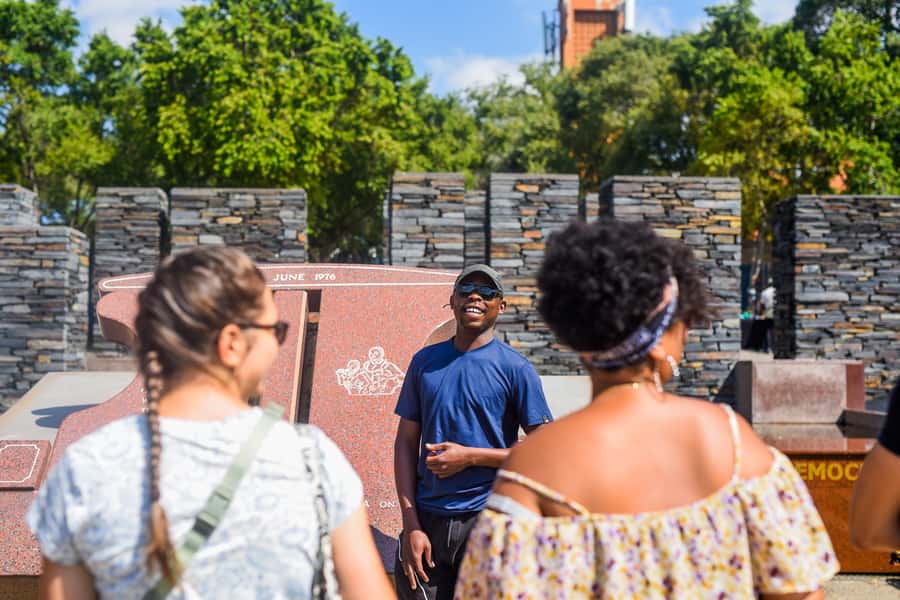
After Mandela’s House and the Vilakazi Street stops, you cycle back to the starting point at Vilakazi Espresso. The final segment wraps up with another photo stop and guided time.
Here’s what I’d pack based on the organizer’s list and what tends to matter for a bike tour in this area:
- Sunscreen (you’re outside for hours)
- Rain gear (weather can shift)
- Cash (useful for snacks, and for any gratuity you choose to offer)
- A water habit (one rider asked for bottled water, so if you’re concerned about hydration, plan for it)
Also keep this in mind: the tour is not suitable if you can’t ride a bike, if you’re using a wheelchair, or if you’re pregnant (per the provided information). It’s designed around active cycling, and the route includes uphill work.
Price and value for $52: what you’re really paying for
At $52 per person for a 4-hour tour, you’re not just paying for access to sites. You’re paying for:
- A local guide and their time with you
- A bicycle for the entire experience
- Food and drinks, including the kota lunch
If you compare this to paying separately for transportation plus guides plus lunch, this price starts to feel reasonable. You also gain something harder to price: you’re moving through Soweto in a way that’s efficient and less disconnected than a car-only route.
The value is best if you actually want both sides of the day: the anti-apartheid landmark stops and the neighborhood feel between them.
Should you book this Soweto bicycle tour with lunch?
Book it if you want a half-day that mixes major historical sites (Hector Pietersen Memorial, Mandela House, Tutu House on Vilakazi Street) with real neighborhood context, and you’re comfortable cycling through hills. The reviews repeatedly praise guides such as Thabo and **Th
emba** for being engaging, safety-focused, and good at explaining how history connects to daily life.
Skip it if biking uphill is a hard no for you, if you need wheelchair access, or if you’re traveling with someone who cannot ride. Also, if your idea of a tour is mostly flat and slow, you might find the pace too active.
If you’re asking me for the simplest fit check: this is a smart choice when you want movement, story, and lunch all in one respectful route through Soweto.
FAQ
Where does the tour start?
Meet at Vilakazi Espresso.
How long is the Soweto guided bicycle tour with lunch?
It lasts about 4 hours.
What’s included in the price?
The tour includes food and drinks, a local guide, and a bicycle.
Is the tour guided in English?
Yes, the tour guide speaks English.
What food is served for lunch?
Lunch includes South African kota sandwiches.
Do I need cash?
The tour notes that you should bring cash, and there may also be an optional gratuity for a local guide during an informal settlement visit.
Is there an informal settlement visit?
There is typically an informal settlement visit done with a local guide. You’re welcome to offer a gratuity during or at the end (commonly R20–R50 or more).
Is this tour suitable for people who can’t ride a bike or use a wheelchair?
No. It’s listed as not suitable for people who can’t ride a bike and wheelchair users.
What are the cancellation and payment options?
You can cancel for a full refund up to 24 hours in advance, and you can use reserve now & pay later to keep your plans flexible.