REVIEW · FES
From Fes To Marrakech: 2-Days with Luxury Camp, Desert Tour
Book on GetYourGuide →Operated by Marrakech City Life SARL · Bookable on GetYourGuide
Golden dunes beat the long drive. This Fès to Marrakech route makes the long transfer feel worth it, with a luxury desert camp in Merzouga and camel rides timed for sunset and sunrise. Along the way you get a real mix: cool mountain stops near Ifrane and Azrou, then the desert starts earlier than you think as you roll through the Ziz Valley and fossil-rich Erfoud.
The main thing to plan for is the pace. You’re doing big road days, sometimes roughly 18 hours total across the two-day stretch, so you’ll want to treat this as an action itinerary, not a slow sightseeing cruise.
In This Review
- Key Points That Matter Before You Go
- Why This Fès-to-Marrakech Route Fits in Just 2 Days
- Fès Morning to Ifrane: Moroccan Switzerland and a Quick Reset
- Azrou Cedar Forests and Barbary Macaques: The Stop That’s Actually Fun
- Midelt Lunch Break: Fuel Up Before the Long Desert Highway
- Ziz Valley to Erfoud: Palms, Oases, and Fossils With Real Age
- Arriving in Merzouga at Dusk: Camp Comfort and Star Night Setup
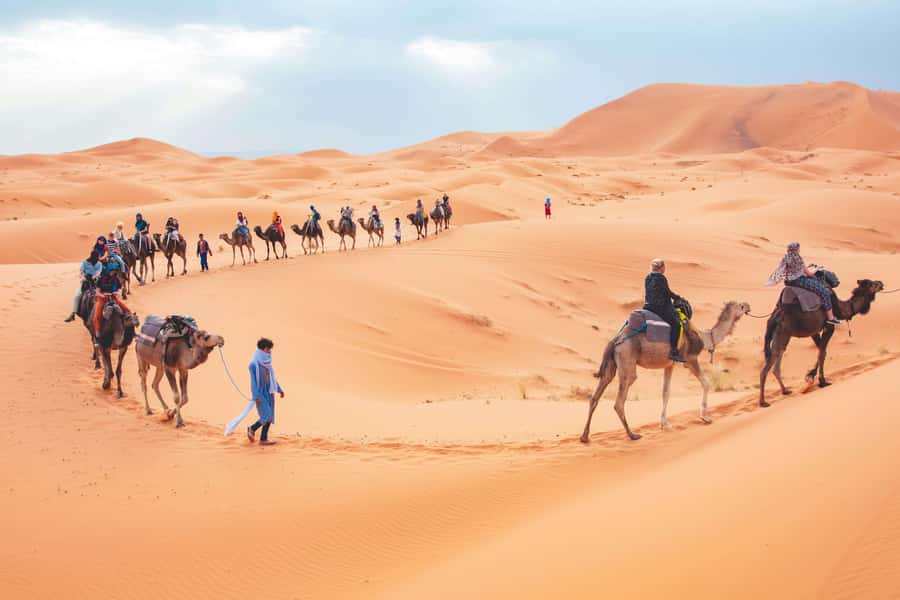
- Sunset Camel Ride: What to Expect on Erg Chebbi
- Dinner and Night Shows: Fun, But Manage Expectations
- Sunrise Camel Ride: The Moment That Changes the Mood
- The Trip Back to Marrakech: High Pass Views and a Smooth Arrival
- Price and Logistics: Is $133 a Good Deal for This Much Desert Time?
- Who Should Book This (and Who Might Want Something Else)
- Should You Book It?
- FAQ
- What’s included in the desert camp night?
- Are camel rides included?
- Is Ait Benhaddou Kasbah included?
- Does the tour include lunch?
- How do pickup and drop-off work in Fès and Marrakech?
- Is Wi‑Fi guaranteed in the vehicle?
Key Points That Matter Before You Go
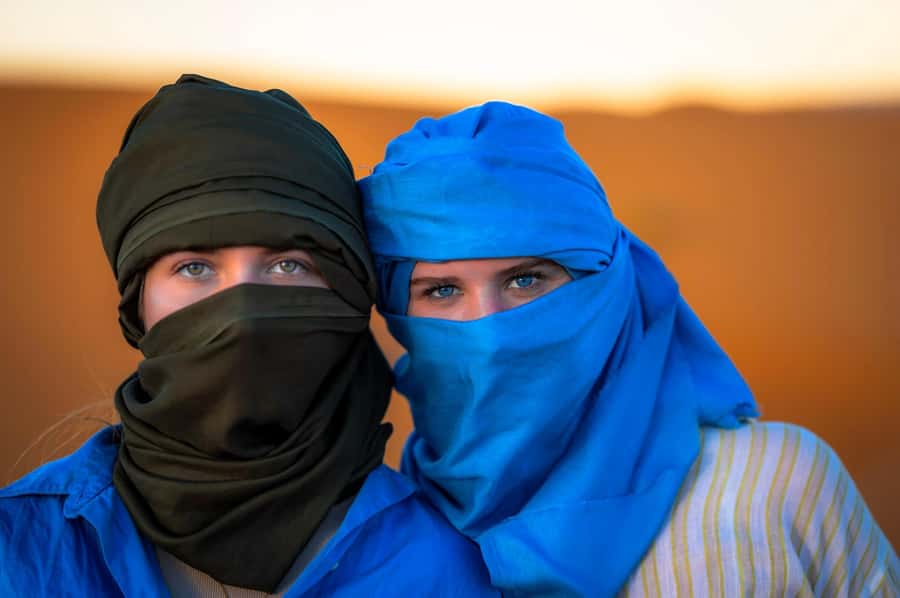
- Luxury tent comfort in Erg Chebbi: private tent setup with a real bed and private facilities (luxury option), plus camp staff service.
- Two camel rides, two moods: sunset over the dunes, then sunrise from the high sand vantage points.
- Desert “arrive at dusk” works: you reach Merzouga late afternoon so golden hour is baked into the plan.
- Ziz Valley and Erfoud are more than stopovers: palms, oasis scenery, and fossil quarries with deep-time history.
- Ait Benhaddou Kasbah visit is not included: you may see the area from the road, but the kasbah stop itself isn’t part of this package.
- Guide quality tends to be a major plus: names that come up often include Hakim, Ali, Ibrahim, Mehdi, Omar Faiz, and Idir, and people call out the safe, organized feel.
Why This Fès-to-Marrakech Route Fits in Just 2 Days
If you only have a short window, this tour is smart math. You get the best “entry-level” highlights of Morocco’s middle geography in one line: Atlas foothills, cedar forests, oasis valleys, then the Sahara. You’re not trying to cover everything in the country—you’re aiming for a tight set of moments that hit hard.
The value is in the structure. You’re paying for transportation with A/C (and Wi‑Fi that isn’t guaranteed), a professional driver-guide, meals, and desert activities wrapped into one schedule. You’ll spend less time figuring out logistics and more time showing up at the right place at the right light.
The other payoff: you don’t just get “a desert camp.” You get desert timing. Sunset camel ride, Berber music at night, then sunrise again. That second morning changes the whole mood of the trip.
You can also read our reviews of more tours and experiences in Fes.
Fès Morning to Ifrane: Moroccan Switzerland and a Quick Reset
You’ll start with pickup from your Fès hotel or a nearby accessible meeting point (especially if you’re staying in the older Medina lanes). Then you roll out toward the Middle Atlas foothills.
The first standout stop is Ifrane, often nicknamed Moroccan Switzerland. Think Alpine-looking buildings and a cooler air shift. It’s a nice early break after the city energy—good for photos and for getting your body temperature back under control.
A practical tip: wear layers. Even if Fès feels mild, the Atlas can turn chilly fast, especially if you travel outside peak summer.
Azrou Cedar Forests and Barbary Macaques: The Stop That’s Actually Fun
Next comes Azrou, in the cedar forests area. This is one of those stops that feels small until you’re there—cedars, forest shade, and Barbary macaques that often show up close to foot traffic.
This is also where the trip becomes more than a transfer. A quick walk here lets you stretch your legs without turning the day into a marathon. And it’s a nice change from road travel before you hit the longer stretch toward the desert.
One thing to remember: keep your distance from the animals, and don’t treat the stop like a petting zoo.
Midelt Lunch Break: Fuel Up Before the Long Desert Highway
After Azrou, you reach Midelt for a traditional lunch stop (lunch is not included). Midelt is a good location for a proper sit-down meal because it breaks up the driving and resets your energy.
People often describe trying local favorites like tagine-type dishes on this route. If you’re hungry, order something simple and filling—you’ll want it later, since the next sections of the trip are heavy on driving and scenic pauses.
If you’re the type who gets car sick, bring what works for you. The route has long stretches, even with regular stops.
Ziz Valley to Erfoud: Palms, Oases, and Fossils With Real Age
Once you’re back on the road, the scenery turns into “desert-edge” Morocco. The Ziz Valley is the big visual moment here: a ribbon of palms and greenery in rocky terrain. It’s the kind of scenery that makes you understand why caravans mattered.
Then you roll to Erfoud, where the fossil quarries are the main attraction. The age you’ll hear is huge—around 400 million years old. It’s a rare chance to connect the desert you see today with the far older world trapped in stone.
This stop is also a good reality check. The desert feeling isn’t only about sand. It’s about geology, dryness, and how life survives in a place that looks harsh from a distance.

Arriving in Merzouga at Dusk: Camp Comfort and Star Night Setup
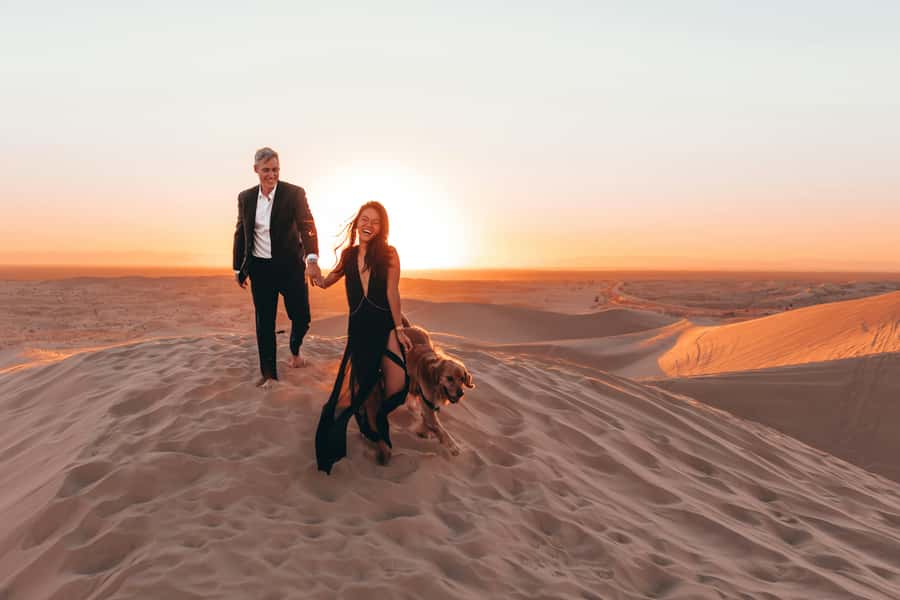
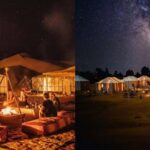
By late afternoon, you reach Merzouga and drop your bags at your desert camp. This is where the “luxury” option matters in a real way.
With the Luxury camp option, you sleep in a private tent with a real bed plus private shower and toilet access. With the Standard option, you’ll have shared bathroom facilities. In cold months, a lot of people appreciate the bed comfort and the warm-feeling setup inside the tent—one report even noted the outside was near zero degrees while the tent still worked well.
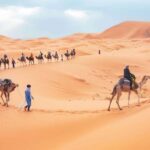
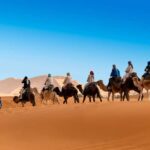
Then comes the classic desert moment: you climb onto camel back for a dune trek (often described around 45 minutes) and you watch the sunset sink over the Erg Chebbi dunes. You’re not just riding—you’re being placed into the landscape’s light.
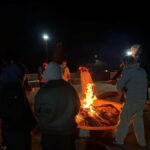
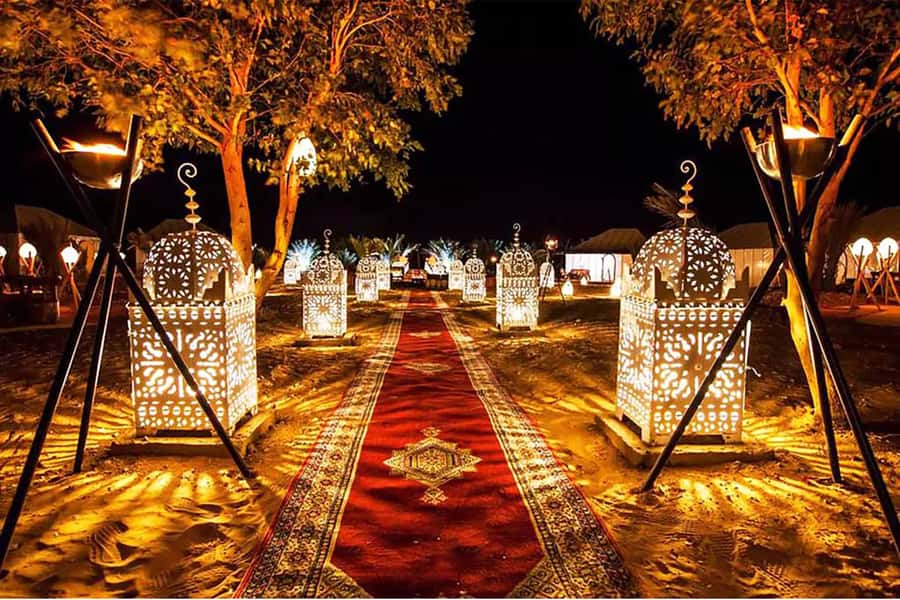
At camp, you’ll get dinner and sweet mint tea around the open flame. Then there’s Berber drumming and music with dance show energy under the stars.
One more reality point: the desert night can be cold, even in seasons that are comfortable in the cities. Pack warm layers. A hat, a jacket, and warm socks do more than you think.
Sunset Camel Ride: What to Expect on Erg Chebbi
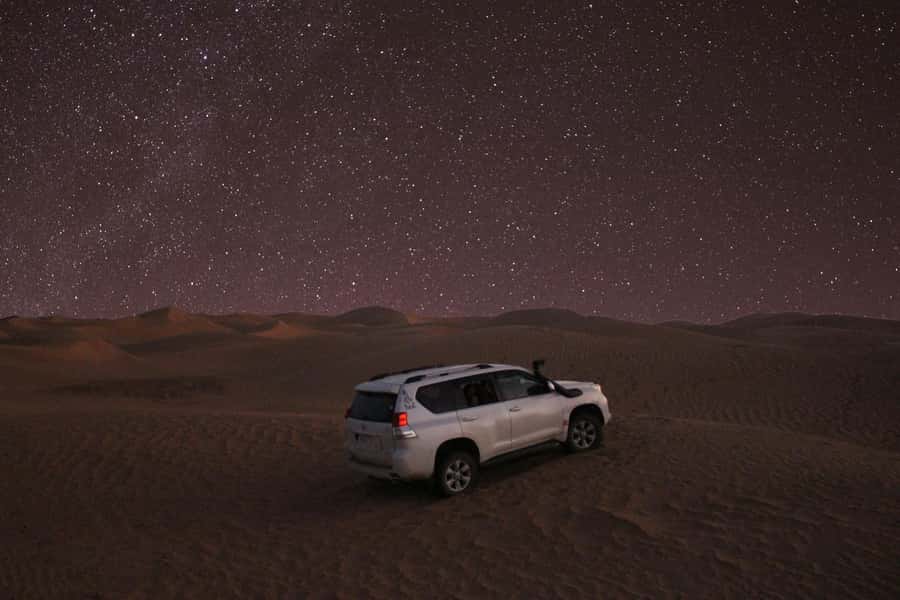
The Erg Chebbi dunes are the centerpiece for a reason. From the camel, the sand feels endless and the horizon line gets sharp. The sunset timing is built into the plan, so you don’t have to guess your “best moment.”
Most people find the ride smooth if you follow the handlers’ instructions and keep your balance. Still, it’s a camel—so expect some movement and bring your patience.
Also plan for photos. The light is gorgeous, but your hands might get cold if you pause for long periods. Bring a camera strap you can adjust quickly so you’re not wrestling gear during prime moments.
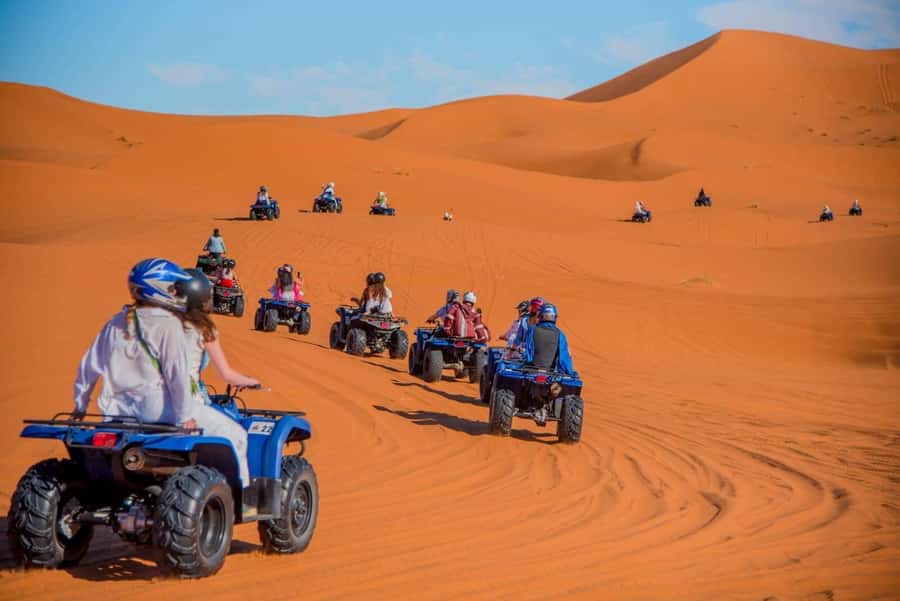
If you’re interested in extra activities, you can usually rent ATVs/quads or buggies from locals. Those add-on costs are not included, and you might see different quotes depending on group size (one rider reported around 500 MAD for a double and 400 MAD for a single).
Dinner and Night Shows: Fun, But Manage Expectations
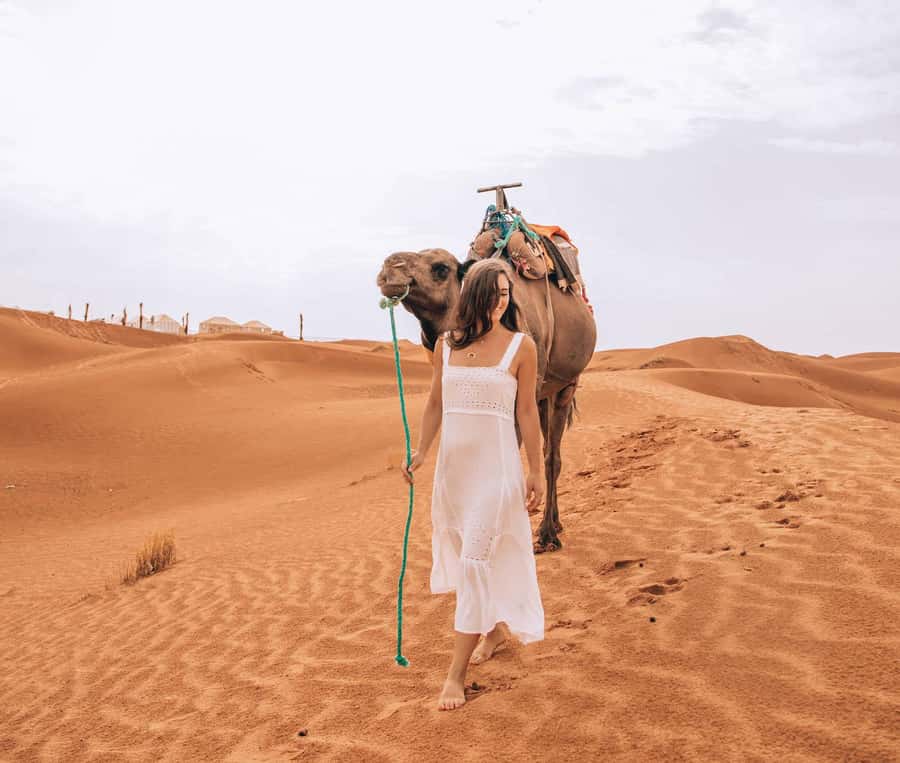
This part is enjoyable, especially if you like music and group energy. The camp dinner and Berber drumming performance are designed to make you feel like you arrived somewhere alive, not just a photo stop.
That said, not every show will feel perfectly polished. Some people described the night party as fun but a bit improvised. If you want strict showmanship, you may be disappointed. If you want a warm, social camp vibe, it usually lands well.
If you’re picky about drink costs, keep your expectations flexible. One group noted that water wasn’t included with dinner and had to be purchased separately. Bring a few extra dirhams just in case.
Sunrise Camel Ride: The Moment That Changes the Mood
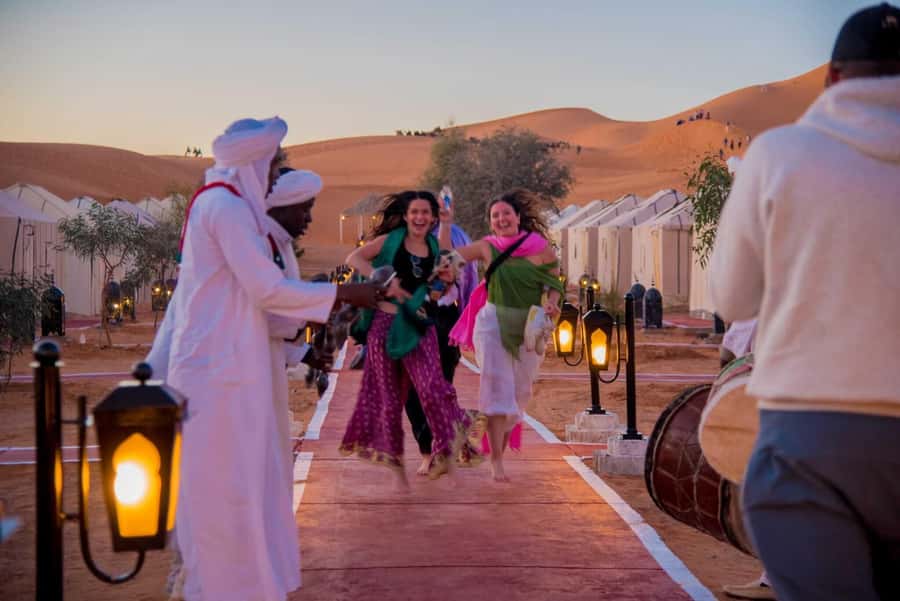
The second camel ride is the real payoff. You’ll wake up early to watch sunrise over the dunes, then ride back (depending on the schedule that morning). People often describe it as magical, because the light is softer and the dunes look textured in a different way.
Why it works: sunrise is quiet. Even if you’re with a group, the desert feels less chaotic. And because you already saw sunset, sunrise gives you comparison—same dunes, totally different atmosphere.
Practical move: have your camera ready before you head out. The best moments don’t last long, and you won’t want to fumble with layers while the light peaks.
The Trip Back to Marrakech: High Pass Views and a Smooth Arrival
After breakfast, you meet your driver again by returning to the transport (by camel or 4×4, depending on how the day is run). Then the focus shifts back to road travel.
This route goes through major scenic points like Tizi n’Tichka, a high Atlas mountain pass with views that can make you forget how many hours you’ve already been in the van. You might also pass through areas like Ouarzazate on the way.
The driving is long, but the schedule includes breaks. Expect toilet stops and short pauses for coffee and photo ops. Some people also appreciated the detours being handled well when roads were affected by weather (like a closure near Ifrane in winter).
You’ll arrive in Marrakech by evening with drop-off at your hotel or near Djemaa el Fna. Ending near the square makes it easier to continue your trip on your own that night.
Price and Logistics: Is $133 a Good Deal for This Much Desert Time?
At around $133 per person for 2 days, the key question is: what are you saving versus doing it separately?
You’re getting:
- A driver-guide plus A/C transportation for a long cross-country push
- One night at a Merzouga desert camp (luxury option includes private tent comfort)
- Meals (breakfasts and dinners included; lunches are not)
- Camel rides at sunset and sunrise
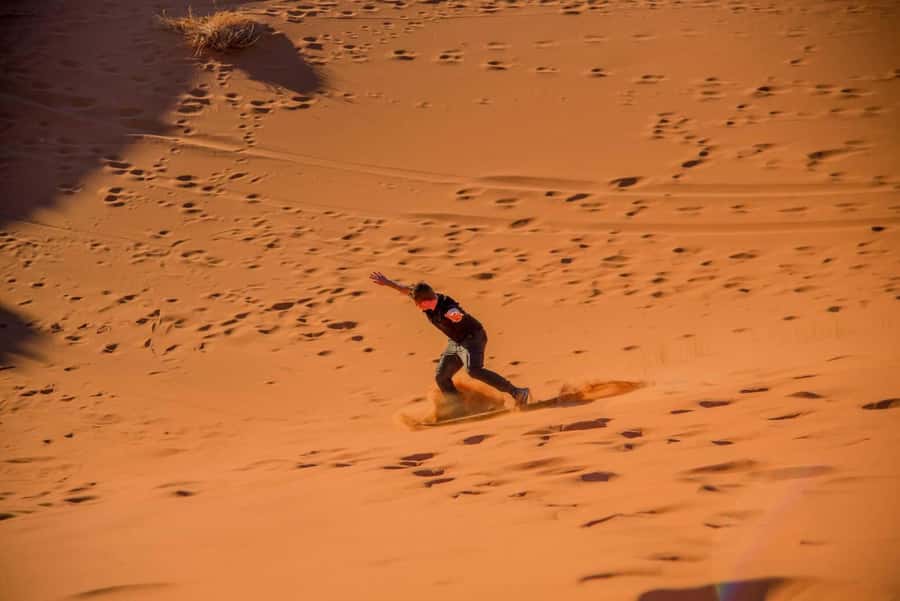
- Sandboarding
- Camp entertainment (Berber drumming/music)
- Luggage service
If you try to piece together a desert camp night, transport from Fès, and camel logistics on your own, the hassle can add up fast. Even if you find cheaper transport, the “right time” coordination is hard to replicate. That’s where this package tends to deliver value.
The trade-off is not price—it’s time and intensity. This isn’t a relaxed, slow route. It’s a curated hit list designed to fit in 48 hours.
Who Should Book This (and Who Might Want Something Else)
This tour is a great fit if you want:
- A quick but memorable Sahara experience without planning separate day tours
- Desert timing (sunset and sunrise) instead of just one camel ride
- A comfortable camp setup, especially with the Luxury option
- A guide-led route where stops are chosen and you’re not navigating alone
It might feel like too much if:
- You hate long car days and want hours of strolling rather than short breaks
- You’re sensitive to cold nights in the desert (pack warm layers either way)
- You expect lunch to be included and priced meals everywhere to be great value (lunch isn’t included)
For solo travelers, this route can work well since it’s guided and you can meet fellow passengers in a small-group setting.
Should You Book It?
I’d book this tour if your top priority is the desert itself—especially if you care about both sunset and sunrise, not just a one-time camel photo. The luxury camp option is worth serious consideration because private tent comfort plus real beds and private facilities changes how much you enjoy the night.
I’d think twice if you want a slow travel pace or if you get irritated by long driving days. This is a “see a lot, do a lot” itinerary, and the payoff comes from the moments at the dunes, not from spending hours in each town.
If you do book, pack for cold desert nights, plan to pay for lunch and drinks on the road, and bring a good attitude for a fast-moving two-day route.
FAQ
What’s included in the desert camp night?
You get one-night stay at a Merzouga desert camp in Erg Chebbi. With the Luxury option, you sleep in a private tent with a real bed plus private shower and toilet. With the Standard option, the camp uses shared bathroom and toilet facilities.
Are camel rides included?
Yes. Camel rides are included for both sunset and sunrise, and you also get a sandboarding activity.
Is Ait Benhaddou Kasbah included?
No. The visit to Ait Ben Haddou Kasbah is not included.
Does the tour include lunch?
No. Breakfasts and dinners are included, but lunch is not included.
How do pickup and drop-off work in Fès and Marrakech?
Pickup is included in Fès from your hotel or the nearest accessible point to your riad if the car can’t reach the old Medina lanes. In Marrakech, you’ll be dropped off at your hotel or at/near Djemaa El Fna.
Is Wi‑Fi guaranteed in the vehicle?
Wi‑Fi is mentioned as available on the comfortable A/C van, but it’s not guaranteed on all vehicles.